Plant a large weight of seed

It takes a lot of seeds per acre to make sure an area fills in with native plants, not weeds.

IMG_3056 mixing seed

In the photo, around 3,000 pounds of hand collected seed is being mixed on the floor.   There is over 125 species in this dry-mesic seed mix.  Some of the barrels have just one species of seed. In a new planting that was a former row crop field, we are planting 40 to 60 pounds per acre.  We don’t clean our seed so perhaps 40% of that bulk weight is chaff.  The bottom line is this is a lot of seed per acre.

Further west of Nachusa, Chris Helzer in dry Nebraska is getting solid results using much less seed per acre on sandy soils.

When we look back on our past plantings we feel confident that poor plantings often resulted from “spreading our seed too thin”, the metaphor made real.


Posted in Uncategorized | 5 Comments

Lesson learned: Decide whether your prairie planting will be low or high diversity.

storm front over pale purple coneflower Nachusa by BKleiman 2013 06 22

This prairie planting created by volunteer steward, Bernie Buchholz and friends,  is very diverse with over 165 species of plants showing up after several years from 175 species planted.  Yes, there is an eye popping amount of pale purple coneflower and a storm front to capture the drama. 

Over the next several posts I will share lessons learned on prairie restoration.  The first lessons is to decide whether you want high or low diversity results. 

High diversity takes extra time and resources to produce. If your habitat restoration goal is short term like with a Conservation Reserve Program ten year contract, then simply plant some grasses and maybe a few forbs.  

If you want habitat for birds then you may not need a plethora of plant species.  But, if you want to mimic the diversity of remnant prairie on the assumption that good things will result, or to provide habitat for all sorts of insects, or you want to connect remnant prairies with restored prairies in between….then you are talking about high diversity, and my lessons learned are for you.

Posted in Uncategorized | 2 Comments

GRN workshop at Nachusa September 9-11, 2014

Save the date!

Nachusa Grasslands will host the next Grassland Restoration Network workshop on September 9, 10, and 11, 2014.

Registration will only be $50 to $75 and include most meals. Such a deal.

The target audience for the GRN workshop are people actively doing/directing high diversity prairie restoration at a significant scale; or doing the science. The workshop has a lot of field time with some inside talks. We talk a lot about techniques, equipment, monitoring and measuring success, the science behind the restoration, and other wonkish topics.

Nachusa Grasslands has over 110 prairie plantings and many nice remnant prairies for you to look at, with many restoration very well done. September is a nice time of year too. Nachusa Grasslands is two hours west of Chicago in Illinois. http://www.nachusagrasslands.org/

So put the date on your calendar, and budget enough money for registration, travel, and hotel. We will have more details at this site by May.

Posted in Uncategorized | Leave a comment

Which herbicide for various weeds

Lespedeza daurica IMG_3830 003

Above: An asian bushclover, Lespedeza daurica, speciman sits out to help people learn what this invasive weed looks like.  You can’t kill it with Transline/Stinger but triclopyr or Milestone does the job.

Every manager has their list of what weeds they have to control and what herbicides or techniques they use to control it.  The link below is my current list:

https://grasslandrestorationnetwork.org/wp-content/uploads/2013/09/which-herbicide-for-various-weeds-july-2013.pdf

Posted in Uncategorized | Leave a comment

2013 GRN Workshop Success

The 2013 GRN Workshop at Columbia Missouri was a fine success.   The main leaders of the workshop were Malissa Underwood, Elizabeth Middleton, Chris Newbold and Jeff Demand.  We also had registration assistance from Mindy Kremer of the Conservation Heritage Foundation, and logistical support from Corinne Carpenter of Mizzou.

IMG_2456

We had around 90 people join us at the University of Missouri in Columbia.  We had a day of good talks and then visited Tucker Prairie.  We also spent a day in the field hearing good stories about planting prairie at Prairie Fork Conservation Area.  It was good to hear ideas that make us think and see good works in progress.  Thank you to all that participated.

Posted in Uncategorized | Leave a comment

Sometimes we wait

By Bill Kleiman

Recently I wrote how it could be a good thing to use a tractor applied boom spray across a failed restoration to return it to grass. But there is the other way too, waiting. Fourteen years ago we sprayed glyphosate (Roundup) on a fallow cattle pasture that was mostly brome grass and a few weeds. We then seeded with a rich mix of prairie species, mowed it a few times that first year, and then did annual weed work on it year after year. The weed work was not hard, but there was always some to do, mostly sweet clover and parsnip. We saw some native plants established but we looked down on this planting for years because we mostly saw the silly yellow coneflower and bee balm which screams out “prairie planting”.

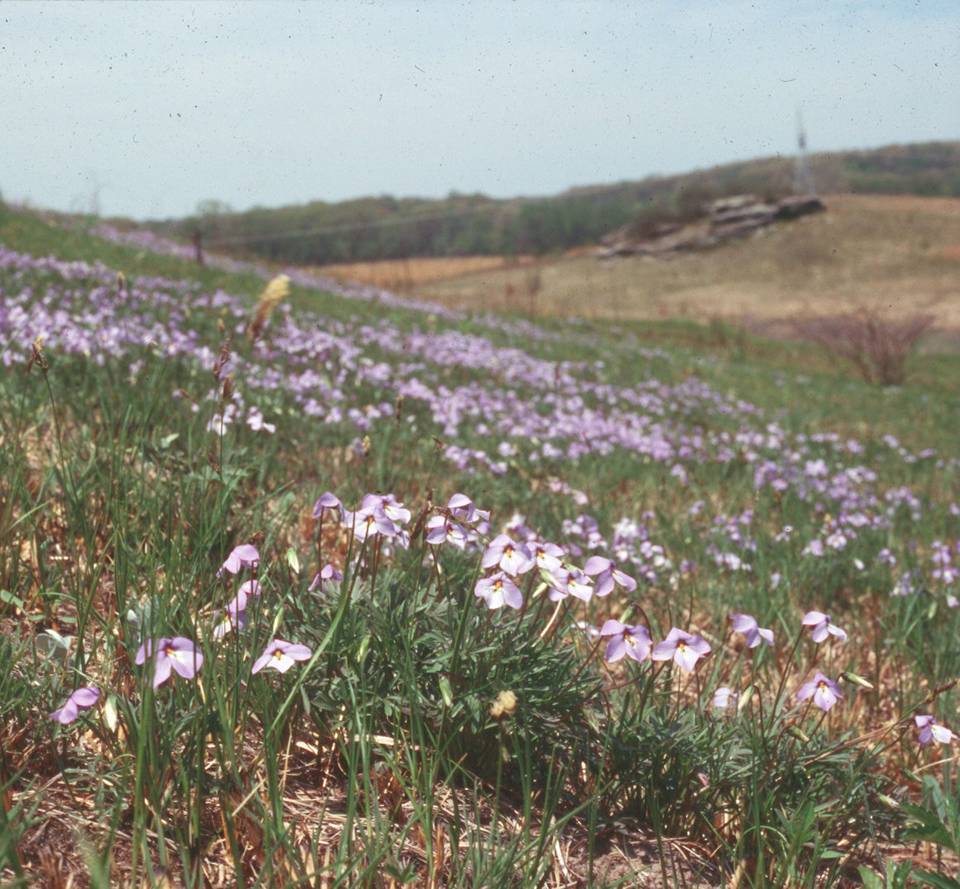
But slowly this restoration has spiraled upwards. I walked around for 15 minutes today and wrote down 37 native plants and 8 weeds and saw no invasive plants. It is good enough to keep adding seed to and keep up the hand weeding.  Here is a photo of a portion:

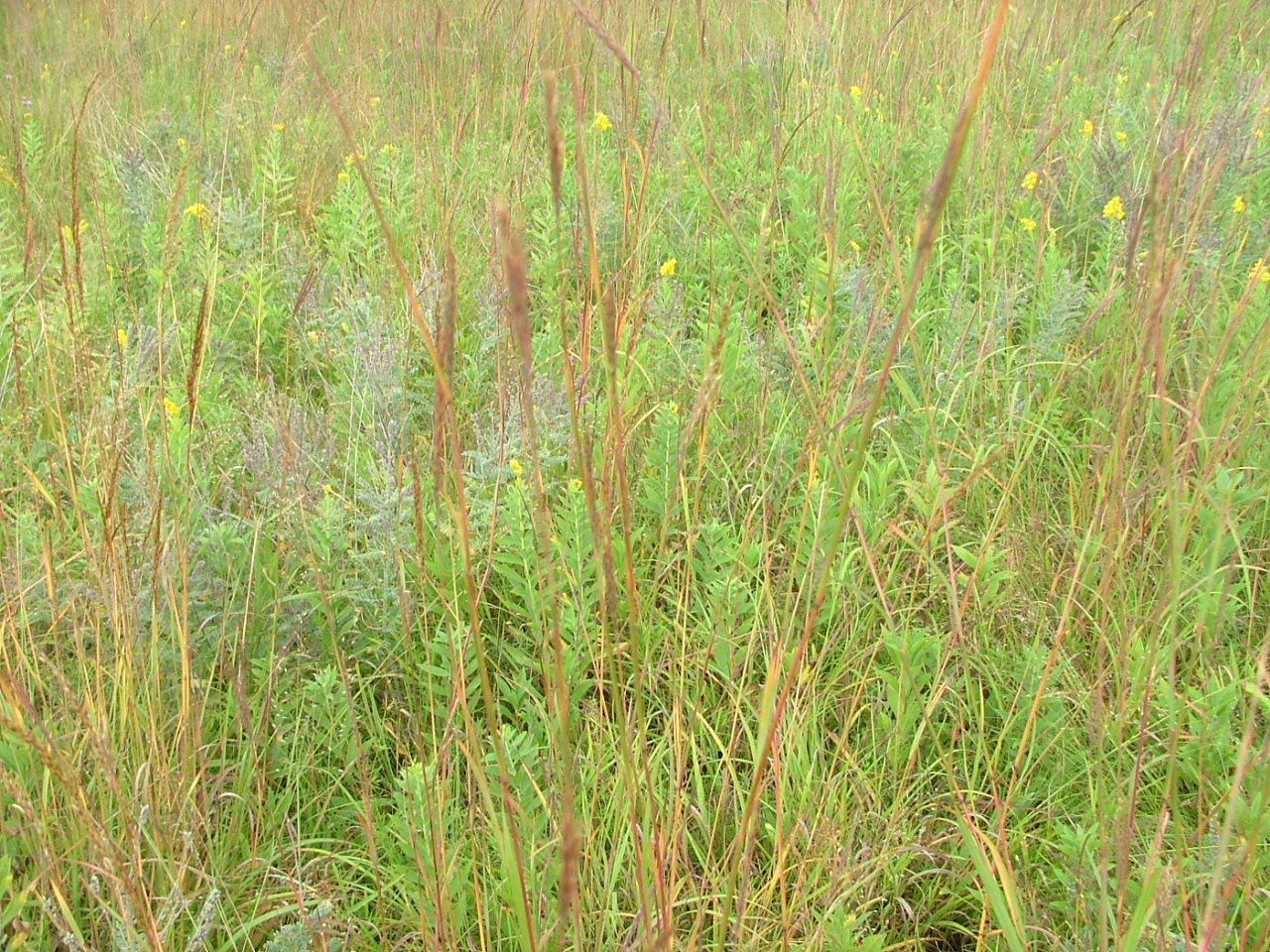
meiners uplands photo

Why keep this planting but boom spray another planting to grass only? If the planting is not a weed headache, a time sink, full of invasive legumes that can’t be controlled then using a boom spray may be the right path. Also,is the emerging plant community reasonably diverse and abundant? As with everything, there is no one answer.

Here are the plants I saw in that 15 minute walk with Bernie Buchholz:

SCIENTIFIC NAME COMMON NAME FAMILY
Achillea millefolium Yarrow Comp
Anemone cylindrica Thimbleweed Ranan
Apocynum cannabinum Dogbane (Indian Hemp) Apocy
Artemisia ludoviciana gnaphalodes White Sage; Prairie Sage Comp
Asclepias syriaca Common Milkweed Asclp
Asclepias tuberosa interior Butterfly Weed Asclp
Aster ericoides (prostratus) Heath Aster Comp
Astragalus canadensis Canadian Milk Vetch Legu
Baptisia leucantha White Wild Indigo Legu
Bromus inermus Smooth (Hungarian) Brome Grami
Carex bicknellii Copper-shouldered oval Sedge Cypera
Carex muhlenbergii (enervis) Sand Bracted Sedge  (Muhlenberg’s) Cypera
Cirsium discolor Pasture Thistle Comp
Convulvulus arvensis Field Bindweed Convo
Cornus racemosa Gray DoWilhelm Good Corna
Daucus carota Queen Anne’s Lace Umbel
Desmodium illinoense Ill. Tick Trefoil Legu
Echinacea pallida Pale Purple Coneflower Comp
Elymus canadensis Prairie Wild Rye Grami
Erigeron strigosus Daisy Fleabane Comp
Helianthus grosseserratus Sawtooth Sunflower Comp
Helianthus rigidus (laetiflorus) Prairie Sunflower Comp
Heliopsis helianthoides False Sunflower; ” Ox-eye “ Comp
Lespedeza capitata  — Round-headed Bush Clover Legu
Medicago lupulina Black Medic Legu
Mirabilis nyctaginea (oxybaphus) Four O’Clock Nycta
Monarda fistulosa Wild Bergamot Labia
Phleum pratense Timothy Grami
Poa compressa Canada Blue Grass Grami
Pycnanthemum tenuifolium Narrow-leaved Mountain Mint Labia
Ratibida pinnata Yellow  Coneflower Comp
Rhus glabra Smooth Sumac Anaca
Rubus allegheniensis Common Blackberry Rosac
Rudbeckia hirta Black-eyed Susan Comp
Rudbeckia subtomentosa Sweet Blackeyed Susan Comp
Silphium integrifolium Rosinweed Comp
Solidago canadensis Canada Goldenrod Comp
Solidago rigida Stiff Goldenrod Comp
Sorghastrum nutans Indian Grass Grami
Sporobolus asper Rough Dropseed Grami
Sporobolus heterolepis Prairie Dropseed Grami
Tradescantia ohiensis Ohio Spiderwort Comm
Trifolium pratense Red Clover Legu
Verbena stricta Hoary Vervain Verbe
Vitis riparia Wild (Riverbank) Grape Vitac
Zizia aurea Golden Alexanders Umbel
Posted in Uncategorized | Tagged , , , | 2 Comments

2013 GRN meeting Missouri: parking, map, directions

Parking information:

Designated visitor parking garage is the Virginia Avenue Parking Garage, labeled VAG on the Campus Map and is at the intersection of Lake and Hitt Streets.
Missouri University Parking Garage map: http://umcspace.missouri.edu/muparking/default.aspx

Buildings to know (Map labels):
MU STUDENT CENTER (location of Tues/Thurs meetings)
MEMORIAL UNION (location of Wed. evening dinner)
Missouri University Campus Map: http://map.missouri.edu/

Location of bus and van pick up/drop off:
Hampton Inn
3410 Clark Ln
Columbia, MO
https://maps.google.com/maps?q=Hampton+Inn+Clark+Lane+Columbia,+MO&hl=en&ll=38.962879,-92.287173&spn=0.017485,0.041585&sll=38.304661,-92.437099&sspn=4.516941,10.645752&hq=Hampton+Inn&hnear=Clark+Ln,+Columbia,+Missouri&t=m&z=15

Directions to Tucker Prairie (Tues p.m.):
Get off Interstate 70 at Exit 144 (Highway M). Head south on County Road 223 for 1.5 miles. Then head left (east) on County Road 220 for one mile. Then head left (north) on County Road 215 for 1.5 miles. The entrance is on the left side (west) of the road.
Directions to Prairie Fork (Wed field day):
1. Exit Interstate 70 at the Williamsburg Exit (Exit 161).
2. Take State Route D North into Williamsburg (0.4 miles) and follow Route D as it turns west (2.3 miles).
3. Route D will turn south and cross Interstate 70.
4. Stay on Route D for 1.9 miles.
5. The main entrance road into Prairie Fork will exit to the east off of Route D.

Posted in Uncategorized | Leave a comment

Final Agenda for GRN 2013 meeting

Grassland Restoration Network 2013 Agenda

Hello!

We are two weeks away from the Grassland Restoration Network meeting! The link above has the agenda for Tuesday, July 16-Thursday, July 18.  On this site you can find liks to parking information, a campus map, and other useful information.

If you have last minute questions, please contact Malissa Underwood. Malissa.Underwood@mdc.mo.gov or 573-522-4115 x 3200.

We look forward to seeing you all soon.

Elizabeth Middleton
On behalf of the 2013 GRN planning team

Jeff Demand
Chris Newbold
Malissa Underwood

Posted in Uncategorized | Leave a comment

Managing invasive weeds with limited resources

During May, June and July, are you like us racing to keep weeds from setting seed? We manage over 100 prairie plantings and dozens of remnant habitats to cover annually. We try to cover all areas of the preserve as many times as needed. But we have our problem areas, areas that are low in diversity and high in invasives. How much time do we spend on degraded areas at the detriment of other areas? We all have limited resources.

kubota boomless

One tool we have learned to use is this 30hp Kubota tractor with a 50 gallon Kings sprayer with Boominator brand spray tips. This unit can turn problem areas into manageable situations. One tip sprays left, one right, and one both all directions. We like not having booms on the sprayer as we negotiate around and through brushy areas. A downside is that these units use more herbicide per acre. We also have a 150 gallon boom sprayer.

A few areas we “boom” with broadleaf herbicide (Crossbow 2% or Milestone at 0.9 oz/gallon) have birdsfoot trefoil infestations. If the area is not a remnant, but essentially a fallow field, with a difficult legume infestation, then booming it might be a strategy for your success and sanity.

We often boom edges of plantings that are weedy. We boom former pine plantations that came back as invasives. We boom spray CRP fields that are brome grass, invasive Lespedeza, and invasive shrubs. We boom prairie plantings that did not turn out more than a few native species. With judicious use of broadleaf herbicide we can turn such areas into low maintenance grass-only-lands.

By applying our limited resources to managing remnants and caring for good habitat restorations we find we can have a sustainable weed management program.

Posted in Uncategorized | 2 Comments

Agenda for GRN annual workdshop

Grassland Restoration Network—Limitations of Success—
Agenda as of 6/11/13
Hotels booked, will be held until June 14, registration deadline June 14 as well.
Hotels with rooms held for GRN participants:

Hotel Address Phone number Rate for single King Rate for single King with pull out couch Contact
Super 8 3216 Clark Lane 573-474-8488 $59 $64 Phillip
Fairfield 1115 Woodland Springs Ct 573-886-8888 $114 $124 Cassie
Hampton Inn 3410 Clark Ln 573-886-9392 $119 $124 Stephanie

Meeting room: Chamber Auditorium, Student Center, Missouri University Campus
Tuesday, July 16
Tuesday, July 16
Begin End
Conference start time 8:30 AM
Introductory remarks, Bill Kleiman 8:35 8:50
Speaker 1 8:55 9:20
Speaker 2 9:25 9:50
Break 1 9:50 10:00
Speaker 3 10:05 10:30
Speaker 4 10:35 11:00
Speaker 5 11:05 11:30
Lunch 11:30 12:30
Speaker 6 12:40 13:05
Manager’s Panel A 13:10 14:10
Break 2 14:10 14:20
Manager’s Panel B 14:25 15:25
Intro to Tucker Prairie, Prairie Forks–Chris Newbold 15:30 15:55
4:00 PM

Speaker objectives:
1. Connect your topic to the theme, “limitations of success in restoration” and attempt to address the ways in which these limitations can be managed.
2. Consistent with the GRN mission: “Connect with colleagues in restoring grassland habitats”, we strive for talks to be opportunities for you to share your experience, but to also engage the audience in the conversation about your topic. This goes beyond leaving 10 minutes at the end for questions. Think of ways to invite perspective from the audience throughout your presentation.
Presenters and tentative talk titles (where available)
Shane Kempter— Restoring “Native” Landscapes on Military Training Sites
Mike Arduser—What Can Bees Tell Us about Prairie Restoration?
Malissa Underwood—Evaluation of Native Plant Seeding Density for High Quality Prairie Reconstructions
Alice Tipton—Little things with a big effect: soil communities and their effect on plant community structure
Pauline Drobney—Structured decision-making in Prairies
Phil Gerla–Resiliency or Irreversibility? Examples of Success and Failure in Restoring Prairie Hydrology

Manager Panel
Speaker objectives:
1. Expose meeting participants to the variety of places where grassland restoration is being done.
2. Highlight challenges associated with grassland restoration in the Midwest
3. Explore common challenges within grassland restorations and what solutions were employed at different sites.
10 minutes per person

Manager speakers
Ted Anchor (IN)
Randy Arndt (MO)
Bill Glass (IL)
Cody Considine (IL)
Chris Helzer (NE)
Dave Darrow (MO)

20 minute introduction to Tucker Prairie and Prairie Forks CA—Chris Newbold
6 pm: Trip to Tucker Prairie (bus transportation provided)
8:30 pm: Return to hotels
Wednesday, July 17
Start time: meet for bus at 6 am
Return from Prairie Forks by 3 pm
Field day—
Boxed Lunch @ 11 am, pavilion
Wrap-up conversation @1:30—facilitated by Jeff Demand
On bus by 2:30.
Dinner organized by GRN—Dinner at Stotler Lounge, MU Campus; catered by D. Rowes (barbeque), beer will be provided; 6-11.
Thursday, July 18
Speaker objectives:
1. Connect your topic to the theme, “limitations of success in restoration” and attempt to address the ways in which these limitations can be managed.
2. Consistent with the GRN mission: “Connect with colleagues in restoring grassland habitats”, we strive for talks to be opportunities for you to share your experience, but to also engage the audience in the conversation about your topic. This goes beyond leaving 10 minutes at the end for questions. Think of ways to invite perspective from the audience throughout your presentation.
3. Look for ways to connect the information presented on Tuesday and Wednesday to what you are presenting on the final day.
Thursday, July 18
Begin End
Conference start time 8:00 AM
Speaker 1 8:10 AM 8:35 AM
Speaker 2 8:40 AM 9:05 AM
Speaker 3 9:15 AM 9:35 AM
Break 9:35 AM 9:50 AM
Invasive Species facilitated discussion–Bill Kleiman 10:00 AM 11:05 AM
Wrap-up Discussion–Chris Helzer 11:10 AM 12:00 PM

Presenters and tentative talk titles (where available):
Alyssa Nyberg—Limitations to success: Homo sapiens
Gwen White—Restoring the vistas and gems of the Tallgrass Prairie in the ETPBR LCC –Eastern Tallgrass Prairie LCC
Invasive Species discussion—facilitated by Bill Kleiman
Doug Petersen—Restoration practices that promote the soil community
Wrap-up Discussion—facilitated by Chris Helzer


Sent May 3, 2013
Dear (Tuesday) Presenters,
Thank you for volunteering to share your experience in a variety of subjects with us at this year’s Grassland Restoration Network meeting. Because the field season can be so busy, I thought I’d write you all early to let you begin thinking about what we’re hoping to accomplish with the talks this year. We have two main objectives for the discussions on Tuesday.

1. Connect your topic to the theme, “limitations of success in restoration” and attempt to address the ways in which these limitations can be managed.
2. Consistent with the GRN mission: “Connect with colleagues in restoring grassland habitats”, we strive for talks to be opportunities for you to share your experience, but to also engage the audience in the conversation about your topic. This goes beyond leaving 10 minutes at the end for questions. Think of ways to invite perspective from the audience throughout your presentation.
The talk timeframe will be 25 minutes for each of you. You are welcome to structure/allocate your talk timing as you think will best inform and engage the participants at the meeting. We will be in a standard stadium seat conference room, with a projector and a computer. We would ask that you please bring your talk on a jump drive so that it can be loaded onto a single computer.

For those of you that are able to attend the entire meeting, we will be returning to some of the ideas that you present when we are in the field on Wednesday. In the next few weeks, I will be sending you the thought questions that we will be giving to the participants of the meeting when we are in the field. In this way, we hope that you might be able to be prepared to also contribute your thoughts and perspective while we are in the field.

Dear (Thursday) Presenters,

Thank you for volunteering to share your experience in a variety of subjects with us at this year’s Grassland Restoration Network meeting. In order to accommodate the different kinds of presentations that we will be offering to participants this year, I elected to move two presentations, Jessica and Alyssa, to Thursday. Please let me know if this is a problem as soon as possible. Because the field season can be so busy, I thought I’d write you all early to let you begin thinking about what we’re hoping to accomplish with the talks this year. We have three main objectives for the discussions on Thursday.

1. Connect your topic to the theme, “limitations of success in restoration” and attempt to address the ways in which these limitations can be managed.
2. Consistent with the GRN mission: “Connect with colleagues in restoring grassland habitats”, we strive for talks to be opportunities for you to share your experience, but to also engage the audience in the conversation about your topic. This goes beyond leaving 10 minutes at the end for questions. Think of ways to invite perspective from the audience throughout your presentation.
3. Look for ways to connect the information presented on Tuesday and Wednesday to what you are presenting on the final day.
For Manager’s Panel:
Dear Speaker,

Thank you for agreeing to be part of our manager’s panel at the 2013 Grassland Restoration Network workshop. Through this panel discussion, we hope to achieve the following objectives:

1. Expose meeting participants to the variety of places where grassland restoration is being done.
2. Highlight challenges associated with grassland restoration in the Midwest
3. Explore common challenges within grassland restorations and what solutions were employed at different sites.
The panel discussion will be broken into two sessions. In the first session, each speaker will only speak for 10 minutes. Our hope is that each of you can present a brief description of your project – just enough information to allow the audience to understand the basics of what you’re doing and ask relevant questions during the discussion. To keep us on time and to ensure that all of our panel present the same kind of information, we’d like you to use the following template for your presentation:

Slide 1 – Title slide. Your name/position and the name/location of your site

Slide 2 – Map and Site Description. Please show a map of your site, as well as 5 bullet points on the size, soil type, topography, and other pertinent information.

Slide 3 – Objectives. Described the overall objectives for your site (what are you trying to achieve?). If relevant, present both your restoration objective(s) and management objective(s).

Slides 4&5 – Strategies. Please describe (with photos) what you’ve done to work toward your objectives.

Slide 6 – Challenges. What are the biggest challenges you face? (Invasives, etc.) and how are you dealing with them? This should be brief and general – we’re just introducing the audience to the kind of work you’re doing to stimulate discussion and questions.

Slide 7 – Measures. How are you measuring whether or not you’re meeting your objectives? In a few short bullets, please describe the results of those measures. These can be qualitative and/or quantitative.

Slide 8 – Next Steps and Questions. Where is your project going from here? What are the biggest challenges you face, or questions you want to address?

In the second session, we will open the discussion up to participants and strive to pull out the commonalities and differences in handling restoration challenges in that hour. We will have a table and chairs set up for the second portion of the panel session and it will be led by a discussion facilitator.

We will be in a standard stadium seat conference room, with a projector and a computer. We would ask that you please bring your talk on a jump drive so that it can be loaded onto a single computer.

Posted in Uncategorized | Leave a comment