By: Clara Barton
Key Takeaways:
- Plants that were still flowering showed no viable seed production in our tests.
- Plants with only green seeds produced very little germination, and the few seedlings that emerged appeared weak.
- For both wild parsnip and sweet clover, it appears safe to leave spaded plants on site while they are still flowering or when seeds remain entirely green. Once seeds begin browning, hauling plants to a burn pile is likely worth the extra effort.
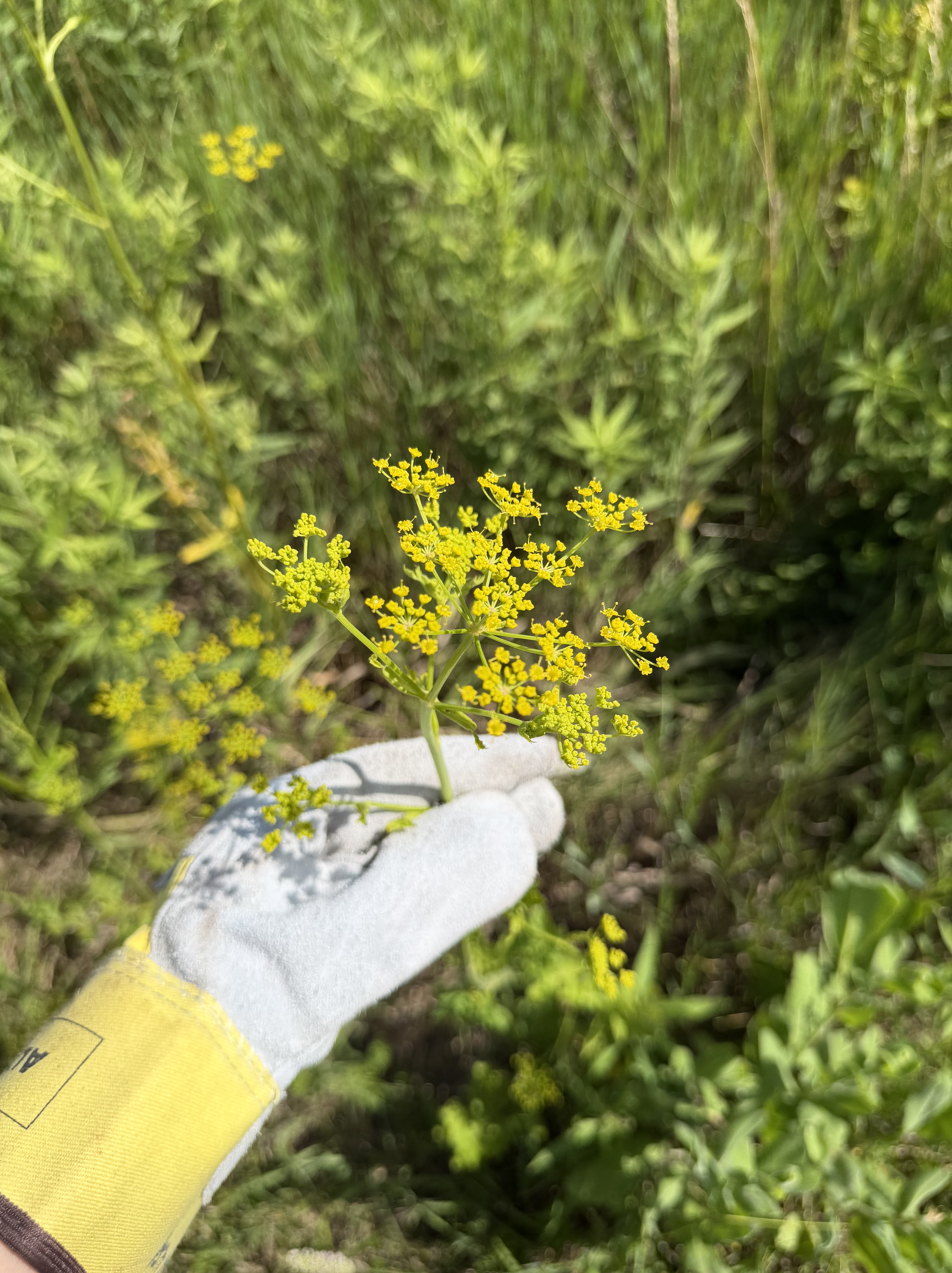
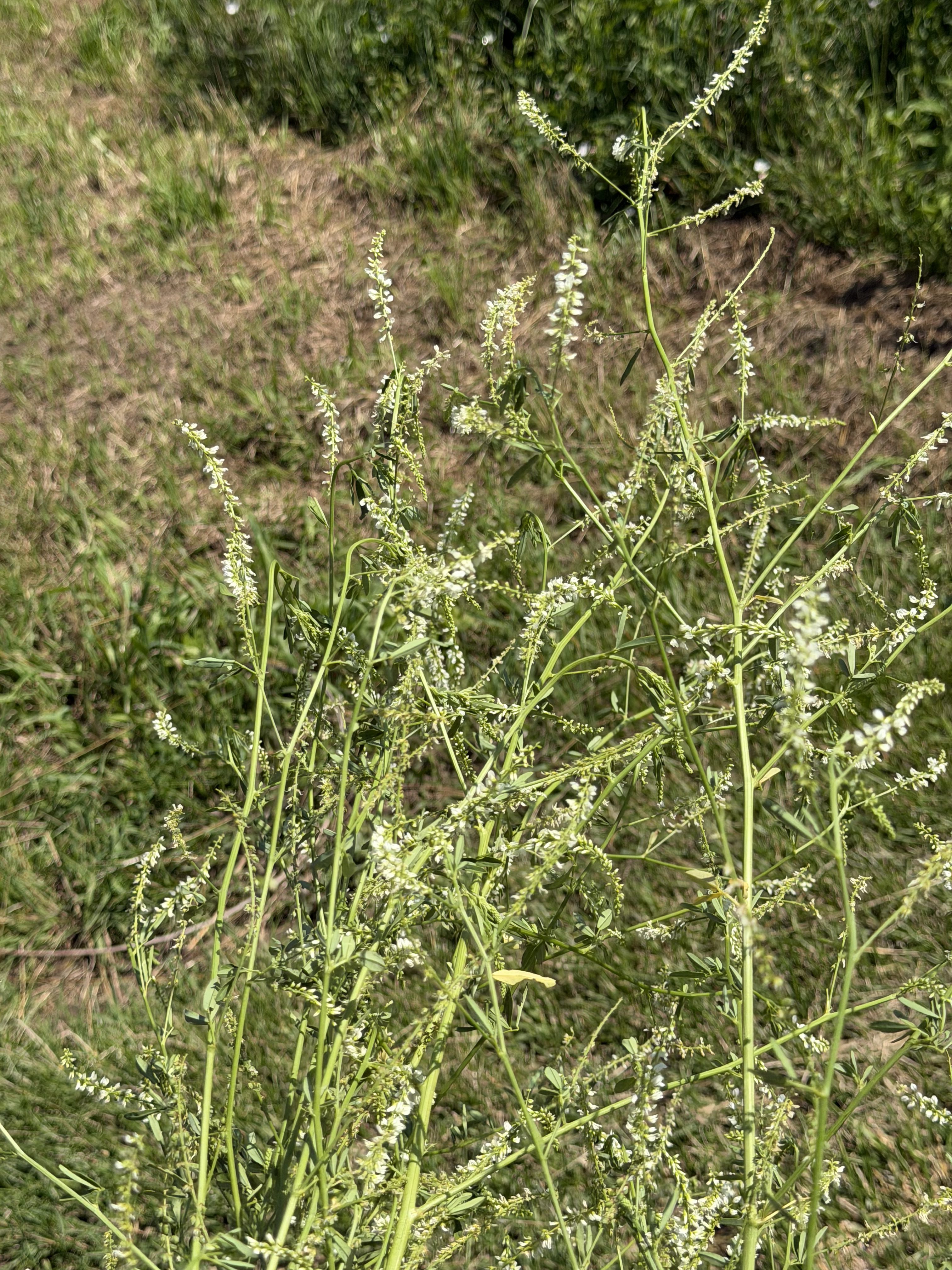
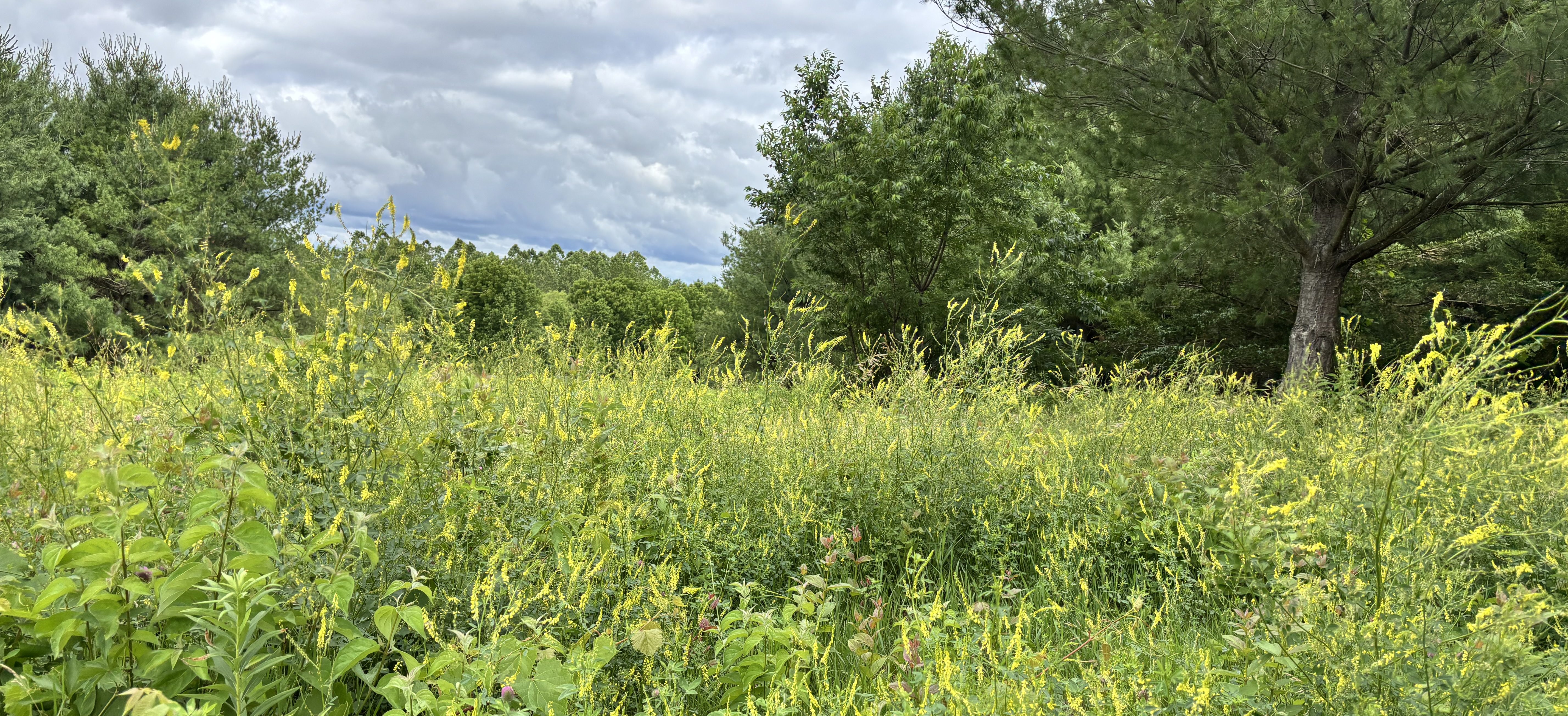
Anyone who has spent time controlling wild parsnip or sweet clover knows that hauling plants out of a site can be very time-consuming and laborious. In remote areas, many stewards simply sever the root and leave the plant where it falls, assuming it will die before producing viable seed. But is that assumption always correct?
To help answer that question, we tested seed viability from wild parsnip (Pastinaca sativa), yellow sweet clover (Melilotus officinalis), and white sweet clover (Melilotus alba) collected at different stages of development. Our goal was to determine when it becomes necessary to remove spaded plants from a site to prevent future seed production.
In early July, spaded plants were collected from seven treatment groups:
- Yellow sweet clover with mostly green seeds
- Yellow sweet clover with browning seeds
- Yellow sweet clover still in flower
- White sweet clover still in flower
- White sweet clover with mostly green seeds
- Wild parsnip still in flower
- Wild parsnip with green seeds
The plants were dried in paper bags until late September simulating the conditions that would occur if cut plants were left on the landscape.
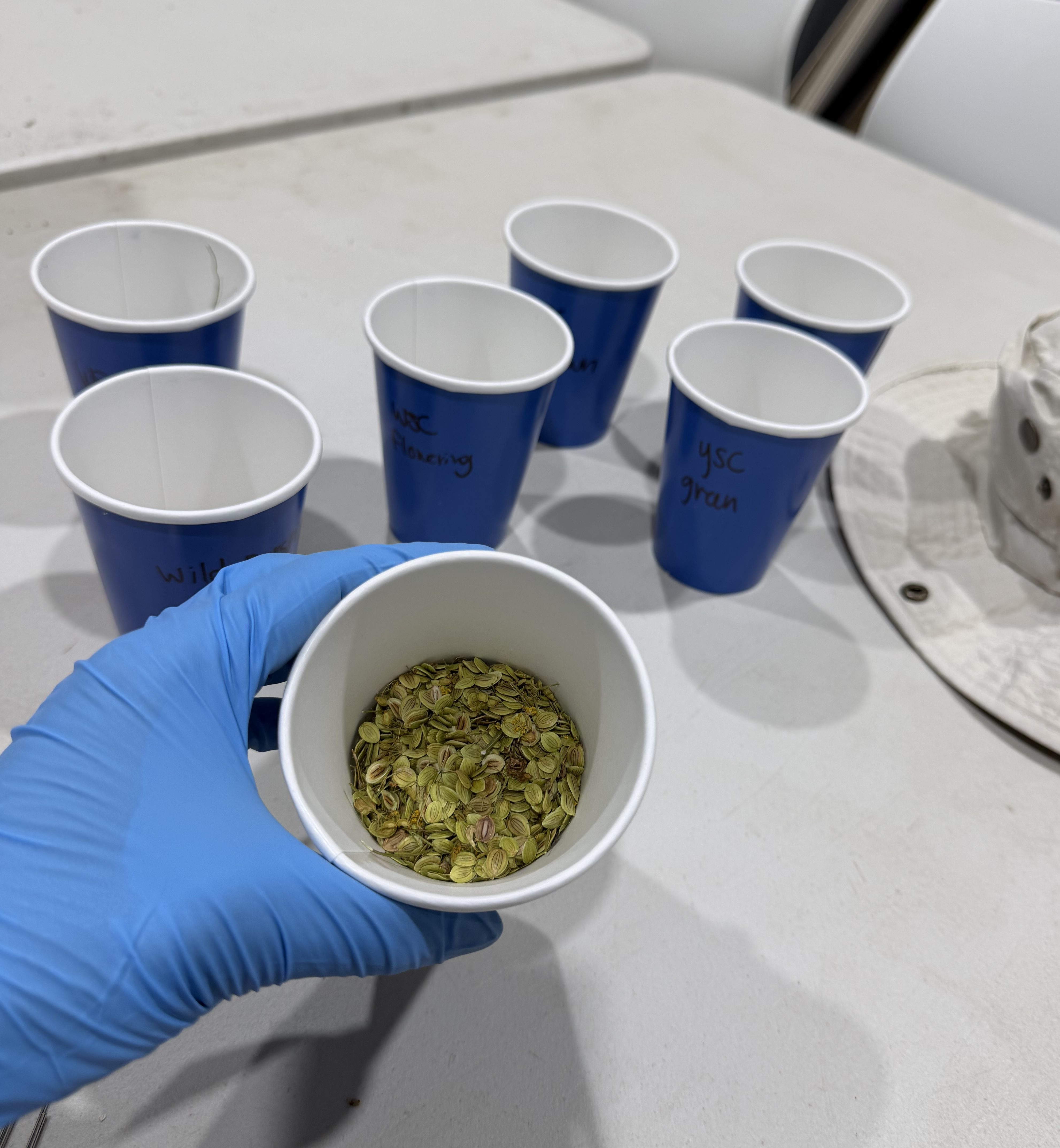
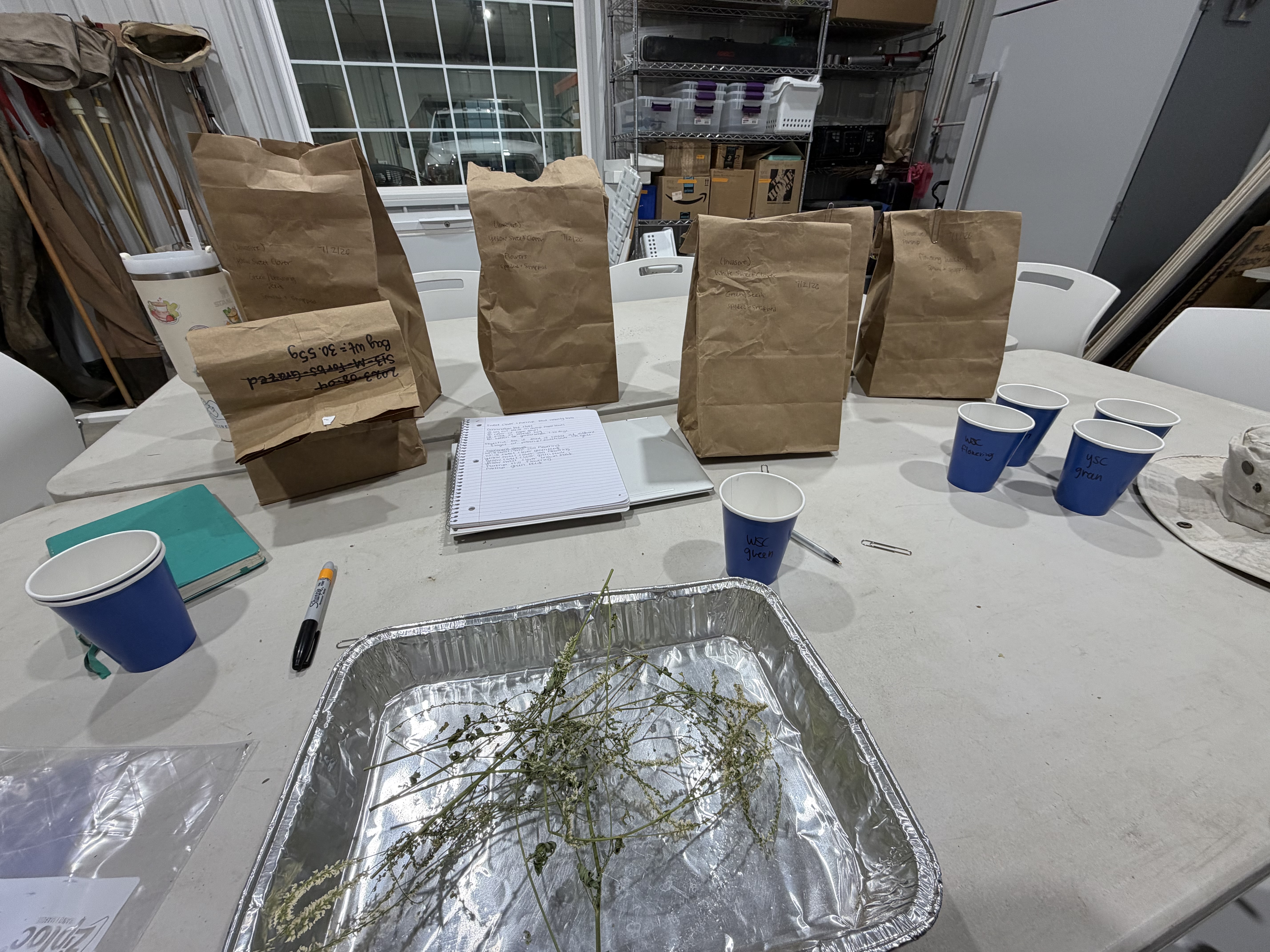
To determine whether seeds remained capable of producing new plants, two different tests were used.
Float Test
A subset of seed groups was first tested using a float test.
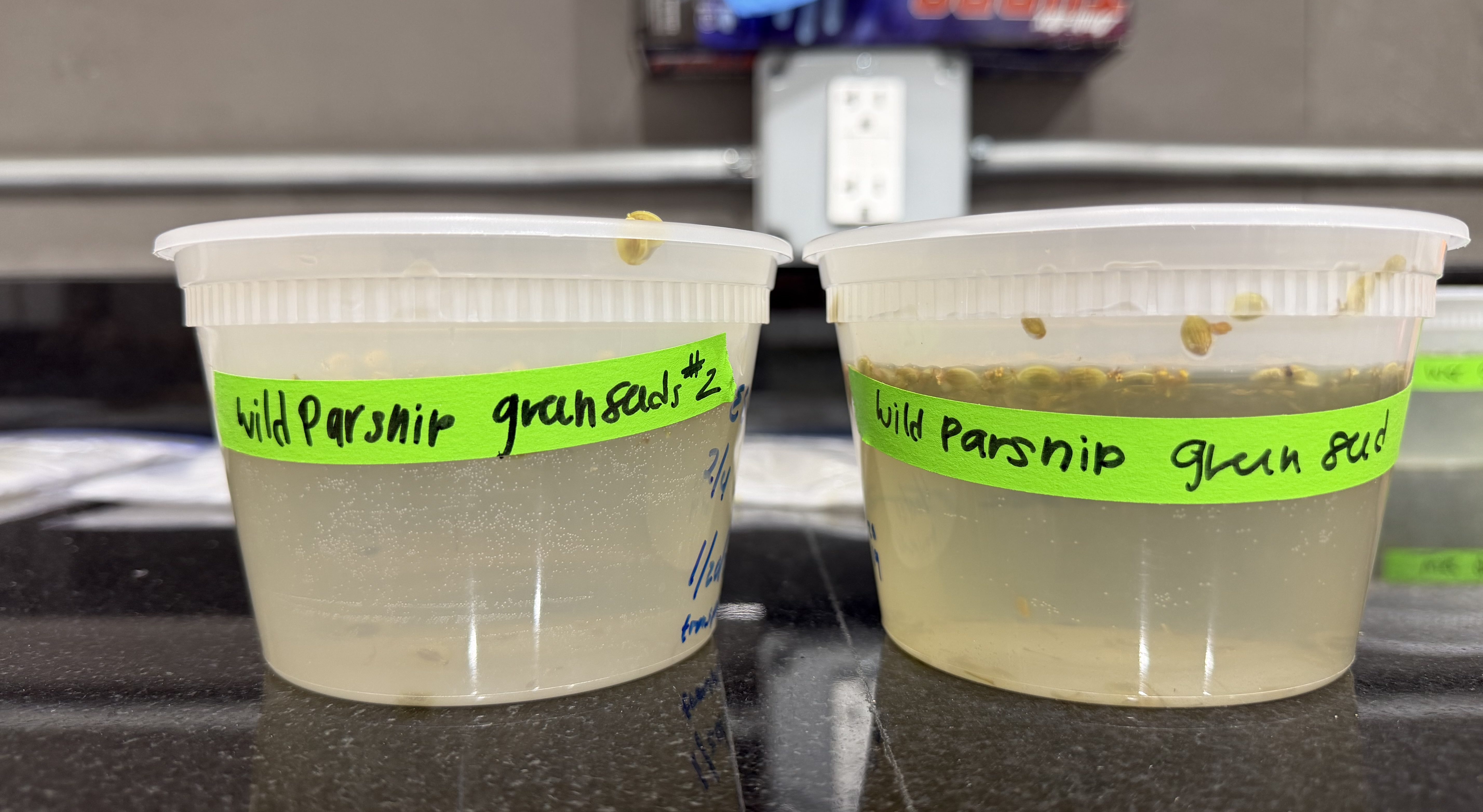
Seeds were placed in 300 mL of water and observed for 15 minutes. In some species, viable seeds are more likely to sink, while immature or empty seeds tend to float.
The float test was conducted on:
- Wild parsnip with green seeds
- White sweet clover with green seeds
- Yellow sweet clover with green seeds
- Yellow sweet clover with browning seeds
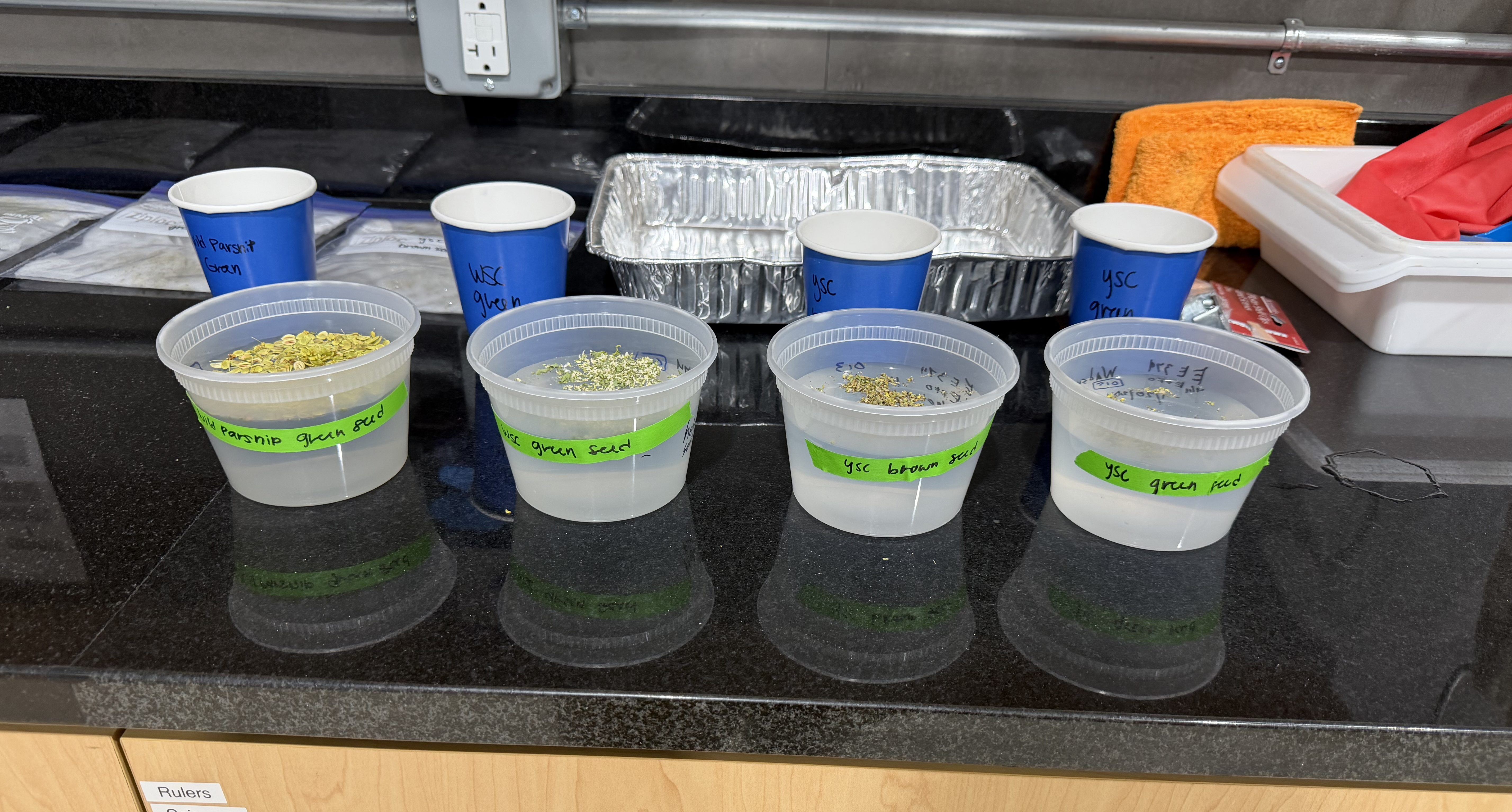
After 15 minutes, the only treatment that showed any seeds sinking was the green-seeded wild parsnip treatment.
This suggested that at least some parsnip seeds may have developed sufficiently to remain viable.
None of the sweet clover seeds sank. Follow-up research suggested the float test may not be reliable for sweet clover because the seeds possess an exceptionally hard, water-resistant seed coat. As a result, a lack of sinking should not be interpreted as evidence that sweet clover seed is nonviable.
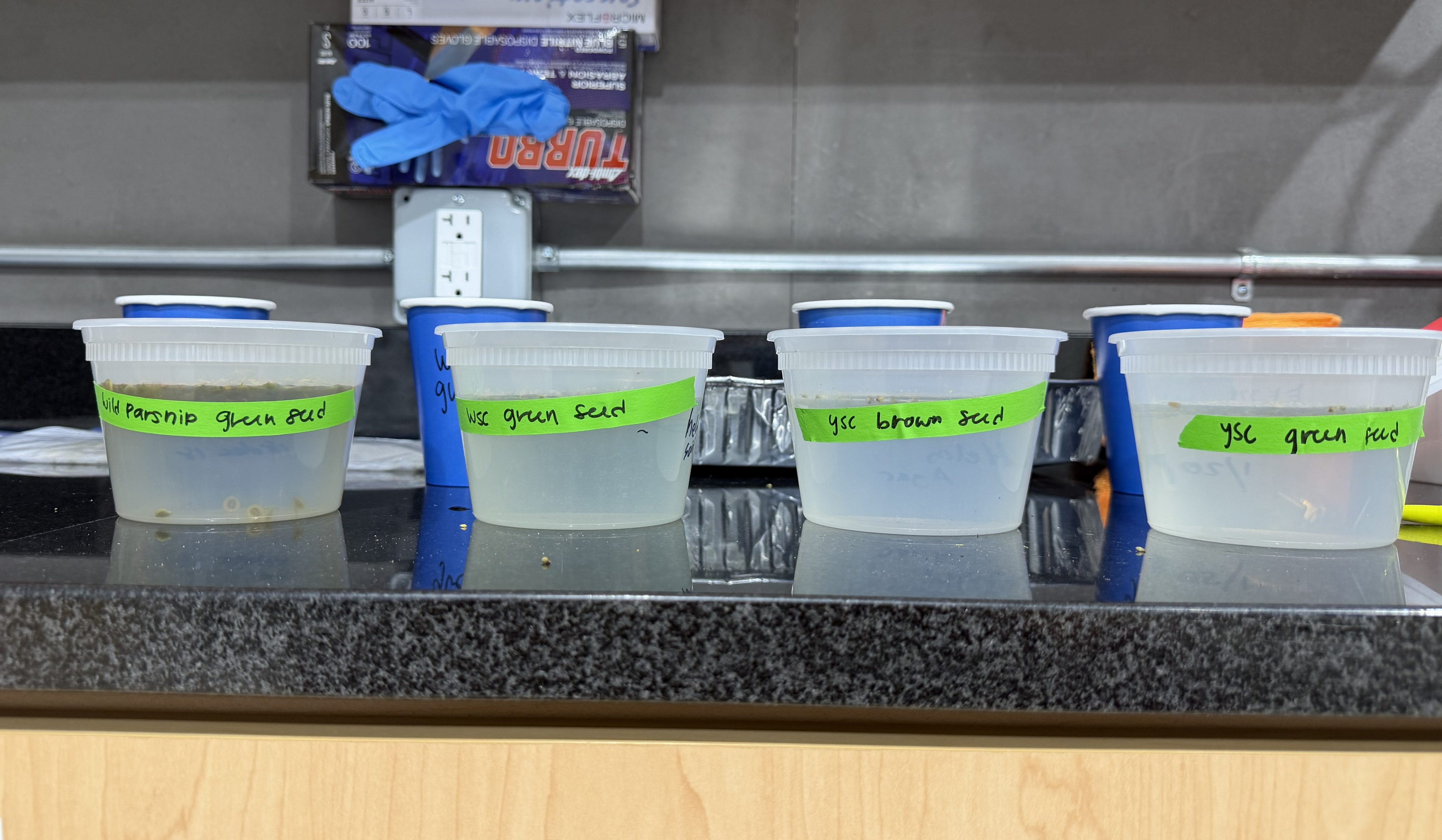
To test the repeatability of the observation, a second float test was performed on the wild parsnip seeds and produced similar results. Once again, only a small portion of seeds sank while most remained floating.
Germination Test
The most direct measure of viability was a germination test.
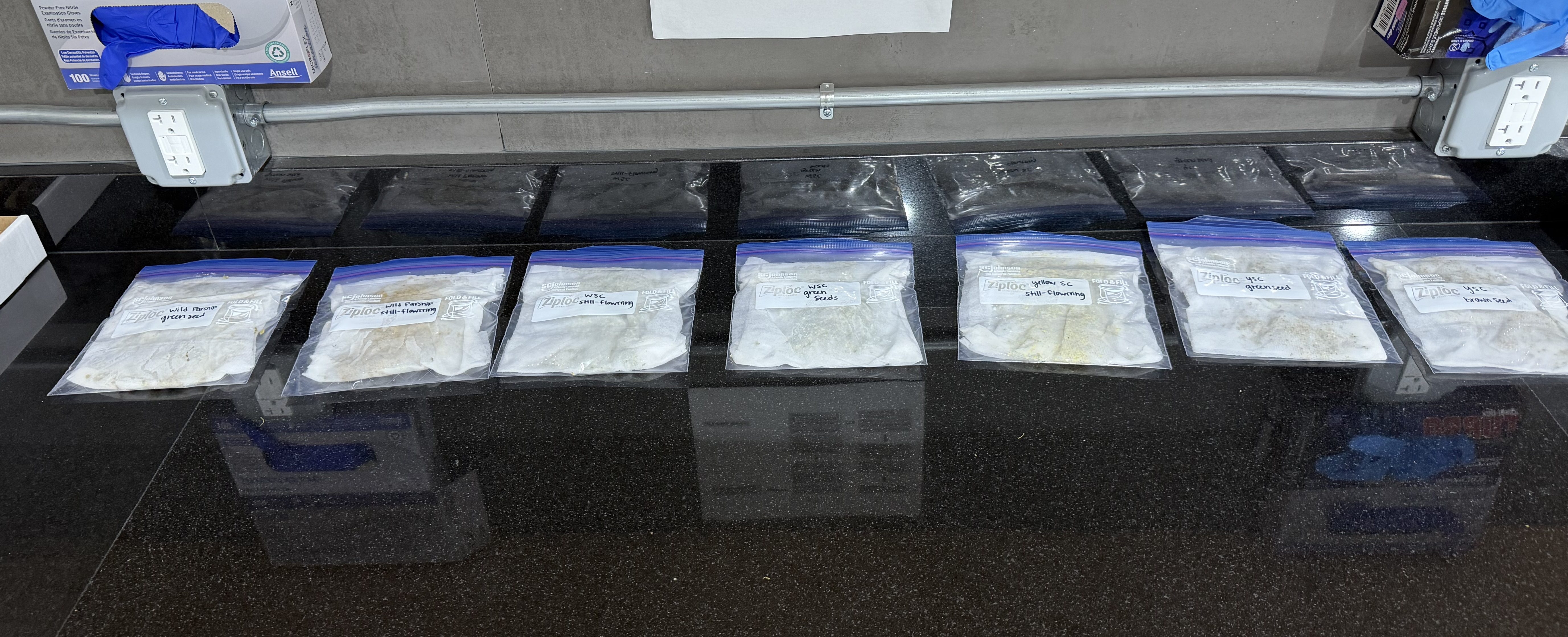
On September 30, seeds from all seven treatment groups were placed on damp paper towels, sealed in labeled plastic bags, and monitored for germination over a 15-day period.
Germination Results
| Treatment | Germination Observed? | Relative Amount |
|---|---|---|
| Yellow sweet clover – still flowering | No | None |
| Yellow sweet clover – green seeds | Yes | Low |
| Yellow sweet clover – browning seeds | Yes | High |
| White sweet clover – still flowering | No | None |
| White sweet clover – green seeds | Yes | Low |
| Wild parsnip – still flowering | No | None |
| Wild parsnip – green seeds | Yes | Low |
The treatments classified as “low” germination produced very few seedlings relative to the number of seeds tested. Each treatment contained more than 30 seeds.
Approximate germination counts were:
- Wild parsnip green seeds: 2-3 seedlings
- White sweet clover green seeds: 4-6 seedlings
- Yellow sweet clover green seeds: approximately 10 seedlings
Even among seeds that germinated, growth was limited. Seedlings remained small throughout the 15-day trial and produced neither substantial root systems nor true leaves.
By contrast, the yellow sweet clover treatment with browning seeds produced considerably higher germination rates, indicating that the seed had reached a much more viable stage of development.
Conclusions
These results suggest that timing matters when deciding whether spaded plants must be removed from a site. Plants that were still flowering produced no germinating seed in our study. Plants with entirely green seed produced only low levels of germination, and the resulting seedlings appeared weak. Once seeds began turning brown viability increased substantially.
Based on these observations, stewardship crews can likely leave spaded sweet clover and wild parsnip on site when plants are still flowering or when seeds remain completely green. However, when seed heads begin browning, the additional effort required to haul plants to a burn pile or disposal area appears justified.
Related Posts
Does Yellow Sweet Clover Resprout After Mowing?
Does yellow sweet clover resprout after mowing? The short answer is yes, but the story doesn’t end there. By tracking mowed plants at Nachusa Grasslands throughout the summer, this project found that early regrowth did not lead to long-term survival, offering practical insights on the effectiveness of mowing.

Wild parsnip (Pastinaca sativa) control
By Don Osmond, volunteer steward Wild parsnip is a monocarpic perennial, usually taking 2-3 years to flower. I chose a 4 acre area in southwestern Wisconsin to evaluate my control efforts over time. Habitats ranged from dry degraded prairie to mesic lowland planted with forage. Spring burns occurred in 2021 & 2023. All the work…

Weed management
By Bill Kleiman, Director Nachusa Grasslands, TNC The recent GRN workshop was all tour based, with 5 themed tours that ran concurrently every two hours over two days. All participants could go on all 5 tours. I led the tour with the theme of weeds. We covered a lot of ground in footsteps and concepts.…
Something went wrong. Please refresh the page and/or try again.


