By Bryon Walters, conservation contractor
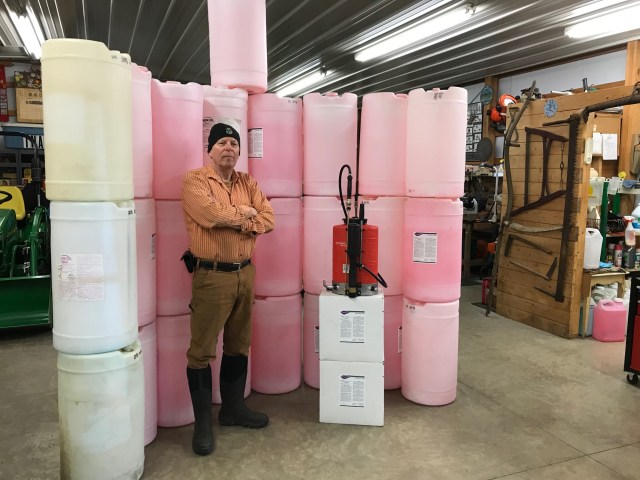
This past Winter I have applied 375 gallons of a 20% solution of Triclopyr 4 mixed with basal oil in 10 different natural areas. All of it, 2 ½ gallons at a time on my back. That’s 150 backpack sprayer loads.
It was all sprayed through one Birchmeier sprayer and without any leaks or breakdowns at all.
How does that happen? By taking good care of my equipment.
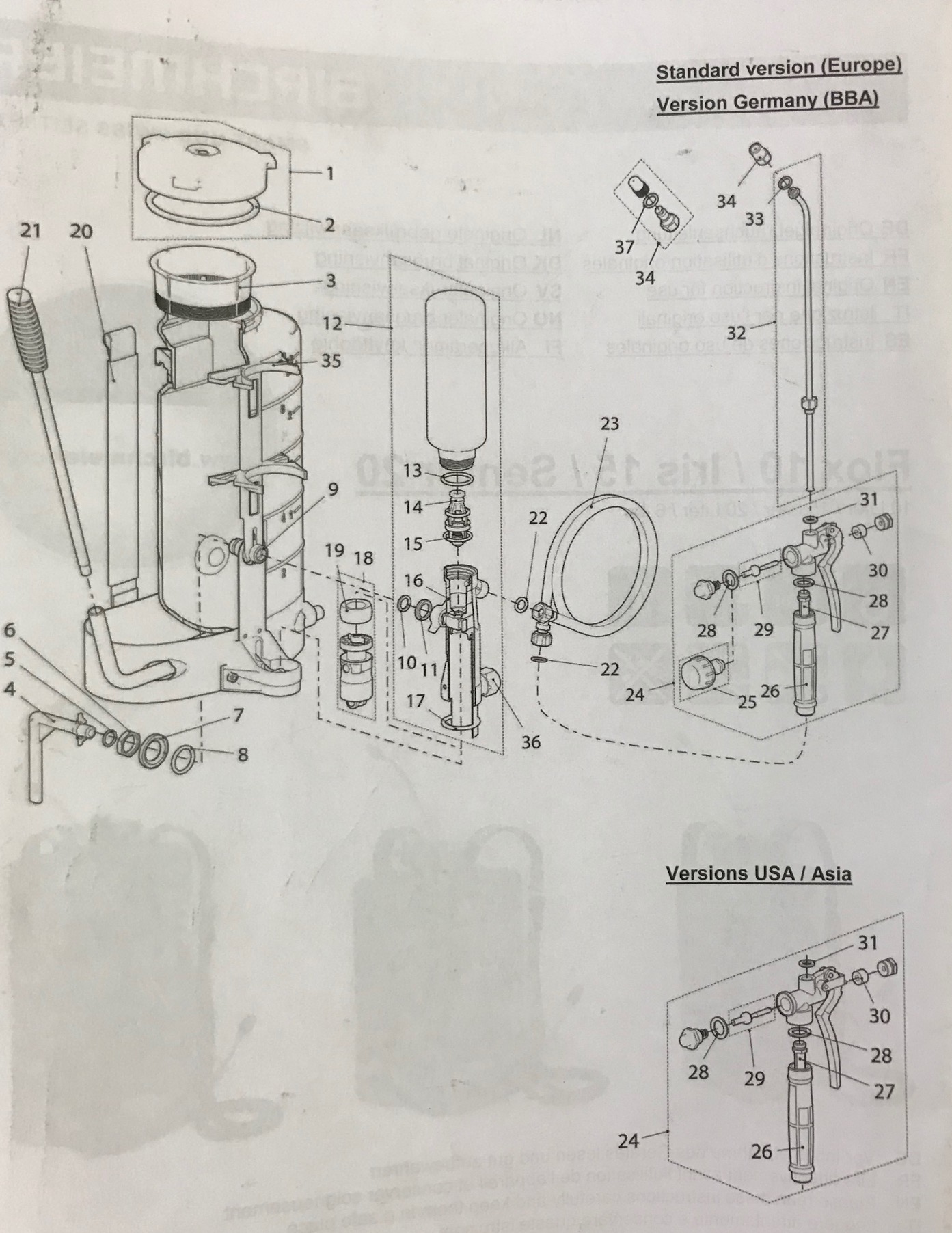
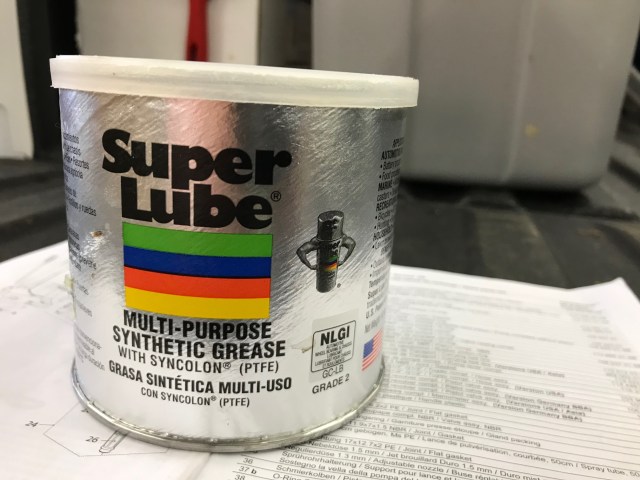
I purchased a new sprayer last fall. I have many sizes of Birchmeier’s, depending on the products that I’m spraying. For basal bark work, which is somewhat slow going, I use the smallest size sprayer that they make, which is the Flox 10, (2 ½ gallon.) I spray 2-4 loads a day. After taking it out of the box, I set up my iPad on my workbench and followed along a great U-Tube video demonstrating how to disassemble the sprayer. Since it was new and there was no chemical residue in it yet, I felt that was as good time as any time to learn how to take apart the sprayer. I have done it in the past several times, but never on a new sprayer. I hit the Pause button a couple of times until I could see every small o-ring and gasket described in the video. I added a small quantity of my Super Lube on a few parts. After reassembling it, I took it all apart again, this time without the video. Piece of cake.
I use dedicated sprayers with labels on them, meaning this sprayer will never spray anything but Triclopyr 4 with basal oil. No cross contamination, needless triple rinsing and over use of my sprayers. I always have the parts blowup chart and a small baggie of extra parts in my truck at all times. Usually I break them out to fix someone else’s sprayer on the tailgate.
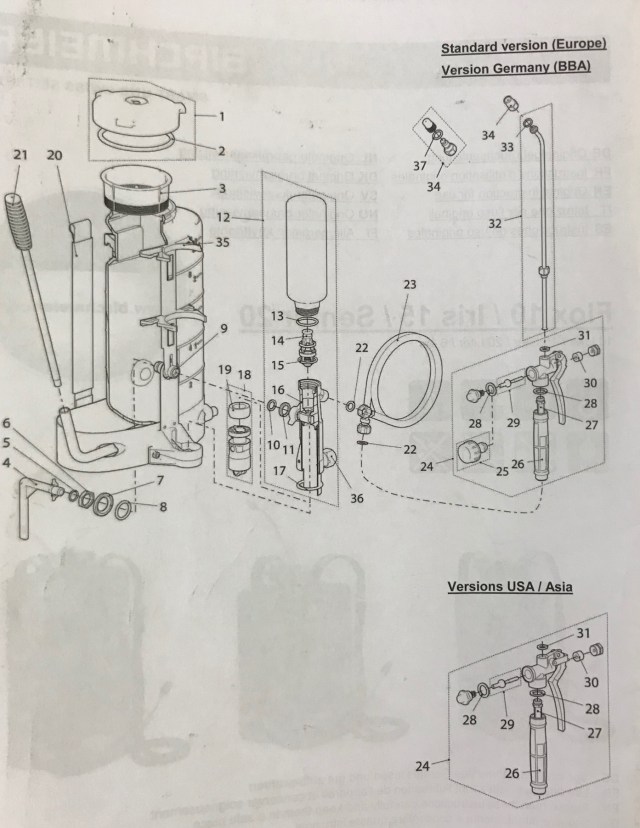
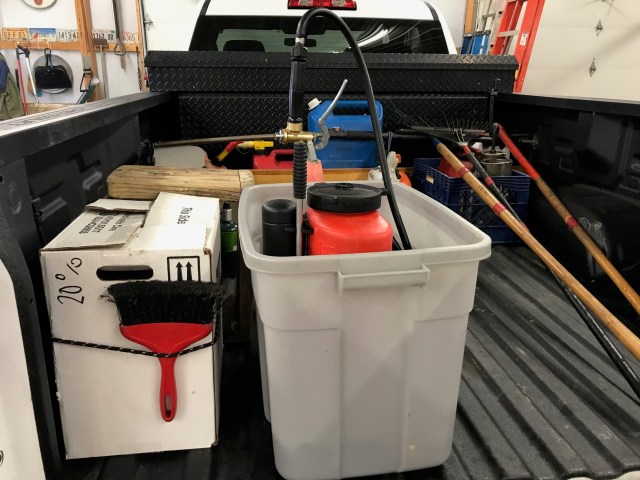
Now that the dormant basal sprayer season is over, I clean it all up. Put a gallon or so of warm soapy water in the tank, swish it around a few times, unscrew the brass adjustable nozzle, pump it up and spray the mixed solution into an empty jug. Repeat one more time or as many times needed so that nothing but a soapy solution comes out. Put the nozzle in the white strainer basket and rinse under warm water. Same for the lid. When finished, put some Super Lube on the lid gasket. If the lid gasket is really loose, warped or won’t reseat into the lid, discard it and replace with a new gasket. Put Super Lube on the new gasket. If your lid leaks during usage, the gasket is faulty. The tighter you close the lid, the more damage is being done to the gasket. I then take apart the sprayer and replace some of the o-rings and gaskets. Clean the white check valve. Tighten, but not overly, the hose connectors, outside brass tank valve, etc. When finished, put the sprayer into a tote or on a flat surface with the lid off. Let it dry out a week or so then put the lid back on when you walk past it. This maintenance work will go along way in helping you get your stewardship work done and less time in the field fixing leaks.
Now the fun part. How many exotic and mesic trees did I treat this winter with 150 back pack loads?
I tallied what I was able to spray in a typical area by counting and listing sizes sprayed with one load.
I spray the lower 6” of the trunk all the way around.
1st Typical 2 ½ gallon load sprayed:
25- Multi-flora Rose, 5-12 canes each plant
10-Japanese Barberry, 10-15 stems each plant
30-Honeysuckle shrubs of various sizes, small to mega large
15-Common Buckthorn trees
30-Glossy Buckthorn shrubs
2nd Typical 2 ½ gallon load sprayed:
32-1-3” DBH Exotic / Mesic trees
28-4-6” DBH Exotic / Mesic trees
16-7-12”DBH Exotic / Mesic trees
4-13-18”DBH Exotic / Mesic trees
I estimate that I sprayed about 50 of the 1st Typical loads and 100 of the 2nd Typical loads.
So in summary, the 375 gallons sprayed this many.
1,250- Multi-flora Rose
500- Japanese Barberry
1,500- Honeysuckle shrubs
750- Common Buckthorn
1,500- Glossy Buckthorn
3,200- 1-2” DBH Exotic / Mesic trees
2,800- 4-6” DBH Exotic / Mesic trees
1,600- 7-12”DBH Exotic / Mesic trees
400- 13-18” DBH Exotic / Mesic trees
TOTAL OF: 5,500 Shrubs and Buckthorns, 8,000 Exotic and Mesic trees.
Not bad for a winters worth of work. Did I mention, not a drop of chemical leaking on my back, on the ground or anywhere else. I am and have been convinced for many years that this type of solo stewardship work is highly effective, cost efficient, quiet, clean, (no CO2 chain saw emissions) and much easier than a winter of chain saw work. Triclopyr 4 with basal oil costs about $35.00 a gallon. So a 15 gallon drum costs about $525.00 and this lot of 25 drums cost about $13,125.00. There is and always will be a need for chain saw work, but there is no way you will get these kind of control numbers chain sawing as compared to basal bark spraying by one individual worker. The shrubs and trees that I sprayed will all be dead by the end of July.
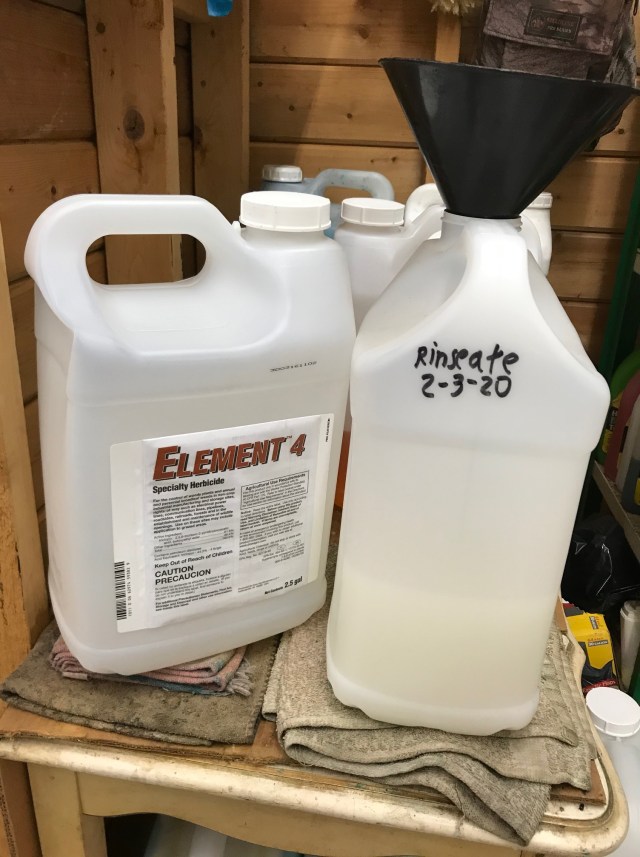
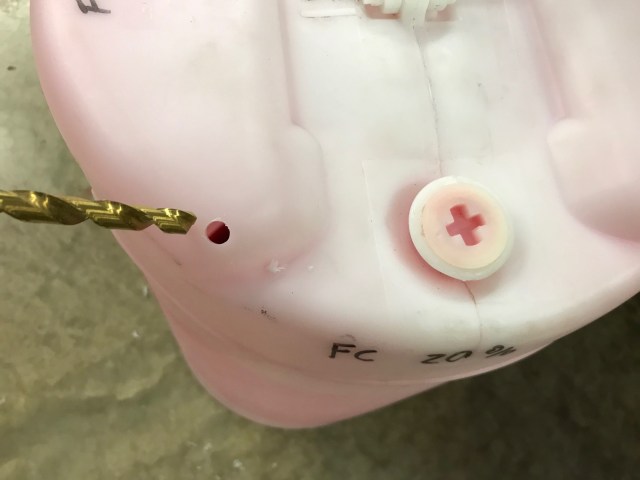
Finally, what to do with all those empty jugs and drums. I triple rinse the chemical jugs and pour the rinse-ate into an empty jug. Mark RINSE-ATE and date on the jug. I have 10 or so jugs. I will pour them into an empty 15 gallon drum and add the first Crossbow mix into that drum of rinse-ate later this Spring. The rinse-ate will all be gone by June. The drums are a little harder to deal with. I drill a hole in them to positively drain them. 25 “empty” drums yielded a gallon of product. If I was a real hero, I would triple rinse the 25 empty drums and drain them into an empty drum. I’m not that kind of hero! My recycle center takes the jugs and drums after I drain out all of the product that I can. It would be nice to return them to the dealers to reuse. We use to do that in the 90’s. Save a few good ones to store other chemical mixes in them. Mark on the drum what’s in there and date it. Use caution with all herbicides and take pride in your work!