By: Clara Barton
Key Takeaways
- Milestone + Garlon 3A + MSO provided the good suppression but caused extensive non-target damage.
- Crossbow caused rapid injury but failed to provide lasting control.
- Telar XP provided the best balance between suppression and selectivity.
- Adding Talent surfactant appeared to increase the speed of injury.
- Physical removal (spading) alone was ineffective because of extensive underground rhizomes.
- Milestone alone appeared to have little impact which was the catalyst for this study.
- Telar XP paired with a non-ionic surfactant will likely be our approach for future management.
Background
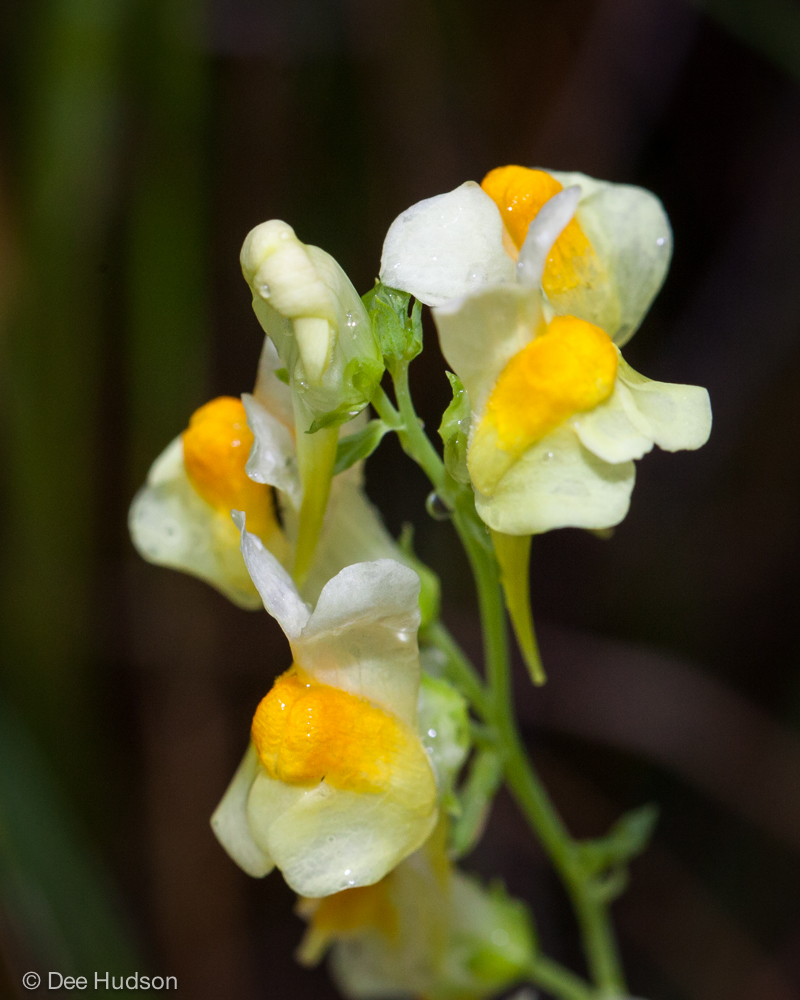
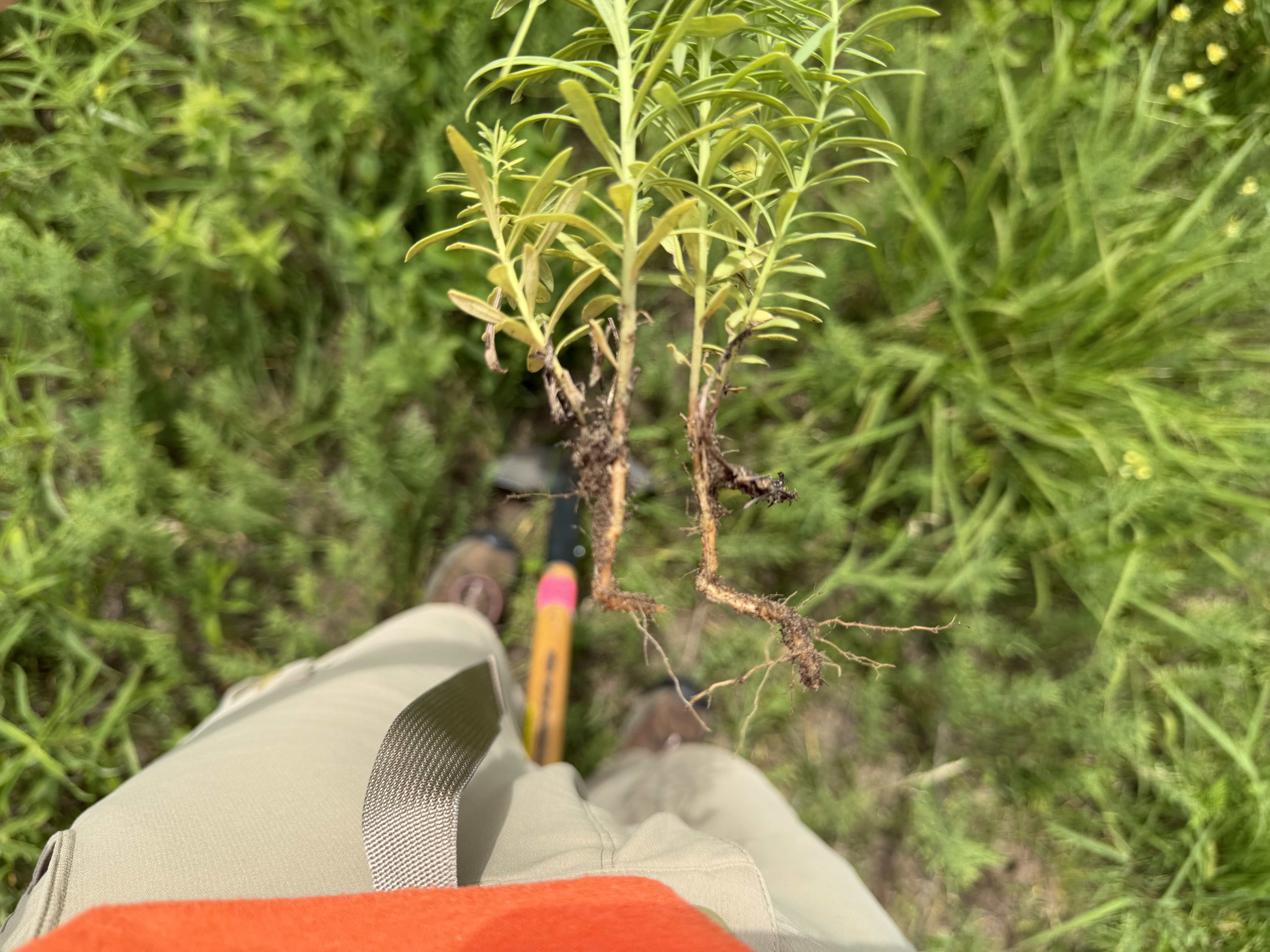
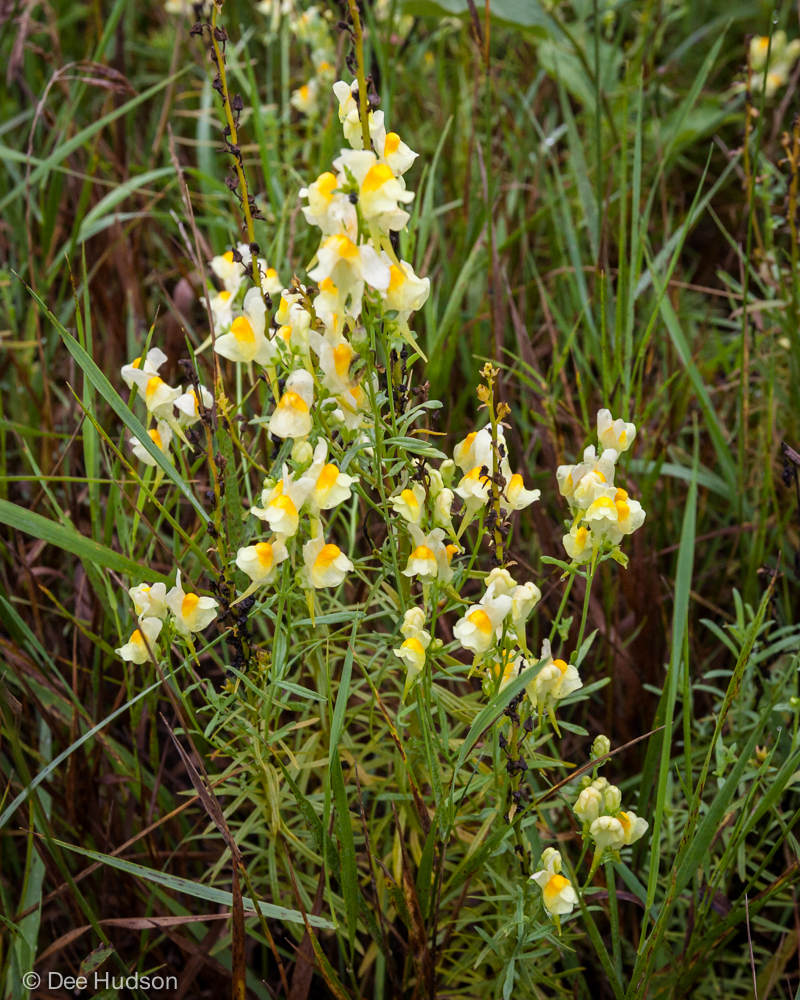
Butter and Eggs (Linaria vulgaris) is a rhizomatous perennial invasive plant capable of spreading through extensive underground root systems. Established populations can be difficult to control because new shoots may emerge from surviving rhizomes long after aboveground stems have been injured or removed.
At Nachusa Grasslands we have noticed Milestone treatments seem to have no impact on this plant. Mike Carr, long-time volunteer steward, started looking into other solutions. His research led him to Telar XP, which produced promising results in several infestations. During visits to these treatment areas from last year, we observed substantial differences between sites treated only with Milestone and sites that later received Telar XP. One area receiving the combined treatment remained largely free of Butter and Eggs a year after treatment, while nearby infestations remained visible. These observations became the foundation for the treatment comparisons included in this project.
Mike’s observations also raised several management questions. Telar appeared promising, but it was unclear how it compared to other treatment options. I was also interested in whether adding a surfactant would improve Telar performance, how herbicide treatments compared to physical removal, and whether the apparent benefit of applying Telar after Milestone could be reproduced in a separate infestation.
This summer, I evaluated seven treatment approaches. Two of these were meant to replicate Mike Carr’s experiment from last year and the other 5 were meant to test other solutions. This weed is not a major problem at Nachusa Grasslands however there are some spots it is persisting in. Testing these treatment options will help us decide how to tackle this plant going forward.
Experimental Design
To compare treatment effectiveness, two large patches of Butter and Eggs infestations were divided up allowing for easy comparison. Site 1 was dedicated to trying new treatments while site 2 was mainly used to recreate Mike Carr’s experiment.
Site 1
| Plot | Treatment |
|---|---|
| Q1 | 0.5% v/v Milestone + 1% v/v Garlon 3A + MSO |
| Q2 | 2% v/v Crossbow + MSO |
| Q3 | 2 g/gal Telar XP |
| Q4 | 2 g/gal Telar XP + Talent surfactant |
| Q5 | Spading |
Site 2
| Plot | Treatment |
|---|---|
| A | Milestone + MSO |
| B | Milestone + MSO followed by 2 g/gal Telar XP + Talent surfactant after 2 weeks |
Results
Milestone + Garlon 3A + MSO
This treatment produced the greatest level of suppression observed within the study. By mid-August, Butter and Eggs was largely absent from the treatment area and no evidence of regrowth remained. Surrounding vegetation was also heavily impacted, with much of the treated area appearing dead or severely injured
Crossbow
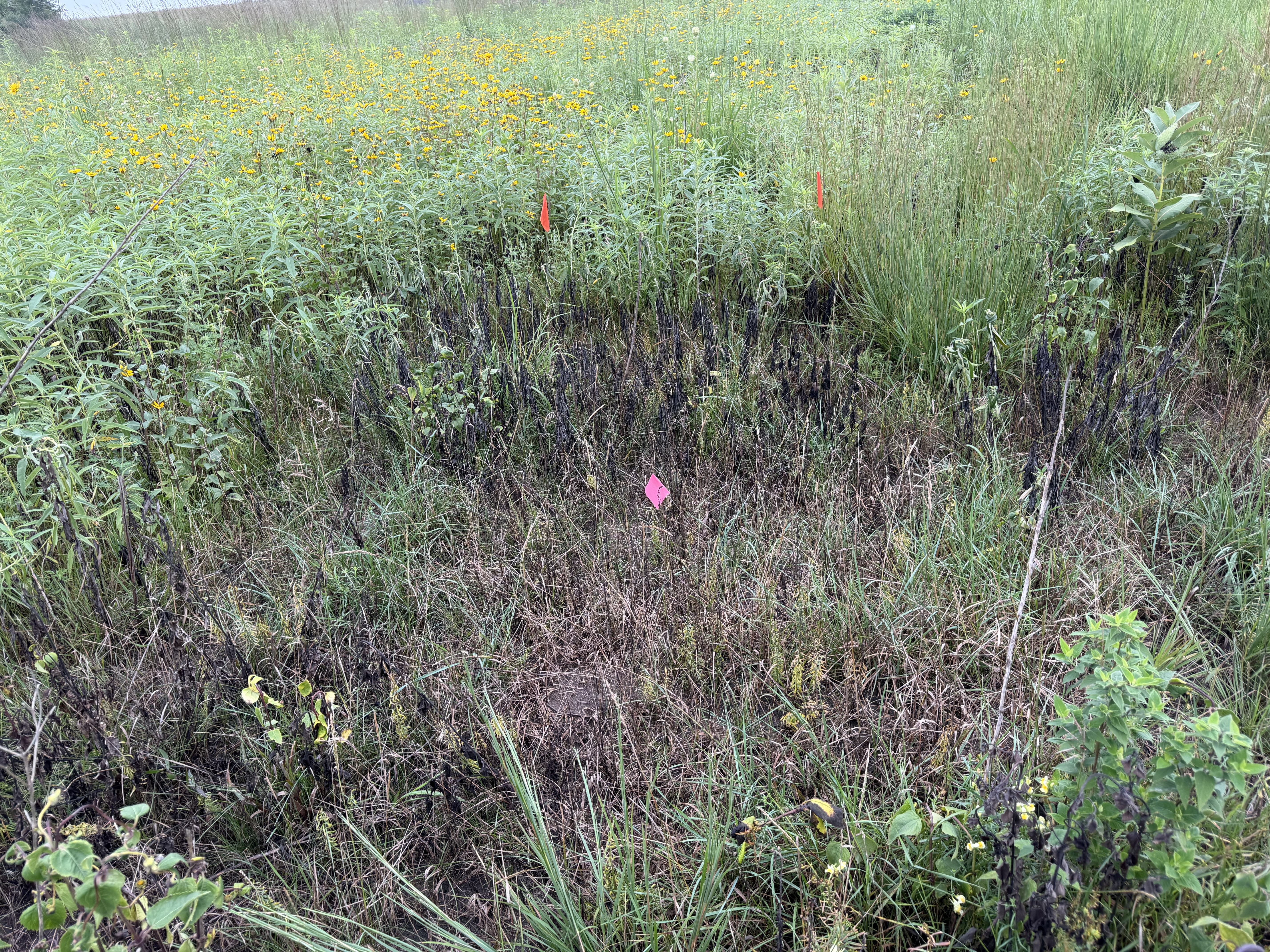
Crossbow produced substantial early injury. Plants yellowed rapidly and appeared unlikely to recover during early monitoring visits. By August, however, Butter and Eggs stems were again abundant throughout much of the treatment area. Many plants appeared healthy and vigorous despite the earlier symptoms, and the infestation remained clearly visible within the plot.
Telar XP Treatments
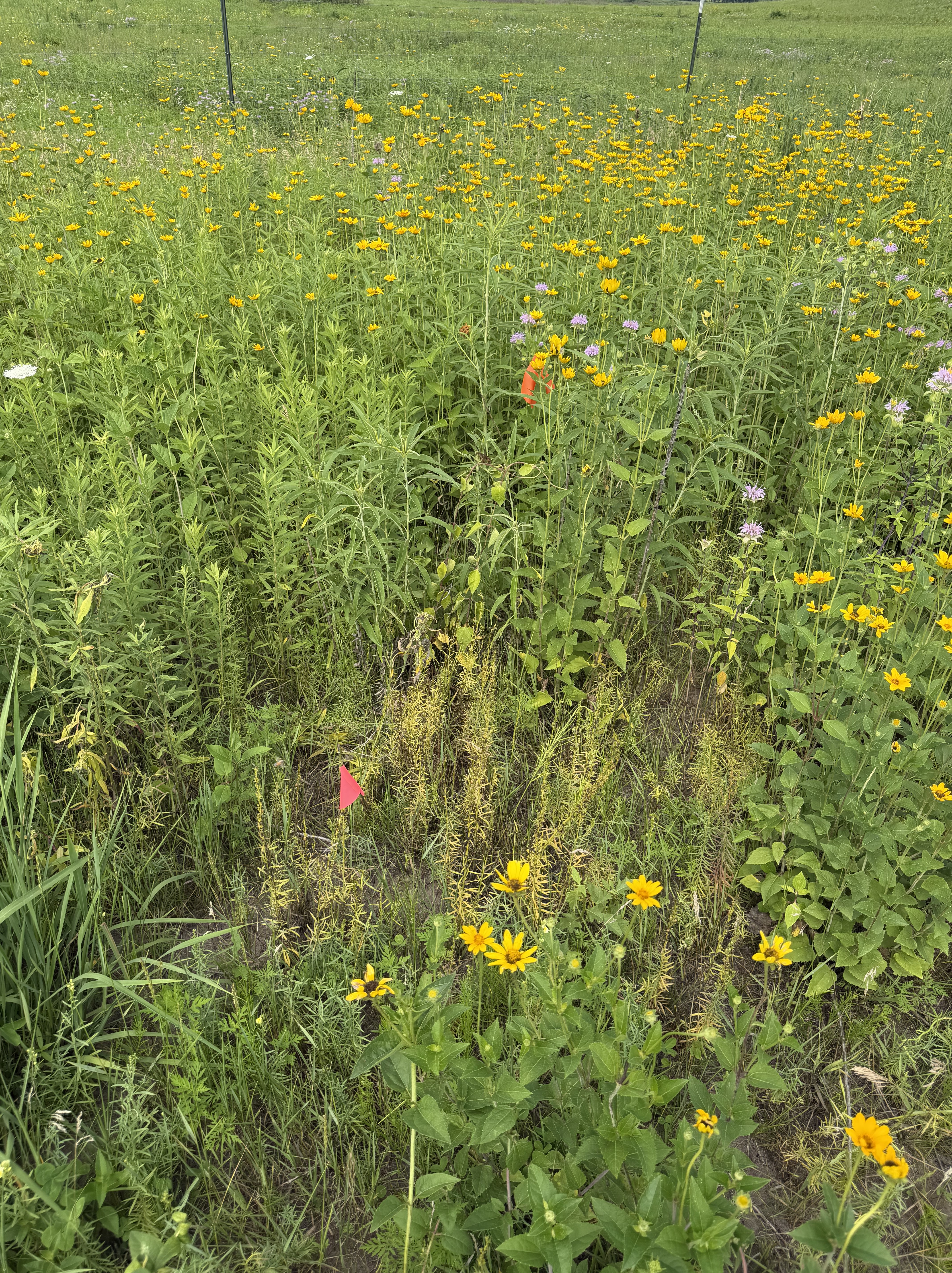
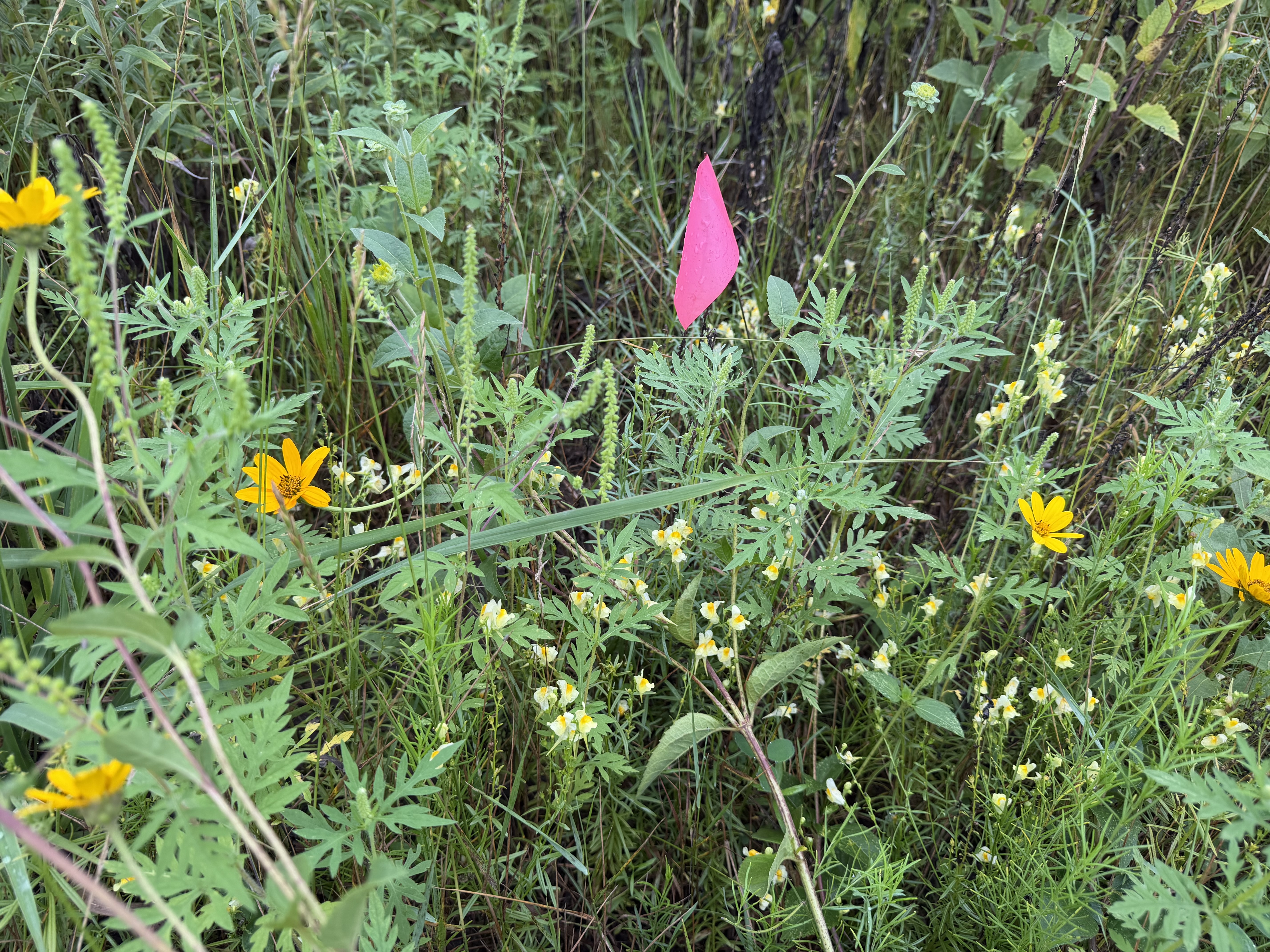
Both Telar XP treatments provided substantial suppression throughout the growing season. By August, most treated stems were blackened and dead while surrounding grasses and forbs remained largely unaffected. Plants treated with Telar XP and Talent surfactant appeared to develop symptoms sooner than those treated with Telar XP alone, though by August both treatments showed similar levels of suppression.
Spading
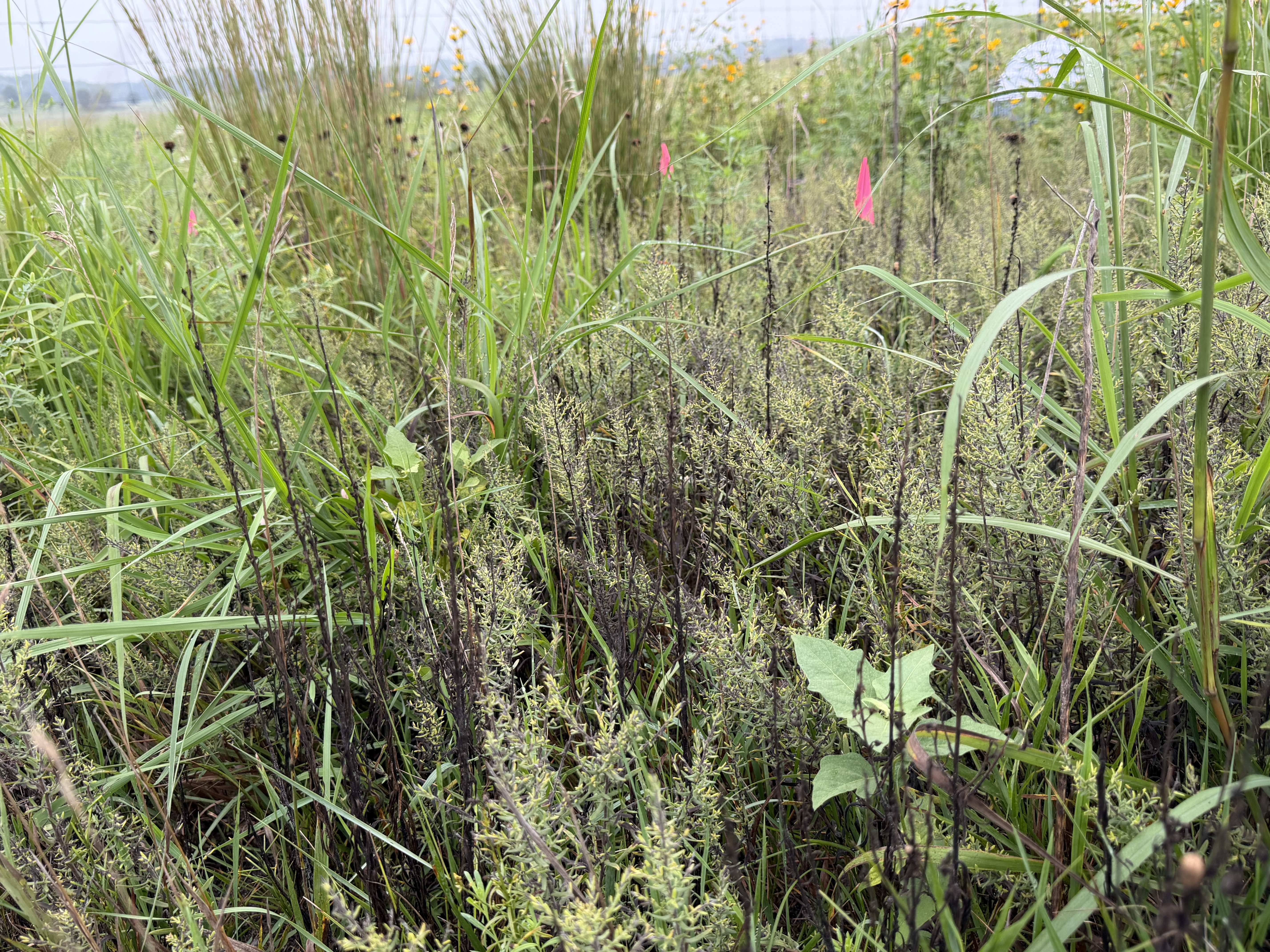
Physical removal produced the weakest results of any treatment included at Site 1. Numerous shoots emerged throughout the treatment area following spading, and the infestation appeared to recover rapidly. Complete removal of belowground structures proved difficult, and surviving roots produced new growth throughout the season.
Milestone Treatments
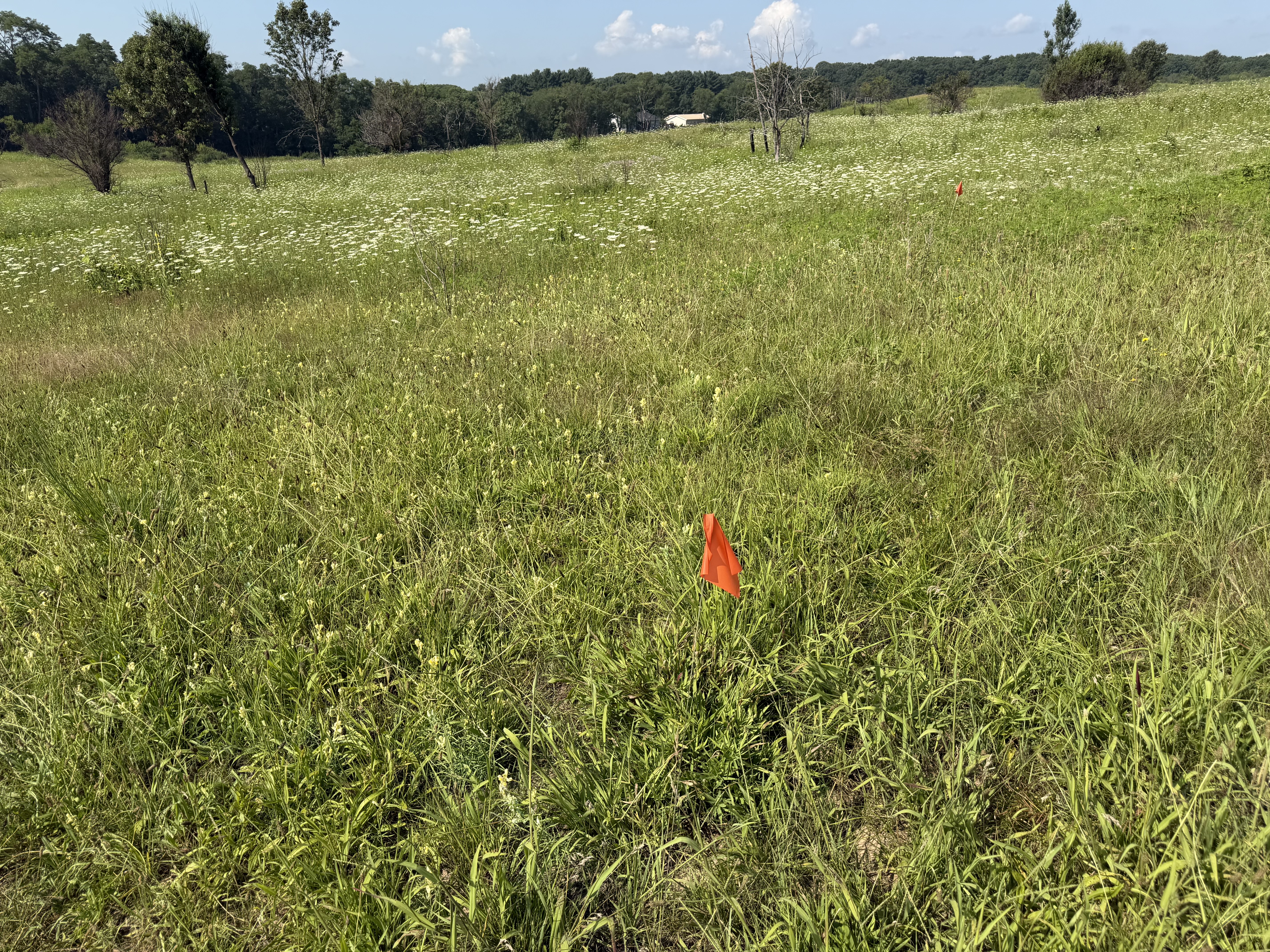
The Big Jump infestation provided an opportunity to compare Milestone alone to Milestone followed by Telar XP and Talent surfactant. Plants treated only with Milestone remained abundant and continued flowering throughout the season. In contrast, flowering largely ceased in the area receiving the follow-up Telar XP treatment, and much of the infestation became difficult to locate by mid-August. The Milestone followed by Telar XP treatment also appeared to produce symptoms more rapidly than the Telar XP treatments at Site 1.
Discussion and Conclusions
Interpreting the control of Butter and Eggs is complicated by the plant’s extensive rhizome system. Many treatments produced obvious aboveground injury during the growing season, but visible damage does not necessarily indicate long-term control. Because this study was monitored for only a single season, the results should be viewed primarily as measures of aboveground suppression rather than definitive evidence of rhizome mortality.
The presence or absence of in-season resprouts may provide some indication of how thoroughly a treatment affected the underground root system. Treatments that produced little or no regrowth likely impacted rhizomes more effectively than treatments where plants recovered quickly. However, because Butter and Eggs can store substantial resources belowground, even heavily damaged populations may persist for some time before fully recovering or dying. As a result, caution should be exercised when interpreting a single season of observations.
The Milestone + Garlon 3A + MSO treatment produced the greatest level of suppression observed during the study, with no observable resprouts appearing within the treatment area. However, it also caused extensive injury to surrounding vegetation. Because Butter and Eggs often grows intermixed with desirable prairie species, broad use of this treatment would likely create substantial areas of bare ground and could increase opportunities for reinvasion by other undesirable species.
Crossbow produced a very different result. Plants initially appeared unlikely to recover, but by August the infestation remained readily visible throughout much of the treatment area. These observations suggest that the treatment caused substantial injury to aboveground growth while having a more limited impact on the underground rhizome network.
The Telar XP treatments provided the best balance between suppression and selectivity. Both treatments substantially reduced the infestation while leaving most surrounding vegetation unaffected. Plants receiving Telar XP and Talent surfactant appeared to develop symptoms sooner than those receiving Telar XP alone, although differences between the treatments became less apparent later in the season. A small number of green stems remained within both plots. Because the original infestation was dense, it is difficult to determine whether these stems represented true resprouts or simply plants that received incomplete herbicide coverage during application.
Observations from Big Jump further supported patterns previously reported by Mike Carr. In both cases, Butter and Eggs treated with Milestone followed by Telar XP showed substantially greater suppression than populations treated with Milestone alone. Similar results were observed in treatment areas established by Mike in previous years and in the Big Jump comparison monitored during this project. Together, these observations suggest that the treatment sequence consistently outperforms Milestone alone, which showed little evidence of suppression.
One question raised by these observations is why Butter and Eggs appeared to respond more strongly when Telar XP followed a Milestone treatment than when Telar XP was applied alone. The Milestone-only treatment showed no evidence of suppression, yet plants treated with Telar XP after Milestone appeared to decline more rapidly than those treated with Telar XP alone. This suggests that Milestone may be affecting the plant in ways that are not immediately visible aboveground or may be interacting with the follow-up Telar treatment in a way that enhances control. The mechanism responsible for this response remains unclear and warrants additional study. From a management perspective, however, the approach presents an important tradeoff. While the results were promising, applying two separate herbicide treatments requires additional field visits and may be less practical than a single well-timed application of Telar XP.
The patterns observed throughout this study also highlight the importance of herbicide residual activity. Crossbow produced rapid injury shortly after application, but much of the infestation recovered by August. This response is consistent with a treatment that effectively injures existing shoots but provides less prolonged suppression of emerging growth. In contrast, both Telar XP treatments continued suppressing Butter and Eggs throughout the growing season despite initially appearing less dramatic. Telar XP (chlorsulfuron) is known for providing both foliar and residual control, which may help explain the continued suppression observed in these plots. The Milestone + Garlon 3A + MSO treatment produced no observable resprouts, potentially due in part to the residual activity of aminopyralid, the active ingredient in Milestone. For a rhizomatous species such as Butter and Eggs, herbicides that remain active long enough to affect emerging shoots and underground buds may ultimately provide greater control than treatments that primarily produce rapid top-kill.
Based on this year’s observations, Telar XP combined with a non-ionic surfactant provided the best balance between suppression and selectivity. The treatment substantially reduced Butter and Eggs while causing minimal injury to surrounding vegetation. At the same time, the strongest suppression observed during this project occurred where Telar XP followed a Milestone treatment, lending further support to observations previously made by Mike Carr. Although the mechanism behind this response remains uncertain, the consistency of the pattern across multiple infestations suggests that the treatment sequence deserves further investigation.
This project began with a relatively simple question: which herbicide works best on Butter and Eggs? The results suggest that the answer is more complicated than expected. Some treatments produced rapid visible injury but failed to provide lasting suppression, while others continued affecting the infestation long after application. While the crew’s mixture did work, I think the use of a more selective herbicide like Telar XP should be our strategy for this weed in the future. Special thanks to Mike Carr for starting this experiment in 2025 and supplying me with his insights and observations to continue it this year.


Thanks for this write-up!
I’m personally haven’t decided whether I go after this one or not, and if so, where and where not. I’m not convinced that it actually suppresses native conservative vegetation outside of situations where it has a head start on open ground, and I’ve seen some cases where it’s been rendered insignificant by strengthening diverse prairie/savanna sod (though it persists and follows wood betony around) with frequent dormant burning and no grazing. Even when there isn’t much, it is conspicuous if it blooms at all.
It’s very understandable to me why people go after this one. I may yet as well, and this would help.
I have not found this species to be a problem in Northwest Cook County. We had a few small populations 17 years ago at Schaumburg Road grasslands ( and Woodlands). Although I have not measured them, subjectively I have not seen any noticeable change. I have not treated them.