By Bill Kleiman, Nachusa Grasslands Director w The Nature Conservancy
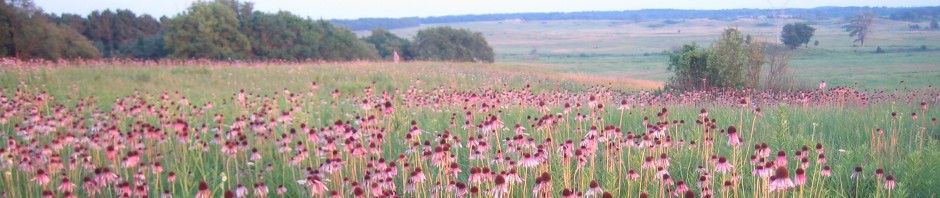
Above, 17 days after a carpet roller herbicide wick drove over cottonwood saplings.
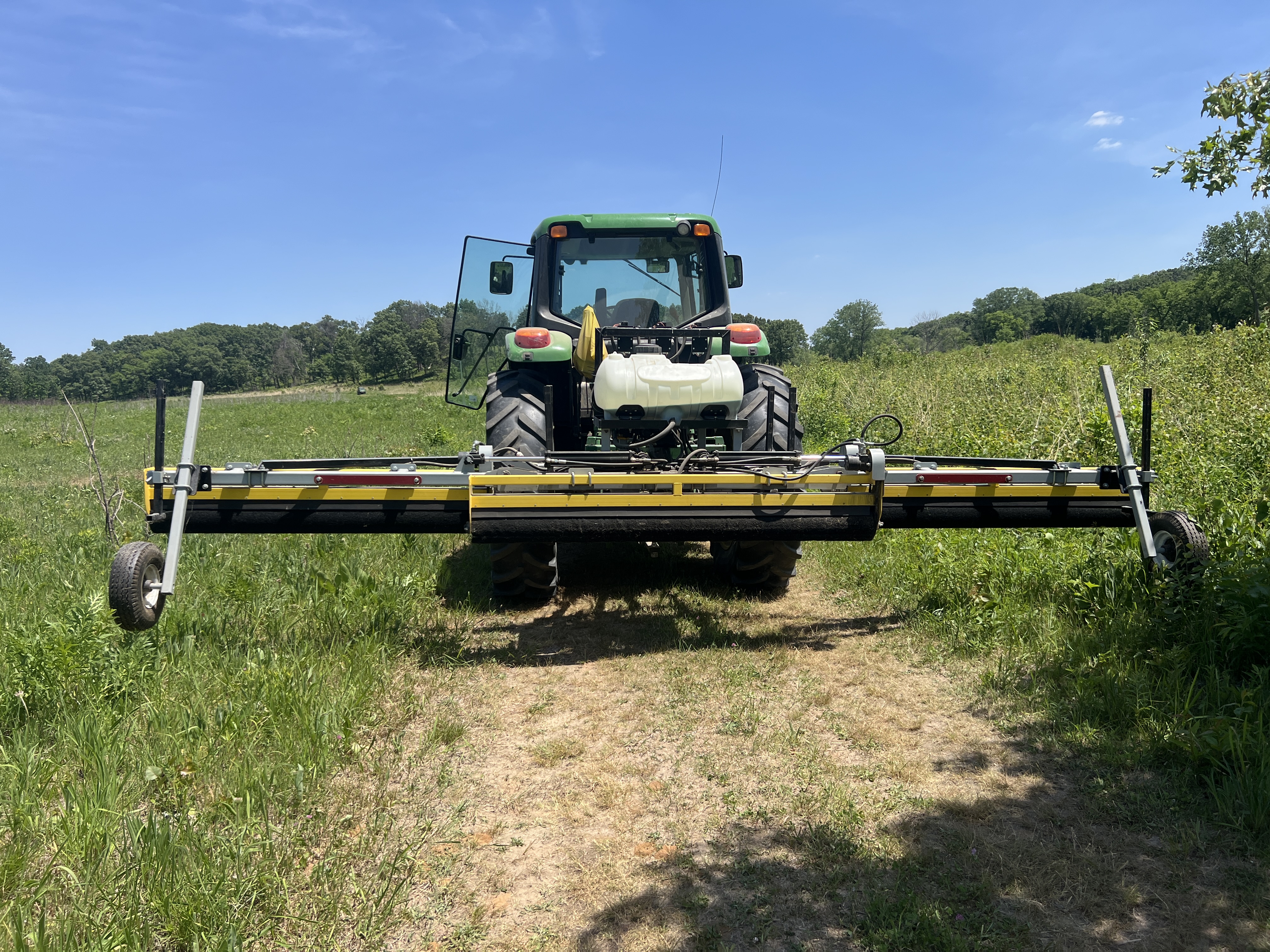
This is a Grassworks 22 foot wide carpet wick. A carpet on a long spool is soaked with glyphosate and it slowly spins as you drive through a brush thicket. Hopefully, you get enough herbicide on the brush to kill some of it, and you damage modest numbers of the good plants trying to grow under the brush.
Spoiler alert: We see modest success using this tool.
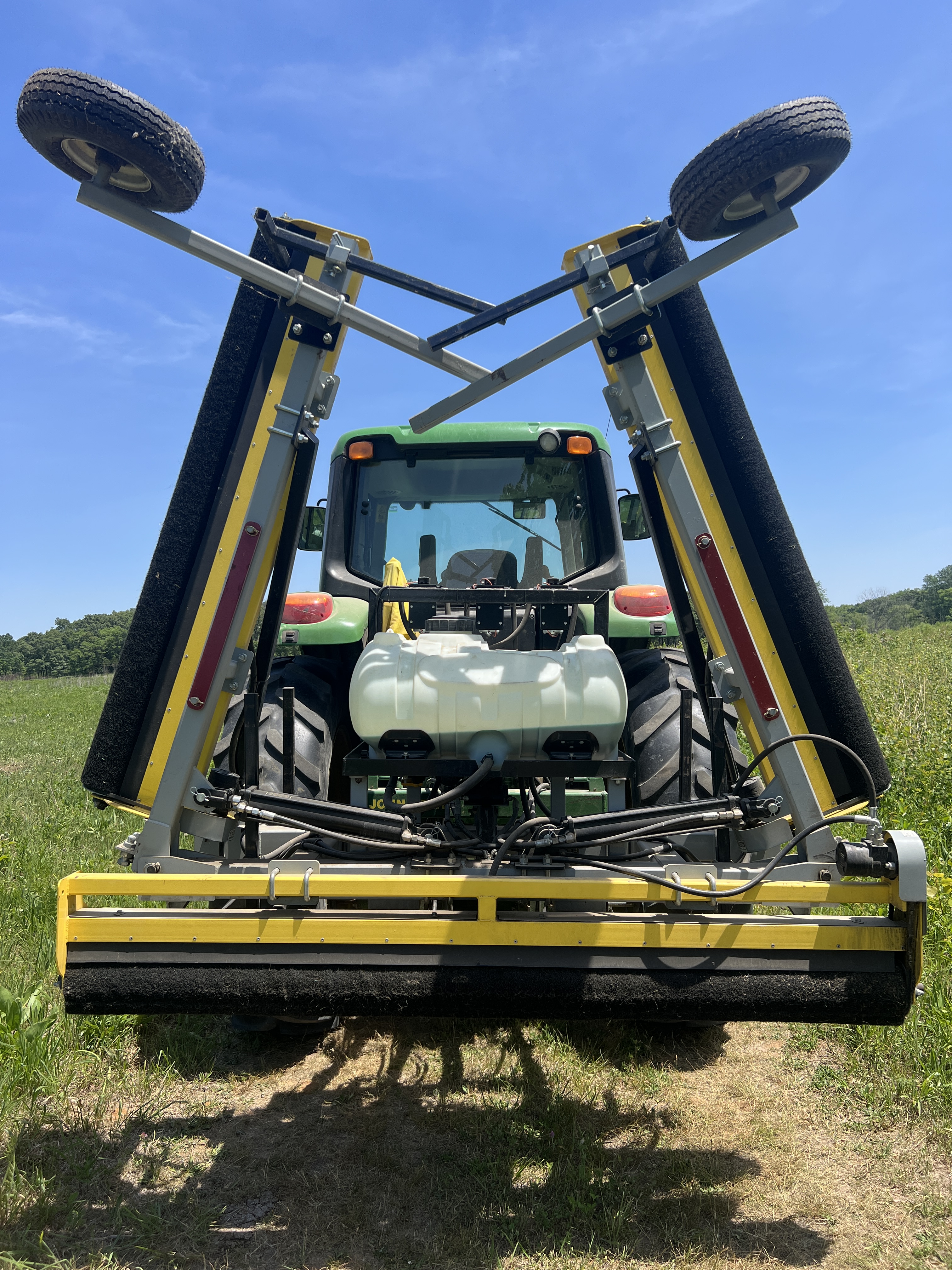
In its folded up travel position.
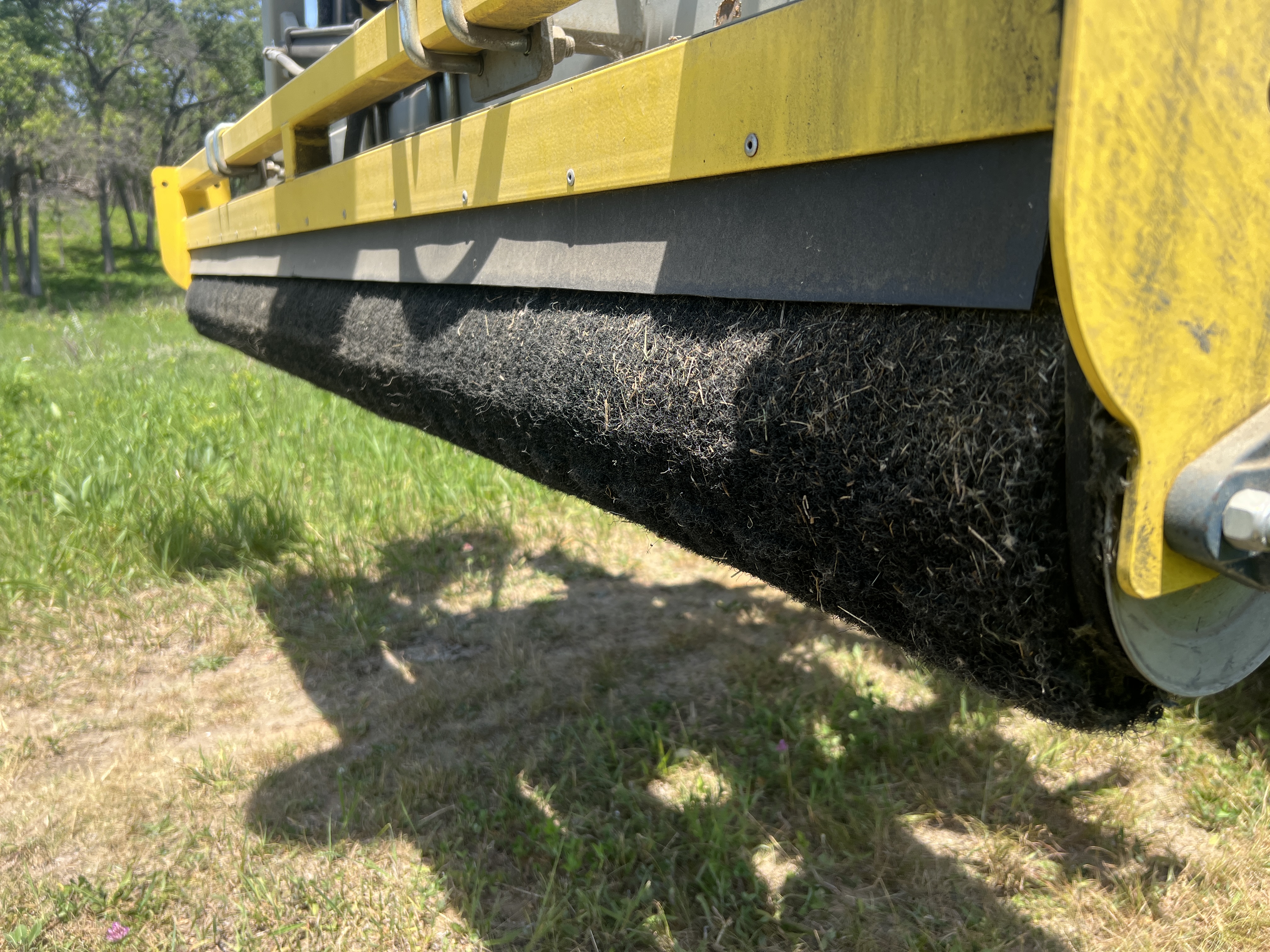
The carpet roller wick is soaked with glyphosate and spins slowly such that as you drive forward you are getting more herbicide on the foliage of the brush.
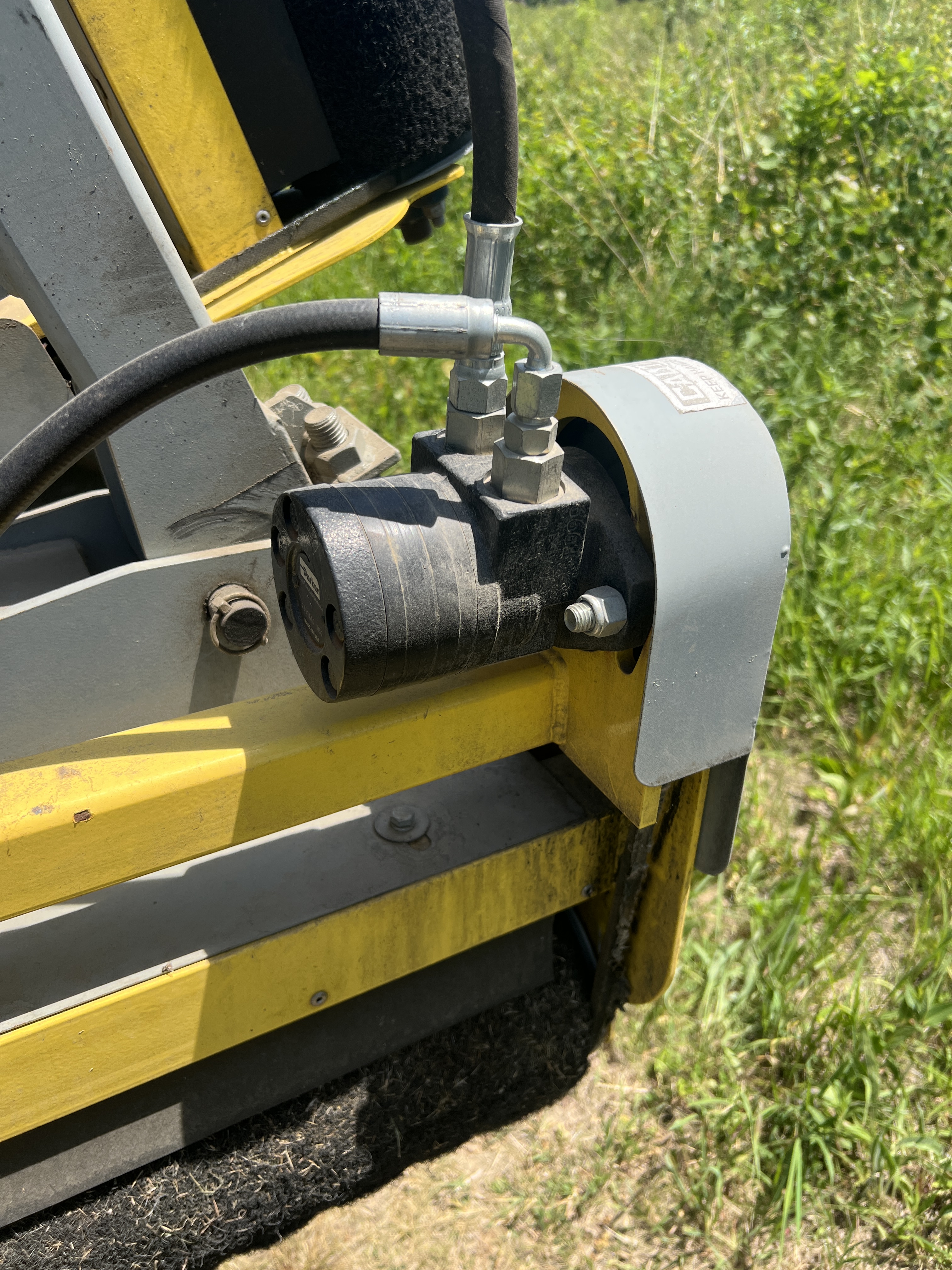
The carpet is spun with the little hydraulic motor spinning a rubber belt below the gray shield that turns the carpet roller.
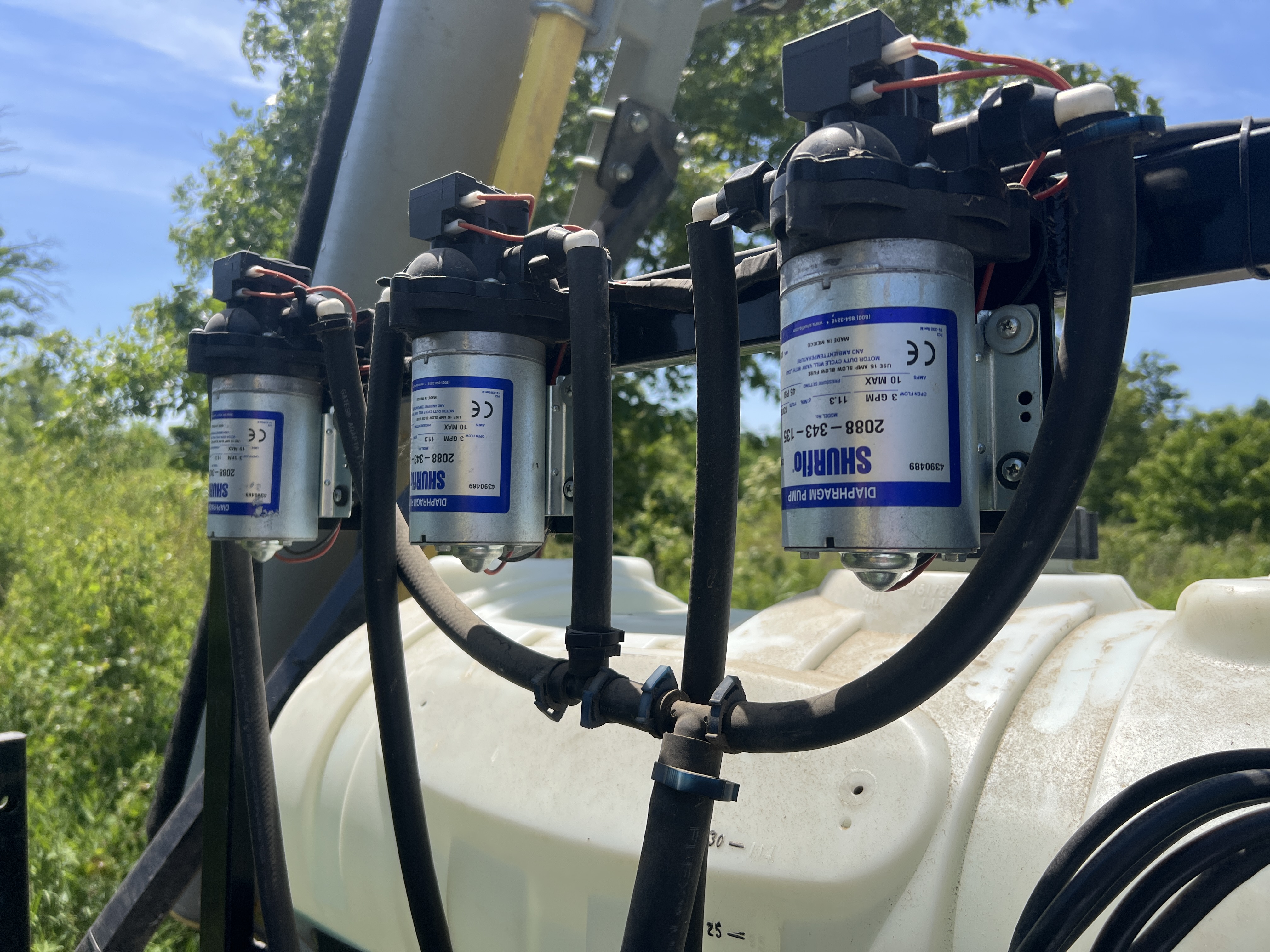
In the cab of the tractor is a wired switch to start these electric herbicide pumps which squirt the glyphosate solution onto the carpet for a few seconds. Then about 20 seconds later you give another squirt of herbicide on the roller. You want the roller wet enough that it drips a little, but not a lot.
Results of a carpet wick on brush follows:
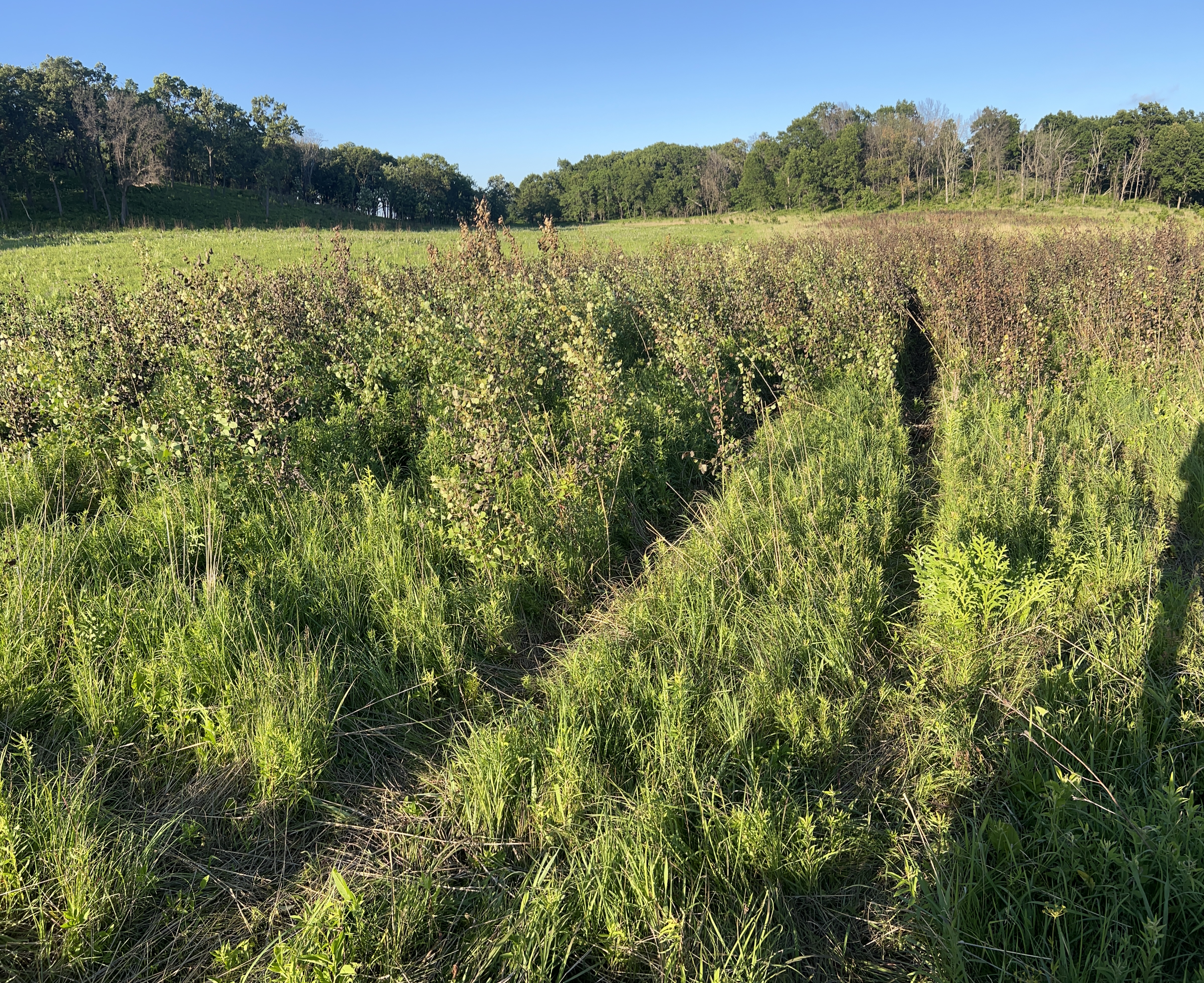
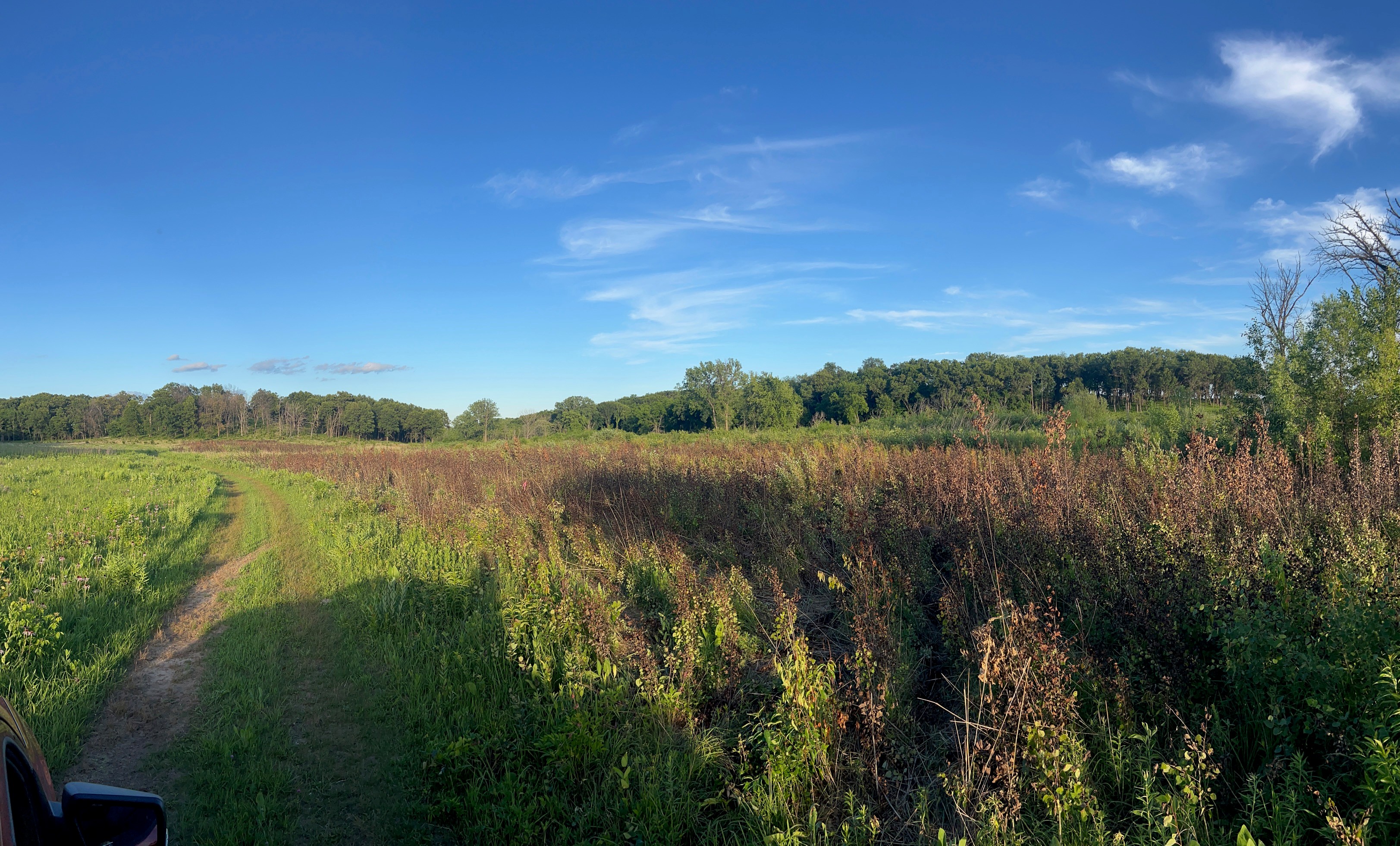
June 17, 2026 photo of a large patch of cottonwood saplings treated with a carpet roller wick two weeks before on June 2 and June 3, 2026. I used 33% glyphosate, 3% imazapic (Journey), and 10% LI700 Non ionic surfactant, and choice weather master water conditioner.
I wicked this patch two days in a row because the first day I did not use much surfactant in the mix. I think the best mix would be thick, like pancake batter, so that the roller could apply more herbicide and drip less. But the surfactant at ten percent still seemed to leave the solution looking watery. If you have used these before let us know how it went for you.
You can see the browned out cottonwood saplings which are about five foot tall. Some are alive. Maybe the browned out cotonwoods will still be alive next spring. We tagged some of the brown ones with tree paint to see how they fair next spring.
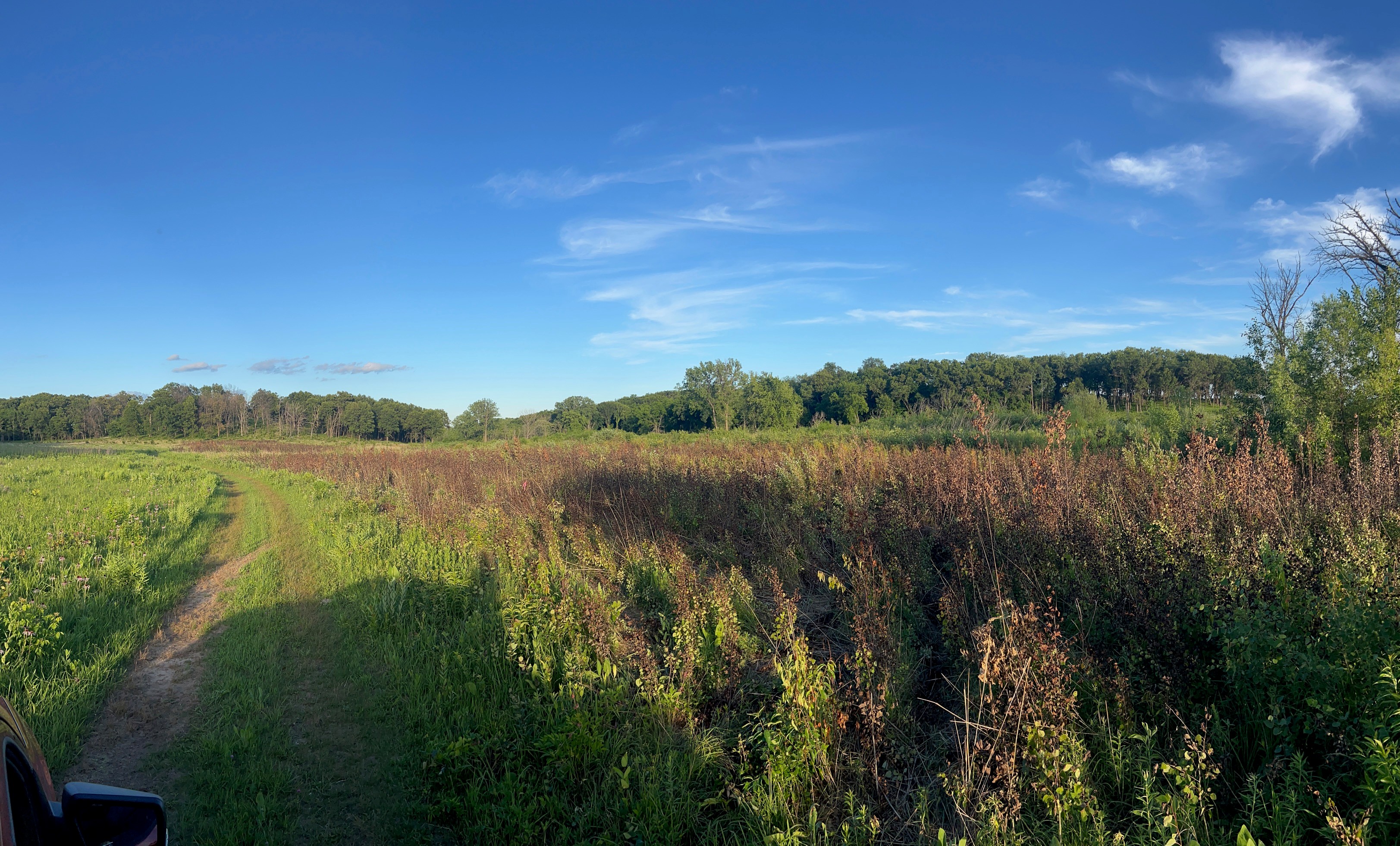
Above is that opening photo again after 17 days. Lots of brown cottonwoods now. If a bunch of those are dead I would call it a success. If they are just browned out and will recover later then not so much. We marked some individuals that look dead and will check on them this fall or next spring to see if they died. Applying blue tree marking paint is a good way to tag them. Flagging tape blows off.
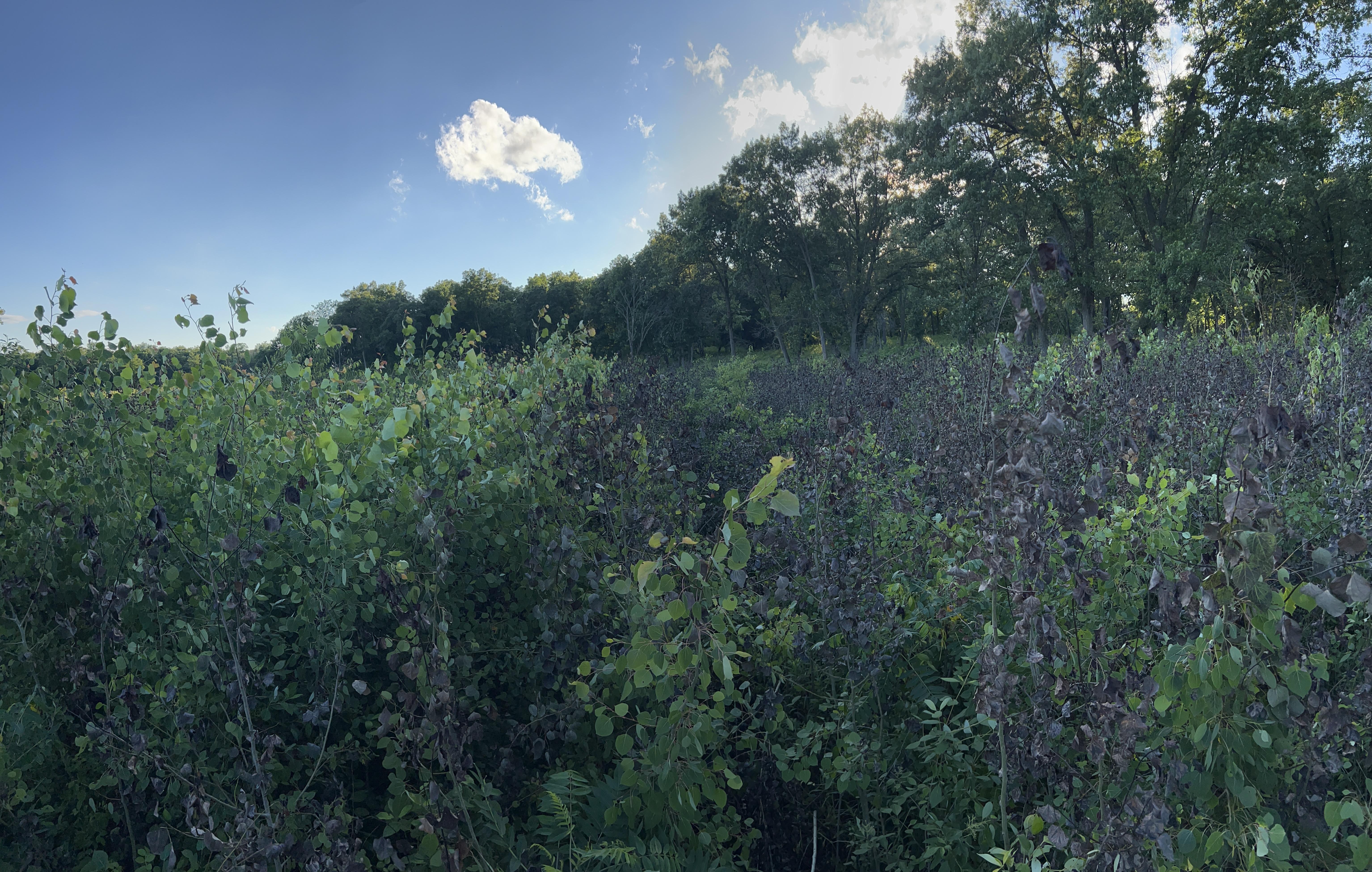
A different unit. Above is the June 3 carpet wick work results on June 17, 2026. This is the Fen unit aspen clone. It was 10 foot tall! I had to run the wick at it full height so the stems would not break the wick. The results were some browned out, but I think the plants were too tall and robust to be heeled by a bit of glyphosate. We will brush mow the patch this winter, burn the unit again, and perhaps try the wick again.
For the wick to work you want the brush to be above the prairie, but not too tall. You don’t want big woody stems in there that wreak havoc on the tractor and wick. I plan to keep bringing this tool out to see what it can do.


 grassland restoration network
After OCT 15 this would be a god tool for large established Reed Canary grass stands and Phragmites as well and you probably would not need 33% Round up. How to make it like pancake syrup is a new one for me. Just thinking about other applications as a great tool! Farmers used to use Rope wicks for Dogbane in the old days amongst other scourges for farmers. I did not even know there was a modern tool available!
The Grass Works implements are primarily designed for herbaceous plant control but are well-built and can handle the woody weeds. The link shows some nice images of herbaceous plants being killed. Like Johnson grass being selectively targeted in a hay field. I agree that the implement could be used for RCG if the height was right. Ensuring that the target species is taller than the desired vegetation is the real trick! Timing is everything.
Most any glyphosate product will have a section in the label with specific language for wiper or wick applications. An example from Aquamaster: “operate this equipment at ground speeds no greater than 5 mph. Performance may be improved by reducing speed in areas of heavy weed infestations to ensure adequate wiper saturation. Better results may be obtained if 2 applications are made in opposite directions.”