By Bill Kleiman
This is a list of most of the weeds we manage against at Nachusa Grasslands. I give brief descriptions of our management strategies.
This blogsite has a search bar where you can quickly find other posts with various details. For instance, there are several posts on reed canary grass.
Here is a link to a short list of these weeds and others and my suggestions: https://www.nachusagrasslands.org/herbicide-use.html
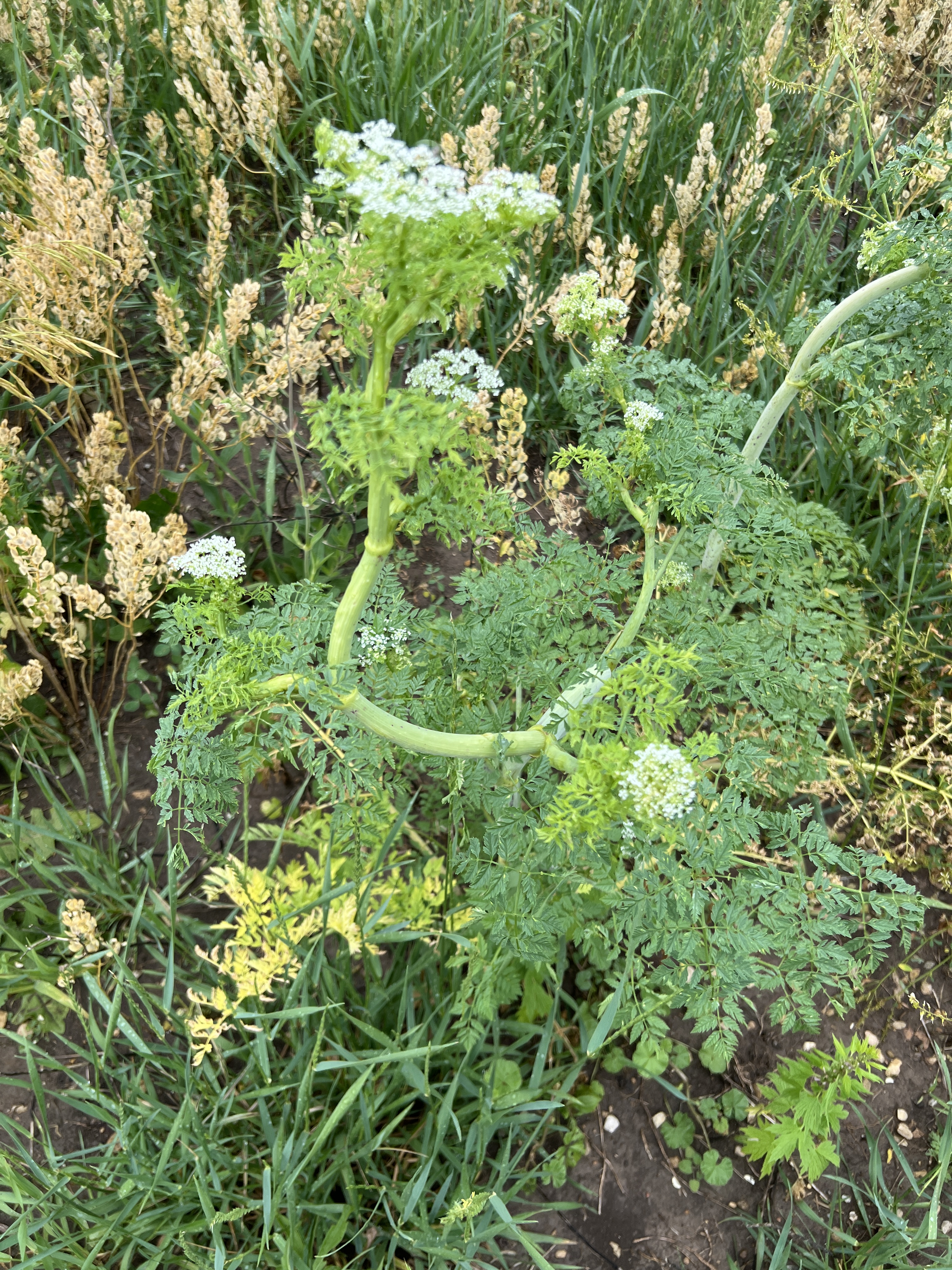
Poison hemlock, Conium maculatum. Above. These can be spaded but beware it is poisonous so don’t handle it, like picking it up to carry it somewhere. Cut the taproot with a sharp spade, push over with your boot. Leave it. You can mow hemlock which may set it back and at least buys you time. Or spray before bolting with a broadleaf such as Crossbow or Garlon 3A. This hemlock was flowering when it was sprayed with 2% Garlon 3A and it just twisted it and will not kill the plant.
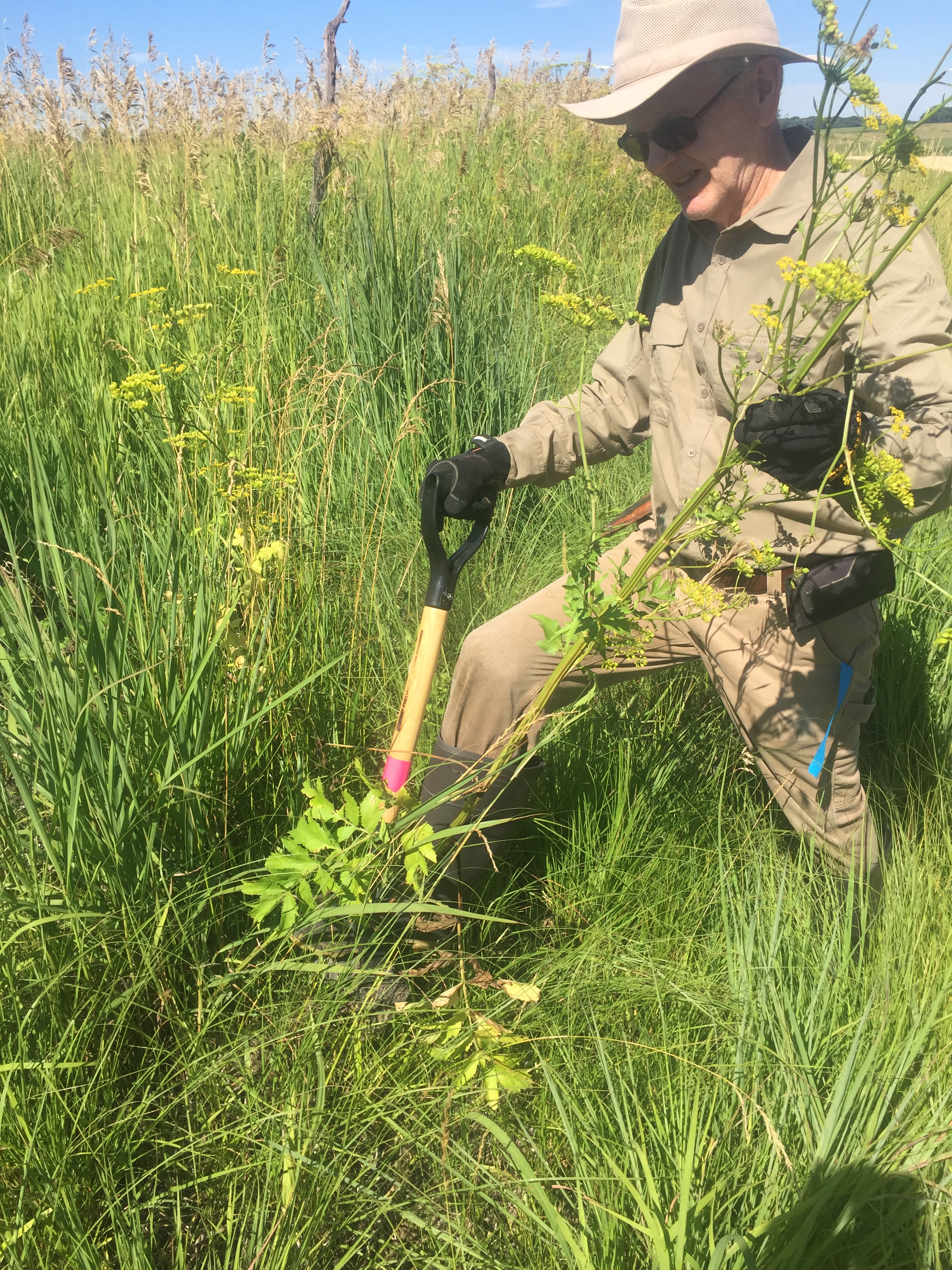
Wild parsnip, Sativa pastinaca. Bernie is spading this one and perhaps plans to carry it somewhere. Beware the sap on your skin will give you a sun burn boil. I tend not to haul it. Like hemlock, I cut the tap root with a spade, then push it over with my boot. Sometimes I use the spade to cut the plant near the top with the hopes of not having the seed mature on the stalk. Or you can mow it and deal with it the next year.
You can spray parsnip before it bolts with broadleaf herbicides such as Crossbow or Garlon 3A.
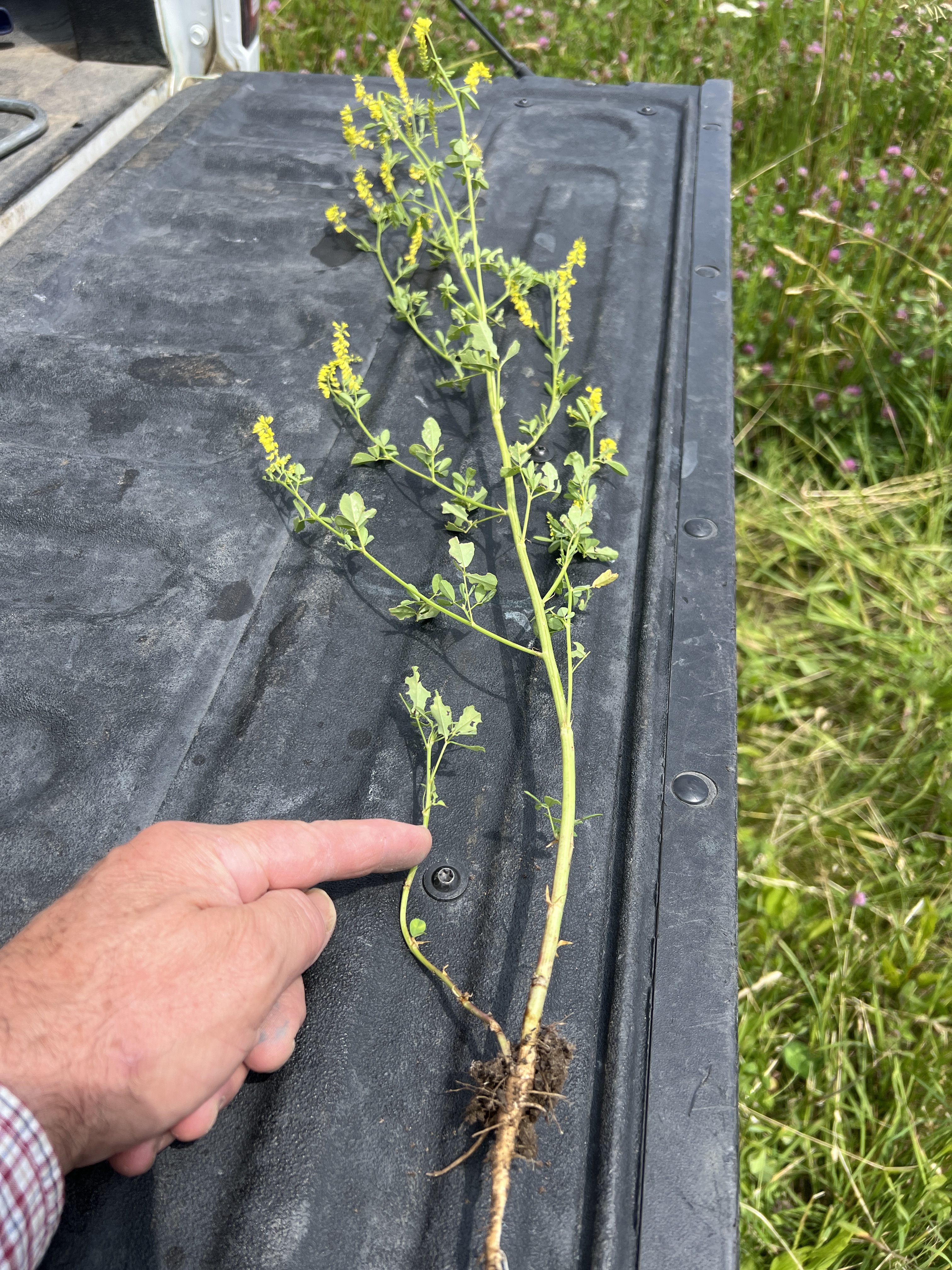
Yellow sweet clover, Melilotus officianalis. Here I point to a low leaf stalk. Mowing or cutting very low sets back sweet clover, but you want to cut below the lowest leaf. In this case that looks to be a few inches. We sometimes use tri-blade weed brush cutters, and the new battery clearing saws are nice. We have had success with old fashioned scythes, and various mowers. They all work pretty well and can reduce infestations.
We often use a weed spade, “parsnip predator”, to loosen the soil next to the sweet clover, then lean on on the spade handle and with the other hand pull the root up. Saves you body strains.
We spray it at times with Transline in the early part of its growth cycle, and then switch to Garlon 3A after it has been blooming for a several days.
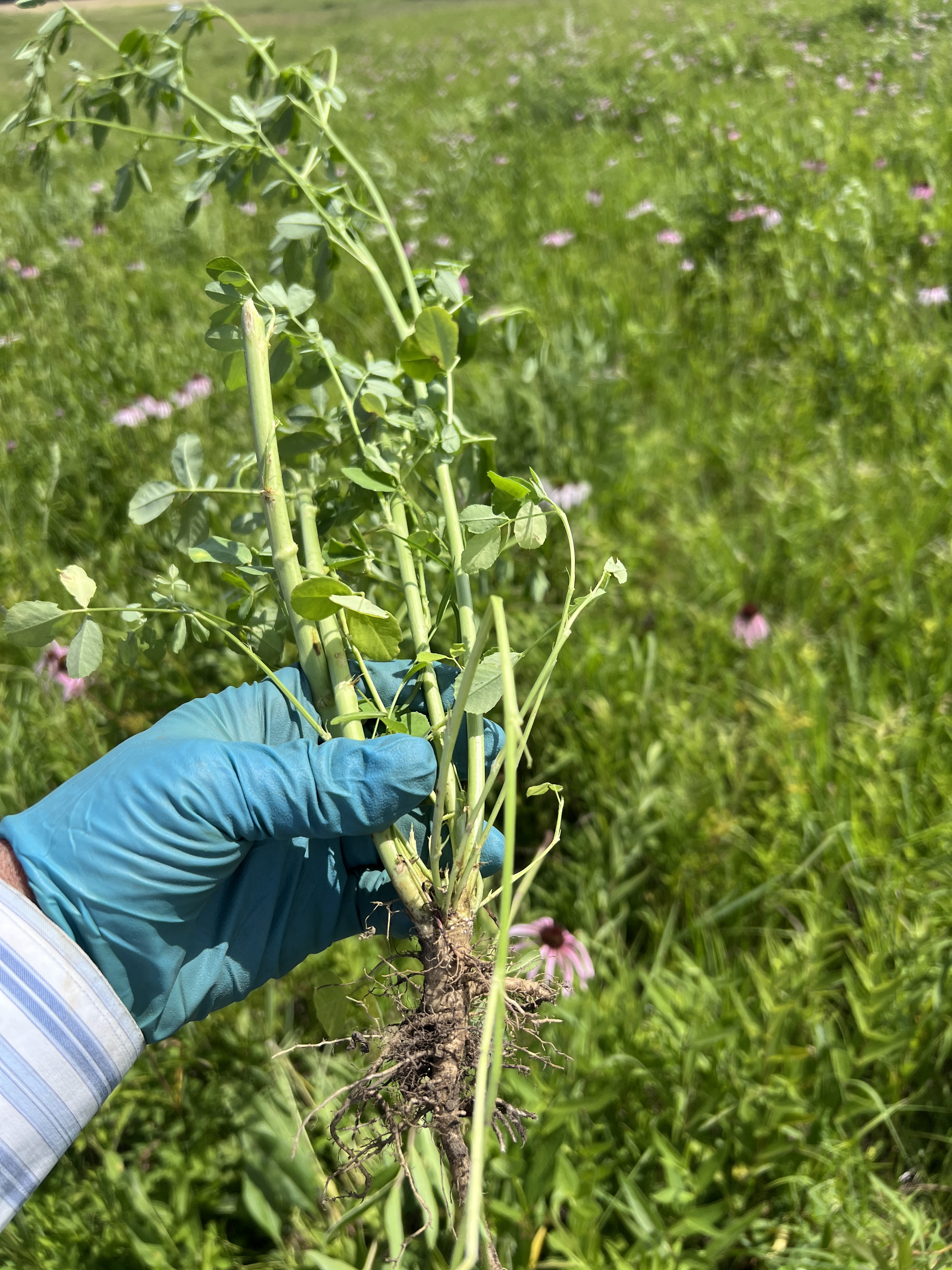
White sweet clover, Melilotus alba. Similar to yellow sweet clover you need to mow or cut it below the lowest leaves. If you wait until the plant is late in flower the lowest leaves will have fallen and you can mow higher. It is also more stout and harder to cut.
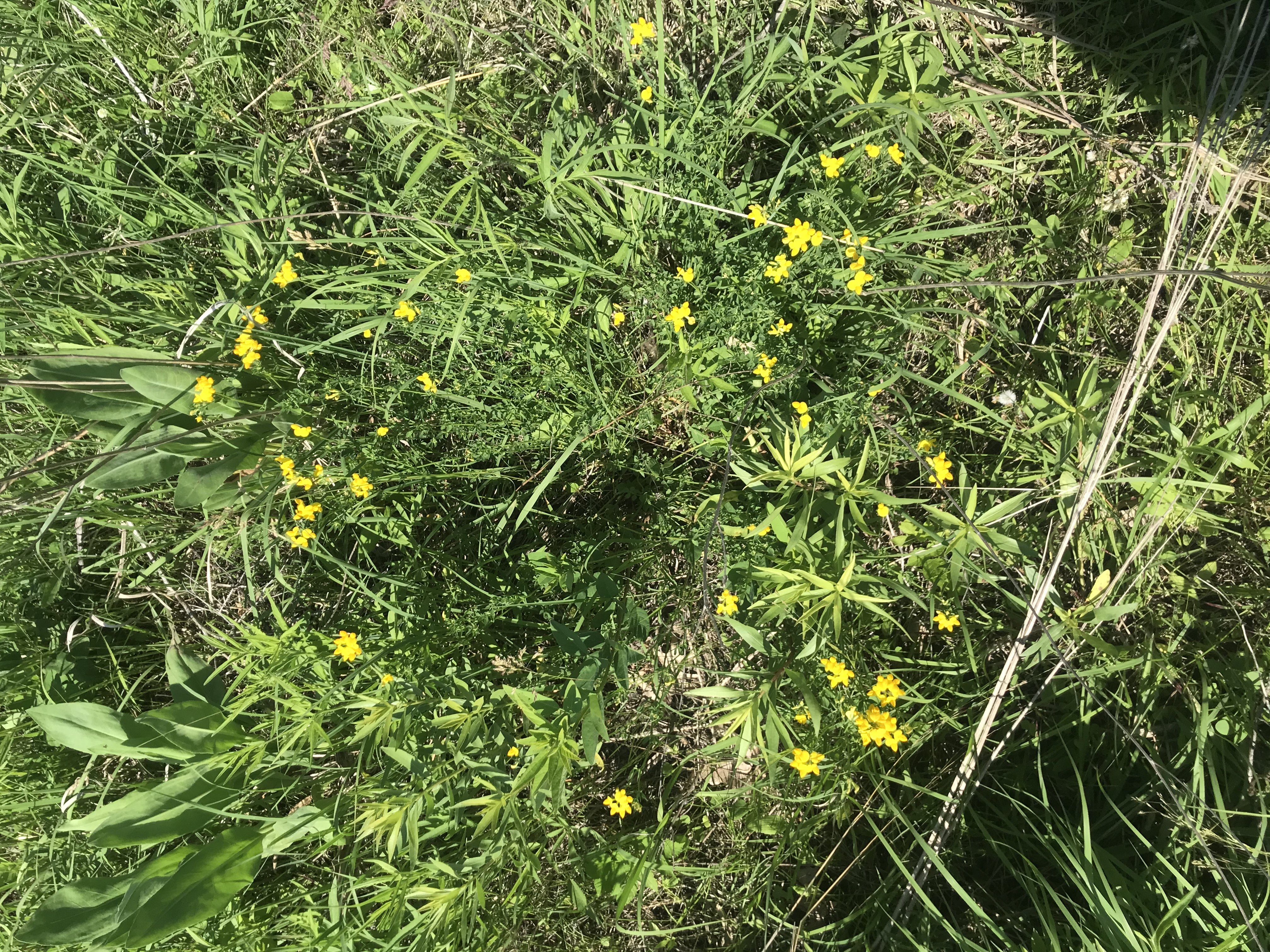
Birdsfoot trefoil, Lotus corniculatus. We spray Garlon 3A, or Transline, Milestone, or Crossbow. Late in the bloom time we mix 2% Garlon 3A with half percent Milestone. Our thinking is that the Garlon 3A browns it out quick to beat seed set, and the Milestone has a residual that will kill emerging BFT plants that are likely around the target plant.
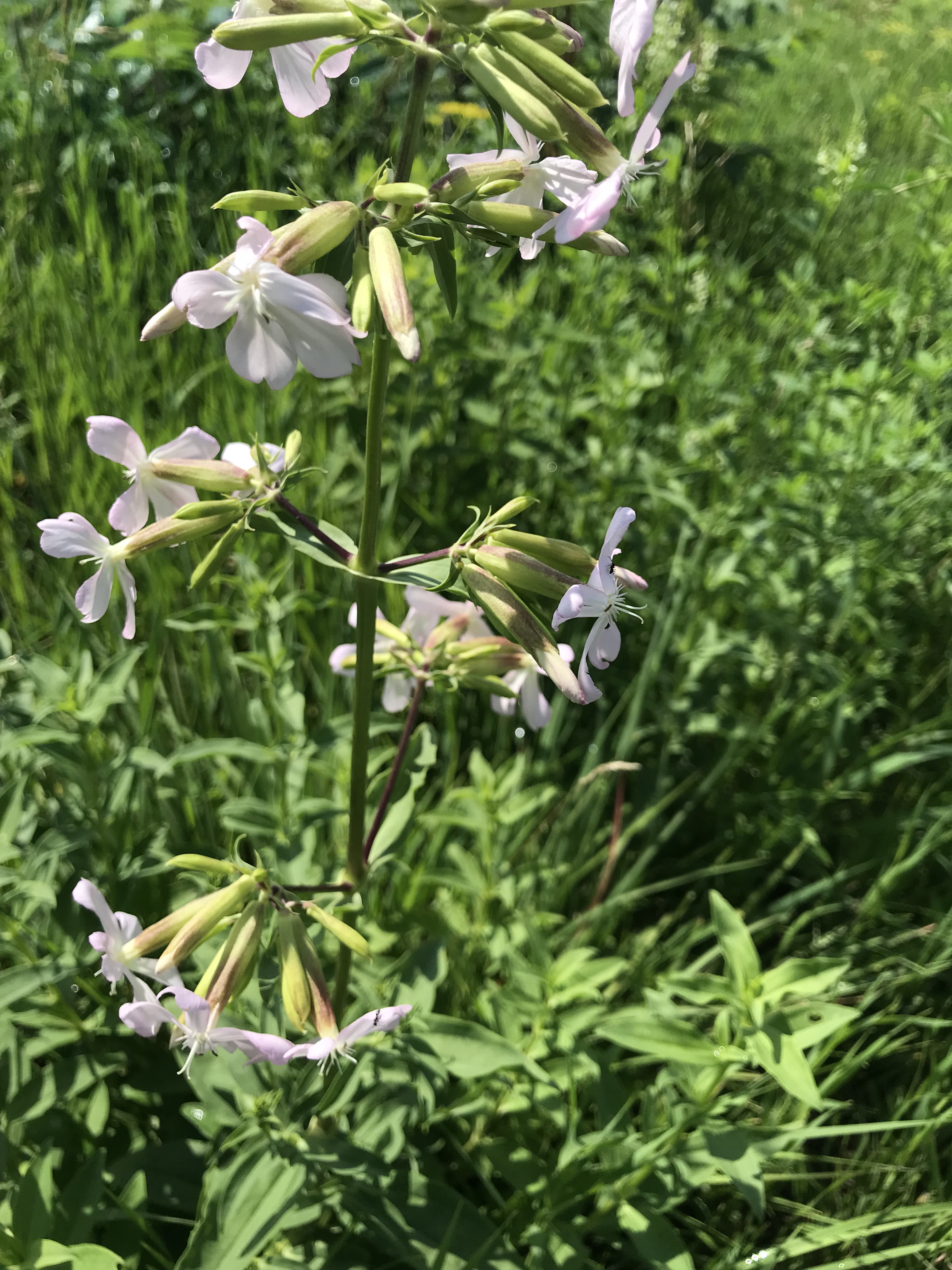
Bouncing bet, Saponaria officinalis. Milestone seems to be working well at 0.7 ounces per gallon. Walters uses tricopyr and 24D. He uses amine or ester tricopyr depending on the situation. Use surfactant.
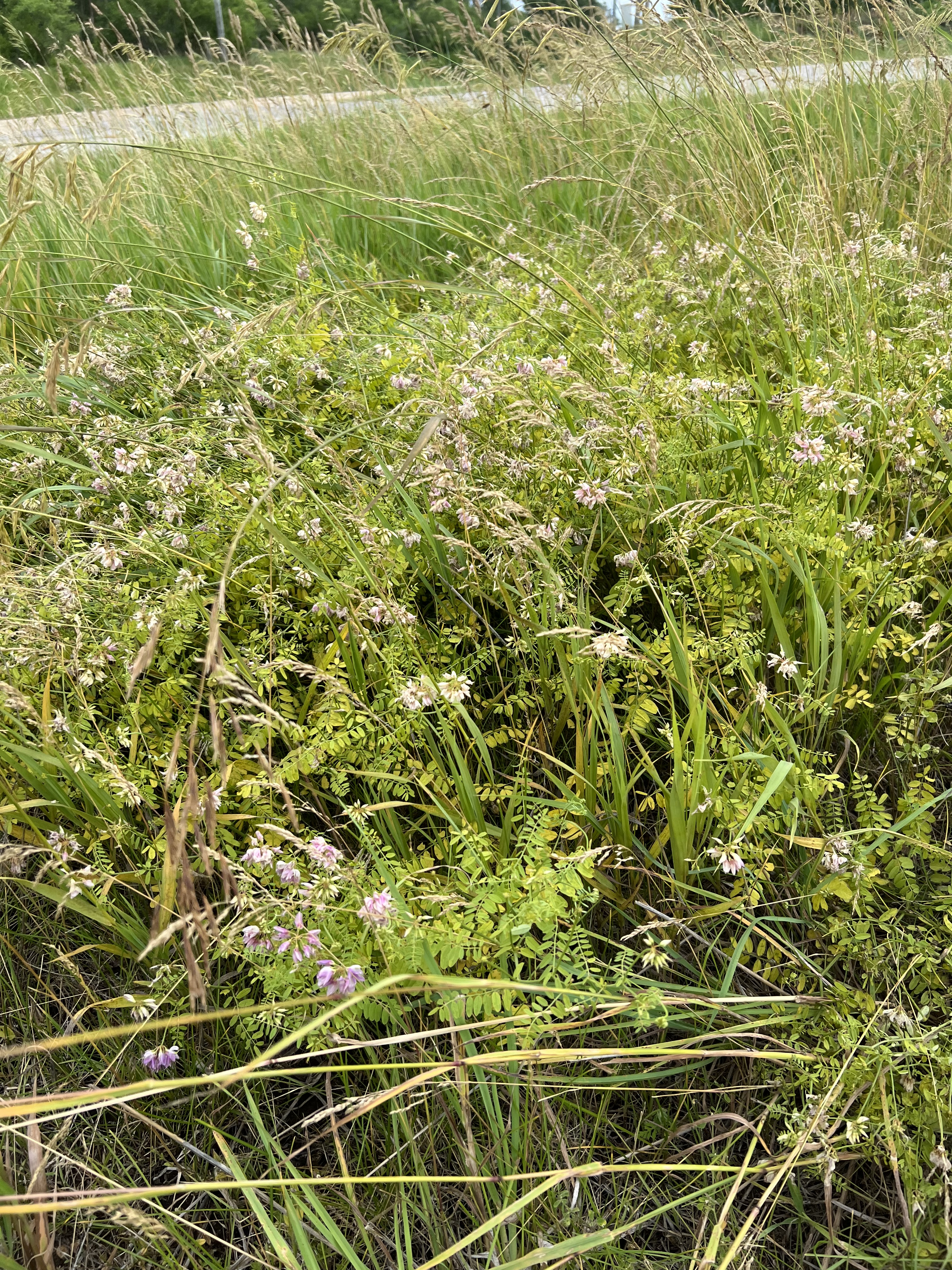
Crown vetch, Corilla varia. Milestone at 0.7 ounces per gallon. Transline works too. Like a lot of weeds, making two or more visits a year makes a big difference.
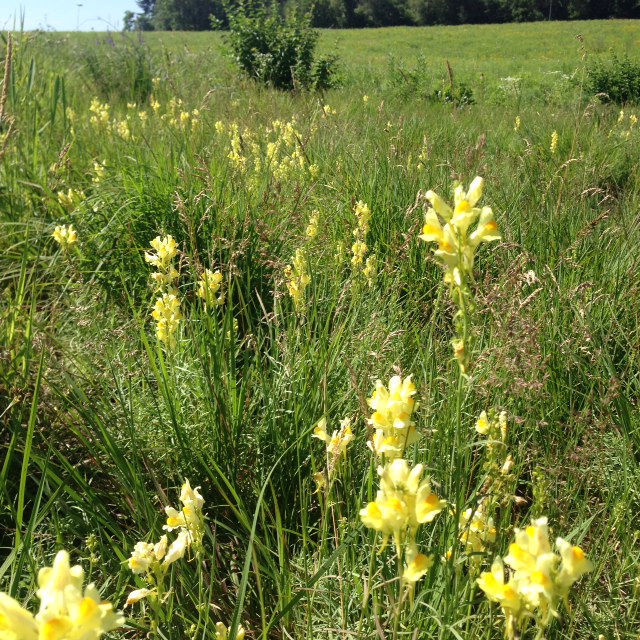
Butter and eggs, Linaria vulgaris. Imazapic seems to work, but these are tough to control as there are lots of small plants for every flower you see.
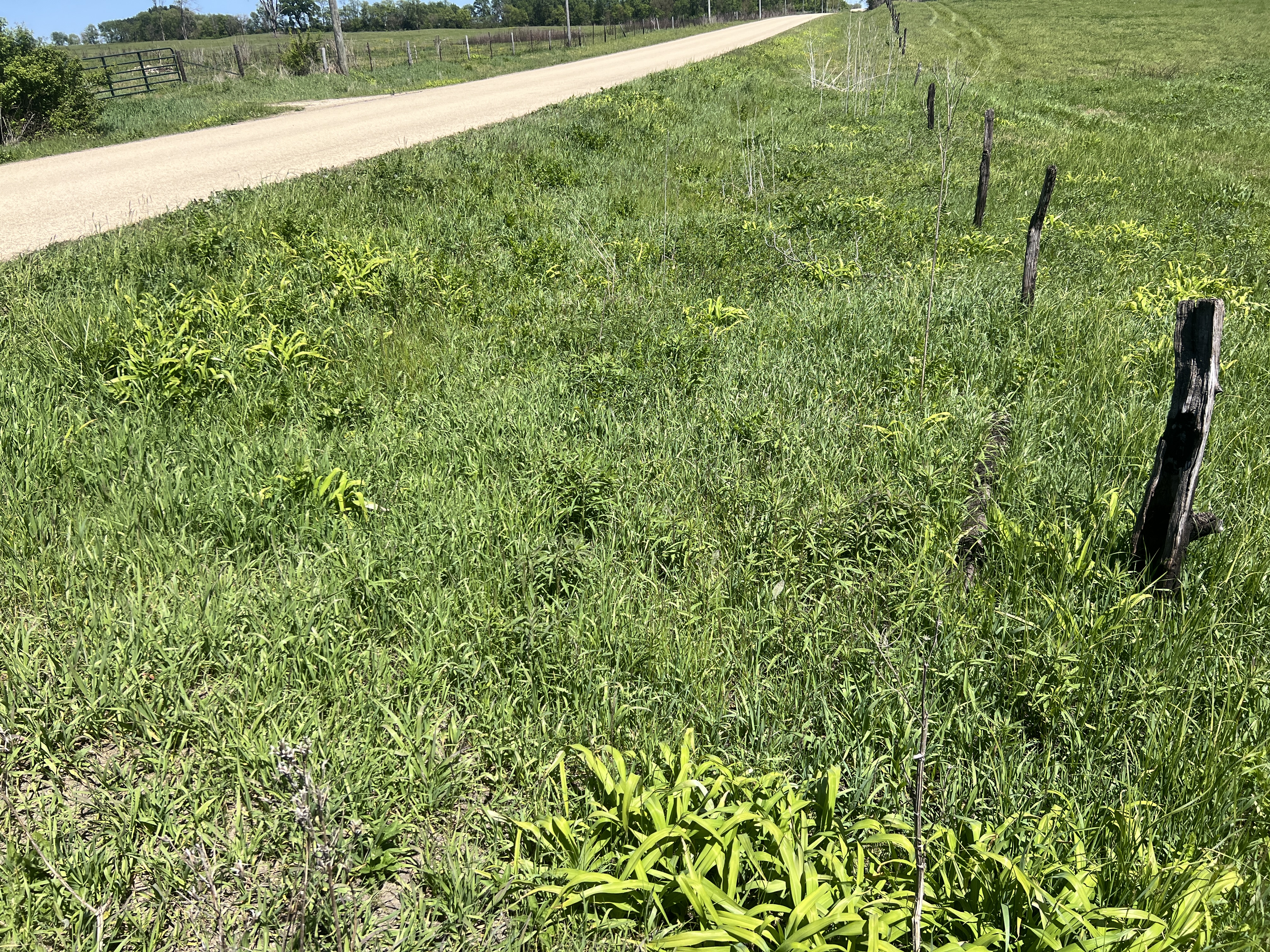
Day lily, Hemerocallis fulva. The photo shows the vegetative day lily in a right of way. They are tough to kill. Use 3% glyphosate with 2% Habitat on these monocots. Add surfactant.
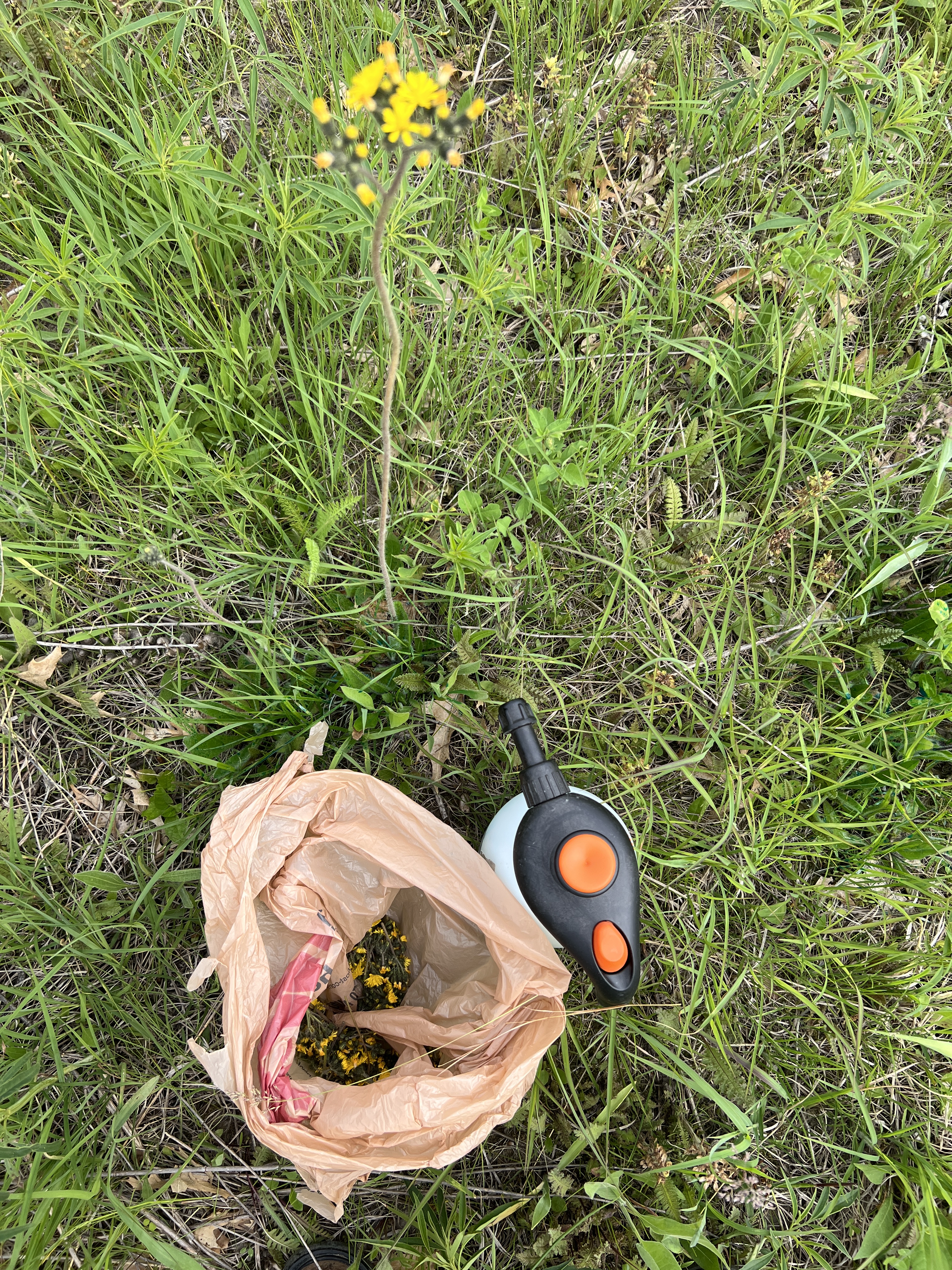
King devil, Hieracium pratense. Garlon 3A, Element 3A, Crossbow, Milestone all work. Some feel these are not a problem but we find them hard to extinguish. The seeds blow about. We treat the flowering plant and look for seedlings nearby. We pluck the flowers and dispose in the kitchen garbage.
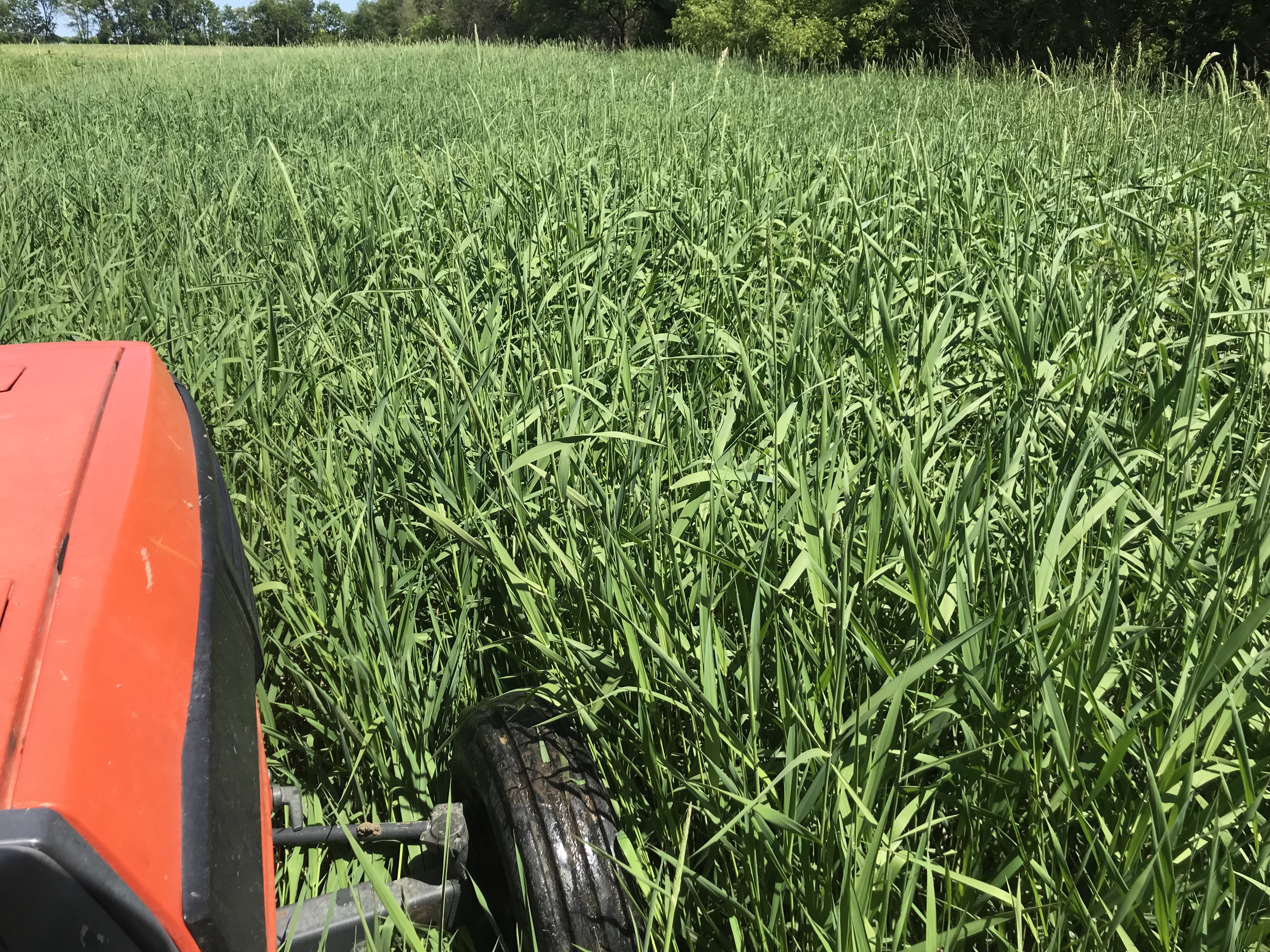
Reed canary grass, Phalaris arundinacea. Lots of opinions on this blogsite about RCG. I like clethodim at 1.5%, with water conditioner added first, and surfactant or MSO added after. Spray twice a year if you can muster that effort but we tend to spray once. Glyphosate with Polaris kills it fully but you want to spray very carefully.
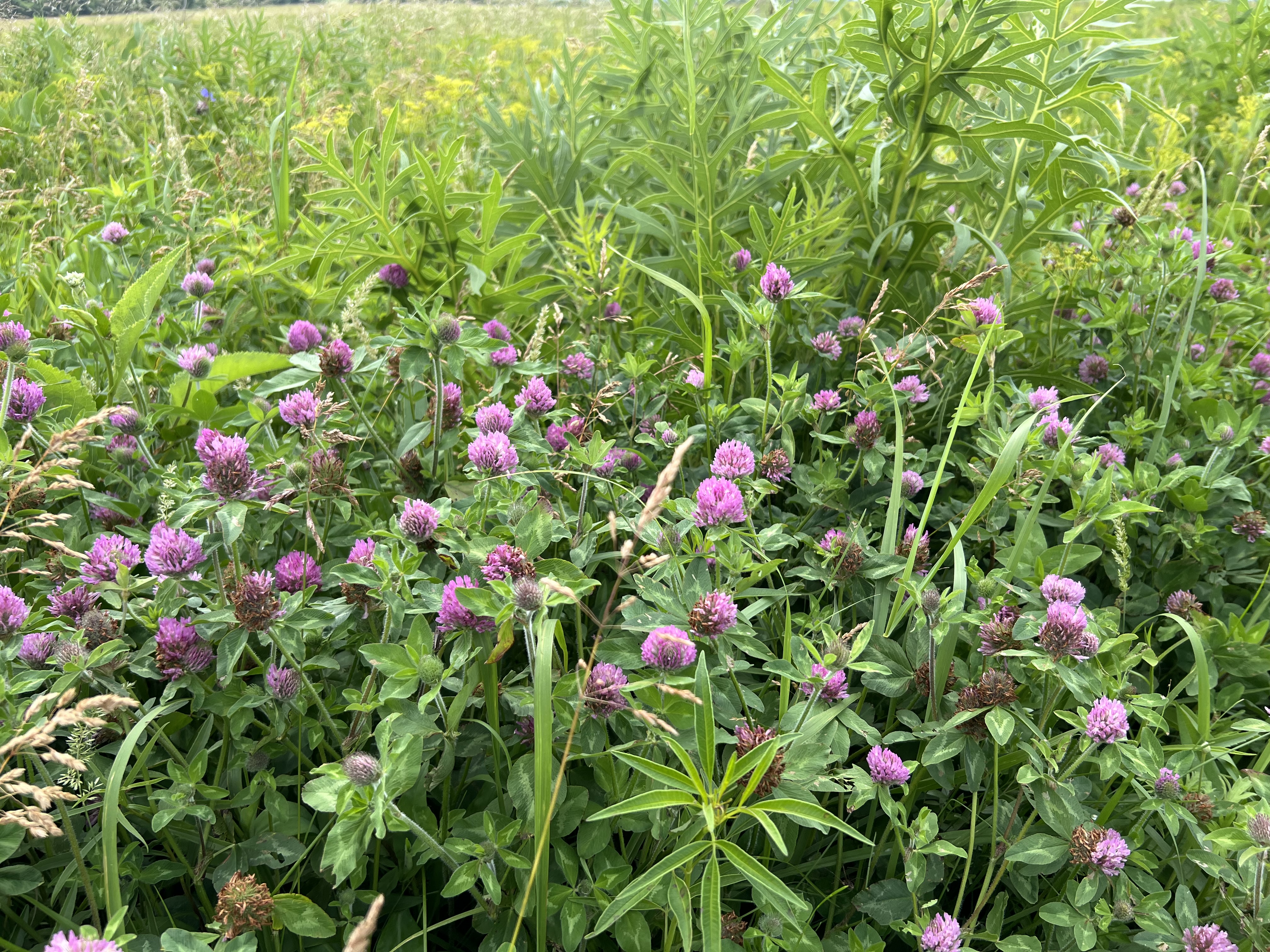
Red clover, Trifolium pratense. Transline works well. Crossbow and Element 3A do fine too. Most do not call this invasive, but we find red clover can be very aggressive in our prairie restorations.
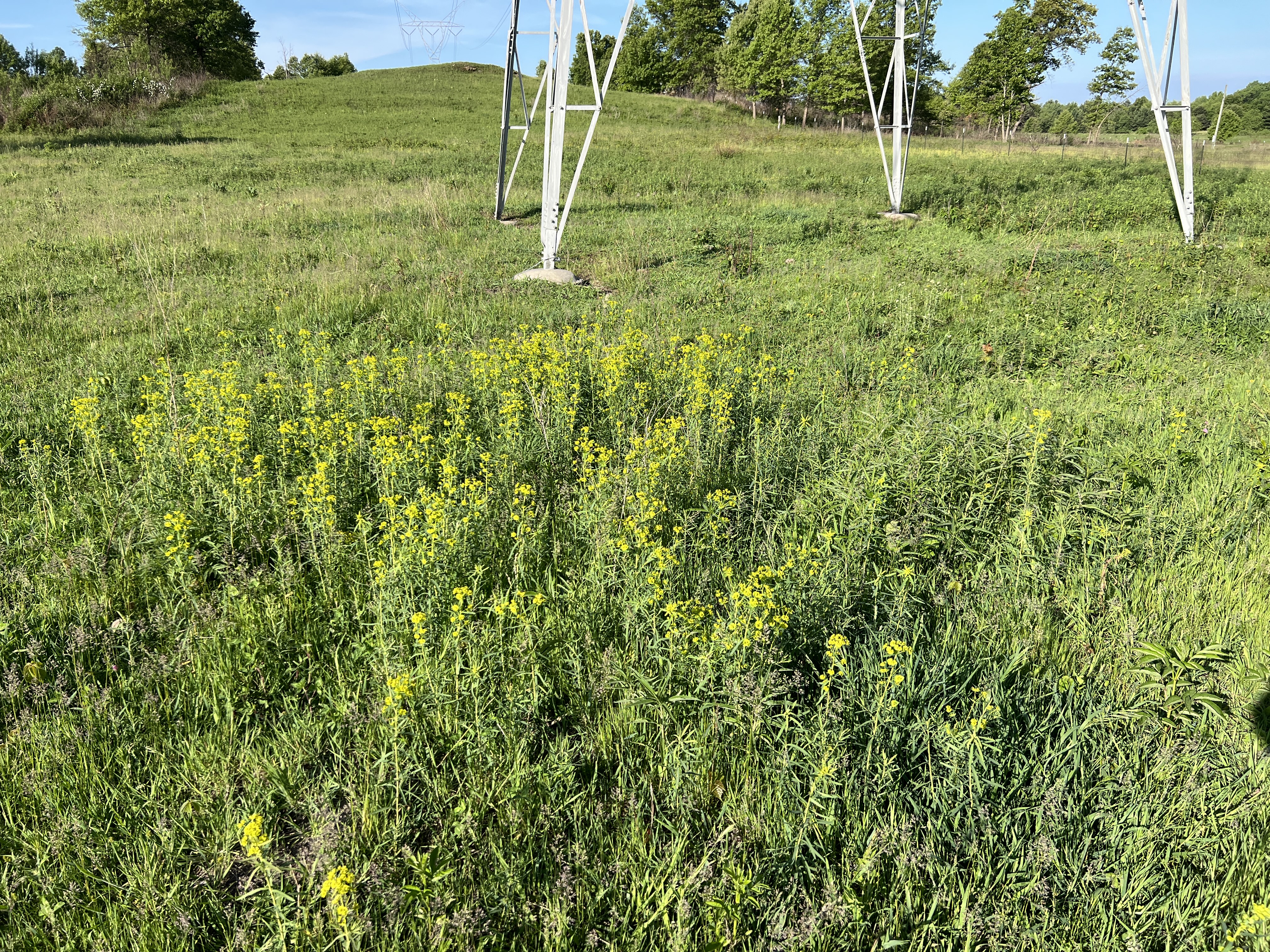
Leafy spurge, Euphorbia eschella. 1.5% Imazapic. It is recommended it be treated twice a season. This is a tough plant to kill.
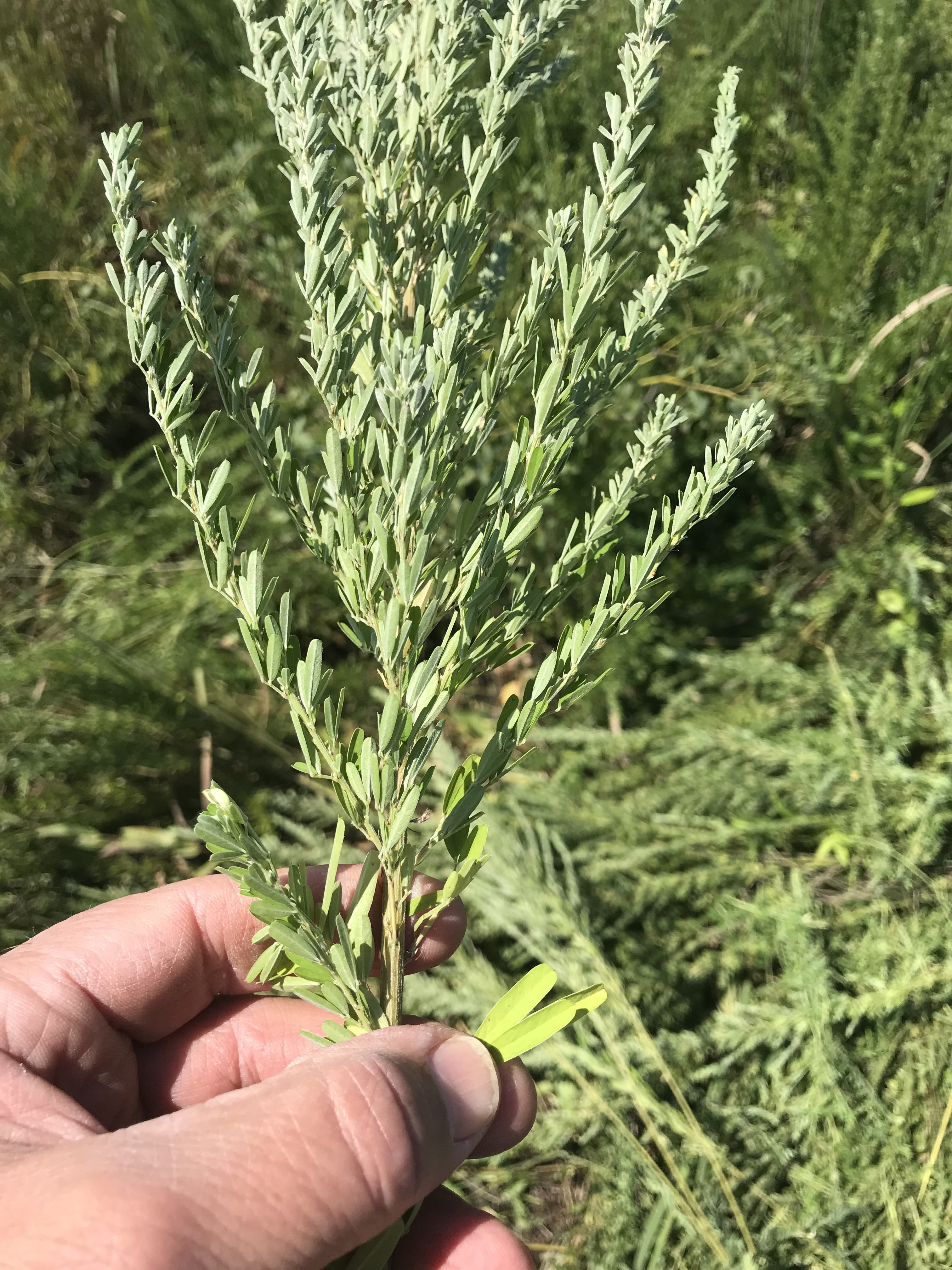
Sericea lespedeza, Lespedeza cuneata. Saxton likes 2% Garlon 4 in water. Look carefully for young and old plants. Jeff Horn and others find Pastureguard herbicide (Triclopyr with Fluroxopyr) to work very well.
Try our blogsite search bar.


Geez Bill that is awesome information. Great work. Hope to see you at Nancy’s event on Sunday.
I’d love to see someone conduct experiments using different adjuvants & application timing on crown vetch with the goal of killing the root of mature clones in one or two applications. In such an experiment, one would have to confidently differentiate root resprouts from new seedlings. One practitioner claimed Dyne-amic surfactant & Induce sticking agent with Transline worked well, but not enough details were given to know how he defined success. In the link below, another party used the same herbicide/adjuvants & killed mature clones with 4 yearly applications.
https://er.uwpress.org/content/36/2/111
Excellent information. May I suggest you try Duracor on Hemlock. I do commercial applications on invasives and have found the results to be quite amazing at all growth stages. Even early bloom…some clients wait a bit long to call!
I like this summary!
At Dane County our big three are crown vetch, birdsfoot trefoil, and leafy spurge. We primarily target these in May and early June using Method herbicide (0.5 oz/gal) with MSO (1oz/gal). The plants brown very quickly. We think the best success has been with BFT, some populations appear eradicated after a couple years of spraying annually. Crown vetch is the hardest, with small plants coming up at the edge of patches that have been treated for 5+ years. A new technique we are testing is mowing newly discovered crown vetch patches when they are in full bloom and then following up with Method spraying the following year. So far this seems more effective, but this is only our second year testing it. We try to retreat some of these at the end of summer or early fall, particularly leafy spurge, but we often miss our window.
As a noxious weed manager in Boulder County, Colorado we find 25oz/ac rate of Quinstar 4L does a terrific job on Leafy Spurge in one treatment with minimal off target impacts. Imazapic is often used in late August Early September prior to senescence and red stem stage at around 15oz/ac. I dont find it to be as effective as quinclorac.