Crafting Wetlands—2023 Crew Planting

Written by Jacob Churulo, Nachusa Grasslands Resident Fellow

Every year, Nachusa’s crew plantings embody our long-standing commitment to restoring high quality prairie habitat. In 2023, the combined seed picking efforts of the summer and fall restoration crews culminated into this 24-acre planting of mostly wet and mesic prairie. The planting site can be found just north of our Thelma Carpenter hiking trail on Carthage Rd. in what we call the Juanita and Homer Williams tract. This year’s planting—our 138th—filled in the final piece of a 350-acre block that now spans from Lowden to Carthage Rd.

Map of 2023 crew planting site, color-coded by seed mix location. The blank bottom right corner of the unit makes up the 2022 crew planting, comprised of the drier uplands of the site.

In the summer of 2023 leading up to the planting, an independent contractor was hired to prepare the site by constructing a series of dikes and scrapes which would hold water and encourage wetland conditions. We first decided that the area could host wetland habitat using the US Department of Agriculture’s web soil survey. This is a free online tool produced by the Natural Resources Conservation Service that reports the soil types and conditions within a desired area of interest. When we performed this soil survey for the planting site, we found that over half of the unit was made up of La Hogue loam soil, which is characterized by poor drainage. This information indicated where it would be most appropriate to construct the wetland scrapes. After that, we could get to removing the drainage tiles and finally start constructing the dikes and scrapes. By the first large rain after construction was complete, the site hosted two small ephemeral ponds which were already being visited by Killdeer, Pectoral Sandpipers, and Sandhill cranes! In only a summer a wetland had been created before our eyes.

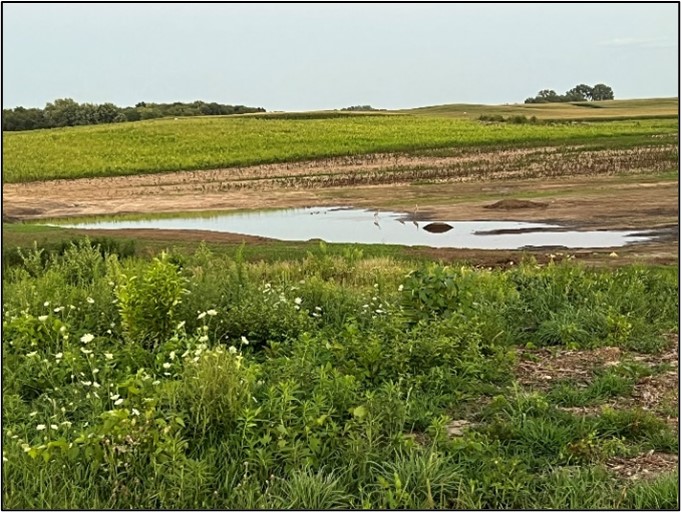
Two small ponds had formed after the first rain post dike construction. You can see three sandhill cranes in the right photo already visiting the ponds.

When the time came to compile all our seed collection data, we found that 2023 proved to be a productive year for seed diversity. Overall, we picked a total of 1,300 Lbs. from 247 species of plants, 19 of which had never been picked for Nachusa seed mixes before! This would not have been possible without the tremendous support from our partners, who allowed us to pick on their sites and gain access to species that do not grow at Nachusa (but hopefully they will now). Because of the wetland habitat being constructed in our planting site, the crew made an extra effort to collect seeds from wetland plants, like pickerel weed and arrowhead which tolerate and even prefer standing water. Picking these seeds made for an especially entertaining afternoon as the crew trudged through stinky wetland ponds, our muck boots utterly useless in the knee-high water. Of the 247 species picked, 68 were wetland species, many of which were also part of the 19 newly picked species.

Fall crew picking arrowhead and pickerel weed in ephemeral wetland pond. Pictured left to right: Jacob Churulo, Kelly Popper, James Johnston, Riley Berner, Molly Duncan.

The seed mixes were prepared over the course of two days, and the planting was finished in three days. Dressed in a dust mask and goggles with pitchfork in hand, we got to work mixing 100s of Lbs. of seed at a time to create five mixes: dry, dry mesic, mesic, wet, and wet emergent. We also utilized a 2020 mix specifically made for dikes, which was a collection of different combine mixes of mostly mesic-dry mesic seed that would support the dike soil from erosion.
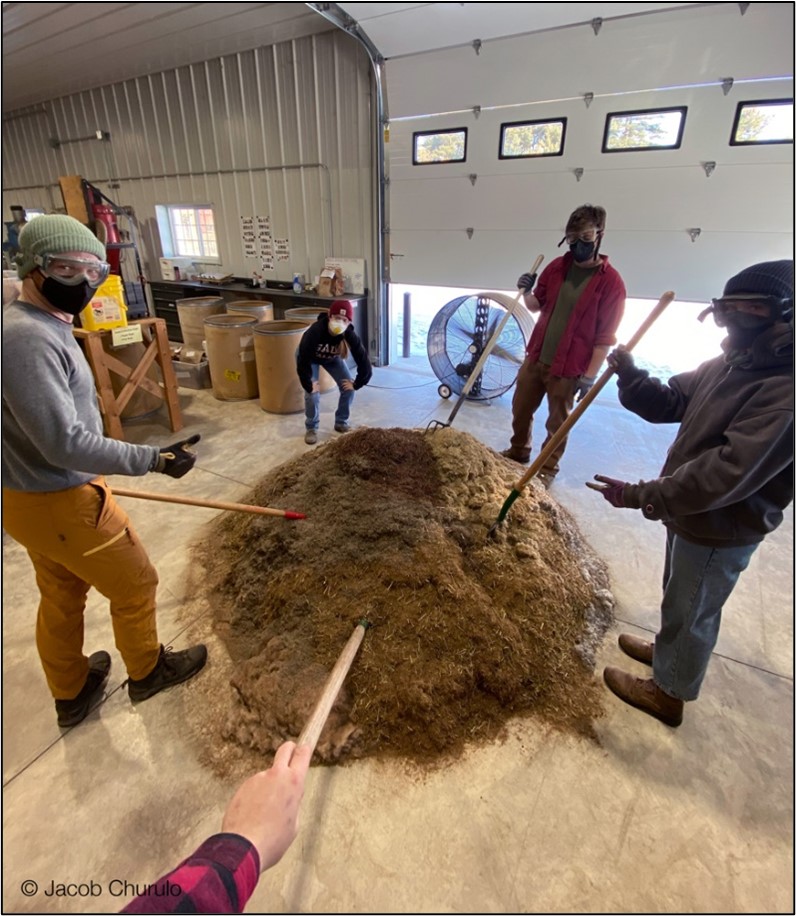
Fall crew getting ready to make a seed mix. We would dump each species that went into the mix into a large pile and use pitchforks to turn and mix the seed.

We planted the seed using drop seeders pulled by pickups. The two trucks drive next to each other, staggered so we can maintain a small overlap and prevent gaps from forming. The trucks drive back and forth in one direction and then again perpendicular to that to ensure a full coverage. On the first day of the planting, we had a lovely blanket of snow over the planting site. While this may seem like a hindrance, the snow makes it incredibly easy to see where the seed is being dropped and evaluate the consistency of the drop seeders, as well as quickly spot and fill any gaps. We planted each mix at a time, and saved the wet emergent mix for hand seeding at the end because it was too mucky to drive the seeders through. On December 11, when the dikes were finally seeded, we officially completed our 138th planting at Nachusa Grasslands!

Trucks in staggered formation with drop seeders. The goal was to create a small overlap of the seeders when driving to prevent forming gaps in the planting.
The snow showed us exactly where the seed was being dropped. This helped tremendously to evaluate how we were driving and spot gaps.

Huge thank you to the crew members, staff, and numerous volunteers who helped us collect all the seed that went into this planting, and another thanks to the staff members and contractors who prepared the site to be planted. The habitat that has been created here is a testament to how important collaboration and teamwork is, especially in restoration, and Nachusa’s dedication to restoring high quality prairie habitat for all organisms to benefit from. A full planting report, as well as previous planting histories, can be found on the Friends of Nachusa Grasslands website at the link below. Crew Planting 138 Full Report:https://www.nachusagrasslands.org/uploads/5/8/4/6/58466593/138_plantingreport_2023_juanitawilliams.pdf

Summer crew, pictured left to right: Noah Reynolds, Amber Denker, Molly Duncan, Clara Barton, Jacob Churulo, Zach Skubiszewski.

Posted in Uncategorized | Tagged , , , , , | Leave a comment

Rx fire pumper units and tenders

by Bill Kleiman

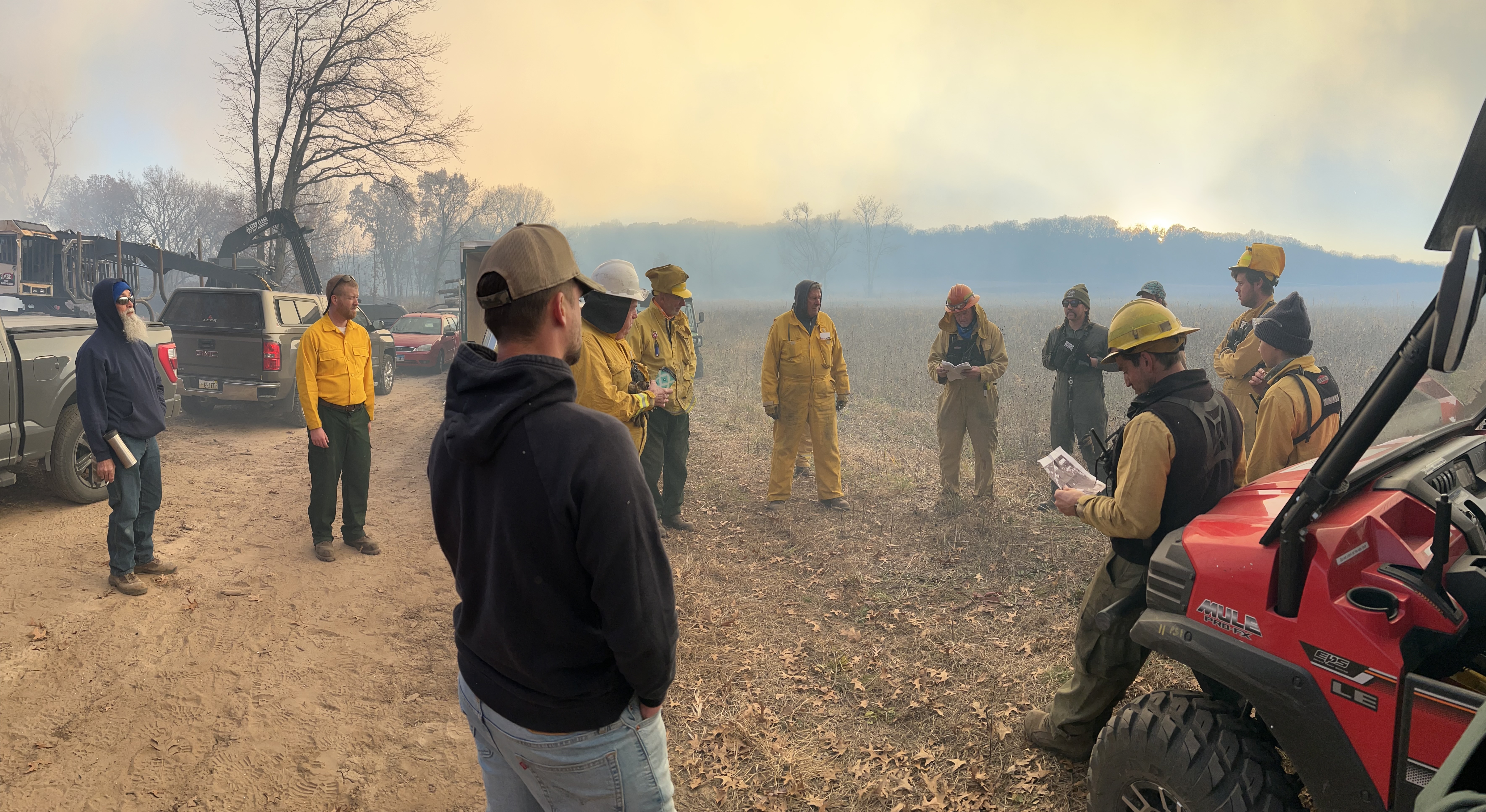
As this is spring fire season in northern Illinois I thought I would highlight past posts I have done that show lessons learned about slip on pumper units and water tenders. 
Posted in Uncategorized | Tagged , , , | Leave a comment

Land Abandonment, Succession and Restoration: The Wolf Run Grasslands Restoration Project at the Missouri Botanical Garden’s Shaw Nature Reserve.

by Mike Saxton and Calvin Maginel

This article was originally posted in https://mbgecologicalrestoration.wordpress.com/2023/12/19/land-abandonment-succession-and-restoration-the-wolf-run-grassland-restoration-project-at-the-missouri-botanical-gardens-shaw-nature-reserve/

Since 1950, over 1-billon acres of agricultural land have been abandoned worldwide. In certain landscape contexts, passive recovery of high levels of native biodiversity in abandoned fields is possible while in others, like the Midwest USA, fallow fields rarely develop into biologically rich habitats. To achieve the ambitious goals of the UN Decade of Ecosystem Restoration, land managers and ecologists need to better understand how to restore these highly altered landscapes.

In 1925, the Missouri Botanical Garden purchased 1,300 acres of battered farm ground in Gray Summit, MO – approximately 35 miles (56 km) west of St. Louis – to escape the deleterious impact urban air pollution was having on horticultural collections in St. Louis City. The intended use of this acreage was (1) to propagate and grow plants, trees and shrubs to be displayed at the main Garden and (2) to gradually establish an arboretum at the site. The site was officially named the Shaw Arboretum in 1933. After decades of development, many non-essential operations at the Arboretum were eliminated in 1958 and many fields were abandoned to undergo successional change. In 2000, the Shaw Arboretum was renamed Shaw Nature Reserve to reflect its contemporary mission to inspire responsible stewardship of our environment through education, restoration, and protection of natural habitats and public enjoyment of the natural world. Today the Nature Reserve consists of 2,400 acres of varied habitat. 

Prior to European settlement, the natural communities of the area were fire adapted, open oak-hickory woodlands and xeric glades with gallery forests along riparian corridors. Post-settlement, woodlands were clear-cut with some woodlots left to passively regenerate while others were converted to row crop agriculture.

Wolf Run Grassland Restoration

In 2016, Nature Reserve staff set an ambitious goal to bring all 2,400 acres of the site into active management to promote native biodiversity by the year 2030. This effort will include restoring open pastures and row crop fields, a relatively simple process. A much more challenging effort will be reclaiming 120 acres of old fields with 60+ year successional development, which is our current Wolf Run Grassland Restoration project.

The 120 acre project area was initially “wasted farm ground” that had erosion gullies “where a freight train could pass without you seeing it”, according to August Beilmann, former Arboretum Director from 1941 to 1956. The entire project area was sculpted and smoothed by a bulldozer in 1953 and then converted to bluegrass (Poa pratensis). “Every piece of this land that looks so likely to be just right was laboriously rebuilt,” said Beilmann in a 1974 interview.

Wolf Run Grassland Restoration project area in ca. 1945 showing open fields (light green) maintained through cattle grazing and mowing with trees occupying wet-weather streams and ditches (dark green).

Since 1958 when areas including the Wolf Run Grassland Restoration were removed from mowing and grazing, the site became dominated by eastern red cedar (Juniperus virginiana), Amur honeysuckle (Lonicera maackii), border privet (Ligustrum obtusifolium), slippery elm (Ulmus rubra), shingle oak (Quercus imbricaria) and ash (Fraxinus) species which are in severe decline due to the emerald ash borer. These degraded woodlands had little native ground flora and were completely infested with non-native shrubs. Tree abundance and species composition had no historic analog. When setting ecological restoration goals for the area, staff determined that much of the site could not be managed as an open oak-hickory woodland, which would have existed at the site pre-settlement.  

Goals for the Wolf Run Grassland Restoration project

  • Establish a mosaic of 80 acres of prairie, 15 acres of savanna and 25 acres of oak-hickory woodlands
  • Maximize native flora diversity and aggressively manage against invasive species
  • Manage the area with prescribed fire

In 2021, Nature Reserve staff marked hundreds of native trees to retain including white, red, bur and black oaks (Quercus alba, Q. rubra, Q. macrocarpa, Q. velutina) and hickory including shagbark (Carya ovata) and bitternut (C. cordiformis). Drainages and wet weather streams were left with a 50ft untreated buffer while a perennial creek flowing through the unit retained a 150ft untouched buffer. A sustainable forester was contracted to remove unmarked trees from the area. Following US Fish and Wildlife Service recovery management guidelines for the Indiana bat (Myotis sodalis) — a federally endangered species — trees were only removed from November 1st to April 1st.

Wolf Run Grassland Restoration project area pre-thinning (2021), approximately 60 years after land abandonment. Note the dark green areas are dominated by eastern red cedar (Juniperus virginiana), a native tree that rapidly colonizes abandoned or disturbed lands in the Midwest. Historically, this fire-sensitive tree species primarily occurred on rocky outcrops and bluffs that served as refugia from periodic fires that were common in the pre-European settlement landscape.

Wolf Run Grassland Restoration project area post-thinning (2023).
Forestry contractor equipment removed most woody biomass 4.5in in diameter and larger leaving behind mostly small-diameter slash. A bulldozer coalesced the debris into 600 piles that were subsequently burned.

The Restoration team has spent the last 9 months focusing on the removal of stumps for the project area. Stumps can be a substantial hazard for vehicles, equipment and staff safety. In order to plant the prairie seed and to effectively manage the area for invasive species in perpetuity, the stumps must be ground down or cut flush to the ground.

Skid loader mounted stump grinder removing stumps.

Concurrent to this effort has been the site preparation step of chemically treating all of the invasive species and the disturbance driven annual vegetation that emerged post-land clearing [primarily fireweed (Erechtites hieraciifolius), mare’s tail (Erigeron canadensis), ragweed (Ambrosia artemisiifolia)and fox tail (Setaria pumila)]. This step is necessary because diverse, healthy native plant communities have not existed in these areas in more than 100 years. Consequently, there is no native seedbank to support the passive recovery of native perennial herbaceous species in these highly degraded acres.

In areas where stumps have not been cleared, traditional equipment (tractor boom sprayers and UTV mounted spray rigs) for applying herbicide are ineffective. The Nature Reserve hired a contractor that specialized in aerial herbicide application from a drone. The drone flies 12 feet above vegetation and can self-navigate around trees and other hazards. The unit carries a total of 8 gallons and sprays only 3 gallons of herbicide per acre. The effective width of each pass is 25ft. A single battery powers the drone, with a flight time of 7.5 minutes and a re-charge time of 6 minutes. When the herbicide tank runs out, the drone re-deploys to the fill up location, is refilled by the contractor, and then returns to where it left off.

Aerial drone sprayer used to eliminate undesirable vegetation.

The last step after the undesirable trees have been removed, biomass/debris has been burned, the stumps have been ground and invasive species have been controlled is the final ground preparation. Currently, in 2023, we are again smoothing out erosion gullies and clearing away the last remnants of woody debris with a bulldozer. This effort will ensure effective seed-to-soil contact when we sow native seed in January 2024 and will enhance our ability to successfully search for invasive species in the coming years by eliminating deep ruts and rills.  

Above: Bulldozer in 1953 eliminating erosion rills in Wolf Run Grassland Restoration project area. Below: Bulldozer completing site preparation for native seed addition.

Native Seeding and Experimentation to promote Biodiversity Recovery

During the growing season of 2023, the Restoration team at the Nature Reserve has been feverishly collecting seed for this 2024 seeding effort. More than 1,100lbs of bulk, milled seed from ~200 locally collected native tallgrass prairie and open oak-hickory woodland species will be used in the restoration planting. Additionally, these acres are enrolled in the Environmental Quality Incentives Program, EQIP – part of the Natural Resources Conservation Service, and we must purchase viability-tested seed to meet the minimum required specifications of the contract. The hand-collected seed together with the PLS seed purchased from commercial vendors will provide us with ample species and volume of seed to effectively cover the 40 acres to be planted this winter.

Concurrent with the preparation effort, we initiated a research study, which will help inform both us and the greater research community of the effectiveness of prairie plant recruitment amongst scraped soils that have been inoculated with mycorrhizal fungi and those that have not. This study includes paired species from the same genus that have different coefficients of conservatism, which represents a species’ tolerance of environmental degradation, or its fidelity to intact remnant or long-restored habitats, as determined by local botanical experts. Ecologists generally expect species that are dependent on stable intact communities (higher c-values) to be more reliant on mycorrhizae connections to establish and flourish. Species with high c-values tend to establish poorly in restorations, which is one of the reasons to pursue this study. Out of the 10 herbaceous species pairs, some examples include Carex bushii (c = 4) and Carex bicknellii (c = 10), Sporobolus compositus (c = 3) and Bouteloua curtipendula (c = 7), and Oligoneuron rigidum (c = 5) and Oligoneuron album (c = 9).

We added all 20 species at the same rate of pure live seeds to provide each species an equal opportunity to establish. Initial analyses after one growing season indicate that low c-value species germinated more successfully, producing more seedlings and greater percent cover than the high c-value species, regardless of inoculation. We expect the addition of mycorrhizal fungi to have the greatest effects on species during the first couple of years after germination. If the mycorrhizae associate with the roots of the high-c species more than the low-c species, this may help them grow faster or be more resistant to future stress. Future monitoring will show us if there are long-term effects of inoculation. To check for updates on restoration activities and results from experimental studies, please see visit our webpage.

Barrels of hand-collected seed connected to a seed dryer which pumps air though tubes into the barrels to eliminate mold & moisture.

Posted in Uncategorized | Tagged , , , , , , , , , , | 12 Comments

Grass-Specific Herbicide Treatment on Heavily Grass-Dominated Prairies

By Alex Conley and Dr. Andrew Kaul, Missouri Botanical Garden’s Shaw Nature Reserve

Shaw Nature Reserve (SNR) is a division of the Missouri Botanical Garden, located 35 miles west of St. Louis and containing roughly 300 acres of restored tallgrass prairie as well as managed oak/hickory woodlands, glades, riparian corridors, and other habitats. While some prairie units are quite rich with moderate forb diversity and short-statured grasses like prairie dropseed (Sporobolus heterolepis) and little blue stem (Schizachyrium scoparium), a majority of our prairies have less than desirable diversity and are dominated by warm-season grasses such as Indian grass (Sorghastrum nutans) and big bluestem (Andropogon gerardii). In the early days of restoration at SNR, seed mixes were grass heavy with limited forbs included. And late-spring burning, a management practice that encourages warm-season grasses, was a common practice. This history is evident when looking out over our prairies today. During early summer, you can see a variety of flowering species. By the end of summer, when the grasses begin to bolt, you can only see a sea of tall grasses. Without grazers, restored prairies often become excessively dominated by warm-season grasses, consequently leading to decreases in wildflower diversity and abundance.

Hiking trail through tallgrass prairie at Shaw Nature Reserve in early September.

Grass Specific Herbicide Treatment

Three years ago, a volunteer steward set up two 20×20 ft plots to experiment with using a grass specific herbicide, Fusilade II, to suppress the grasses and—hopefully—increase forb diversity. For two years, we sprayed out the grasses during the growing season then sowed seed in winter between applications. In the summer, we monitored diversity and abundance inside and outside plots. The results from these observations were encouraging. While there were still some clumps of big bluestem and Indian grass, the existing forbs were noticeably more robust and abundant. Likely, suppressing the grasses for two growing seasons released existing forbs from competition. We will continue to monitor to assess whether seeded forbs establish in the future.  

Above: June 29, 2023 – Grass specific treatment area on right.

Above: September 27, 2023 – Untreated control on left

Above: Butterfly Milkweed (Asclepias tuberosa), Slender Mountain Mint (Pycnanthemum tenuifolium), White Wild Indigo (Baptisia alba) flowering in the grass specific treatment plot.

Larger Scale – Grass Specific Treatment

The restoration team at SNR decided to experiment with a larger ½ acre plot in an area that has little Sericea Lespedeza (Lespedeza cuneata), an invasive species we actively manage during the growing season. The plot was burned in late January 2023. We added seeds from 20 species not observed prior to the study’s beginning, including Golden Alexander (Zizia aurea), New England Aster (Symphyotrichum novae-algliae), Cream Gentian (Gentiana alba), and Pale Purple Coneflower (Echinacea pallida). Following the label for Fusilade II, we treated the area at the beginning of May and then a follow up treatment mid-June. In late June and September, we conducted basic presence/absence vegetation sampling inside and outside the plots.

In the first growing season post-treatment, there was little difference in species composition between the control and the treatment area. However, the species inside appeared to be more abundant and vigorous. We did find Nabulus asper – rough white lettuce in the treatment area and not in the control.

Our observations are encouraging as we look to better manage and diversify grass-dominated prairies. The next challenge will be to establish more forb species from seed, not simply releasing existing forbs.

Above: June 29, 2023 – treatment area on the right.

Above: September 27, 2023 – control area on the left.

Peer Reviewed Research – in progress

Dr. Andrew Kaul, a former postdoctoral fellow in the Center for Conservation and Sustainable Development at the Missouri Botanical Garden, has been leading a project studying how to diversify grass-dominated prairies at SNR over the past three years. He tested how three management interventions 1) herbicide application, 2) forb seed additions, and 3) mowing affect species diversity, forb abundance, and degree of invasion by nonnative species.

This study seeks to identify a management strategy to favor forb recruitment and growth that could be applied at large scales and does not open the prairie up to increased invasion from non-native species. Treatments included glyphosate, Fusillade II, or no herbicide to 2 plots of tallgrass prairie. Within each of these three herbicide treatments, ½ the plots received seed addition from 25 desirable prairie forbs and ½ the plots were mowed once during mid-growing season after the seed addition.

After two years of plot level sampling, the preliminary results indicate that using fusillade II (grass specific herbicide) in combination with seed additions increased forb abundance and diversity compared to controls, while also avoiding invasion.

Without seed additions, fusillade II slightly decreased the number of species present.

Plots treated with glyphosate did increase in their forb:grass ratio, but their composition was highly variable, very different from other treatments, and many became more invaded by non-native species.

June 2022 – before the mowing treatment, you can see the effects of both herbicide treatments on the vegetation. Left-Glyphosate (treatments completed August 2021). Right – Fusilade II (treatments complete May & June 2022).

Posted in Uncategorized | Tagged , , , , | 6 Comments

Protecting oaks with fire and from fire

By Bill Kleiman

Oak species in our area thrive in landscapes with frequent fire. White oak, bur oak, black, Hills oak…. In full sun, bur oaks will grow like this one above with characteristic outspreading limbs. Fires bring sunlight. Oaks love sunlight.

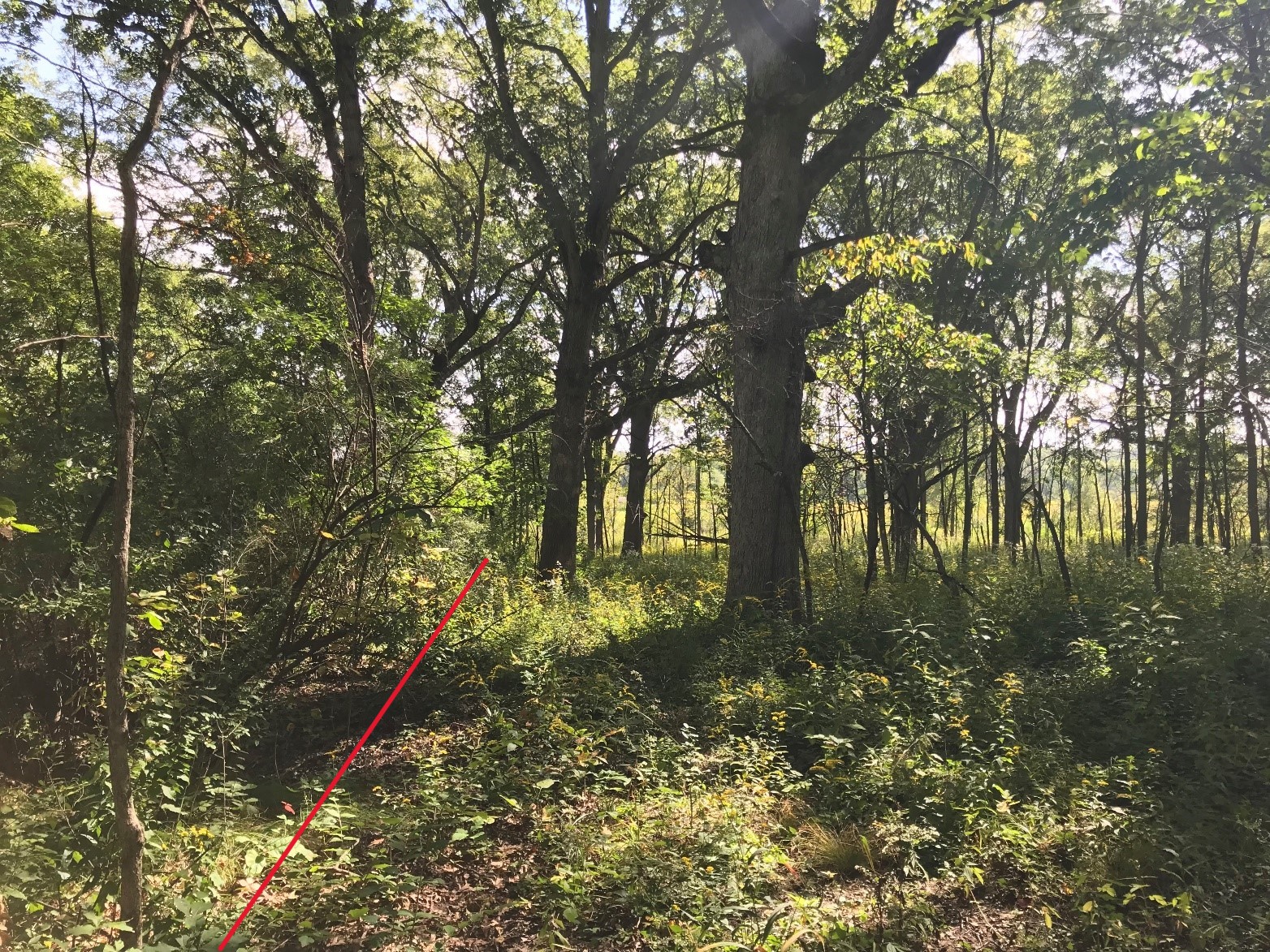
Above, an oak that grew in the open is now crowded in with invasive brush and small trees. The ground layer is reduced to weeds. Oak reproduction stops in such conditions. Brush clearing followed by frequent low intensity fires can reverse this situation. 

But oaks can also be damaged a bit by fire when dead branches sit against the base of the tree. When those branches burn they can heat the thick bark of an oak and damage a portion of the cambium layer. The tree likely won’t die. The bark will heal over the fire scar. For sure, it is better to burn the landscape and accept some bark damage than not to burn. If an oak woods is not thinned, or burned the oaks will die out.

Above, is a tree “cookie” that I viewed last week at a fire ecology class in Arizona. We were visiting the University of Arizona Tree-Ring Lab which is the biggest such lab in the world. I forget what tree species it is. Each of those years there was a landscape fire that left a small fire scar that healed over with new bark, but the fire left its tell tale sign.  

We toured the lower level where thousands of tree cookies are stored for researchers to come and look at fire scars. Something like 250,000 tree cookies from around the nation have been carefully studied. The story they tell is a continent of landscape fire set by humans and lightening for thousands of years.

So fire scars are ok, but I really like this old oak. Let’s save it from that nasty scar. The branches in this tree are abundant. It takes a chainsaw and a few minutes to move those branches off the base of the tree. If you have just a handful of oaks perhaps you can justify this effort. I enjoy clearing them, having conversations with trees. ”Your welcome” I say with a pat.

In this restoration we found about two dozen small bur oaks growing on several acres where we brush mowed and sawed out cherries, mulberry and box elder. I used the leaf rake to clear around them. It took about 15 minutes. I am using a fire leaf rake from Forestry Suppliers. They work great and hold up to vigorous use. If I had not raked around this young tree the heavy thatch that had built up might have top killed the oak. The tree would re-sprout which is what an oak does, but then I would have to wait several years for it to reach this size again. Bur oaks have become uncommon enough to motivate my raking.

Susan K helped me clear some cherries from this area. We bucked them up for fire wood for next winter.

All those shrubs out there are bur oak, in this case planted as acorns in this prairie restoration by us a decade before. This prairie is frequently burned and the oaks simply re-sprout each time. They must have prodigious roots by now. At some point in the future we won’t burn for several years and a bunch of those oak shrubs will become small and then perhaps large majestic oaks. 

Posted in Uncategorized | Tagged , , , , | 17 Comments

Northern Illinois Native Seed Phenophases

By Matt Hokanson

Have you ever discovered a population of rare native plants gorgeously in bloom and think to yourself “I must come back and collect seed from these plants to restore their population elsewhere”? Summer rolls on, life gets busy, and one fateful autumn day you suddenly remember the wonderfully healthy population of plants you were interested in collecting seed from. So, you gear up, head out into the field with marvelous vigor, but are soon sorely disappointed. You are too late, and the seed has fallen.

Has this ever happened to you? Have you ever wished there was a guide readily available that could help you understand when the seeds of native species are ripe? Now, there is. For northern Illinois at least. Welcome to the Northern Illinois Native Seed Phenophases Guide.

The native species listed in this guide are local to what is generally known as “Northern Illinois”, specifically, the counties of McHenry, Cook, DuPage, Lake, and Lee. The data was generously donated from volunteer groups, not-for-profit organizations, and municipal agencies. Some of the seed collection data sources utilized in this guide date back to 2005 and it is assumed seeds were collected during their prime ripening stage in any given year and are specifically local. It is also assumed seeds were collected from wild sources (i.e. not collected in a formal manicured garden setting). Yearly differences in climate/weather patterns, annual/monthly precipitation data, and average monthly temperatures were not taken into consideration.

Finally, major variances and anomalies were removed from any data that was used. Examples include seeds from species that were collected during the winter and prior to the next growing season (e.g., seed that ripened in September 2018 and was collected in February 2019). Native brome and rye grasses are not recommended to be collected after late October because their seeds often disarticulate from the glumes quite early during the seeding phase.

If you are interested in helping add data to this project, please submit individual observations to the respective Facebook group within your county. Organizations or groups that perform large-scale seed collection operations can submit their data at the end of the season. If this guide works out well, it could be a model for other natural areas conservationists throughout the country to use.

The more data collected the more refined this list will become. Phenological shifts, which are likely happening due to climate change, can be tracked over time as well.

Here is a link to our website that has the chart available for viewing and download. This is where I will keep the most up-to-date documents. woodstowetlands.com/seedcollectionchart/

Posted in Uncategorized | Tagged , , , , | 1 Comment

GRN Workshop at Nachusa Grasslands September 10-12, 2024

by Bill Kleiman

Our survey last week suggested that September 10-12 were better for more people, but plenty said these dates were not their top choice. The top topics people chose were habitat restoration lessons learned, weed management strategies and science and monitoring. Most respondents were resource managers.

Our planning team has met a few times already and we will update you during the winter.

Photo by Charles Larry Main unit prairie. Looks like weedy Canada goldenrod to me. Not all that glitters is gold. 

Posted in Uncategorized | Tagged , | 4 Comments

Woodland fire at Hill Site

By Bill Kleiman

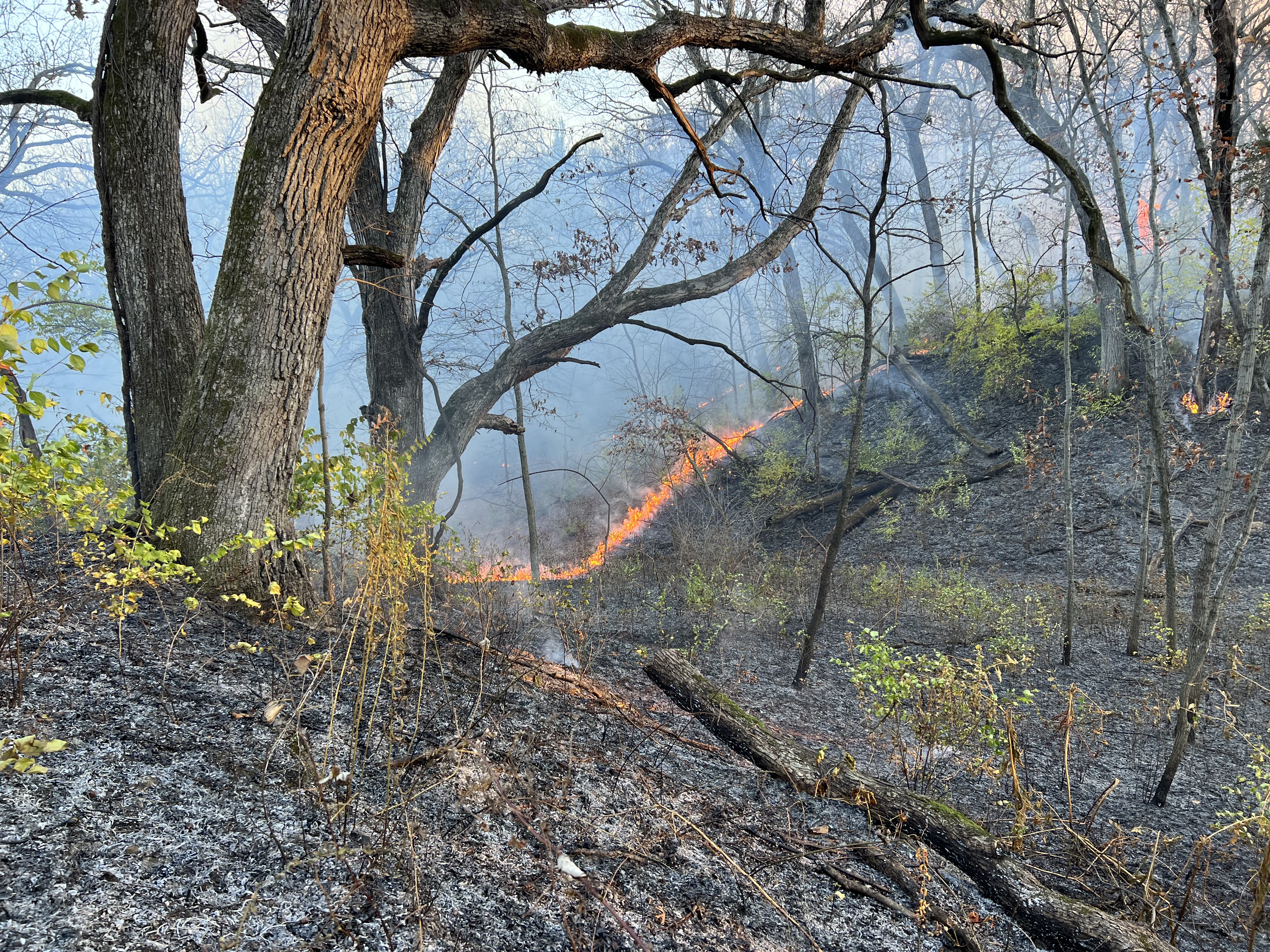
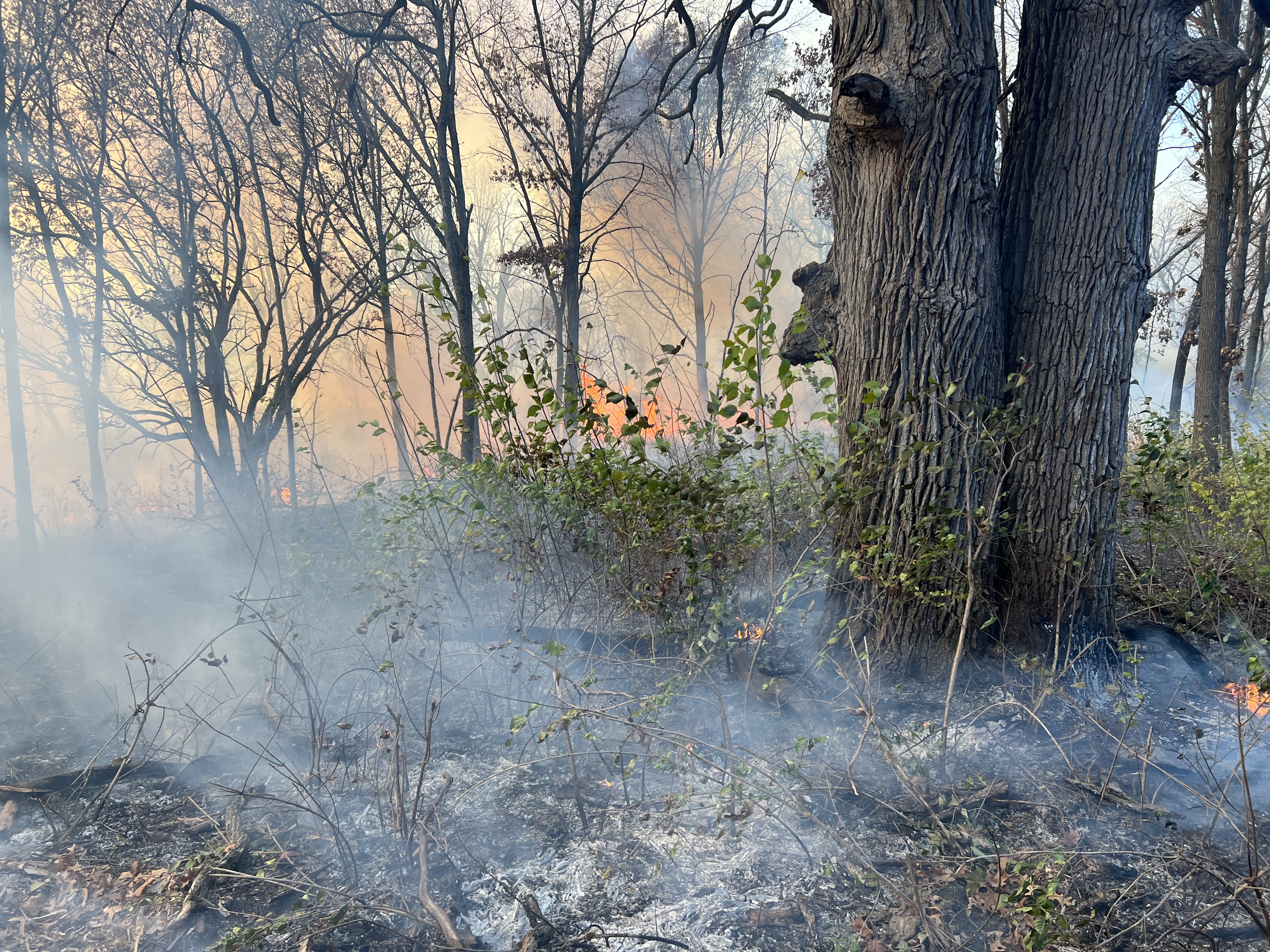
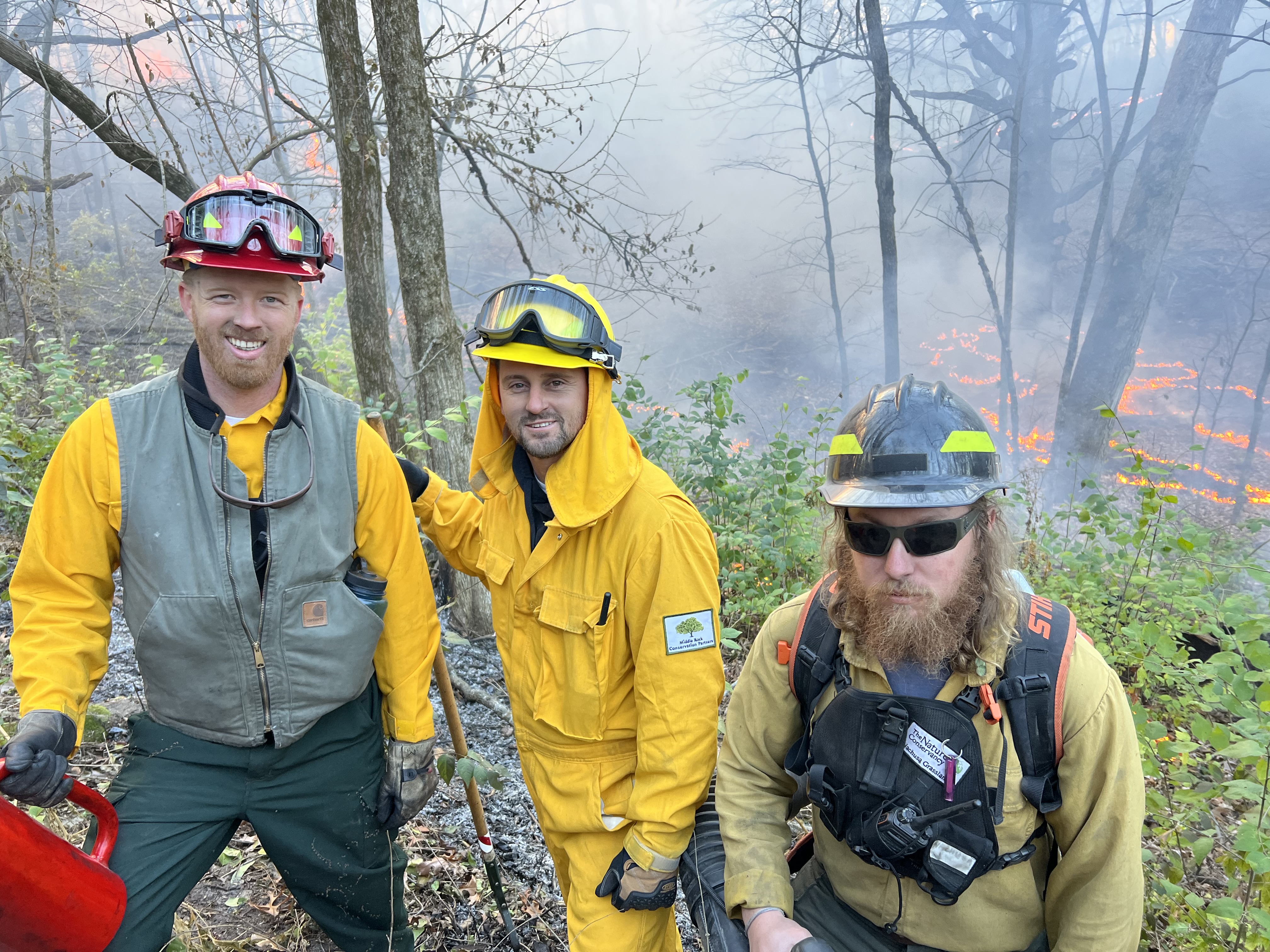
On November 17, 2023 Middle Rock Conservation Partners burned their Samuel and Edna Hill Site. This photo shows good ecological fire, with a slow backburn consuming oak leaf litter and some dried plants from the previous few years. The shrubs there are all invasive honeysuckle. The heat of the fire will top kill most of those shrubs. The shrubs will re-sprout from the roots and after several years be big enough to produce flowers and then seeds. In those intervening years the increased sunlight supports the growth of flowers, grasses, and sedges. Hopefully, the crew returns in a few years to burn this woods again.

The thick bark of this bur oak is not effected by the modest heat of this fire. Although a really old oak with a rotted center can sometimes get a chimney fire going and damage the tree. Bur oak regeneration requires sunlight which comes with repeated use of fire, and in a restoration phase selective thinning of non-oak trees and shrubs.

Kaleb Baker, Pete Oliver with crew boss Phil Nagorny. Behind them at the bottom I can see how Kaleb walked in a wandering circle with the drip torch to get that bottom burning. Behind Kaleb the fire is moving more vigorously up a north facing slope. The winds were northwest.

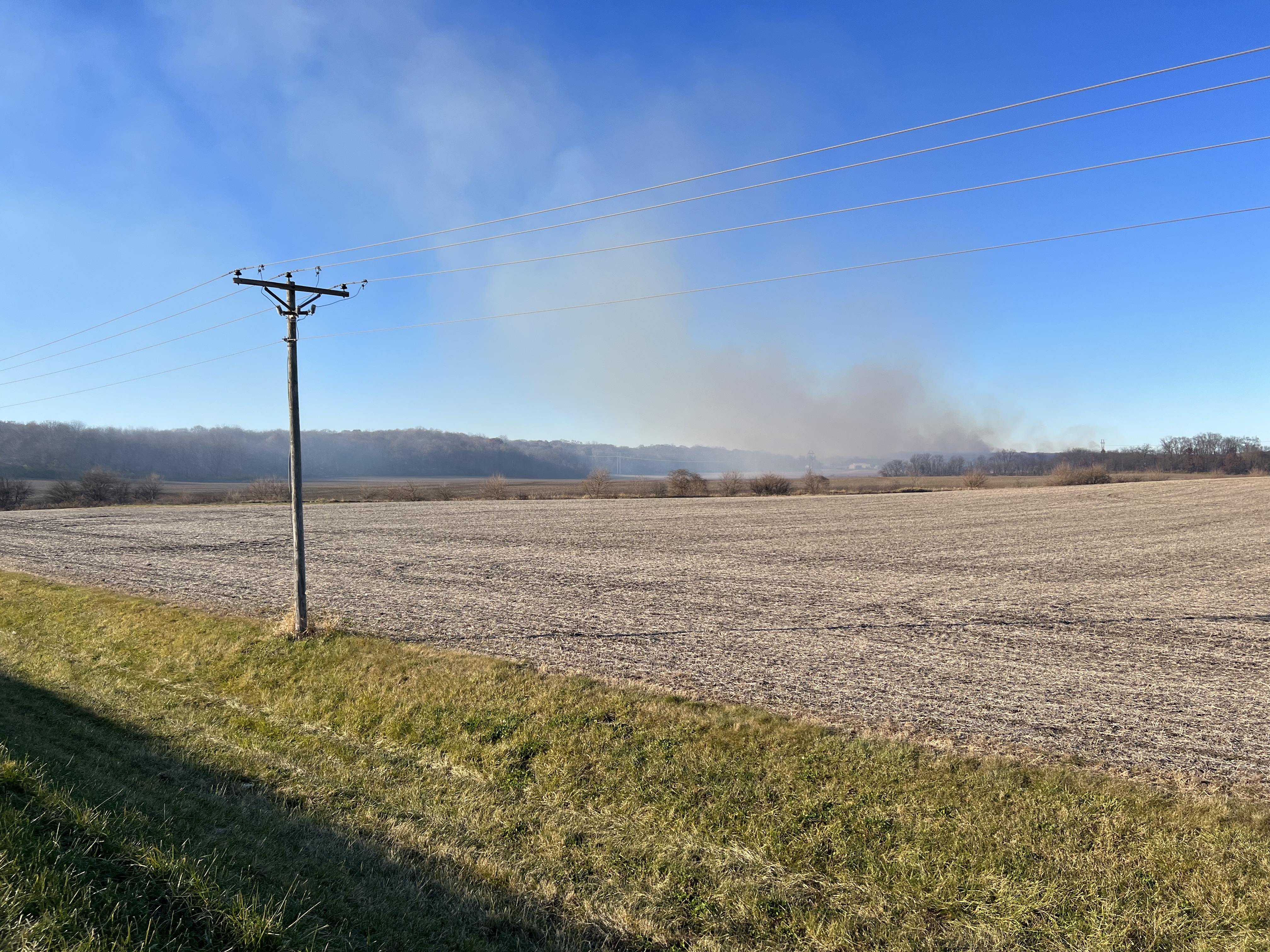
The down wind smoke column rose slowly as the fire reached peak burning. The wind direction was chosen to be away from the adjacent highway.

Near the end of the day, burn boss Damian Considine leads an after action review to share lessons learned and discuss tasks for the end of the day. Some logging equipment of Grover Tree is seen on the left. Grover has helped thin some of the trees that were crowding the oak and hickory on this site, mostly cedar, cherry, box elder and elm.

This is the second prescribed fire at this site, which the group purchased four years ago. You can find other posts about this site:

https://grasslandrestorationnetwork.org/2023/11/09/the-power-and-limits-of-photo-monitoring/https://grasslandrestorationnetwork.org/2022/12/08/photo-monitoring-results/https://grasslandrestorationnetwork.org/2020/04/12/brush-mowing-2/https://grasslandrestorationnetwork.org/2020/02/07/scaling-up-to-mow-brush/

Posted in Uncategorized | Tagged , , , | 1 Comment

2024 GRN workshop at Nachusa Grasslands, Illinois

We are working to plan the 2024 GRN workshop at Nachusa. We were wondering what time of year you might want the workshop, and what things you want to talk about? I made a very short survey to get your feedback.

Here is the survey link: https://www.surveymonkey.com/r/85TG3KR

-Bill Kleiman

Posted in Uncategorized | 2 Comments

Invasive Shrub Treatment Methods – Cut Stump and Basal Bark Comparison

By: Julianne Mason, Restoration Program Coordinator

It’s an understatement to say that woody invasives are a major threat to our natural areas.  They can displace native plant communities, alter wildlife habitat, and impact nutrient cycling and other ecosystem processes.  Here in northeastern Illinois, they have become nearly ubiquitous. I’m hard pressed to think of any protected upland areas in my county that are not threatened by some kind of woody invasive species.  The scale of where woody invasives need to be treated = basically, everywhere we want to maintain or restore highly diverse natural communities!

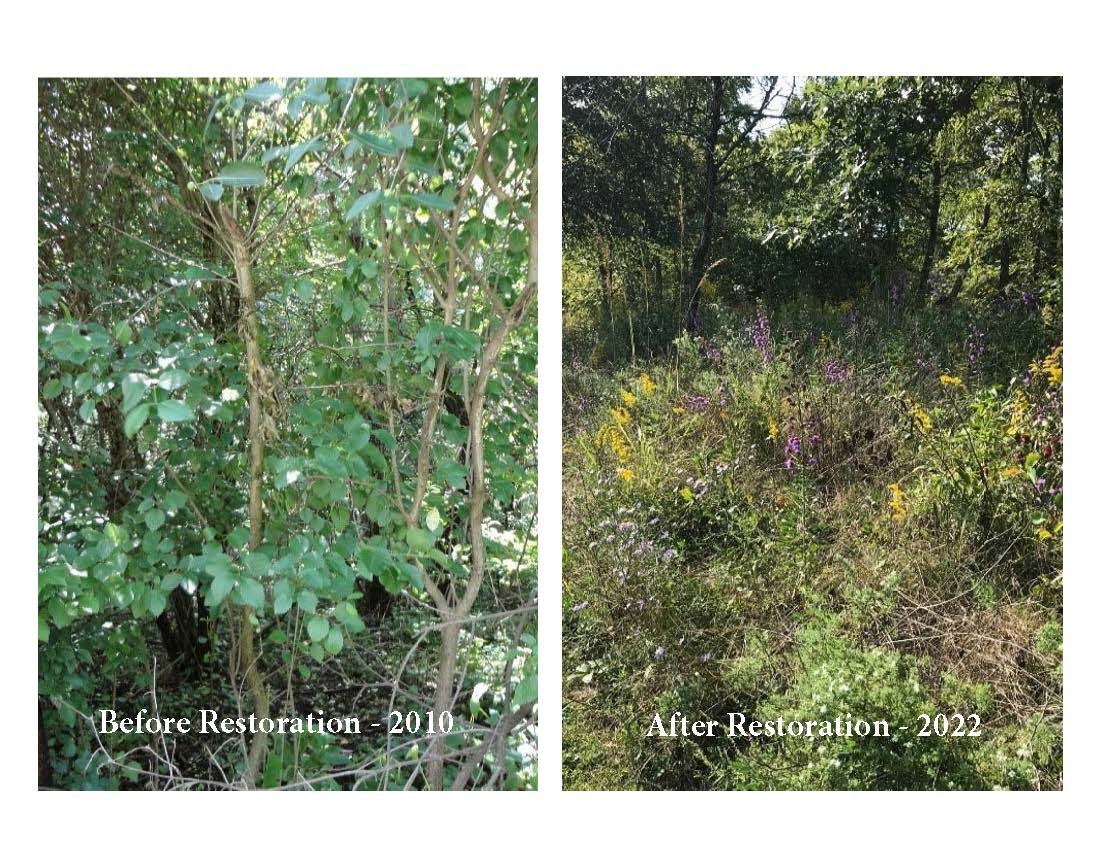
Dense brush before restoration (left) and more diverse savanna community after invasive shrubs are managed (right).

Previous posts in this blog have documented how basal bark treatments are an effective and efficient method to kill invasive woodies.  Bill Kleiman’s original posts on the topic were published in five parts in 2016. Part 1, Part 2, Part 3, Part 4, Part 5. If you haven’t read them yet, I highly recommend doing so.  Based on his recommendation and data, we did our own trials which were also highly successful. JM post. After that, we started using basal bark treatments fairly extensively to combat invasive woodies.  Even so, we still use cut stump treatments in many situations too. I analyzed the past six years of treatment data to compare the time and resources needed for the two different treatment methods to control woody invasives.

Woodland where invasive shrubs have not been controlled (left) and where woodland has been managed with prescribed burning and basal bark treatment to invasive shrubs (right).

Here’s a summary of the past six years of treatment data for my organization (the Forest Preserve District of Will County in Illinois).  For scale, we own ~22,000 acres in 80 preserves scattered across the county, and we perform a moderate level of ecological management in ~6,000 acres.

Cut stump treatments are when the invasive shrubs are physically cut, using chainsaws, hand tools, or specialized machinery like forestry mowers.  Herbicide is typically applied to the cut stump to kill the shrub.

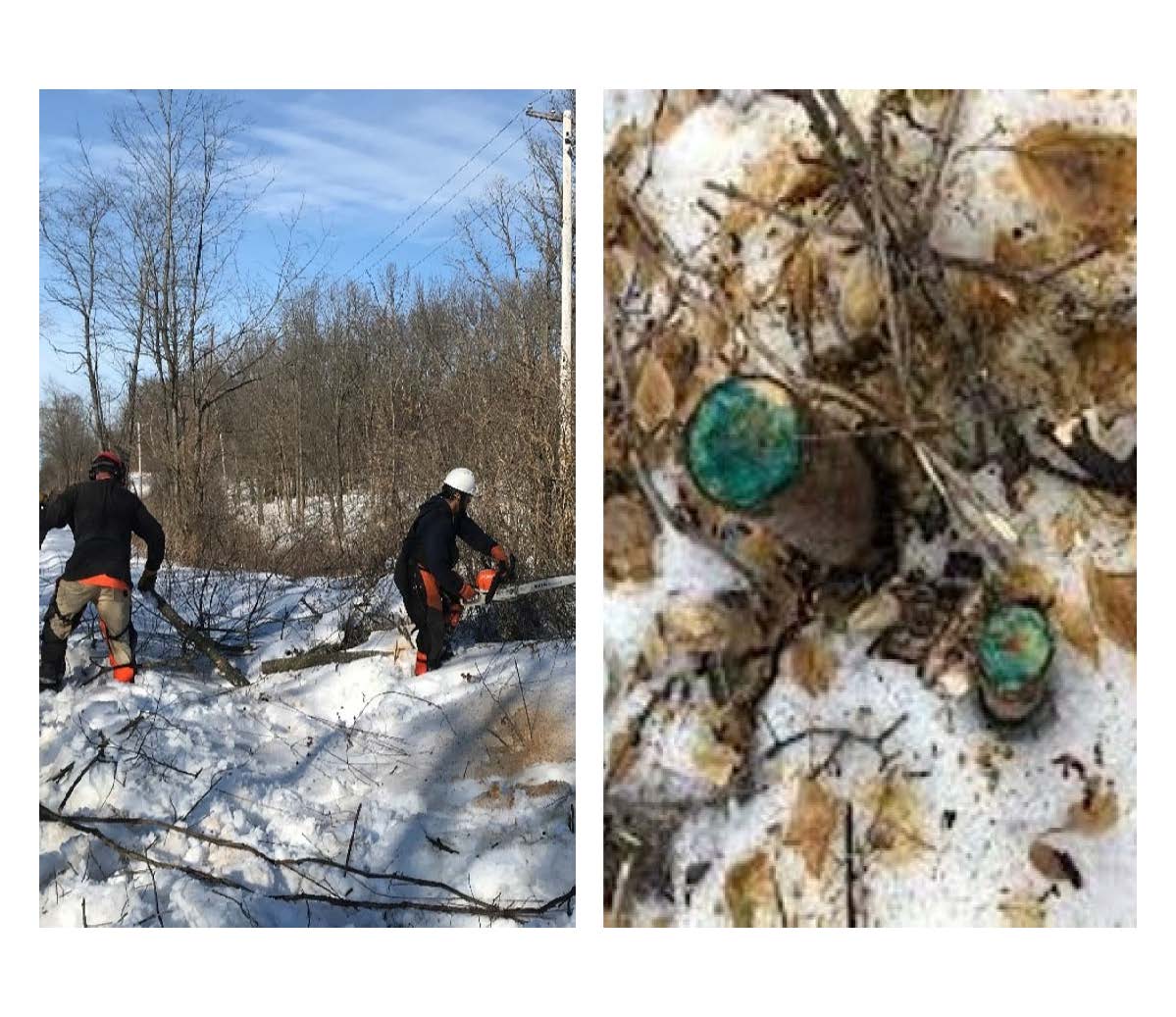
Cut stump treatment where the brush is cut with chainsaws (left) and herbicide applied to the cut stumps (right).

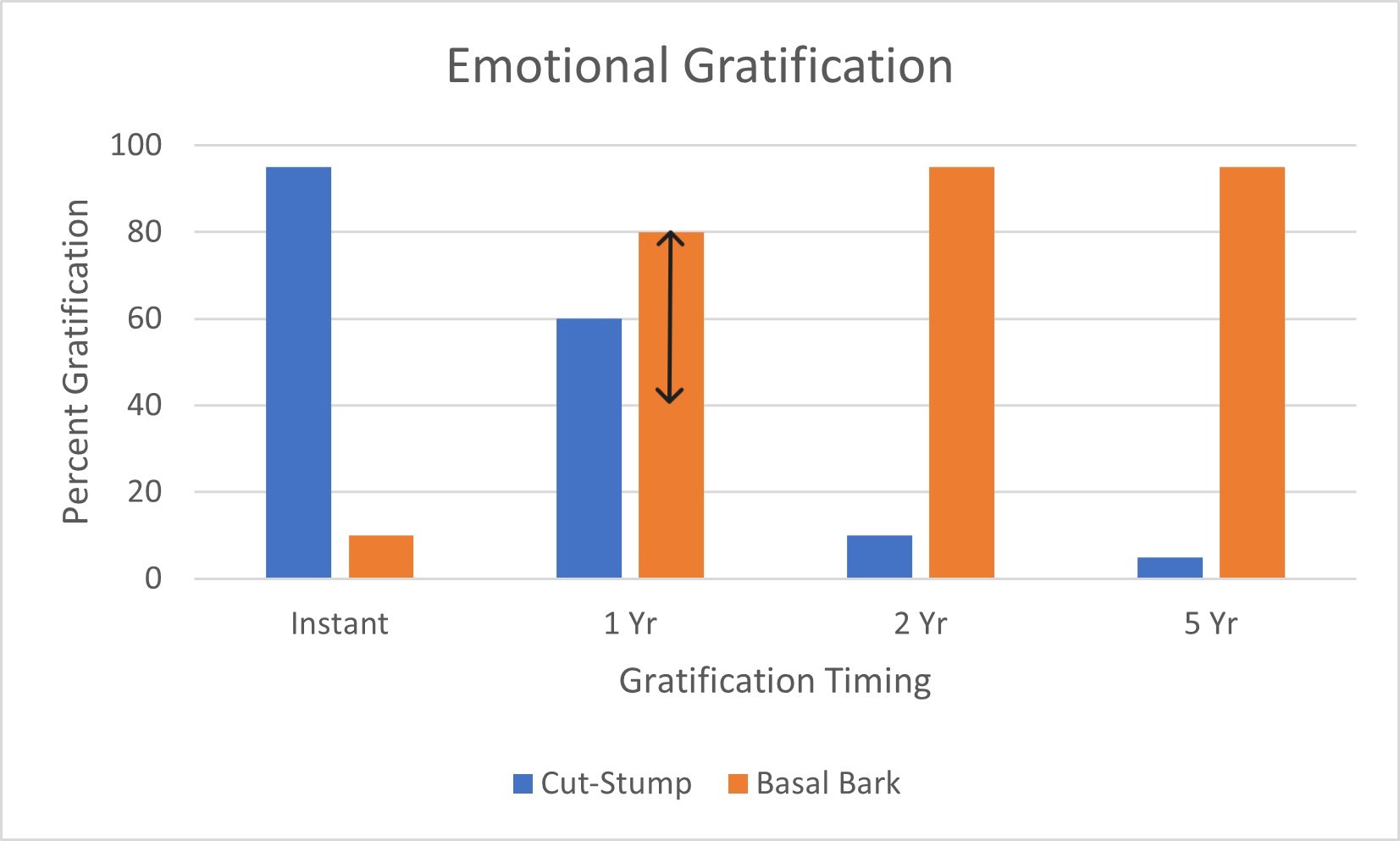
Sometimes, the cut material is stacked into piles and burned.  This is fun and satisfying, and brush clearing using the cut/stack/burn method is a popular activity during volunteer workdays.  The main advantage of cut stump treatments is instant gratification.  We’re humans, after all, and it’s very satisfying to see visible progress after a day of hard work.  A dense thicket of shrubs in the morning is physically removed, and it’s very satisfying to look back at our progress at the end of the day. 

The cut/stack/burn approach is popular because it is fun and satisfying.  We’re humans and we love instant gratification.

If machinery like a forestry mower is used, one drawback is that ground disturbance caused by the machinery can kill plant crowns located in the top inch of soil and result in opportunities for weedy species to establish. Generally, there is a slower recovery of the native plant community.  This is especially true if the ground is not frozen solid.  In our area, there are often limited numbers of days when the ground is frozen solid, which limits the acreage that can be treated under optimal ground conditions.

Mechanical clearing also results in instant gratification.  Compare the area cleared (right) to the uncleared area of dense shrubs (back, left).

An unfortunate reality is that many invasive shrubs resprout vigorously after a cut stump treatment, and areas often need multiple re-treatments after the initially satisfying (but rather ineffective) cut stump treatment. 

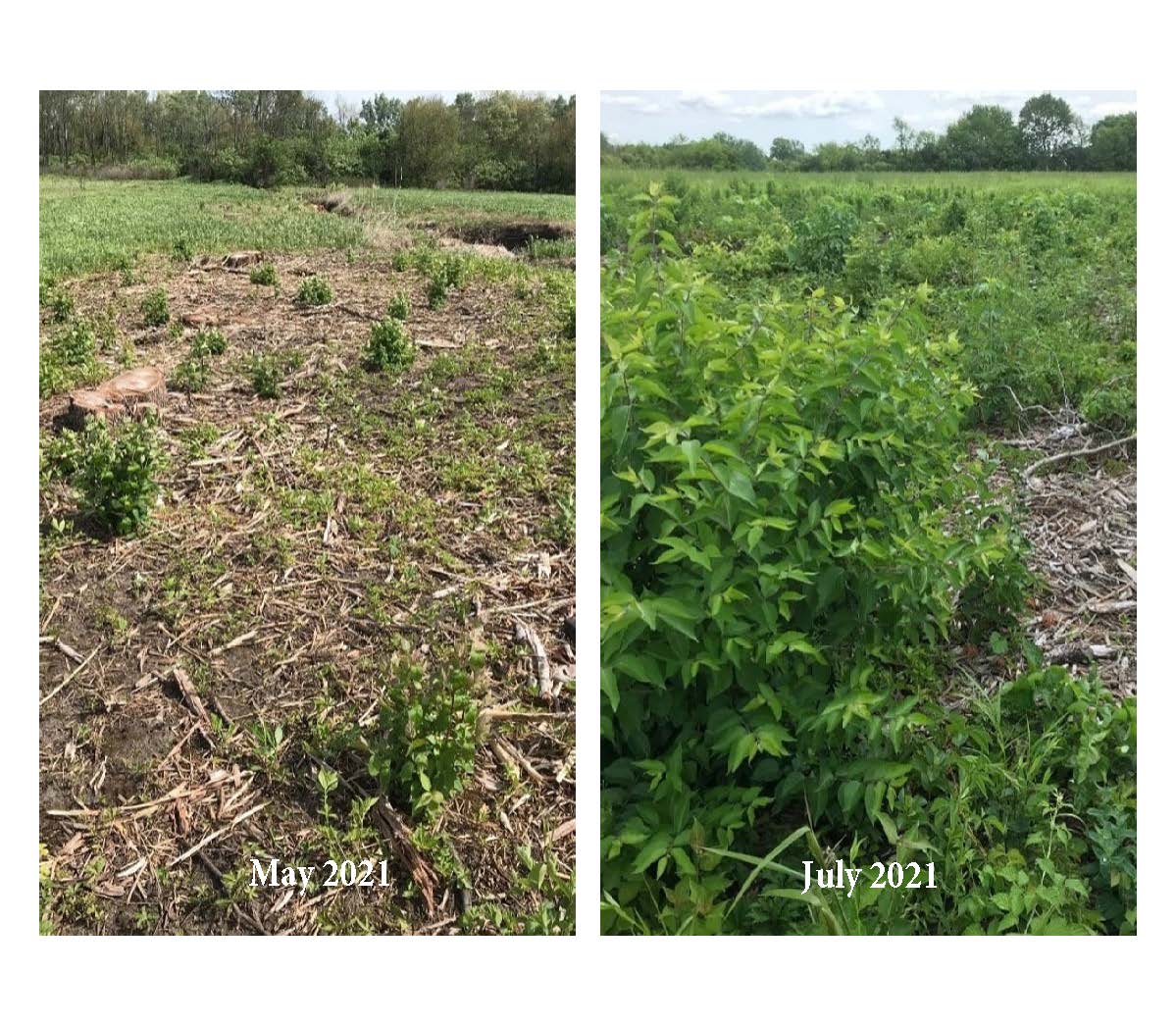
Invasive shrub resprouts after cut stump treatment.  Note how much the shrubs grew back by the following summer.

In a previous study, I found that only ~30% of resprouting shrubs died from a follow-up foliar herbicide treatment. Insert sad face here.

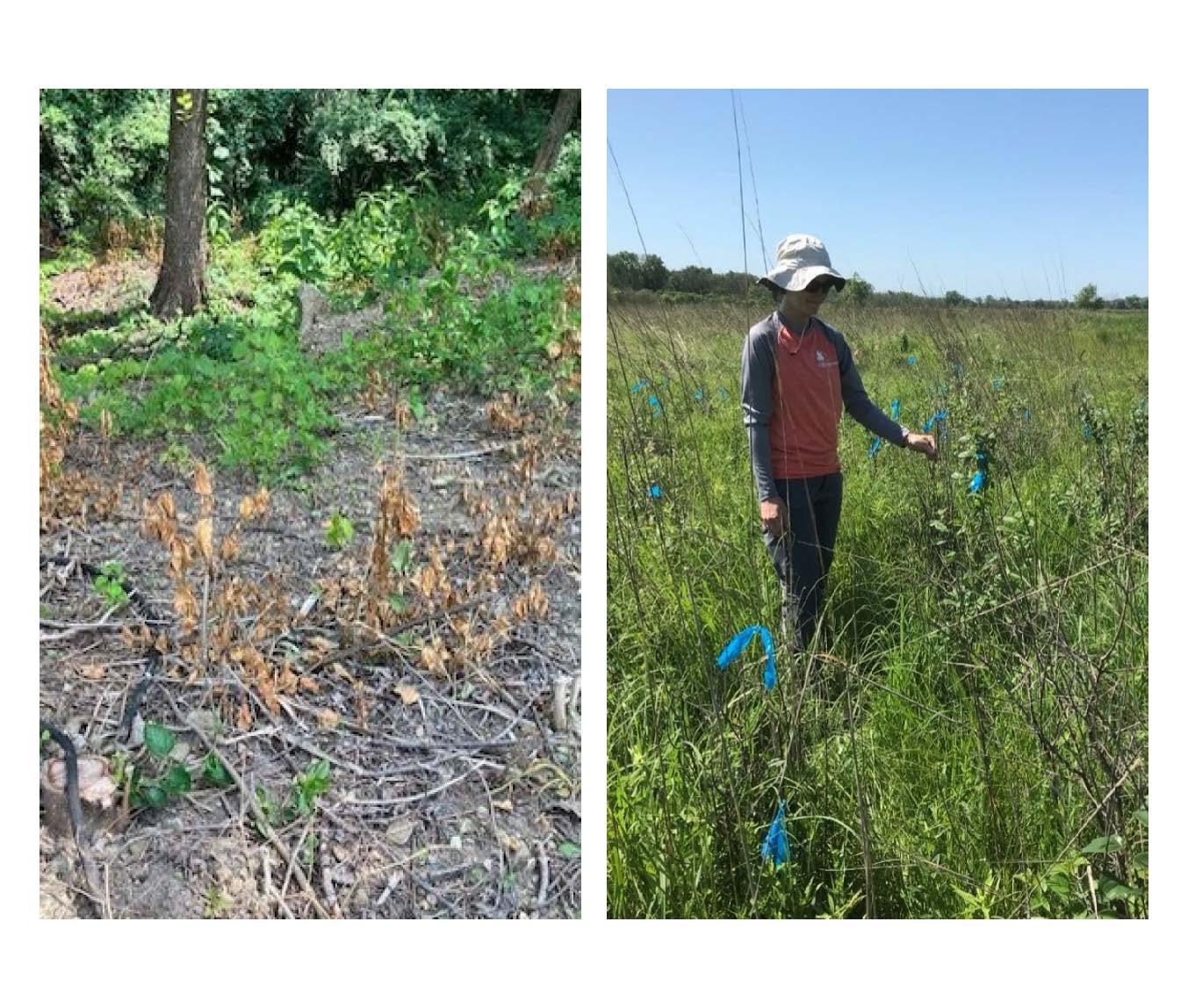
Invasive shrub resprouts look dead after a foliar herbicide treatment (left).  However, 70% of them rebounded to life (right).

Cut Stump Treatments – By the Numbers:  Due to various factors, most of our cut stump treatments have been done by hand using chainsaws, and clearing with machinery has been used less frequently.  For the past six years of available data (2017-2022), cut stump treatments have taken an average of 38 person-hours per acre.  To complete 949 acres of cut stump treatments, it has taken over 30,000 hours by our staff, contractors, and volunteers.  The initial cut stump treatments have used 1.0 gallon of herbicide per acre.  Follow-up foliar treatments to re-sprouts have used an additional 1.8 gallons of herbicide per acre, and taken an additional 5 person-hours per acre.  All that adds up to a lot of effort!  However, multiple rounds of follow-up treatments are often needed, and in balance, little effective management is achieved especially compared with the amount of time and effort invested.

Basal bark treatments are an herbicide-only method.  We typically use a backpack sprayer to spray the bottom part of the stem with 15% triclopyr ester (Garlon 4 or equivalent) in bark oil.  It’s important to get full 360 degree coverage around the stem’s circumference for it to be effective.  If most species are only sprayed on one side of them stem, the treatment will not fully kill them.  A happy exception is that all canes that come out of the ground of multiflora rose and Japanese barberry need to be treated, but full 360 degree coverage is not necessary for those species.  For small diameter shrubs, just the bottom inch or two need to be sprayed.  For massively large shrubs (4-6+ inch diameter), the bottom 9-12” need to be sprayed.  We try to use low pressure on the backpack sprayers to minimize the overspray zone and reduce collateral damage to other plants.

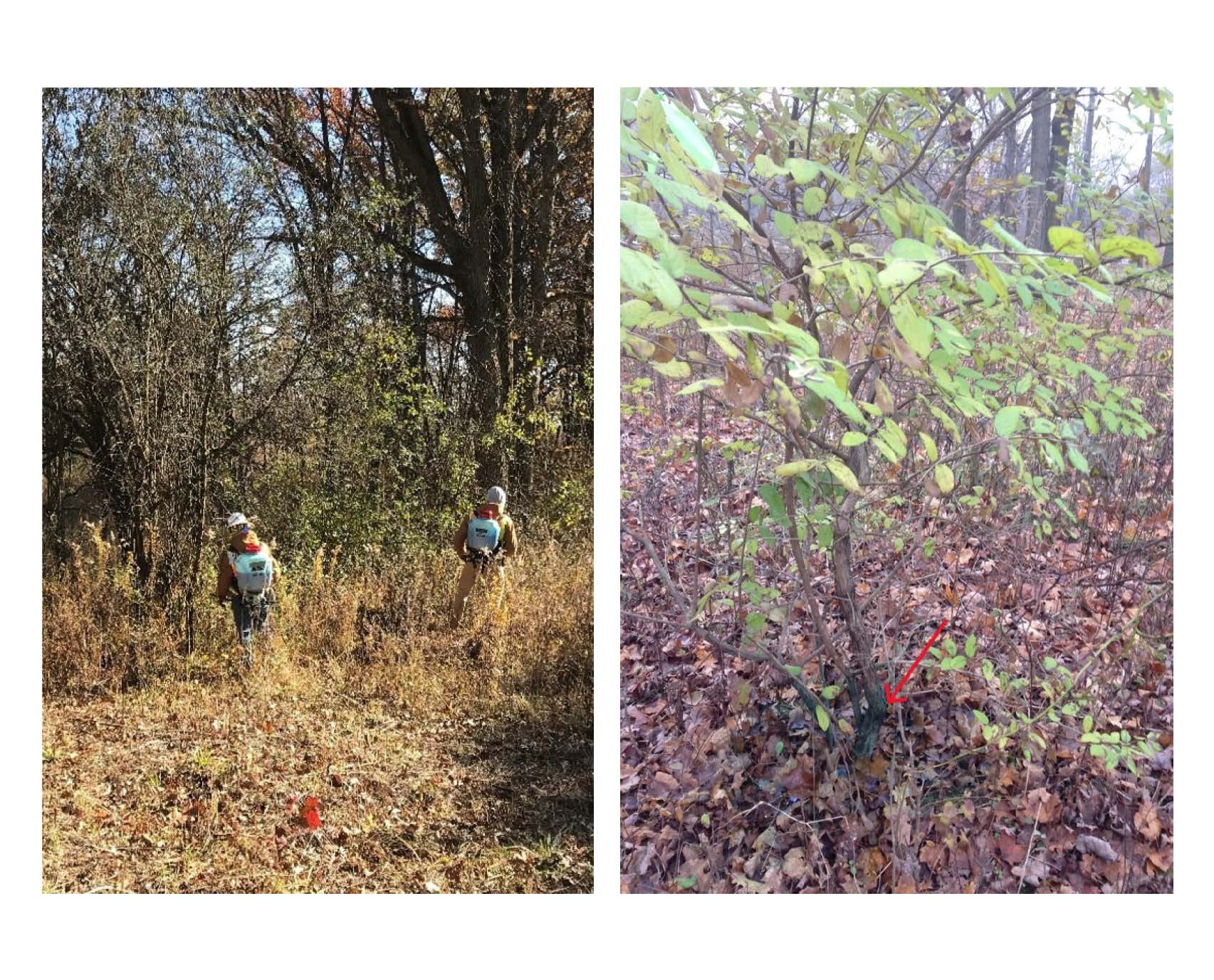
Basal bark herbicide crew (left) and invasive shrub with basal bark herbicide treatment (right).

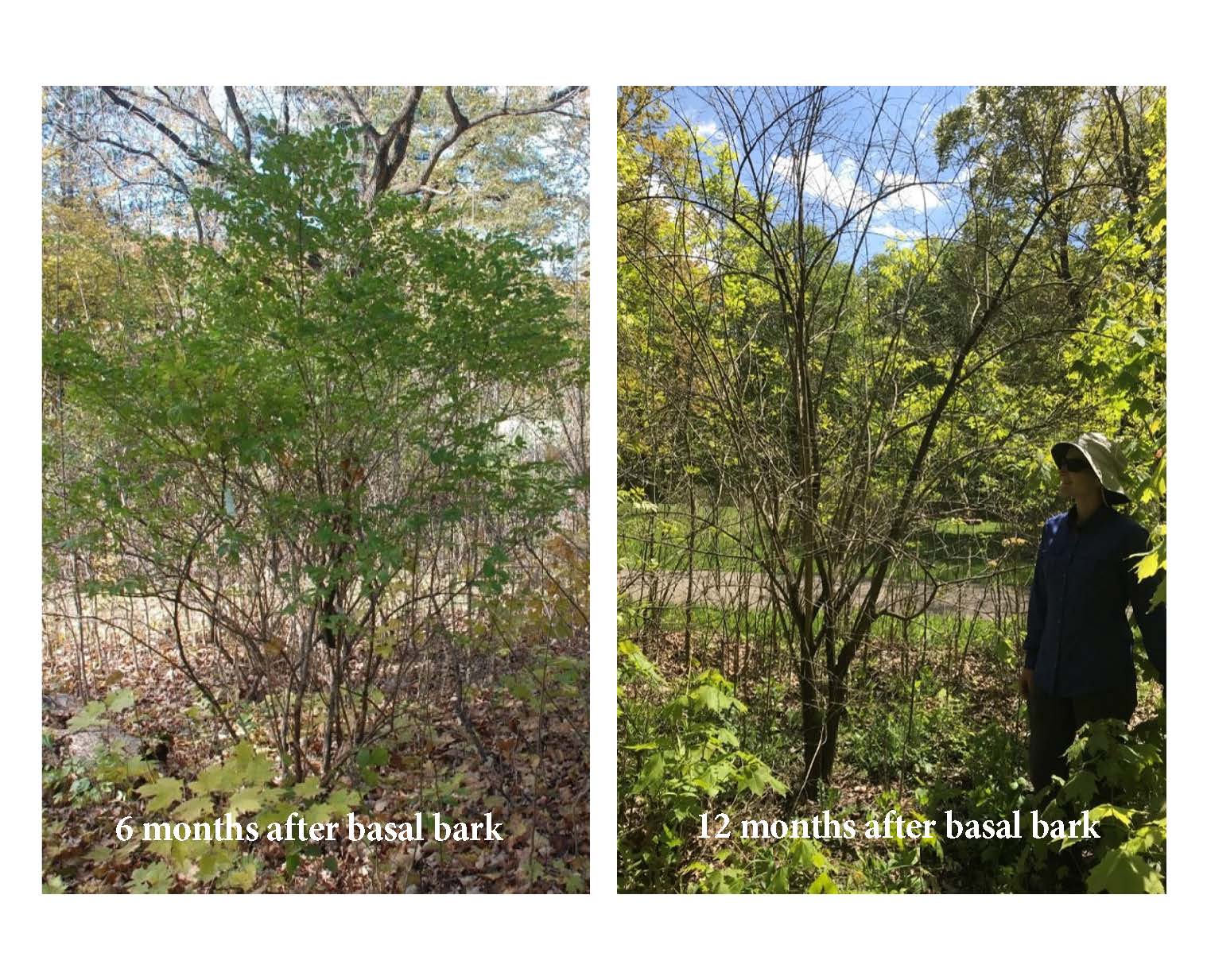
The main downside of basal bark treatments is that it can take a long time (even 12-18 months) for treated woodies to die.  However, it’s highly effective – more than 95% of properly treated individuals do die. Eventually.  It just takes time.  From an emotional standpoint, it’s the complete opposite of the instant gratification of cut stump treatments – the gratification is delayed by many months or even years.

Slow death.  Invasive shrub still has green leaves 6 months after basal bark treatment (left), but is fully dead 12 months after treatment (right).

Basal Bark Treatments – By the Numbers:  For the past six years of our data (2017-2022), basal bark treatments have taken an average of 4 person-hours per acre.  A few of the very densest brush areas took more than 40 hours per acre, which is on par with most cut stump treatments.  But those super-dense areas only accounted for 4% of treatment entries.  In almost all cases, the brush looks scary from a distance and the edges can be dense.  However, when you get in there, nearly all areas are actually passable to be treated with a backpack sprayer.  Overall, basal bark treatments took significantly less time than cut stump treatments.  Our staff, contractors, and volunteers have been able to treat 4,900 acres in less than 20,000 hours.   An average of 1.7 gallons of herbicide was applied per acre during basal bark treatments, which is slightly more than the initial amount of herbicide applied during cut stump treatments (1.0 gal/ac) but less than initial cut stump treatments plus foliar resprout herbicide applications (2.8 gal/ac).

Cut Stump Treatments

Basal Bark Treatments

  • Instant gratification
  • Resource intensive – 43 hours/ acre by hand
  • 2.8 gallons of herbicide per acre
  • Ground disturbance potential if machinery
  • Re-sprout lots
  • Foliar follow-up – only 30% effective on resprouts
  • Multiple years of follow-up needed
  • Delayed gratification
  • Resource efficient – 4 hours/ acres
  • 1.7 gallons of herbicide per acres
  • Up to 12-18 months for shrubs to die
  • Dead standing
  • >95% effective
  • Patience needed

Given the scale of acreage that needs invasive woody treatments, we need to be able to treat thousands of acres per year effectively with our current resources.  Like most natural resource management organizations, we have a limited amount of time, money, and personnel.  Basal bark treatments take patience, but they are very efficient and effective.  We need to recognize our human emotions, and to acknowledge that the biggest advantage of cut stump treatments is that they give us instant gratification.  However, to manage the scale of the woody invasive threat, we need to have patience with basal bark treatments, a slower-acting but more effective management approach.  It’s important to effectively scale up invasive woody treatments in order to maintain or restore highly diverse natural communities.  Efficient, effective management (albeit with delayed gratification) is ultimately more satisfying!

* Special thanks to my co-worker, Becky Blankenship, for making the graphs!

Posted in Uncategorized | Tagged , , , , , | 15 Comments