By Bill Kleiman
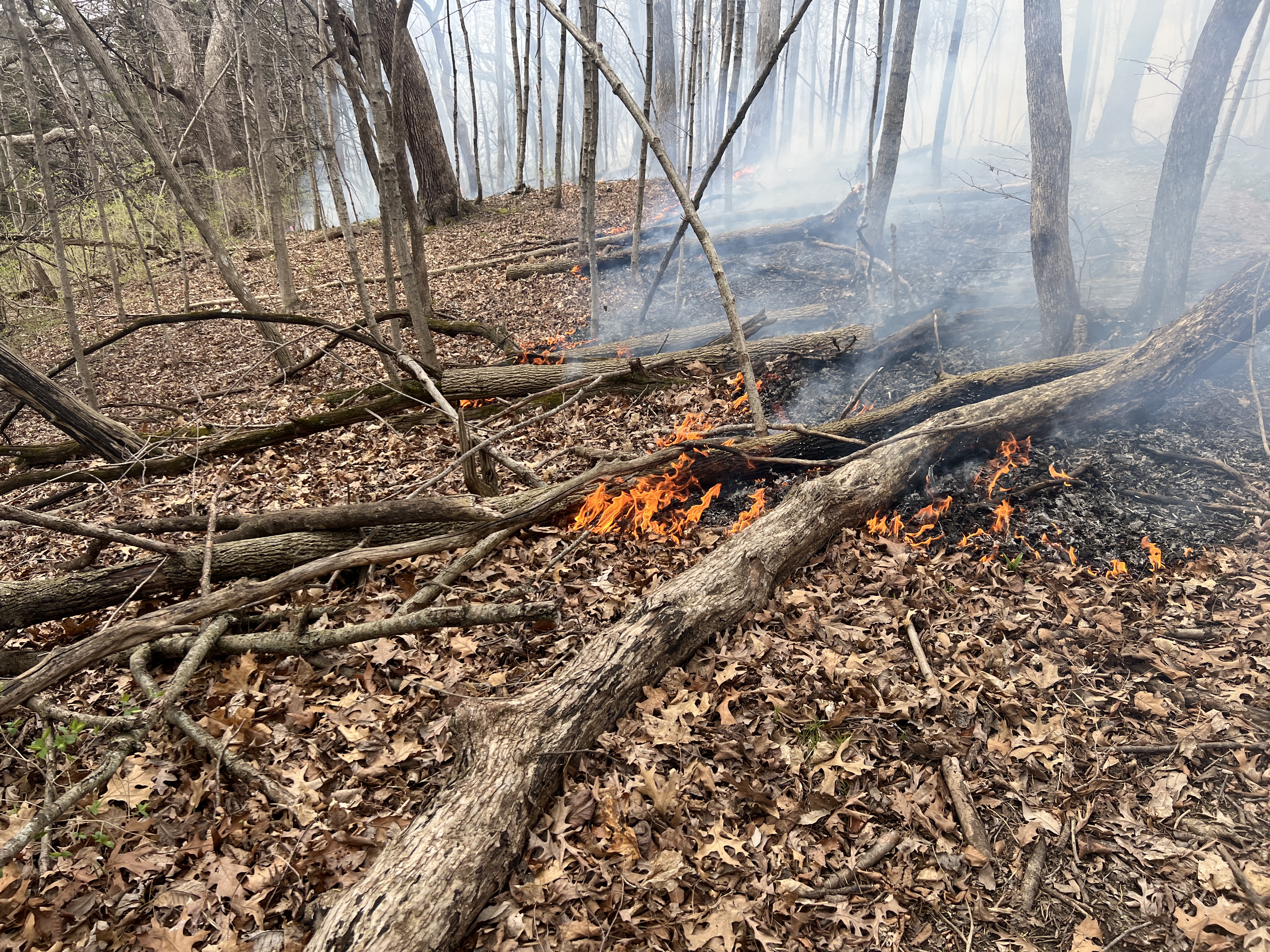
April 9 IL DNR Franklin Creek Natural Area, 21-acres. These very modest flames do some good if they can just keep going.
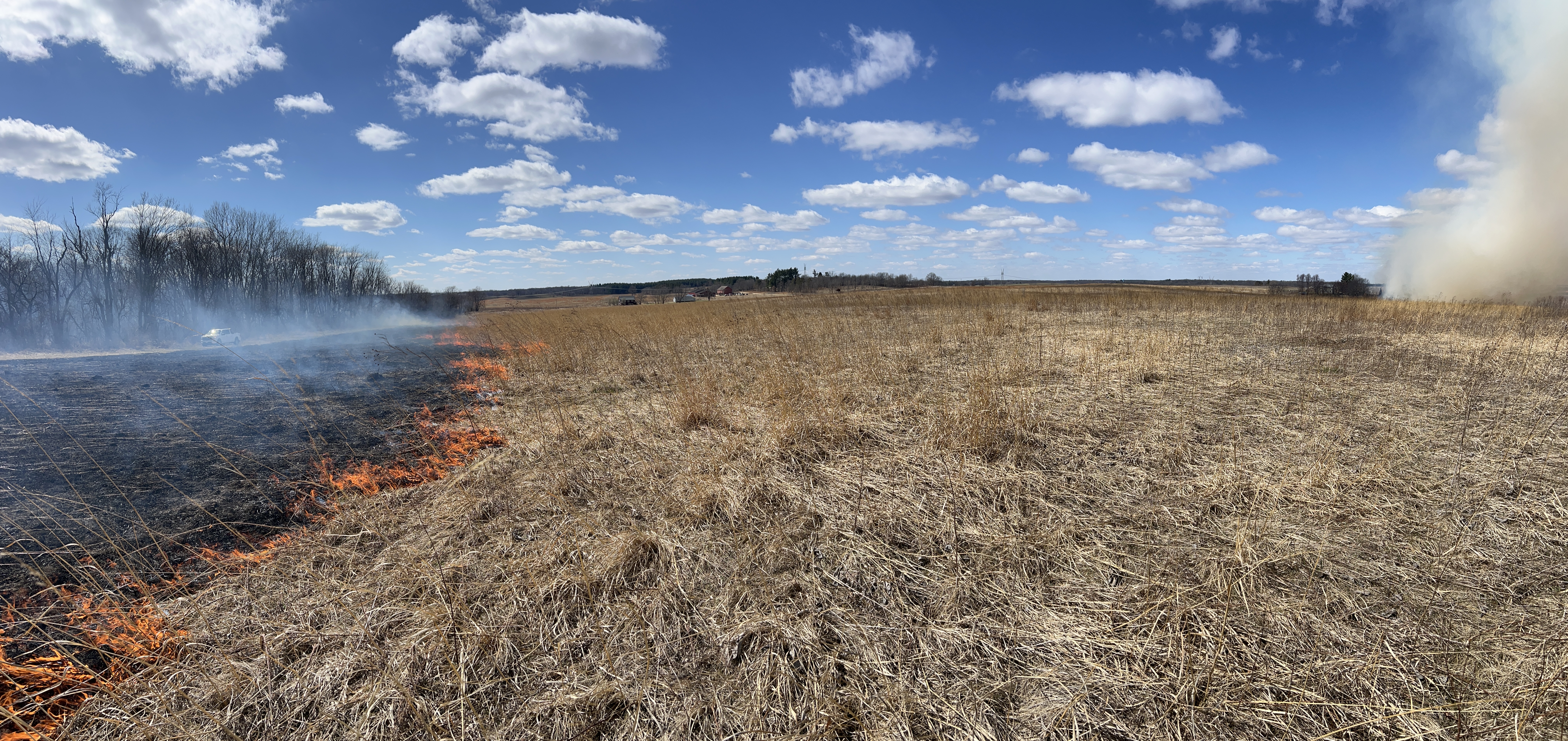
March 27: Yellow House Prairie burn 140– acres
The bottom line:
- Number of burn days was 20, which is a limiting factor.
- We burned 2,370-acres of Nachusa on 23 burn units
- We assisted at 6 units for 278-acres.
- Average size of a burn unit was 103-acres with a unit as small as 15-acres and big as 333.
- Average crew size was 10.
- These values are typical for us.
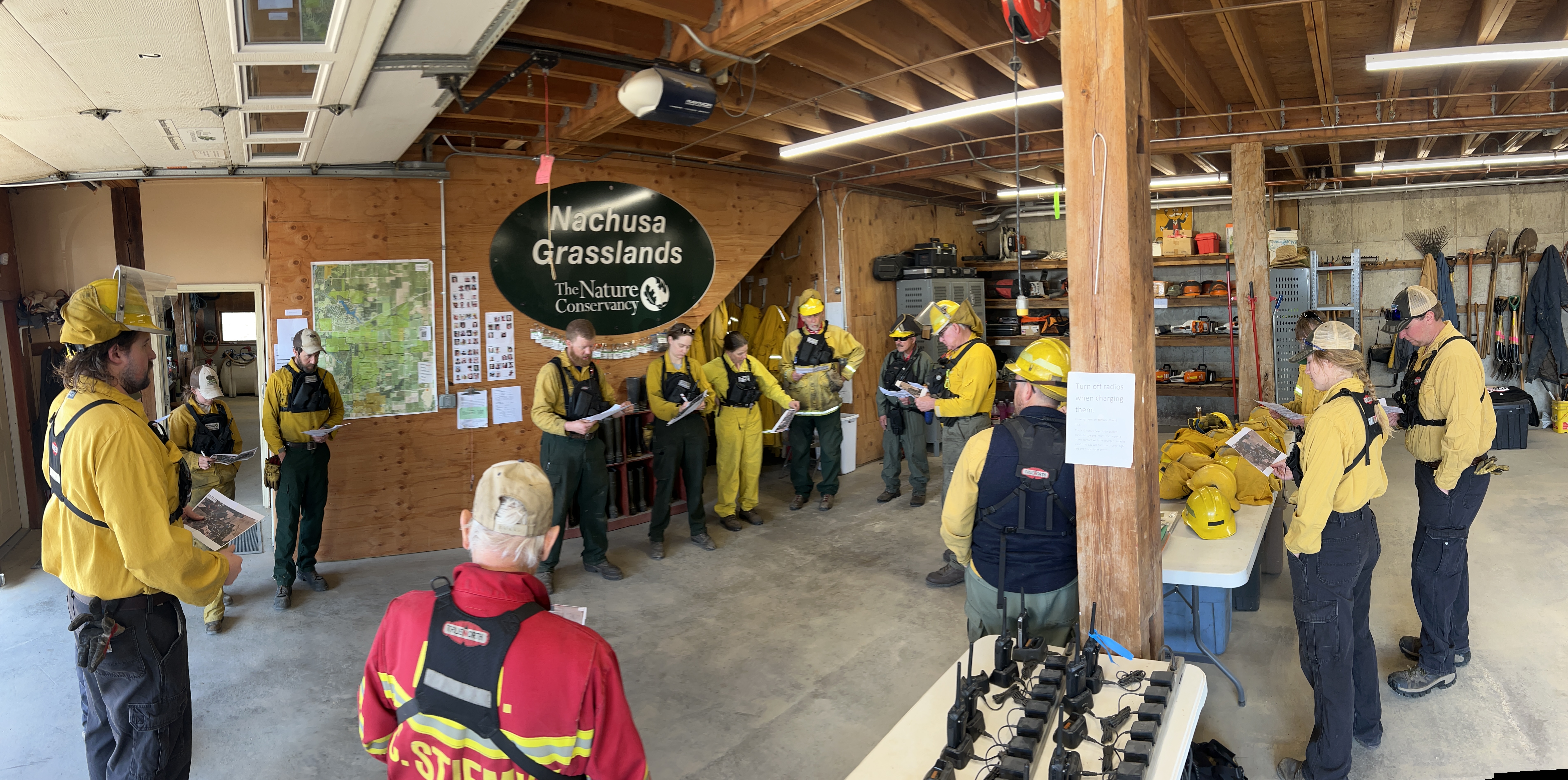
March 30: Kaleb Baker of INPC leads the fire safety briefing for a DNR fire at Franklin Creek State Natural Area. At the briefing each crew receives a map and a crew roster which tells them which team they will be on & what equipment they will have. The map and roster are printed and on the radio table when crew arrive, and they enjoy pondering the information gleamed from it. The briefing lasts about 20 minutes. Then each team gets together and figures out some last minute logistics, tests their equipment, then they leave to go inspect their fire line that they will control for the day.
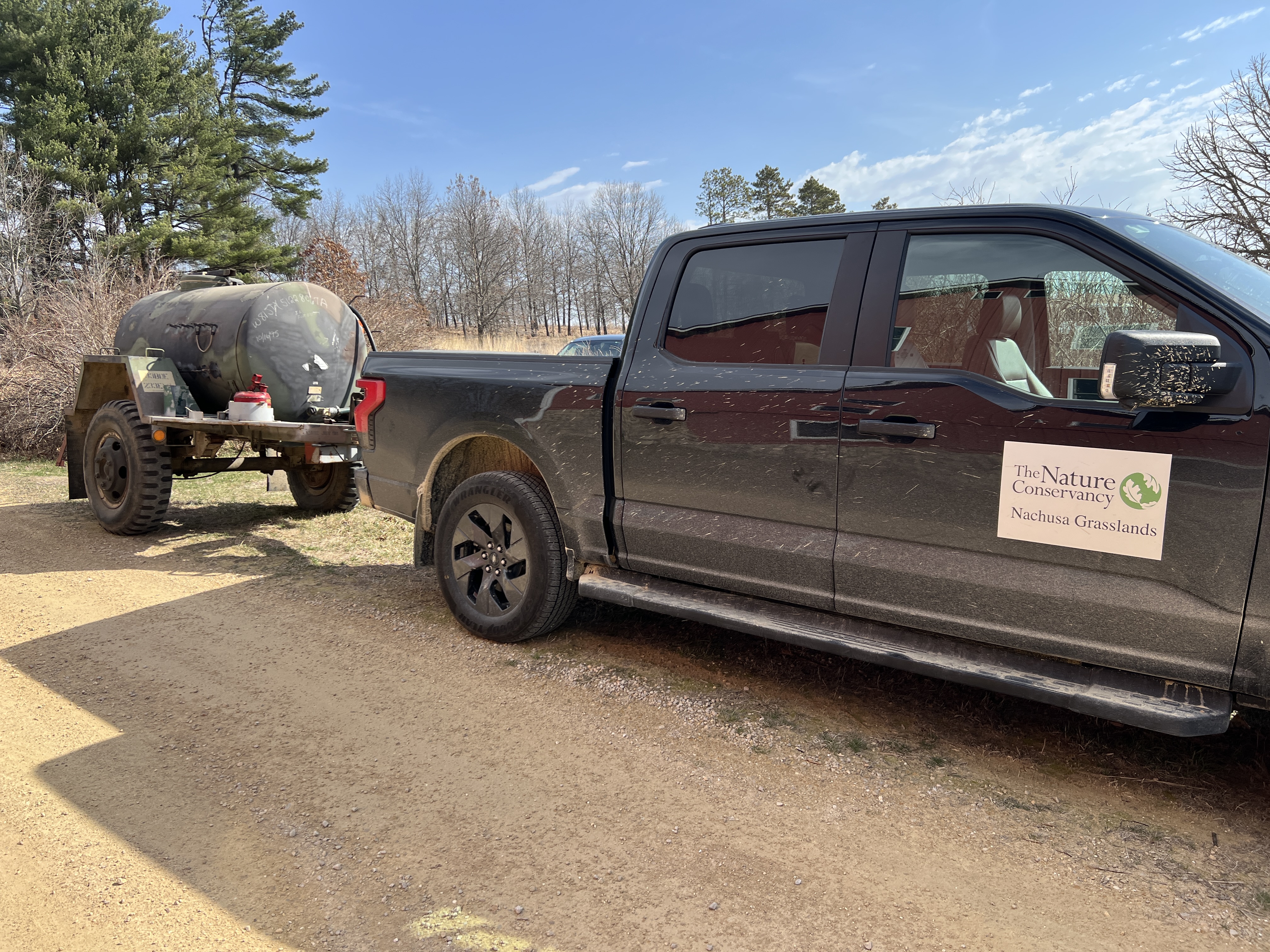
What is better than one water tender? Two tenders! We find this extra army surplus water buffalo is nice to have when the burn unit is big. Each team can have their own water tender in a place where it helps them refill an empty tank and return to the line quickly. It also gives this new EV Ford truck which we don’t want scratched yet something to do.
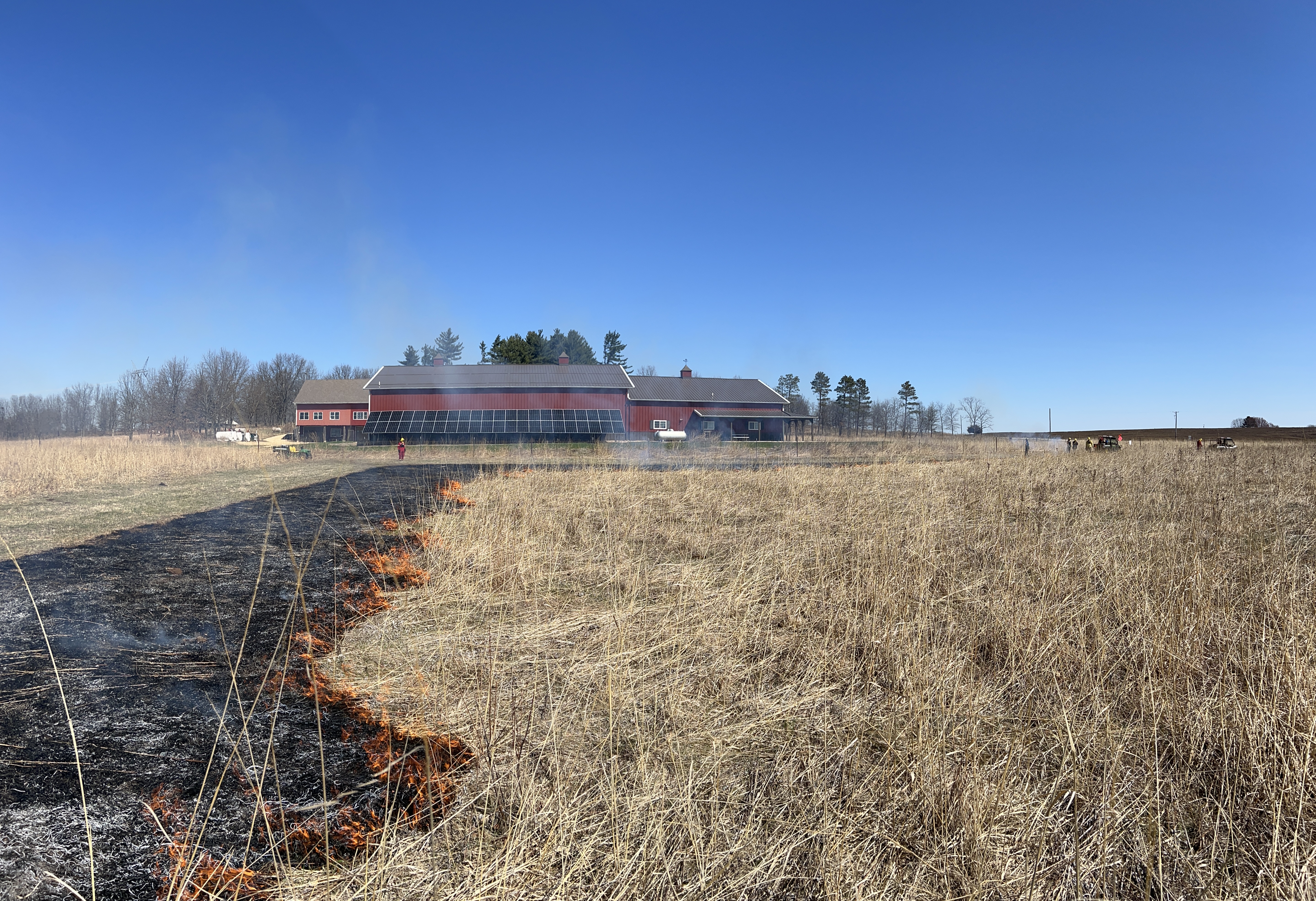
April 7: East part of Main Unit. Our fire scout in red, Joe Richardson, watches in the corner where we started ignitions. The clockwise team is to the right, and the counterclockwise is off camera on left.
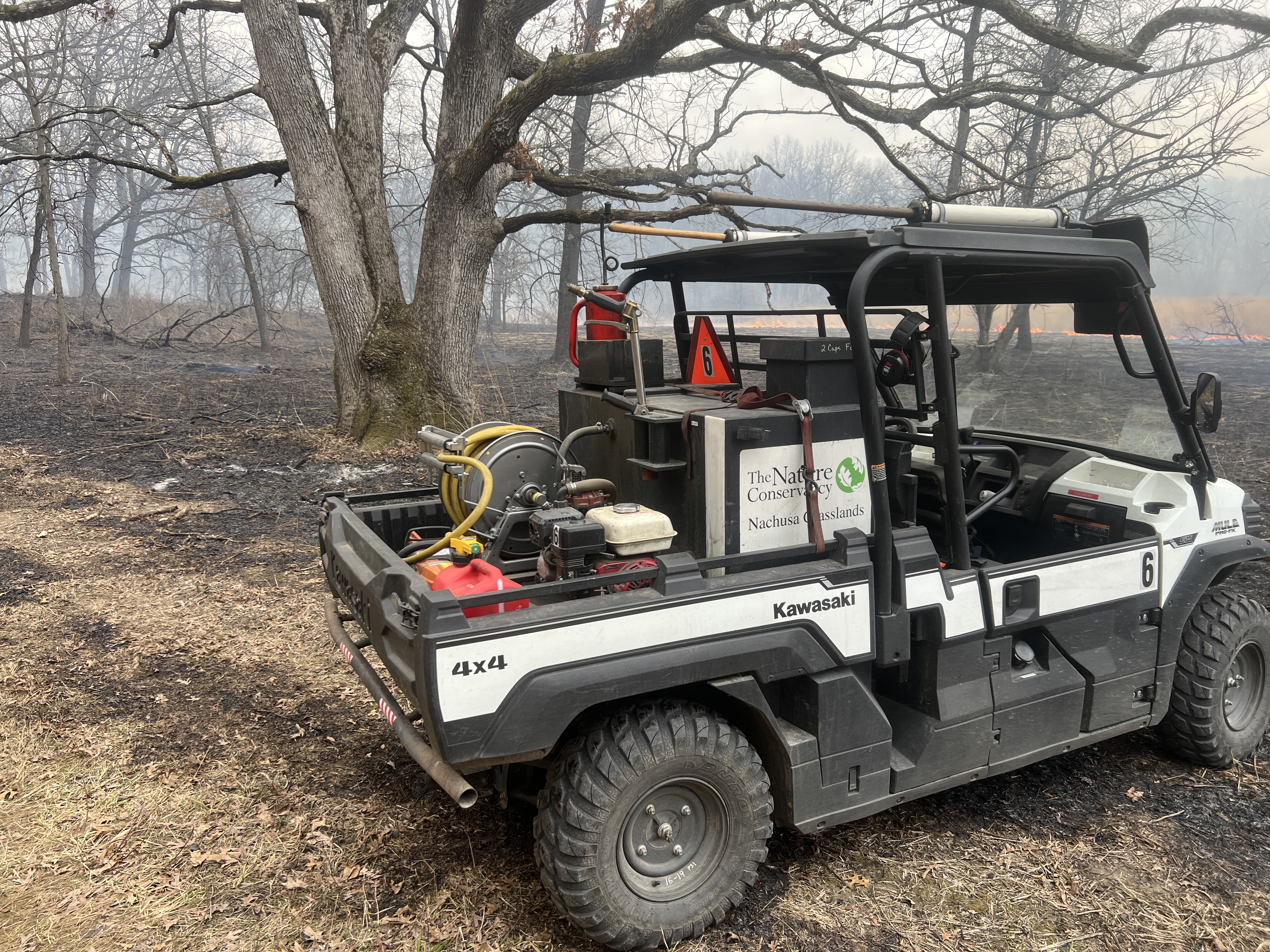
We like UTVs for their mobility. I don’t like that a two stroke gasoline fuel can is there, especially behind the pump motor exhaust. I removed it. You can find a GRN blog post I wrote about fire equipment here: Rx fire pumper units and tenders | grassland restoration network
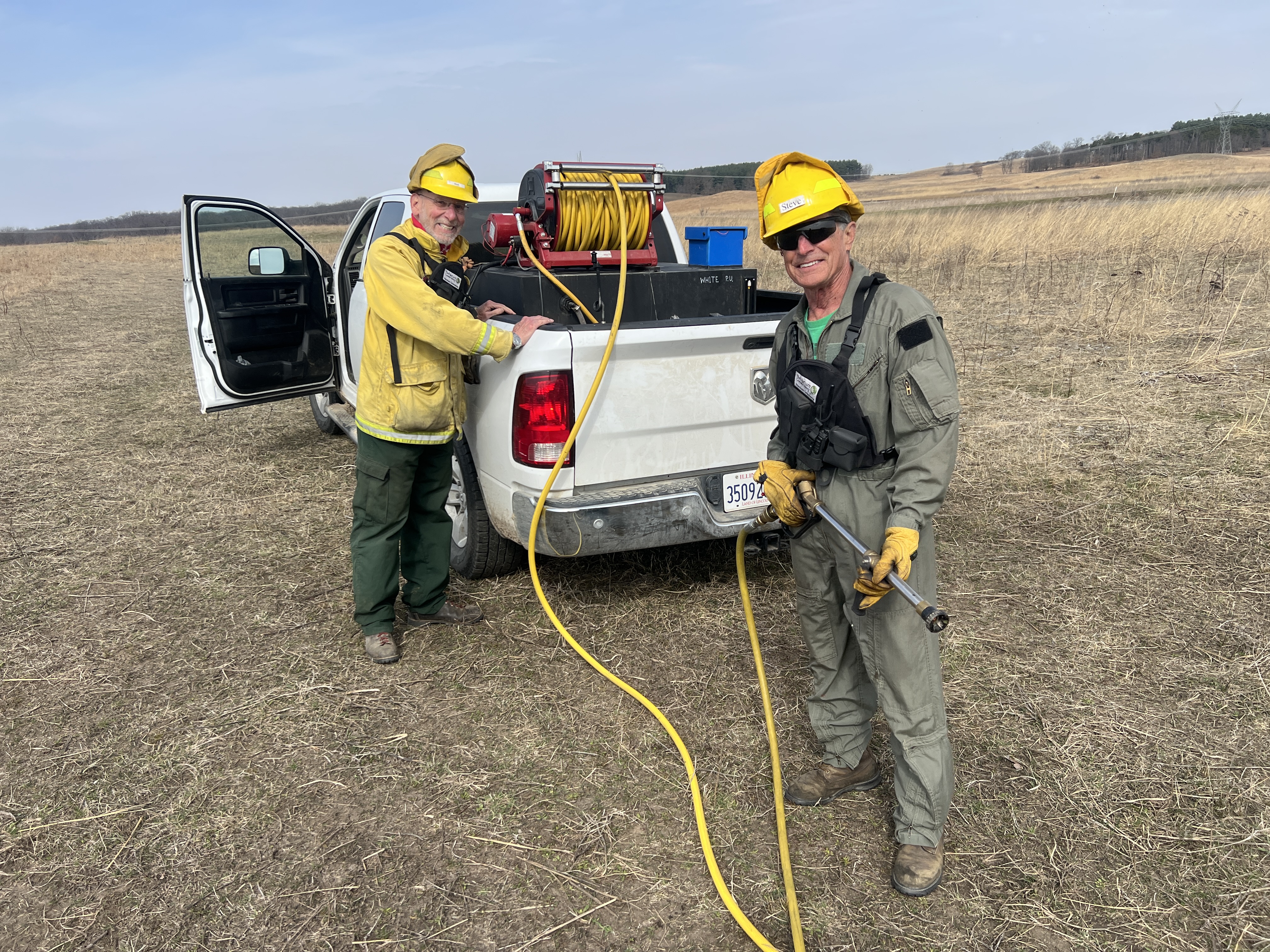
On the open prairie the pickup truck pumper is nice as it holds nearly 3 times the water the UTV carries. Mark Herman was driver with Steve Lardner on the hose.
Lessons learned:
- Communicate. Tell the chain of command what the issue is. If the radios are full of static, try that cell phone. Line bosses need to communicate across to each other and up to the burn boss, without being chatty, vague, or cautious.
- Redundancy: We had a fire where a UTV went down with a flat tire. Hence we need enough boots and tires on the ground to fill in such gaps.
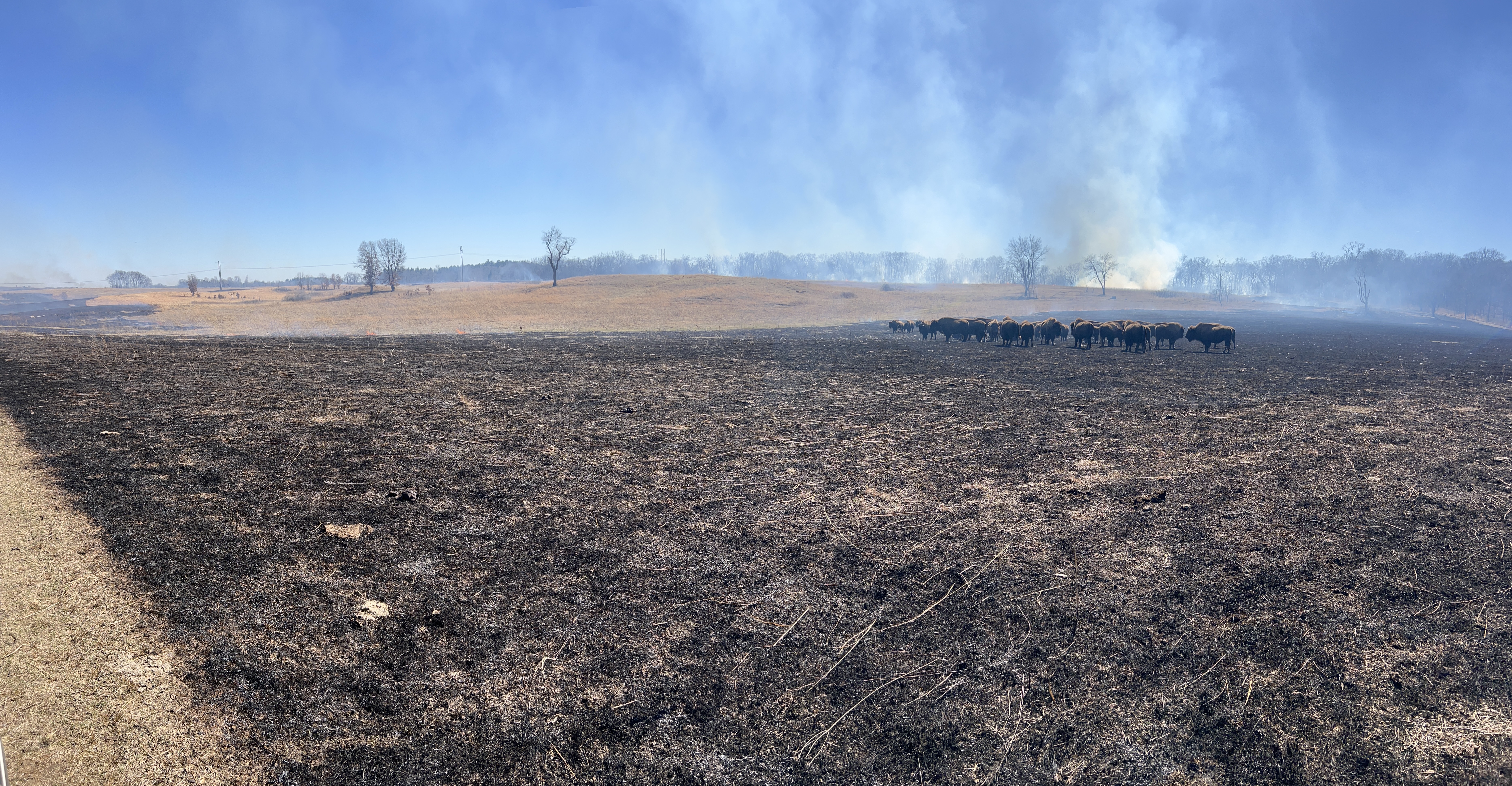
March 9: Hook Larson Unit, 114-acres. Bison are typically very calm when we burn. This bunch was in the burn unit. We slowly moved them out of the unit and kept burning. Bison seem to hover in grazed lawns where the fires hardly burn, and they will hang out in fresh black.
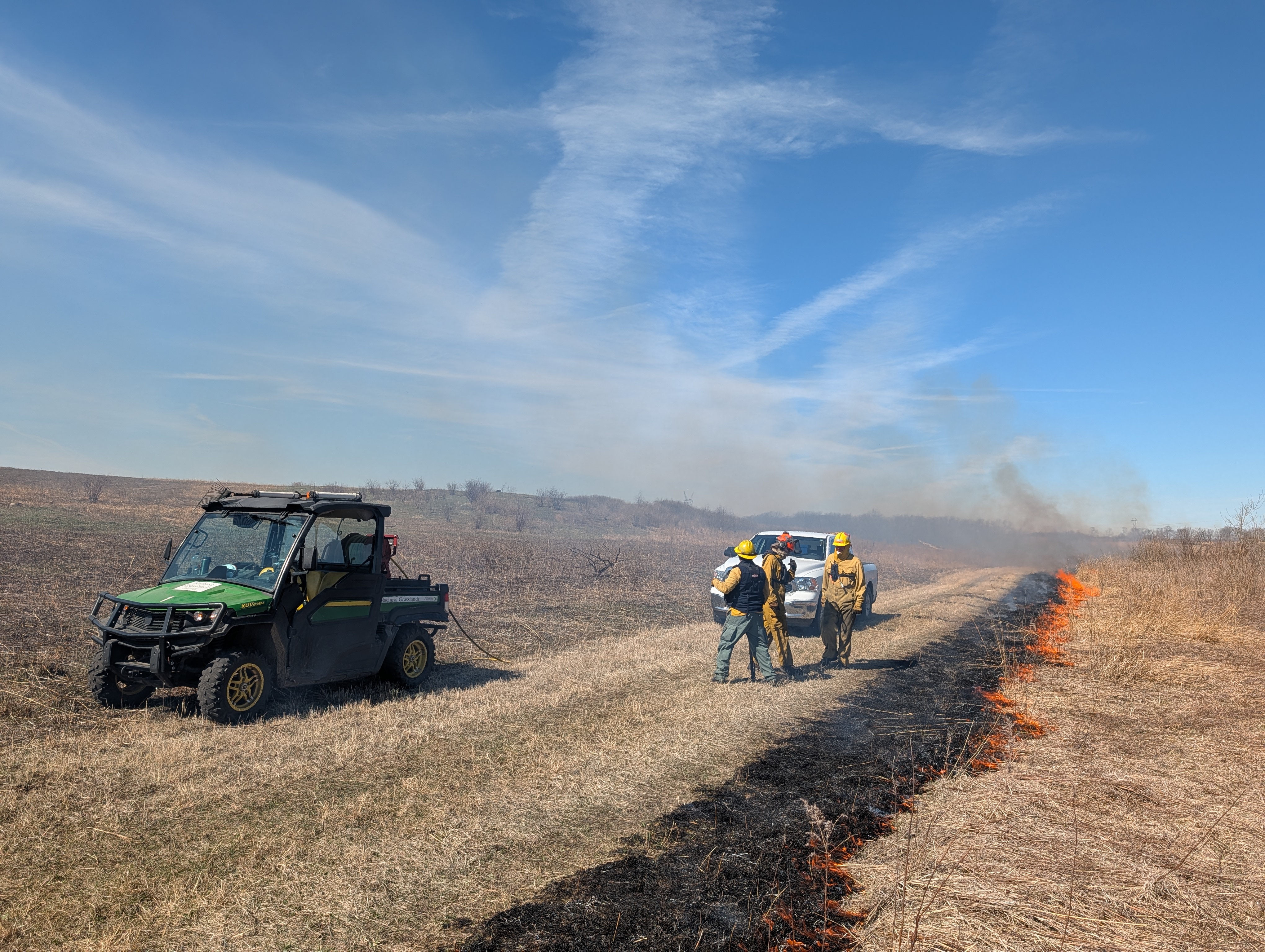
March 25: Main Unit burn, 333-acres. A long line of smokey back burn. If the backfire is burning don’t add to it by igniting a line further in, as this puts a bolus of smoke on the crew trying to observe the line and the extra ignition is more likely to send a spot fire. Be patient and keep extending the ignition line.
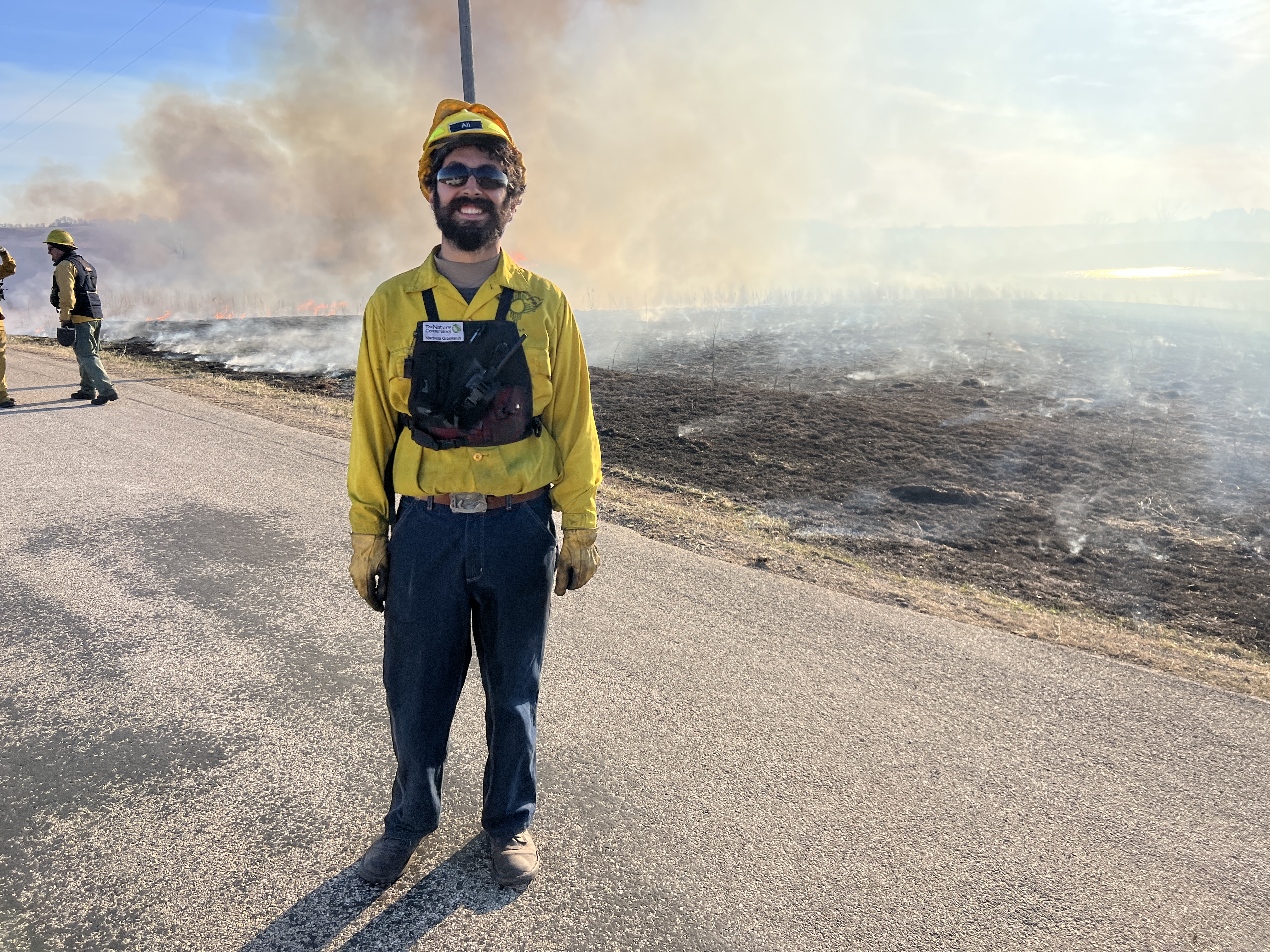
March 23: Juanita’s burn unit. Ali Fakhari of the Friends of Illinois Nature Preserves joined us for a day. When we burn with other crews everybody gains insights.
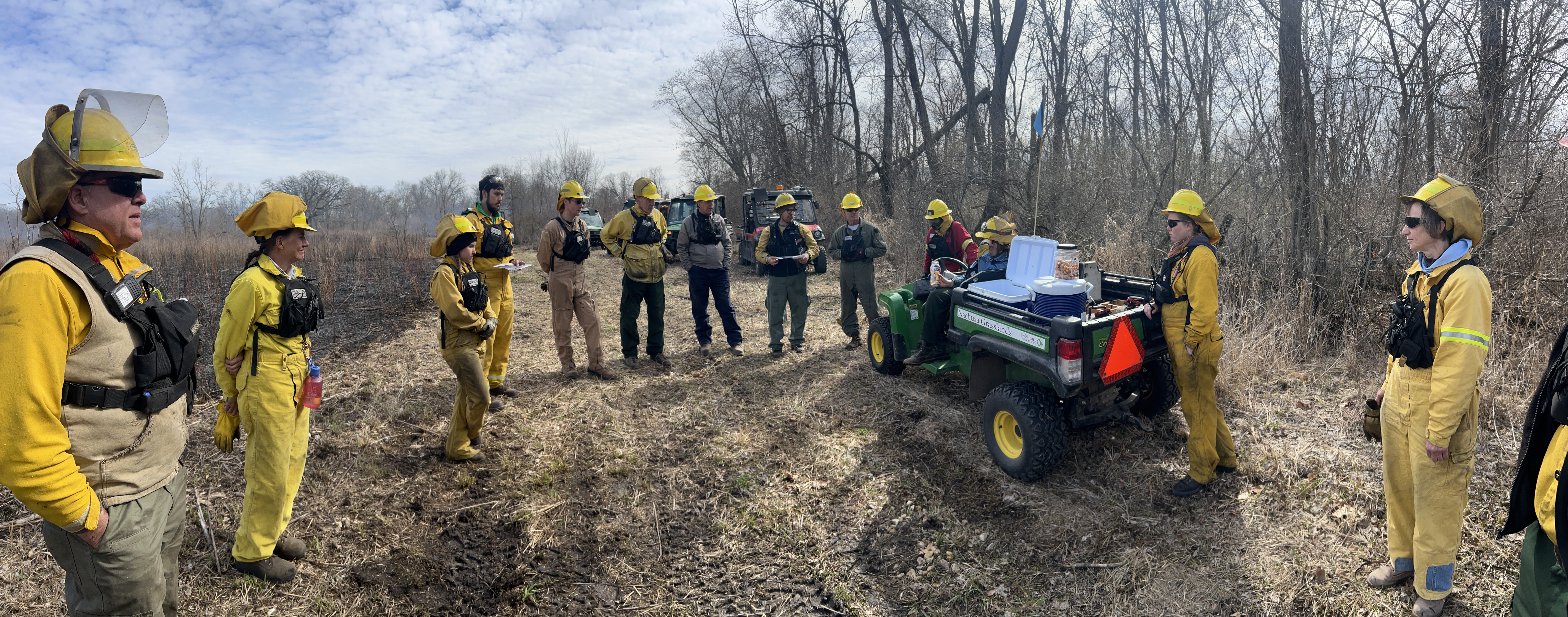
March 28, Stone Barn Savanna burn, 300-acres. Crew is gathered for the After Action Review to discuss lessons learned. The UTV there is our fire scout vehicle, which carries snacks, drinking water, and torch fuel. Four of these crew are staff, the rest are ‘civilians’. Go team!
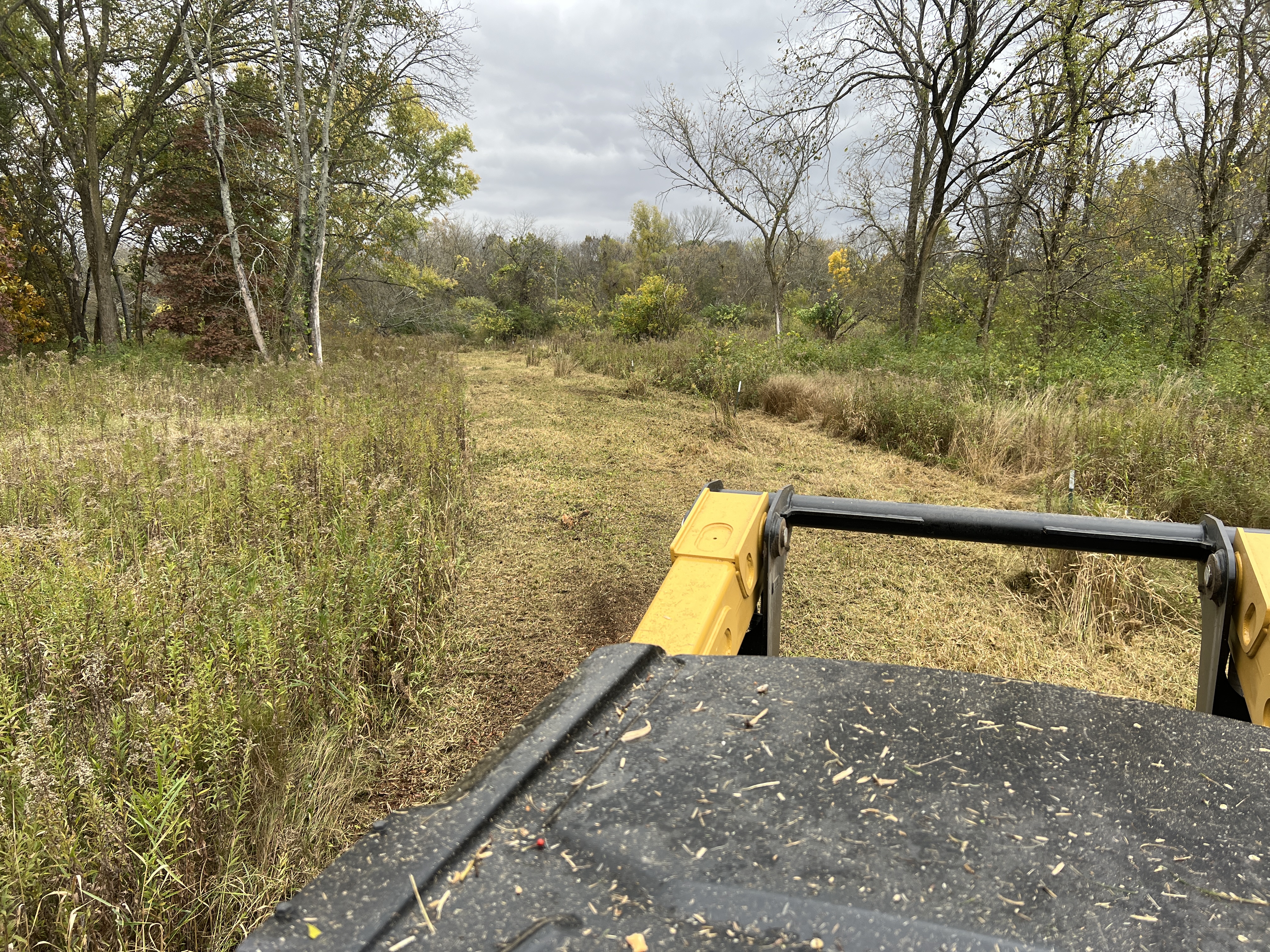
October 21: Big Jump West fire break preparation. The skid loader just mowed the fire break. All that vegetation is now mulched. Typically, we hay rake and then use a leaf blower powered by our tractor to move that mulch off the fire break.
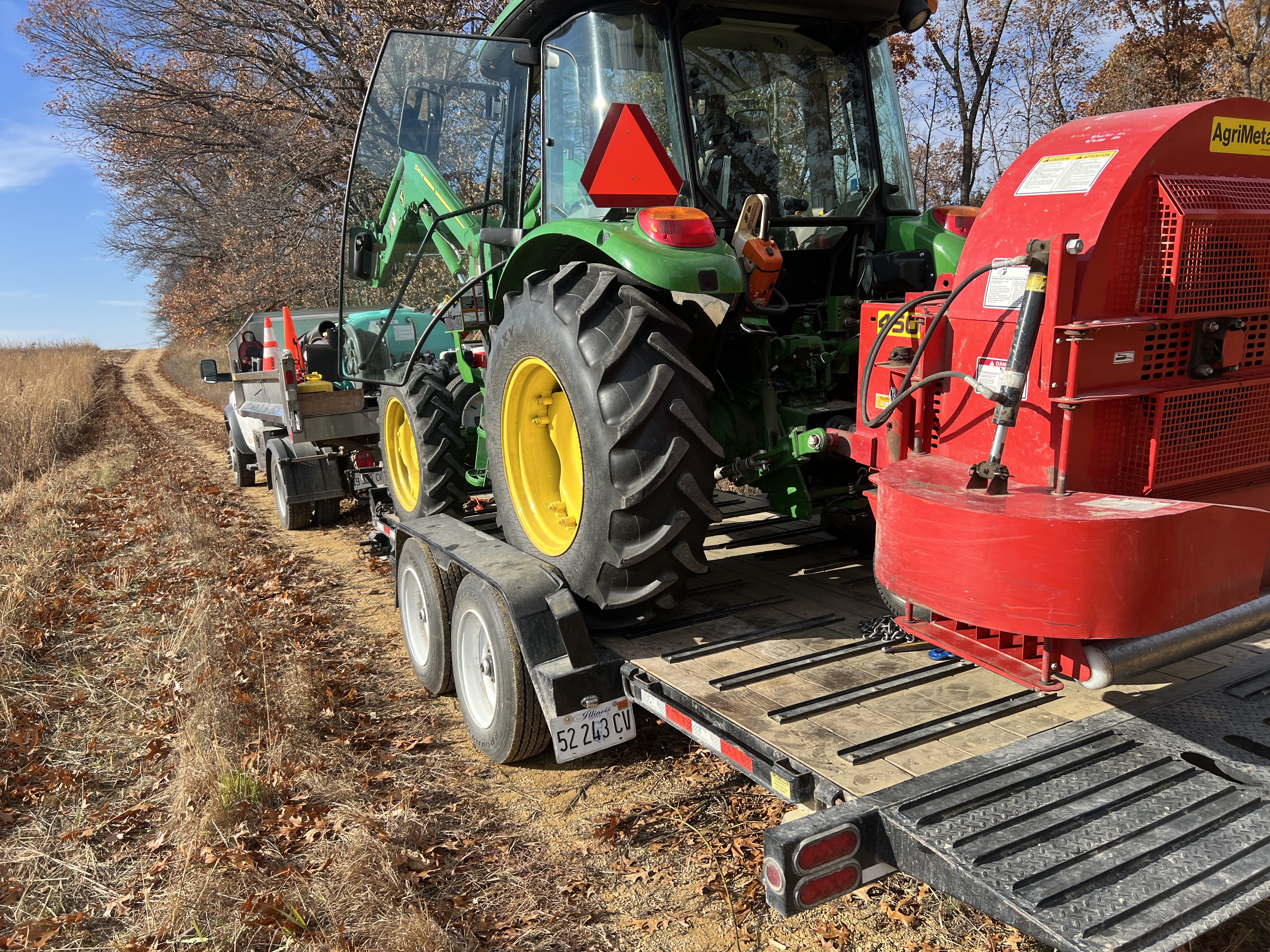
November 11: Preparing fire breaks. The tender truck towed the tractor to this unit and then that red leaf blower cleared about two miles of leaves and mowed vegetation from the fire break.
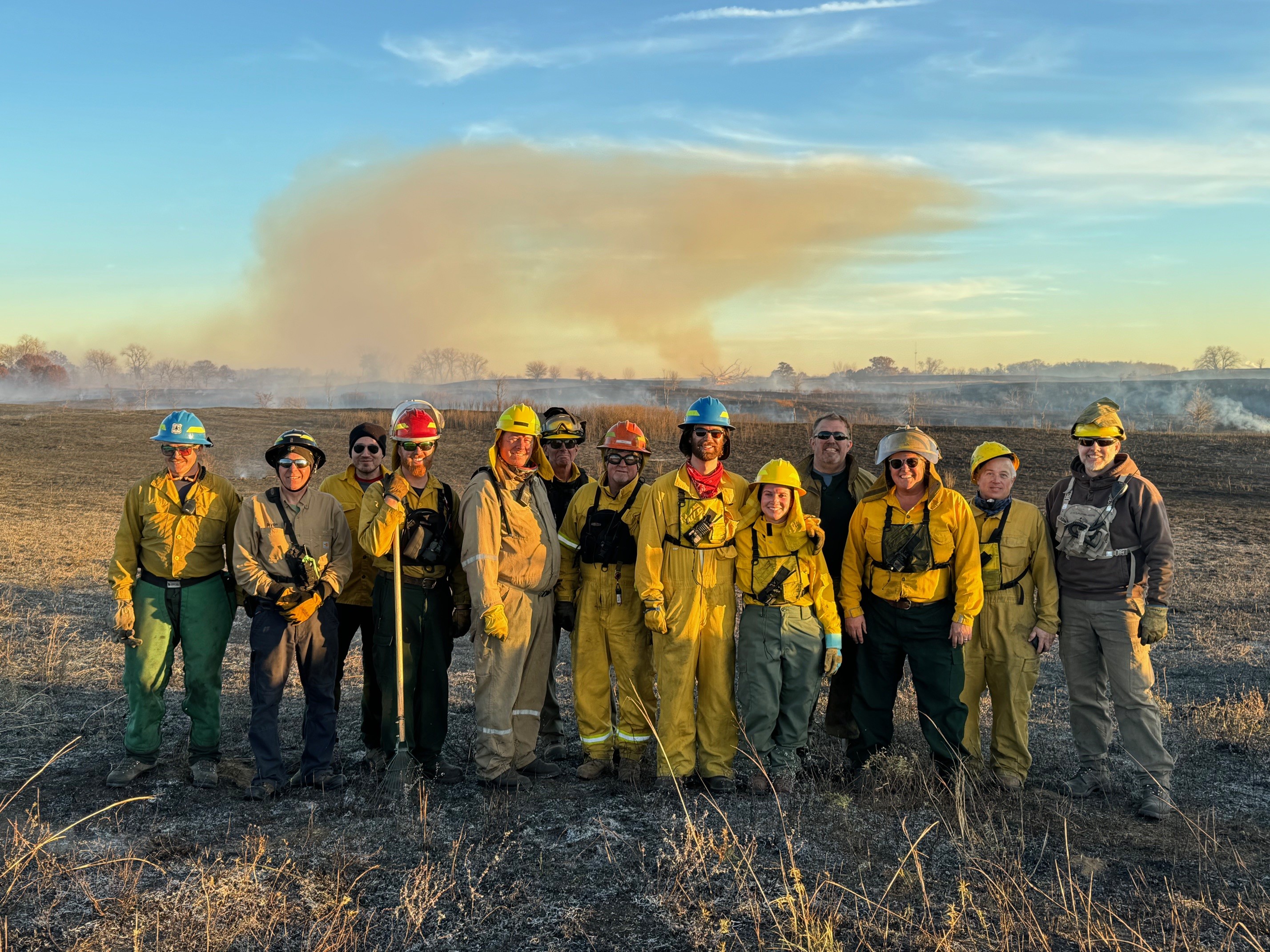
November 16, DNR fire at Mineral Marsh, 160-acres. Russ Blogg was Burn Boss. About half of this crew are citizen volunteers who made this big burn possible. Nachusa supports natural areas management in the region. We care for our preserve, but we also turn outwards and support other preserves as they are important too. Photo: R Blogg
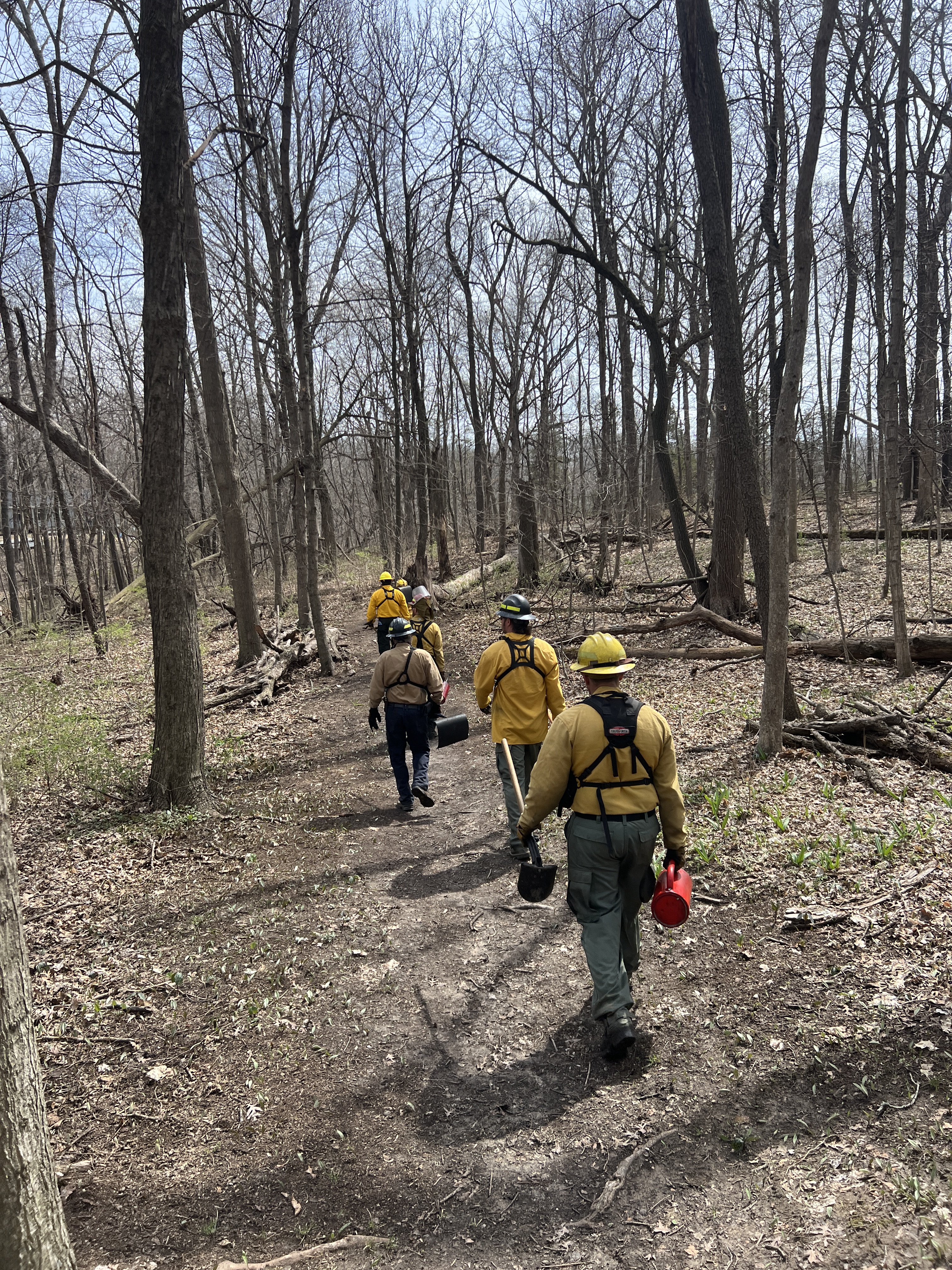
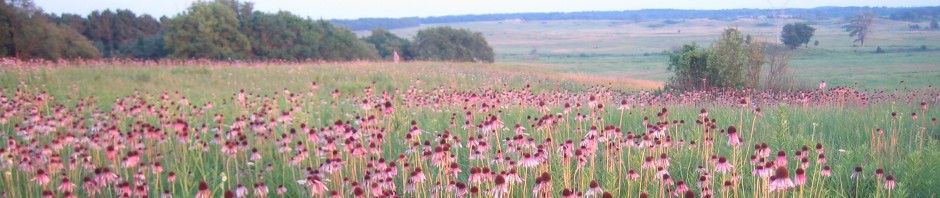
April 14, FCNA: Spring green-up came early and this was our last fire. The opening photo in this report is from this unit where oak litter burned slowly helping thin the brush.
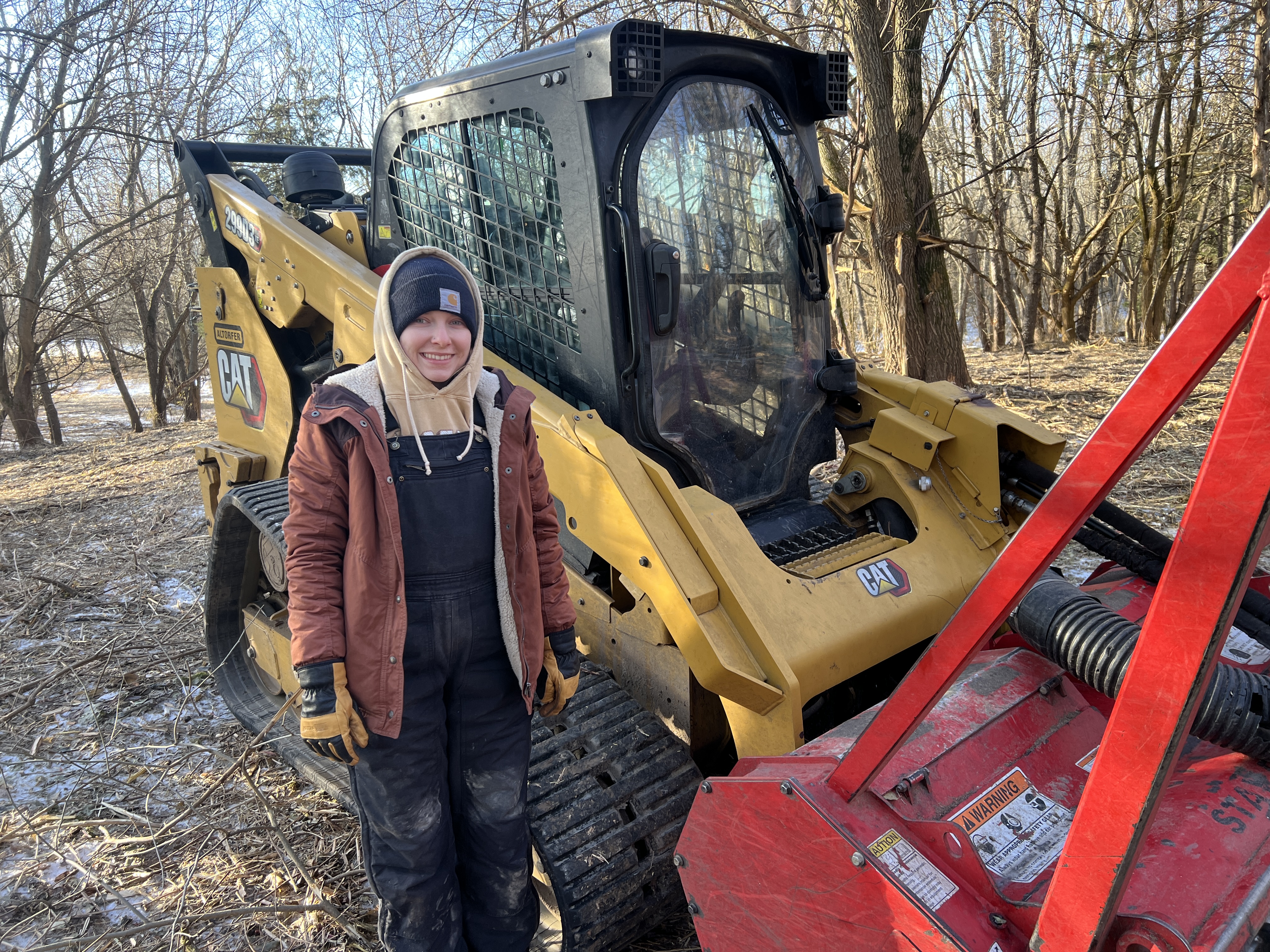
December 19: Brush mowing opens brush filled habitats that the fires can then keep sunny. Katie Jo Jackson was a regular operator of our brush mower.
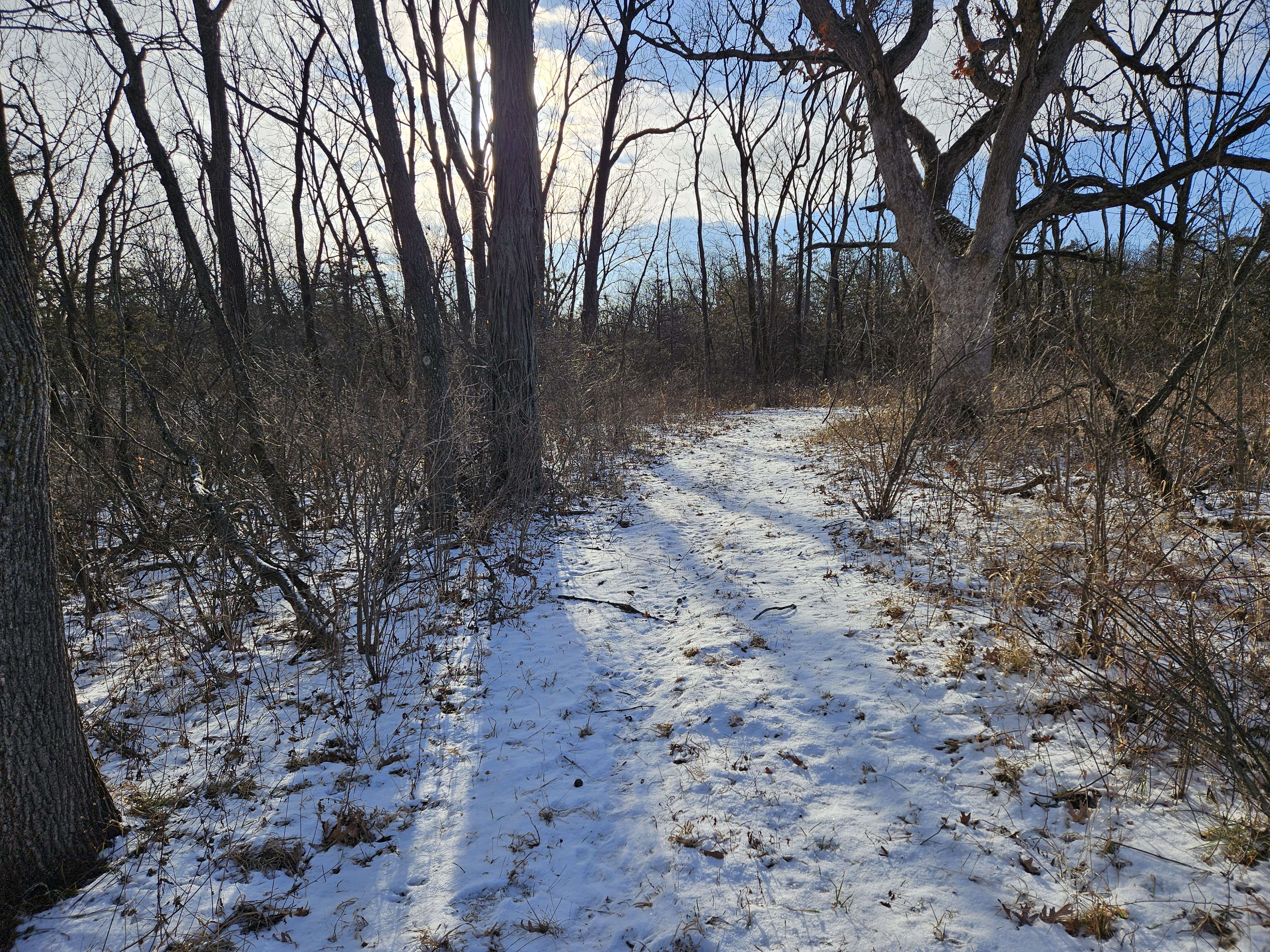
January 23: Before brush mowing by Kaleb Baker at FCNA.
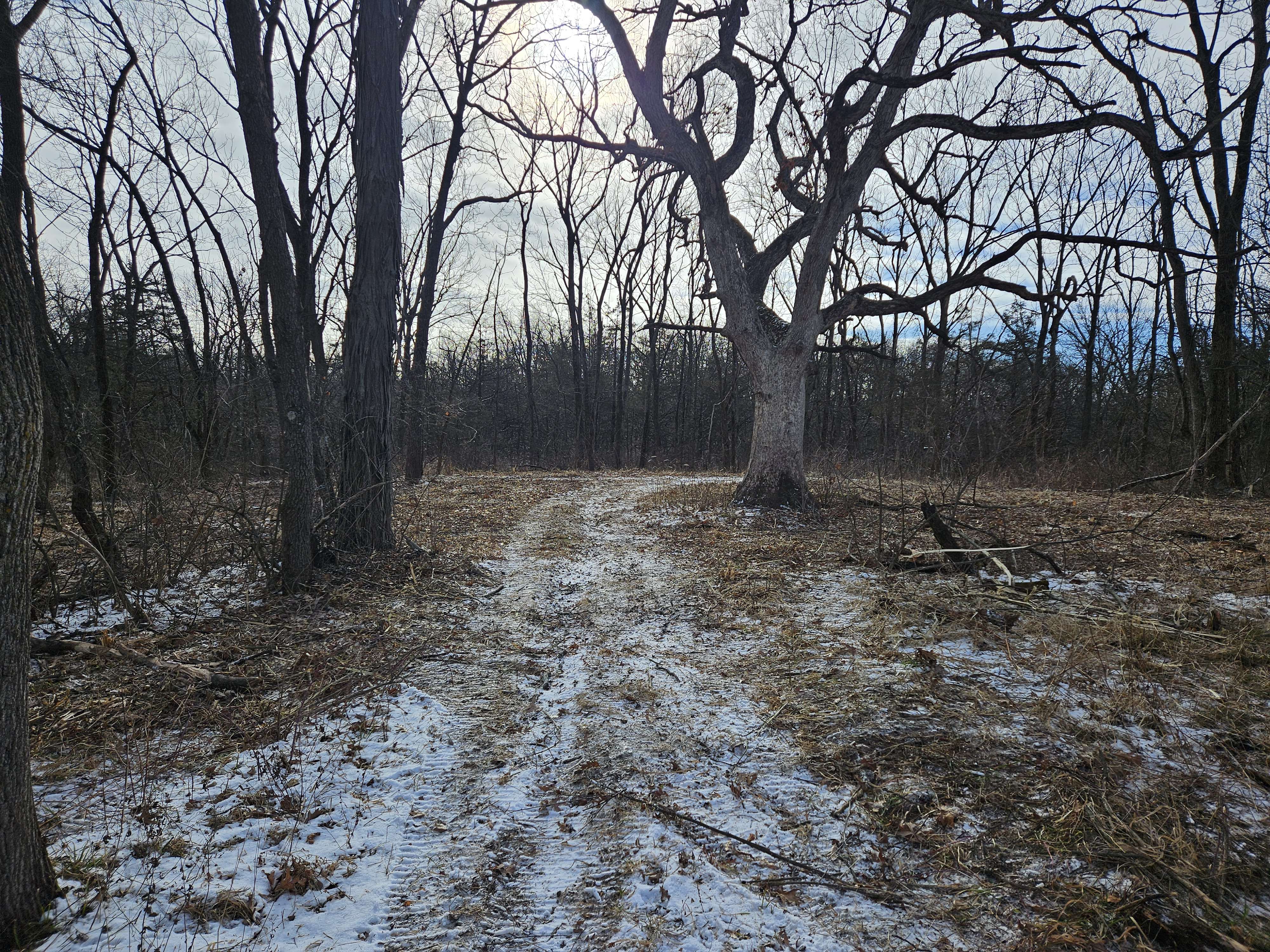
January 23: After brush mowing
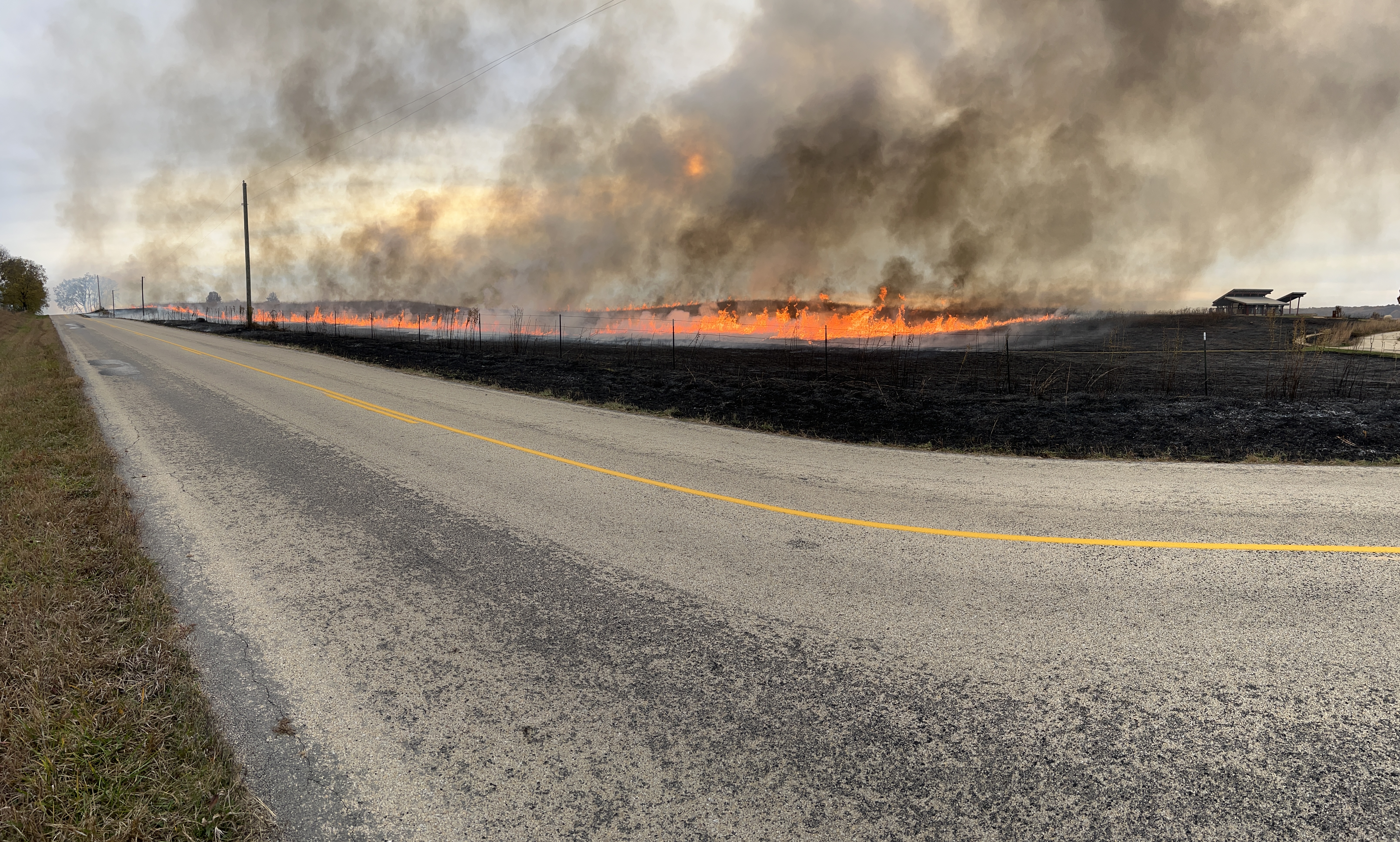
November 6: Visitor Center Prairie burn, 31-acres. Smoke blowing out of the east sending smoke away from the road.
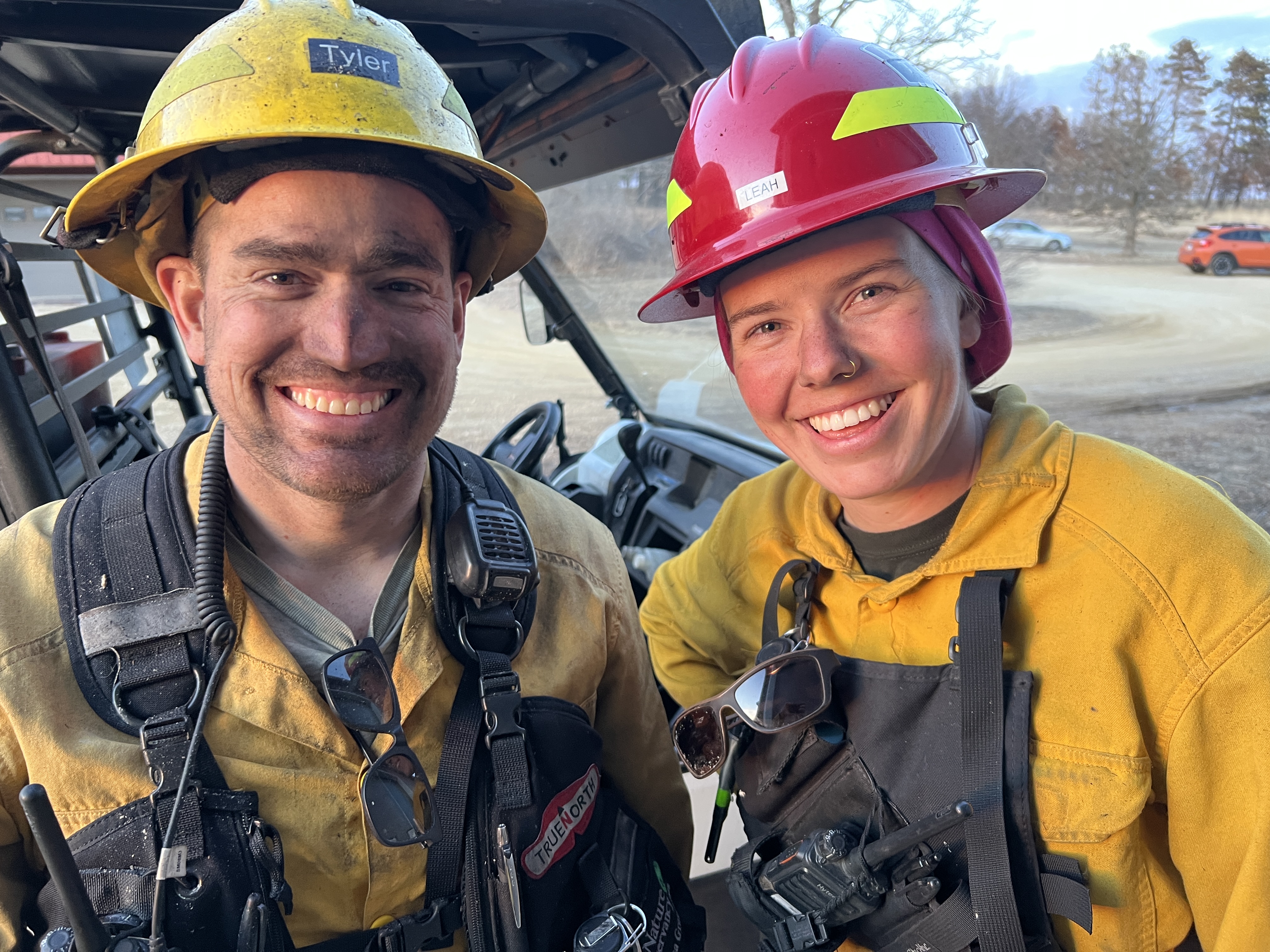
Ecologists Tyler Pellegrini and Leah Kleiman
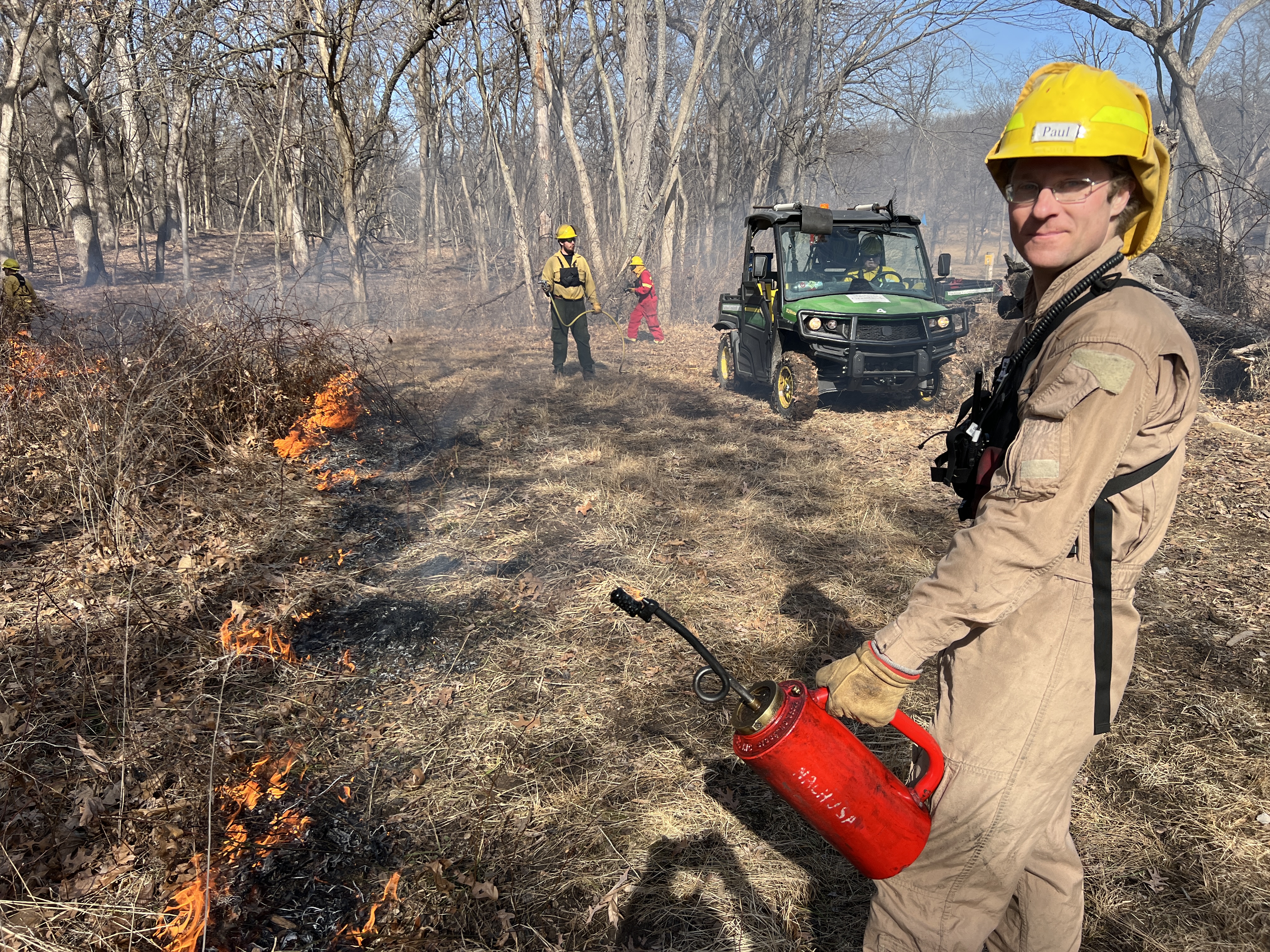
February 16: Big Jump East, 180-acres. The climate is such now-a-days, that in the last several years we can burn in February. Paul Say is a food engineer by day and volunteer steward by weekend.
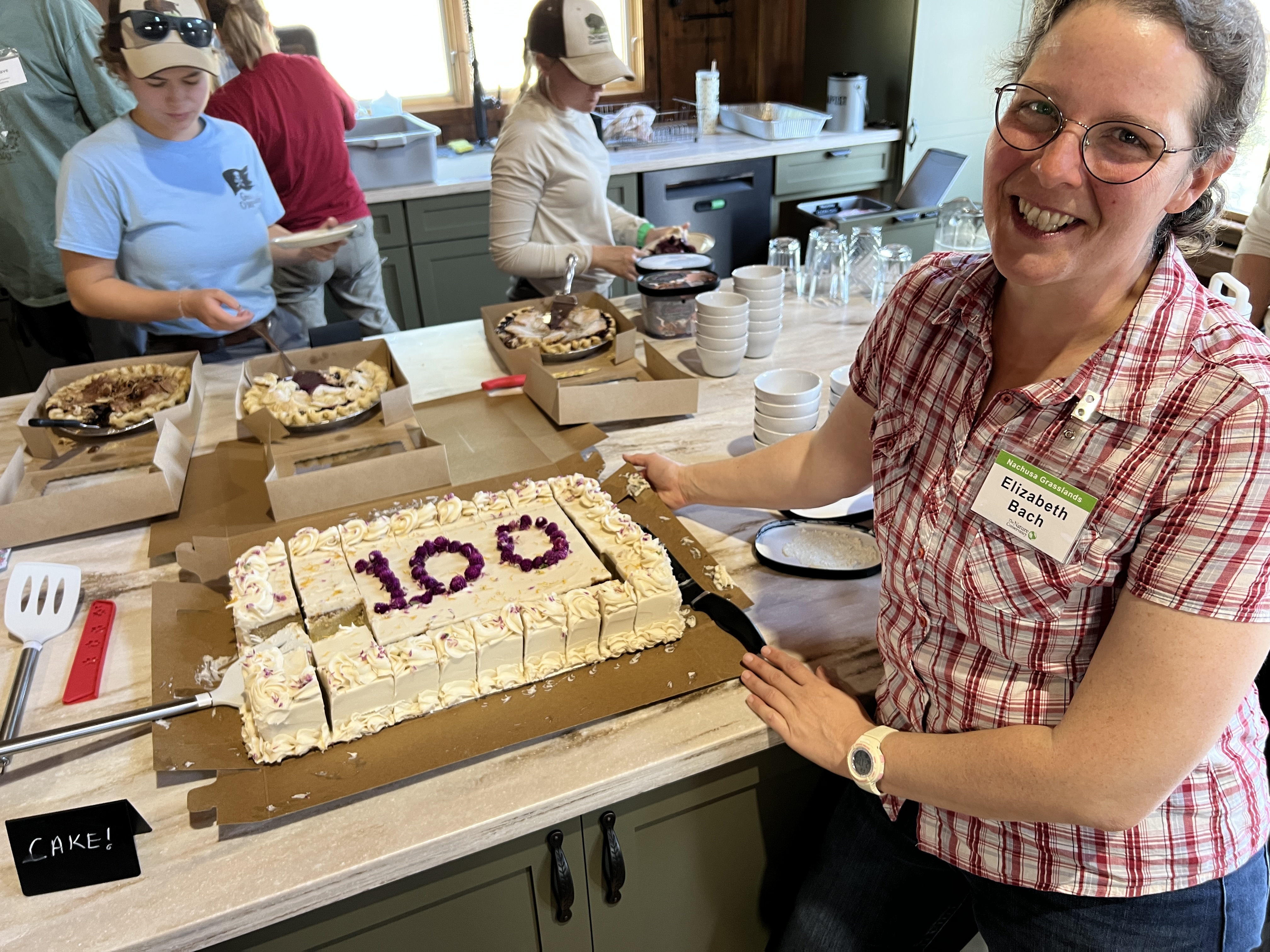
Nachusa celebrated publishing 100 peer reviewed scientific papers this year. Elizabeth Bach is our lead scientist.
To see the end of the report which has the map of what we burned, the list of fires, and list of fire crew you can find them here:


What are the required qualifications for your volunteers?