Written by: Sam Odell
When restoring native ecosystems, it is intuitive to promote native plant species and
to remove invasives. It makes sense that a native system would need plants that have
historically occurred in that system and even evolved with it as habitat structure, a food
source, or as a denizen. However, there are times when native species run counter to
conservation goals and, like invasives, act as inhibitors for restoration. When this happens
it can be difficult to justify the removal of native plant life and the complexity only
snowballs as restoration projects develop into new plantings built on carefully crafted seed
mixes. So, what does the management of native plants look like? Here’s how we implement
it at Nachusa Grasslands.
Management of natives can be passive. If a native species is known to populate well
after planting and readily form monocultures, a limit can be set on its collection. This is
sometimes referred to as being “weedy” even though it is a native. Only collecting a small
amount of seeds for these species allows for them to still be present in the planting,
contributing to the ecology of the site. The limit keeps them from taking over the planting
and diminishing species richness which is a common goal of managing native plants.
Practically, we use a standard unit of measurement (one collection barrels worth) as our
limit and only collect till it is full. While the weights may differ for each species based on
the morphology of the seed and the amount of chaff included, we still have found this
method to work well.
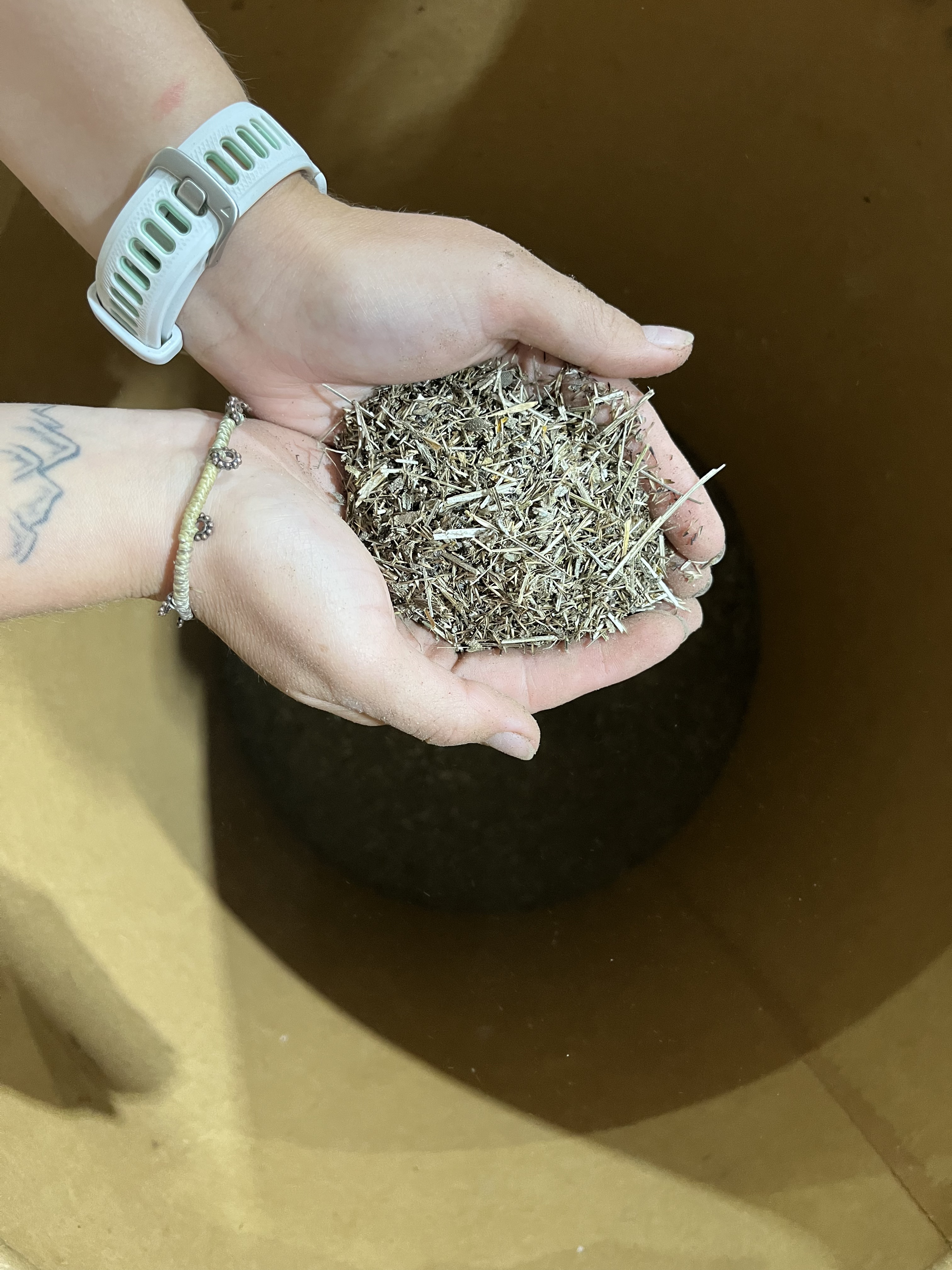
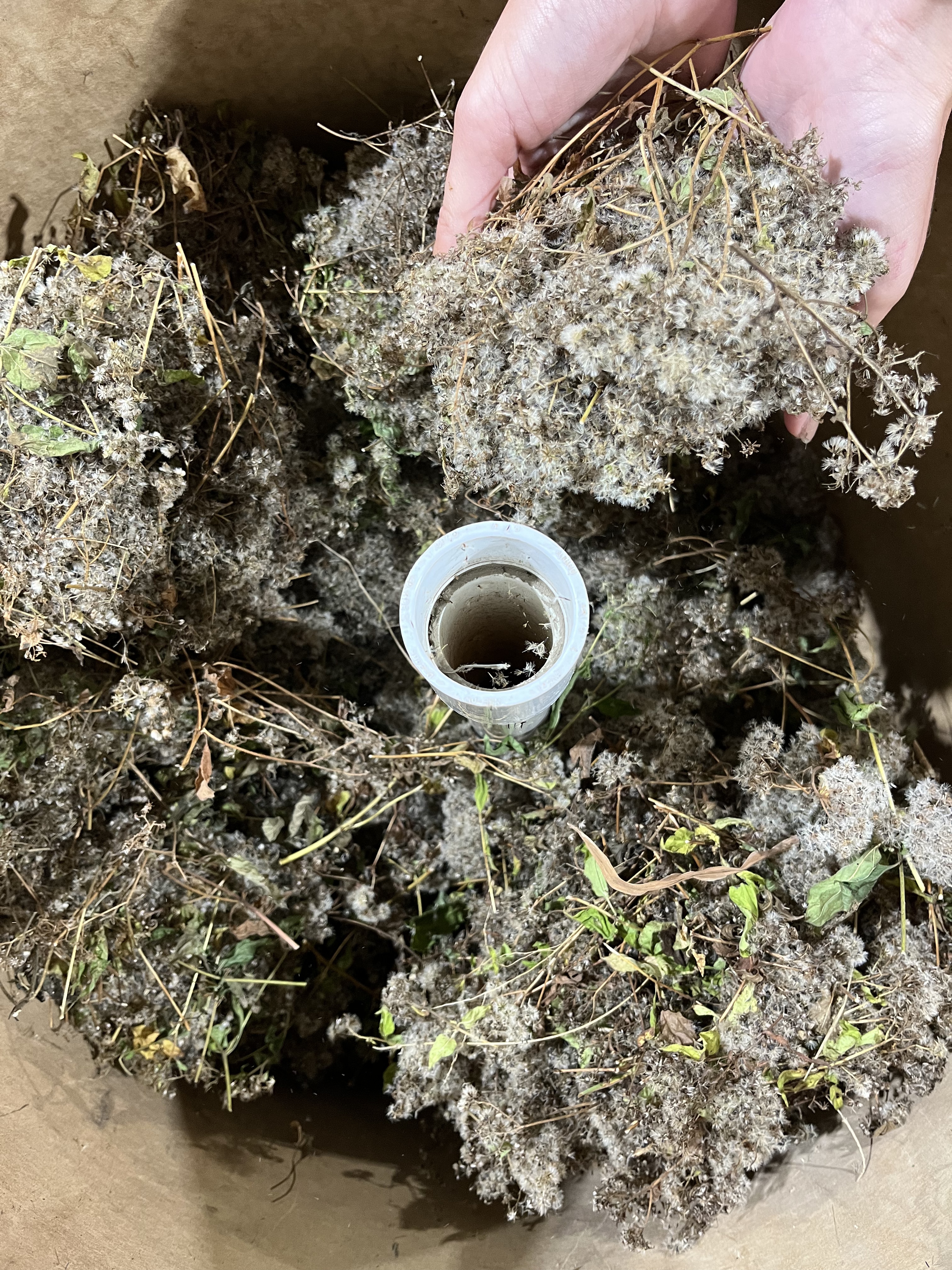
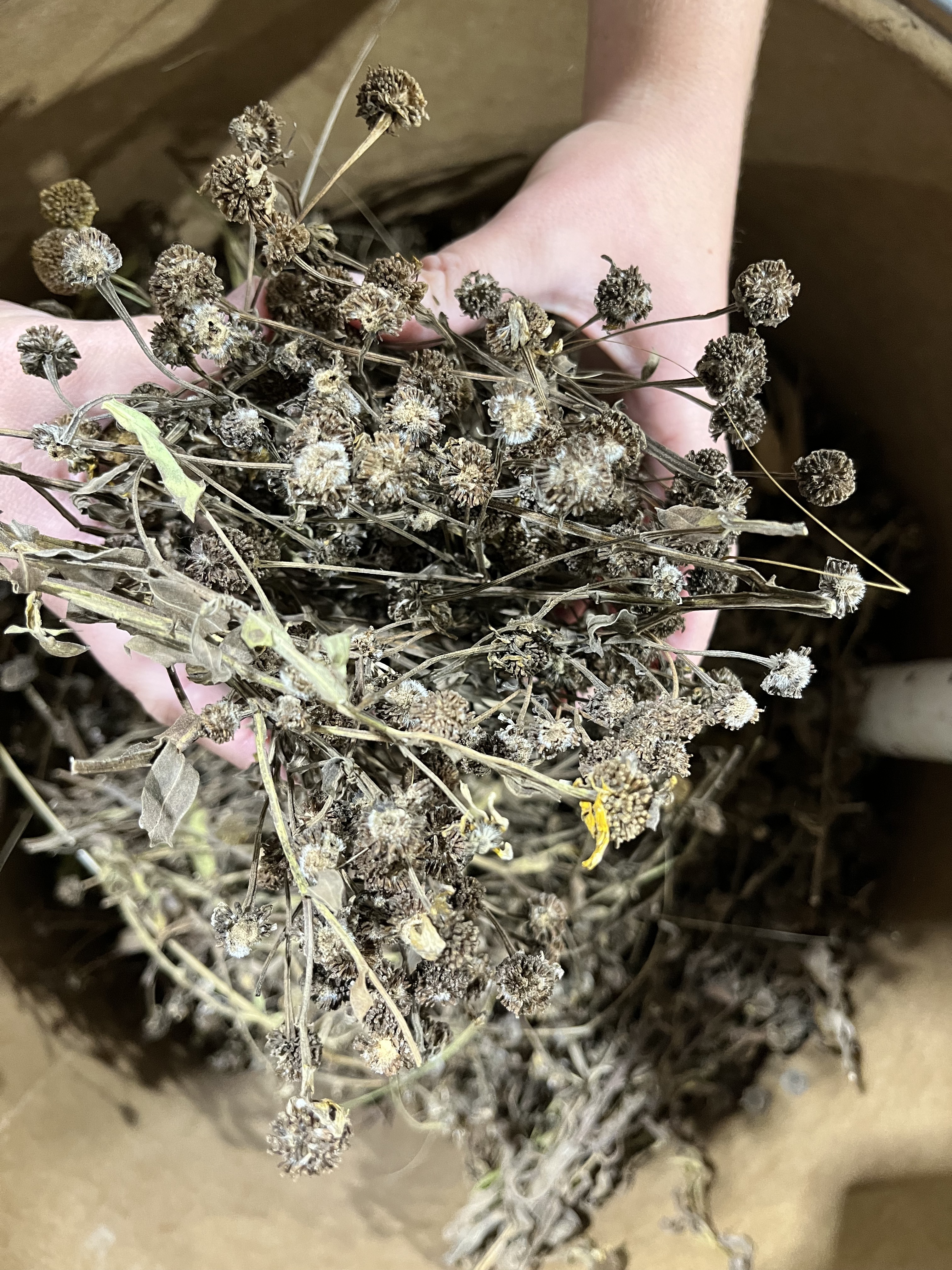
hirta), white snakeroot (Ageratina altissima), and sneezeweed (Helenium autumnale). Collected and
displayed by Katie Jo Jackson, Clara Barton, Tess Birsa, Matthew Molsen, and Samuel Odell.
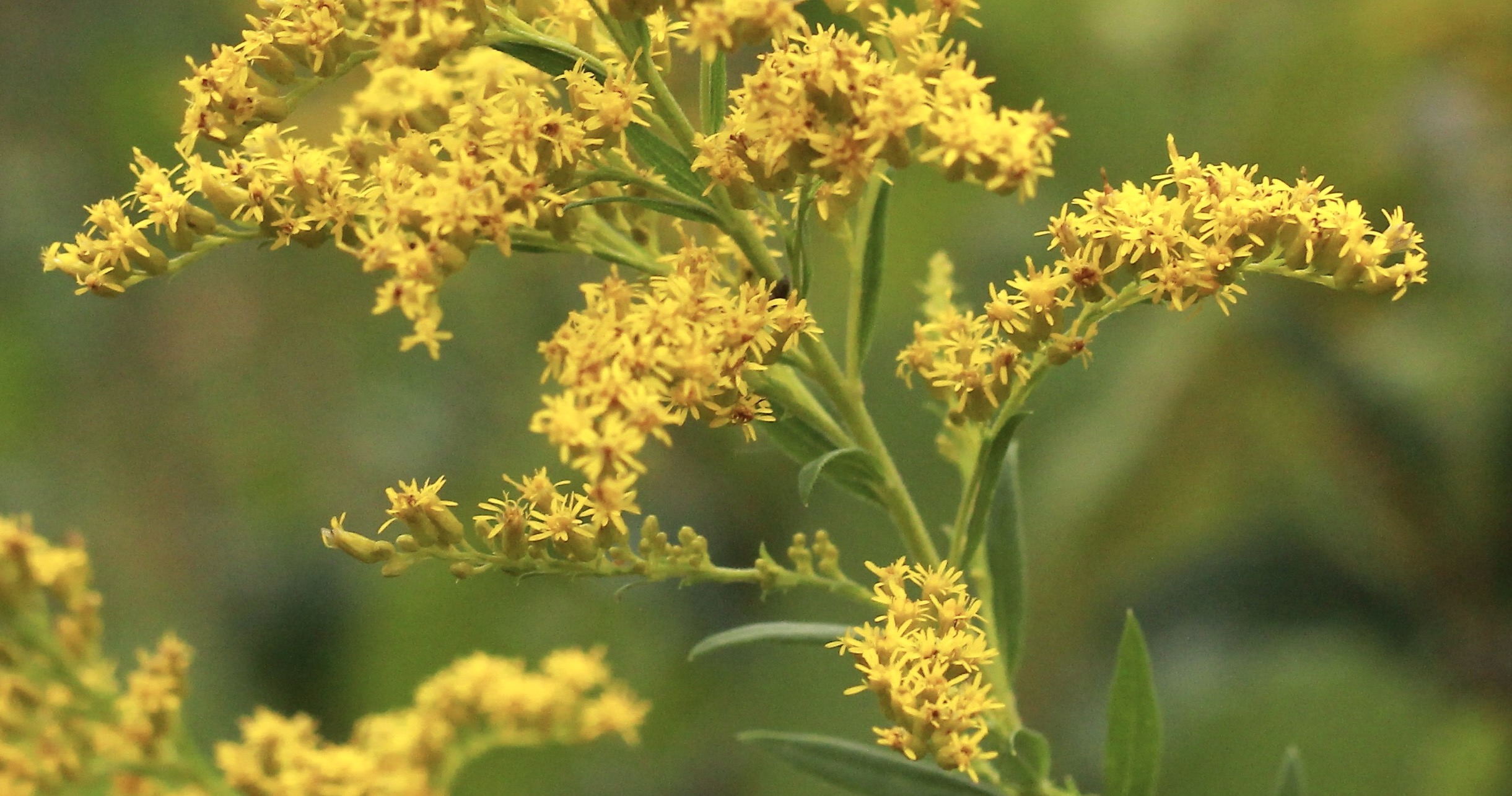
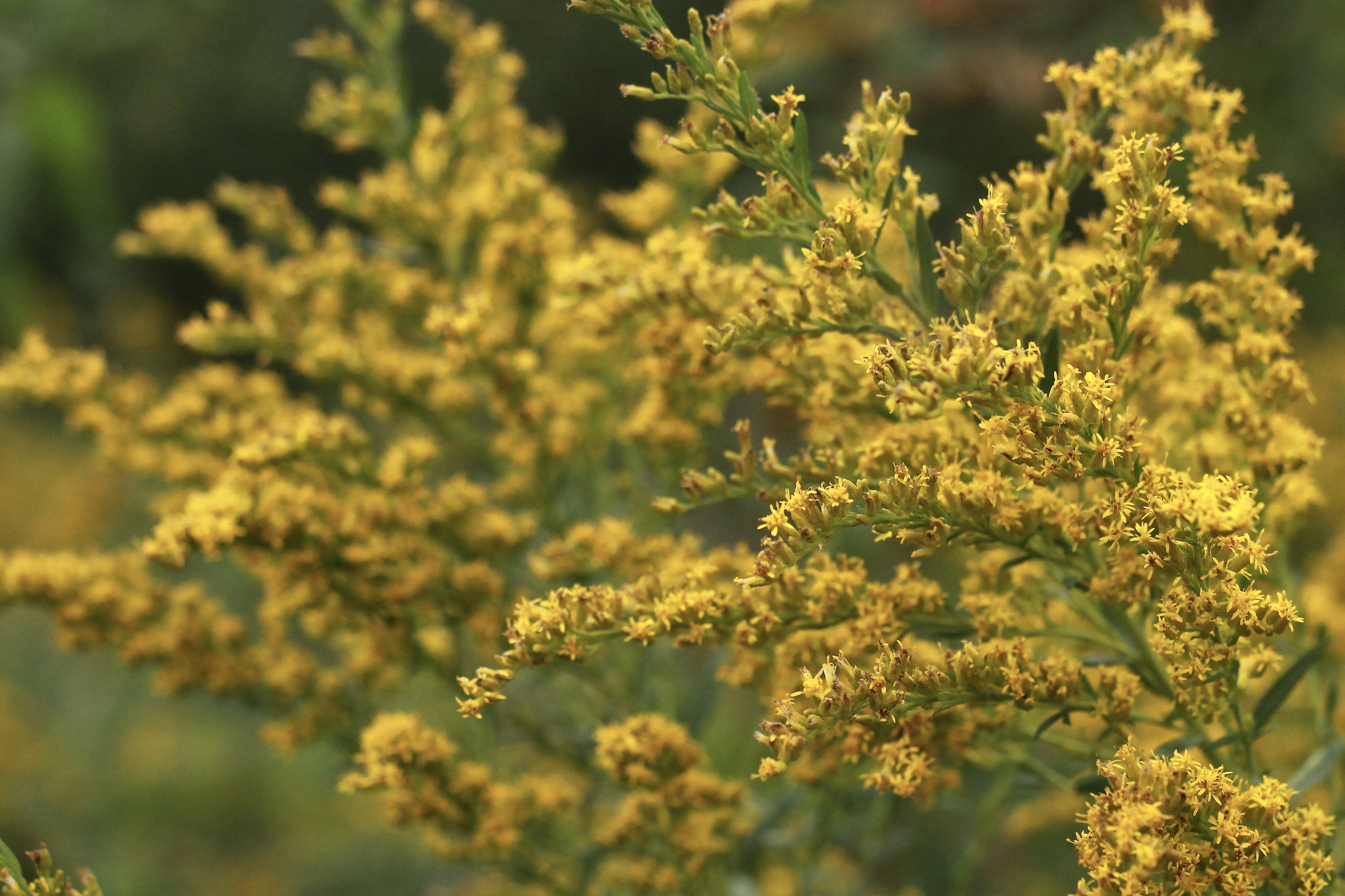
Native species management can also be active. An example of this here at Nachusa
is tall and canada goldenrod (Solidago altissima & S. canadensis) management which is
primarily focused on as we prepare a new planting site. As mid-successional species both
can be quick to move into old fields and can rapidly take over a planting by outcompeting
more sensitive natives. We believe that these species also readily invade after invasive
species management such as spraying for smooth brome (Bromus inermis) and quack
grass (Elytrigia repens). To address the overabundance of these Solidagos we apply a foliar
spray herbicide before they go to seed and mow them, both with tractor implements.
While mowing and spraying may be keeping these populations at bay, they have not
been removed to desired amounts. We are still looking for better ways to manage these
species and to do so in a timely manner. Recently, we had a proposed planting site that had
to be postponed because of the amount of S. altissima and S. canadensis and its
persistence after treatment. While we did spray this population with Garlon 3A (Triclopyr
triethylamine) at 1% v/v, with methylated seed oil (MSO) as an adjuvant, it persisted long
enough to go to seed. However, we do not know if that seed was viable or what those
patches will look like next spring.
It has been mentioned that managing native plants can be counter intuitive when
working in restoration. This is especially true when we are managing species that in name
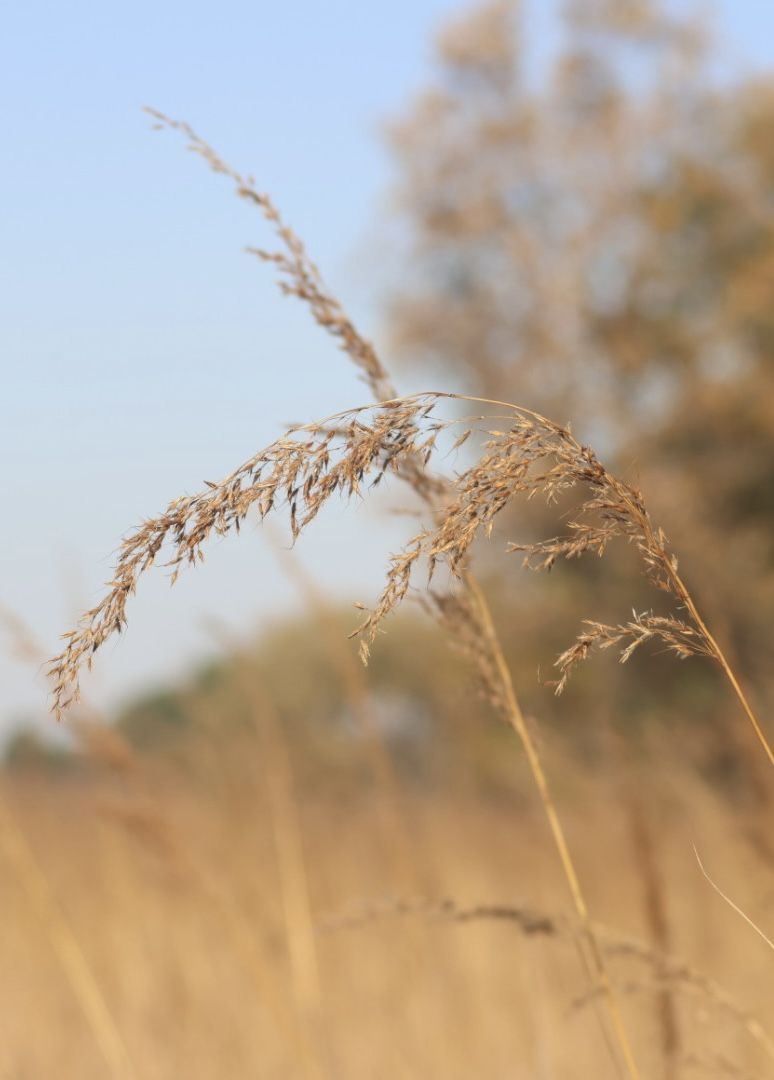
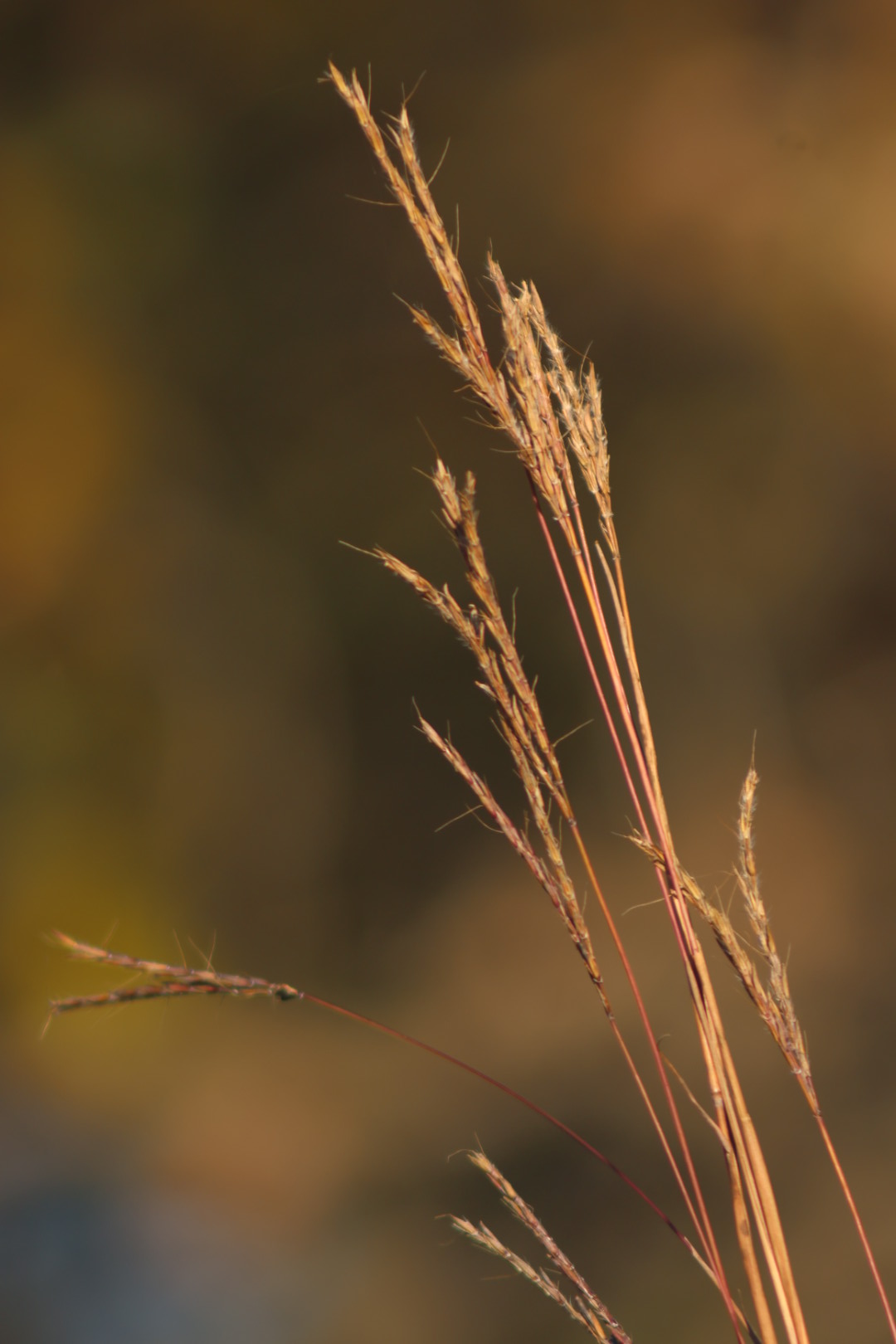
alone would seem to be a necessity. Species like Indian/golden feather grass (Sorghastrum
nutans), big bluestem (Andropogon gerardii), and switchgrass (Panicum virgatum) which
are tallgrasses native to Illinois. These three species form large swaths where they
dominate the groundcover and sometimes form monocultures where they are exclusively
present. This of course is detrimental to sustaining species diversity at our sites as they
outcompete forbs and other grass species alike.
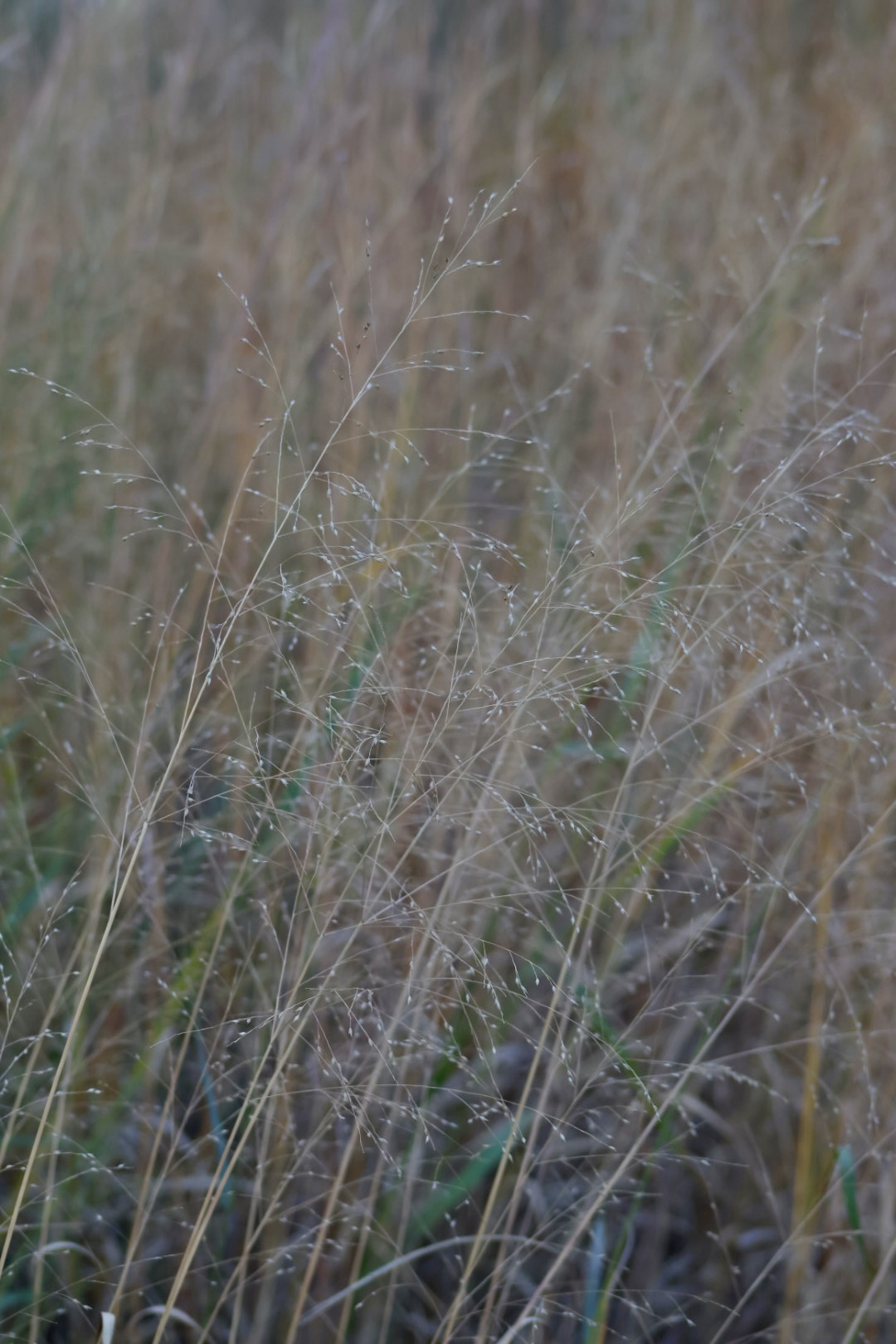
The abundance of these tall grasses is also not historically accurate to tallgrass
prairie, especially upland, composition in northern Illinois and in many parts of the
Midwest. Instead of big bluestem monocultures the primary composition would have been
bunchgrasses like porcupine grass (Hesperostipa spartea) and prairie dropseed
(Sporobolus heterolepis) and a greater diversity of flora overall (Carter 2023). In his article
with the Prairie Enthusiast, Dan Carter synthesizes historical assessments of tallgrass
prairie compositions to show how they have changed.
We manage these three tallgrasses in both passive and active ways. Throughout the
seed harvesting season we refrain from collecting them and thus exclude them from any of
the planting or overseeding mixes. We also utilized a seed stripper this fall for a little
bluestem (Schizachyrium scoparium) harvest and to exclude those three grasses we
preemptively visited the harvest site and cut off the seedheads or “dead-headed” them.
This meant that we could go over big bluestem, golden feather, and switch grass with the
stripper and not worry about including that seed in our harvest. Additionally, dead-heading
increased efficiency with the seed stripper by allowing us to keep straight rows which gave
us access to more little bluestem plants. In either case of harvesting with a seed stripper or
by hand, we also pull out any bycatch as we are milling. For more on the seed stripper,
read through Clara Barton’s GRN post “Little Bluestem Seed Collection Using Pull-Behind
Seed Stripper.”
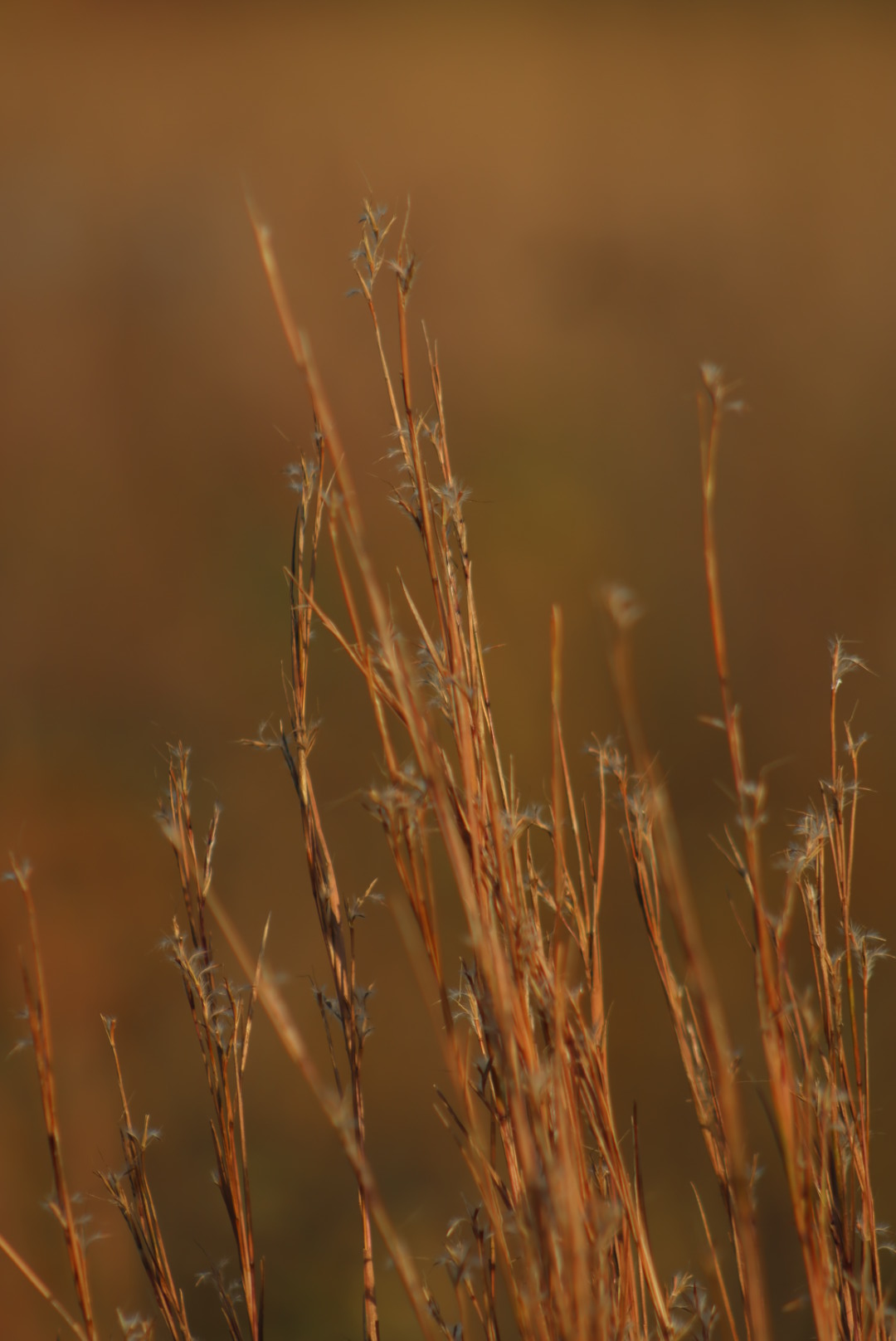
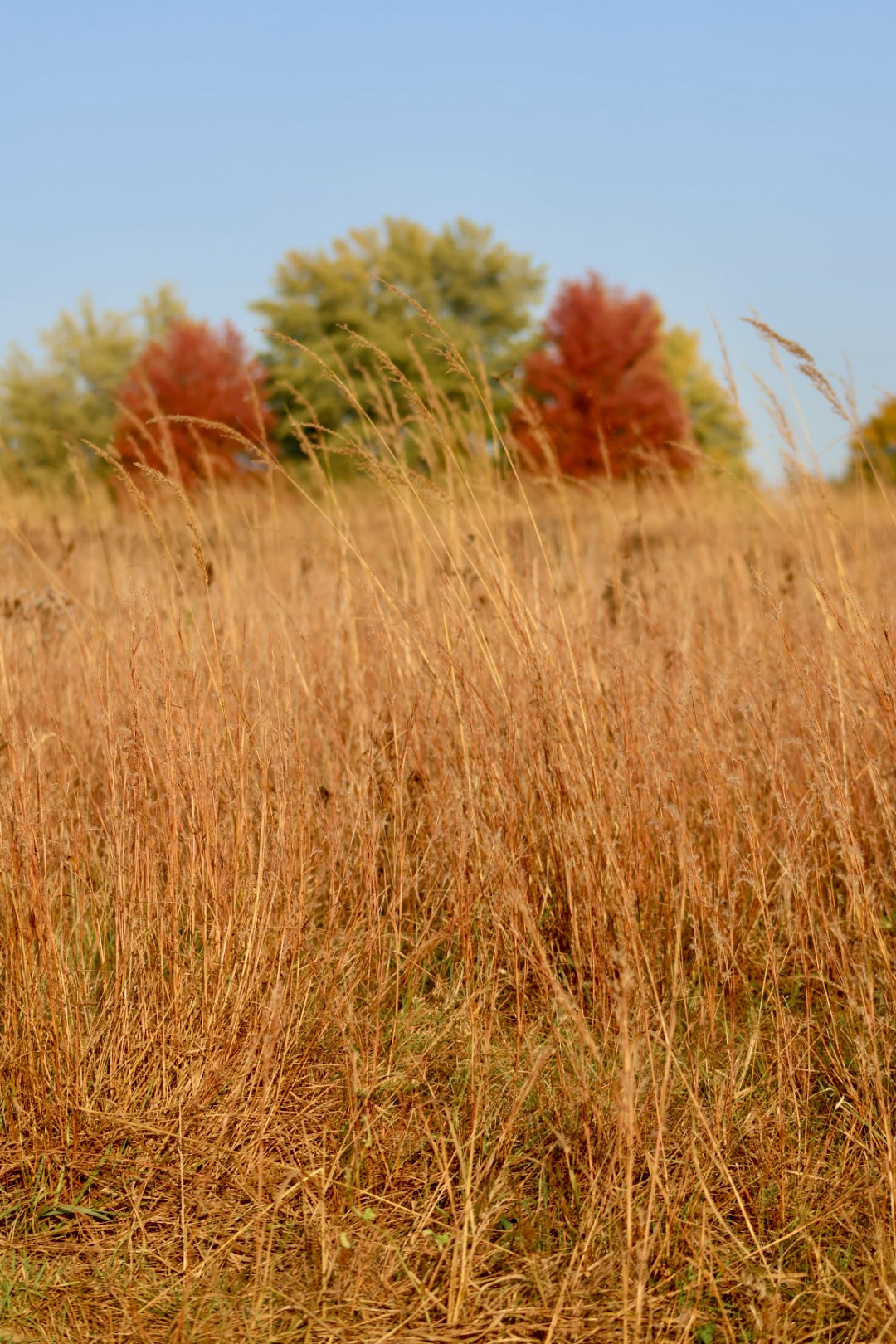
in the above recollection. Second is an example plot where we could dead-head the golden feather
grass (Sorghastrum nutans) and use a seed stripper to collect the shorter little bluestem.
While not always intuitive, the management of native species is critical to
restoration and conservation at Nachusa Grasslands and other sites. It allows for greater
species diversity and increases our ability to conserve threatened and endangered species
that cannot compete with the dominant monocultures other natives form. This increase in
heterogeneity benefits plants as well as wildlife, which can take advantage of the increased
diversity of niche spaces these management methods provide. Native species
management, actively and passively, is a valuable asset to grassland restoration and a
consideration of all land stewards seeking to sustain a diversity rich site. How have you
found success managing native species at your site?


The taller grass species (Andropogon gerardii and Sorghastrum nutans) do not grow so obviously dense until late summer and early fall. Would over seeding with earlier bolting, forb species work to eventually “thin out” those taller species?
Repeat overseeding of forbs, but also annual prescribed burning is needed to remove all the tallgrass chaff. It takes several years.
This is EXACTLY the issue I have – my work involves tackling a lot of fallow fields in New York State. So many of them are just pure stands of Canada golden rod. On a particularly bad day, it’s goldenrod and knapweed. What is different with these fields and how it used to be? Was New York formally just one huge goldenrod field? I puzzle over this one a lot. Is it that the fields are too fertile? Too little disturbed? What?? I would love a nonchemical way of getting rid of the goldenrod and cleaning out the seedbed. I am attempting frequent, very low mowing but don’t know if it will work.
Regarding the big bluestem and its ilk, in the UK to make short grass meadows they have to add parasitic plants that weaken the grasses. Are they included in US native restorations? Dodder and yellow rattle, etc?
Pedicularis parasitizes Goldenrod, we should probably include it in more seed mixes, it would be interesting to see the difference between seeding it in the beginning during establishment versus overseeding in latter years.