By: Clara Barton
Short Answer:
Yes, yellow sweet clover can briefly resprout after mowing, but in this project none of the monitored plants survived through the end of the growing season.
Key Takeaways:
- Several mowed plants produced small new leaves after mowing.
- The resprouts never developed into substantial growth.
- By the end of the growing season all monitored plants appeared dead
- Properly timed, low mowing remains an effective sweet clover management tool.
Yellow sweet clover (Melilotus officinalis) is a common management concern in Midwestern prairie restorations. As a biennial, it spends its first year developing a root system and leaf rosette before bolting, flowering, and producing seed in its second year. Dense infestations can suppress native vegetation and contribute large numbers of seeds to the soil seed bank.
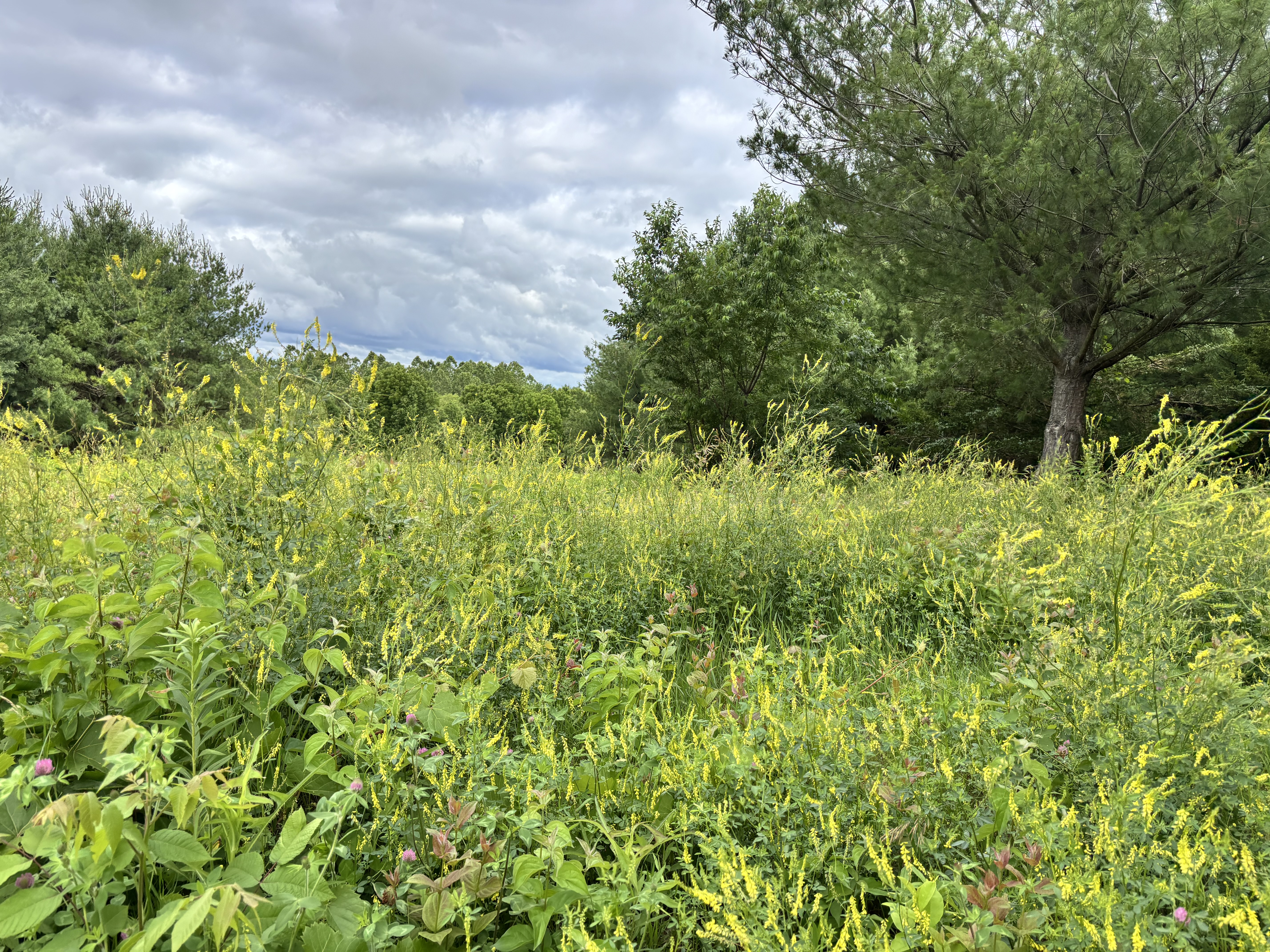
A variety of techniques are used to control sweet clover, including hand-spading, herbicide applications, and mowing. At Nachusa Grasslands, mowing has long been used as a management tool when plants have reached a growth stage where they can be cut below their lowest remaining leaves. Experience has shown that both timing and cutting height are important. Plants that retain active growth points may recover, while plants cut low enough often fail to survive.
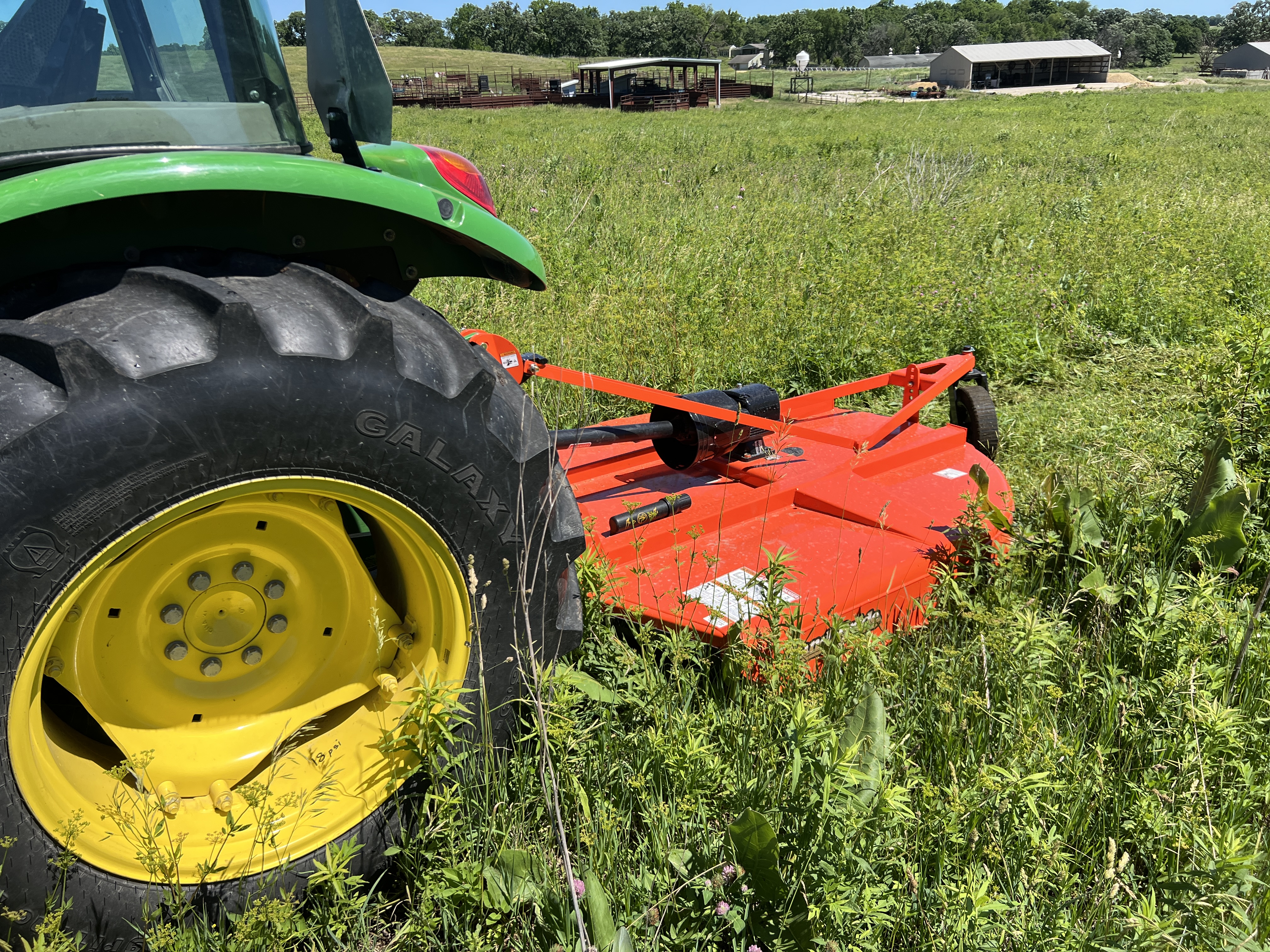
To better understand what happens after mowing, Bill Kleiman, Nachusa Grasslands project director, marked several yellow sweet clover stems after mowing them with a new rotary mower at the low setting, and I followed them throughout the summer. The goal was to see if the mowing treatment works.
See previous GRN posts on managing sweet clover:
Yellow sweet clover plants that had been mowed on June 12, 2026, were marked with blue paint and flagged for repeated observation. Initial measurements were taken on June 16. The remaining stem bases averaged around 9 cm in height. Plants were photographed and revisited every week throughout the summer.
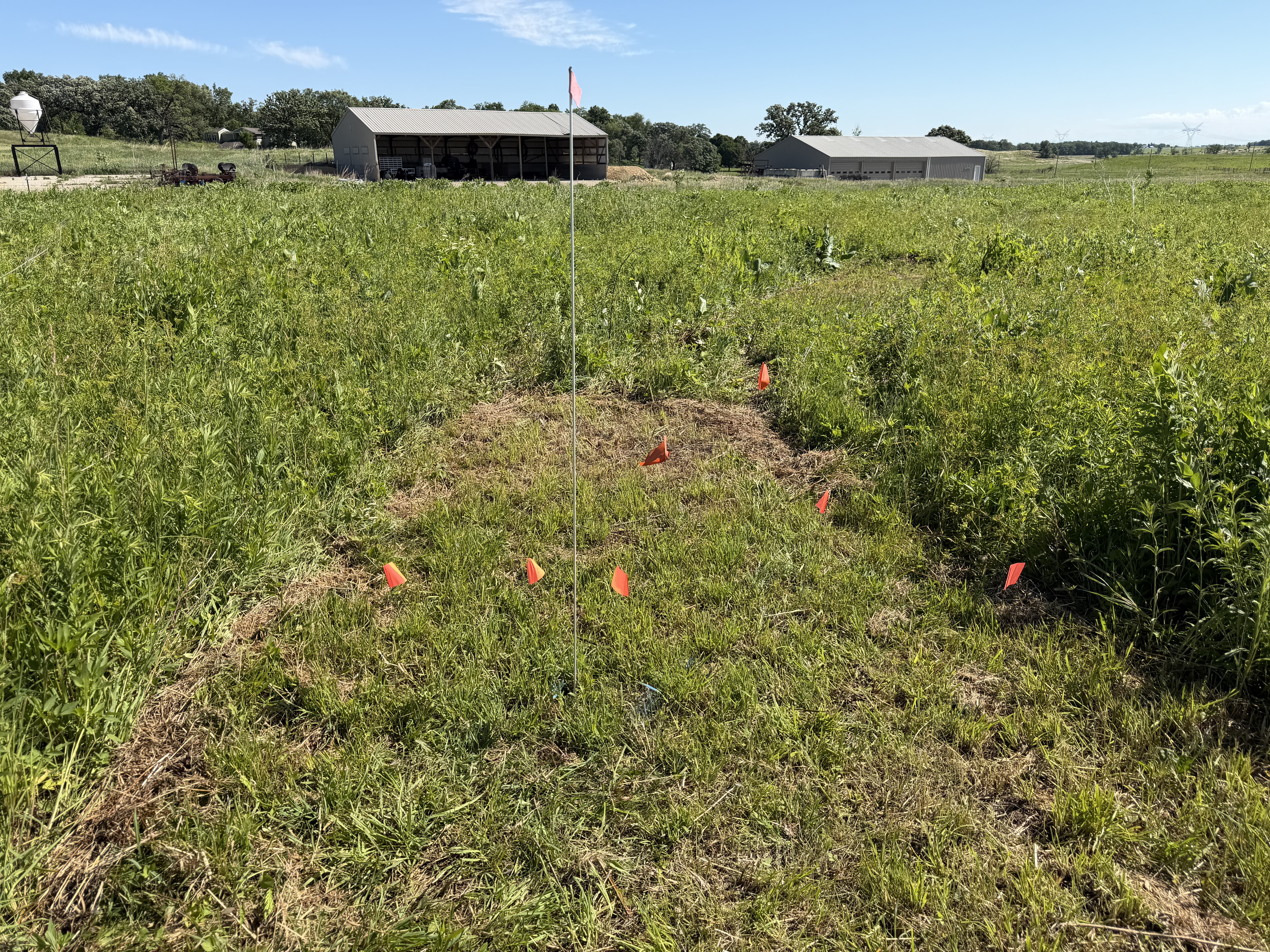
Within the first week of monitoring, several of the plants appeared to be recovering. Small leaves emerged from the bases of the cut stems, indicating that the root systems were still alive and capable of producing new growth.
However, the new shoots showed little additional development over the following weeks. The leaves remained small and did not develop into larger shoots.
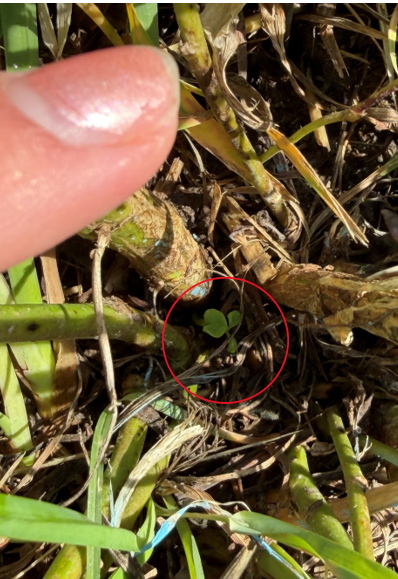
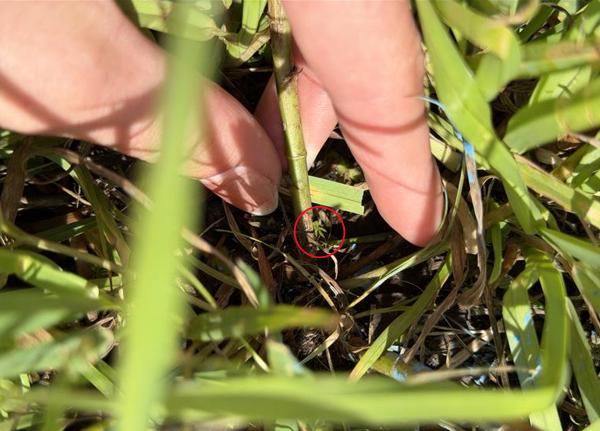
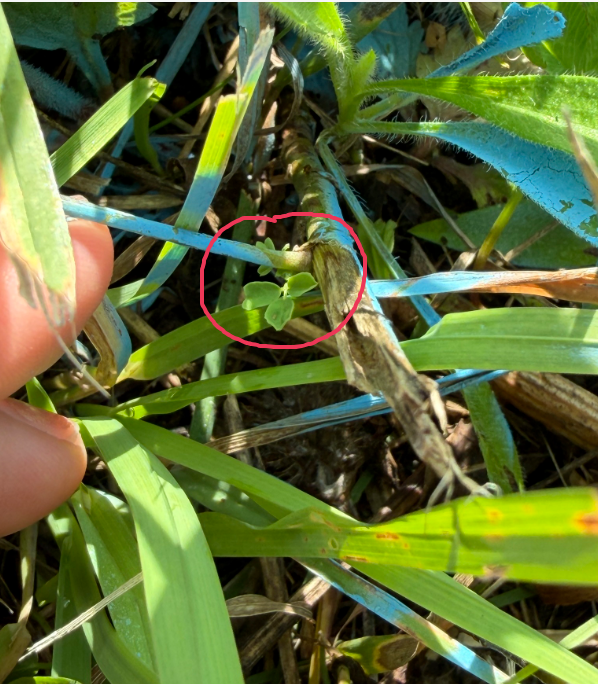
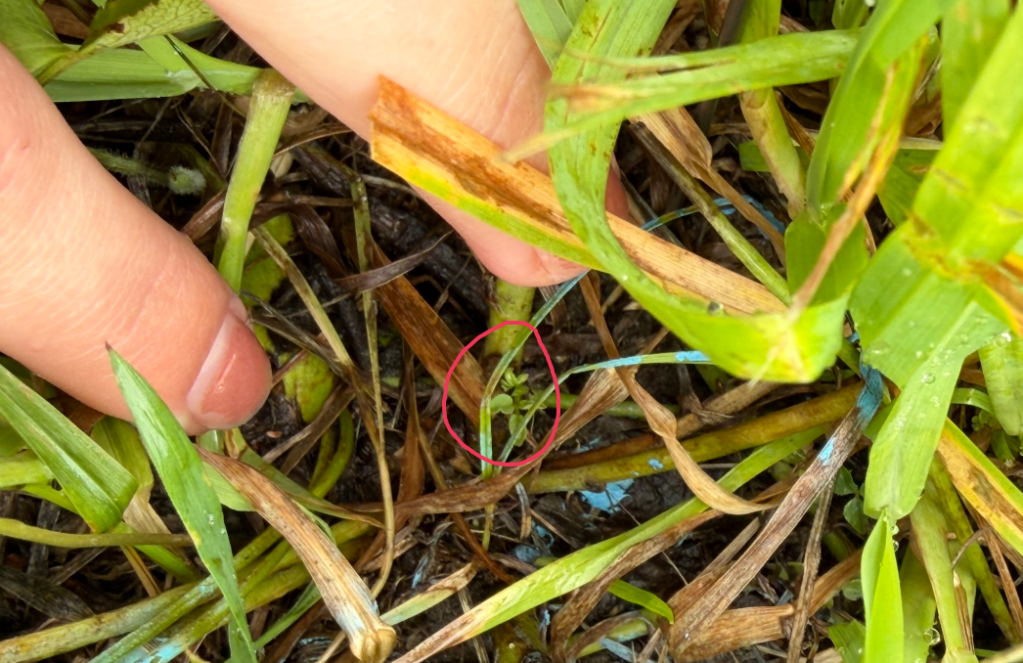
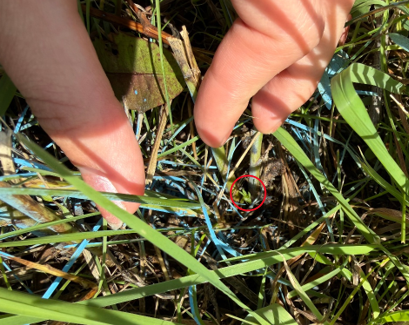
As July progressed, the condition of the plants steadily declined. The cut stems became increasingly brown and dry, and the small basal leaves that had emerged after mowing began to wither. By mid-July, only a single sprout remained near one monitored stem.
By late July, no living resprouts remained. All monitored stems appeared dead and showed signs of decomposition. I revisited the site again in early August and found no evidence of renewed growth. Weather conditions during the monitoring period were generally favorable for plant growth, with adequate rainfall through much of June and no prolonged periods of drought. Even under those conditions, the monitored plants failed to recover.
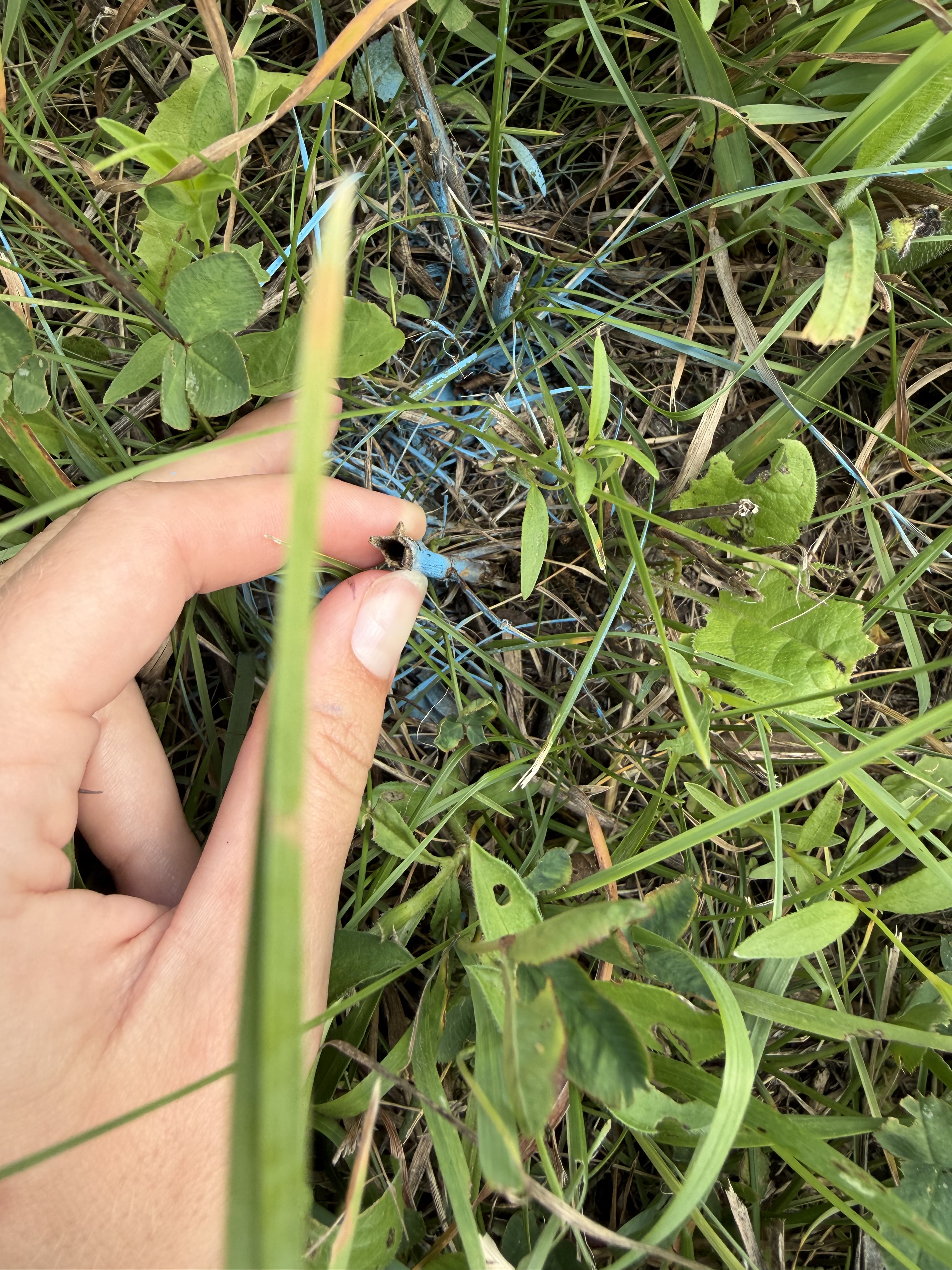
Research on sweet clover management provides a possible explanation for what was observed. Conn and Seefeldt (2009) found that cutting height strongly influenced survival. In their study of invasive sweet clover, first-year plants commonly regrew after cutting, while second-year plants were much less likely to recover when cut close to the ground. The authors suggested this occurred because low cutting removed the leaf axils and growing points needed for continued growth. That explanation aligns closely with the observations from North Holland Prairie. The plants monitored here were second-year flowering individuals that had been cut below their lowest remaining leaves.
The biennial life cycle of sweet clover may also play a role. During the first year, plants focus on building root reserves. During the second year, those stored resources are redirected toward flowering and seed production. By mid-June, many of the monitored plants had already invested substantial energy into reproduction. Once most of their remaining foliage and growth points were removed, the plants may not have retained sufficient reserves to support long-term recovery.
This was a small observational project focused on yellow sweet clover at a single site. A larger study would be needed to test how factors like mowing height, timing, plant age, and species affect recovery. Even so, the plants monitored here followed a consistent pattern. The mowed stems briefly produced new growth before gradually declining, and none survived through the end of the monitoring period. These observations support the continued use of properly timed mowing as a tool for managing sweet clover at Nachusa Grasslands.
Sources and Further Readings
- Invasive White Sweetclover (Melilotus officinalis) Control with Herbicides, Cutting, and Flaming
- Melilotus officinalis (Yellow Sweetclover) Causes Large Changes in Community and Ecosystem Processes in Both the Presence and Absence of a Cover Crop
- Influence of Environmental Factors on Seed Germination and Seedling Emergence of Yellow Sweet Clover (Melilotus officinalis)
- Melilotus alba, M. officinalis (Fire Effects Information System)
- Ensiling Reduces Seed Viability: Implications for Weed Management
- The Role of the Exotic Legume Yellow Sweetclover (Melilotus officinalis) in a Low Nitrogen System: A Potential Ecosystem Transformer and Facilitator of Invasion
- The Biology of Canadian Weeds: 29. Melilotus alba Desr. and M. officinalis (L.) Lam.Yellow Sweet Clover: Information and Management


I employed the same technique of cutting the stems as low as possible on Yellow Sweet Clover in June and White Sweet Clover in July on my prairie acreage in southern Wisconsin. I hope it reduces regrowth next year!
Larry Hartzke
Mount Horeb WI
>
The first year or two after the initial cutting of yellow sweet clover, the flush of plants may not diminish if the seed bank has existed for a while. The seeds do not all germinate at either the same time or even in the same year. Just keep cutting them annually without fail to prevent recharging of the seed bank, and you will eventually see a diminishing density of these biennial plants. Persistence is the key to eradicating them.