
Written by: Clara Barton
Surfactant proves vital in diminishing populations of bouncing bet. Both Crossbow and Telar XP paired with surfactants show promising short-term control, though long-term effects on rhizome survival are still unknown.
Background
Bouncing bet (Saponaria officinalis), also known as soapwort, is a perennial forb introduced from Europe that is considered invasive throughout many parts of North America. This weed can form dense colonies through both seed production and spreading rhizomes, allowing infestations to persist and expand over time. The plant is characterized by smooth, waxy leaves and stems that contain saponins, compounds historically used in soap production. Its waxy leaf surface may reduce herbicide uptake and therefore limit treatment effectiveness when herbicides are applied without an effective adjuvant.
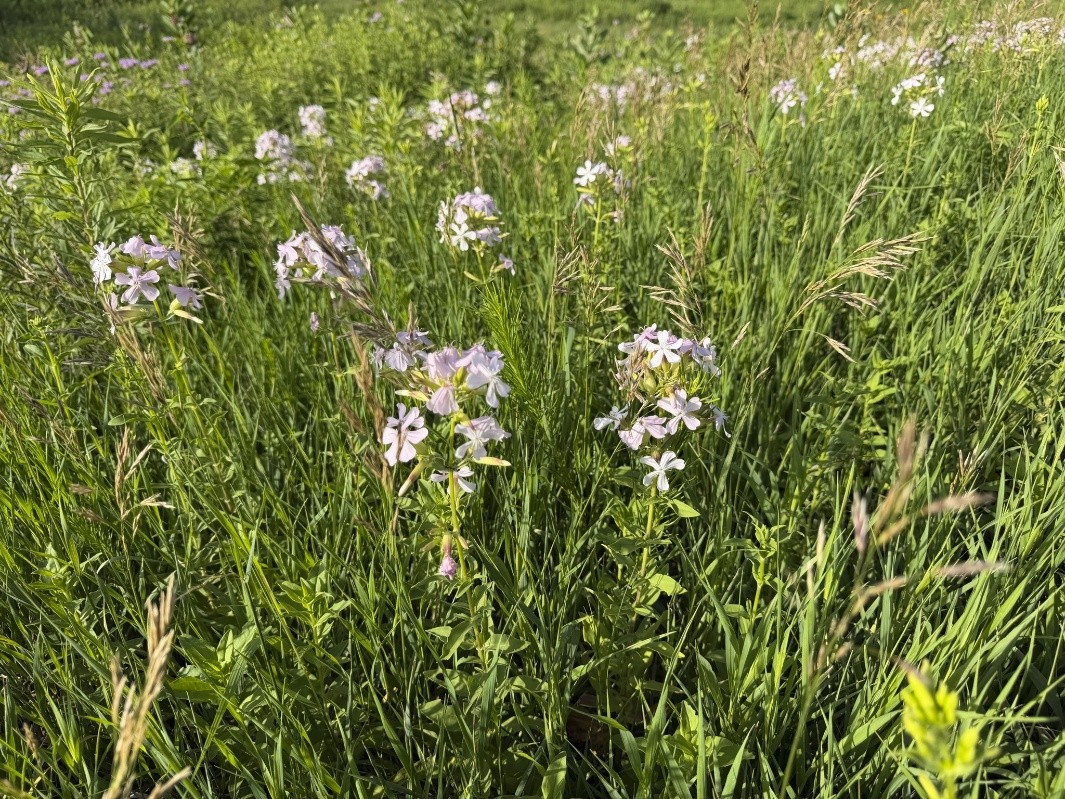
Despite its aggressive growth habit, relatively little research is available regarding optimal management of bouncing bet. Existing management recommendations frequently suggest chlorsulfuron and other broadleaf herbicides for bouncing bet control. To evaluate treatment options commonly used by restoration practitioners, this study compared Telar XP (chlorsulfuron) and Crossbow (2,4-D + triclopyr). Surfactants are commonly recommended to improve herbicide absorption given the waxy nature of this plant’s leaves. Control is generally expected to require multiple years of treatment due to the species’ extensive rhizome system.
At Nachusa Grasslands, bouncing bet has never been one of our highest-priority invasive species because infestations remain relatively small. As a result, technicians have typically treated it with whatever broadleaf herbicide was available at the time. However, as part of our effort to stay ahead of emerging invasions, we wanted to determine which treatment option was actually the most effective.
Methods
The experiment was conducted on an established bouncing bet infestation located within the Visitors Center Prairie. The patch of bouncing bet present at this site was divided into three sections which received different herbicide treatments. Having these treatments so close to each other made comparing and contrasting the impacts easier to observe.

Three herbicide treatments were evaluated:
| Treatment | Mixture |
| 1 | Telar XP mixed at 2 grams of product per gallon of water, plus FS Talent (non-ionic surfactant) |
| 2 | Telar XP mixed at 2 grams of product per gallon of water |
| 3 | 2% Crossbow (v/v) plus methylated seed oil (MSO) |
Having the Telar XP without the surfactant (treatment 2) was done to evaluate the importance of using a surfactant when it comes to treating this plant. The site was revisited regularly and documented with notes and photographs following treatment.
Summary of Observations
During the first week after treatment, Crossbow produced the fastest response, causing noticeable yellowing and damage. Telar XP alone produced little visible change, while Telar XP plus surfactant caused mild wilting.
By the second week, Crossbow-treated plants showed extensive yellowing and twisting. Plants treated with Telar XP alone developed reddish coloration and continued producing seed, while Telar XP plus surfactant caused much greater browning and stress.
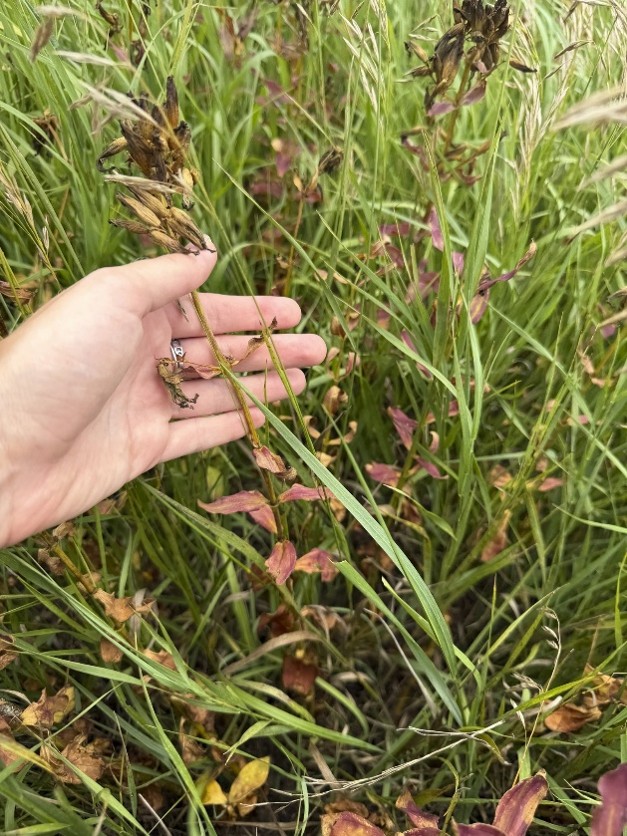
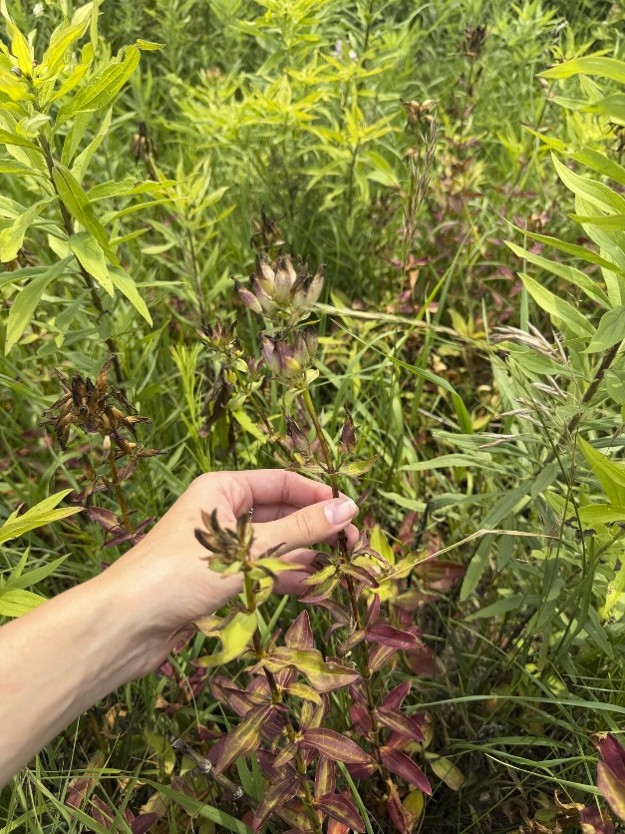
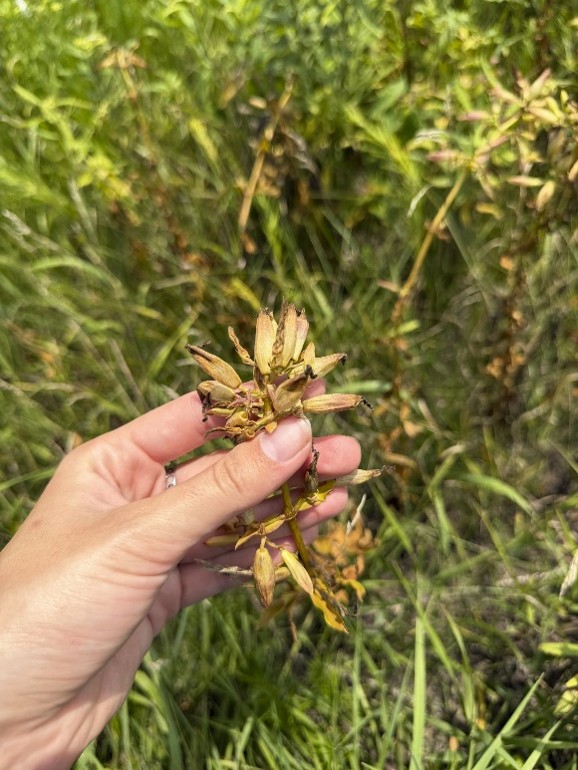
After three weeks, both Crossbow and Telar XP plus surfactant appeared to cause substantial mortality. In contrast, many plants treated with Telar XP alone remained alive and still appeared capable of producing seed.
Plants three weeks post treatment:



Results
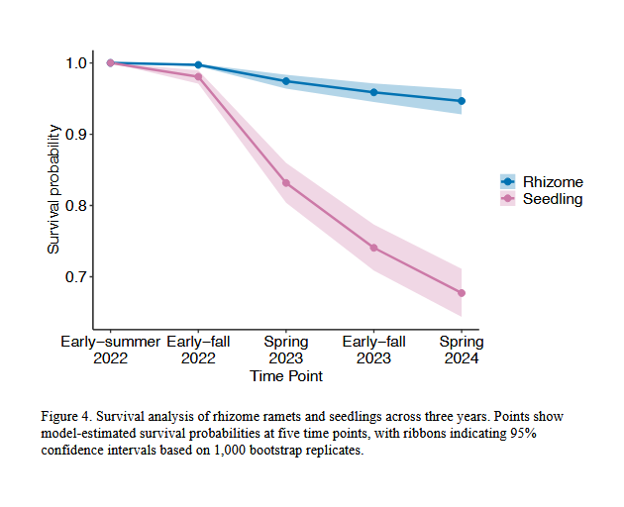
While Crossbow produced a more rapid visible response than Telar XP, speed of symptom development should not be interpreted as evidence of superior long-term control. Bouncing bet spreads through underground rhizomes, and plants that regrow from those structures can be especially persistent. Natto and Friedman (2025) found that rhizome-derived plants survived at higher rates than seed-derived plants, suggesting that long-term control depends on suppressing belowground growth as well as visible stems.
Telar XP (chlorsulfuron) is specifically recommended for bouncing bet management on the label and provides residual activity that may help reduce future populations. However, field observations from this study suggest that Telar XP alone may provide inadequate control without the addition of a surfactant. Based on the available evidence, both Crossbow and Telar XP plus surfactant appear capable of providing effective control, but Telar XP may have greater potential for long-term suppression due to its residual activity and documented use against bouncing bet. Additional monitoring over multiple growing seasons would be necessary to determine whether the rapid initial control observed with Crossbow translates into lower rates of resprouting and reinfestation.
Discussion and Conclusions
The results suggest that adding a surfactant was an important factor in improving Telar’s effectiveness. Bouncing bet’s waxy leaves makes it harder for herbicides to stick to and enter the plant. This likely explains why the Telar XP plus surfactant treatment performed much better than Telar XP alone. Although chlorsulfuron is commonly recommended for bouncing bet control, our observations indicate that it may be less effective when applied without a surfactant. In practical terms, the success of Telar XP treatments may depend not only on the herbicide itself, but also on using an adjuvant that helps the herbicide penetrate the plant.
Crossbow consistently produced the fastest and most dramatic visible symptoms. The yellowing and stem twisting observed in treated plants are characteristic responses to auxinic herbicides such as 2,4-D and triclopyr, the active ingredients in Crossbow. While these symptoms developed rapidly and caused substantial aboveground injury, visible top-kill does not necessarily indicate superior long-term control. As mentioned above, bouncing bet spreads through persistent rhizomes, making control of belowground structures important for lasting suppression. In contrast to the Crossbow, Telar XP is a systemic herbicide that translocates throughout the plant and may move into underground tissues before visible symptoms develop. This slower response may explain why Telar XP appeared less dramatic initially despite its potential to suppress rhizome-driven regrowth. Additional monitoring will be necessary to determine whether this translates into improved long-term control.
Another interesting observation was the condition of the plants’ flowering and seed-producing structures. By the end of the study, the Telar XP plants without surfactant still had noticeable green tissue around developing seed heads, while those treated with Crossbow or Telar XP plus surfactant were almost completely brown and dried down. Although we did not measure seed production or viability, this difference suggests that plants receiving Telar XP alone may have continued directing resources toward reproduction longer than plants in the other treatments. This would be an interesting question to explore in future monitoring.
While this was a relatively small field trial, it provided valuable insights into how bouncing bet responds to commonly used herbicide treatments. The study was conducted on a single infestation and relied primarily on visual assessments during the first three weeks following treatment, so additional monitoring will be needed to evaluate rhizome survival, regrowth, and long-term population decline. Even so, the results clearly highlighted differences among treatments and identified several areas for future investigation.
Key Takeaways
- Telar XP performed poorly without a surfactant.
- Adding a surfactant greatly improved Telar’s effectiveness.
- Crossbow produced the fastest visible response.
- Both Crossbow and Telar XP plus surfactant provided strong short-term control.
- Additional monitoring will determine which treatment gives the best long-term suppression of bouncing bet.
Notes
Additional monitoring in 2027 is recommended to evaluate regrowth, rhizome survival, and reinfestation. Long-term observations will ultimately determine whether the rapid response observed with Crossbow or the slower systemic activity of Telar XP plus surfactant provides more durable control.
Bibliography
“Bouncing-Bet // Mizzou WeedID.” https://weedid.missouri.edu/weedinfo.cfm?weed_id=251.
Corteva Agriscience. Crossbow® specialty herbicide label. EPA-registered product label.
Envu Environmental Science. (2020). Telar® XP Herbicide label (EPA Reg. No. 432-1561). U.S. Environmental Protection Agency. https://www3.epa.gov/pesticides/chem_search/ppls/000432-01561-20200320.pdf
“Jefferson County Invasive Species Management Program. Bouncing Bet Information Sheet.” n.d. .https://www.jeffco.us/DocumentCenter/View/1183/Information-Sheet-on-Bouncingbet-PDF.
Natto, Alyson C. Van, and Jannice Friedman. “Seasonal Life-History Trade-Offs Differ between Plants Derived from Seed versus Rhizomes in Saponaria Officinalis.” Preprint, bioRxiv, October 29, 2025. https://doi.org/10.1101/2025.10.28.685121.
“Range and Pasture Recommendations for Bouncingbet.” n.d. https://www.weld.gov/files/sharedassets/public/v/1/departments/public-works/documents/bouncing-bet-identification-and-management-final.pdf.
“Saponaria Officinalis | UMass Amherst Landscape, Nursery & Urban Forestry Program.” https://extension.umass.edu/weed-herbarium/weeds/saponaria-officinalis/index.html.
“Saponaria Officinalis Profile – California Invasive Plant Council.” https://www.cal-ipc.org/plants/profile/saponaria-officinalis-profile/.
“USDA Natural Resources Conservation Service. Bouncing Bet. Illinois Grazing Manual Fact Sheet, 2006.” n.d. https://www.nrcs.usda.gov/sites/default/files/2022-12/BouncingBet.pdf.
“USDA Plants Database Plant Profile Characteristics.” https://plants.sc.egov.usda.gov/plant-profile/SAOF4/characteristics.


Anecdote. I have been treating an area of bouncing bet along a right of way edge with 2.5% Triclopyr 4 in water with 2 tablespoons of MSO/gallon and 2 tablespoons of AMS/gallon (why not). It very effectively burns it down. Last year the plants were large, dense and produced buds. I treated them in early July and followed up treating widely scattered small shoots that emergered after treatment in August and again in September. This year year only widely scattered weak shoots emergered (probably reduced 95+% in density compared to the prior year and 99% reduced in terms of cover). I treated them again this July, but they are hard to find, because they are small, so I am going to walk through every couple of weeks and look for more. …it certainly isn’t killing it all in one pass, but I think if keep sweeping the area, I’m going to have less and less.
…so maybe the 2,4-D in Crossbow doesn’t make much difference.
I was wondering about the 2,4-D as well. As recommended in a previous post, I’ve been using triclopyr 3 (4%) + NIS (.25%). Got started kind of late this year, so have been applying it to flowering plants and the vegetative stems surrounding them. Returning after a couple weeks, it at first appears as if each colony has been obliterated; look more closely and you start to see short vegetative stems re-emerging, but sparsely. Those get re-sprayed, and on it goes
Anecdotally, here at the Chiwaukee Prairie, we’ve been spot treating with the chemically similar to Telar XP (chlorsulfuron), but much cheaper generic metsulfuron-methyl (MSM), on bouncing bet with good year after treatment results. Per gallon we use it at: 0.6 g (¼ level teaspoon), 14.4 mL Activator 90 (0.375% non-ionic surfactant), and tracking dye. Make certain that the water dispersible granules are completely dispersed before spraying. This is also true of Telar.
The results of treatment are as described for Telar XP in above study, with the plant seeming unaffected for quite a while but freezing in growth at treatment, then slowly browning over time.
Anecdotally, here at the Chiwaukee Prairie, we’ve been spot treating with the chemically similar to Telar XP (chlorsulfuron), but much cheaper generic metsulfuron-methyl (MSM), on bouncing bet with good year after treatment results. Per gallon we use it at: 0.6 g (¼ level teaspoon), 14.4 mL Activator 90 (0.375% non-ionic surfactant), and tracking dye. Make certain that the water dispersible granules are completely dispersed before spraying. This is also true of Telar.
The results of treatment are as described for Telar XP in above study, with the plant seeming unaffected for quite a while but freezing in growth at treatment, then slowly browning over time.