Herbicide Treatments to Reed Canary Grass, Clethodim vs. Glyphosate

Subtitle:  We need to focus on winning the war and not just the battle

By:  Julianne Mason, Restoration Program Coordinator, Forest Preserve District of Will County

April 21, 2020

Like all invasive species, reed canary grass is a formidable opponent.  It is aggressive, robust, produces tons of seed, spreads rhizomatously, and can form monocultures in many wetland community types.  Even during these shelter-at-home days, we have been able to do solo work to treat reed canary grass in high priority areas.  Our current work restrictions have highlighted the need to be both strategic and effective in our treatment actions.

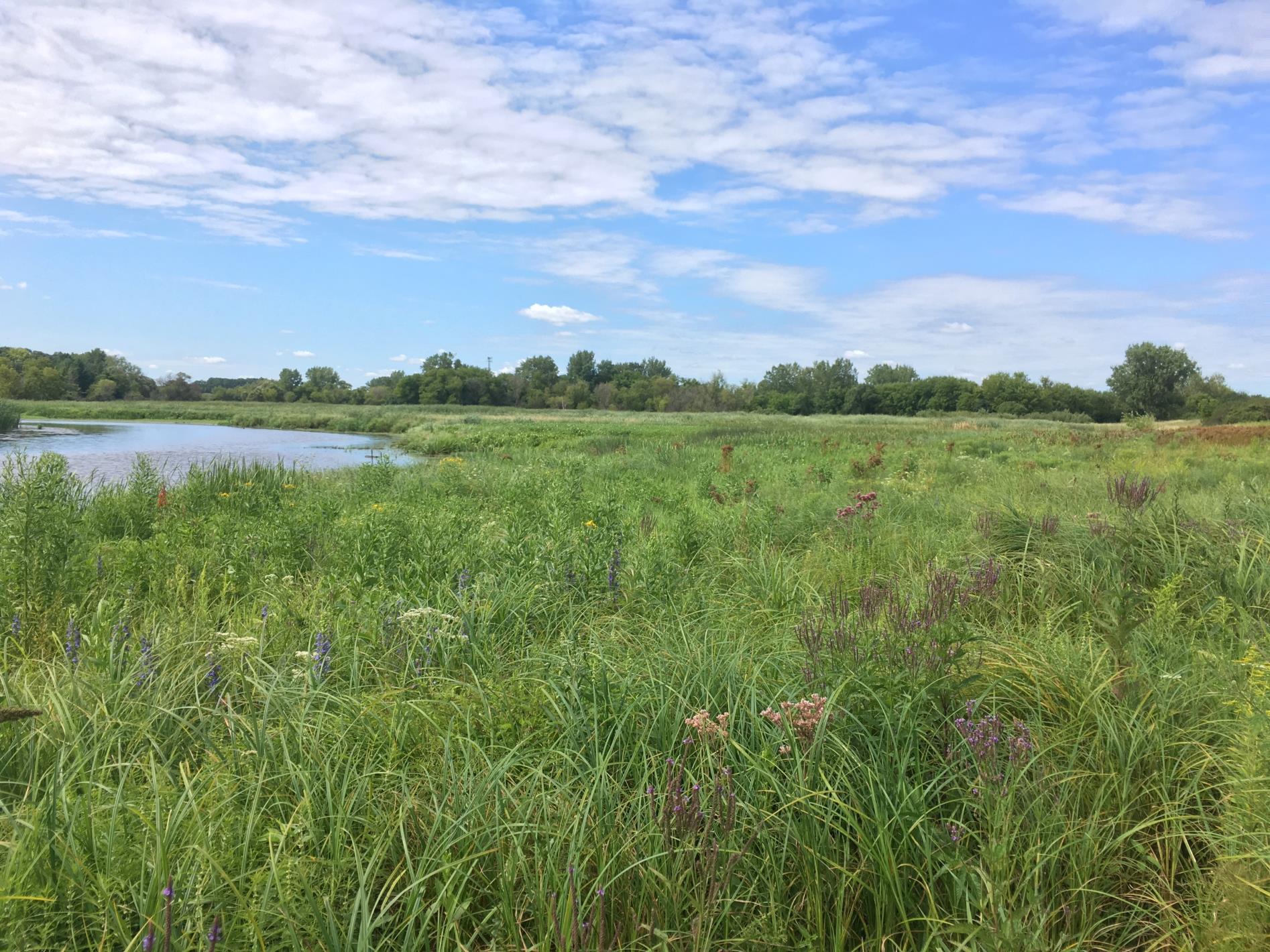
Several years ago, I put in some test plots to compare the longer-term effectiveness of treating reed canary grass with glyphosate, a non-selective herbicide, compared to treating it with clethodim, a grass-specific herbicide.  I used 2% AquaNeat (glyphosate product) with 0.4% Pen-A-Trate II, which is our normal nonionic surfactant.  For the grass-specific herbicide treatments, I used 1.5% Volunteer (clethodim product) with 1.5% Powerhouse, which has ammonium sulfate (AMS) incorporated in the surfactant.  Adding AMS, a fertilizer, to the herbicide solution is suggested on the clethodim label.  Unfortunately, clethodim is not approved for use over water; there is no aquatic-approved, grass-specific herbicide.  The clethodim treatments were made when the treatment areas were fairly dry and no standing water was present.  Plots were sprayed in the late fall, early spring, or late spring in 2017 and 2018.

Photo 1 caption: Reed canary grass plants were treated with clethodim or glyphosate herbicide and marked with pin flags which were color coded to the treatment type.  In this plot, the clethodim treatment was pretty effective since no flowering reed canary grass heads are visible in the July photo.

Not surprisingly, the reed canary grass that was treated with glyphosate died quickly.  However, glyphosate is a non-selective chemical, and there were dead zones resulting from overspray during the treatments.  This was especially significant for the late spring treatments. The reed canary grass was big and tall when it was sprayed, resulting in a lot of herbicide spray used and a lot of overspray death.

Photo 2 caption:  Reed canary grass that was sprayed with glyphosate died quickly.  The quick kill was gratifying, but note the dead zones from the non-selective chemical’s overspray.

The dead zones were less obvious but still present during the late fall treatments, which were made after many other species had gone dormant, and during the early spring treatments, which had less overspray because the plants were treated when still small.  The dead zones were mostly colonized by reed canary grass seedlings, which is not surprising. There must be a lot of reed canary grass seed in the seedbank under reed canary grass plants.  Within two years, the reed canary grass stand that was treated with glyphosate during the late spring had returned to a robust reed canary grass stand.  If you had seen the end result, you would not have believed that the reed canary grass had been sprayed with herbicide and killed just two years prior.

Photo 3 caption:  By the second year after treatment, the area treated with glyphosate had returned to a reed canary grass stand.

In contrast, the reed canary grass plants that were treated with clethodim took many weeks to months to turn yellow and senesce.  All of them looked sick and none of them flowered, but they didn’t look especially dead after treatment.  Even a year or two after treatment, many of them had resprouted weakly and were not fully dead, just severely stunted.  However, the other plants in the area that had been previously suppressed by the reed canary grass, like sedges and wetland forbs, were unaffected by the herbicide treatment and had greatly increased in vigor and cover.  Two years after the initial herbicide treatment with clethodim, the treated area had recovered the native cover and diversity of a sedge meadow.

Photo 4 caption:  In the clethodim treatment plots, reed canary grass was killed or significantly reduced.  Sedges and forbs were unaffected by the herbicide treatment and greatly increased in vigor and cover.

Overall, the best results in this study were: 1) treated in the late fall with 2% glyphosate, when the reed canary grass was still slightly green but almost all the other vegetation was dormant, and/or 2) treated with 1.5% clethodim in the fall or early spring, with a follow-up treatment to missed individuals and ones that did not fully die.

Photo 5 caption:  Reed canary grass was treated with clethodim herbicide, and a sedge-dominated community remained two years after the treatment.

Although following up with multiple treatments of clethodim may seem like more work, I think it is worthwhile and actually less work in the end because it allows the native sedges and forbs to flourish.  In many of our natural areas, and especially immediately under invasive plants, the seed bank may not be our friend.  It may have seeds of more invasive plants instead of native species.  Creating “holes” in the vegetation with non-selective chemical use can just make space for more invasive plant recruitment, spray and repeat, spray and repeat.  To break out of that cycle, an end game is to facilitate renewed dominance of the native matrix, which seems to happen better and more quickly when a grass-specific herbicide is used to treat the reed canary grass.

Photo 6 caption:  Comparison of two adjacent plots where the reed canary grass was treated with clethodim and glyphosate herbicide, viewed two years after the treatment.

NEWS: Due to Covid 19 crisis we are postponing the GRN workshop of this August to next August, 2021 in Barrington, Illinois.

Posted in Uncategorized | Tagged , , , | 43 Comments

Brush mowing

By Bill Kleiman

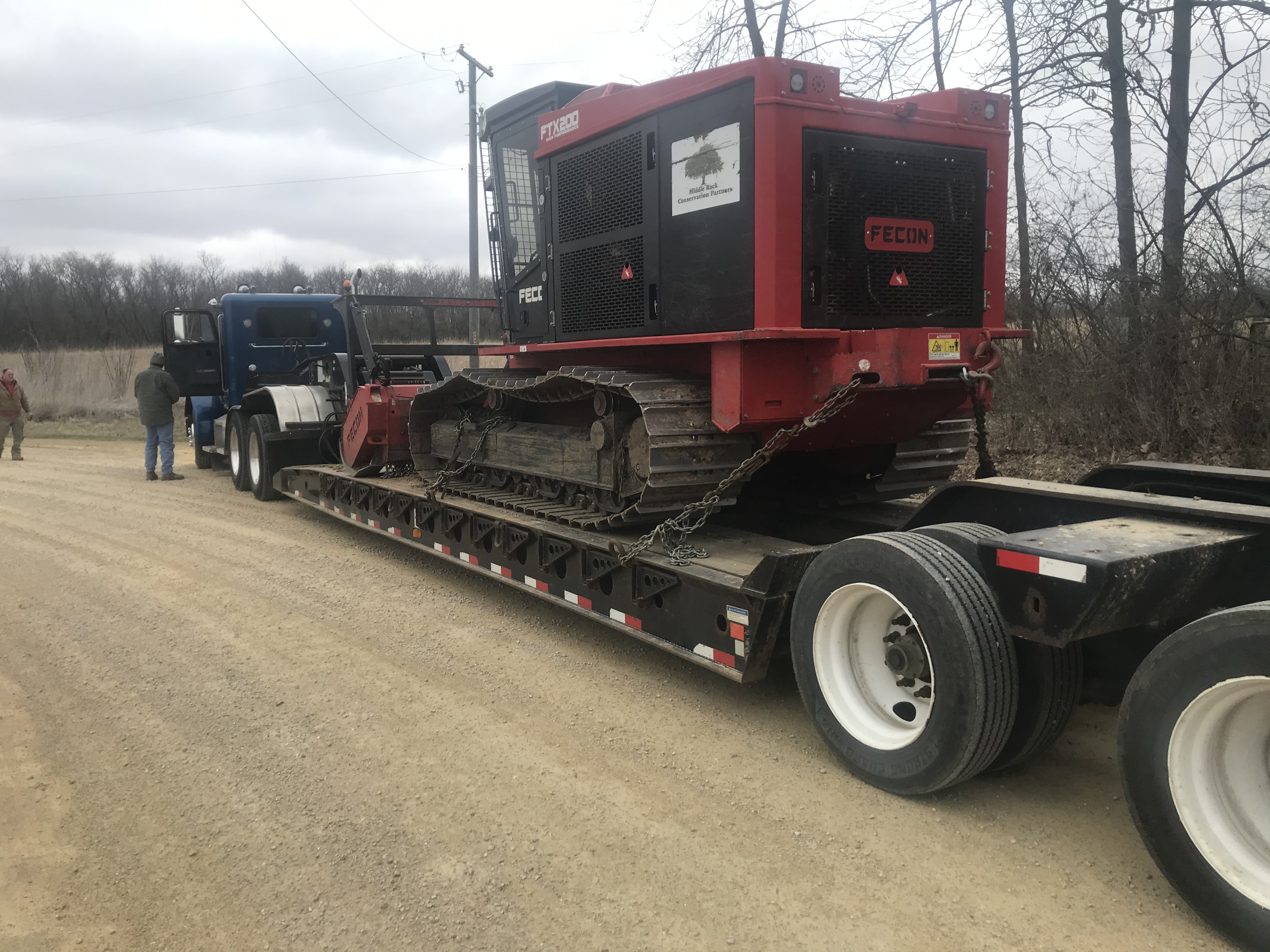
The Middle Rock Conservation Partners have had a long winter and early spring of brush mowing.   MRCP purchased this large brush mower in early winter and have been working to keep the machine going.

Above is the Fecon FTX200 being moved to the site.

The MRCP Hill tract is very dense with box elder and honeysuckle. The brush is being mowed, than planted with prairie seed harvested with a combine.   Then they plan to backpack treat resprouts and keep up the prescribed fire over the years.  Remember prescribed fire?

This is what the view is at times from the cab.  The reverse screen shows the thinned area.

Before shot with a bur oak just a bit left of center.  Photo below is a after photo with panorama view.

Posted in Uncategorized | Tagged , , | 4 Comments

25 Drums, 1 Applicator, 1 Sprayer & 1 Winter

By Bryon Walters, conservation contractor
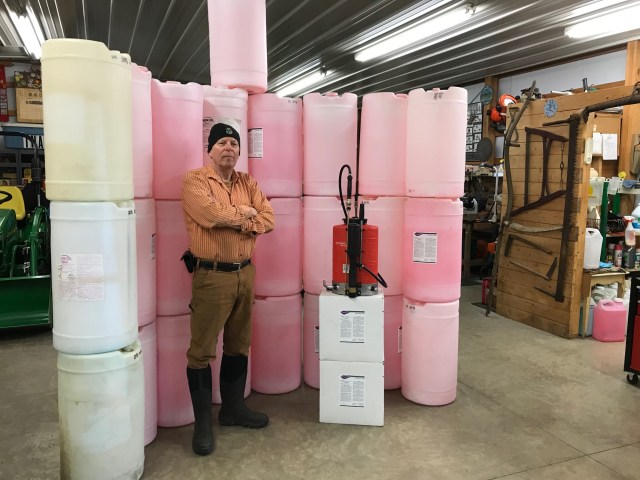
This past Winter I have applied 375 gallons of a 20% solution of Triclopyr 4 mixed with basal oil in 10 different natural areas. All of it, 2 ½ gallons at a time on my back. That’s 150 backpack sprayer loads.

It was all sprayed through one Birchmeier sprayer and without any leaks or breakdowns at all.

How does that happen? By taking good care of my equipment.

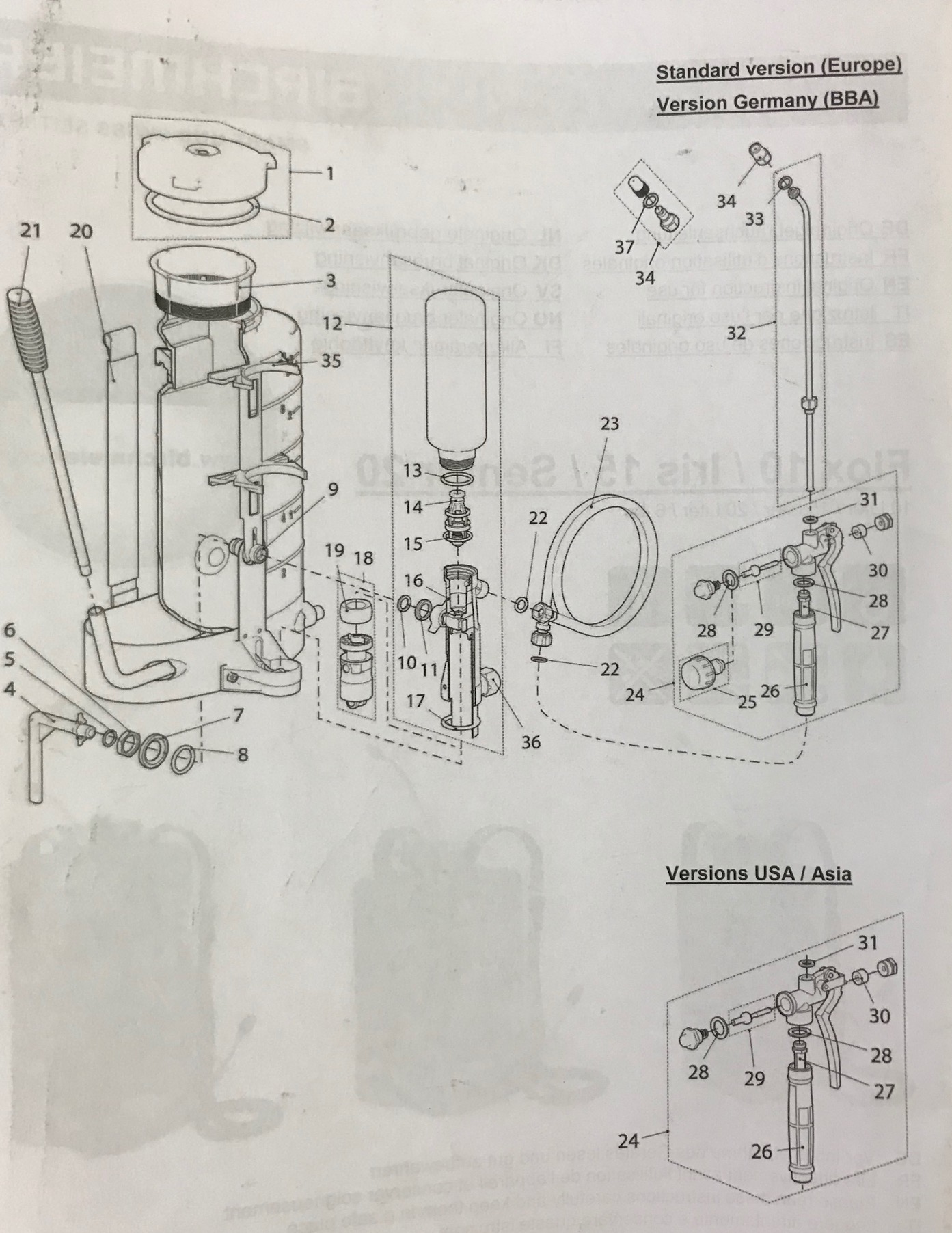
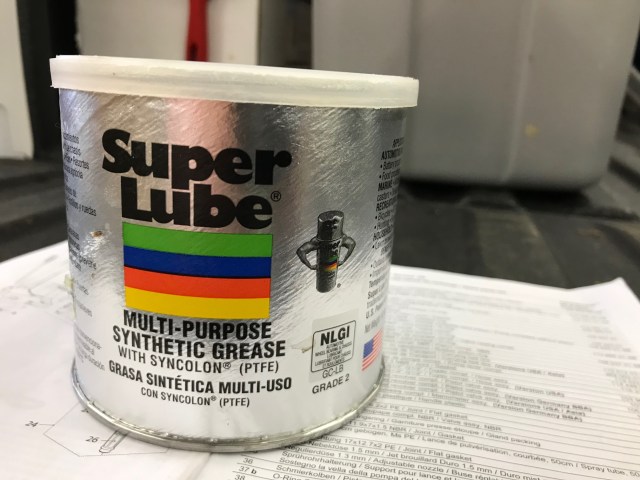
I purchased a new sprayer last fall. I have many sizes of Birchmeier’s, depending on the products that I’m spraying. For basal bark work, which is somewhat slow going, I use the smallest size sprayer that they make, which is the Flox 10, (2 ½ gallon.) I spray 2-4 loads a day. After taking it out of the box, I set up my iPad on my workbench and followed along a great U-Tube video demonstrating how to disassemble the sprayer. Since it was new and there was no chemical residue in it yet, I felt that was as good time as any time to learn how to take apart the sprayer. I have done it in the past several times, but never on a new sprayer. I hit the Pause button a couple of times until I could see every small o-ring and gasket described in the video. I added a small quantity of my Super Lube on a few parts. After reassembling it, I took it all apart again, this time without the video. Piece of cake.
I use dedicated sprayers with labels on them, meaning this sprayer will never spray anything but Triclopyr 4 with basal oil. No cross contamination, needless triple rinsing and over use of my sprayers. I always have the parts blowup chart and a small baggie of extra parts in my truck at all times. Usually I break them out to fix someone else’s sprayer on the tailgate.
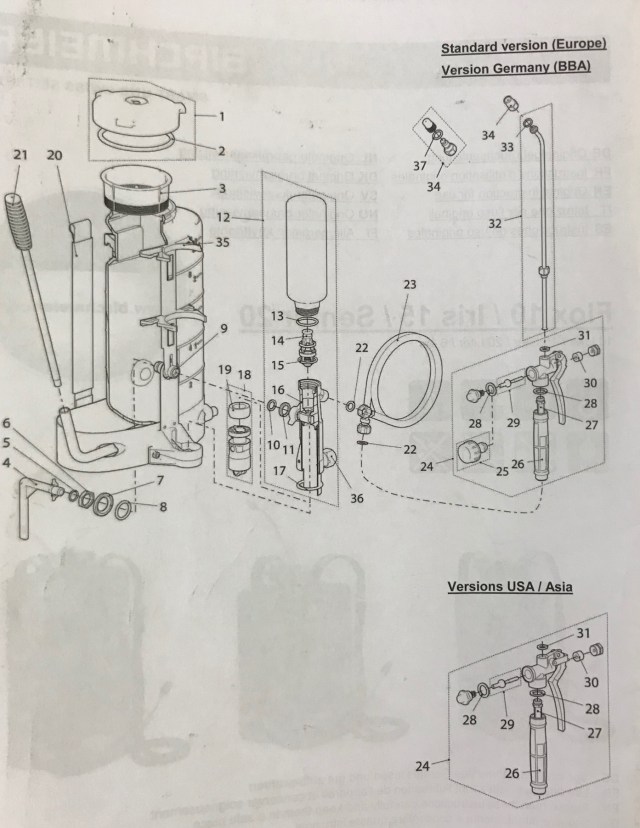
Now that the dormant basal sprayer season is over, I clean it all up. Put a gallon or so of warm soapy water in the tank, swish it around a few times, unscrew the brass adjustable nozzle, pump it up and spray the mixed solution into an empty jug. Repeat one more time or as many times needed so that nothing but a soapy solution comes out. Put the nozzle in the white strainer basket and rinse under warm water. Same for the lid. When finished, put some Super Lube on the lid gasket. If the lid gasket is really loose, warped or won’t reseat into the lid, discard it and replace with a new gasket. Put Super Lube on the new gasket. If your lid leaks during usage, the gasket is faulty. The tighter you close the lid, the more damage is being done to the gasket. I then take apart the sprayer and replace some of the o-rings and gaskets. Clean the white check valve. Tighten, but not overly, the hose connectors, outside brass tank valve, etc. When finished, put the sprayer into a tote or on a flat surface with the lid off. Let it dry out a week or so then put the lid back on when you walk past it. This maintenance work will go along way in helping you get your stewardship work done and less time in the field fixing leaks.
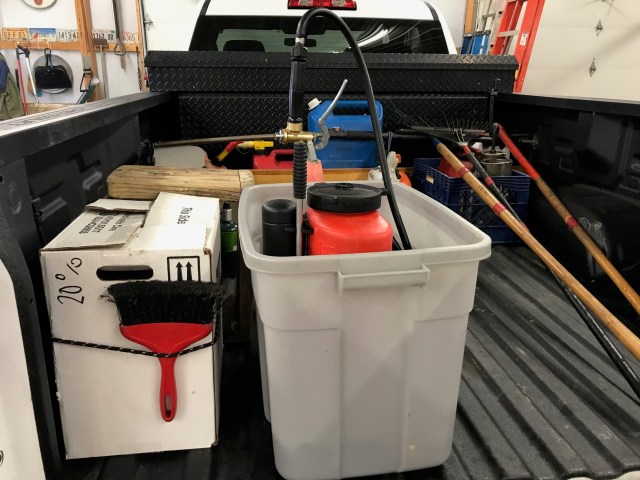
Now the fun part. How many exotic and mesic trees did I treat this winter with 150 back pack loads?

I tallied what I was able to spray in a typical area by counting and listing sizes sprayed with one load.

I spray the lower 6” of the trunk all the way around.


1st Typical 2 ½ gallon load sprayed:

25- Multi-flora Rose, 5-12 canes each plant

10-Japanese Barberry, 10-15 stems each plant

30-Honeysuckle shrubs of various sizes, small to mega large

15-Common Buckthorn trees

30-Glossy Buckthorn shrubs


2nd Typical 2 ½ gallon load sprayed:

32-1-3” DBH Exotic / Mesic trees

28-4-6” DBH Exotic / Mesic trees

16-7-12”DBH Exotic / Mesic trees

4-13-18”DBH Exotic / Mesic trees


I estimate that I sprayed about 50 of the 1st Typical loads and 100 of the 2nd Typical loads.

So in summary, the 375 gallons sprayed this many.


1,250- Multi-flora Rose

500- Japanese Barberry

1,500- Honeysuckle shrubs

750- Common Buckthorn

1,500- Glossy Buckthorn

3,200- 1-2” DBH Exotic / Mesic trees

2,800- 4-6” DBH Exotic / Mesic trees

1,600- 7-12”DBH Exotic / Mesic trees

400- 13-18” DBH Exotic / Mesic trees

TOTAL OF: 5,500 Shrubs and Buckthorns, 8,000 Exotic and Mesic trees.


Not bad for a winters worth of work. Did I mention, not a drop of chemical leaking on my back, on the ground or anywhere else. I am and have been convinced for many years that this type of solo stewardship work is highly effective, cost efficient, quiet, clean, (no CO2 chain saw emissions) and much easier than a winter of chain saw work. Triclopyr 4 with basal oil costs about $35.00 a gallon. So a 15 gallon drum costs about $525.00 and this lot of 25 drums cost about $13,125.00. There is and always will be a need for chain saw work, but there is no way you will get these kind of control numbers chain sawing as compared to basal bark spraying by one individual worker. The shrubs and trees that I sprayed will all be dead by the end of July.
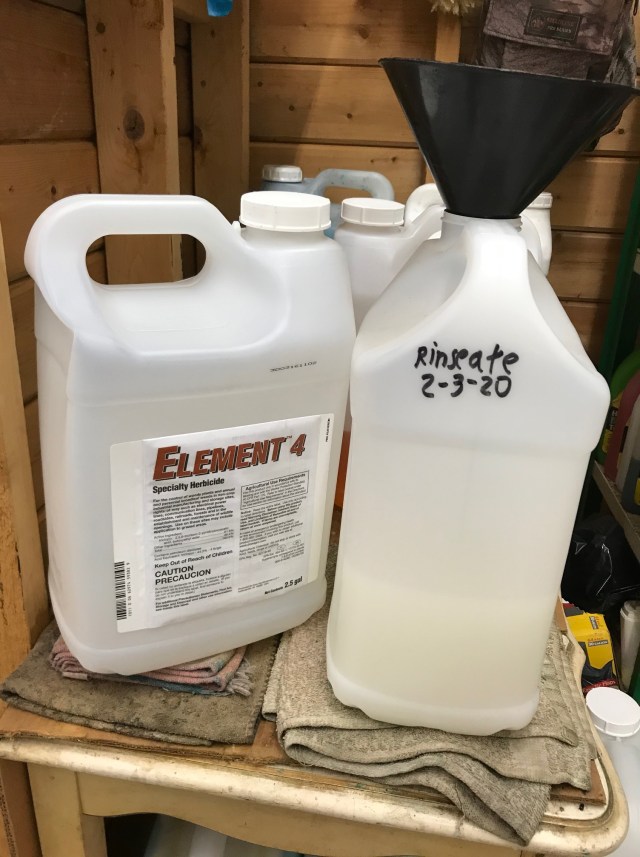
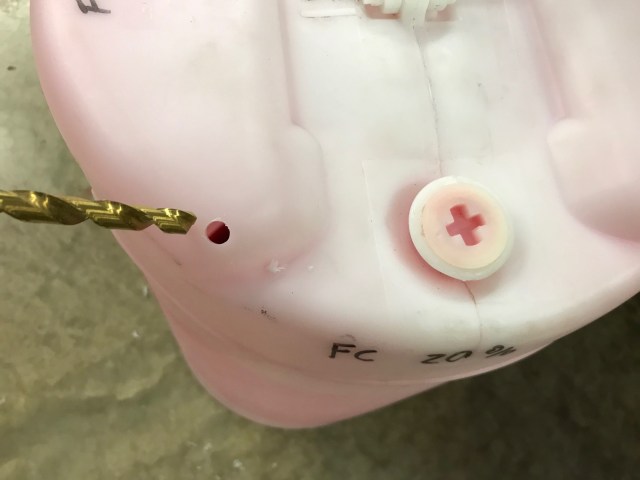
Finally, what to do with all those empty jugs and drums. I triple rinse the chemical jugs and pour the rinse-ate into an empty jug. Mark RINSE-ATE and date on the jug. I have 10 or so jugs. I will pour them into an empty 15 gallon drum and add the first Crossbow mix into that drum of rinse-ate later this Spring. The rinse-ate will all be gone by June. The drums are a little harder to deal with. I drill a hole in them to positively drain them. 25 “empty” drums yielded a gallon of product. If I was a real hero, I would triple rinse the 25 empty drums and drain them into an empty drum. I’m not that kind of hero! My recycle center takes the jugs and drums after I drain out all of the product that I can. It would be nice to return them to the dealers to reuse. We use to do that in the 90’s. Save a few good ones to store other chemical mixes in them. Mark on the drum what’s in there and date it. Use caution with all herbicides and take pride in your work!
 

Posted in Uncategorized | Tagged , , , | 9 Comments

Remote Automated Weather Station

By Dale Maxson, Eastern Iowa Land Steward – TNC

With many facets of land stewardship, our daily course of action revolves around weather and our ability to understand its patterns and influence on the world around us.  This is especially true when it comes to wildland fire, both prescribed and wild.  Down in the Land of the Swamp White Oak in southeast Iowa we recently installed a Remote Automated Weather Station (RAWS) to help us track these environmental factors that influence our work.  These stations are significantly more robust than the typical home weather station you might pick up at the farm store.  In 1975 the US Forest Service began investigating automated weather stations to replace the manual measurements that rangers and firefighters across the US were collecting in order to support fire danger ratings.  By 1978, they had finalized a general design for these automated weather stations.  They were, and continue to be, required to collect a minimum set of data including precipitation, wind speed & direction, air temperature, relative humidity, battery voltage (remember, these are remote stations so they are typically solar powered and require a battery backup), solar radiation, and universal coordinated time (coordinated through GPS readings).  The data are collected, stored on a local datalogger, and transmitted on an hourly basis to a Geostationary Operational Environmental Satellite (GOES).  That information is shared through a network, and used by NOAA scientists to help inform fire weather forecasts across the country.  Like with most things fire or federal, there is a thick manual outlining the standards for these stations.  These stations are completely automated; no wifi or power feed needed.

The user has a few options for tapping in to the data.  They can download directly from the USB port on the datalogger, connect to the online RAWS network through MesoWest or for specially equipped stations they can tune in to the robot-voiced text-to-speech function on a designated radio frequency, allowing for real-time weather updates without having a human assigned to constantly take weather observations.  Unlike seasonal hires, the RAWS station doesn’t mind if it is cold or raining, and never asks about overtime pay.  The platform for RAWS allows for a wide array of customization.  For ours, we wanted to add sensors to gauge 10 hour fuel moisture and temperature (helpful when considering prescribed fire objectives like woody debris consumption) , as well as soil temperature and moisture at 10cm and 60cm below soil surface.  The additional sensors were essentially plug and play.  Using the MesoWest website https://mesowest.utah.edu you can filter weather stations by RAWS network for a geographic region, producing an interactive map like this:

Alternately, you can navigate directly to a known weather station to view more in-depth data.  The Cedar River TNC SWAMP station can be found here.   Does everybody need a RAWS at their site?  No!  Take a look at the map on MesoWest.  There are clearly gaps in the network, and there are some great land stewards continuing to do great work in those gaps.  For most situations, the farm store weather station, handheld weather meter like a Kestrel, or an old-school belt weather kit will give you good data to work with.  We are beginning long-term monitoring at our preserve, and the RAWS setup made sense for our specific objectives.  Consider your objectives and build your data accordingly.

Posted in Uncategorized | Tagged , , | Leave a comment

Save the date: 2020 Grassland Restoration Network Workshop

The Barrington area, located in the northwest suburbs of Chicago, is home to large expanses of natural areas fragmented by urban sprawl. The Barrington Greenway Initiative is comprised of multiple conservation organizations , is working to restore and and works to restore and connect these isolated grasslands to a functioning ecosystem. Come learn from some of the oldest restorations in the Chicago Wilderness region.

August 20121  DUE TO COVID CRISIS THIS WORKSHOP WILL BE HELD IN 2021!

Details on registration to come

Posted in Uncategorized | Tagged , | 1 Comment

Launch of Ecological Solutions and Evidence and Applied Ecology Resources

By Elizabeth Bach and Holly Jones

Winter can be a great time to reflect on ecosystem stewardship practice and explore management questions for the upcoming growing season. There are many ways to learn from each other in this field: talking with colleagues, listening to talks and webinars, following blogs like this one, and reading scientific literature. But let’s be honest, how often is the scientific literature useful to on the ground management questions and decisions? Plus, it’s super hard to search and a lot of it is in journals you must pay to access!

In response to these frustrations, shared by ecosystem managers around the world, the British Ecological Society has launched a new freely accessible journal Ecological Solutions and Evidence. The goal of this journal is to encourage sharing of work, lessons learned, and research between practitioners and scientists. This includes a unique article type called “From Practice.” From Practice articles must include at least one author who is a practitioner (i.e. not an academic scientist), are less than 3500 words (shorter is better!), and have no strict format or subject matter requirements. That means you don’t have to read (or write) in that clunky “scientific style” with an introduction, method, results, and discussion. Topics for these articles could include case studies of project successes (and failures), calls for new approaches to recurring problems in management, and perspectives on research topics most relevant to management. Many of the blogs here at the Grassland Restoration Network would be great starting points for a From Practice article.

If you, or a colleague, would be interested in learning more or writing an article, feel free to reach out to a member of the Ecological Solutions and Evidence editorial board, which includes both of us: Holly Jones (Northern Illinois University, Lead Editor) and Elizabeth Bach (The Nature Conservancy, Nachusa Grasslands, Associate Editor). We would be delighted to answer questions and offer feedback on article ideas. If you’re wary of writing an article by yourself and don’t know where to turn, we’d be happy to connect you with interested co-authors.

To make articles freely accessible, publications in the journal charges a publication fee.  There is a discount for From Practice and Data articles, and there is also a generous wavier system for people whose organizations can’t financially support page charges, so don’t let cost concerns stifle interest.

But wait, there’s more! In connection with Ecological Solutions and Evidence, The British Ecological Society is launching and on-line repository for information related to ecosystem management: Applied Ecology Resources. This information may include data associated with article published in Ecological Solutions and Evidence or be a home to that data currently sitting around unused. Applied Ecology Resources is also freely searchable. The repository soft-launches on 20 February 2020, so take a look, and let us know what you would like to see more of! If you have information you think might feel at home on Applied Ecology Resources, we’d be happy to talk about how to make that happen.

Read more from the lead editors, Holly Jones and Editor-in-Chief Marc Cadotte: https://besjournals.onlinelibrary.wiley.com/doi/10.1002/2688-8319.12000

Posted in Uncategorized | Tagged , , , , , | 2 Comments

Native Seed Exchange

by Joshua Clark, Natural Resource Manager, DeKalb County Forest Preserve, IL

On December 13th the Northern Illinois Native Seed Network held its 5th annual native seed exchange and potluck. In the 5 years since its inception the group has grown to include conservation focused groups from across the northern Illinois region. The members of the network cover a wide range of organization type; non-profit, land trusts, county forest preserves, conservation districts, park districts, and educational organizations. Our organizations vary in structure, size, funding, and land holdings but we all have similar goals and visions. This network allows us to share essential resources; seed and knowledge.

The Network was the brainchild of Ed Cope. This is how he described the origins:

“I had previously worked for Winnebago County, and after moving over to NLI (Natural Land Institute) I was surprised to see just how different our seed resources were even within the same county.  Species that Winnebago picked poundage of NLI could barely find, and vice versa.  So I started asking the other neighboring entities – Boone, Byron, and Rockford Park District – what kind of rare stuff they had, and if they’d be willing to trade.  It was immediately obvious that there was a good opportunity here, and the idea of expanding it into a larger network followed pretty quickly.”

Ed moved west last year for grad school and left the leadership of the group to Aaron “Ace”Minson from Boone County Conservation District and Josh Clark from DeKalb County Forest Preserve. The group goals remain the same; share locally rare and uncommon seed, work together to restore historically common species that have declined, share seed resources that may be common for some  in the group but not others, and share knowledge and information about seed collection, processing, storage and mixing.

One of our major initiatives has been the growing and sharing of focal species. This past year our focal species was Hypoxis hirsuta (Yellow Star Grass).  Hypoxis hirsuta used to be common throughout the tallgrass region in prairies ranging from dry to moist, but now it is fairly uncommon. We felt that Hypoxis hirsuta was an ideal selection because multiple agencies had a little bit to offer, leading to a pretty substantial seed resource or at least more than one agency could have collected on their own. We are hopeful that going forward we can identify similar, regionally rare species, which we can assemble into a significant shareable seed resource and enhance their prevalence in the region.

The Hypoxis seed that was collected in 2019 was distributed to four organizations. Each organization is using different methods to propagate or create populations. We will base our future growing methods for Hypoxis on our successes this year. We hope to eventually have enough seed or plants that each organization in the network will be able to try and establish populations on the lands they manage.

Hypoxis hirsuta (yellow star grass.  Family Amaryllidaceae)

The idea is fairly simple. Share what one has in excess with the other who has none of or very little for the benefit of the whole. Increasing plant diversity by sharing seed resources benefits the organization, pollinators, bugs, birds, the public and the ecosystem as a whole. We have come a long way from scouring cemetery prairie remnants for rare seed to the point where we are able to share these rare genetics across our region and attempt to save, restore, and recreate a little of what has been lost to progress and time.

“Though I do not believe that a plant will spring up where no seed has been, I have great faith in a seed… Convince me that you have a seed there, and I am prepared to expect wonders.” – Henery David Thoreau

Posted in Uncategorized | Tagged , , , , | 11 Comments

Scaling up to mow brush

By Bill Kleiman

Most natural areas have brush work to do.  Repeated use of prescribed fire keeps brush in check, but often a tract is purchased which has not had fire in a long time and the build up of brush and trees can be a challenge.

Have you ever been thinning brush, and at the end of a tired day exclaimed, “We need a bigger tool!”?

I have.

The Middle Rock Conservation Partners recently purchased, with a loan, a Fecon FTX200 brush mower.

This is a steel tracked, 200 horse-power steroid version of a skid loader with a brush attachment.

This was an audacious move for an all-volunteer group.  This land trust also recently purchased its first tract of land, 90-acres of heavily brush encroached former savanna and former prairie.  Fire breaks don’t exist.  The brush seems endless.  I wrote about this tract of land a while back.

Owning land and managing land can lead to bold steps.  MRCP hopes this tool will help lots of natural areas in the Middle Rock area.

Above photo shows the service truck for the mower.  The service truck is an old dump-truck that we cut off the sides and back, and loaded the flat bed with a large diesel transfer tank, and equipment cabinets to hold various things to keep the mower going.  The service truck proves to be important.

This is Damian Considine on the right, installing a fence brace with Mike Saxton.  Damian is the key operator of the MRCP brush mower.  He is a volunteer who has adopted this machine and its purpose.  Damian loves habitat and has cut enough brush by hand to appreciate a big tool and where to use it.

Here is a link to the Middle Rock Conservation Partners https://www.middlerockconservationpartners.org/

And a link about the forestry mower https://www.middlerockconservationpartners.org/forestry-mower.html


Posted in Uncategorized | Tagged , , , , | 8 Comments

Demolition before restoration

By Bill Kleiman, Nachusa Grasslands, TNC

Sometimes, before restoring habitat we first have to remove old buildings and  infrastructure.

This Fall we closed on a tract of land with a house, two mobile homes, and three huge pole barns, a garage, a little shed, tons of rusty steel horse panels, and lots of box elders popping up in the yard.

Below is a before view:

Below is an after view.  That is an old bur oak back to being in the open on a soon to be prairie hill.

Below we had an excavator demolish all the buildings.  We first disconnected the electric power.  We sealed the water well with bentonite.  We recovered about 5 semi loads of scrap metal we hauled to the scrap metal yard.  We made a number of runs to the land fill.  We had the excavator pluck out a bunch of weed trees (box elder, elm, black cherry, mulberry) that were in disturbed ground.  A bulldozer pushed them into piles.  We seeded the area with combine harvested prairie seeds.

We still have plenty of work to do away from this developed area but we feel good about this leap forward.


Posted in Uncategorized | Tagged , , | 1 Comment

The Timing of Prairie Seeding Matters!

By Julianne Mason, Restoration Program Coordinator, Forest Preserve District of Will County

Here is a strong visual example of how the timing of prairie seeding matters.  A former agricultural field in Will County, Illinois was seeded with rather diverse mixes of wet and mesic prairie seeds in early 2018.  The contractor was busy doing mechanical clearing and other winter projects that need frozen ground conditions.  They hoped to catch the end of the frozen ground window to do the seeding.  Only part of the field was broadcast seeded under good conditions during mid February, 2018.

Photo 1

Photo 1 caption: Broadcasting native prairie seed under good winter conditions – frozen ground, light wind, and light snow cover to show the seeding coverage.

Photo 2

Photo 2 caption:  View of native prairie seed and carrier (rice hulls) broadcast onto the snow surface.

Photo 3

Photo 3 caption:  By the next day, the ground had thawed, and the tractor got horribly buried in the mud.

By the time the tractor was able to be unstuck, it was half way through the spring burn season.  The rest of the field was broadcast seeded in late March.

The same seed mix was broadcast seeded by the same operator using the same equipment in the same field.  The only thing that was different was the timing of the seeding.  During the second growing season (2019), the area that had been originally seeded during the winter looks great.  There are already dozens of native plant species that cover the whole seeded area.  Each square foot has many native wet prairie plants establishing.

Photo 4

Photo 4 caption:  By the second growing season (2019), the portion of the field that was originally seeded during the winter looks great, with a diversity of native plant species establishing.  Blue vervain, tall coreopsis, common boneset, sneezeweed, water horehound, black-eyed Susan, and false boneset are visible in the photo.

In contrast to the portion of the field that was seeded during the winter, the area that was seeded during the spring burn season is underwhelming.  There are a few native plant species scattered in the late-seeded area.  However, most of the vegetation is foxtail, an annual grass that tends to fade quickly in restorations once the native plants get established.  The continued dominance of foxtail during the second growing season indicates a lack of initial native plant establishment.

Photo 5

Photo 5 caption:  During the second growing season (2019), the portion of the field that was originally seeded after the spring burn season was still dominated by foxtail, an annual grass, with only widely scattered native plants establishing.  See the lone black-eyed Susan in bloom.

Native prairie seed is expensive, and it takes a lot of time and resources to collect, clean, and broadcast.  To give that investment the best chance of success, native seed needs to be broadcast in the late fall or winter, and most certainly before the end of the spring burn season.  This is especially true for forbs, sedges, and other species that need a period of cold moist stratification before they are able to germinate.  By giving them the early spring window to cold moist stratify, those species are able to germinate and grow during the first growing season.  This greatly improves the opportunity for a diverse prairie restoration.

Take-home message:  Schedule the initial seeding of a prairie restoration during the first window of suitable ground conditions during the late fall or winter.  Other work can wait.  Don’t wait until spring to seed a diverse prairie mix, unless you want to give warm season grasses an advantage at the expense of diversity.

Posted in Uncategorized | Tagged , , , , | 11 Comments