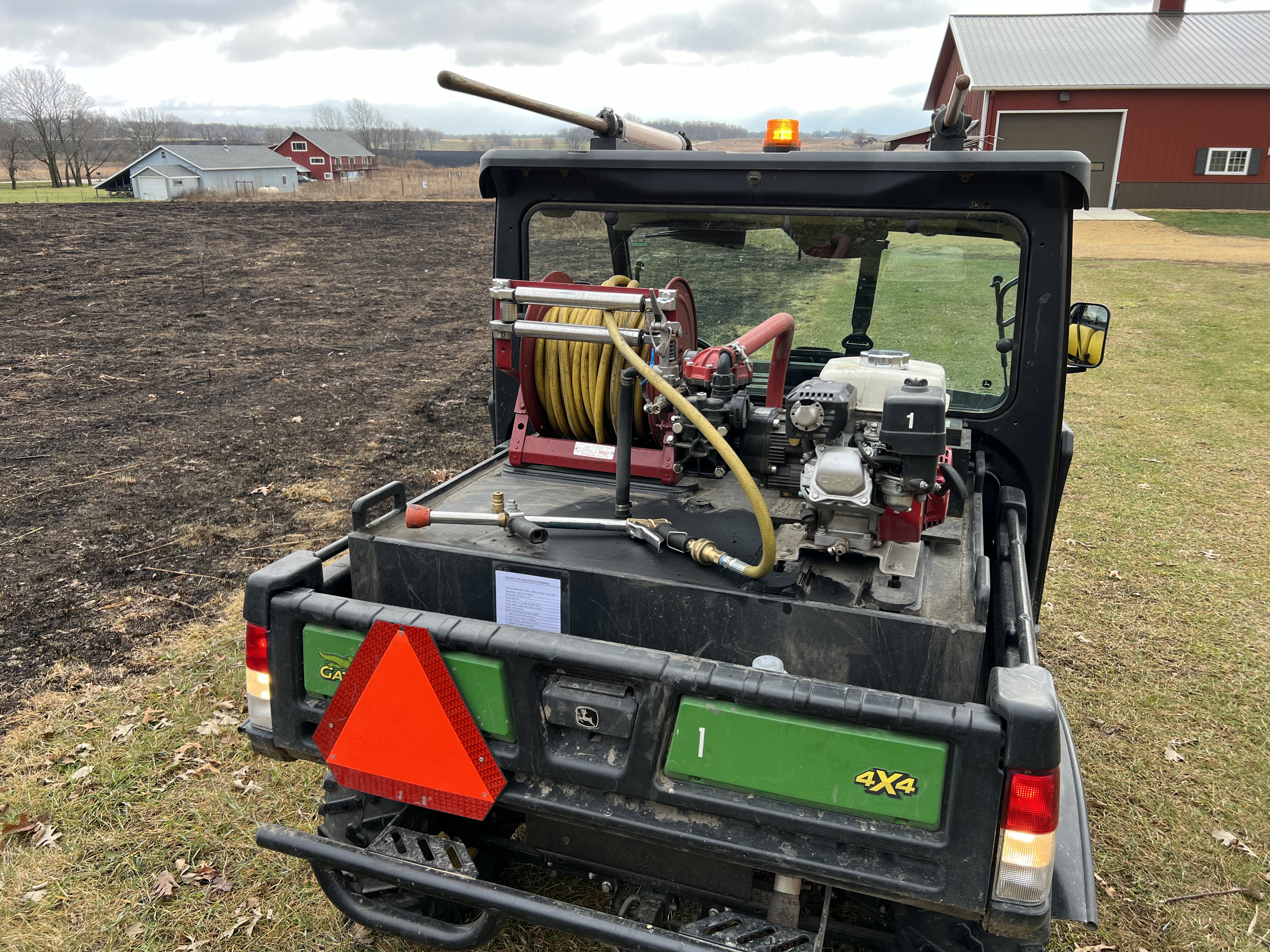
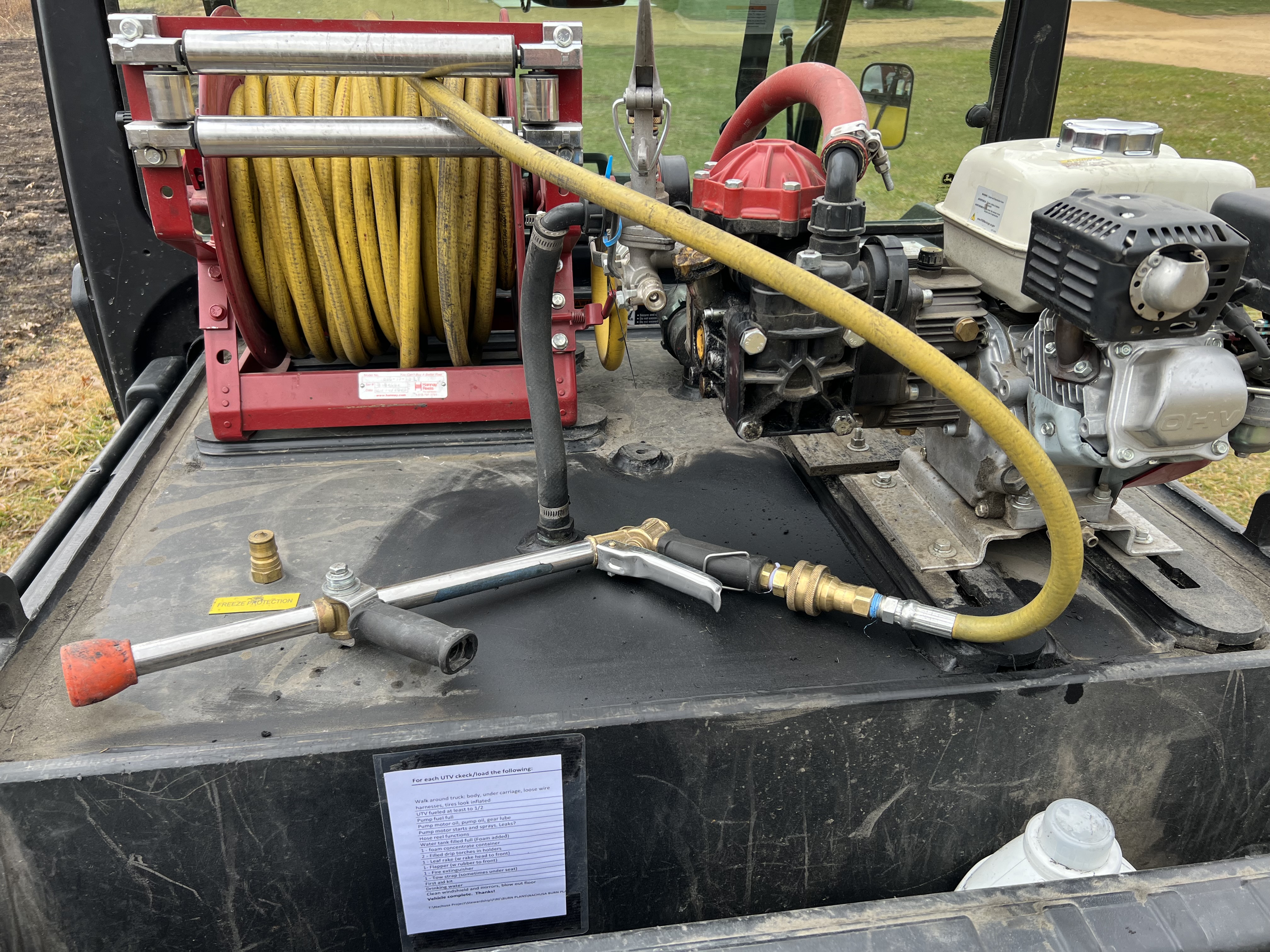
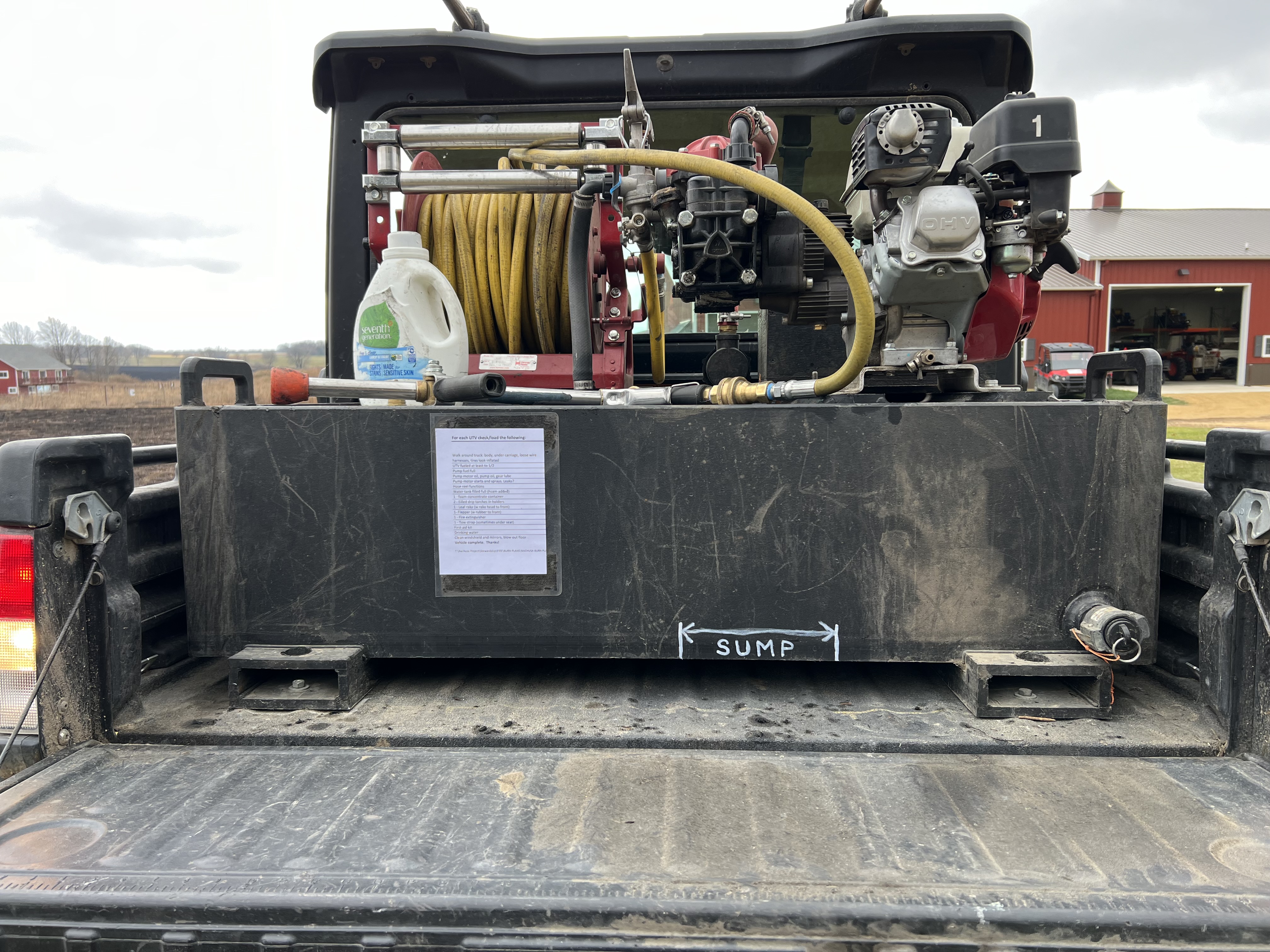
Last week’s pumper unit had the tank taking up the entire bed. It was longer and shorter. The pump, motor, torches, and hose reel were all on top of the tank. But the design above is also nice and works fine. Here the pump, motor and torch holder are on the deck. I could not fit the hose reel on the deck too. The deck extends under the tank which is about the same volume of 75 gallons. Here the tank must be taller to meet that volume. This tank also has a sump on the bottom which allows the pump to drain off all the water. When you order a flat bottom tank always ask for sump.
All the other components are the same as last weeks post. I like both these designs equally. They both ride smoothly and seem stable.
Above is the unit I profiled last week.
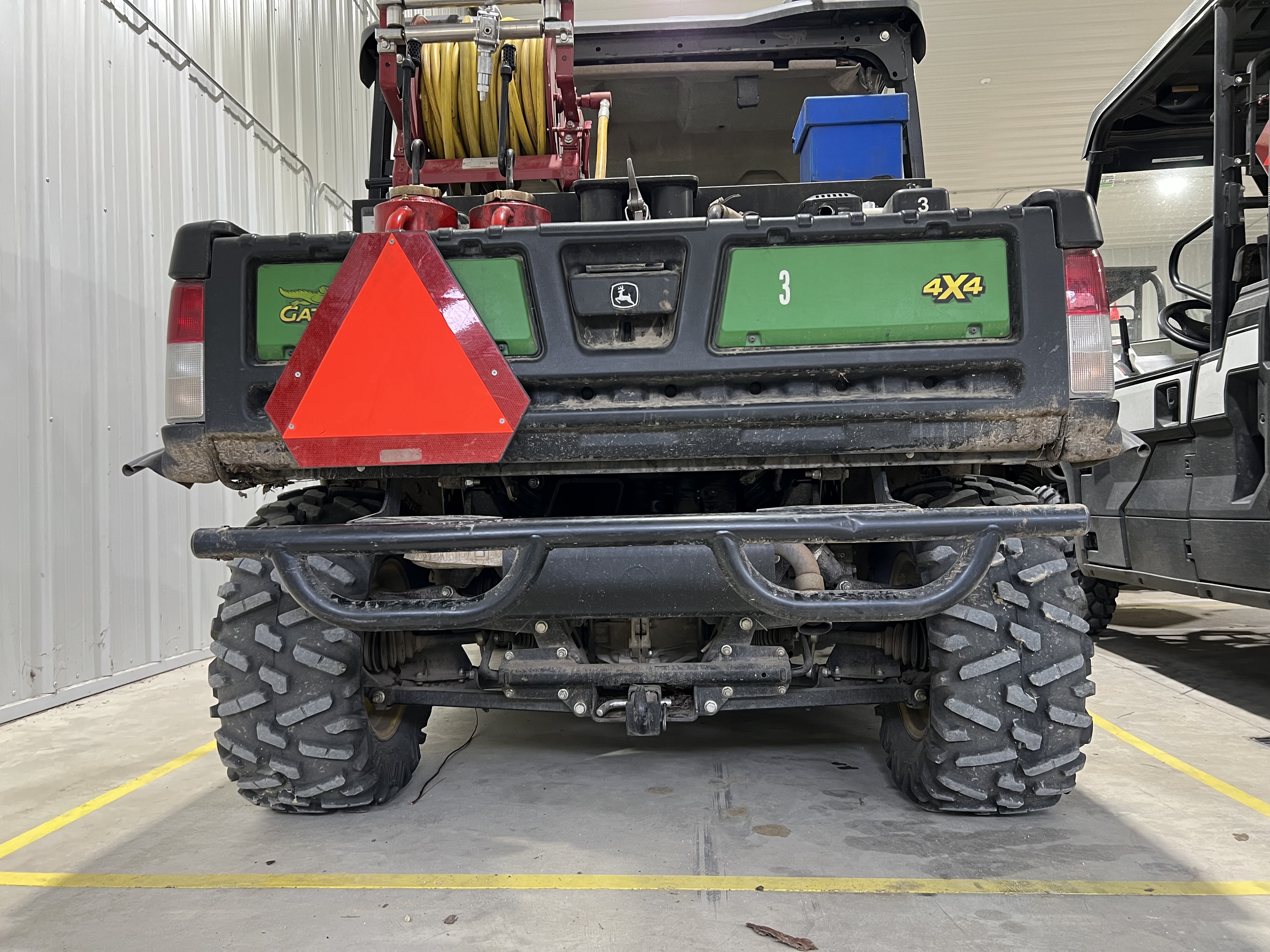
Note above how the tank full of water compressed the shocks enough that the machine is flat on the bottom. If it were without any skid in the bed the hitch would be about two inches higher.
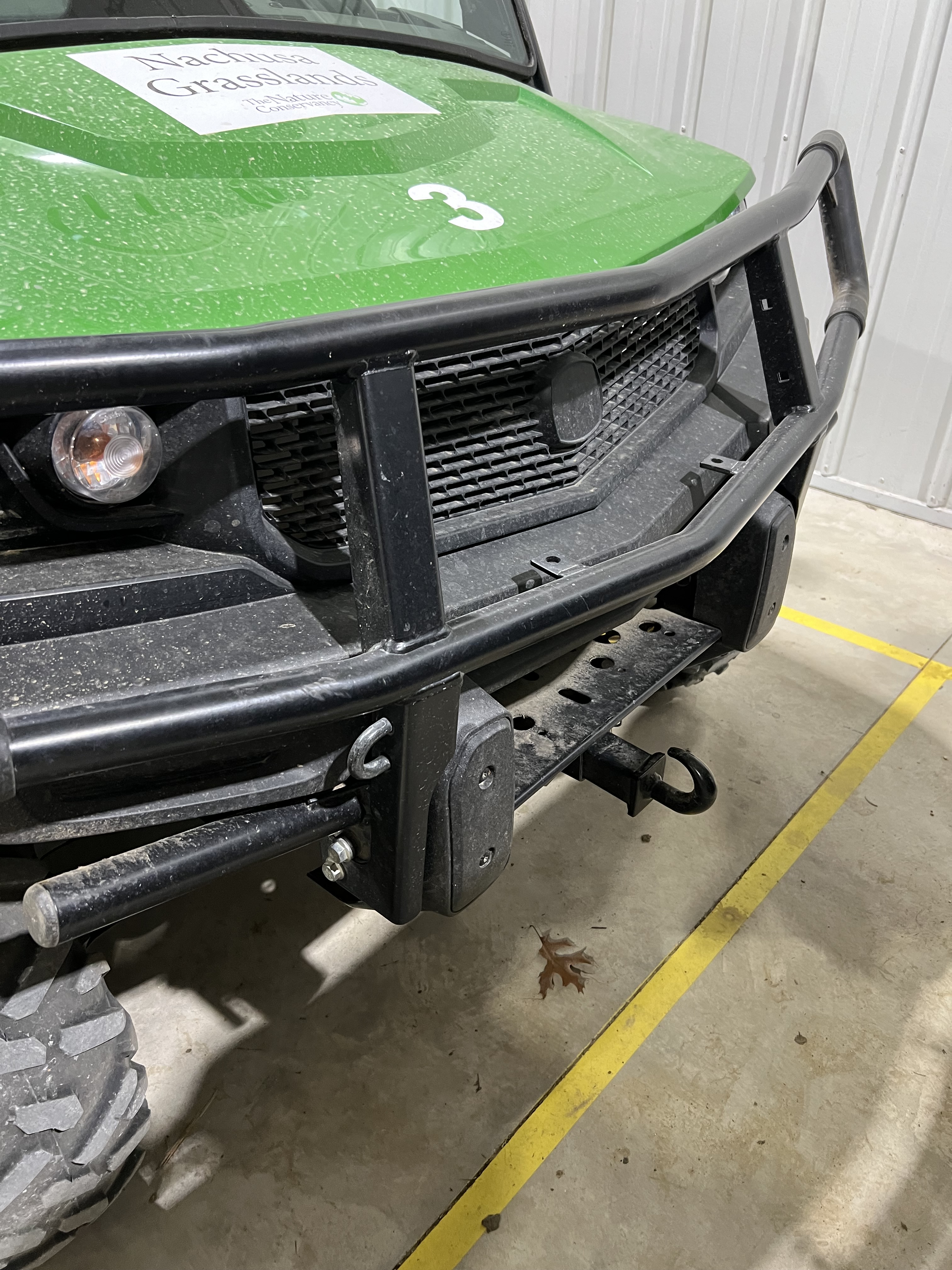
This model has a hitch receiver on the back and front. These are handy for chaining down the UTV on a trailer, or for pulling a UTV that is stuck in the mud. We try to keep a tow strap in each UTV and truck.
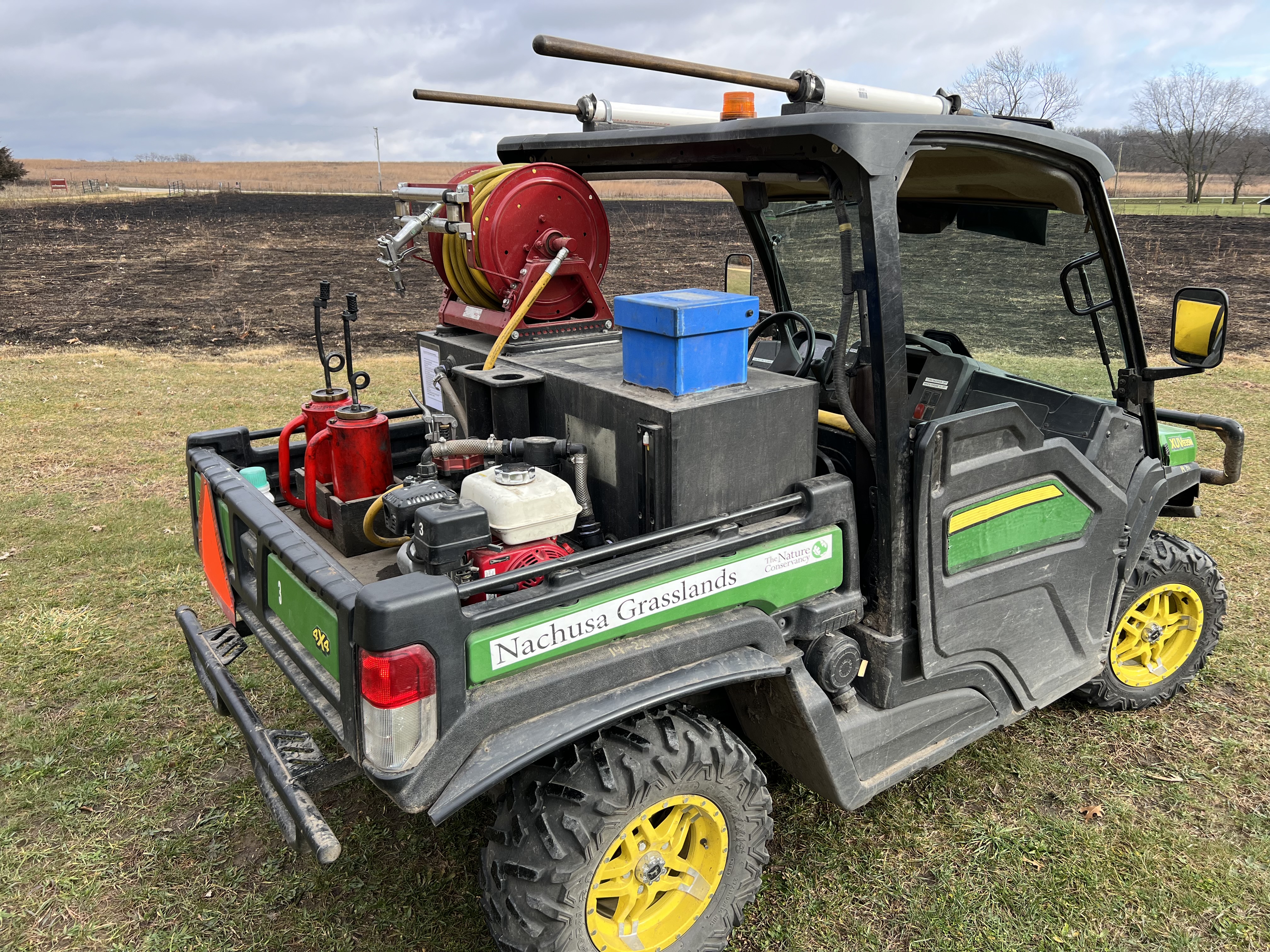
Here are recent photos from a slip-on pumper unit we have at Nachusa Grasslands. We like this one.
This is a 75 gallon unit with the pump, motor and reel on top of the tank. The tank is made of half inch polypropylene. There are baffle partitions in the tank to limit sloshing of the water. This tank has a sump. Always ask for a sump on a flat bottom tank!
This unit was made by Unruh Fire. The current price is about $8,000.
We added the hazard light on the roof. It helps you see the machine better. The light turns on with the key. It is a Federal Signal brand Firebolt LED. It is bright enough and not too tall. The next bigger lightis also nice and about 2 inches taller. Cheaper lights may not flash bright enough.
The tool racks hold a rake and a flapper. The tube is 1.5 inch PVC, but 1.25 inch would likely also work fine. On each end of the PVC there are two layers of tire inner-tube rubber hose clamped. We cut a slit in each rubber layer. We slit one innertube one direction, and the second layer the other direction to make a cross. The tubes are bolted to the roof with PVC plastic pipe straps. In this UTV we had to remove the ceiling liner to be able to bolt the clamps.
In use, you slide the rake or flapper into the tubes. The friction of the rubber innertube holds them in place. They work but have the tool head to front, especially for trailering. Once I drove under a oak limb which pulled on the tool and broke the plastic clamp. But having tools on the roof is nice. Short people can still access and store the tools.
The mirrors are good, especially the driver side mirror.
When full this 75 gallon pumper unit is at near 1,000 pounds, so the upper limit of weight for this UTV . But it sits pretty level. If you were to look at the rear suspension you would see the unit sits low with this weight. We run the unit in Low gear except when on the road.
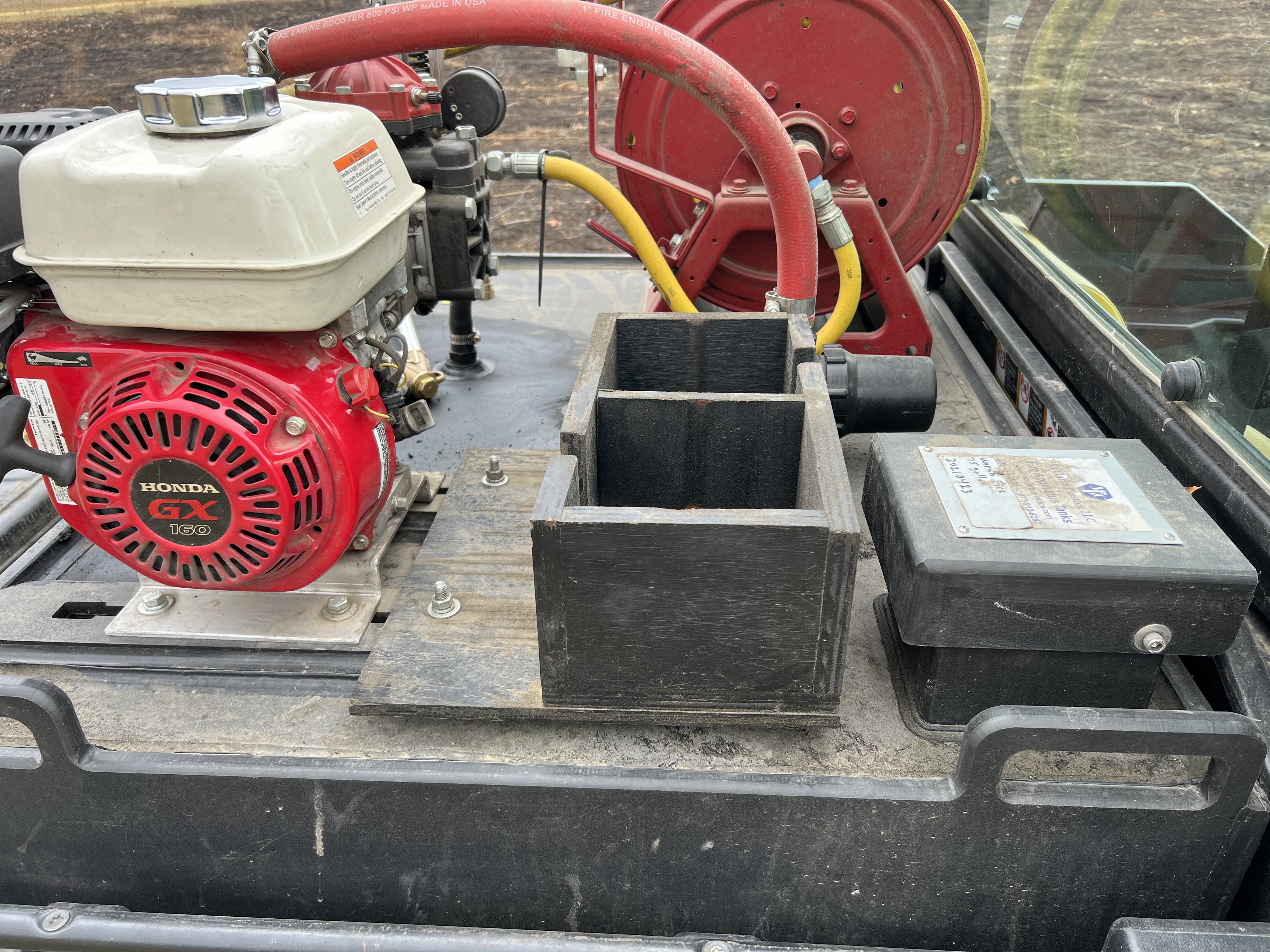
The motor is a 5hp Honda, the pump a Hypro D30 which produces a flow of water of about 3-4 gallons per minute but at high pressures of 150 to 350 psi. This Hypro D30 has been discontinued but there are other brands with similar specs. The hose is heat resistant half inch yellow of about 100 feet in length. The chrome hose roller is great. I see the little fire foam container in the bed. That is Class A foam in a used laundry detergent bottle. We add a capful or two per tank.
The nozzle is a Hypro rifle style. We also use a JD9 hand gun style. There is a quick attach there to switch nozzles. I like the JD9 for its lighter one handed ease of use.
We recently started putting the UTV morning checklist on the back of the tank. This helps others help us get ready.
Side view shows the water fill tower on right. Then the homemade wood double drip torch holder. The black round water strainer is behind the torch holder. The water in the tank passes through a screen strainer up the red hose to the pump. We check the water strainer every day as some days there is some green scum on the screen. We think this might be due to the fire foam we batch mix in the tank. My guess is we leave the soapy water in the tank for weeks and it grows scum. If your pressure drops off suddenly, check that you have water, and then check the water strainer.
A tank sump is very important. The pump draws water from the recessed sump on the bottom of the tank near the center. If you don’t have a sump your pickup tube will suck air even though there is ten or fifteen gallons of water sloshing around the bottom of the tank.
We wrote “sump” on the tank so we don’t skewer the sump with the pallet forks we use to load the unit. Notice the two rectangle plastic frame member that hold the tank above the UTV bed. Those two frame members allow the sump space to be there. We had those two frame members left a few inches long on the rear end so we could drill a hole in them and bolt them to the bed of the UTV. This works better than a ratchet strap.
If your tank sits flush on the UTV you likely don’t have a sump. The tank drain has a Banjo quick release cap. We tie the cap with a string to the tank so we don’t lose the cap.
For overnight freeze protection you drain the tank, then close drain. There is still water in the tank since the drain is on the side of the tank. Then spray out the remaining ten gallons of water. Then add maybe a gallon of pink RV antifreeze and spray into the tank until you see the pink start coming through. You can do this at low RPM and pressure.
There are other fire pumper units posts on our blog. There is a search button on the home page. Type in logical key words and find more good info. For this topic try “pumper unit”
While there, press the “follow the GRN”.
Addendum: Want to spend half as much and get most of the function of the unit I show? These are made for herbicide application. For the nozzle you want the extra large tip so you can spray near the maximum gallons per minute of 3-4.
This one even cheaper with no hose reel and less hose. But a good sprayer.
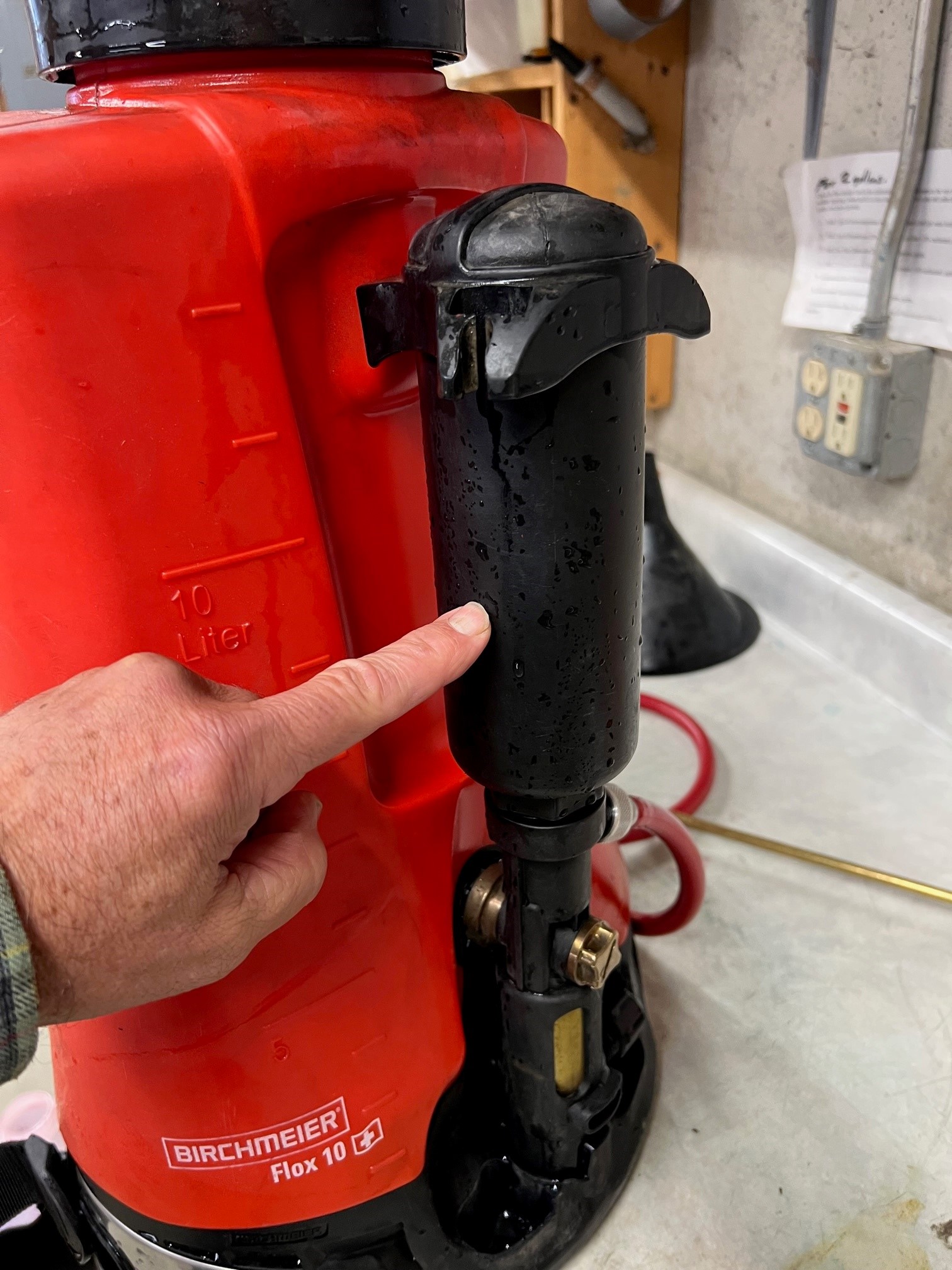
I have seen this issue before. A repair tag on the Birchmeier that says “does not pump right” or “does not spray right”. Indeed, when I tried this pack it would only pump one stroke and then the handle seemed stiff with pressure. When I sprayed it the fluid came out fast but pressure faded immediately.
I know what this is!
The air bladder is full of basal bark liquid. I am pointing to the air bladder. To get it out you empty the tank. Then rotate off the air bladder…but watch out because it will start to empty with a slow gurgle and a rush if you fully unscrew the bladder. I used a funnel over a 2 gallon jug to catch it. Screwed bladder back on it worked perfect.
How did air bladder get full of liquid? If a pack falls over in a truck the air in bladder can move into the tank and the liquid in the tank move into the bladder. So affix your packs so they don’t fall over.
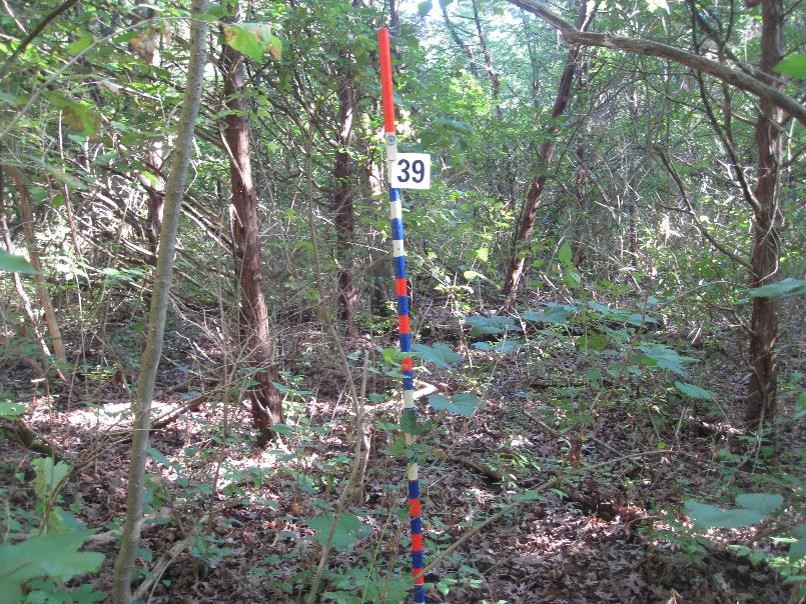
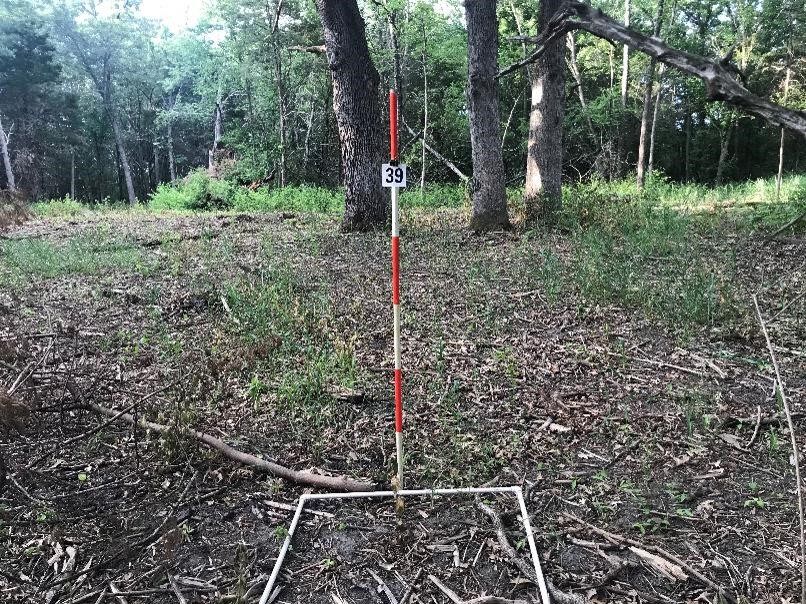
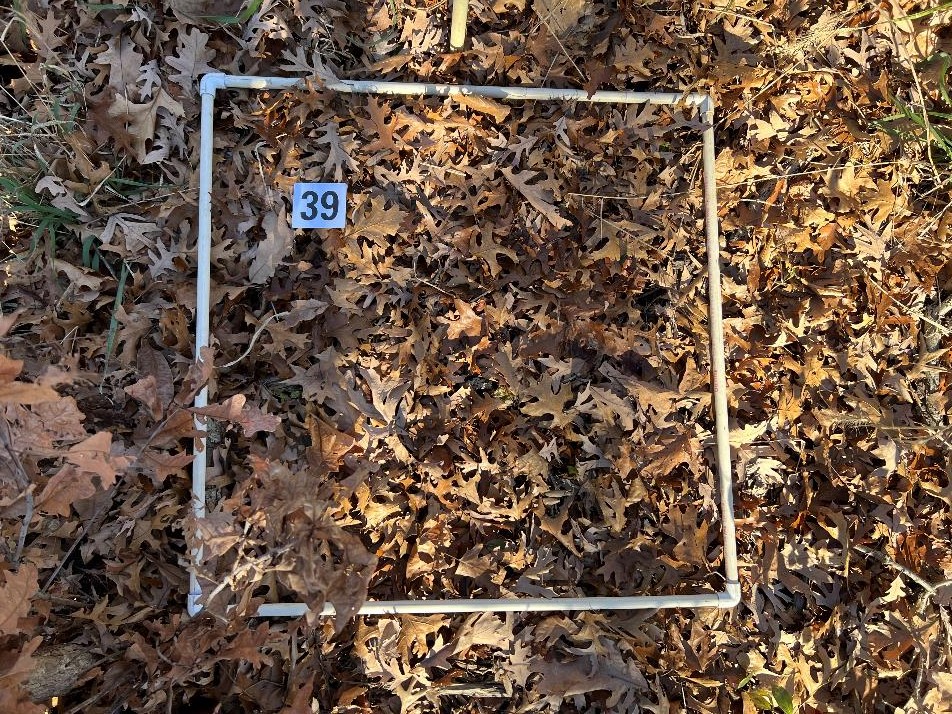
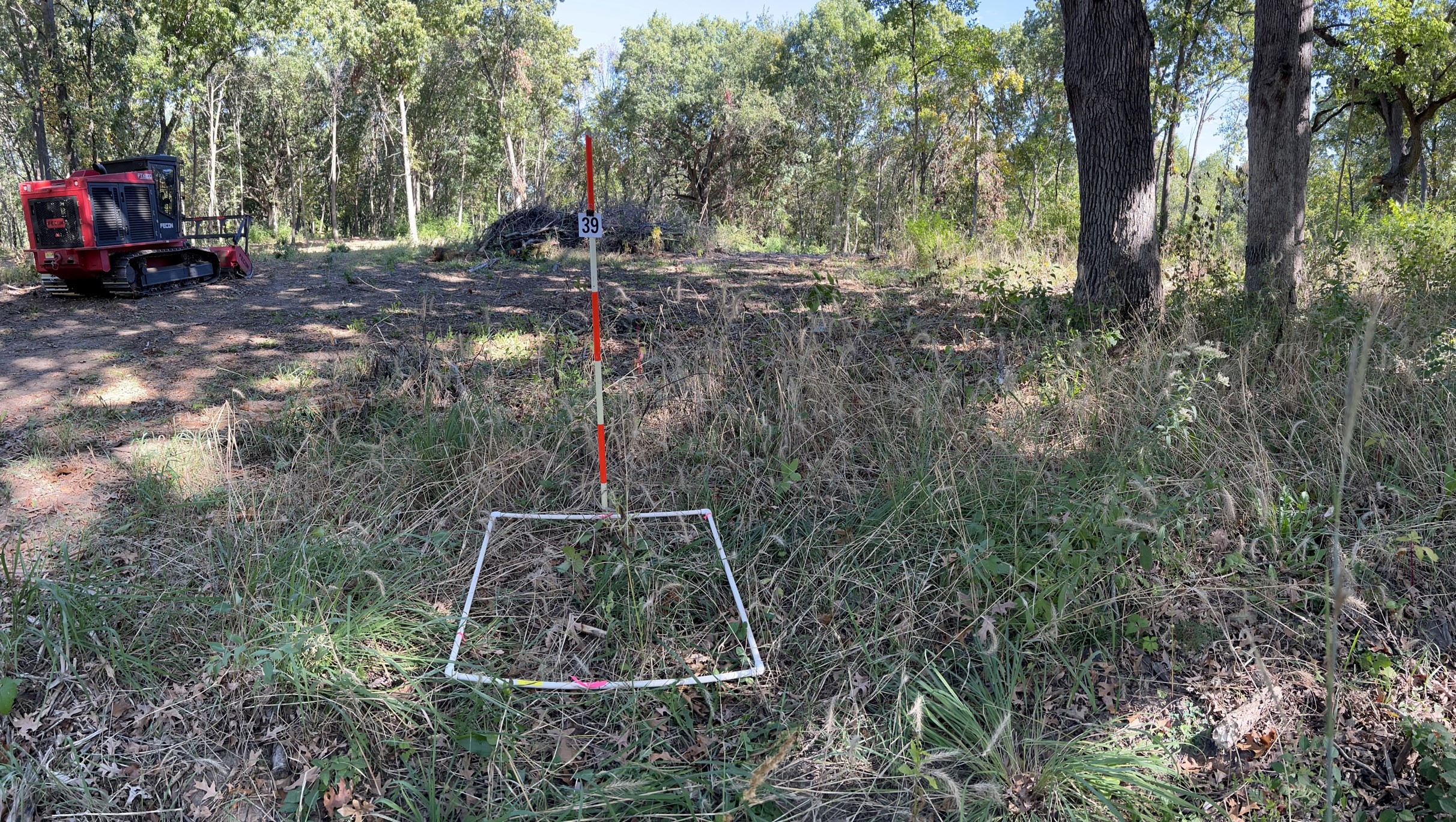
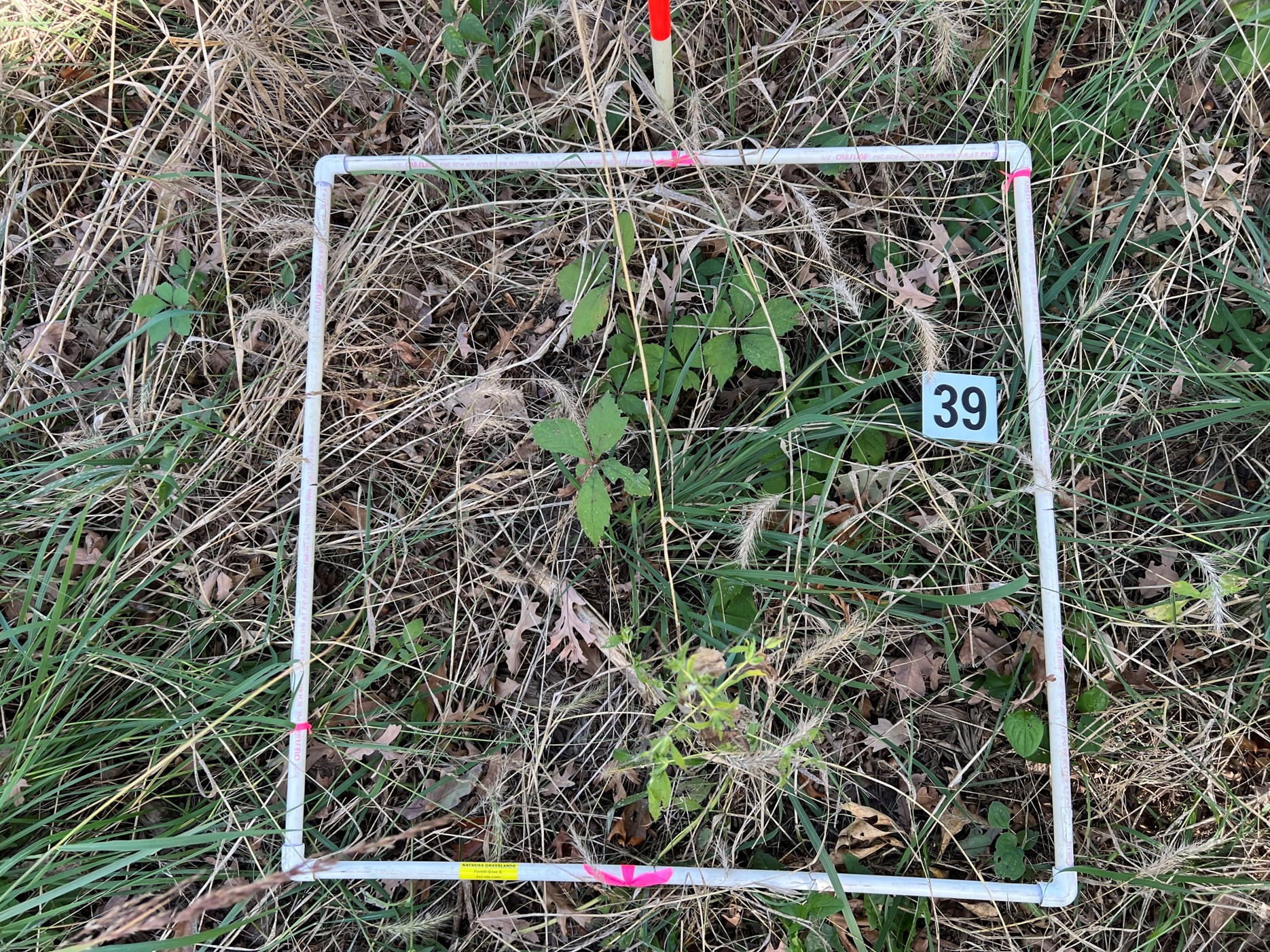
We did a lot of brush thinning that first year so there is a stark difference after year one for the photos looking north. The second photo shows the black after our spring fire, and the slash from the brush mowing. The third and fourth photos seem pretty similar to the second photo. In the third and fourth photo I show a slight panoramic I took with my phone to help place the oak trees in the photo. This gives the viewer a way to anchor the photos.
Unfortunately the brush was originally so thick that you can’t see the oaks in that first image. It might have been better to move the photo point a little closer to the oaks to get them in that first photo, or perhaps clear a bit of brush. Often I will paint a stripe around a tree to help the viewer see it.
What do you think of the photos looking down? To me, they are less helpful as I can’t make out the species easily from the images. Is the herbaceous layer improving or not?
Why am I doing the photos in different months? Because grant deadlines crept up on us and those were the days we had to take photos.
The cool thing about these photo points is that we also collected the baseline vegetation data before we did any brush clearing. We recorded all species and their percent cover in each quadrat of 50 random quadrats. We will go back next year, which will be year 5, and resample for vegetation and take new photos.
The pairing of vegetation data with photos makes the photos more meaningful and vegetation data more visual.
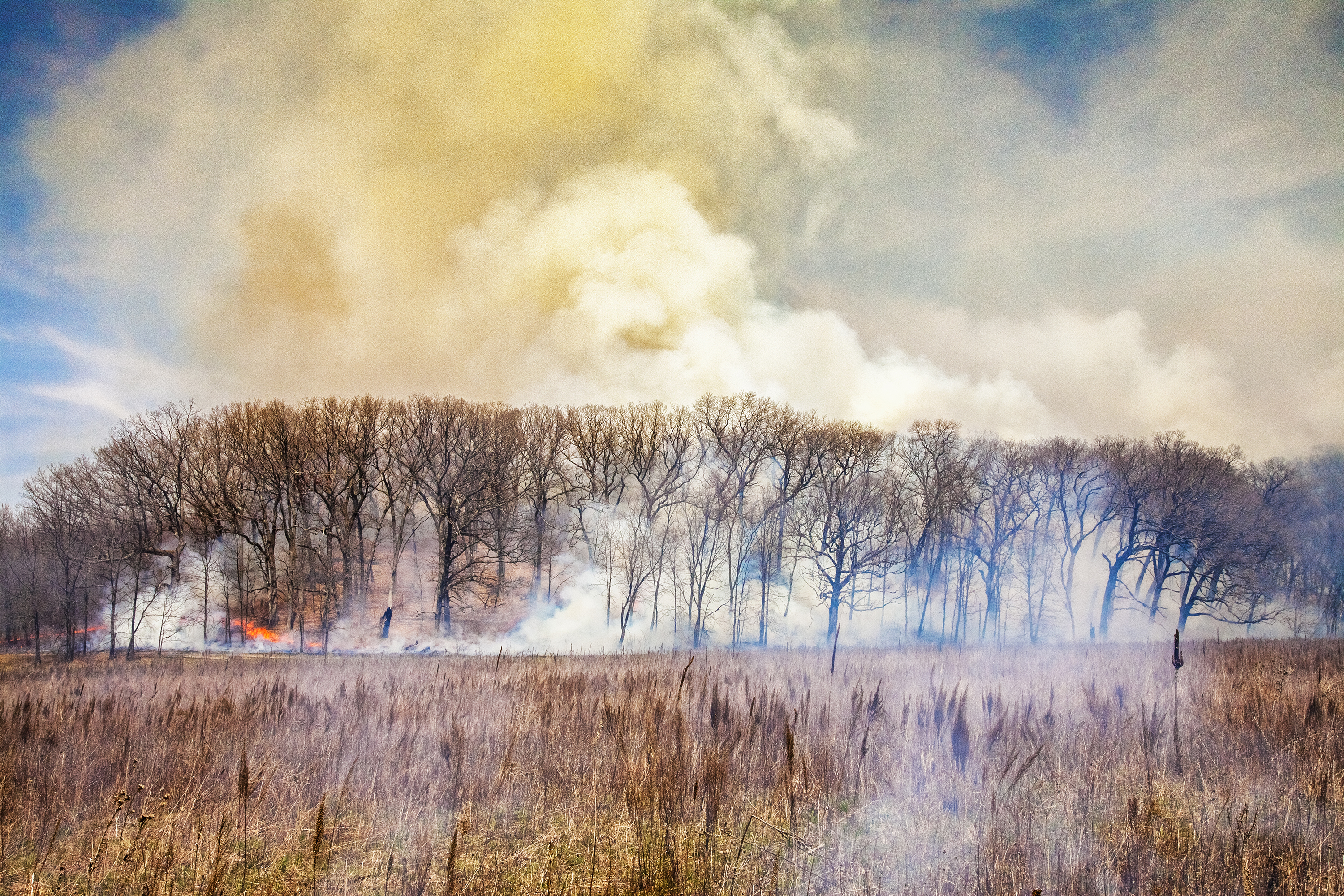
Prescribed fire is an essential management tool in grassland systems. It can help suppress invasive species, particularly woody species, and maintain native plant diversity. Some plants and animals thrive in recently burned habitat, others prefer some thatch cover or have larval stages that overwinter in surface litter. When managing for the entire ecosystem, it is helpful to maintain a rotation of burned and unburned areas, providing opportunities for a strong diversity of species with differing fire tolerance to thrive at the landscape level. This is certainly a challenge in highly fragmented landscapes like tallgrass prairie within the midwestern United States.
Habitat fragmentation is a leading cause of declining biodiversity throughout the Midwest region. This is particularly true for reptiles like ornate box turtles. As a result of fragmentation, the ornate box turtle is a state-threatened species in Illinois, where they persist in small, isolated areas. Prescribed fire is needed to maintain the open grassland habitat the turtles prefer as well as support overall biodiversity.
Ornate box turtles spend winters belowground. As temperatures cool in the fall, turtles begin digging holes and spending nights underground. Once temperatures reach a certain level, they will stay belowground essentially sleeping through the winter. As temperatures warm in the spring, turtle metabolism ramps up and they dig out of their holes. The days and weeks when the turtles enter and emerge from their burrows are a sensitive time. Their metabolisms are running more slowly, they physiologically move and respond to their surroundings slowly. If a fast-moving grass fire moves through their habitat, they may not be able to burrow down or hide quickly enough to avoid injury, or worse, death.
Turtle tracking dogs smell turtles and pick them up. Researchers quickly accept the turtle, give the dog a pat on the head, and then return the turtle to the that spot within an hour.
To help land managers identify these sensitive turtle times, Devin Edmonds and colleagues from the Illinois Natural History Survey and University of Illinois Urbana-Champaign conducted a study to determine exactly when turtles burrow in the fall and emerge in the spring. Devin attached radio-trackers to turtles in three different populations in Illinois. Observed turtle presence aboveground was correlated with air temperature, soil temperature, shell temperature, and soil inversion date to generate a predictive model land managers can use to determine conditions when turtles are most likely present aboveground.
Air temperature was the most predictive of all the environmental variables considered. In the fall, turtles can remain aboveground in cooler temperatures than in spring. Warmer air temperatures are needed in spring for turtle emergence. The best model includes both air temperature and day of year to accurately predict ornate box turtle presence aboveground in Illinois:
Fall
Spring
Date
Air Temp
Probability turtles aboveground
Date
Air Temp
Probability turtles aboveground
1 October
16° C (60° F)
10%
1 March
15° C (59°F)
10%
1 November
16° C (60° F)
6%
1 April
15° C (59°F)
20%
1 November
15° C (59°F)
<5%
1 April
10° C (50°F)
<5%
Author recommended thresholds in bolded bottom row.
Lower air temperatures further reduce the probability that turtles are aboveground. We encourage land managers to be aware of areas where ornate box turtle populations exist and prioritize prescribed fire activity in those areas during the dormant season, before temperatures trigger emergence in the spring and after turtles go under in the fall. Prescribed fire in areas without known turtle populations can be prioritized outside these recommended conditions. This paper provides the most robust recommendations to date on predicting emergence and submergence dates, giving land managers more power to achieve prescribed fire objectives for the whole ecosystem and avoid turtle injury or mortality.
We don’t have the specific dates yet, but September, 2024 looks to be the month for our GRN workshop in Franklin Grove Illinois, about two hours west of Chicago. We last hosted the GRN back in 2014. Since then we have brought back bison to parts of the preserve, and we have purchased more land and have created more prairie plantings. We have about 150 prairie plantings! We have done a lot of brush thinning, wetland creations, savanna and oak woods work. We collect a lot of seed on site and have a nice seed handling facility. We have worked very hard to keep the invasive weeds at bay. Our science program is sophisticated. Come see!
Future GRN workshops are Konza in Kansas September 10-12, 2025; Shaw Reserve in Missouri in 2026; and Kankakee Sands in Indiana in 2027
By: Julianne Mason, Restoration Program Coordinator, Forest Preserve District of Will County
Five years ago, my coworker and I put in some test plots to compare the effectiveness of spraying reed canary grass with glyphosate, a non-selective herbicide, compared to treating it with clethodim, a grass-specific herbicide. Plots were treated in the late fall, early spring, or late spring in 2016-2018. The area is a remnant sedge meadow/ wet prairie in Joliet, Illinois. In the portion of the wetland that was sprayed in the late fall and early spring, reed canary grass had been scattered to moderately heavy, but native species were still present throughout.
When we put in the test plots, we marked treated individuals with pin flags. Since that time, we have not done any invasive species treatments there. The area was burned this past spring. After the burn, we were able to find many of the pin flags and evaluate the status of the treated reed canary grass plants five years later.
To my surprise, there is still a visible difference between the plots that had been treated with clethodim during the fall, compared to the glyphosate plots. Reed canary grass in the plots had been initially sprayed on October 21, 2016. In all plots, there is less reed canary grass now than there had been in 2016. However, there is noticeably less reed canary grass in the clethodim plots than in the ones treated with glyphosate.
In addition to having less reed canary grass in general in the clethodim plots, none of the marked locations from the 2016 treatment have alive reed canary grass now. However, in the glyphosate plots, more than half of the marked locations from the 2016 treatment have alive reed canary grass now.
This is interesting because roughly half of the clethodim-treated individuals had been recorded as alive but stunted in 2017 and 2019, while the other half had been recorded as dead. In contrast, nearly all of the glyphosate-treated individuals had been recorded as dead in 2017 and 2019. This suggests that the initial glyphosate treatment killed the reed canary grass. Since it is a non-selective herbicide, it also killed the sedges and other native species in the immediate vicinity, leaving visible “holes” in the vegetation. These holes probably provided space for reed canary grass to germinate and re-establish in the sprayed locations. In contrast, since clethodim is a grass-specific herbicide, it did not affect sedges and native forbs, and those plants were able to expand into the former reed canary grass locations.
The plots that were treated in the spring of 2017 were a different story. Roughly half of the marked locations where reed canary grass had been sprayed on April 21, 2017, have live reed canary grass now. There was not a noticeable difference between the two types of herbicide used.
Based on this case study, it seems that late fall treatment of reed canary grass with clethodim herbicide is quite effective! For the fall treatments, we used 0.75% Volunteer herbicide (clethodim product), with 1.5% Powerhouse which has ammonium sulfate (AMS) incorporated in the surfactant. Of course, reed canary grass has been re-invading into the plots, but I was completely surprised that the specific locations treated with clethodim herbicide have resisted re-invasion by reed canary grass over the span of the past five years!
This makes me double-down on my conclusion in the initial article: “In many of our natural areas, and especially immediately under invasive plants, the seed bank may not be our friend. It may have seeds of more invasive plants instead of native species. Creating ‘holes’ in the vegetation with non-selective chemical use can just make space for more invasive plant recruitment: spray and repeat, spray and repeat. To break out of that cycle, an end game is to facilitate renewed dominance of the native matrix, which seems to happen better and more quickly when a grass-specific herbicide is used to treat the reed canary grass.”
To my past self – yes, I totally agree! And now I add: late fall is a great time to spray reed canary grass with clethodim herbicide.
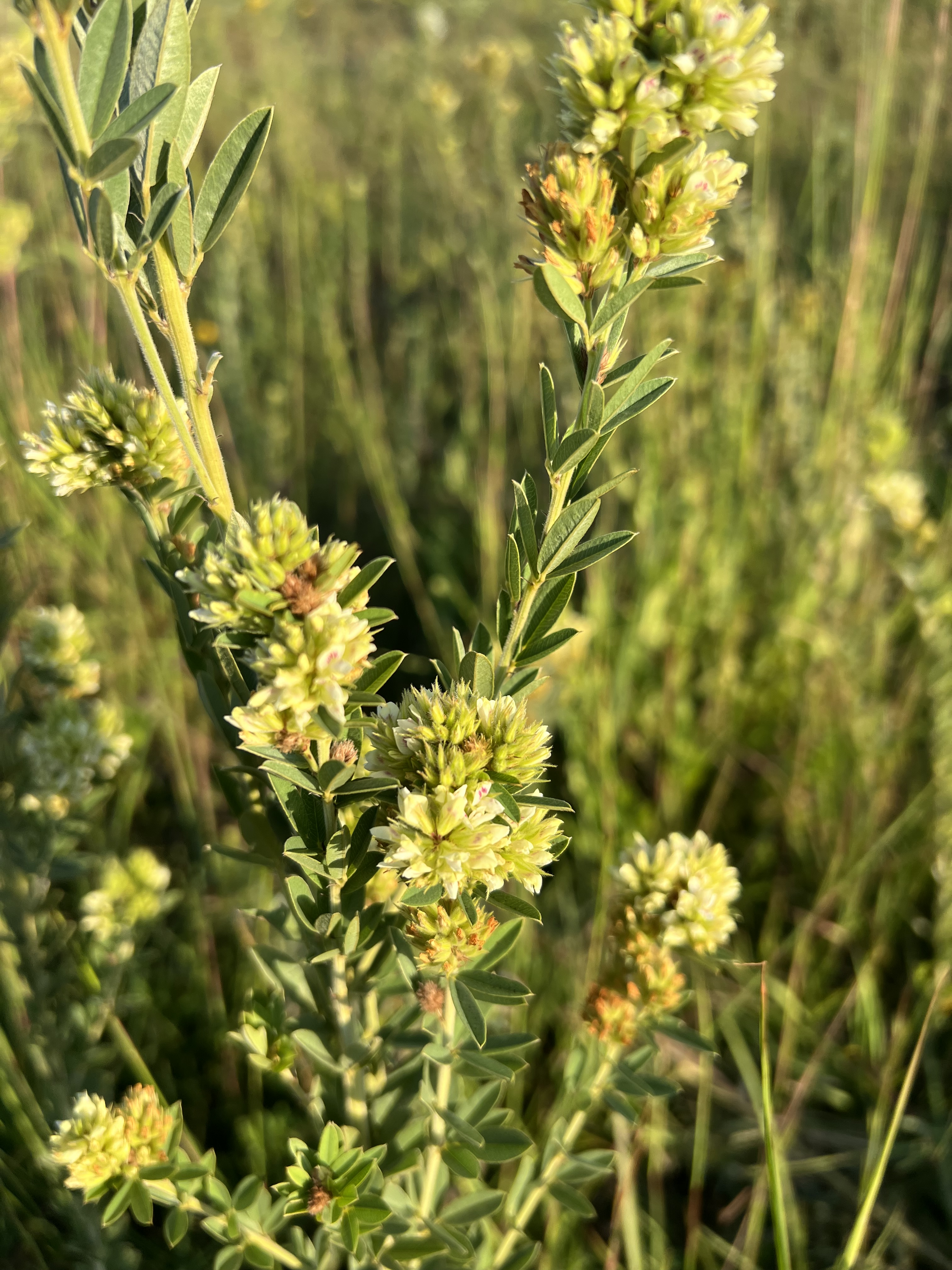
Our area has five species in the genus Lespedeza, and two are invasive. Here is a quick summary of the five species and a link at the end to a lengthier set of images with pointers.
Lespedeza capitata, round headed bushclover. Native. Upright with modest size leaves of three that are more fuzzy with hairs.
L virginica, native, slender bush clover. Upright with slender leaves.
L leptostachya, prairie bushclover. Native and rare. Stands upright but a dainty plant with narrow leaves and small flowers.
L cuneata, sericea lespedeza, invasive. Stands tall like this, with many small leave of 3. This invasive is known to many.
L daurica, Dahurian bush clover. Invasive. The main way to know this Lespedeza is that it sprawls in the vegetation. L daurica is not known to many, but it occurs in the counties by Nachusa Grasslands. It is at McCune Sand Prairie, Mineral Marsh, and sadly Nachusa. We are pushing hard to get this plant gone but it is tough to find in a tallgrass prairie.
To make progress with weeds you need your crews, scientists, and citizens to recognize them as they are hiking about. Once we find the occurrence we can deal with it. Which is why I made a longer version of the above photos with identification pointers. You can find this on the Friends of Nachusa Grasslands website under stewardship resources:
by Izabella Redlinski, Deputy Director of Resource Management, Forest Preserves of Cook County
[Izabella was at our GRN workshop at Windom Minnesota and sent me some resource links related to topics we were discussing – BK]
Paper by R. Pizza et all – this work looked at Wisconsin prairies that were seeded with seeds sourced from various distances from their final destination – the establishment rate and abundance was not affected by distance of seed sources, but phenology might have been. The seeding rate was what also increased positive results (shocker I know!)
Bucharova et al – talks about different seed sourcing techniques – regional admixture being the favorite – this is in fact what many of the projects discussed on this conference do. Caveat – this work is from Germany and based on European grasslands and meadows.
There is a CW café that talks about this prepared by myself and a group of folks interested in the seeding with climate change in mind. More on this initiative here from the GRN blog itself!
Lastly, something we know already – the planting year conditions affect prairie restoration outcomes by Anna (Funk) Groves – which probably reinforces why we should seed prairies on multiple years
Research that supports or negates some of our practices based on experience is important, and I wish there was more of a bridge between practitioners and researchers to listen to us and address questions we have.
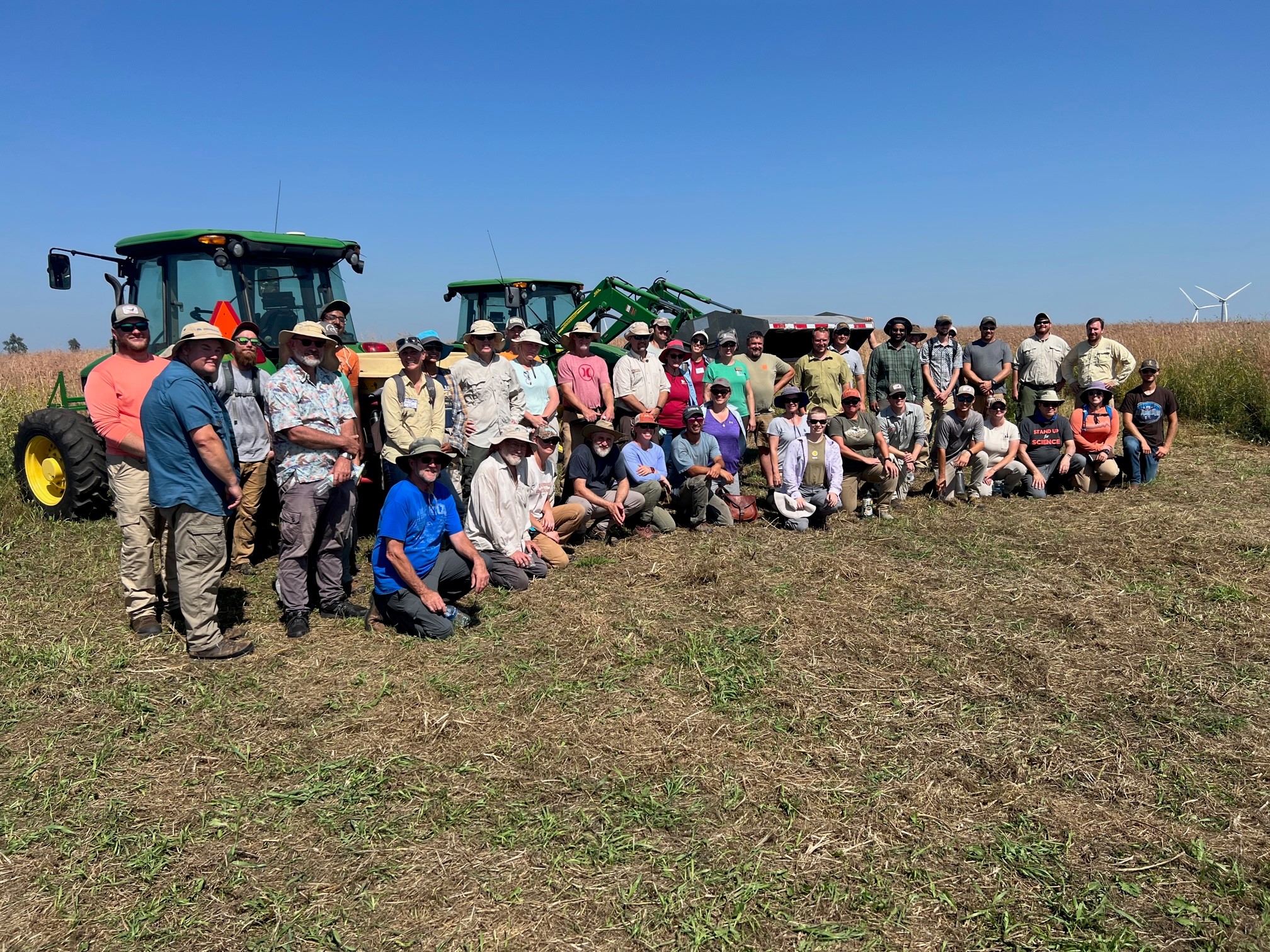
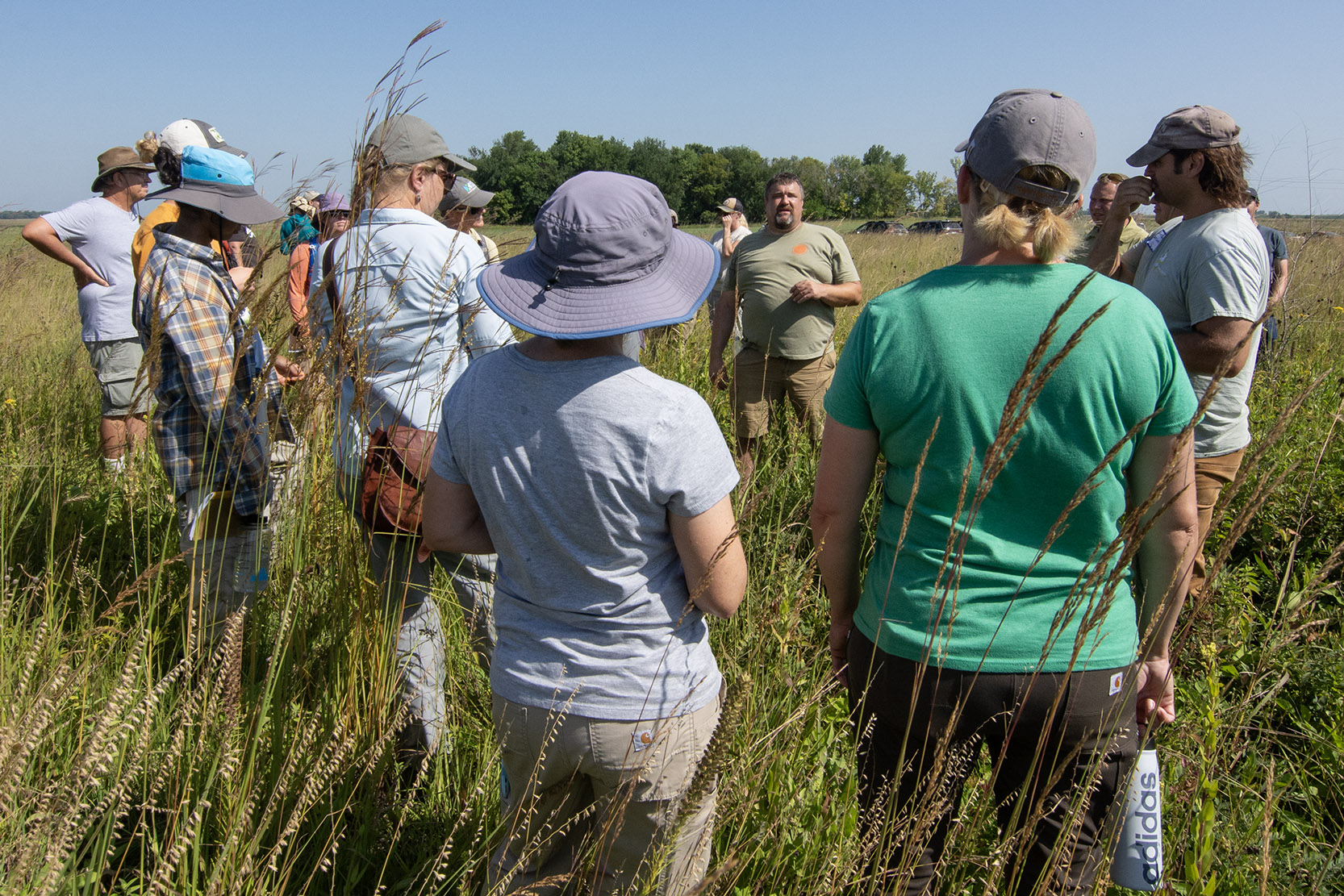
Much of the nation was sweltering this week and so were we in Windom Minnesota with around 70 who gathered. We had folks from the North Star State, and Illinois, Nebraska, Indiana, the Dakotas, Iowa, Wisconsin and David from Texas. We visited four good sites, two each day. There was a lot of sharing of lessons learned during the day, and during meals and in the evenings. We are passionate about our work and like to talk details.
Kudos to Jeff Zajac who was the host in chief. He had a bunch of helpers with Cathy Forstner doing logistics and Chad August, Brian Nyborg, Bill Schuna, Shon Thelen and Kent Schaap who did the on site work and most of the mapping.
Jeff Zajac (center) at the 2023 Grassland Restoration Network near Windom, Minnesota.
We talked about weed management and noted that as in real estate, the location of your preserve is important. An invasive weed in damp Illinois may be only a nuisance in mid-Nebraska. Most every one agreed that Canada thistle reduces as a prairie planting gets going. We Illinoisans were noting that the Windom Minnesota prairies had little brush whereas our prairies want to turn to shrublands.
We also discussed seeds, purchasing vs harvesting seed ourselves. Prescribed fire operations, fire frequency, smoke issues, and seasonal timing. Minnesota has their awesome sales tax that fills the Outdoor Heritage Fund. Good stuff.
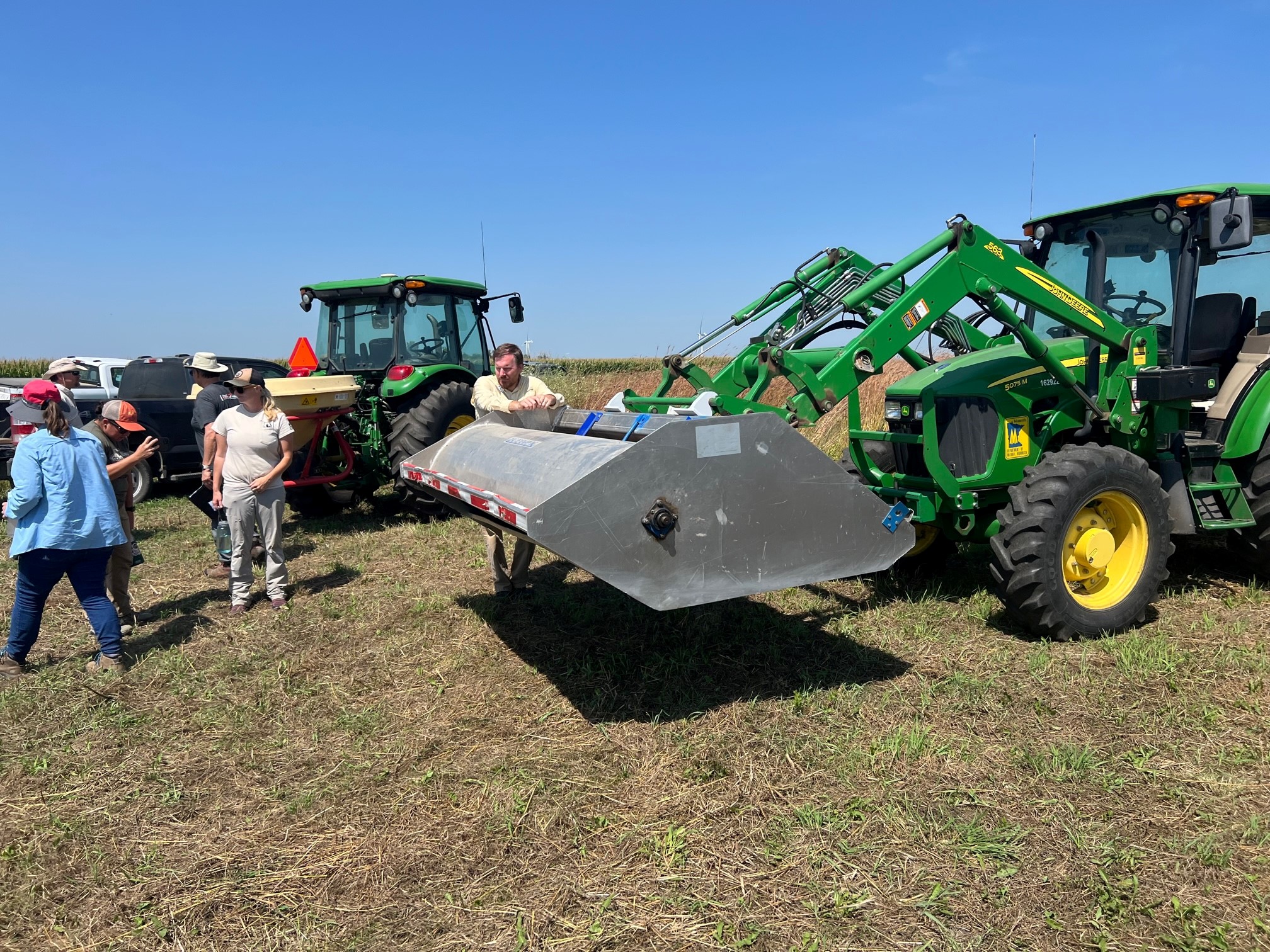
Flail vac seed harvester w pendulum broadcaster behind
This GRN blog site is a welcome venue to share your lessons learned. Click on the “Follow the GRN” for our weekly emails of lessons learned. Each blog post has search tags added. One tag is the author of the article and another is the topic. So people searching will find your good works. Just email Bill your ideas at bkleiman@ tnc.org.
Jeff Zajac closed by encouraging us to do our best conservation. That the next generation will take forward what we learn now and what we do now, just as we carry forward the good works from the generation before us.

















 grassland restoration network