By Jason Johnson, Natural Resource Manager with Forest Preserve District of Kane County


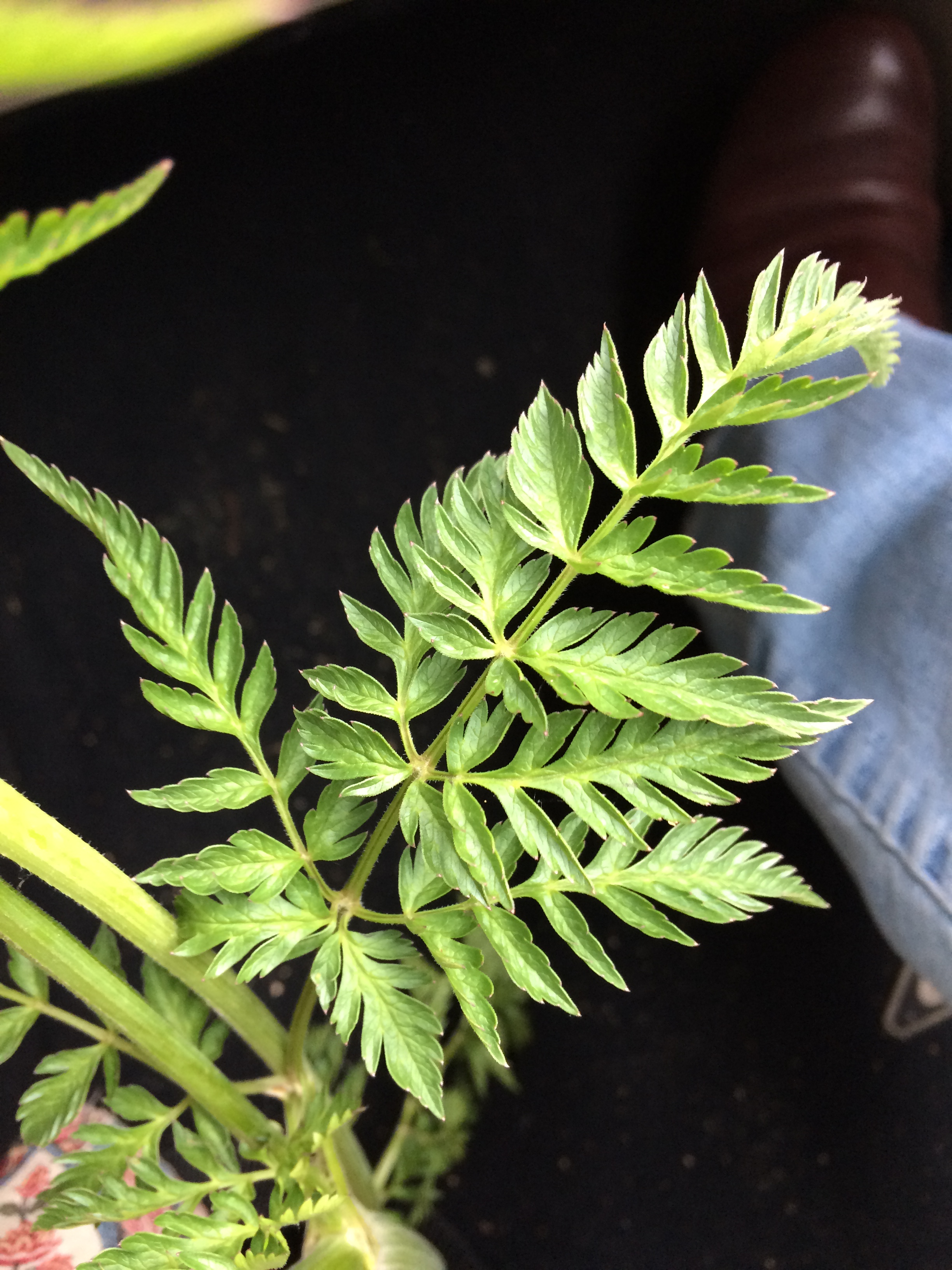
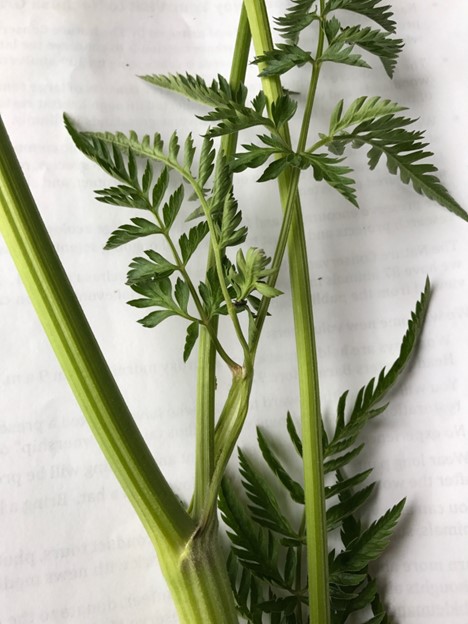
Wild Chervil (Anthriscus sylvestris) is an herbaceous biennial or short-lived perennial introduced to the US from Europe, is about 3 feet tall, and in the Apiaceae family. It has a hollow stem, white umbel flower, and tripinnate leaves. Chervil blooms before most of these other common look-alikes such as Queen Anne’s Lace (Daucus carota), Japanese Hedge Parsley (Torilis japonica), Sweet Cicely (Osmorhiza longistylis, O. claytoni), and Poison Hemlock (Conium maculatum). Chervil spreads rhizomatously as well as producing large quantities of viable seeds. It forms dense stands, displacing native species. Shaded lowlands, especially near creeks, seem to be a favorite habitat for this invasive species. Flowing water and human activities, especially mowing, are the most common means of dispersal. On the plus side, the seed bank is very short lived. Seeds only survive one or two winters.

Chervil was first observed in Kane County, IL in 1975, but was not widely distributed until the late 1990’s or early 2000’s. By 2007 it was exhibiting rapid spread throughout the county; particularly in roadside ditches and has since spread to many of the surrounding counties. By my observations, Kane County has seen the worst of it in northern Illinois for some reason.
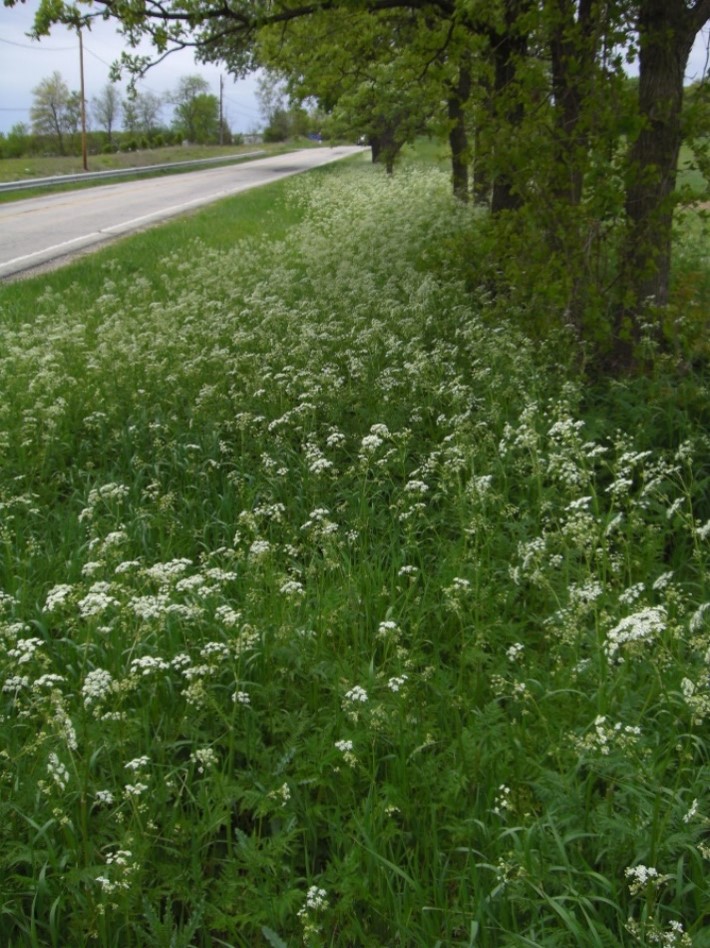
Forest Preserve District of Kane County staff began noticing large populations of Chervil in a few preserves in the mid-2000’s and began treating them. From about 2007-2012, Chervil populations were exploding across the county and they were spreading into more and more County Forest Preserves. Roadsides in some townships were full of it and it was spreading into preserves from those road ditches. Creek corridors in a few preserves also had large infestations with very low native plant diversity. Because the Forest Preserve District holds land in so many disjunct parcels, we have a significant amount of edge. All of those edges are incredibly vulnerable to invasion by weeds. As Chervil spread around the county, we decided that it was necessary to focus a large effort on controlling it as part of our overall mission to preserve and protect the public lands of Kane County. Over the years, our list of Chervil populations has grown, but fortunately the size and density of those populations has been reduced. It is difficult to eradicate weed populations when you have a constant influx of new seeds, but even the densest populations on neighboring property are being held at bay with annual follow-up visits to treat scattered individuals that are trying to reinvade the preserves.

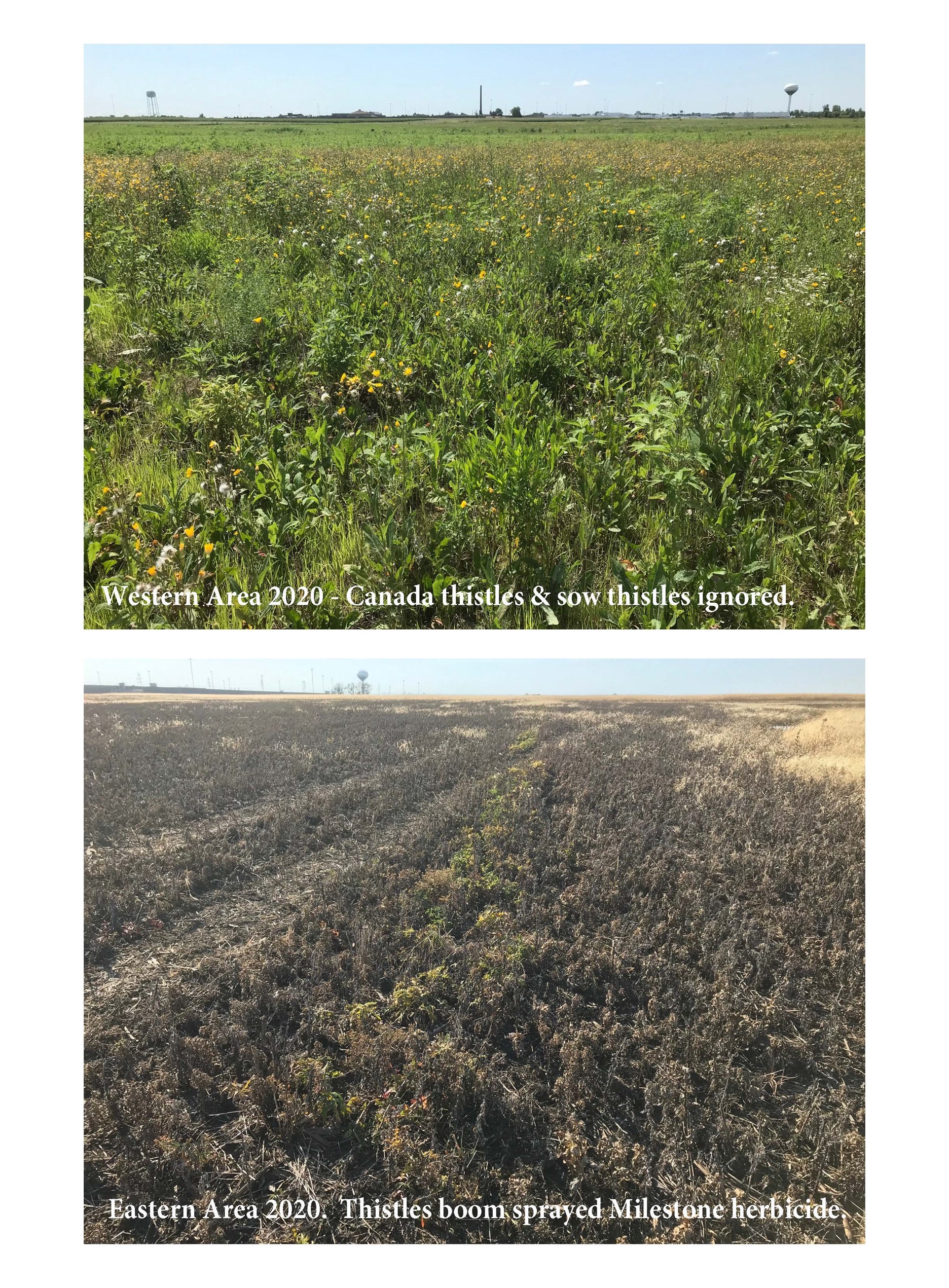
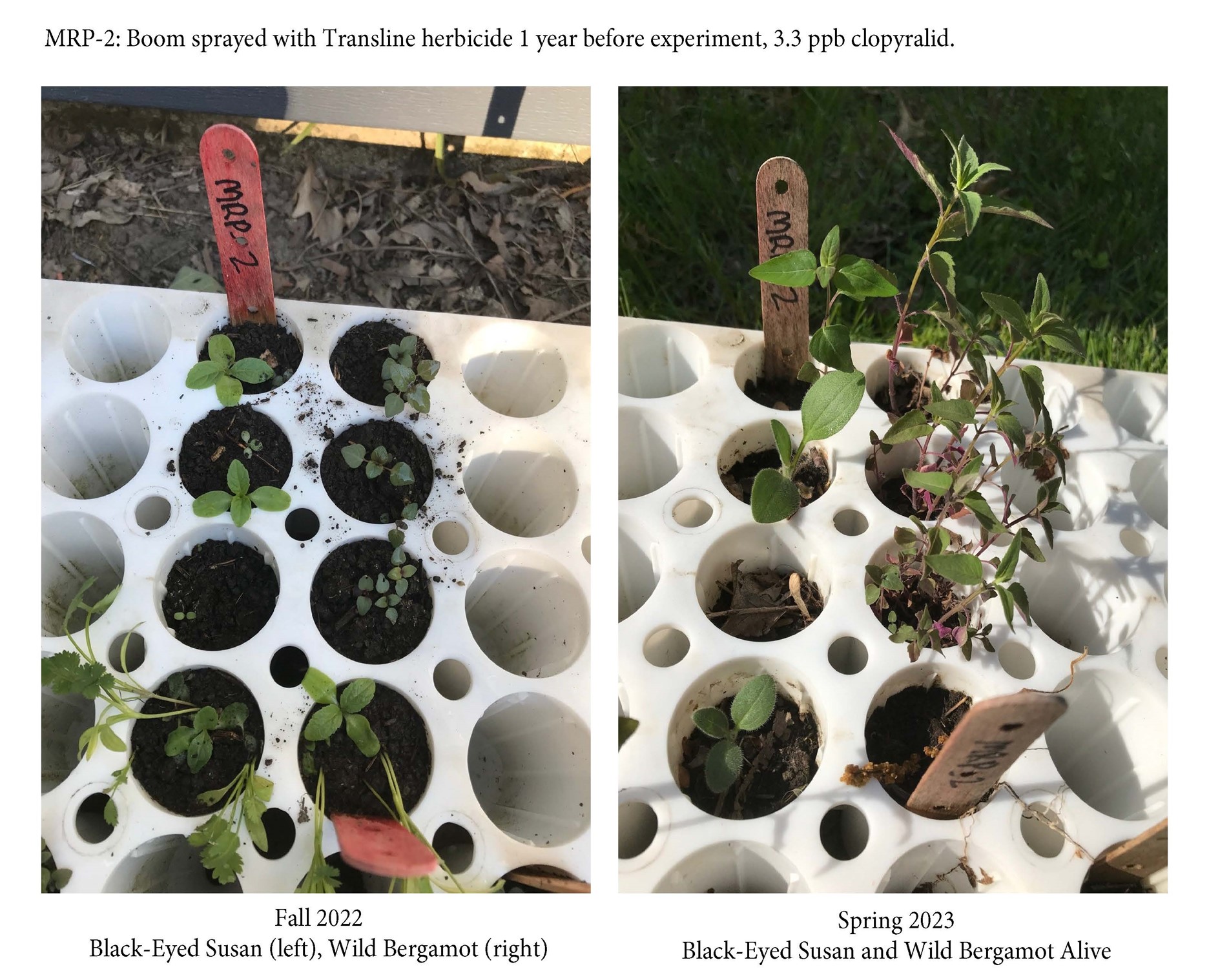
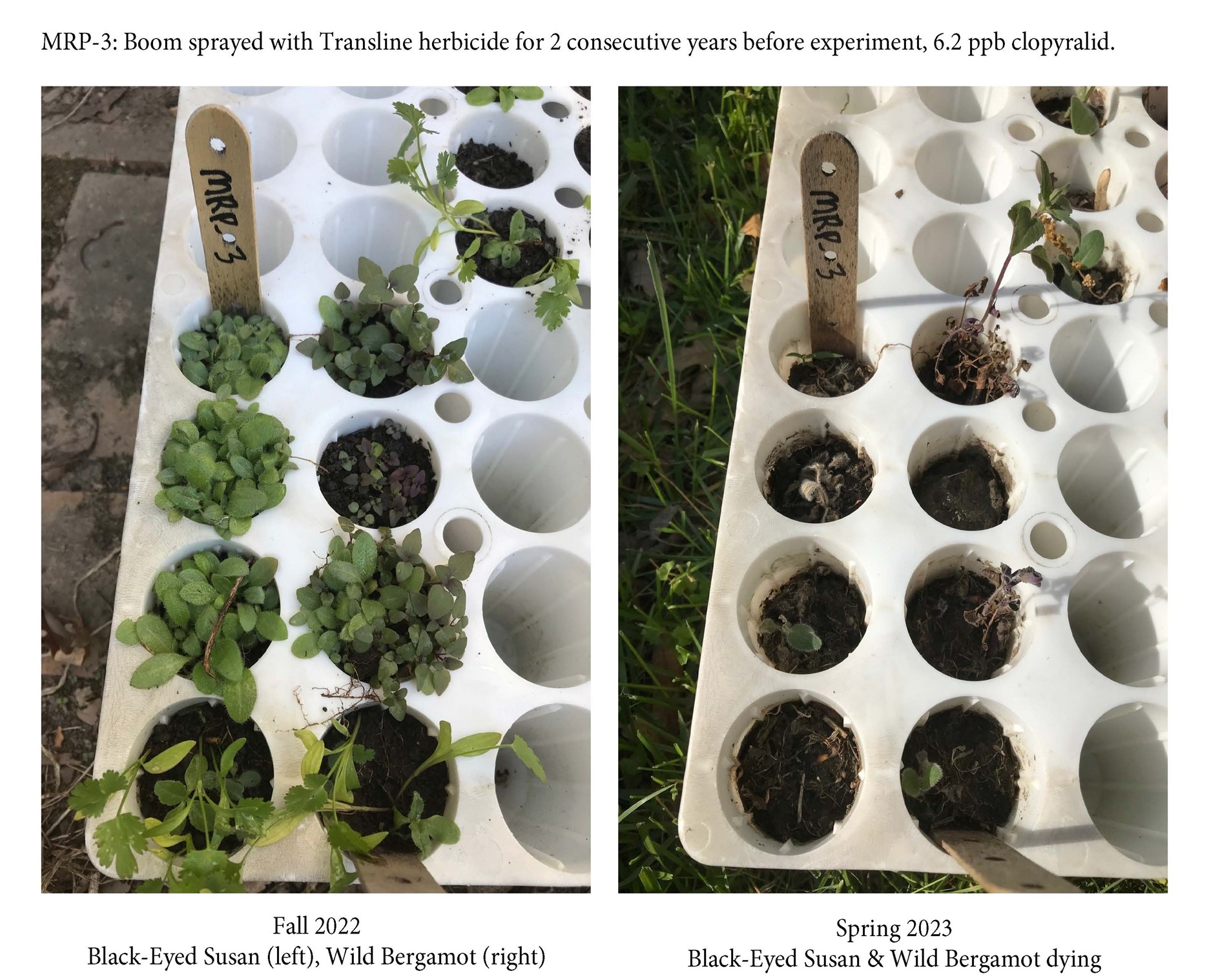
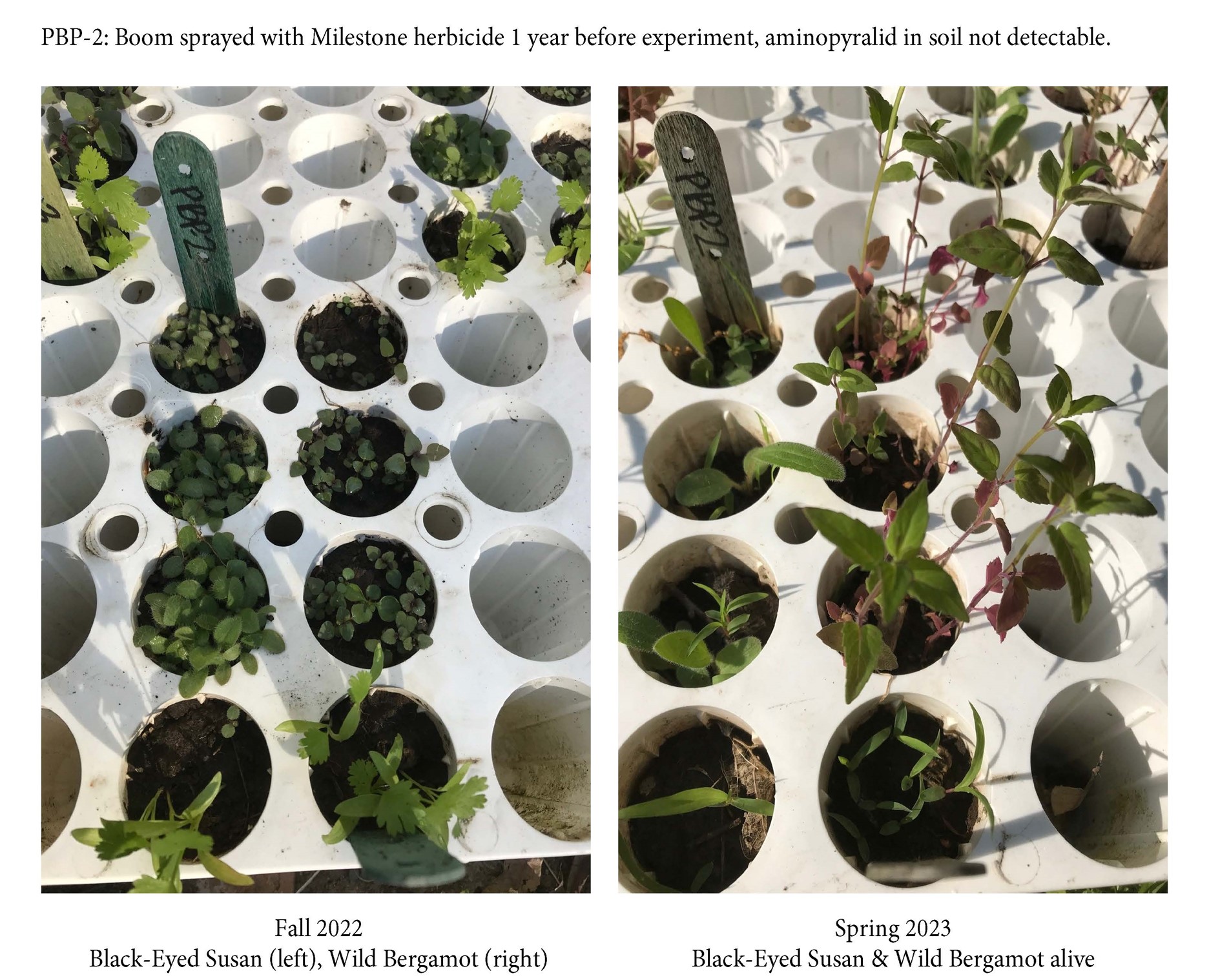
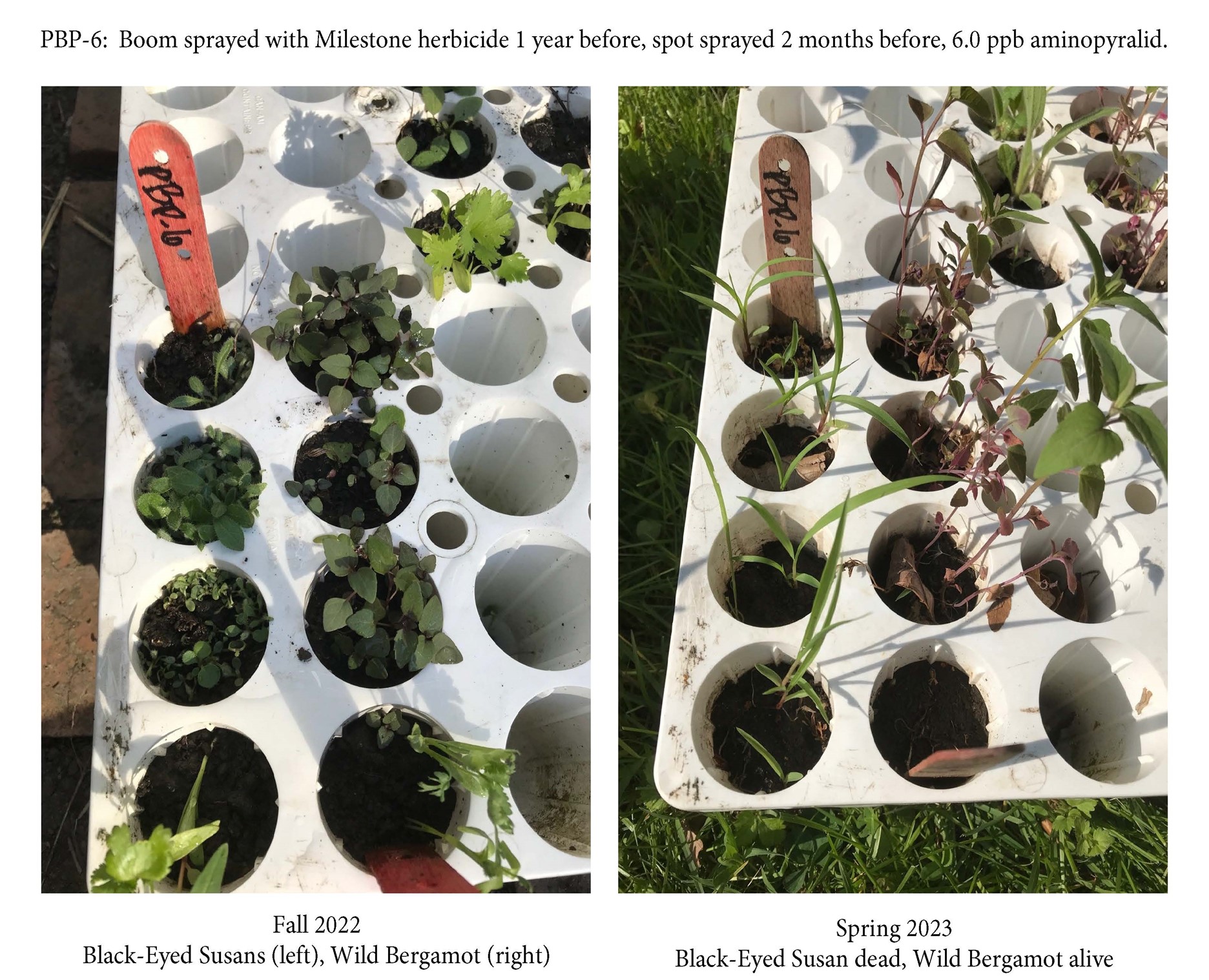
When the District first began treating Chervil around 2007, we used glyphosate. Glyphosate is effective, but is not ideal due to its non-selectivity. An attempt at mowing it was made, but quickly abandoned due to how highly labor intensive it was. Also, the large root system of the plants allowed them to re-flower rapidly; defeating the efforts of the mowing crew. District staff began looking for an effective broadleaf specific herbicide to use on Chervil. Ben Haberthur, Restoration Ecologist at the time; now Executive Director, ran a field study in 2012 testing several different herbicides and determined 0.5% Transline (Clopyralid) as the best option. We have since increased the concentration to 0.75%, or 1 oz/gal., which provides better results. Rodeo (Glyphosate) was tested at 2.5% and it did the job, but as previously mentioned, is non-selective. Escort (Metsulfuron methyl) and Milestone (Aminopyralid) were also tested but did not have as favorable results. In hindsight, I think that Milestone may in fact work, but it was tested at too high a concentration; which killed all vegetation.
After almost 15 years of consistent field use, 0.75% Transline has shown itself to be very effective at controlling Chervil. Today, District crews begin spraying Chervil populations as early as March. Chervil is one of the first plants to green up in the spring, so is easy to locate early. Once flowers form, crews clip the heads to prevent them from going to seed. Follow-up visits continue into May until seed set. Due to the short-lived seed bank, large infestations are relatively easy to bring under control, however, if there is an off-site seed source the area will need to be monitored annually.
It is possible to treat large, established Chervil populations late in the year. Chervil seems to green back up in the fall and existing populations may be sprayed with glyphosate as late as November or December if the weather is mild. Native species have gone dormant by this time and thus will be protected from the effects of the herbicide. This method does only provide partial control of Chervil, but is helpful in reducing the size of large populations that were not discovered or not able to be treated the preceding spring. The reduced population size makes follow-up treatments easier the next spring.
Bill Kleiman notes he tried spading chervil and found it difficult, but ok for a few plants.

Here are a few sites to look at:
https://www.nwcb.wa.gov/weeds/wild-chervil https://www.vtinvasives.org/invasive/wild-chervil https://kingcounty.gov/en/legacy/services/environment/animals-and-plants/noxious-weeds/weed-identification/wild-chervil














 grassland restoration network