Fire does not kill the roots of invasive honeysuckle

Fire top kills honeysuckle, but does not kill the root.  We have burned our Bennett woods unit annually for about a dozen years.   The fires top kills most of the honeysuckle, with some plants not affected because they were next to big logs or other fire breaks.   Below is a typical photo of the Bennett woods after a fire.  Here the photo is April 1, 2010.  The ground layer shows black, the shrubs might be top killed or not, we can’t tell yet.  Look at how many waist high shrubs are there!

approx-point-75-looking-e-honeysuckle-img_5993

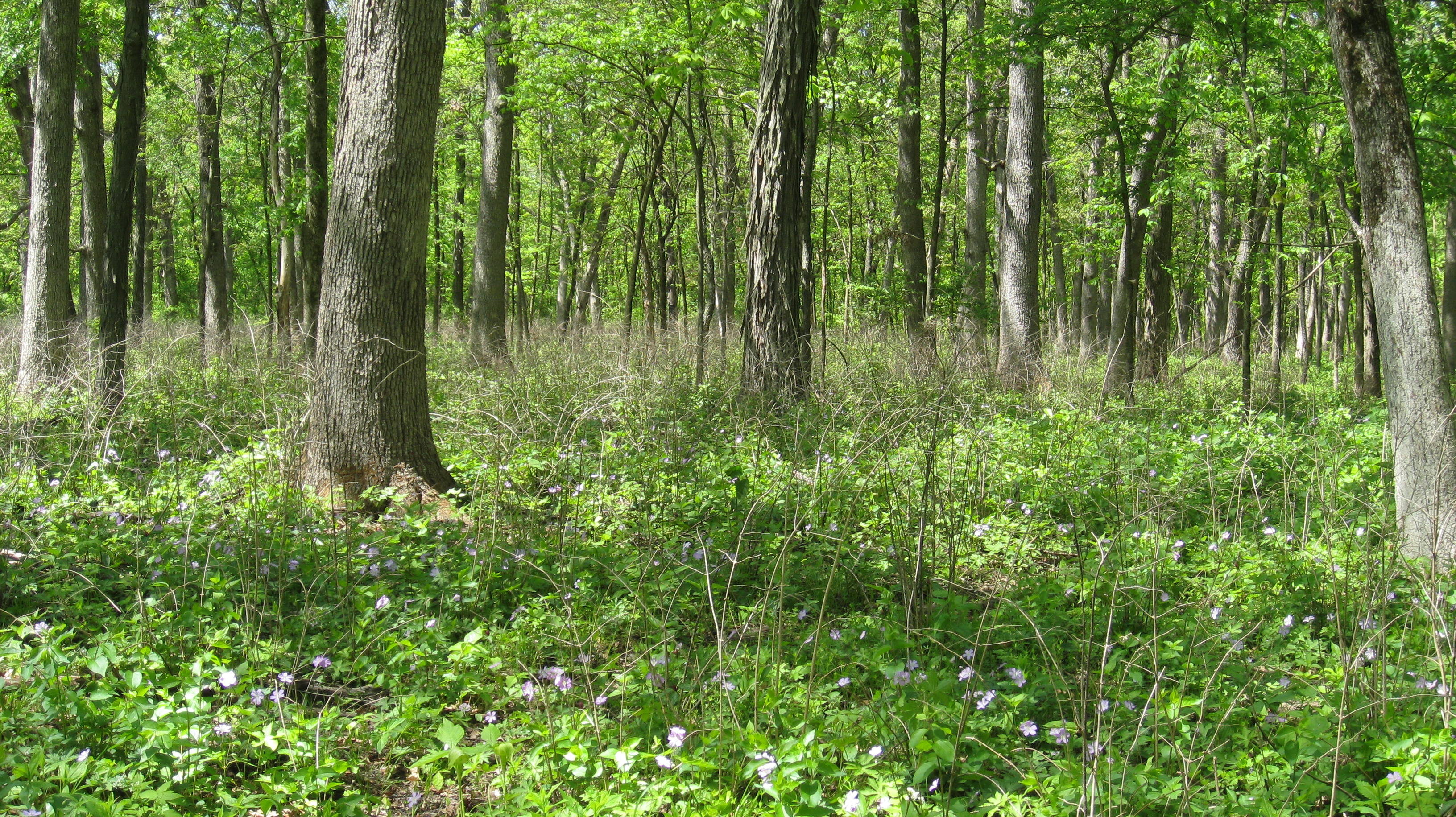
Photo below is from the same area but a few weeks later, May 3, 2010.  The lovely wild geraniums are in bloom!  Look at the all the honeysuckle stems with no leaves on them.  The fire top killed them.  Does fire control honeysuckle?  Sort of.
bennett-fire-effects-dead-honeysuckle

If you were to kneel down by those honeysuckle plants you would see something like the following photo. Here the top killed honeysuckle stems have no leaves, but the plant is sending up several new stems. This is an April 18 image.

img_5119-honeysuckle-resprout-after-fire

Below is a May 7, 2016 photo showing robust growth of honeysuckle, even though the stems of the previous year are leafless and lifeless.   Fire does not kill the roots.

003-honeysuckle-top-killed-by-fire-that-resprouted

Shrubs evolved to take fire and grazing.  I have walked our Bennett Woods unit carefully every year for nine fire years.  By mid-May, I can’t find one invasive honeysuckle that has not re-sprouted.   Not one!

What would a lifeless honeysuckle look like?  The photo below shows a plant that died from a herbicide application.  Dead stems, no re-sprouts.

004-honeysuckle-in-early-may-that-was-basal-bark-killed-previous-season-no-resprouts

Fire does not kill honeysuckle.  Fire does set it back, top killing stems, and making the plant re-sprout.  It takes two to three years for the shrub to become big enough to produce a flower and a fruit full of seeds.  So annual or bi-annual fire offers an opportunity to keep the stature of the plant low which allows other plants like sedges, grasses and forbs to get a leg up.  And the shrubs are not producing fruits and seeds for a few years.  Also, the shrubs are a smaller target to apply herbicide to.  End.
Posted in Uncategorized | Tagged , , , , | 4 Comments

Managing invasive Amur honeysuckle

In Plants of the Chicago Region, Swink and Wilhelm describe invasive honeysuckle just right: “It would be difficult to exaggerate the weedy potential of this shrub.”   Invasive honeysuckle does very well in savannas, edges of woods, and open fields.  It is a fine competitor that deserves our respect and attention.  If only our species could take over the planet so well. Oh wait.

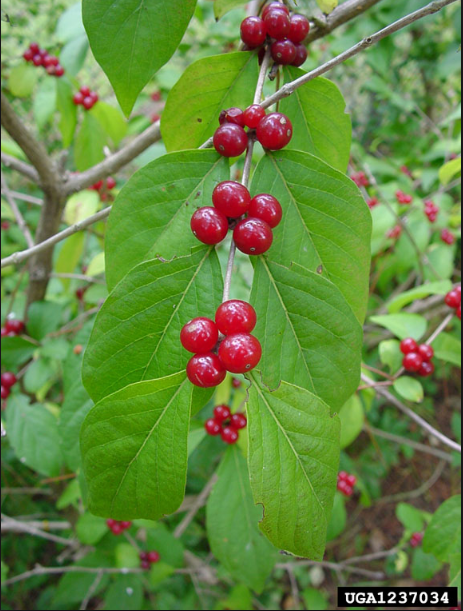
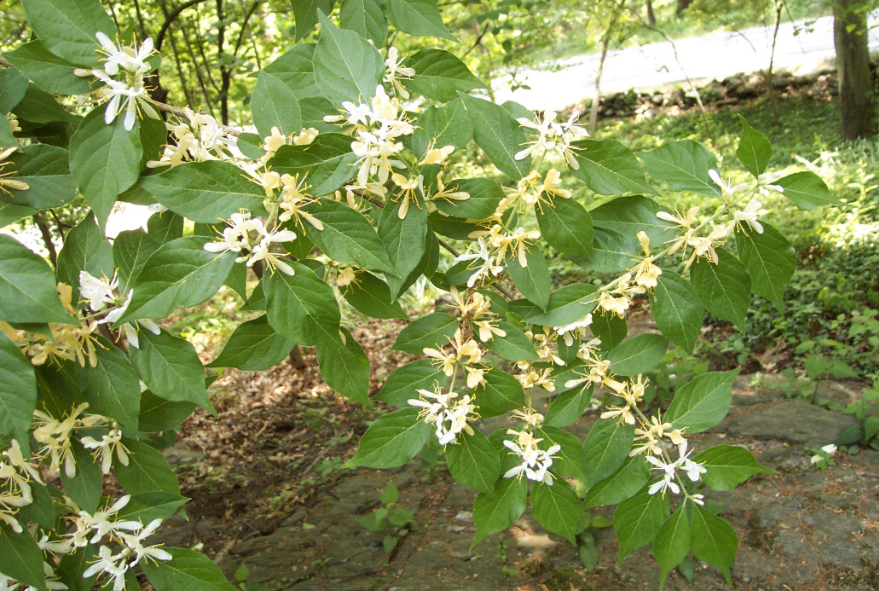
Lonicera maackii, Amur honeysuckle or bush honeysuckle is an invasive shrub from the Euro-Asian continent.  It is in the family Caprifoliaceae, or honeysuckle family.  This is the shrub with opposite leaves, white or pinkish paired flowers, red fruits in the fall.  These shrubs leaf out early in the spring and hang on long into Fall.  You have seen it.

honeysucle-in-flowerhoneysuckle-in-fruit

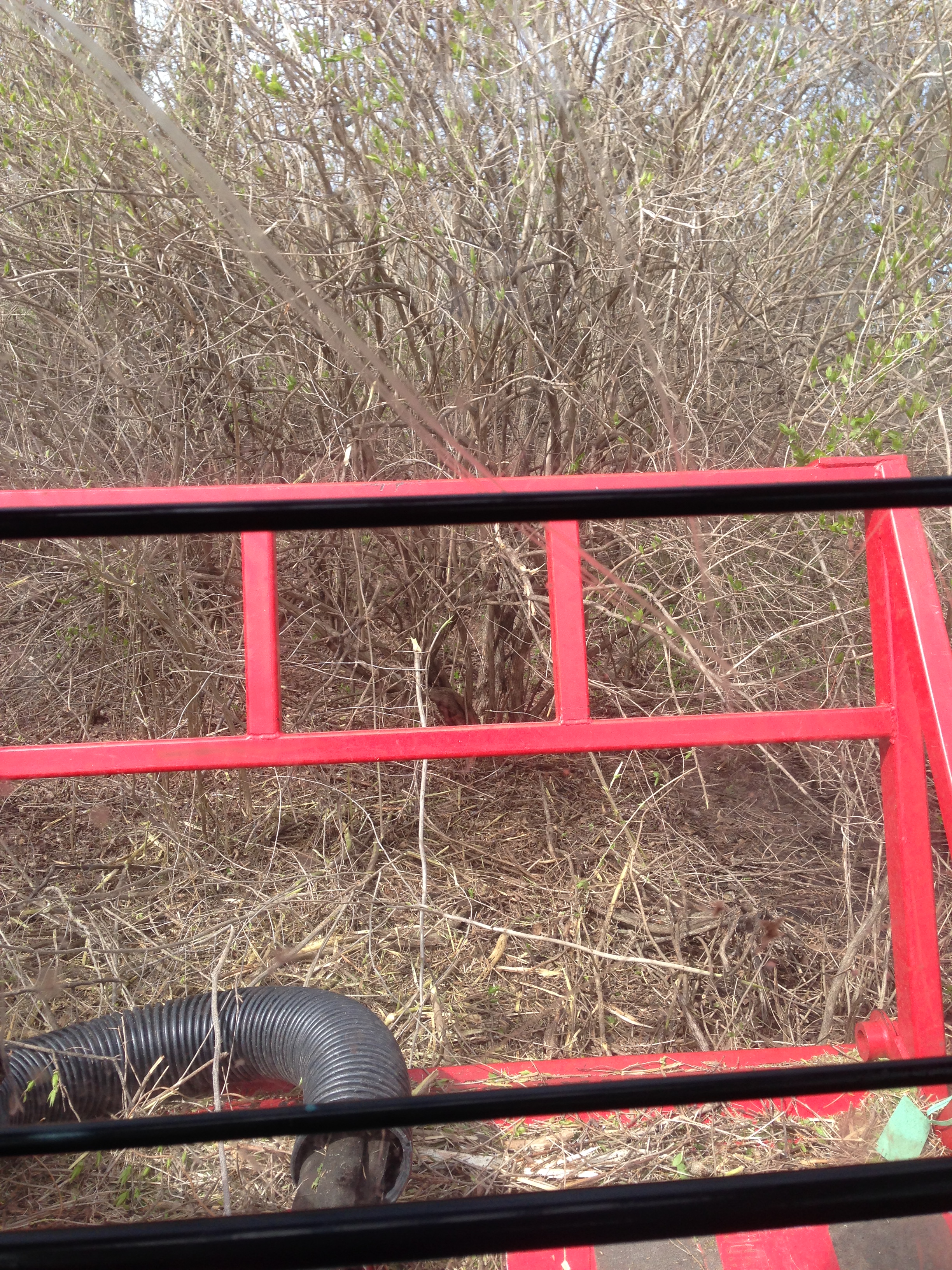
Below is one big honeysuckle out my windshield before being mowed down.  In the next few posts I will summarize some ways to control honeysuckle.

001-honeysuckle-and-brush-mower-fcna

Posted in Uncategorized | Tagged , , | Leave a comment

Fire break preparation

I used our Terex P110 skid loader with a Fecon flail brush head to open up an old fire break that had not been touched for perhaps a decade.  Below is the photo before and then about 30 minutes after.  Now, if I did this work myself, by hand with a chainsaw, it would take me a few full days.  So brush mowers do quick work.   But follow up is important:  Next May I need to go to this fire break and spray the re-sprouting brush with our basal bark herbicide mix.   This would be when the honeysuckle re-sprouts are maybe a foot tall, showing off to me where they had been hiding under the mowing slash.  The oil based herbicide sprayed direct down on the sprouts is very effective at killing them.   The prescribed fire regime these breaks support will help to bring back this rare community of savanna and wet prairie.

img_7394 img_7396

Posted in Uncategorized | Leave a comment

GRN Workshop a success

About 100 attended our recent workshop in the Platte River area of Nebraska.  Thank you to Mardel Jasnowski, Chris Helzer, Bill Whitney and their peers for hosting us.  For two days we were outside hiking around prairie restorations, and sharing stories of success and defeat. I went home ready for more.

Our 2017 GRN workshop we think will be at Konza Biological Station in Manhattan Kansas.  We are working on a date.  Stay tuned.

Below, Bill Whitney sharing ideas with colleagues.

grn-bill-whitney-img_7135

Posted in Uncategorized | 1 Comment

GRN Workshop Registration

2016GRN_Agenda

The 2016 Grassland Restoration Network Workshop will be in Aurora and Wood River, Nebraska on September 13-14. This year’s workshop is hosted by The Nature Conservancy and Prairie Plains Resource Institute, with additional funding assistance from Pheasants Forever. The workshop agenda (along with other logistical information) is attached.
Please fill out the registration information below and email it to Mardell Jasnowski (mjasnowski@tnc.org). You are welcome to participate in one or both days. Be sure to note which meals you will be present for. After you have registered, we will send you more detailed information with directions to the sites, etc. Registration is free for the first 75 people we hear from. There will be a cost of $35 per person for any additional registrants.

REGISTRATION DEADLINE IS AUGUST 19, 2016

Please fill out the information below.
Name
Organization/Affiliation
Address
Phone Number
Email Address
Will you take part in the optional Tuesday morning tour in Aurora?
Will you be eating Tuesday evening supper?
Will you be eating Wednesday lunch?
Do you have any dietary restrictions? If so, list them here:
Thank you to Pheasants Forever and the Nebraska Environmental Trust for helping to cover the costs of registration for this conference.

Posted in Uncategorized | Leave a comment

GRN workshop September 13 & 14, 2016

Preliminary Agenda

Grassland Restoration Network- 2016 Workshop

September 13-14, 2016 – Aurora/Wood River, Nebraska

Co-Hosted by The Nature Conservancy’s Platte River Prairies
and Prairie Plains Resource Institute

September 13
9am-11:30am – Optional walking tours of prairie restorations in Aurora, Nebraska by Bill Whitney of Prairie Plains Resource Institute. Bill planted these diverse prairies in the early 1980’s through the 1990’s along what is now the Lincoln Creek Trail. He will discuss how the prairies established and changed over time, along with the history of Prairie Plains Resource Institute as an educational land trust.
12:30pm – 5:30pm – Tours of Prairie Plains Resource Institute’s Gjerloff Prairie north of Aurora, including various restored sites, remnant prairie on loess bluffs along the Platte River, fire and grazing management, and seed storage/processing facilities.
6pm – Catered supper at the Prairie Plains Education Center
7pm – 9pm – Social time
Lodging on your own at nearby hotels in Aurora and Grand Island, Nebraska. Consider Holiday Inn Express in Grand Island, Ken’s Motel in Aurora, or other options.

September 14
8:30-11am – Field sessions on evaluation and research results at The Nature Conservancy’s Platte River Prairies south of Wood River, Nebraska. Topics will include: long-term monitoring of mean floristic quality in restored prairie, impacts of soil texture/nutrient levels on prairie restoration establishment, response of grassland birds to patch-burn grazing of restored prairie, results of overseeding projects in degraded remnant prairie, and the response of small mammals, bees, grasshoppers, and ants to attempts to enlarge and reconnect prairie remnants through prairie restoration.
11am-Noon – Tour and group discussion of a restored wetland/stream (former sand and gravel mining ponds). The site was restored in stages between 2003 and 2013 and has established well, but is threatened by a number of invasive plants that are well-established upstream of the site.
12pm – 1pm – Catered lunch
1pm – 3:30pm – Tours of cropland restored to high-diversity prairie/wetland habitat in 2013 and 2016 and field sessions on research results from the Conservancy’s Diversity Research Plots – a series of ¾ ac replicated plots planted with various levels of plant diversity. Ongoing and completed research has focused on the impact of plant diversity on invertebrate communities, resistance to invasion, soil properties, and drought response and other aspects of ecological resilience. Researchers from the University of Nebraska-Lincoln and Kansas State University will discuss their projects.
3:30pm – Depart

Posted in Uncategorized | Leave a comment

foliar spray of shrubs leads to off target kill

shrub earlyshrub latePhotos above show a honeysuckle shrub I carefully sprayed while doing some other weed work. The second photo is about 20 days later. The shrub died but I show this photo to demonstrate the area of the off target damage. This would be the yellowing grass on what was the downwind side of this shrub.

This area was ruderal-low diversity-junk so the damage does not matter in this case, but beware of spraying tall things like white sweet clover and shrubs where there are plants you do like nearby. Choose a different method of control when the vegetation surrounding the target has native plants.

Posted in Uncategorized | Tagged , , , | 6 Comments

Nachusa Grasslands annual fire report

Our annual Nachusa Grasslands fire report where we have lots of photos, maps and lessons learned is available at:

Click to access 2015-2016_nachusa_fire_crew_annual_summary_report_b_kleiman.pdf

Posted in Uncategorized | Leave a comment

Illinois Fire Needs Assessment

This is the first systematic report in Illinois documenting the number of acres being burned annually and identifying how many acres need to burn annually to maintain and restore ecosystem health. This review is a call to action for land managers, legislators and the general public.

This Assessment Demonstrates:
• Dramatically more acres need to be burned annually across Illinois
• Natural areas need to be managed with prescribed fire with a much higher frequency
• Far too many ecologically degraded acres across the state are in need of fire
• Considerably more resources need to be allocated to prescribed fire programs

Key Data Points
• Of the 1,049,000 acres reported, 790,000 (76%) are held in habitat acres, of which only 50,789 (6%) were managed with prescribed fire between 6/14-5/15
• 213,000 more acres must burn annually in Illinois to effectively manage and restore target acres
• 20% of conservation lands are too degraded to carry effective, healthy, needed fire. Without committed and supported conservation efforts, these numbers will increase over time.

Click to access IL%20Fire%20Needs%20Assessment.pdf

Posted in Uncategorized | Tagged , , | 2 Comments

Save the Date – Grassland Restoration Network in Nebraska September 13-14, 2016

The Grassland Restoration Network is a loose affiliation of people trying to use prairie restoration (reconstruction) as a way to rebuild, conserve and sustain grassland ecosystems. Each year, we put on a workshop to share ideas, techniques, research results, and stories with other. Workshops are hosted by a different site each year, giving us the opportunity to visit a range of projects over the years.

The next workshop will be hosted in central Nebraska (near Grand Island) on September 13 and 14, 2016. We’ll visit sites owned by both Prairie Plains Resource Institute and The Nature Conservancy (Platte River Prairies). As always, we will compare notes on restoration techniques and we will look at a variety of plantings, from brand new to more then 20 years old. In addition, however, we will talk about how to evaluate the success of restoration projects beyond simply counting plant species. We will tour restored sites with a number of researchers who have helped us see whether we’re actually restoring ecological function at our Platte River Prairies – including whether or not we are defragmenting the landscape for a variety of insect and animal species.

Posted in Uncategorized | Tagged , | 2 Comments