Basal bark application final part 5: Helpful tips

Kleiman L.R crop

Screenshot 2022-11-28 174626

Above is the cover and title from a management note we published in Ecological Restoration.  That was a lot of work.

Some tips to apply basal bark herbicide:

Be careful applying these mixes in quality vegetation areas.  It is not only a brush herbicide, but a broadleaf plant herbicide. It kills forbs!

In nice areas tighten up your application method.  You can leave the pressure very low on the pack, and just gently press the trigger to get a minimum of herbicide on the stems.  Or use a paint brush or paint sponge and carefully wipe the stems with the mix.  You can also cut the shrub and dab on some mix this way, but the cutting is not necessary.  You can wire a sponge to the tip of your backpack sprayer wand and then dab or wipe the mix with little dripping and no overspray.  Don’t drip herbicide on good plants.

I generally don’t apply basal bark mix on hot days because it volatizes and perhaps harms nearby good plants.  In good areas don’t apply unless it is sweater weather or cooler.

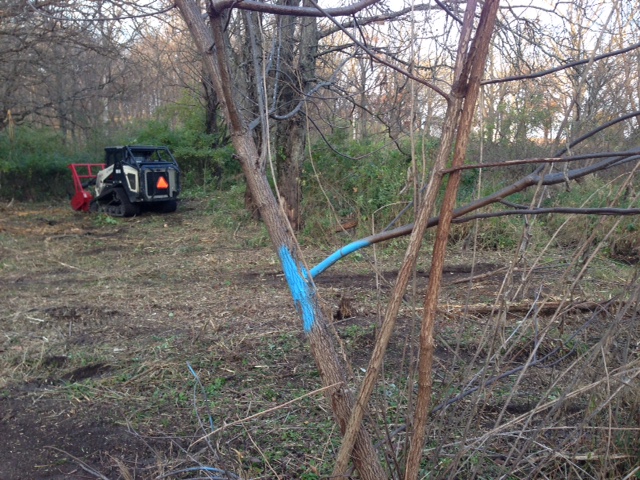
Mark some plants with tree marking paint so you can do your own testing. It is fun.

Expect to return to the area several years in a row to treat the ones you missed.

Expect to get some off target kill within 2 to 8 inches of the stems you sprayed, depending on how carefully you sprayed.

While treating honeysuckle also treat the autumn olive, buckthorn, and mesophytic trees like box elder.

Typically, I apply the mix to all the stems and all sides of the stems.  When there is thorny brush in the way I don’t worry about getting all the stems treated.

Go after the scattering of shrubs in a field before worrying about the huge thickets.

Wear safety glasses.  Folks who wear prescription glass might get side shields for the frames or wear goggles over your glasses.

Bring some paper towels to clean up.  Some rubber gloves for when you are filling your pack or fiddling with the pack.  Once you have got the pack working good you can go back to your thicker and warmer gloves.

Don’t fill the pack all the way.  Halfway is plenty and will last a long time.

Take your time.  You are going way faster than those folks cutting the shrubs.  You can whistle while you work while they are still back at the shop preparing their chainsaw.

Elsewhere, I describe how to take care of your Birchmeier pack.

This year, we ramped up our basal bark solution on the advice of Rick Schulte of Crop Production Services.  We increased the Garlon4 from 17% to 20%.  And we add one quart of Vanquish herbicide to each 12.5 Gallons of mix.  Others have adopted this mix so I am trying it out.

Future research question.  If I basal bark honeysuckle in winter, say January, does an April fire that top kills the stems still kill the root of the shrub?  My current sense is yes, but I don’t have the data.  Update of September 2025:  Kaleb Baker demonstrated in a controlled study that prescribed fires done soon after basal bark application did not diminish the effect of the herbicide. https://grasslandrestorationnetwork.org/2024/04/25/a-study-on-controlling-bush-honeysuckle/
Posted in Uncategorized | 15 Comments

Basal bark application part 4

Previously I described success in killing honeysuckle with October and May applications when the leaves were on the stems of the shrub.  Here are a few kill counts we have from dormant season applications with leaves off:

March 6 and 7, 2011:  80% kill from basal bark application to about 70 plants.

April 10, 2010: 100% kill from basal bark to a few dozen plants.

April 1, 2012: 100% kill from basal bark to 24 plants.

Here is a nice quote from an experiment by Ronald Rathfon “…month of application did not affect the three triclopyr-containing herbicide treatment efficacy rates, which exceeded 95%…”  (2006 North Central Weed Science Society Proceedings).

So the last few posts I have made the case that basal bark application works in any season, but don’t apply it in hot weather as it volatizes.

And kudos to Mike Carr, Volunteer Steward of Nachusa Grasslands who has been helping me note basal bark treatments of honeysuckle.

One more basal bark post to follow, then a post on foliar application and mowing.

carr-mike-at-orland-se-img_7529

Posted in Uncategorized | Tagged , , , , , | 1 Comment

Basal bark application part 3

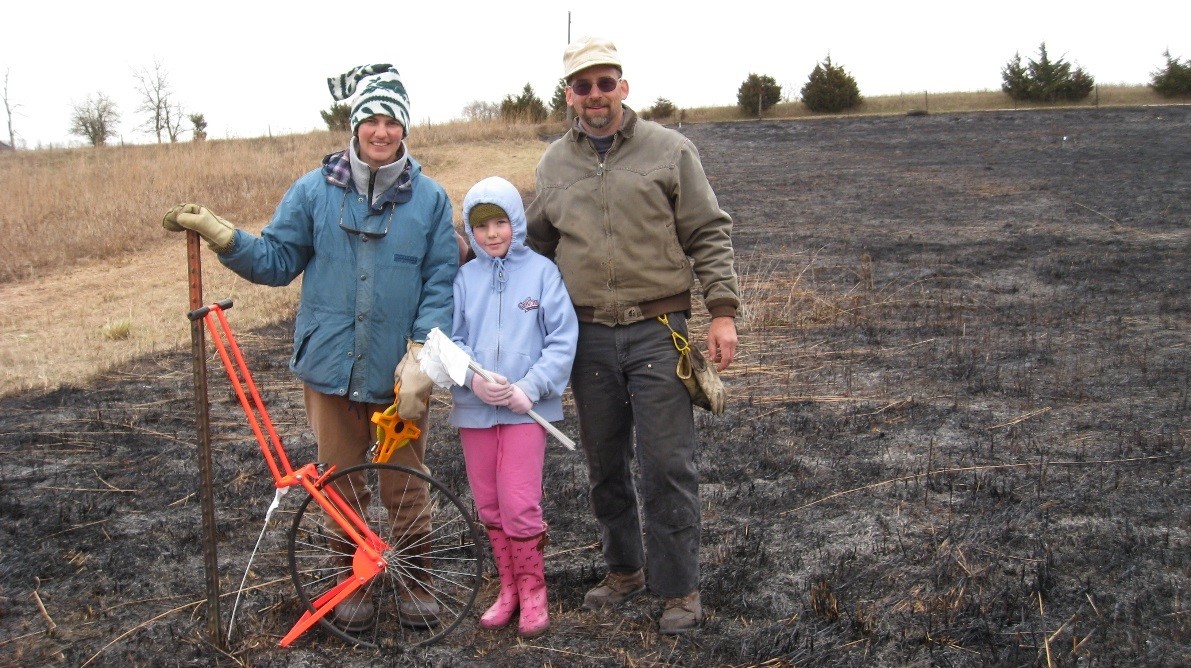
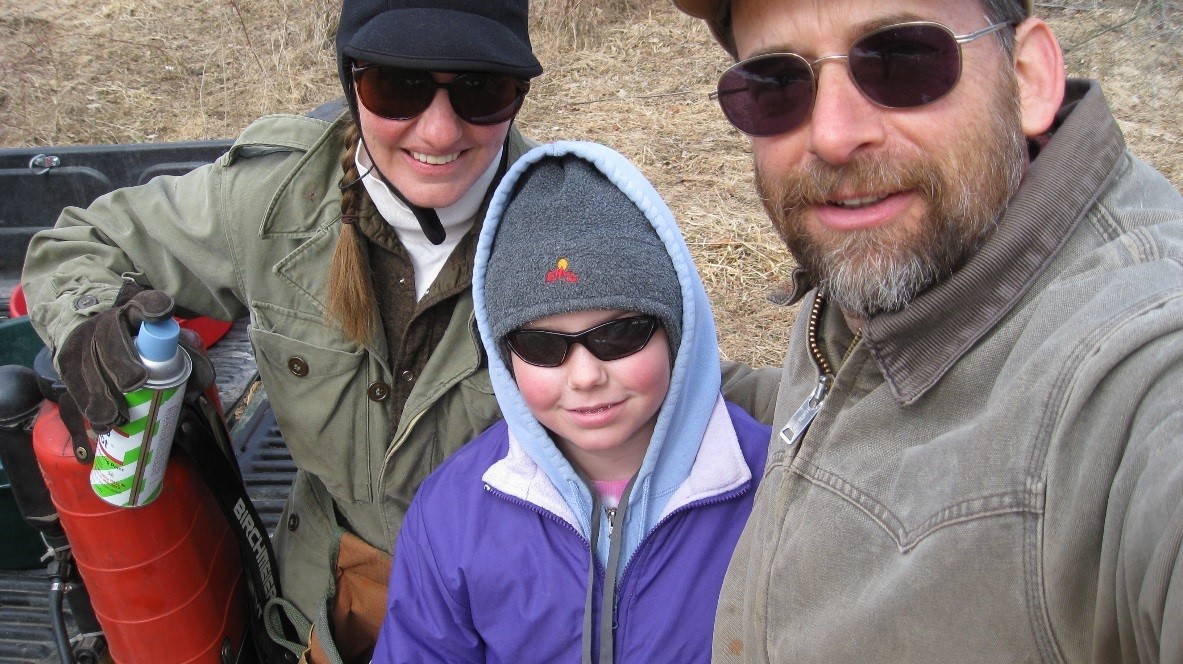
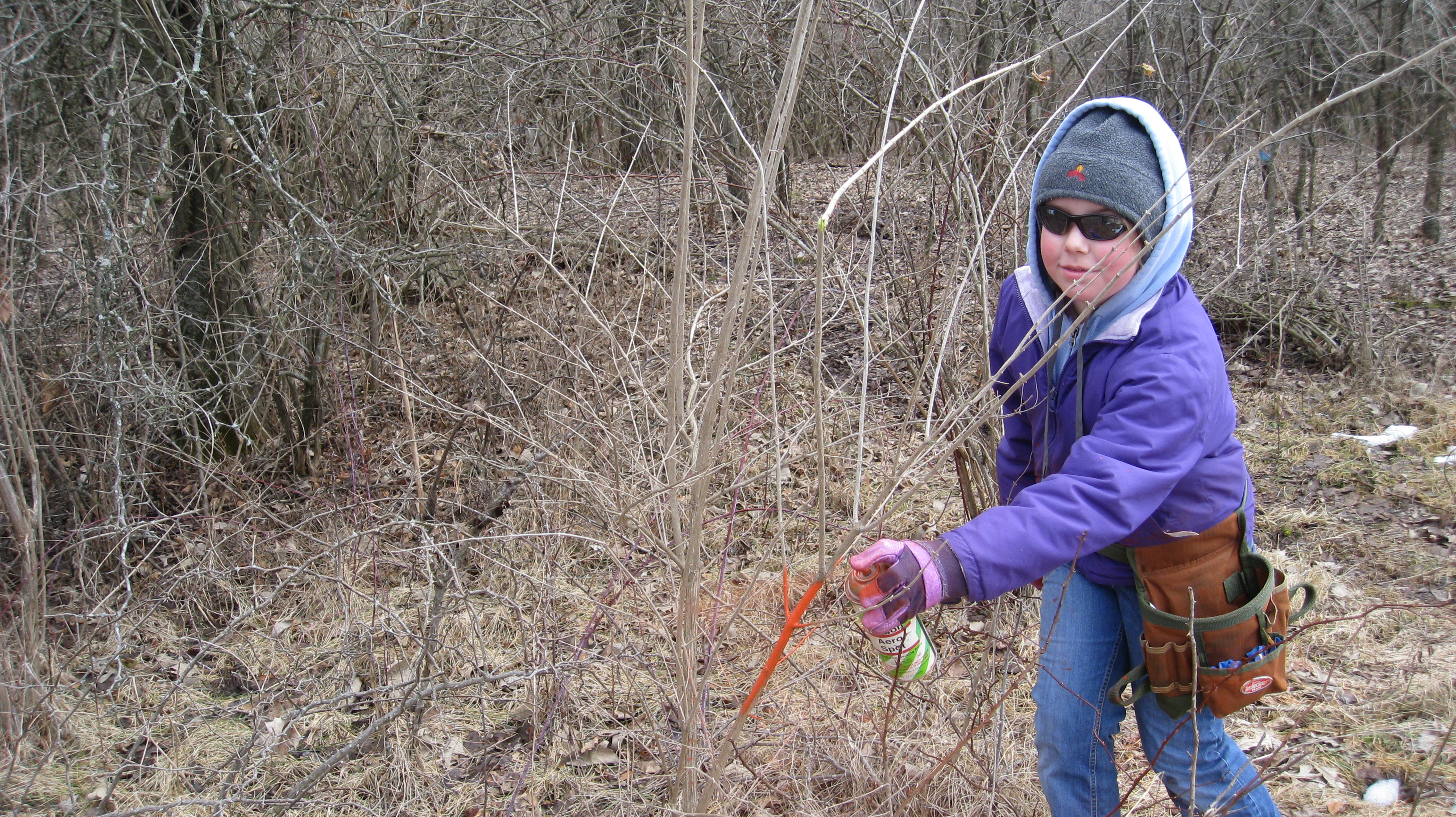
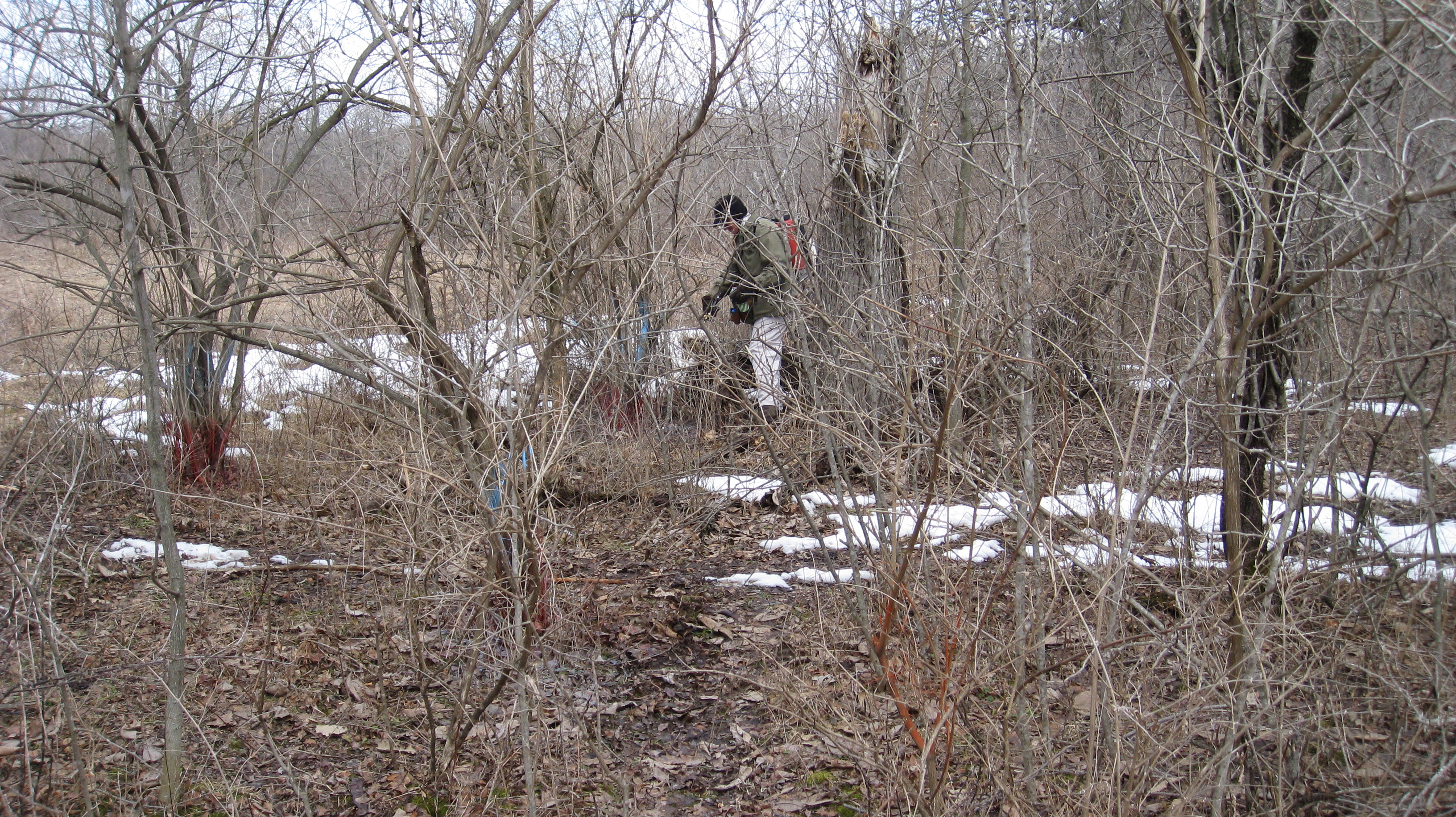
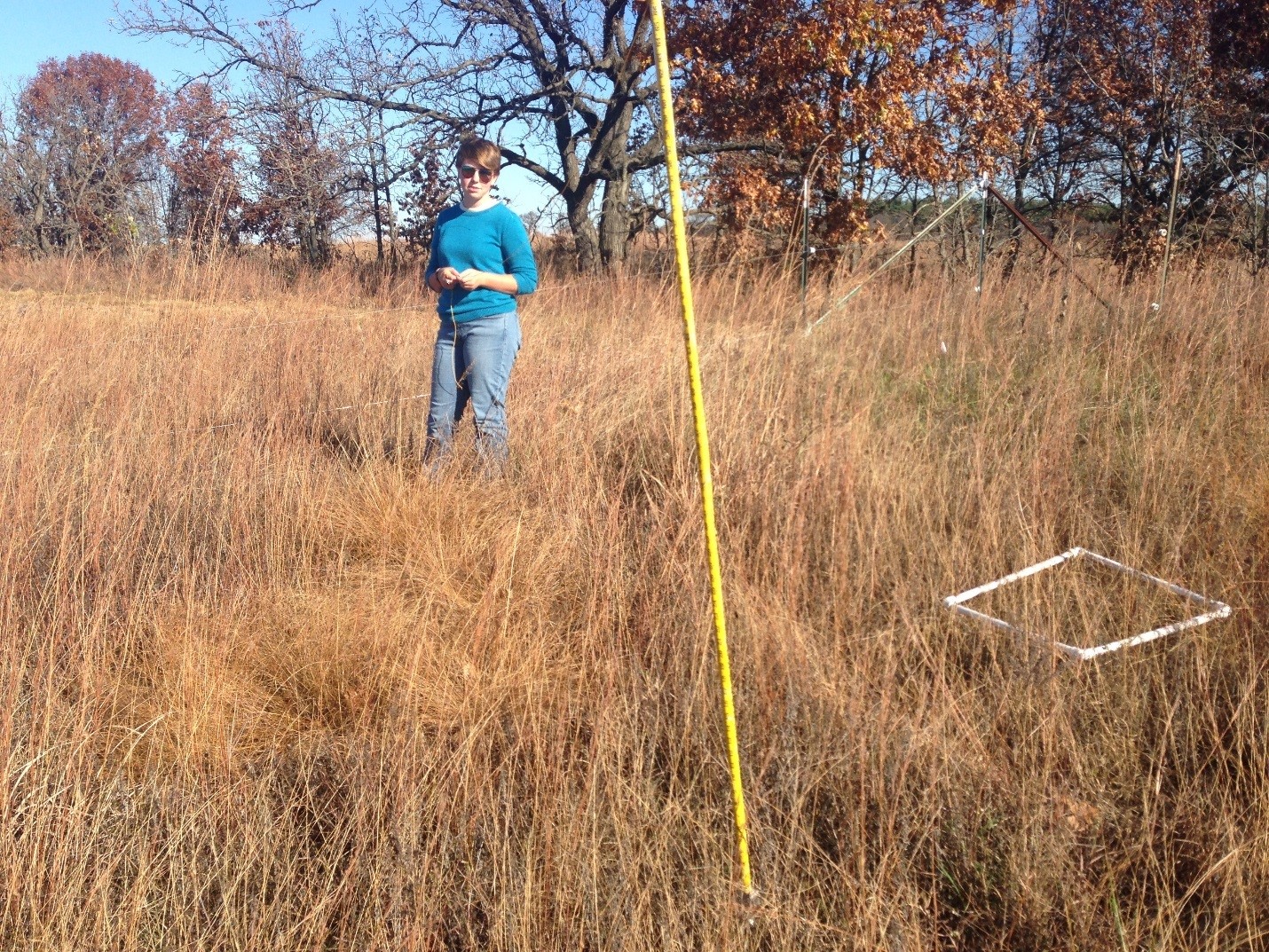
My daughter and wife and I have been doing field experiments and stewardship for years.  We have experience in marking and treating honeysuckle.  In late May of 2014 the three of us treated and paint marked about 250 honeysuckle shrubs with 17% Garlon4 in mineral oil.  We had a control of 180 live shrubs.   The photos below are from a few of our scientific escapades.

kleimans kleimans-3 kleiman-leah-painting-control-honeysuckles-img_7166 kleiman-honeysuckle-experiment-susan-img_7167  kleimans-w-goggles

kleiman-l-range-measures

After that May basal bark treatment we returned in September and tallied our results.  The painted stems made the tally easy. We had 100% death to the Garlon4 treated stems!  This was true in all size classes from dinky to huge honeysuckle.  We did not spray an excessive amount.  All dead.  We can exclaim that when honeysuckle are leafed out in the spring you will get excellent results treating them with basal bark herbicide at that time. It works!

Two more posts to go on basal bark.

Posted in Uncategorized | Tagged , , , | 4 Comments

Basal bark application part 2

I sometime hear colleagues say basal bark on invasive honeysuckle “sort of” works.  I find basal bark with Garlon4 kills nearly all of the time.

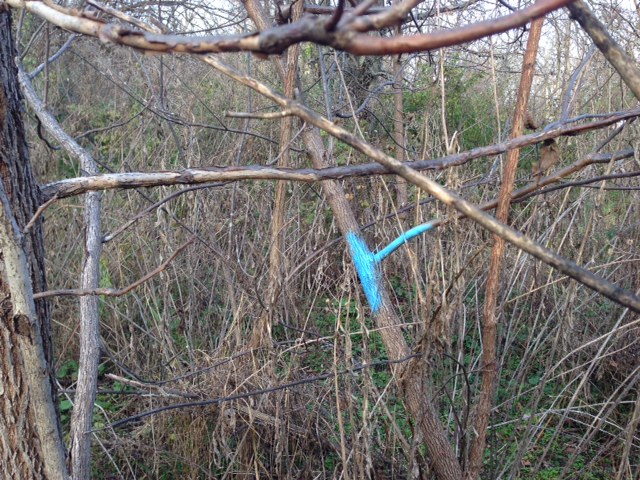
Note in the photo below the blue tree marking paint I applied to the stem.  In the fall, October 10, 2015,  I sprayed a little basal bark solution on the lower stems of this plant and about 50 others.  By marking the stem with paint I can return later and see that indeed the plant is dead.  If I took you to this area and exclaimed that I basal barked the shrubs you might say it “sort of” works.  You would say that because there would be live honeysuckle here, there, and seemingly everywhere.   That would be until I pointed out that every shrub I herbicide sprayed and then marked with paint is dead.  There are shrubs around the treated plant that are not dead because they were not sprayed.  The plants sprayed are dead.    So applying basal bark in October with the leaves still on worked.   In my next post, I will tell you about a spring application.


honeysuckle-painted-stem-example-5829

Posted in Uncategorized | 4 Comments

Basal bark application on honeysuckle part 1

Basal bark works.  Applying brush herbicide with a mineral oil carrier allows the herbicide to be sprayed on the bark.  The mix absorbs into the basal cells of the bark where all the action occurs in a tree or shrub.  Hence the term, basal bark herbicide application.

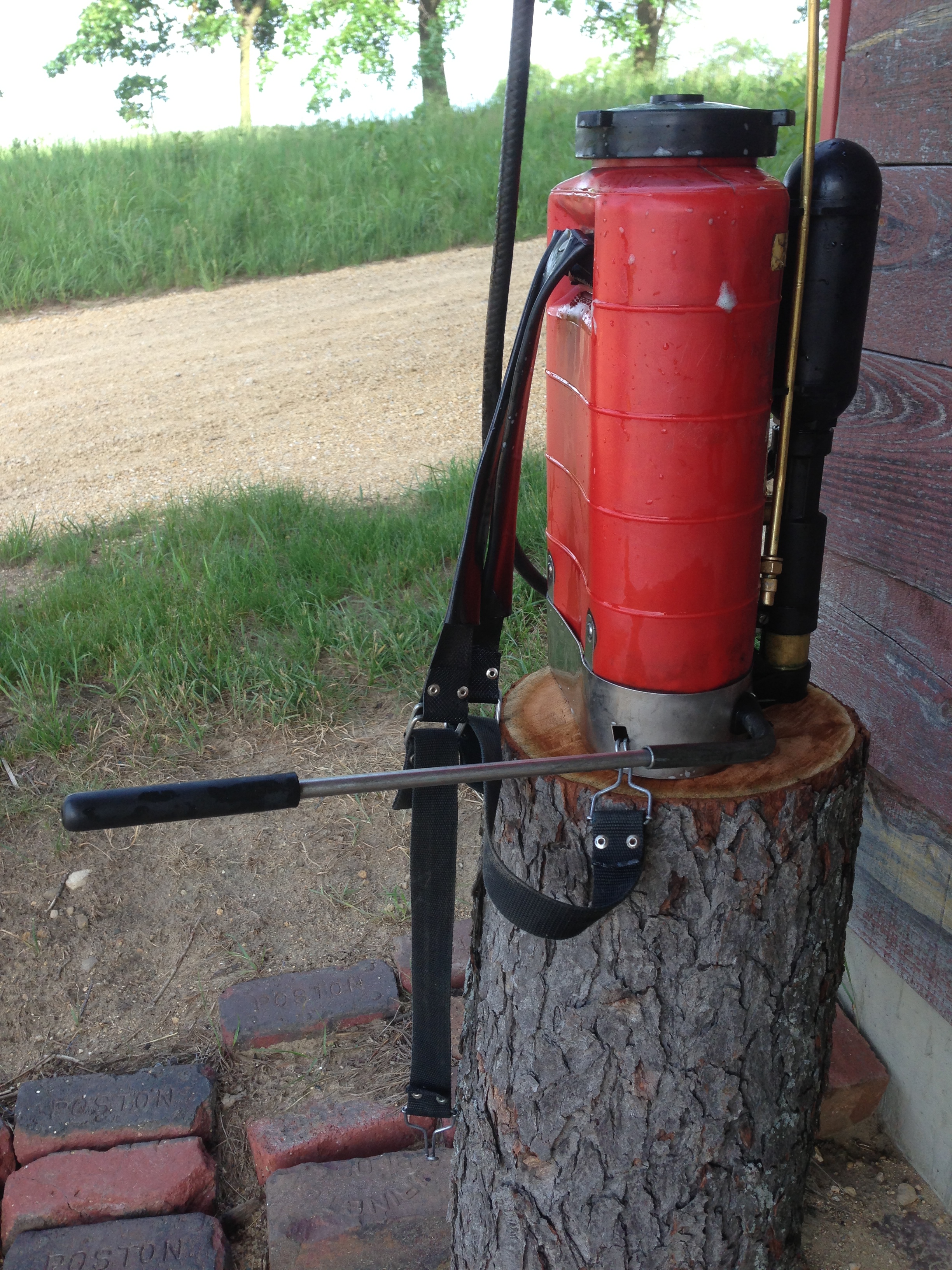
Below is the expensive Birchmeier backpack sprayer.  Many people use these because their seals hold up better with the mineral oil carrier. Elsewhere on this blog I have written about these packs. There may be other packs that do as well.  Let us know if you have a pack you have time tested.

birchmeier-img_2098

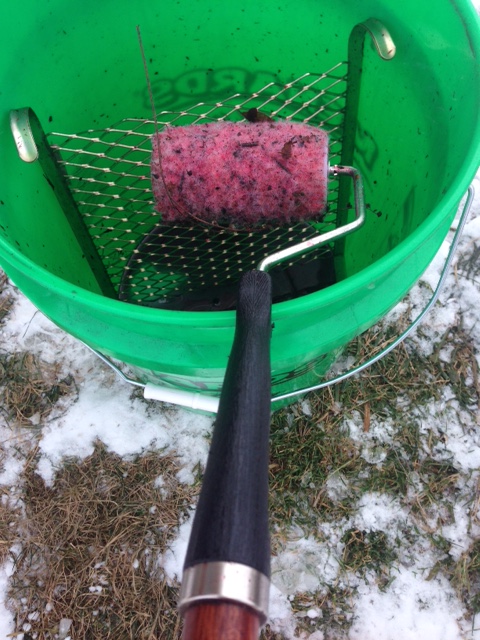
Below are some of our paint roller applicators sticking out of the buckets.  In the bucket is an inch of basal bark mineral oil herbicide mix.  You have a 5 inch long paint roller on a handle cut to about 30 Inches.  There is a screen to roll back and forth on to get rid of the excess solution.  Make sure roller has stopped dripping!  Then take roller to your honeysuckle and roll the solution on the stems.  This works.  basal-bark-bucketsbasal-bark-paint-roller-and-screen-in-bucket

The advantage of basal bark herbicide application:

  • It is several times faster than cutting and treating the shrub.
  • It is quiet and safer than running a saw.
  • It works as well as cut stem treatments.

More posts on this topic will follow.

Also see Kaleb Baker’s study showing great results using basal bark herbicide:  https://www.nachusagrasslands.org/nachusa-blog/a-study-on-controlling-amur-honeysuckle-lonicera-maackii

Posted in Uncategorized | Tagged , , , , , , | 9 Comments

Fire does not kill the roots of invasive honeysuckle

Fire top kills honeysuckle, but does not kill the root.  We have burned our Bennett woods unit annually for about a dozen years.   The fires top kills most of the honeysuckle, with some plants not affected because they were next to big logs or other fire breaks.   Below is a typical photo of the Bennett woods after a fire.  Here the photo is April 1, 2010.  The ground layer shows black, the shrubs might be top killed or not, we can’t tell yet.  Look at how many waist high shrubs are there!

approx-point-75-looking-e-honeysuckle-img_5993

Photo below is from the same area but a few weeks later, May 3, 2010.  The lovely wild geraniums are in bloom!  Look at the all the honeysuckle stems with no leaves on them.  The fire top killed them.  Does fire control honeysuckle?  Sort of.

bennett-fire-effects-dead-honeysuckle

If you were to kneel down by those honeysuckle plants you would see something like the following photo. Here the top killed honeysuckle stems have no leaves, but the plant is sending up several new stems. This is an April 18 image.

img_5119-honeysuckle-resprout-after-fire

Below is a May 7, 2016 photo showing robust growth of honeysuckle, even though the stems of the previous year are leafless and lifeless.   Fire does not kill the roots.

003-honeysuckle-top-killed-by-fire-that-resprouted

Shrubs evolved to take fire and grazing.  I have walked our Bennett Woods unit carefully every year for nine fire years.  By mid-May, I can’t find one invasive honeysuckle that has not re-sprouted.   Not one!

What would a lifeless honeysuckle look like?  The photo below shows a plant that died from a herbicide application.  Dead stems, no re-sprouts.

004-honeysuckle-in-early-may-that-was-basal-bark-killed-previous-season-no-resprouts

Fire does not kill honeysuckle.  Fire does set it back, top killing stems, and making the plant re-sprout.  It takes two to three years for the shrub to become big enough to produce a flower and a fruit full of seeds.  So annual or bi-annual fire offers an opportunity to keep the stature of the plant low which allows other plants like sedges, grasses and forbs to get a leg up.  And the shrubs are not producing fruits and seeds for a few years.  Also, the shrubs are a smaller target to apply herbicide to.  End.

Posted in Uncategorized | Tagged , , , , | 4 Comments

Managing invasive Amur honeysuckle

In Plants of the Chicago Region, Swink and Wilhelm describe invasive honeysuckle just right: “It would be difficult to exaggerate the weedy potential of this shrub.”   Invasive honeysuckle does very well in savannas, edges of woods, and open fields.  It is a fine competitor that deserves our respect and attention.  If only our species could take over the planet so well. Oh wait.

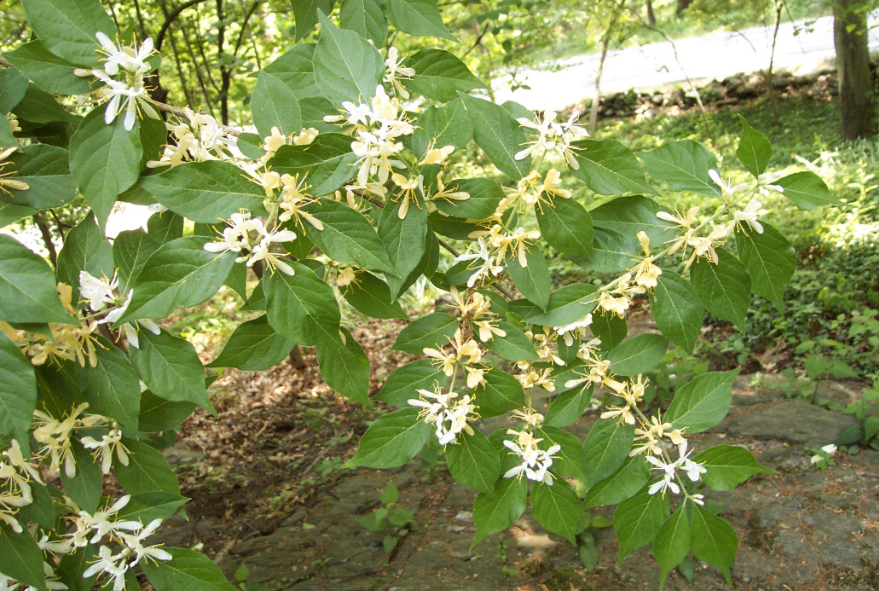
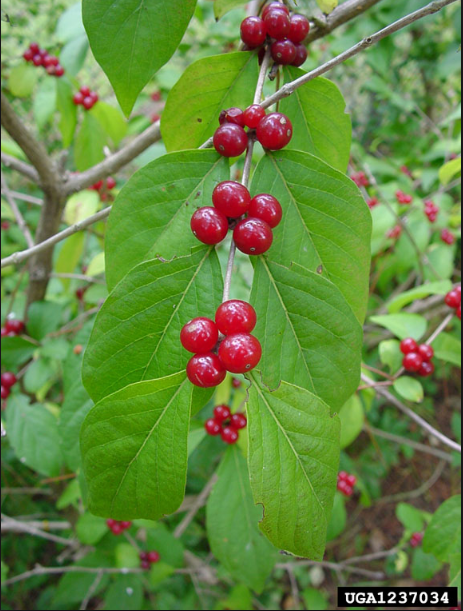
Lonicera maackii, Amur honeysuckle or bush honeysuckle is an invasive shrub from the Euro-Asian continent.  It is in the family Caprifoliaceae, or honeysuckle family.  This is the shrub with opposite leaves, white or pinkish paired flowers, red fruits in the fall.  These shrubs leaf out early in the spring and hang on long into Fall.  You have seen it.

honeysucle-in-flowerhoneysuckle-in-fruit

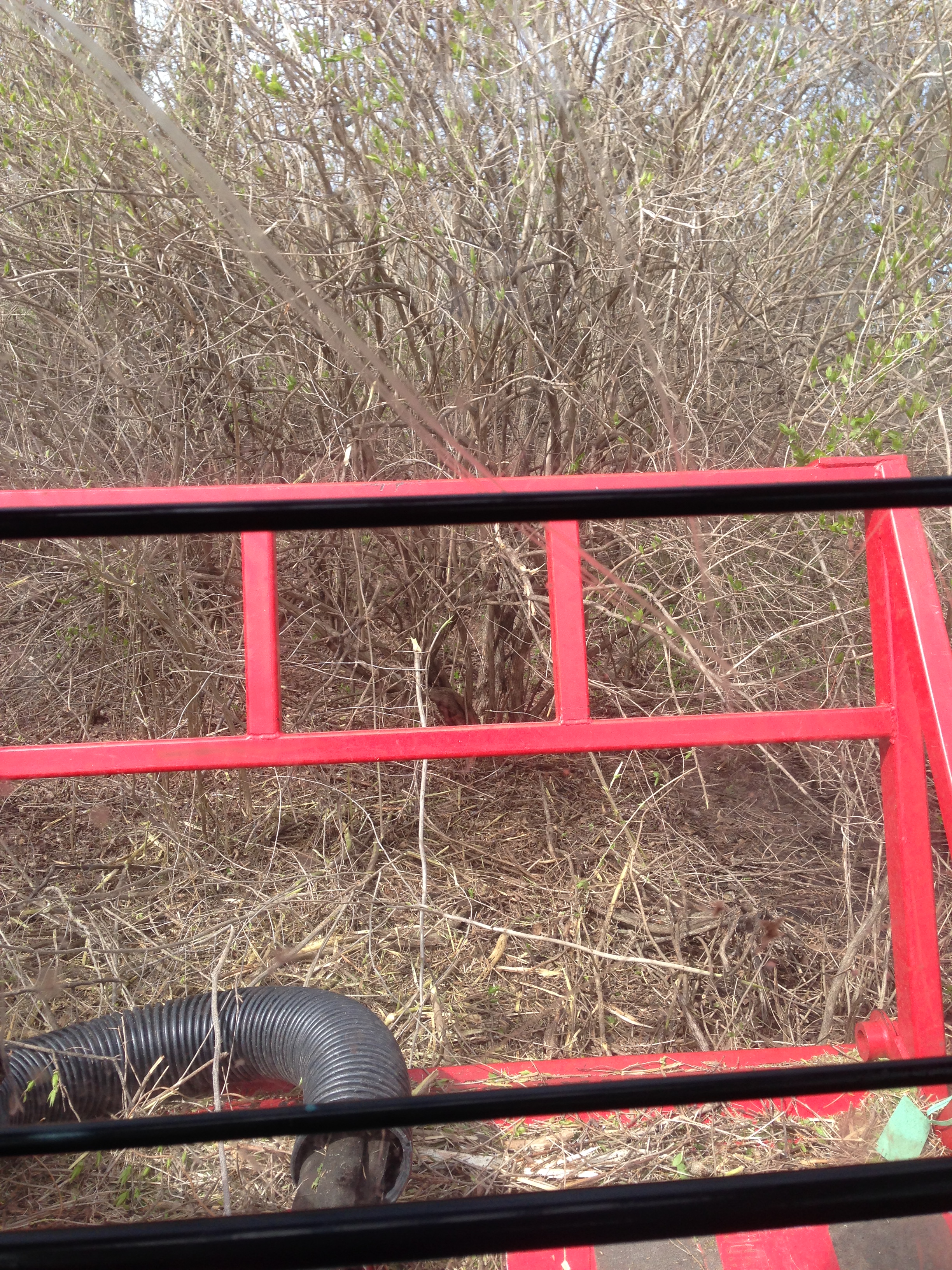
Below is one big honeysuckle out my windshield before being mowed down.  In the next few posts I will summarize some ways to control honeysuckle.

001-honeysuckle-and-brush-mower-fcna

Posted in Uncategorized | Tagged , , | Leave a comment

Fire break preparation

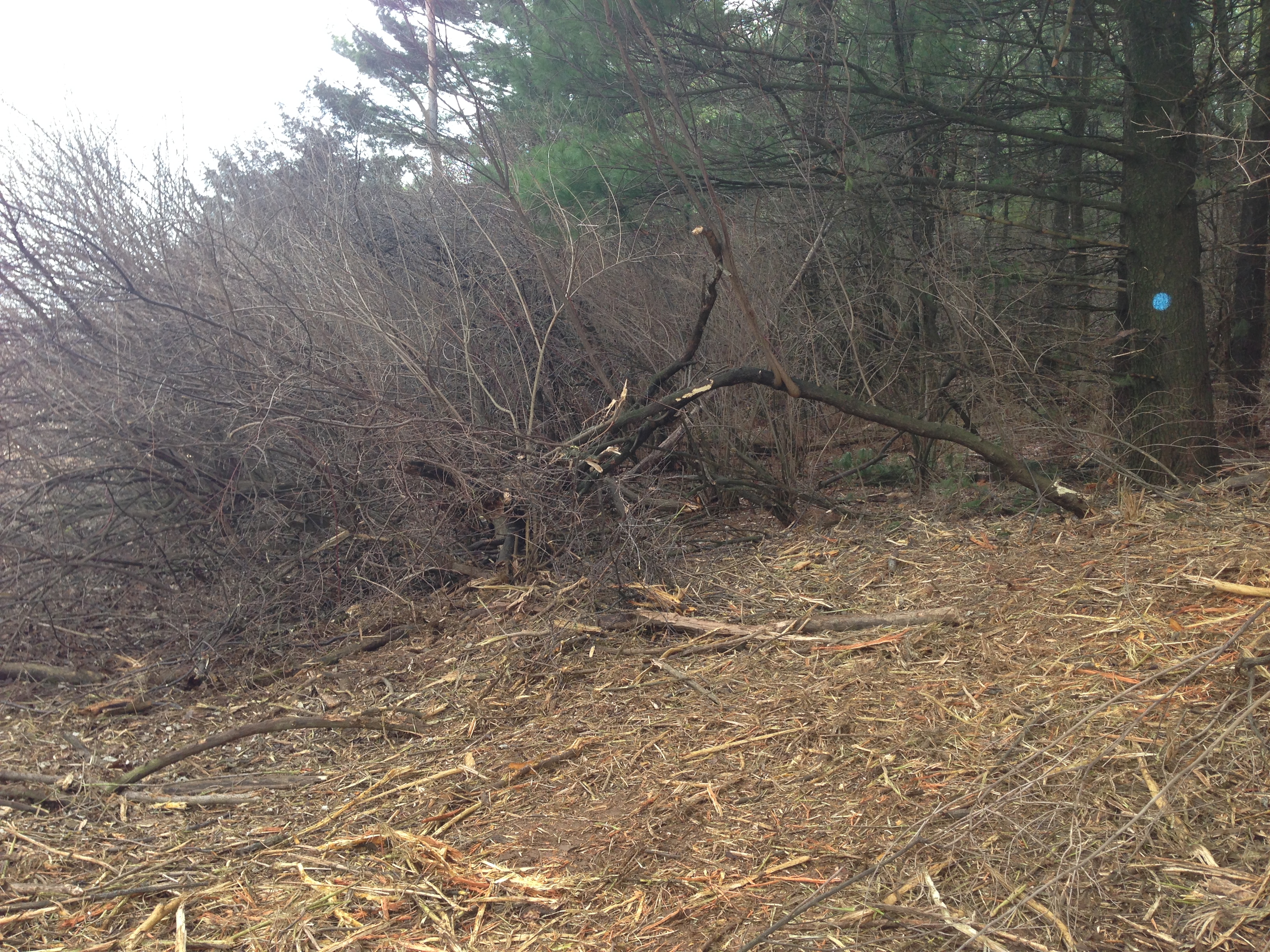
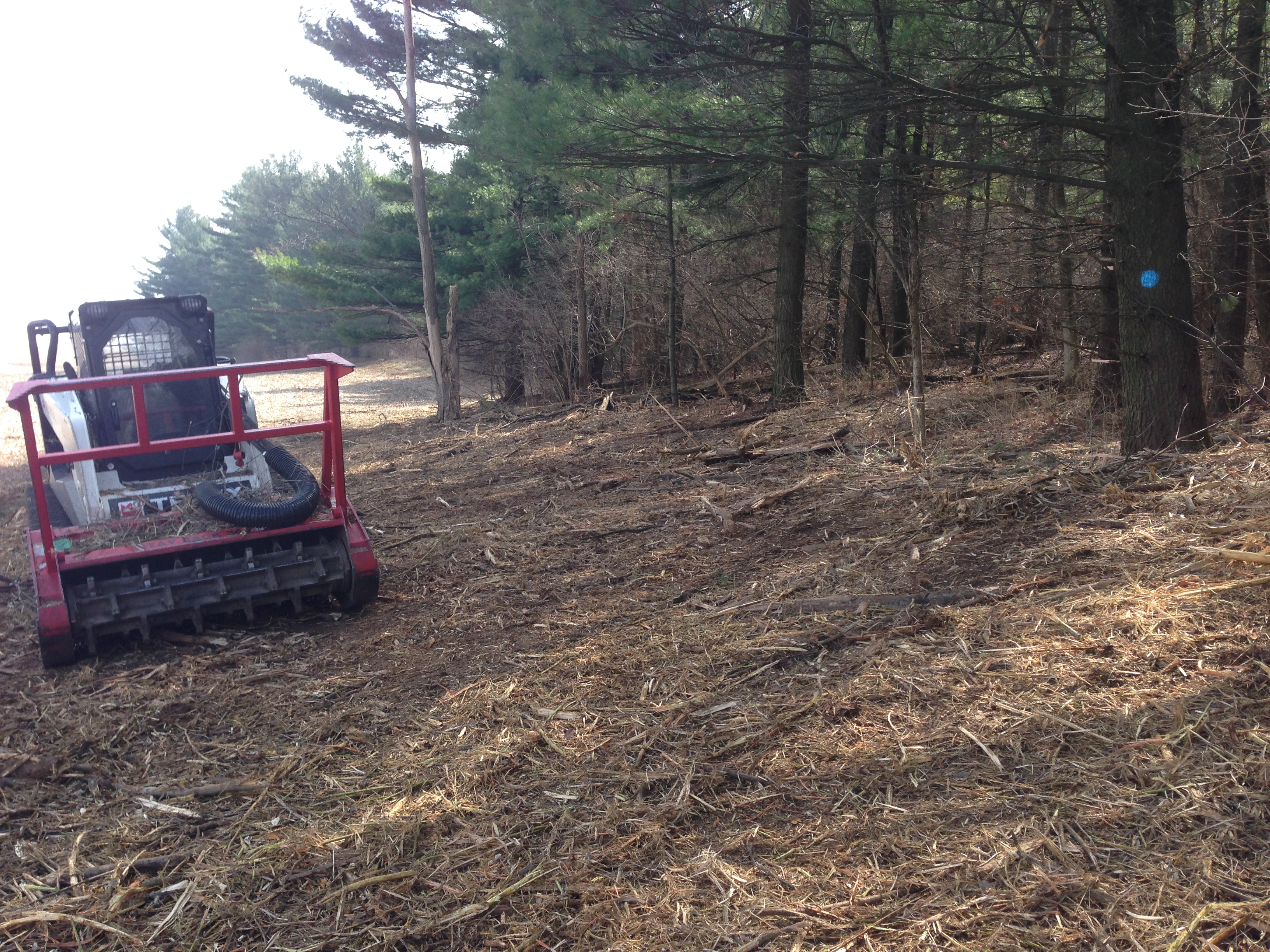
I used our Terex P110 skid loader with a Fecon flail brush head to open up an old fire break that had not been touched for perhaps a decade.  Below is the photo before and then about 30 minutes after.  Now, if I did this work myself, by hand with a chainsaw, it would take me a few full days.  So brush mowers do quick work.   But follow up is important:  Next May I need to go to this fire break and spray the re-sprouting brush with our basal bark herbicide mix.   This would be when the honeysuckle re-sprouts are maybe a foot tall, showing off to me where they had been hiding under the mowing slash.  The oil based herbicide sprayed direct down on the sprouts is very effective at killing them.   The prescribed fire regime these breaks support will help to bring back this rare community of savanna and wet prairie.

img_7394 img_7396

Posted in Uncategorized | Leave a comment

GRN Workshop a success

About 100 attended our recent workshop in the Platte River area of Nebraska.  Thank you to Mardel Jasnowski, Chris Helzer, Bill Whitney and their peers for hosting us.  For two days we were outside hiking around prairie restorations, and sharing stories of success and defeat. I went home ready for more.

Our 2017 GRN workshop we think will be at Konza Biological Station in Manhattan Kansas.  We are working on a date.  Stay tuned.

Below, Bill Whitney sharing ideas with colleagues.

grn-bill-whitney-img_7135

Posted in Uncategorized | 1 Comment

GRN Workshop Registration

2016GRN_Agenda

The 2016 Grassland Restoration Network Workshop will be in Aurora and Wood River, Nebraska on September 13-14. This year’s workshop is hosted by The Nature Conservancy and Prairie Plains Resource Institute, with additional funding assistance from Pheasants Forever. The workshop agenda (along with other logistical information) is attached.
Please fill out the registration information below and email it to Mardell Jasnowski (mjasnowski@tnc.org). You are welcome to participate in one or both days. Be sure to note which meals you will be present for. After you have registered, we will send you more detailed information with directions to the sites, etc. Registration is free for the first 75 people we hear from. There will be a cost of $35 per person for any additional registrants.

REGISTRATION DEADLINE IS AUGUST 19, 2016

Please fill out the information below.
Name
Organization/Affiliation
Address
Phone Number
Email Address
Will you take part in the optional Tuesday morning tour in Aurora?
Will you be eating Tuesday evening supper?
Will you be eating Wednesday lunch?
Do you have any dietary restrictions? If so, list them here:
Thank you to Pheasants Forever and the Nebraska Environmental Trust for helping to cover the costs of registration for this conference.

Posted in Uncategorized | Leave a comment