Hand held herbicide sprayer

By Bill Kleiman, update of April, 2024

I find it pleasant when driving the preserve and I spy one autumn olive out in the prairie and I have my little sprayer in the truck. I don’t need to remember to return to take care of the problem.

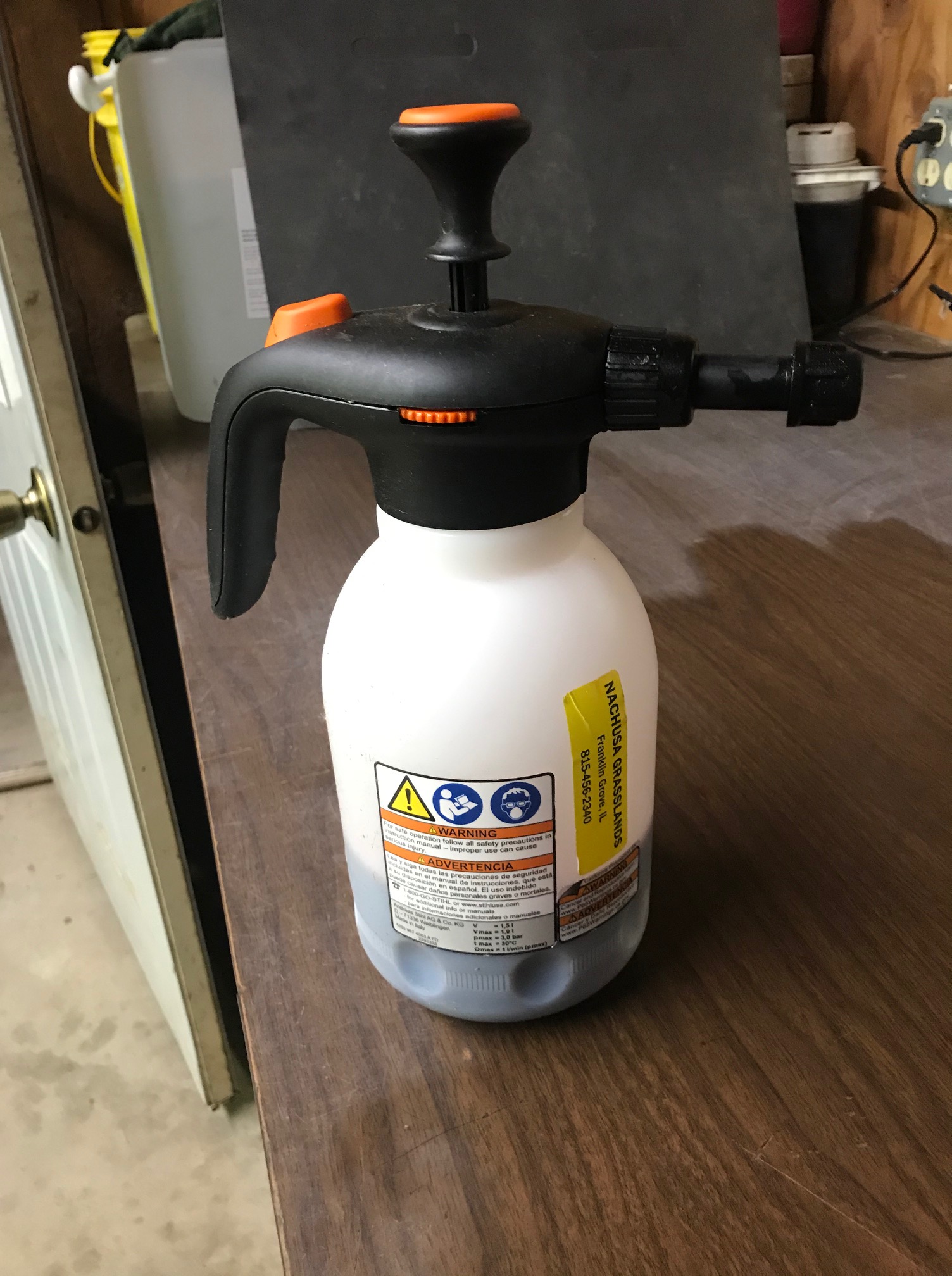
Below is a Stihl SG11 we use for basal bark oil herbicide, so mineral oil with about 20% broadleaf herbicide of Garlon 4. They hold about 1.5 quarts. Sprays water solutions too, of course.

Although the directions for these state to empty and wash them with warm soapy water after each use, I fill them with slippery basal bark solution and have one of them sitting in a bucket in the bed of my truck year round, cleaning it a few times a year for good luck.

The Stihl SG11 costs about $35. I have been trying several of these for about two years and they still works. Amazing! The tip is not adjustable which is one weakness. It sprays a cone pattern only. So you want low pressure and get very close to the stem. A few of our crew find this cone only pattern frustrating. The tip and its mount are stout. It has an orange pressure release on the side for storage.

A few times we have had them report they would not build pressure. This was the rubber ring that pushed against the air to build pressure. The seal was out of place. To fix, clean sprayer with warm soapy water, then find that rubber ring on the pump plunger and fit it back into place. Then test.
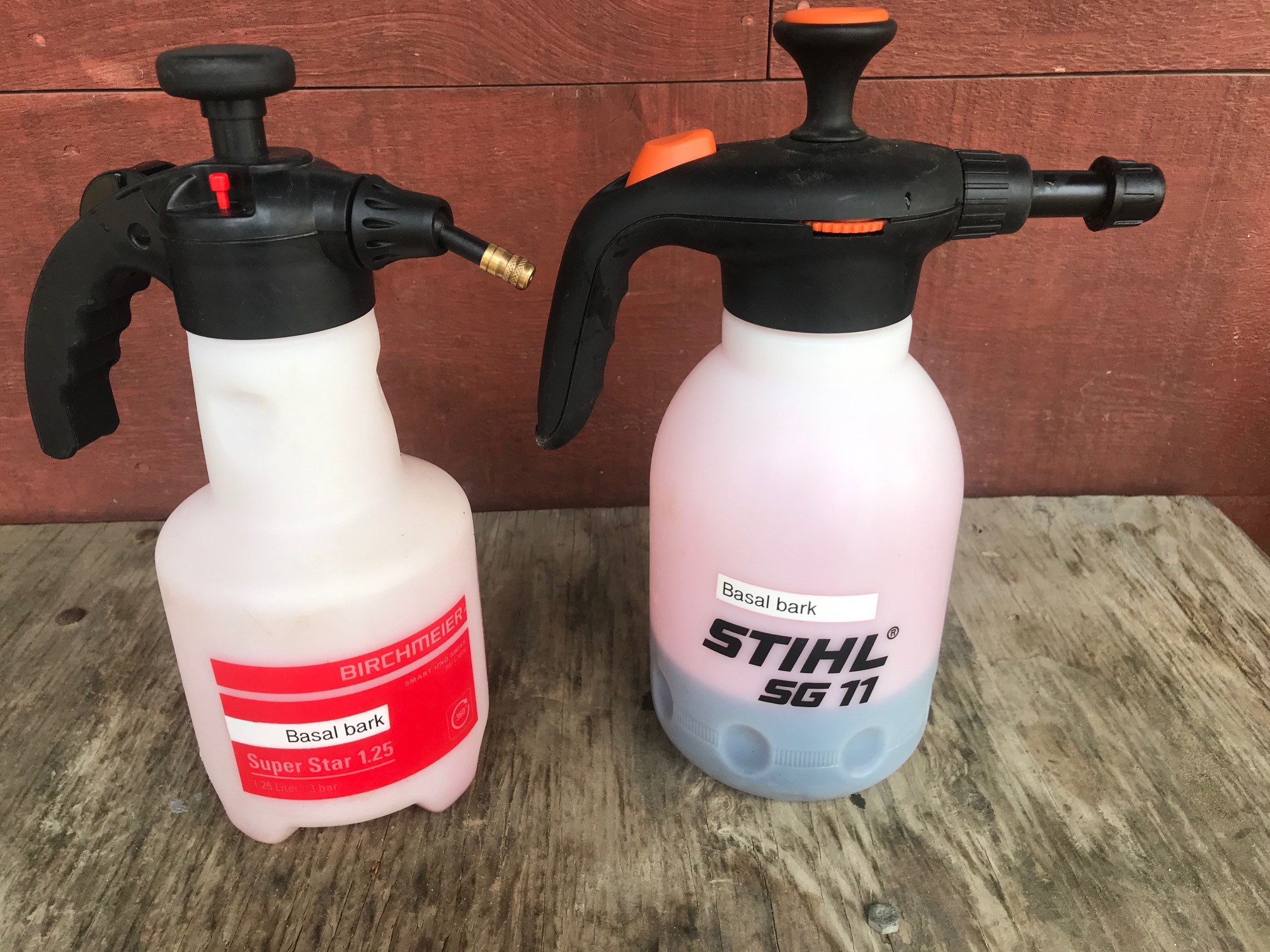
For about a year I have been trying the Birchmeier brand “Superstar 1.25” of these sprayers at $70! I like it too. The tip can pivot up and down which maybe helps with some situations. And the brass nozzle tip is adjustable for cone or stream. Both models can release the pressure when you are putting them away in your vehicle.
Below is the working parts of the Birchmeier. In this photo you can see the trigger I am holding has split on the far end. The red plunger is pointing at crack. This is the third time this has split right here. The supplier was responsive and sent me triggers at no charge.

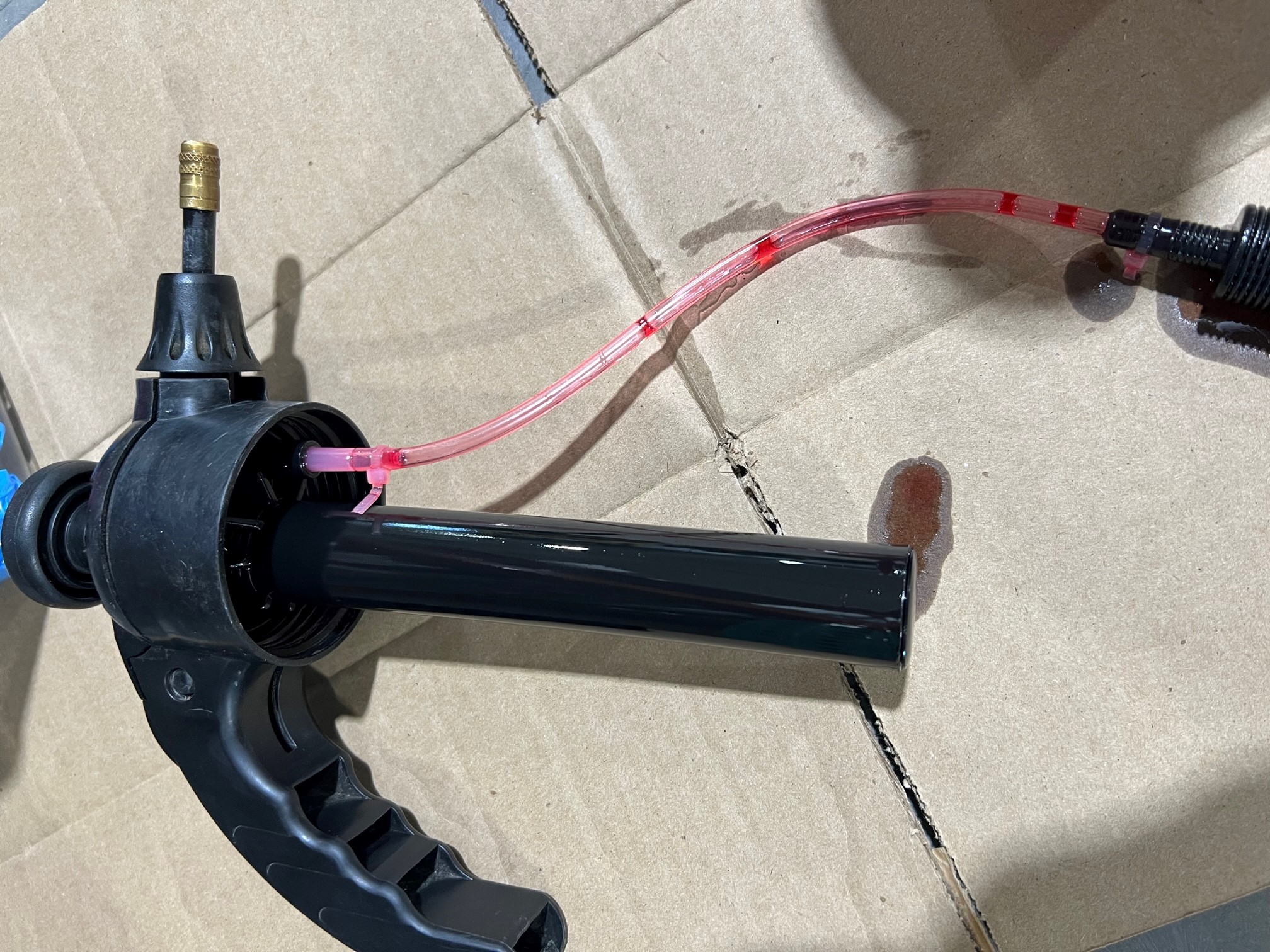
Below, the Birchmeier innards. See the clear pickup tube slides over a smooth hose bib. Basal bark fluid is slippery and this tube was sliding off. This bib should have been made with barbs. To fix it, I took a very small clear cable tie and cinched it on. You can just see them in the photo below. I put a cable tie on the filer end too. It works.
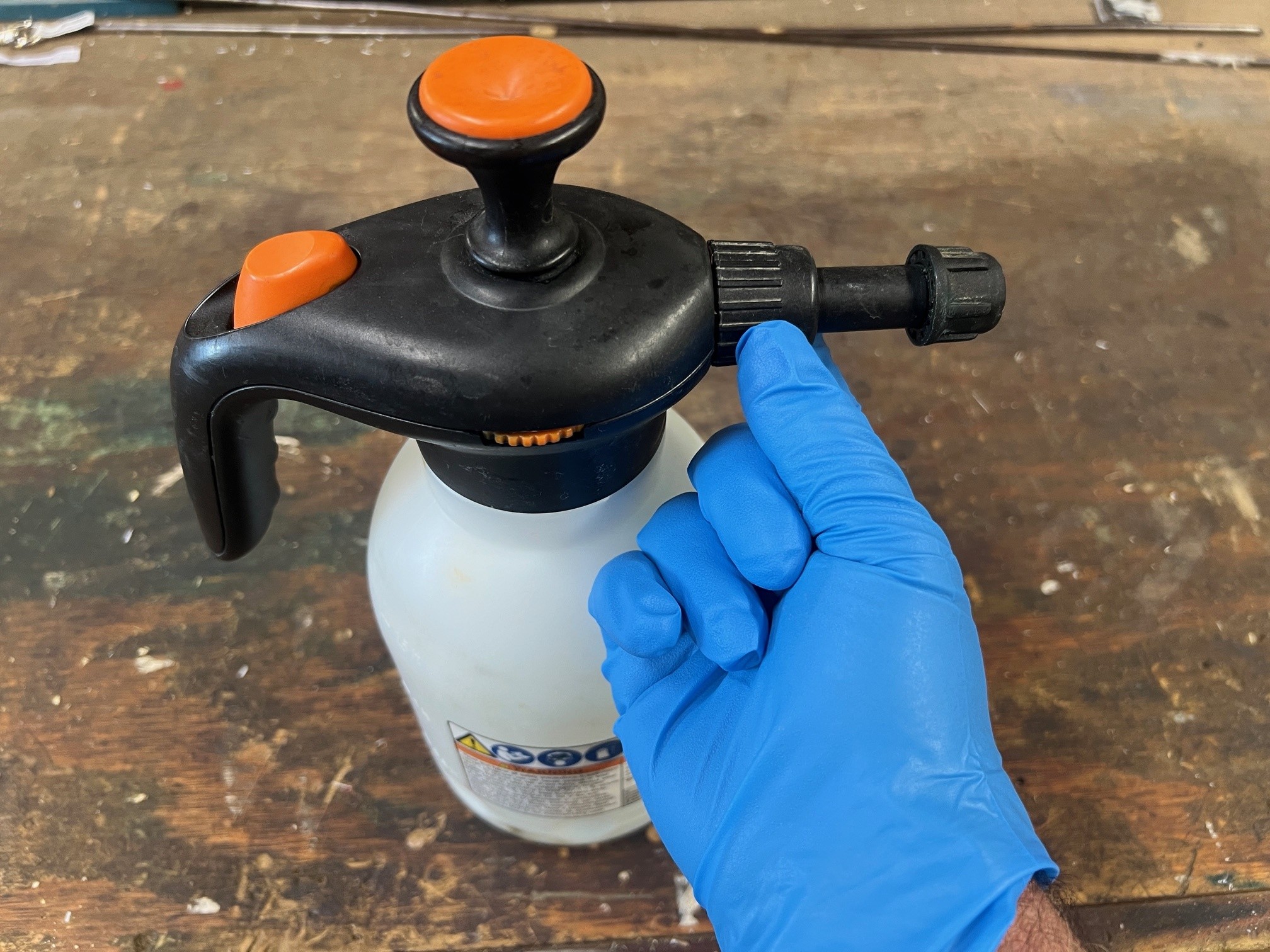
Back to the Stihl hand sprayer. If the issue with the Stihl squirt bottles is that it is hesitant to release the liquid when you pull the trigger, then I have a solution.  In the photo I am touching the plastic nut which holds the mechanism together.  If that nut is too tight you get the hesitant trigger.  Just loosen it about a tenth of a turn (counter clockwise) and I have found that problem is solved.

Likely someone tightened it to make sure it would not leak.
Posted in Uncategorized | Tagged , , , , , | 7 Comments

Gravel pit restoration

by Bill Kleiman

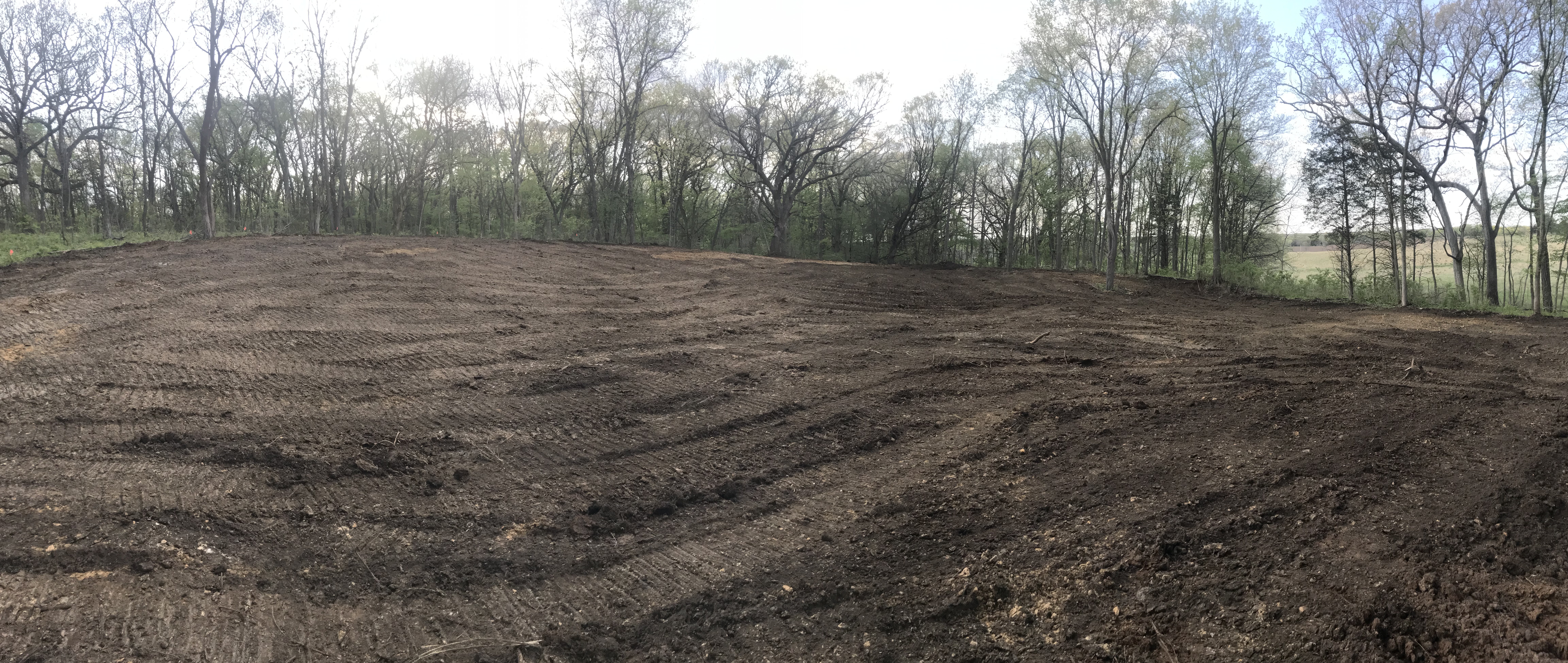
Years back we purchased a tract with a gravel mine pit.  We found some funds last year to use an excavator to return the land to a more natural looking, gentle, shape before starting the long process of restoring the native plant community.

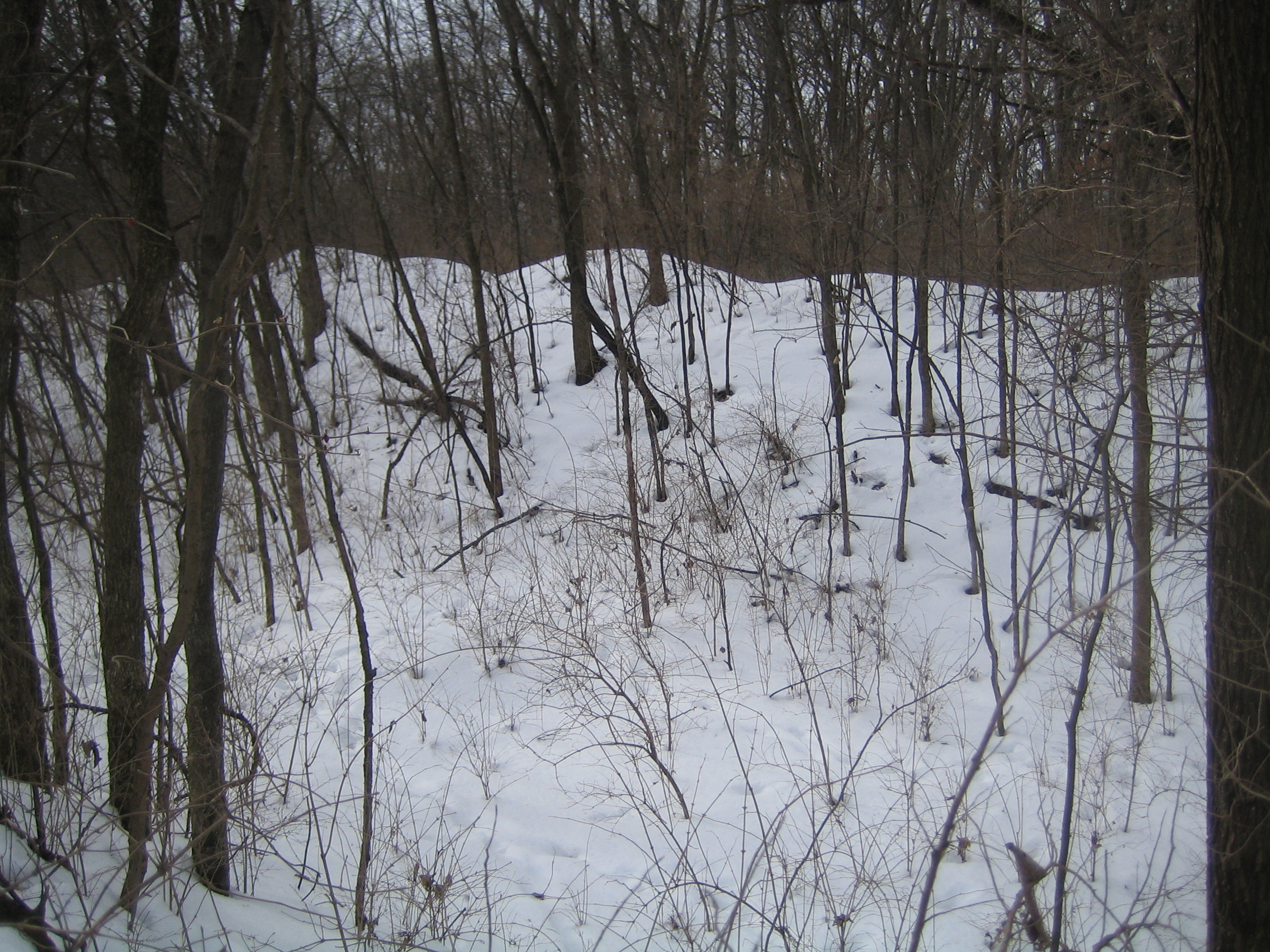
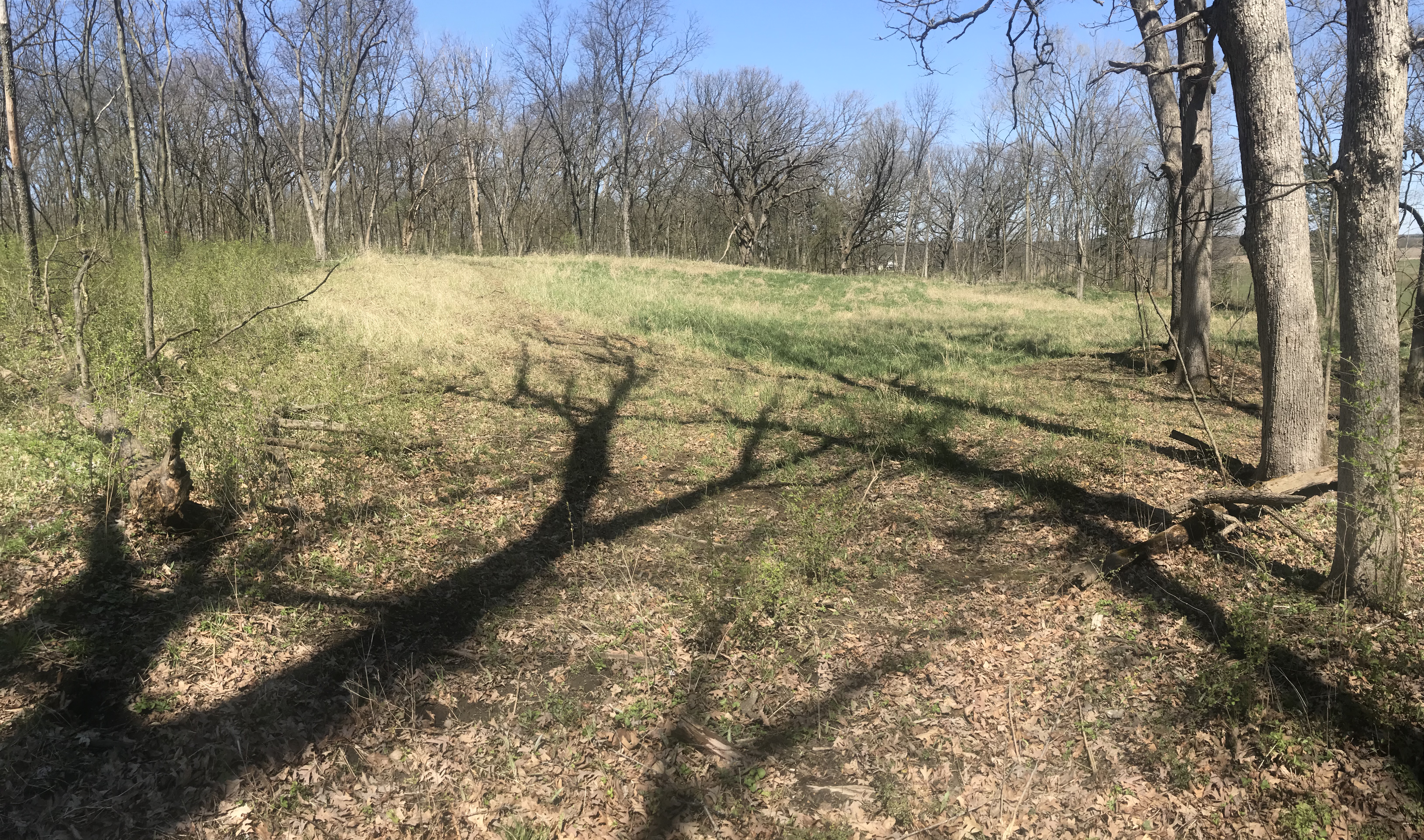
The photo below is the old gravel “borrow” pit.  The trees are mostly elm, some Osage orange, cherry.  The spoils are bigger and more abundant than my photo suggests.  The area surrounding the pit is a rather nice oak hickory woods.

The same pit, but a different photo angle.  Decades back the top soil had been pushed up onto a ridge on the left.  We later spread this topsoil back over the final grade.

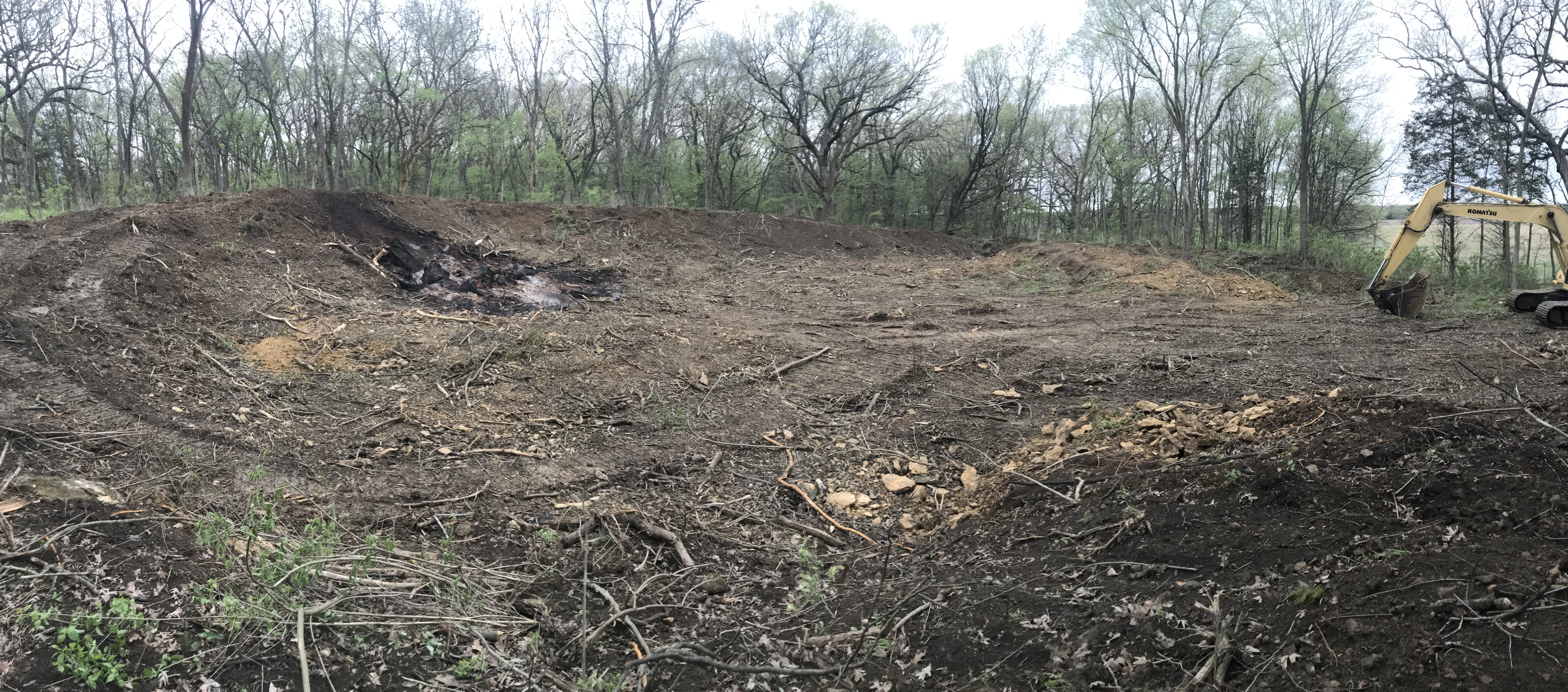
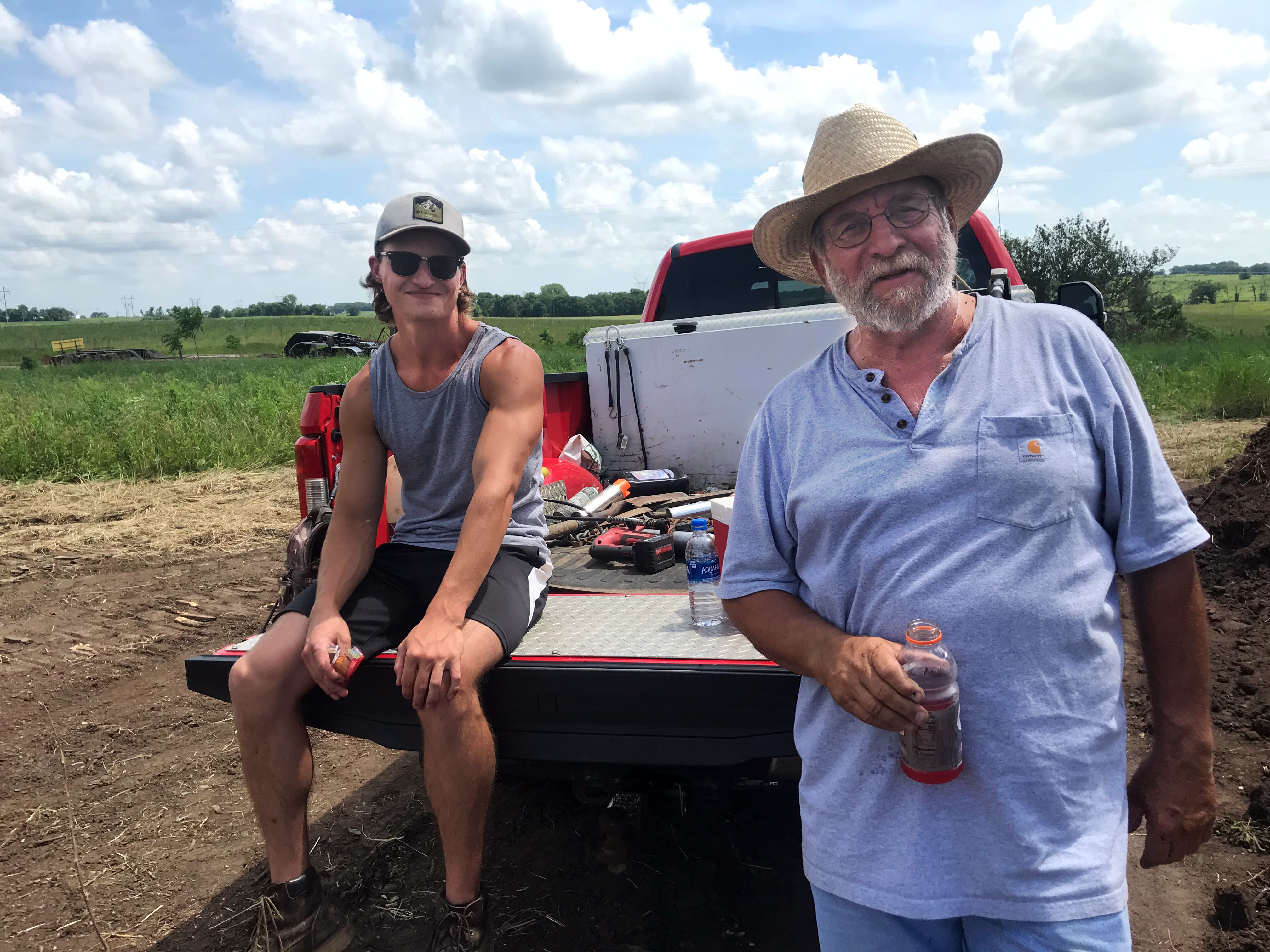
After two days the contractors had the trees piled and burned.  The excavation contractors were Bill and Brad Nordman, below.

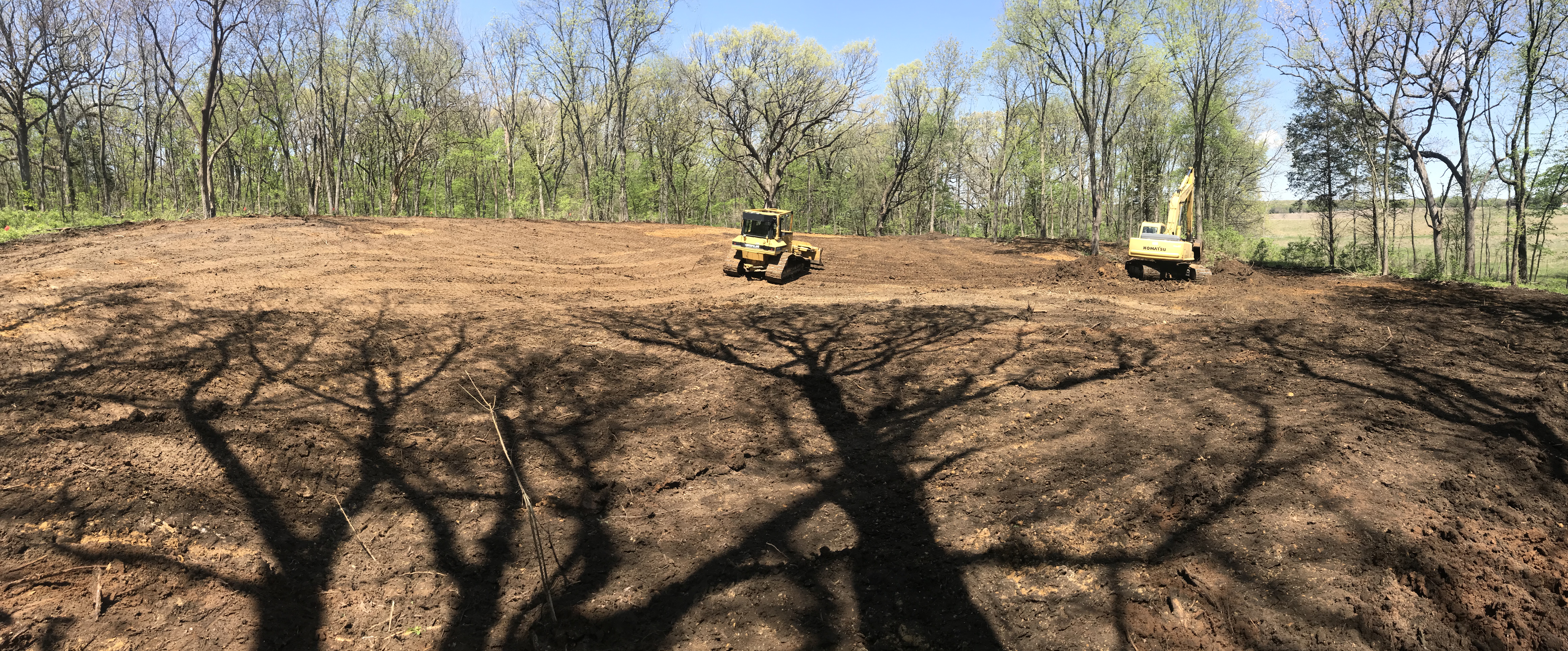
They gave the shape of the pit a more natural look.

We smoothed the area with a harrow and planted combine harvested seed from a prairie planting.

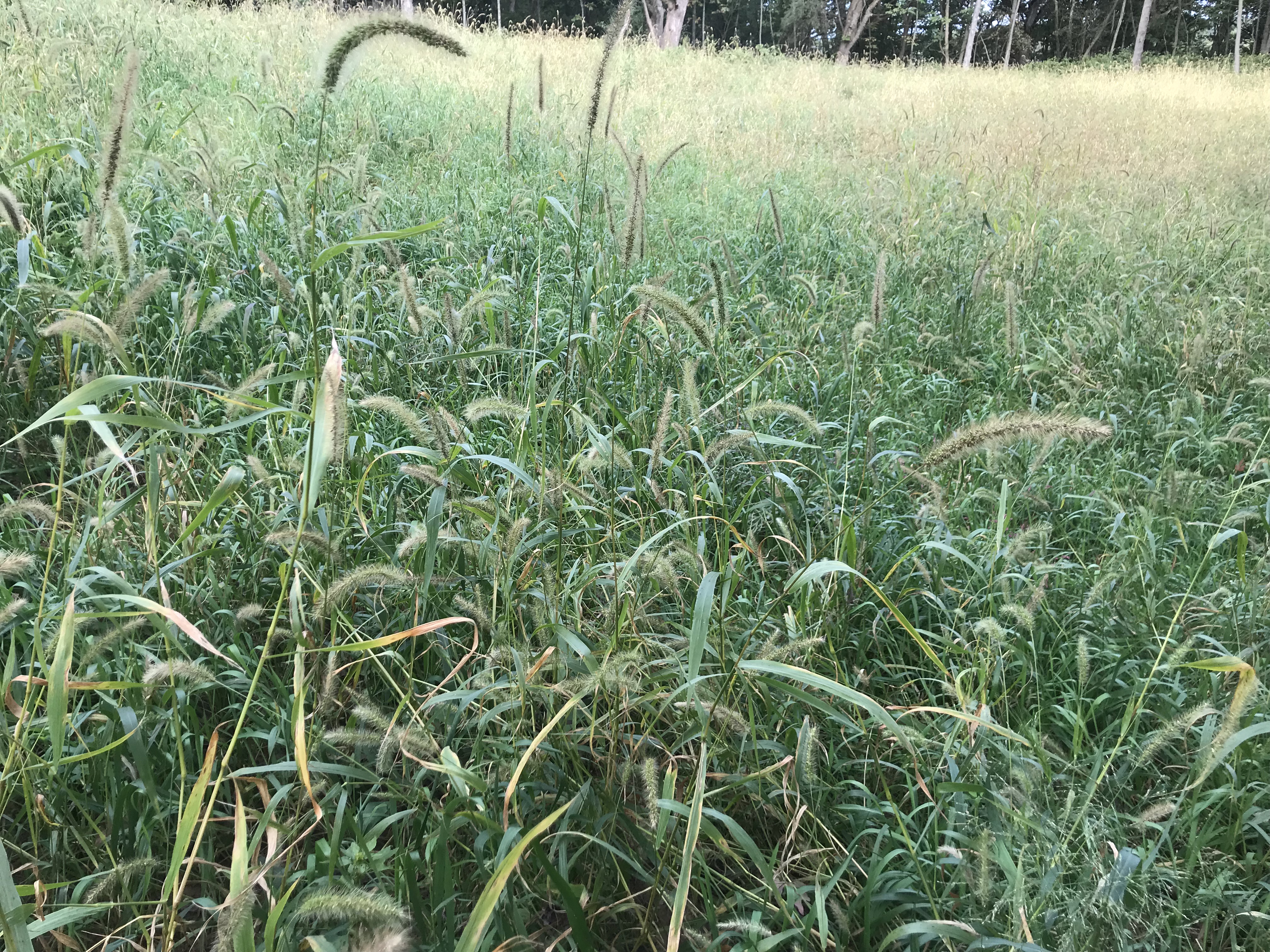
Below is the natural “cover crop” of foxtail, a weed in every foot of disturbed soil in the region.  There are also some smaller sized annual oats we planted in case our cover crop did not show up. And we planted our prairie seed. A year later the Canada rye dominates, and by year three the other prairie plants will be showing up

Below is a view of the restoration a year later.

Posted in Uncategorized | Tagged , | 4 Comments

Leaf blowers to clear mowed fire breaks

by Bill Kleiman

Leaf blowers are used to move vegetation off of fire breaks to make them less flammable.

A backpack leaf blower

I once sent two hardy youth, Ryan K and Austin S, out to clear two miles of woodland fire break, each with a back pack leaf blower. After a long day of noise, brambles in their faces, hills to go up and down, they got it done.

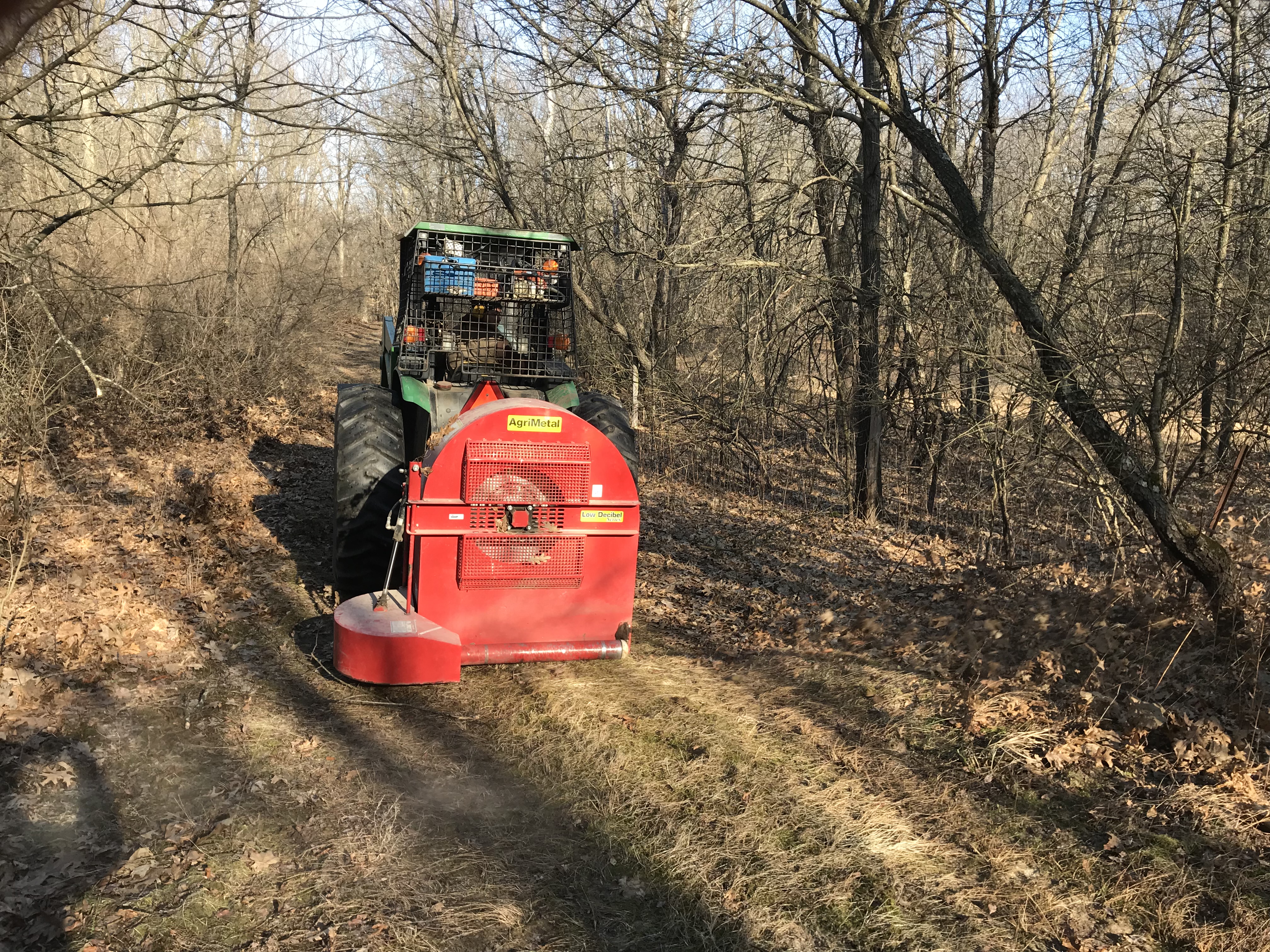
We needed a bigger tool. It ends up golf courses use tractor mounted leaf blowers to clear their fairways. They work for us too. Below is our leaf blower for about the last decade.

Here is a video of the leaf blower above clearing oak woodland fire break of leaves and mowed vegetation. These cost $4,000 to $5,000: https://youtu.be/dGYF0BHrZro

For prairie fire breaks we mow a break in the prairie, then use a hay rake to move the cut vegetation to the side. Look for the blog we have on hay rakes. Here is a video of a tractor mounted leaf blower removing the raked prairie, the windrow, off of the fire break: https://youtu.be/TWFiHMW8k4M

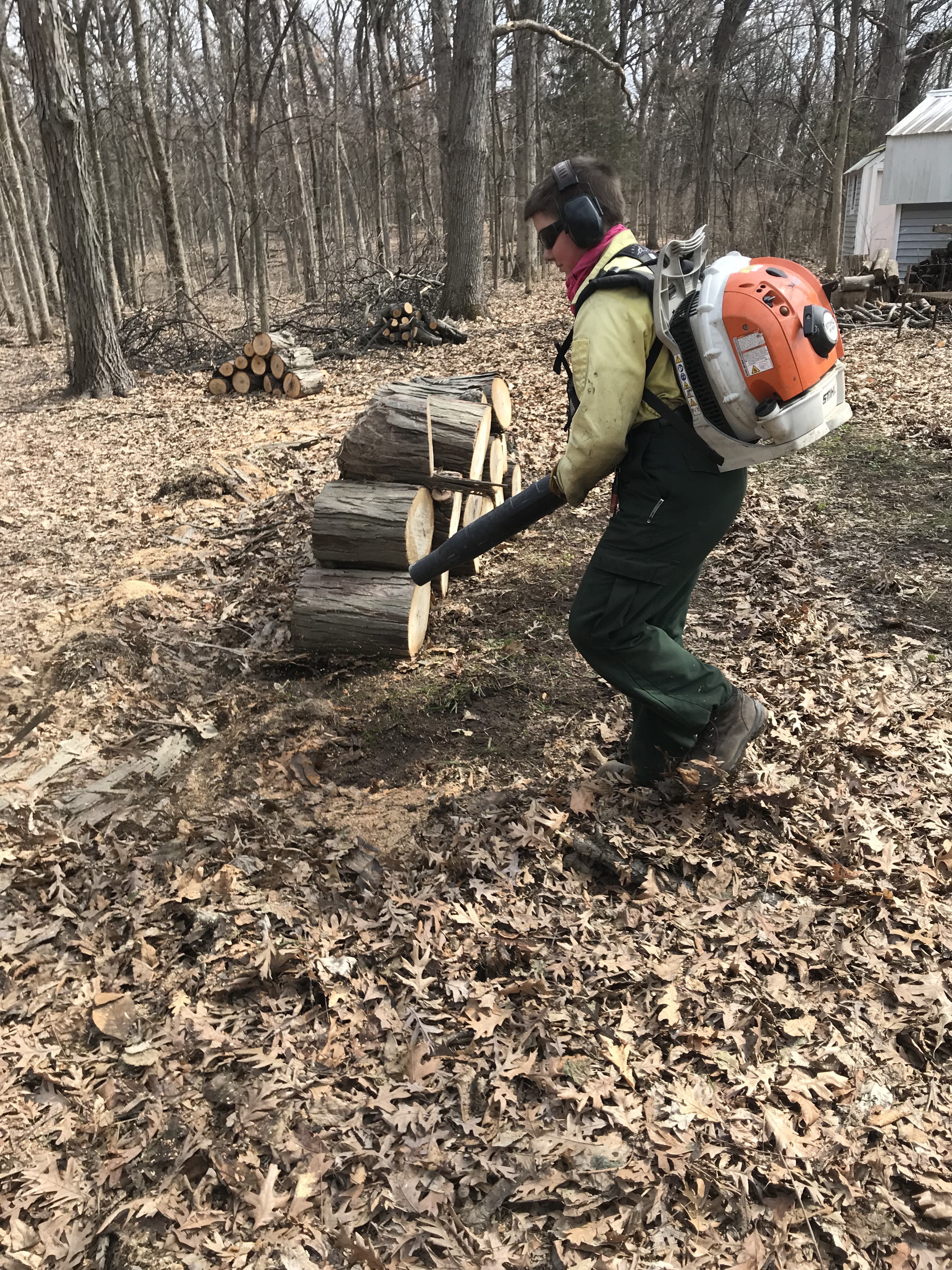
We still carry and use backpack leaf blowers. They are nice for tasks like short fire breaks, or blowing leaves from around small flammable things like sheds and wood piles, as in below:

Posted in Uncategorized | Tagged , , , | 4 Comments

UN Decade on Restoration special issue

By Elizabeth Bach, Ecosystem Restoration Scientist, The Nature Conservancy

OLYMPUS DIGITAL CAMERA

Ecosystem restoration is a critical tool to reduce biodiversity loss, combat climate change, improve ecosystem functioning, and support human health and well-being. In recognition of restoration’s role in meeting multiple global challenges, The United Nations has declared 2021-2030 as The Decade on Restoration. As restoration practitioners, we are the boots on the ground doing restoration. We know what works and what doesn’t. We keep trying new ideas to improve restoration success. We share tips, practices, and ideas through the Grassland Restoration Network, including this blog.

In an effort to hear and share lessons from restoration “doers” from all around the world, two professional organizations, the Society for Ecological Restoration and the British Ecological Society, are collaborating to produce a unique Special Feature on the Decade of Restoration. This will be a peer-reviewed special issue featuring papers published from eight scientific journals published by these two societies. These journals intentionally publish different types of ecological research and one journal, Ecological Solutions and Evidence, includes an article type, From Practice, which are authored or co-authored by restoration practitioners. These can include case studies of successful projects, calls for new approaches for dealing with persistent problems or perspectives on research topics relevant for management. The article should make clear recommendations regarding how the issue can be taken forward to ensure improved science-based practice. (from the journal’s website)

As an associate editor for Ecological Solutions and Evidence, I would like to personally invite you all to consider submitting a manuscript for this Special Feature, to share your expertise with colleagues and the world. Many of the posts on this blog would be an excellent starting point for a From Practice manuscript. Writing a manuscript is daunting, so collaborations with colleagues are strongly encouraged. I am happy to be a resource if you’re interested in the idea, but not sure how to get started.

The process to submit your work is:

  1. Develop an idea or brush off some data that sitting around in file cabinets (or computer files)
  2. Send a title and a few sentences about their proposed contribution and the target journal to one of the two editors by November 13, 2020:
    1. Dr. Holly Jones, Lead Editor, Ecological Solutions and Evidence, hjones@niu.edu 
    1. Dr. Stephen Murphy, Editor-in-Chief, Restoration Ecology, stephen.murphy@uwaterloo.ca 
  3. The editor will provide feedback on if the proposed paper is a good fit, and may suggested collaborators who submitted similar ideas that could be combined into a single paper.
  4. Write the paper and submit by January 31, 2021
  5. The paper will go through the peer-reviewed process. It is possible the paper could be rejected during the peer-review stage.
  6. The Special Feature will be published in 2021.

Full details of the call for papers can be found here: https://besjournals.onlinelibrary.wiley.com/hub/Call_for_Papers_Decade_of_Ecosystem_Restoration?campaign=dartwol|5453941188

Posted in Uncategorized | Tagged , , , , | Leave a comment

Seed Collection Guide

by Kelly Schultz, Lake County Forest Preserves and Volunteer Steward Dale Shields.

The story on how these came about, in the words of Dale Shields….

A few years ago, after I started volunteering at the Lake County Native Seed Nursery, I decided to try to make use of my photography hobby with my volunteer work.  I had noted that all the published field guides showed plants in flower, but not what they look like when it’s time to collect seed, so I started taking pictures of plants when the seed was ripe. 

People had been telling Kelly Schultz, director of the nursery at that time, that she could write a book with her knowledge of seed collection and propagation lore.  So we decided to work together to make a set of pictorial guides. 

We used the Field Museum’s field Guide format and have completed a set of 12 field guides showing native (and some adventive) plants.  We originally divided the guides up according to season and habitat to keep each guide a size that we could email out to Lake County volunteers. The guides are ordered roughly by photo date, with exceptions to put similar looking plants together.  An index is available to help determine what species might be found in which guide. 

Link to the Field Museum guides, including the seed guides follows.  Note once there you can access an index list of all the species covered in the guide:  https://fieldguides.fieldmuseum.org/guides


Posted in Uncategorized | Tagged , , , , | 2 Comments

A SURGICAL APPROACH TO PHRAGMITES CONTROL

by Bryon Walters

Phragmites australis, Common or Giant Reed, can be a very problematic invasive in wetlands and wet prairies. If left unchecked, it can form large monoculture, impenetrable jungles 6-10’ high. Usually nothing else will grow under the dense canopy. Large infestations can be controlled with high pressure, high volume, non selective herbicides, leaving the area brown and dead.

Small infestations should be dealt with as soon as possible. Here is a seep area that has about 24 stems.

September is a great time to deal with the stalks. You want to treat it before the large seed heads turn brown, ripening to the point of seed falling off. Early in the Fall, the seed heads may be young, green and unripe.

The only effective herbicides for treating Phrag are Glyphosate and Imazapyr. Both are non selective and will kill everything it drips on.

The high or good quality areas, the best approach to rid the Phrag and save the surrounding vegetation is a surgical approach.

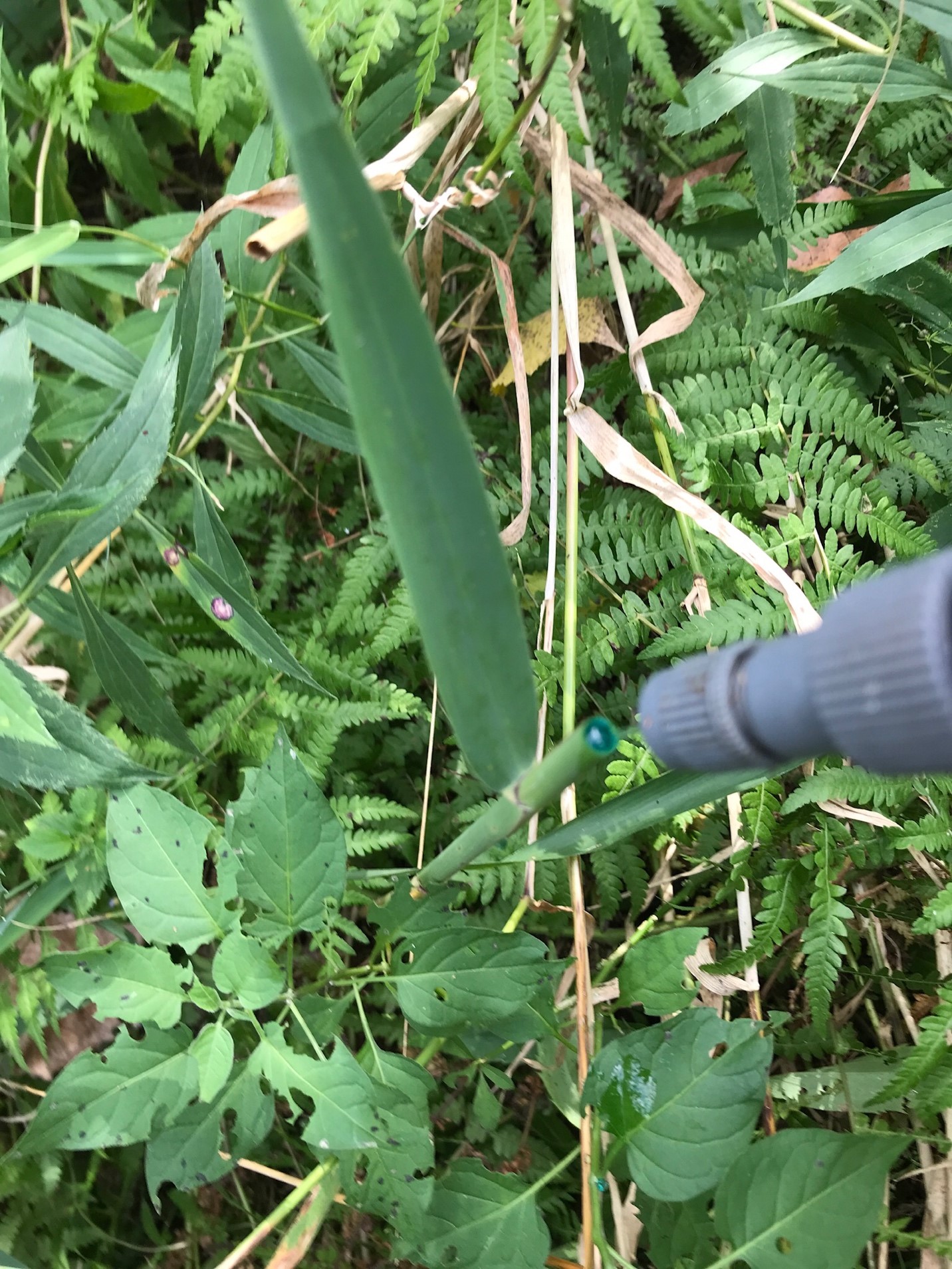
First, starting in the back of a patch of Phrag, use hand pruners to cut the stalk off about knee or waist high. The lower the better, but personal comfort may dictate the height. Cast the long stalk you just cut with the seed head, off to the side laying it somewhat flat. If you just drop it where you cut it, it will remain upright and you will be confused and grab that stalk again thinking it needs to be cut. Use sharp pruners, I use Felco #2’s, to make a clean cut. You need to see the hollow hole in the remaining, standing stalk you just cut. If it is smashed closed, cut again just below your first cut. It should look like this.

Next, have a hand held bottle sprayer that is filled with 100% Glyphosate and a little blue dye. Slowly spray a straight stream into the hollow stem. It will hold various amounts of herbicide. You may want to practice spraying water into a straw before hand. The Phrag hole will be half the size of a straw hole. It takes a little practice and patience. When I cut the stalk I leave a small portion of a leaf sheath to use as a backboard when spraying into the hollow stem. It can stop the occasional overspray from running a stream of Glyphosate onto the ground or other vegetation. Sometimes Reed Canary Grass is all around and you don’t mind herbicide dripping on that. After getting in a rhythm, I may cut 3-5 stems in a group and then spray them. Don’t do more than that at one time because you may not find the stems. Get good with one’s and two’s before moving to larger groups.

Work moving backwards away from the stalk(s) you just treated. You do not want to step on, bending or breaking the stem you just treated. I can treat about 100 stems in an hour. I rarely cut more than that but on occasion I’ve had to.

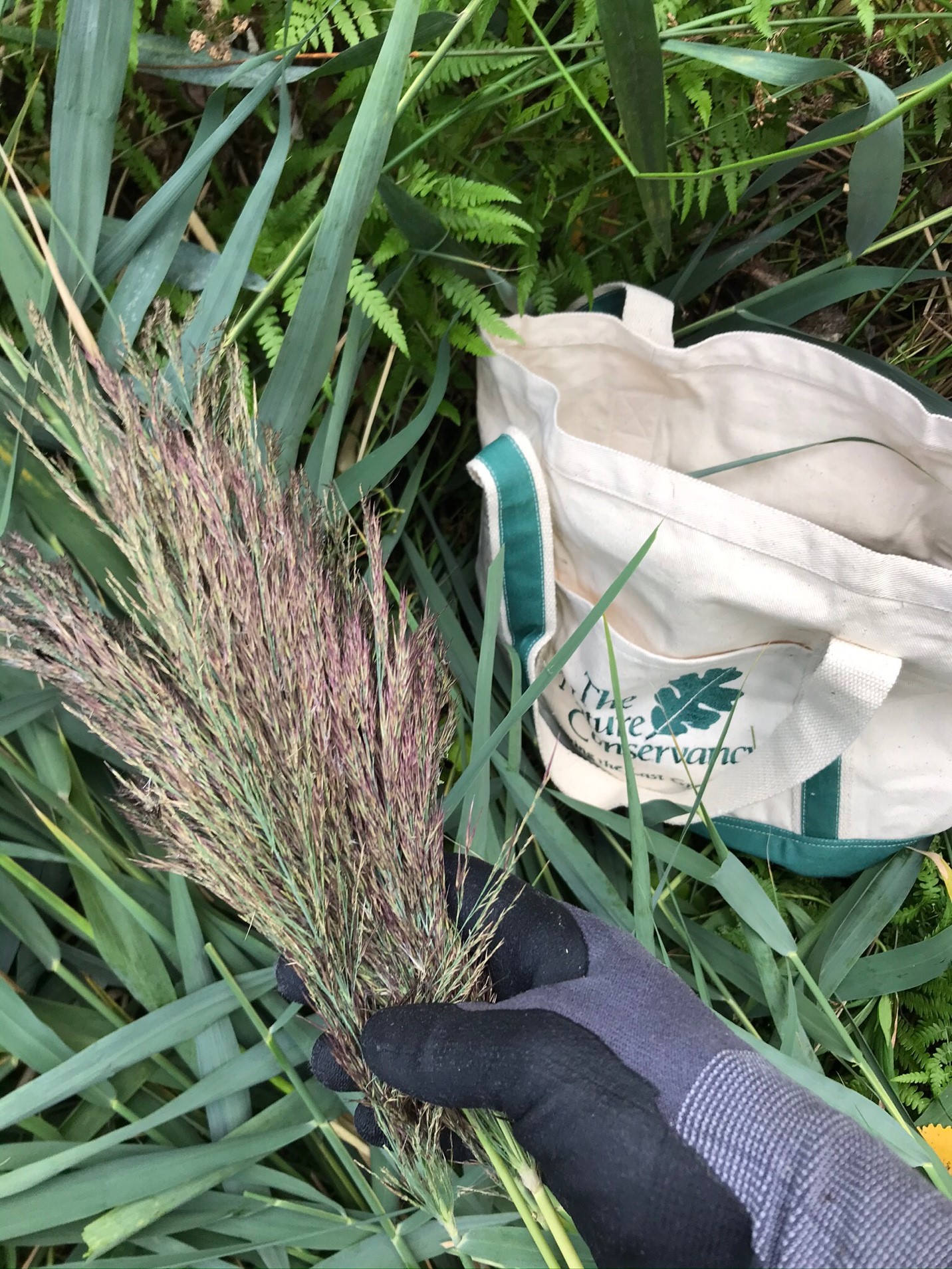
An advisable follow up option would be to gather up the cut stems that are laying everywhere and put them on a pile. Working from the pile, I cut off all the seed heads and put them in a sack to carry off site. Even young green unripe seed heads could potentially ripen and reseed the area. It doesn’t take too long to do this. You’re reassurances are worth the little extra efforts.

I have successfully eradicated and eliminated Phragmites entirely from areas using this surgical approach. I’ve treated it with wonderful plants like Bog Goldenrod, Grass-of-Parnassus and Gentians growing right underneath the Phragmites. My follow up visits have shown zero damage to the native plants. Give it a try and you’ll be a doctor in no time.

Posted in Uncategorized | Tagged , , , | 23 Comments

Registration open for September 15 virtual GRN sponsored workshop

Here is the Event Brite registration for this free workshop:

https://protect-us.mimecast.com/s/Jar5CBBXvgIZQJGjIz7dZ5?domain=eventbrite.com

Posted in Uncategorized | Tagged , , | 3 Comments

Does over-seeding prairie plantings work?

By Bill Kleiman, Project Director of Nachusa Grasslands, The Nature Conservancy

Have you planted seed into an already established prairie planting, trying to increase floral diversity?  You had that warm hopeful feeling. Those tiny seeds in your hand soon to be germinating.  New flowers blooming in your restoration.

Did what you plant ever show up?  Most of us have examples of where the seed planted did eventually produce new populations, but more often we shrug when asked.

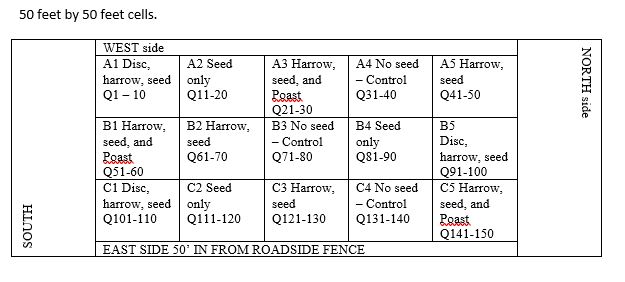
Way back in 2009 I had this study question: What is the best way to over-seed an already established prairie planting to increase its diversity?  Below is the random block we set up with four treatments and  a control.  I explain the block below.

This was in an established prairie, with reasonable forb diversity, rather thick in warm season grasses.  Look at the top row of cells.  In cell A1 we worked up the prairie sod with a disc, then raked it with a harrow, and then seeded a rich and abundant mix of seed, well over 50 species at a heavy pounds per acre.  Would this cell turn out the best?

In A2 we only added seed.

In A3 we harrowed, seeded, and then in mid-summer we sprayed with Poast grass herbicide.   Would the grass herbicide set back the Indian grass and big bluestem and make space for our seed to grow?

A4 was the control with no seed added.

A5 we harrowed and seeded.

The B row and C row are the same setup but not in same order.  This is called a Random Block study.

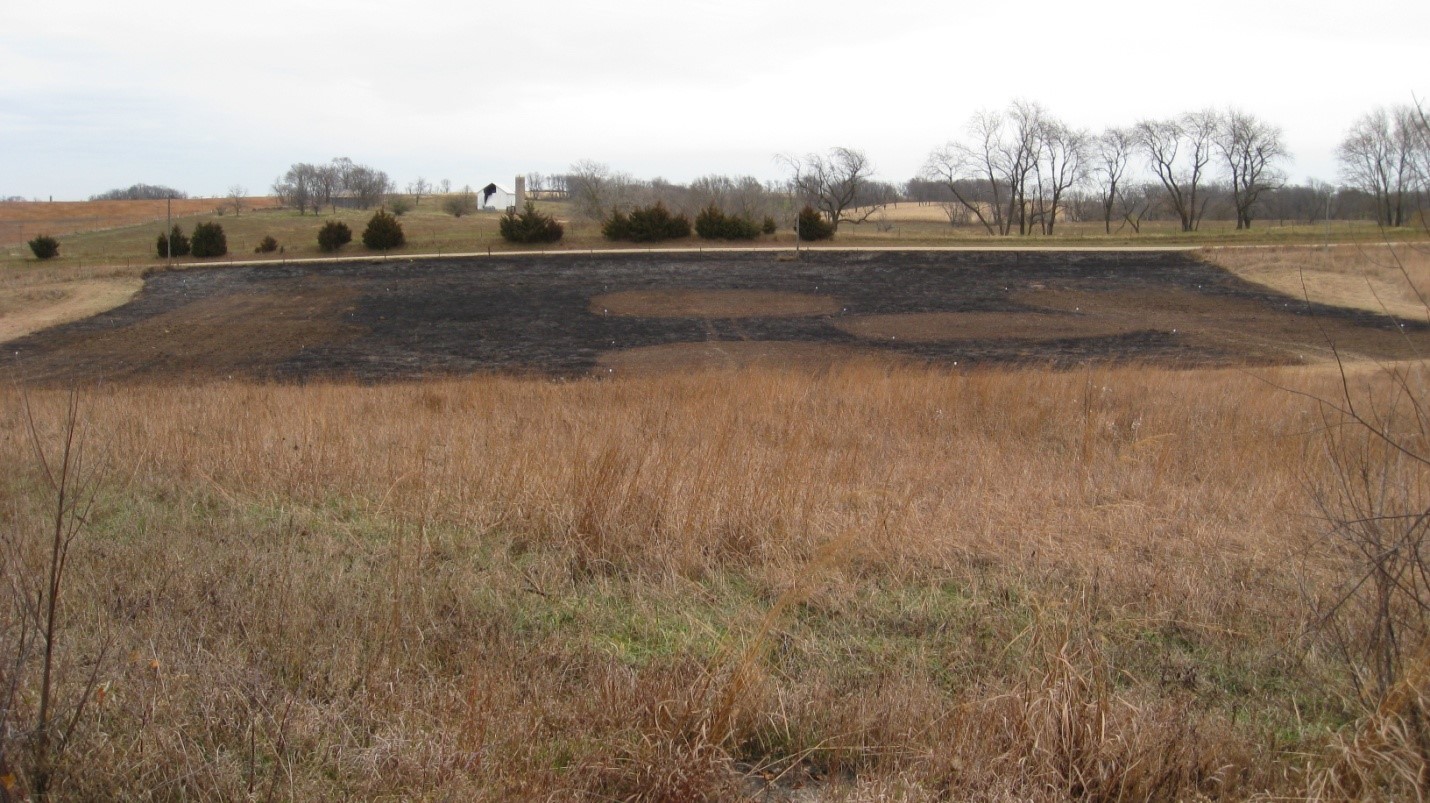
Below photo looks down at the block when we set it up.  It was burned before we did anything.  You can see the harrowed and disced cells.

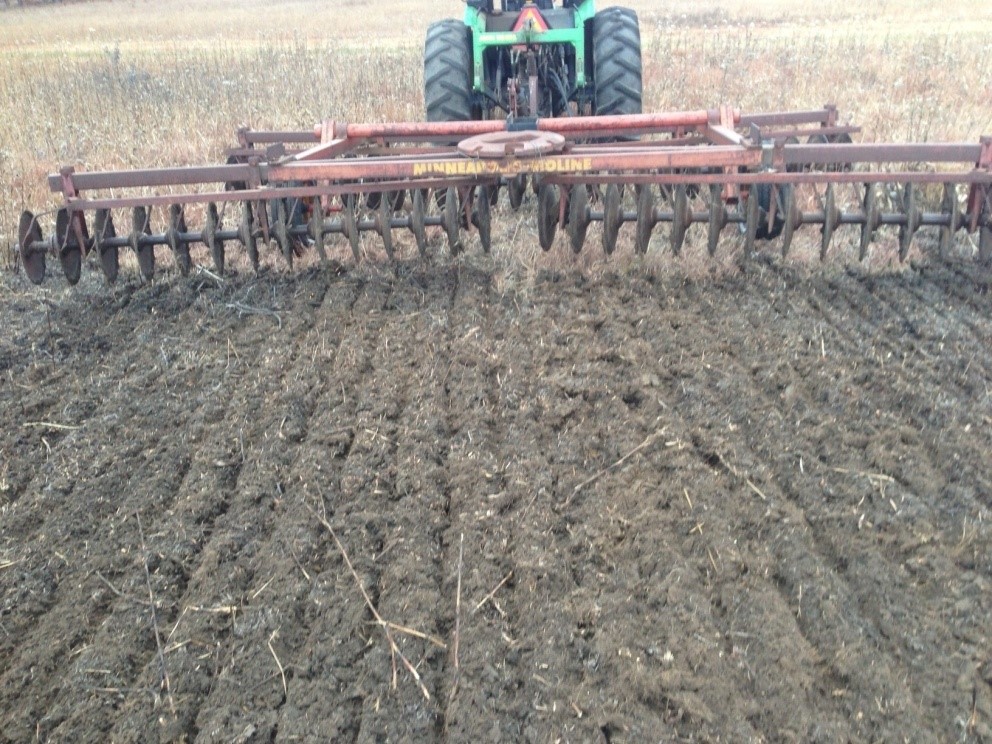
Below is the disc in one of the cells.  We worked up the prairie sod several inches deep.


Ten years later what do you think we see when we walk along this experimental block?

All the cells look the same to me.  Elizabeth says she saw some subtle differences.

The experiment is ongoing.  We are looking for a grad student to adopt this experiment and collect the vegetation data.

My takeaways on adding seed to established plantings is this:

It takes a long time for the seed planted to produce a noticeable sized plant.  There are exceptions where plants show up in just a handful of years after addition, but you should expect a decade, or two decades, to get the establishment you want.

Yes, you should add seed to those prairie plantings.   Many species you want to see in your restorations will not blow in, nor be dropped in by birds flying over, or carried in the fur of rabbits or deer or mice.  It will be you planting the seed.

Patience is a prairie word.

Below are the experimenters in 2009:  Susan Kleiman, 9 year old Leah K, and myself, Bill K.    I coaxed Leah with promises of fun science.  She is now 20 years old majoring in plant ecology.

We did three of these same blocks.  More details here: https://www.nachusagrasslands.org/links–resources.html

If you want to see the seed list we planted look to planting 91 and 92 here: https://www.nachusagrasslands.org/planting-histories-in-chronological-order.html


Posted in Uncategorized | Tagged , , , , | 8 Comments

Save the Date! Growing Through Change: Sourcing Climate-Resilient Seed in Ecological Restoration

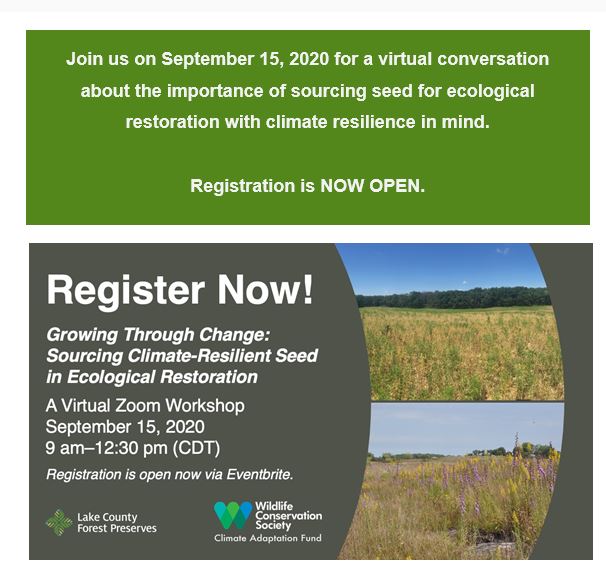
Join us on September 15, 2020 for a virtual conversation about the importance of sourcing seed for ecological restoration with climate resilience in mind.

All are welcome to join this virtual version of the Grassland Restoration Network annual meeting

Short presentations by researchers in restoration ecology and regional seed producers will be followed by breakout sessions for discussions on strategies and steps for moving forward.

Registration opens August 31, 2020! You will receive a follow-up email when the registration link goes live.


Presentations by:

Anna Bucharova at the Institute of Landscape Ecology, Münster, Germany. Anna’s work is focused on challenges in using seeds for ecological restoration under changing environments and the rapid evolution of climate change.

Julie Etterson at the University of Minnesota, Duluth. Julie studies how native plant species respond to human impacts on the environment, such as climate change. She is also the principal scientist behind Project Baseline, a research seed bank that studies the evolution of wild plant populations over time and space.

Jennifer Ogle, the coordinator of the Arkansas Native Seed Program. Jennifer is working hard to provide locally sourced native seed for large-scale habitat enhancement, habitat restoration and revegetation projects in Arkansas.

There will also be lightning talks from regional native seed producers including Cardno, Inc. and The Prairie State Nursery, as well as from representatives of Forest Preserve and Conservation Districts and NGOs on their seed sourcing strategies and protocols used for their restoration projects.

Would you like to share your seed sourcing policy and experiences in a lightning talk?

We invite workshop participants to engage with each other by presenting a very brief talk regarding their seed sourcing policy and experience.

We will have two focal topics: “Seed Sourcing—What’s YOUR Policy?” and “Seed Sourcing Strategies—On the Ground Implementation.” If you are interested, please email Pati Vitt at pvitt@LCFPD.org by September 5.

Join us on September 15, 2020, 9 am-12:30 pm (CDT) as we discuss how seed sourcing may provide the foundation for climate-resilient restorations in what we hope will be the first of many conversations.

One anticipated outcome of this workshop will be the formation of a working group to continue studying and developing best practices for sourcing seed now and into the future.

Organizers include:

Pati Vitt, Lake County Forest Preserve District

Sponsored in part by the Wildlife Conservation Society’s Climate Adaptation Fund.

Posted in Uncategorized | Tagged , , , | Leave a comment

Rapid Assessment Monitoring, a video

By:  Julianne Mason, Restoration Program Coordinator, Forest Preserve District of Will County

Stewards are busy people.  Fire work, weed work, seed harvesting, brush thinning. How can you also find time to assess how your restorations are coming along?

Watch our video and see how a rapid assessment can be done.

The video link is https://www.nachusagrasslands.org/monitoring.html

At the same link are the two templates we mention.

Posted in Uncategorized | Tagged , , , | 1 Comment