Here is the Event Brite registration for this free workshop:
https://protect-us.mimecast.com/s/Jar5CBBXvgIZQJGjIz7dZ5?domain=eventbrite.com
Here is the Event Brite registration for this free workshop:
https://protect-us.mimecast.com/s/Jar5CBBXvgIZQJGjIz7dZ5?domain=eventbrite.com
By Bill Kleiman, Project Director of Nachusa Grasslands, The Nature Conservancy
Have you planted seed into an already established prairie planting, trying to increase floral diversity? You had that warm hopeful feeling. Those tiny seeds in your hand soon to be germinating. New flowers blooming in your restoration.
Did what you plant ever show up? Most of us have examples of where the seed planted did eventually produce new populations, but more often we shrug when asked.
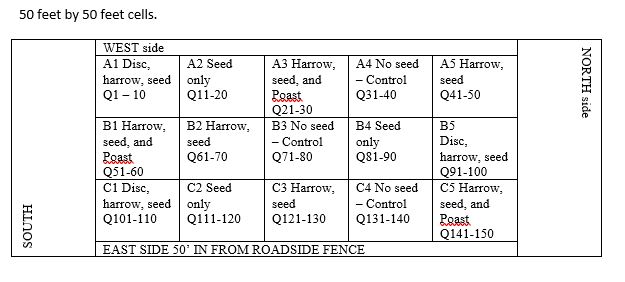
Way back in 2009 I had this study question: What is the best way to over-seed an already established prairie planting to increase its diversity? Below is the random block we set up with four treatments and a control. I explain the block below.
This was in an established prairie, with reasonable forb diversity, rather thick in warm season grasses. Look at the top row of cells. In cell A1 we worked up the prairie sod with a disc, then raked it with a harrow, and then seeded a rich and abundant mix of seed, well over 50 species at a heavy pounds per acre. Would this cell turn out the best?
In A2 we only added seed.
In A3 we harrowed, seeded, and then in mid-summer we sprayed with Poast grass herbicide. Would the grass herbicide set back the Indian grass and big bluestem and make space for our seed to grow?
A4 was the control with no seed added.
A5 we harrowed and seeded.
The B row and C row are the same setup but not in same order. This is called a Random Block study.
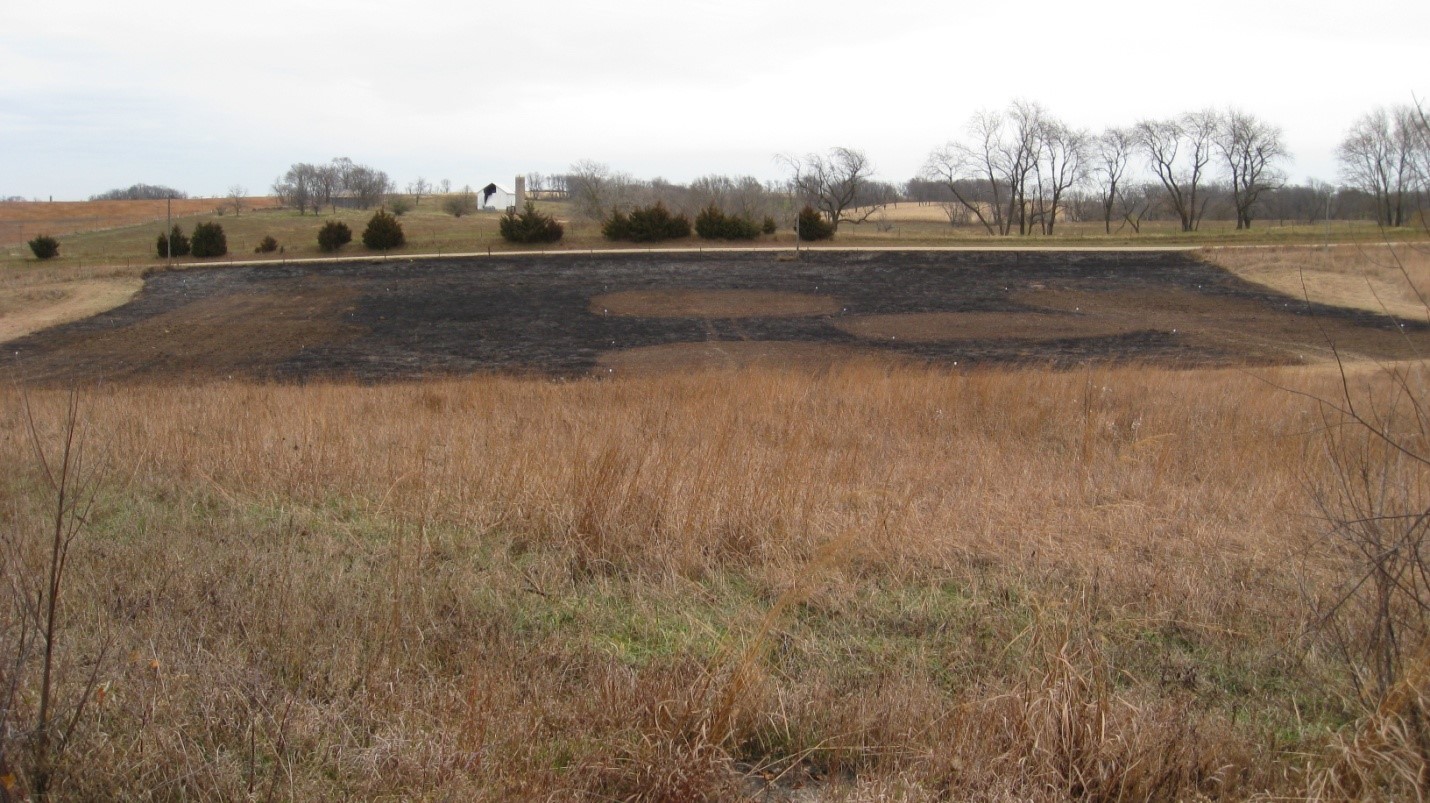
Below photo looks down at the block when we set it up. It was burned before we did anything. You can see the harrowed and disced cells.
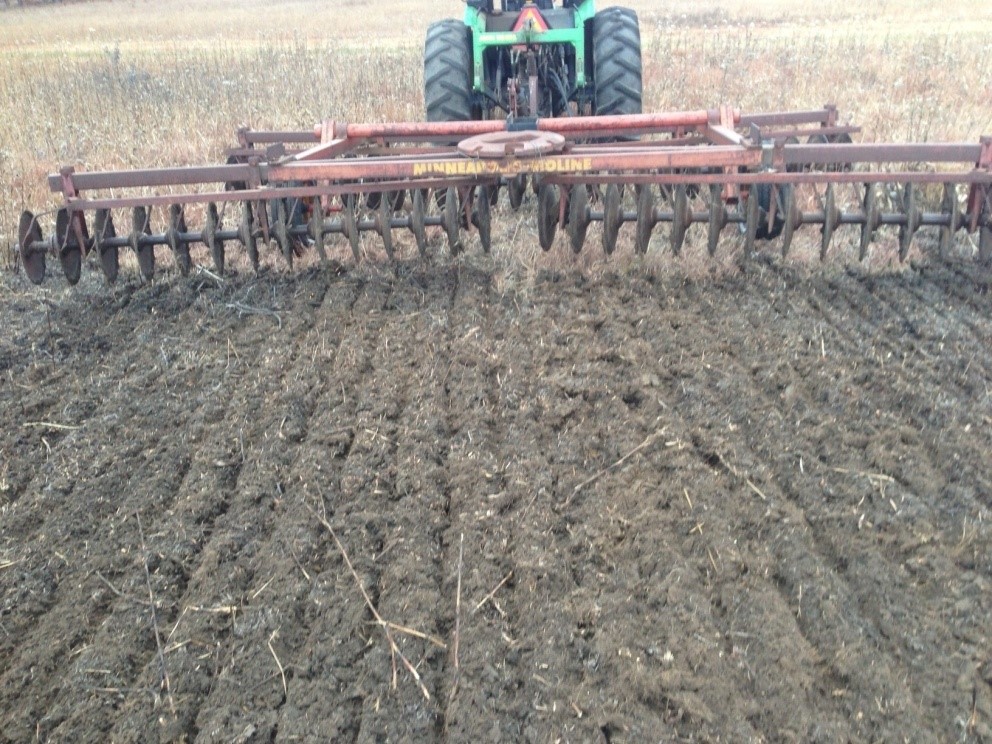
Below is the disc in one of the cells. We worked up the prairie sod several inches deep.
Ten years later what do you think we see when we walk along this experimental block?
All the cells look the same to me. Elizabeth says she saw some subtle differences.
The experiment is ongoing. We are looking for a grad student to adopt this experiment and collect the vegetation data.
My takeaways on adding seed to established plantings is this:
It takes a long time for the seed planted to produce a noticeable sized plant. There are exceptions where plants show up in just a handful of years after addition, but you should expect a decade, or two decades, to get the establishment you want.
Yes, you should add seed to those prairie plantings. Many species you want to see in your restorations will not blow in, nor be dropped in by birds flying over, or carried in the fur of rabbits or deer or mice. It will be you planting the seed.
Patience is a prairie word.
Below are the experimenters in 2009: Susan Kleiman, 9 year old Leah K, and myself, Bill K. I coaxed Leah with promises of fun science. She is now 20 years old majoring in plant ecology.
We did three of these same blocks. More details here: https://www.nachusagrasslands.org/links–resources.html
If you want to see the seed list we planted look to planting 91 and 92 here: https://www.nachusagrasslands.org/planting-histories-in-chronological-order.html
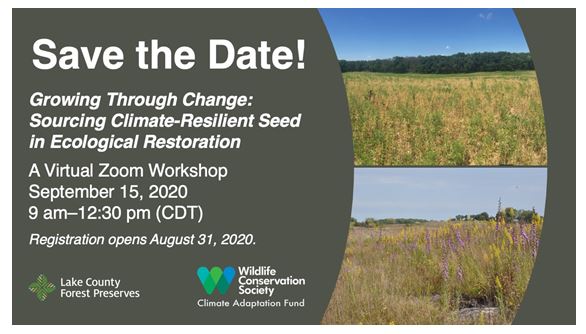
Join us on September 15, 2020 for a virtual conversation about the importance of sourcing seed for ecological restoration with climate resilience in mind.
All are welcome to join this virtual version of the Grassland Restoration Network annual meeting
|
|
| Would you like to share your seed sourcing policy and experiences in a lightning talk?
We invite workshop participants to engage with each other by presenting a very brief talk regarding their seed sourcing policy and experience. We will have two focal topics: “Seed Sourcing—What’s YOUR Policy?” and “Seed Sourcing Strategies—On the Ground Implementation.” If you are interested, please email Pati Vitt at pvitt@LCFPD.org by September 5. |
Join us on September 15, 2020, 9 am-12:30 pm (CDT) as we discuss how seed sourcing may provide the foundation for climate-resilient restorations in what we hope will be the first of many conversations.
One anticipated outcome of this workshop will be the formation of a working group to continue studying and developing best practices for sourcing seed now and into the future.
Organizers include:
Pati Vitt, Lake County Forest Preserve District
Sponsored in part by the Wildlife Conservation Society’s Climate Adaptation Fund.
By: Julianne Mason, Restoration Program Coordinator, Forest Preserve District of Will County
Stewards are busy people. Fire work, weed work, seed harvesting, brush thinning. How can you also find time to assess how your restorations are coming along?
Watch our video and see how a rapid assessment can be done.
The video link is https://www.nachusagrasslands.org/monitoring.html
At the same link are the two templates we mention.
By Bill Kleiman, Nachusa Grasslands, TNC
In Nebraska, Chris Helzer of TNC, does no or little work against sweet clover. Perhaps Nebraska is dry enough that yellow and white sweet clover (Melilotus officinalis and M alba) are there but not overwhelming. In rain soaked Illinois we find prairie plantings can look like we are raising sweetclover hay.
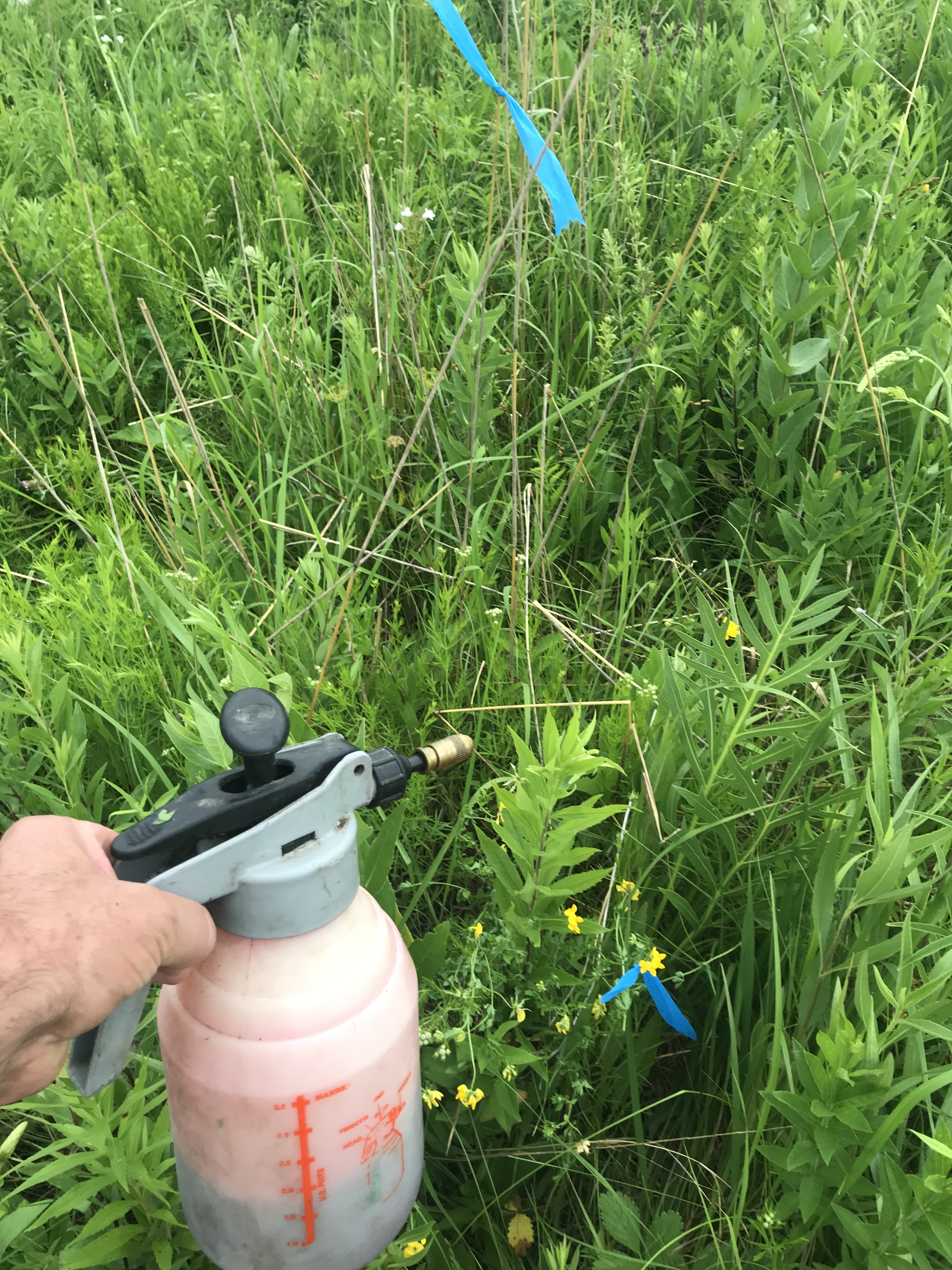
We sometimes spot spray sweetclover with a pack. In ruderal areas we sometimes use a tractor sprayer.
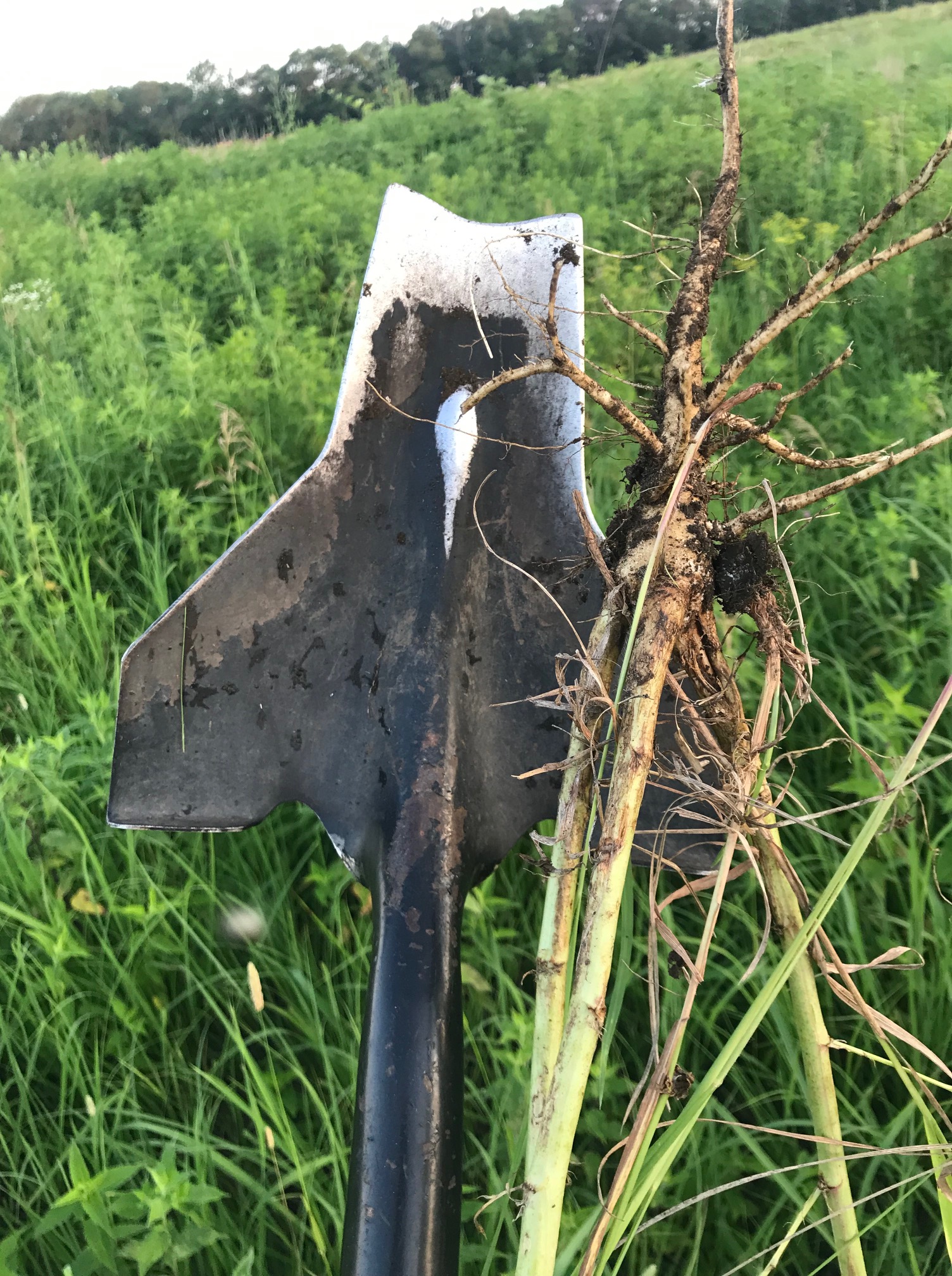
We like weed spading sweet clover as the spade is light weight, simple, and effective. We loosen the soil next to the clover and pluck it out, rather than tug until our backs hurt. I have written about these weed spades previously on this blog.
You can see we can grow some huge sweet clover plants.
Sweet clover is a biennial so if you mow it very short, on year two, when it is in full flower the plants typically do not re-sprout. On some rocky soils it is hard to mow the yellow clover short enough to not have it re-sprout.
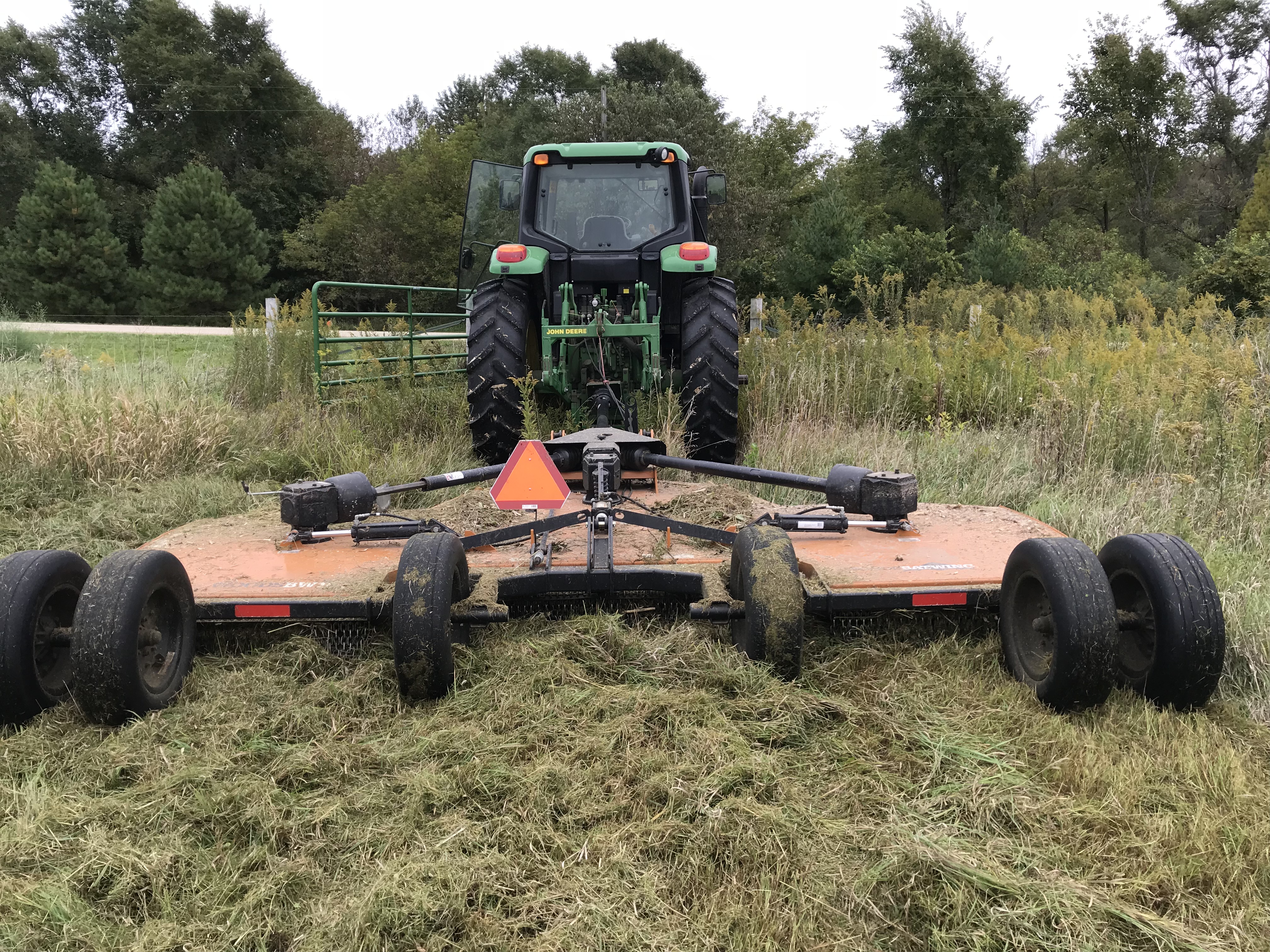
We use rotary mowers. The batwing mower tends to mow short enough to pick up and cut the plants knocked down by the tractor tires.
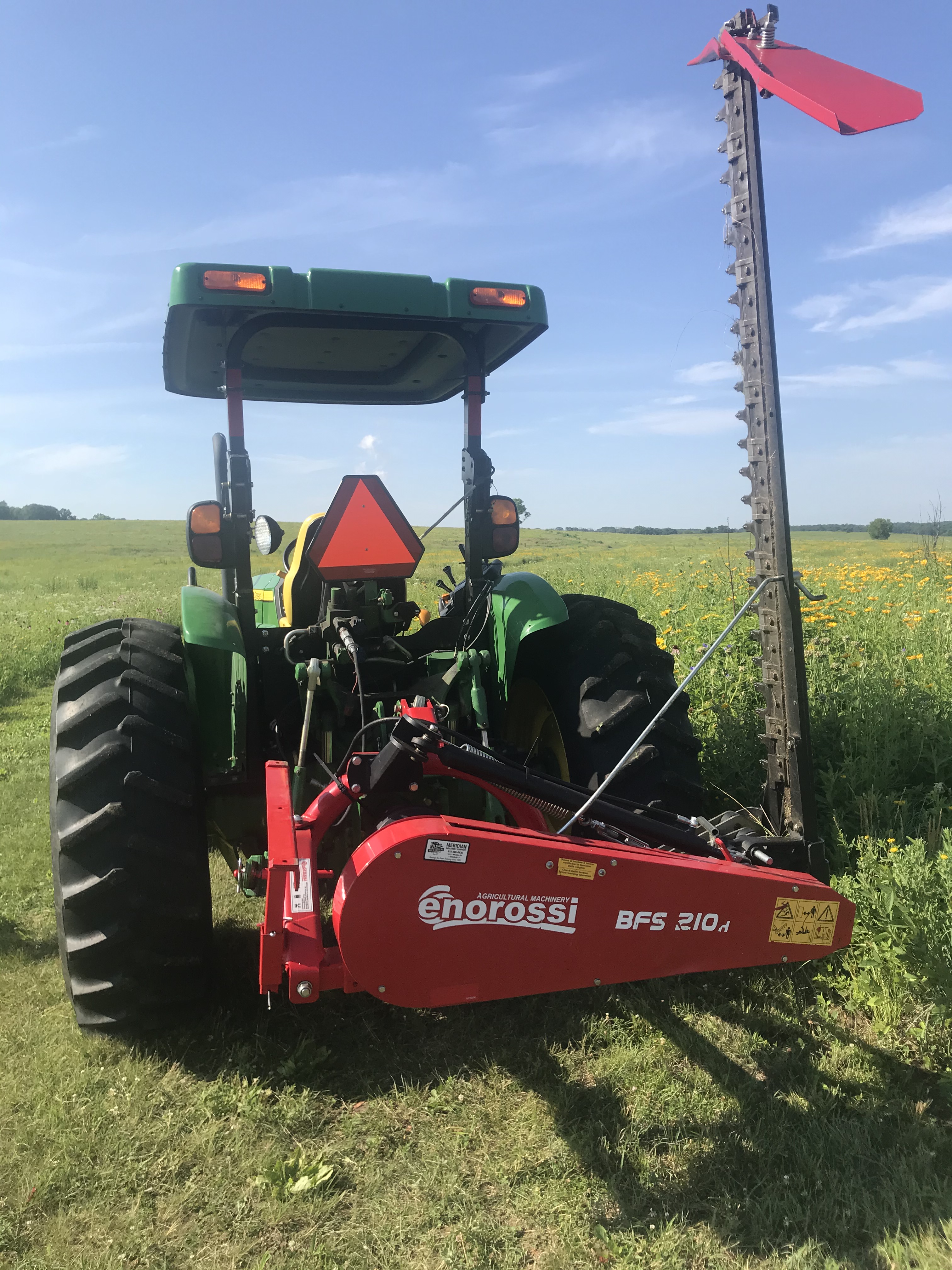
The advantage of a sickle mower is that the cutter is off to the side. Below, Austin Webb of Byron Forest Preserve is showing me their mower used for sweetclover patches. They are relatively simple, quiet as the tractor can be run at low throttle, and they are nimble to maneuver. After two seasons with this mower they are pleased.
Below, the flail mower is another way to mow weeds and lanes. This photo is from a manufacturer’s website. Flail mowers rotate the blade not horizontal to the ground but in the other dimension, like a brush mower head rotates, or a roto-tiller spins.
Below is a photo submitted by Joe Blastick of South Dakota TNC. They call this one Mowasaurus. This is a silage chopper. It is designed to cut a crop like hay with its flail mower components, then auger to its built in chopper, and then its blower sends the product into a wagon trailing behind. Here they use it to mow a fire break and then blow the product into the wind off the fire break.
I tried one of these in our Illinois 5 foot high prairie and it kept jamming the chopper with all that prairie. You want the wind to be modest or away from you. It does not like lots of rocks.
Because one project is spraying invasive birdsfoot trefoil does that mean I should too?
How to approach this question for birdsfoot trefoil, or any invasive plant.
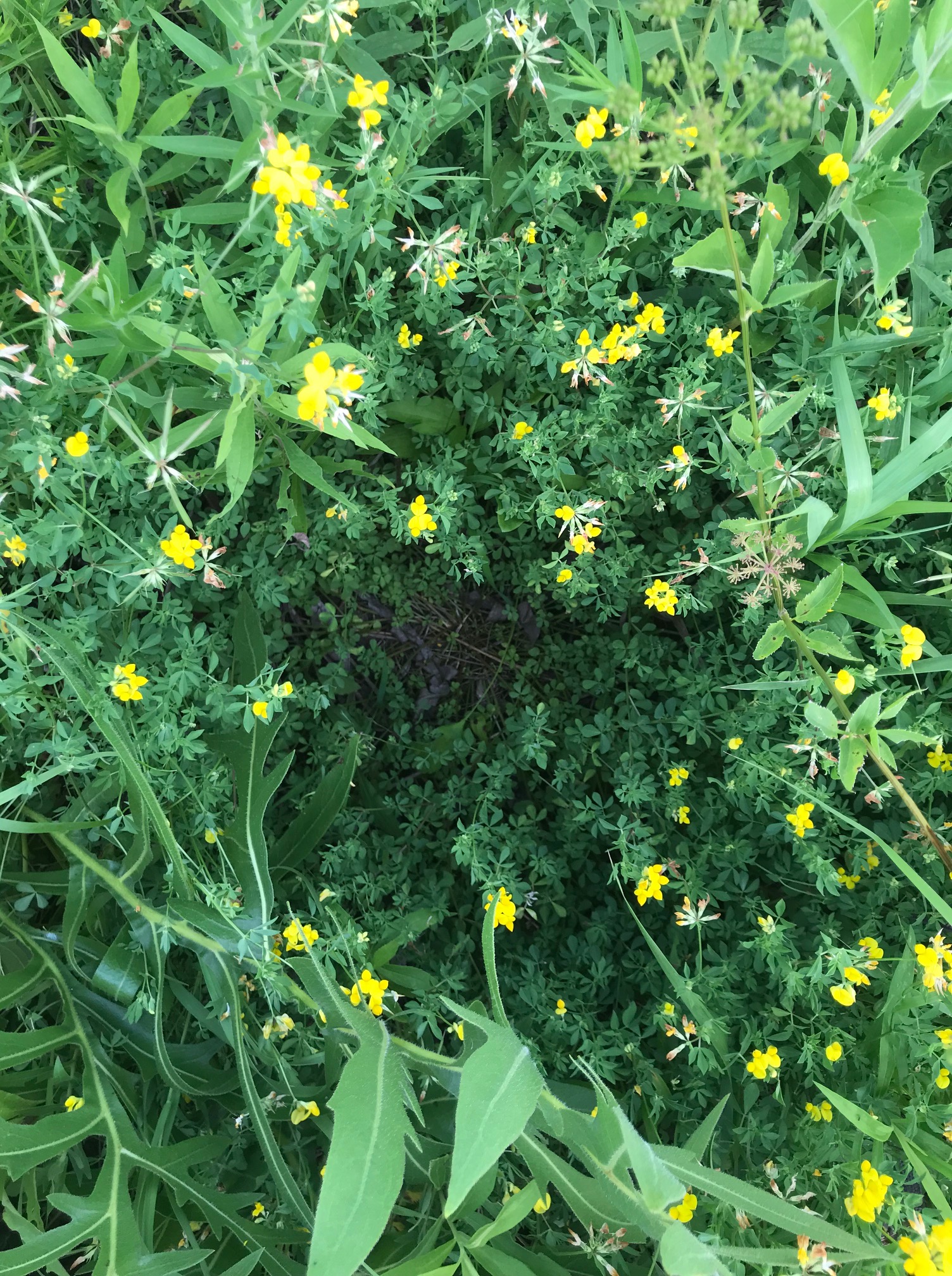
First gather information about an assumed invasive plant. Look up websites, talk to managers you know, consult people with a history on the site. For birdsfoot trefoil, Lotus corniculatus, you will likely find experts/botanists/natural areas managers consider it to be invasive. They may not know what to do about it. It has kept me humble.
But should you manage against it at your particular site?
First, study a map of your site that shows where any remnant habitats are located, where the habitat restorations are. Note the good quality from the poor quality sections.
Then map the occurrences of the invasive plant across your site. Below is a 2006 map from Nachusa.
Does the plant occur everywhere? Does it occur on just the very poor restorations, or the old pasture with no native plants? Or is it on the best part of the remnant habitats, or just on the degraded edges of the remnant?
Consider what harm you might do by working against the weed. A quality remnant already saturated with an invasive plant may be a case of leaving the weed alone.
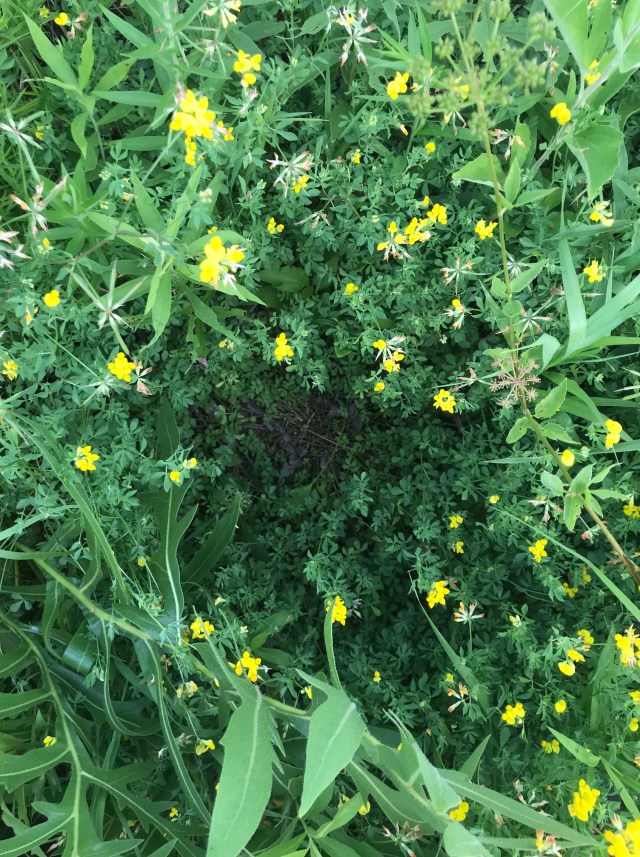
On our Big Jump unit we have birdsfoot trefoil that is very thick and all across the remnant prairie. Decades back trefoil seed was broadcast over that prairie to make a better pasture. To try to spray out the trefoil would leave little else in the way of forbs. Trefoil produces lots of seed that stays in the soil a long time. Trefoil requires decades of annual visits to spray plants. Our resources are limited. So for this unit we want to contain the spread, leave the trefoil on the remnant, and instead spray trefoil in the adjacent ruderal areas. We also spray any trefoil that occurs on our fire breaks or stewardship lanes so we don’t move the seed around on our equipment.
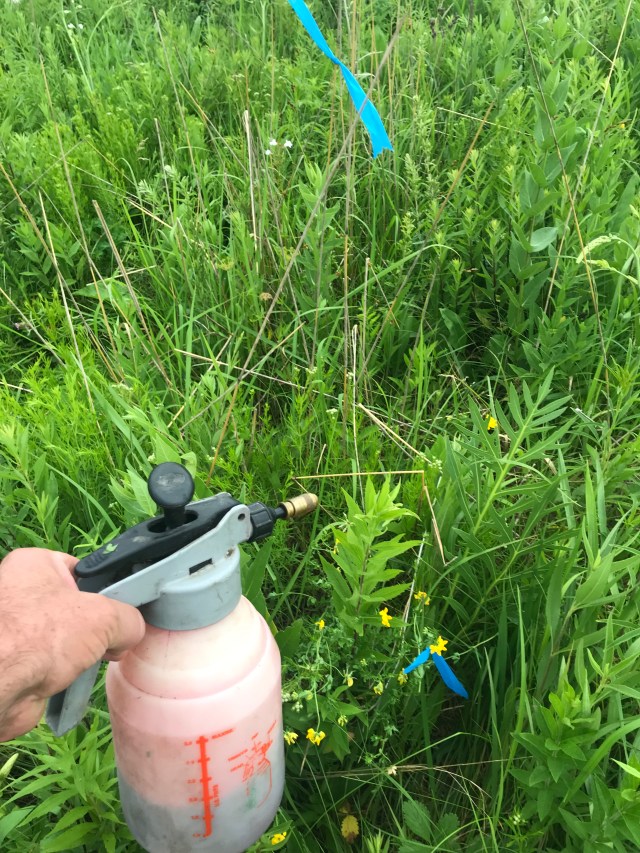
Below: The trefoil in the adjacent fallow field that had about four species of plants: brome grass, timothy, weedy goldenrod, and lots of the yellow trefoil. We used less than 1% Milestone herbicide (1 oz per gallon) as it works on the germinating seeds too. This was not hard to do. We could do this every few years.
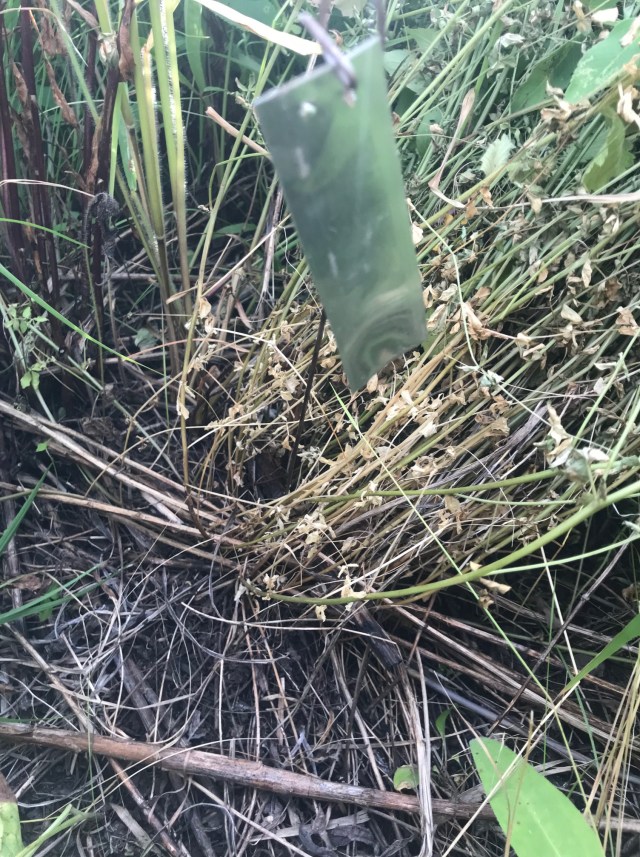
On another large unit we have owned a long time we have been carefully backpack spot spraying trefoil from a remnant, and we have been spot spraying in restorations that are adjacent. This effort has been a 27 year long practice with multiple visits every year. A labor of love.
We get so busy doing conservation that we often don’t report out on the work we accomplish. Or we create a dry report and wonder if anyone reads it. I was recently involved with a brush mowing project where we cleared a lot of habitat. I wanted to try to explain why we mowing a lot of brush, planting seed, and using prescribed fire. I decided to use Adobe Spark to produce a report on the work. The link is here: https://spark.adobe.com/page/tJeXFdSRLvy2s/
Presentation can be made with other software such as ArcGIS StoryMaps or Power Point. They all charge a fee.
A lot of the work we do in grassland restoration takes time to explain. Visual aids help us bridge a gap.

By Bill Kleiman, Nachusa Grasslands, The Nature Conservancy
If you manage grasslands you likely also do prescribed fire. I have been posting fire and fire equipment articles with the GRN because I also provide content for the Illinois Prescribed Fire Council website….where you can find the extended version of this post and other fire equipment reviews.
https://www.illinoisprescribedfirecouncil.org/uploads/1/0/5/8/105892833/tender_enduraplas_2022.pdf
A water tender is used to fill up the other pumper units being used on prescribed fires. Water tenders need to hold and pump a lot of water. They also are the place you put all those tools and supplies you don’t need in every vehicle.
We purchased an Enduraplas brand 300 gallon skid unit. This post summarizes how we set up our tender truck using this new unit.
Bolting the skid to the truck bed:
Our truck is a stainless steel dump truck. It has no tie down points for using straps to hold the skid tank in place. I am reluctant to use straps anyway as they can be precarious, allowing the tank to slide about the bed and frequently being inadequate of a hold down.
Instead, we looked for a way to drill through the stainless bed and bolt the skid frame down. We ended up concluding that the dump truck bed had frame members in the way of a simple straight bolt through the tender skid frame. We were going to need metal fabrication. We took the truck and tender skid to Bellini Welding in Dixon Illinois. Their staff Tim McBride spent a day mounting the skid to the truck. Below photo is the metal L channel that was added with photo below that finished mount.
Brian Bellini – who can fabricate anything, and with flair.
Tim McBride
Below are the baffle balls we purchased and dropped inside the tank. They took all the slosh out of the tank when the truck moves.
Below is a type of tail gate we fashioned to keep stuff from falling out.
This tender skid unit uses a 5hp motor turning a centrifugal pump that can theoretically pump 120 gallons per minute. I tested the flow rate that comes out of the 100 feet of ¾’ hose at a mere 13 gpm. This flow rate is too low for a tender.
Below shows the solution as a plumbed bypass of the hose reel and a wide hose. The output is now a massive 73 gallons per minute. The line fits in the pallet fork frame for storage. The hose reel line still works too.
Thank you to volunteer maintenance tech Paul Mellen for working with me to get this tender set up.
Again, more details on tender here: https://www.illinoisprescribedfirecouncil.org/uploads/1/0/5/8/105892833/tender_enduraplas_2022.pdf


By Eric Hoff and Haley Bloomquist, The Nature Conservancy, Brown Ranch, North Dakota.
Leafy spurge is native to Eurasia and thought to have been brought to the upper Midwest in the late 1800’s. A very aggressive plant, Leafy Spurge spreads through rhizomes as well as seeds. Exploding seed pods have been shown to spread seed up to 20 feet from the parent plant! Seeds are also viable in the soil for as long as 10 years.
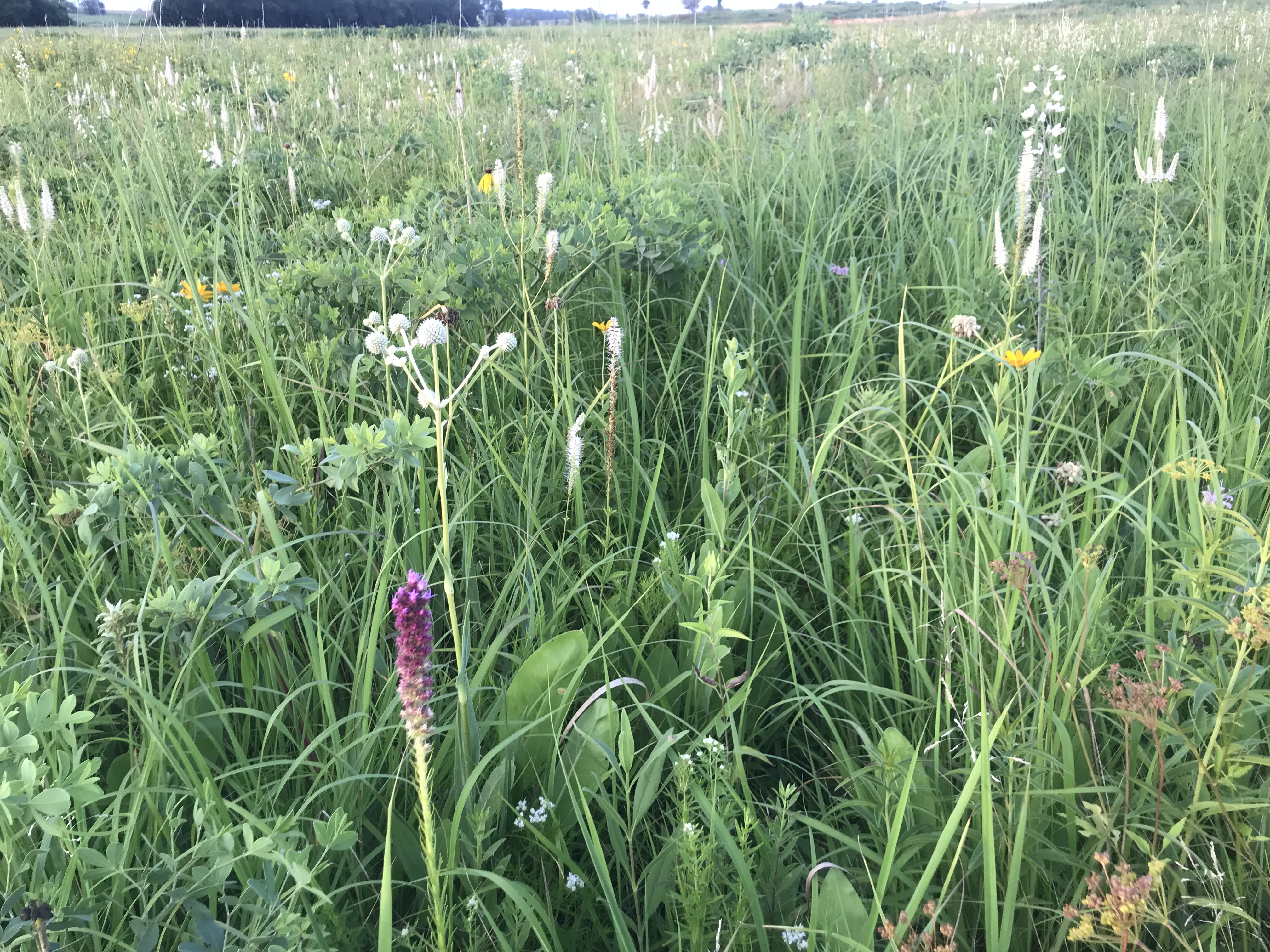
Here at Brown Ranch in North Dakota, Leafy Spurge is found from the top of our sandhills right down to the very edge of the wetlands/ sedge meadow. It does not like to be submerged in water or heavily saturated soils but can withstand a short duration of inundation.
Leafy spurge can flower in the spring and fall. The control of Leafy Spurge is very difficult because of its extensive root system, which can be up to 26ft in depth, as well as the longevity of the seeds. There are many integrated pest management tools to control Leafy Spurge which include chemical, mechanical, and biological methods. The most common and effective herbicides to combat Leafy Spurge include Tordon, Plateau, 2,4-D, and Facet. At Brown Ranch we have found Plateau and Facet are the most effective at controlling Leafy Spurge. Plateau is hard on forbs and caution must be used in areas where the water table is or can be at or near the soil surface. Facet is not as hard on forbs, is equally or more effective, but costs almost twice as much as Plateau. As with many herbicides, care should also be taken when applying Facet to areas where the water table is at or near the surface.
Another option for control is mechanical treatment. Land managers have successfully used weed whips for smaller areas and large tractor mounted mowers to control the plant by keeping it from setting seed. Mechanical treatment is often followed by an herbicide treatment later in the summer or fall.
A third option for control is utilizing biocontrol agents such as the flea beetle. Flea Beetles have been found to be very cost effective in places where the beetles can over winter. Here in the Sheyenne Delta, the soils are often too sandy for the beetles to establish their larvae in the root system to survive during the winter months. Other biocontrol agents include livestock. While Leafy Spurge can be toxic to cattle and horses, these species are best used to remove desirable vegetation prior to chemical application. This helps increase chemical reception of the intended target. Unlike cattle, goats and sheep can graze Leafy Spurge without worry of toxicity and provide effective control by reducing the vigor of the plant and preventing it from setting seed early in the season.
One last tool that may be utilized is prescribed fire. Leafy Spurge responds well to fire, so why would it be a useful tool? At Brown Ranch we use fire to delay the onset of seed, thus extending our pre-seed spraying season. Because leafy spurge responds well to fire, it grows with vigor, which often means it is one of the first plants to emerge and one of the tallest, making it an easy target for chemical application. Because it is actively growing, that chemical is readily adsorbed and translocated to meristematic tissues.
If unmanaged, Leafy Spurge can out compete native vegetation and can become a monoculture (see photos below of managed vs. unmanaged). The good news is, with dedication, good timing and integrated pest management practices you can control Leafy Spurge and have healthy diverse prairies!
Above is prairie managed for Leafy Spurge
Above is unmanaged for leafy spurge
NEWS: Due to Covid 19 crisis we are postponing the GRN workshop of this August to next August, 2021 in Barrington, Illinois.