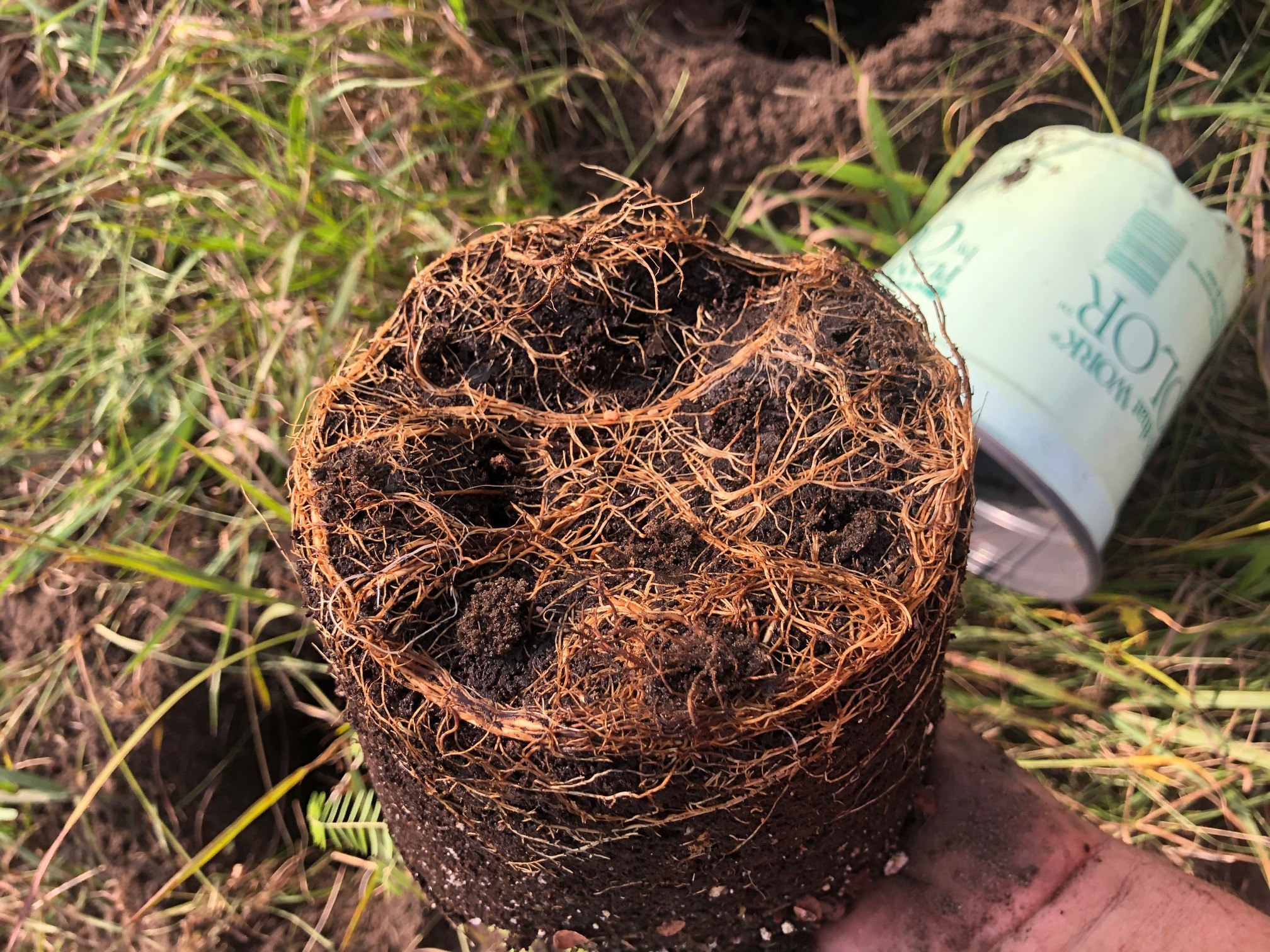
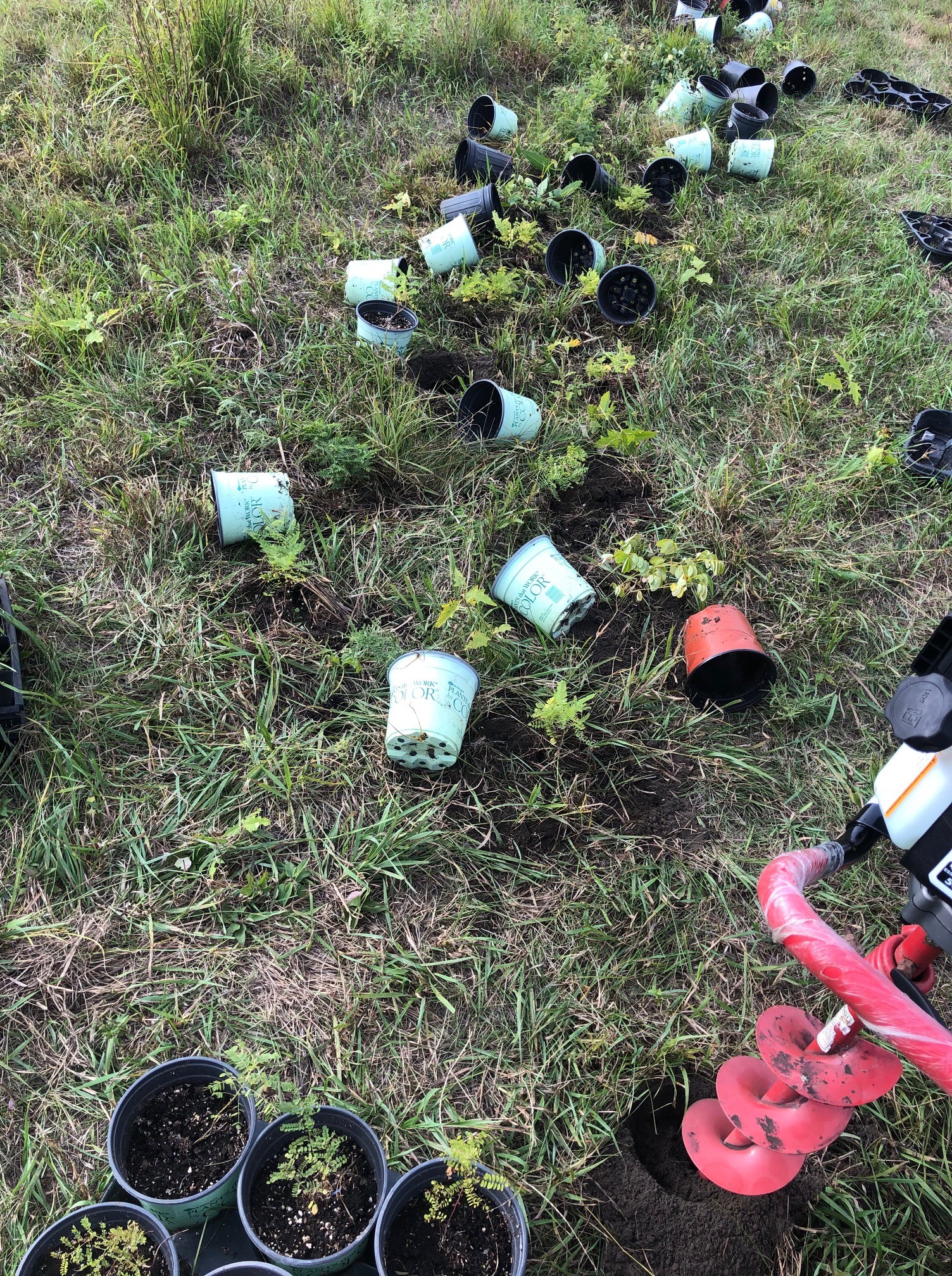
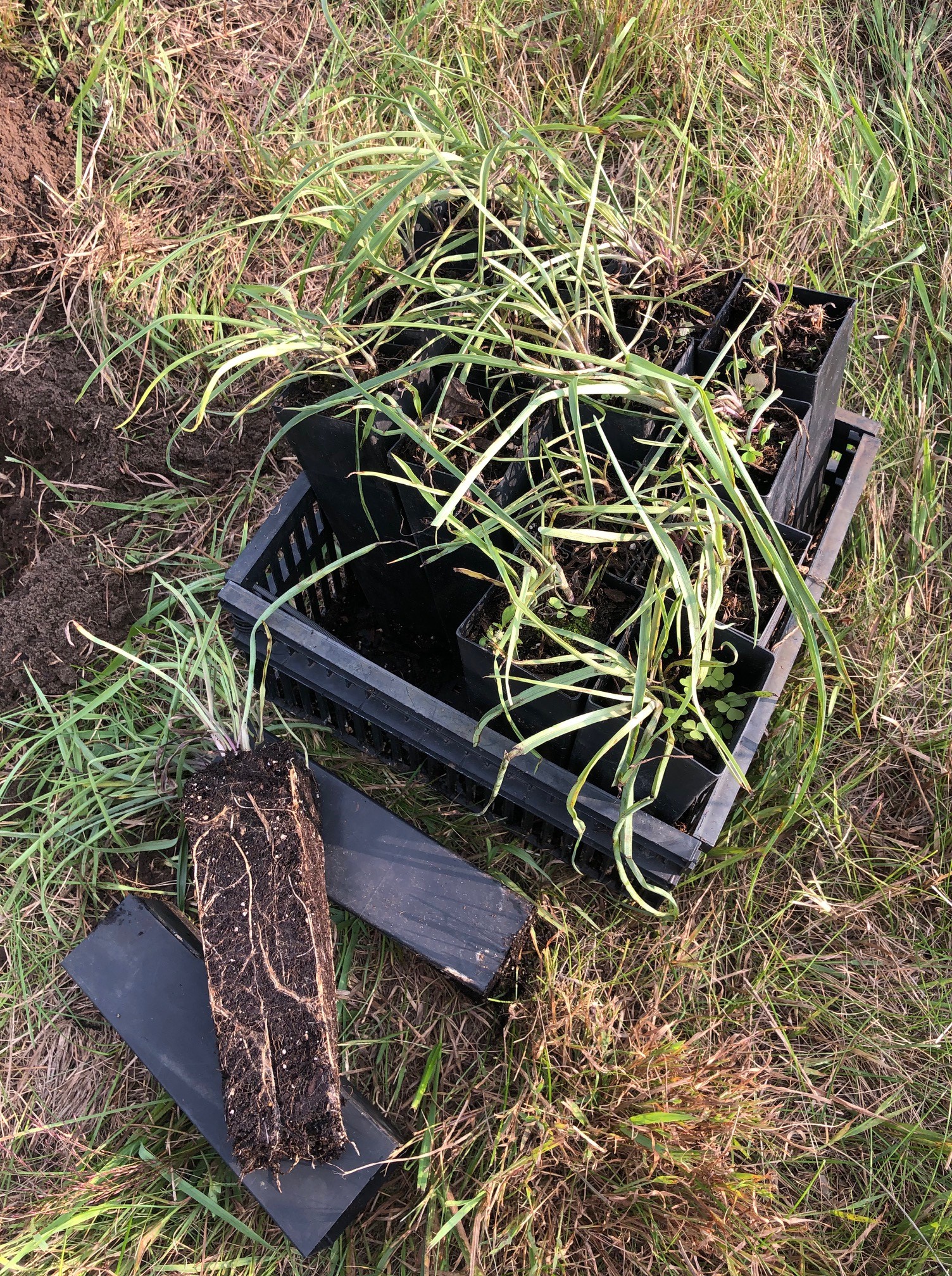
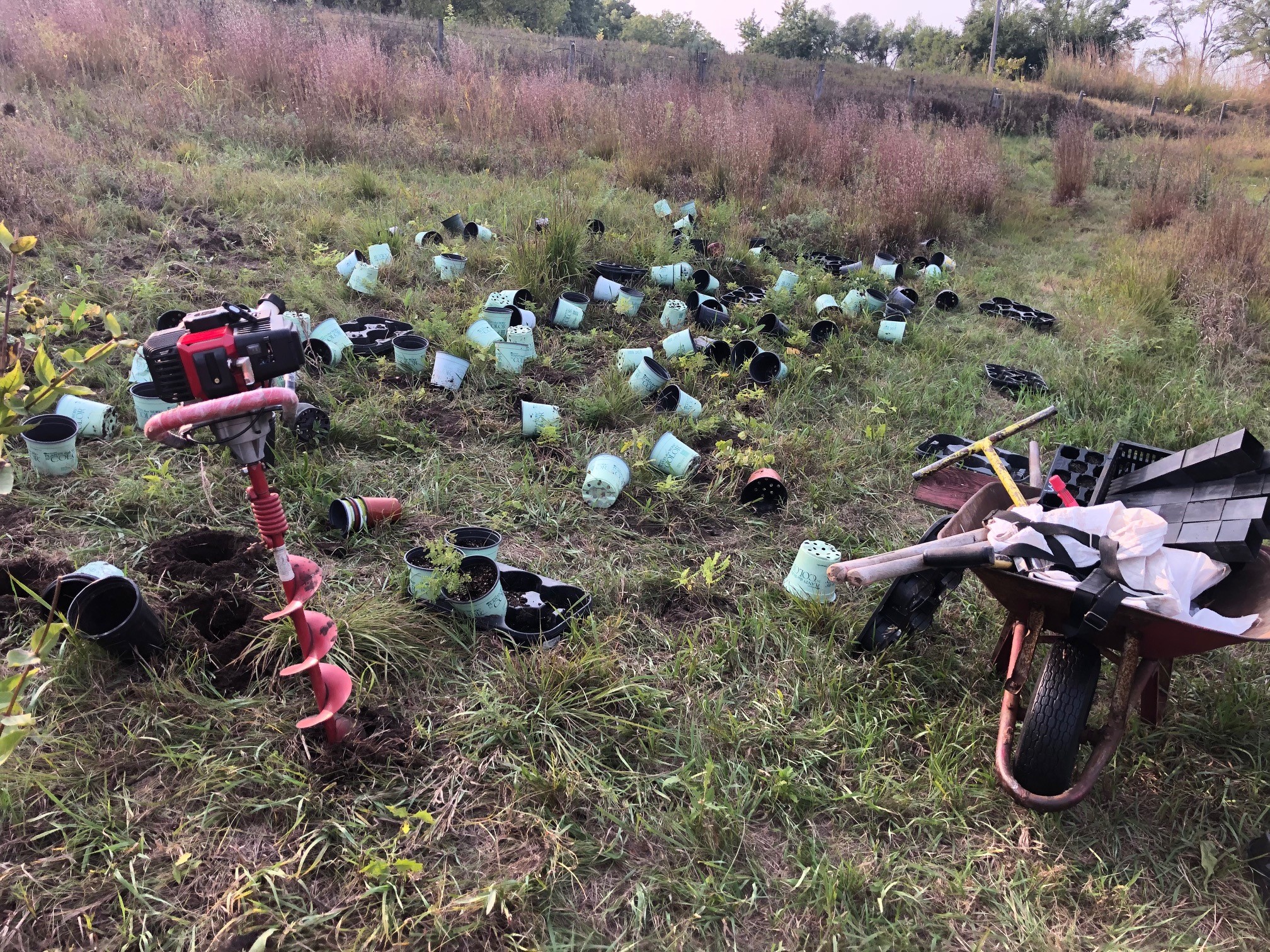
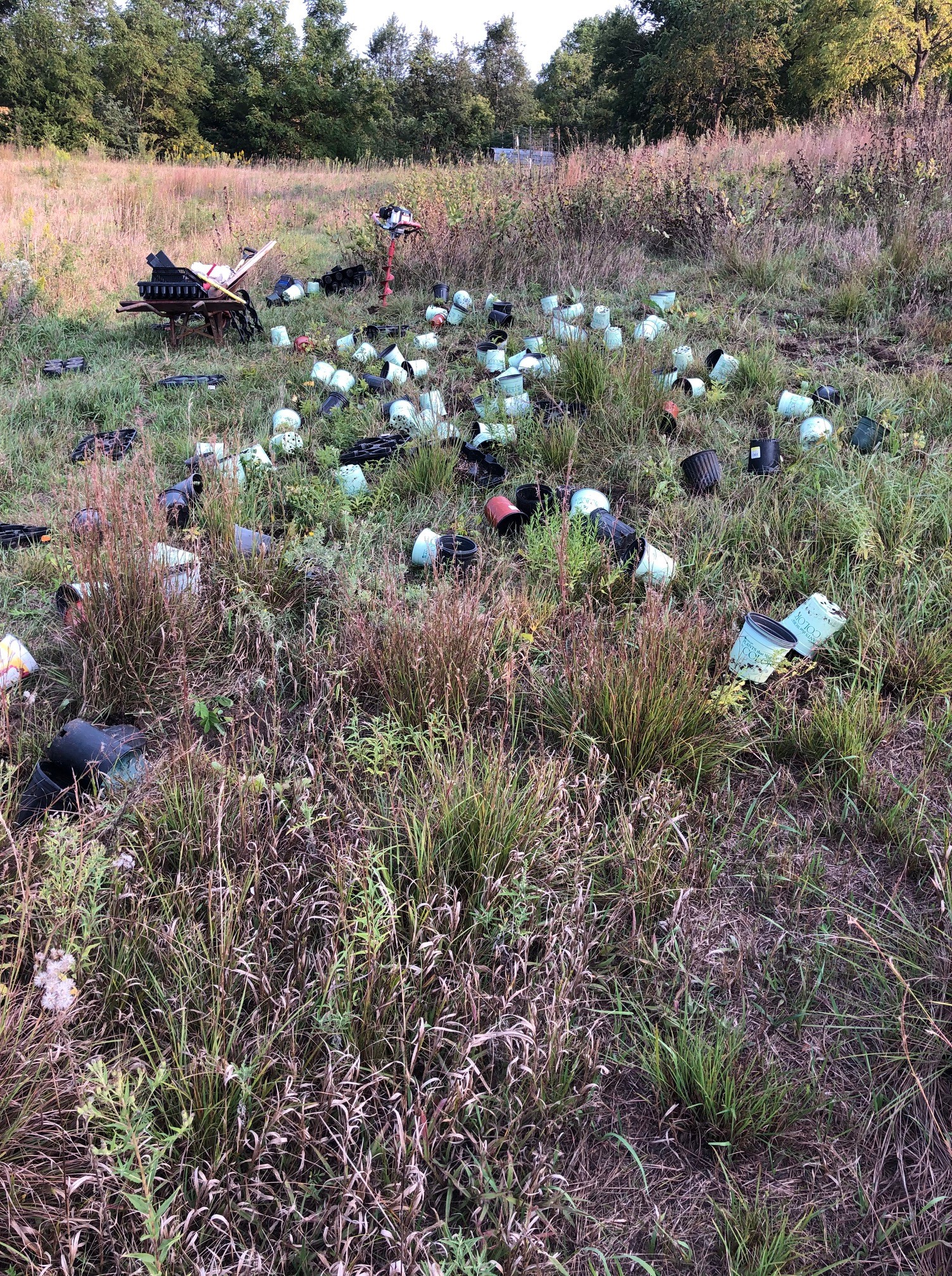
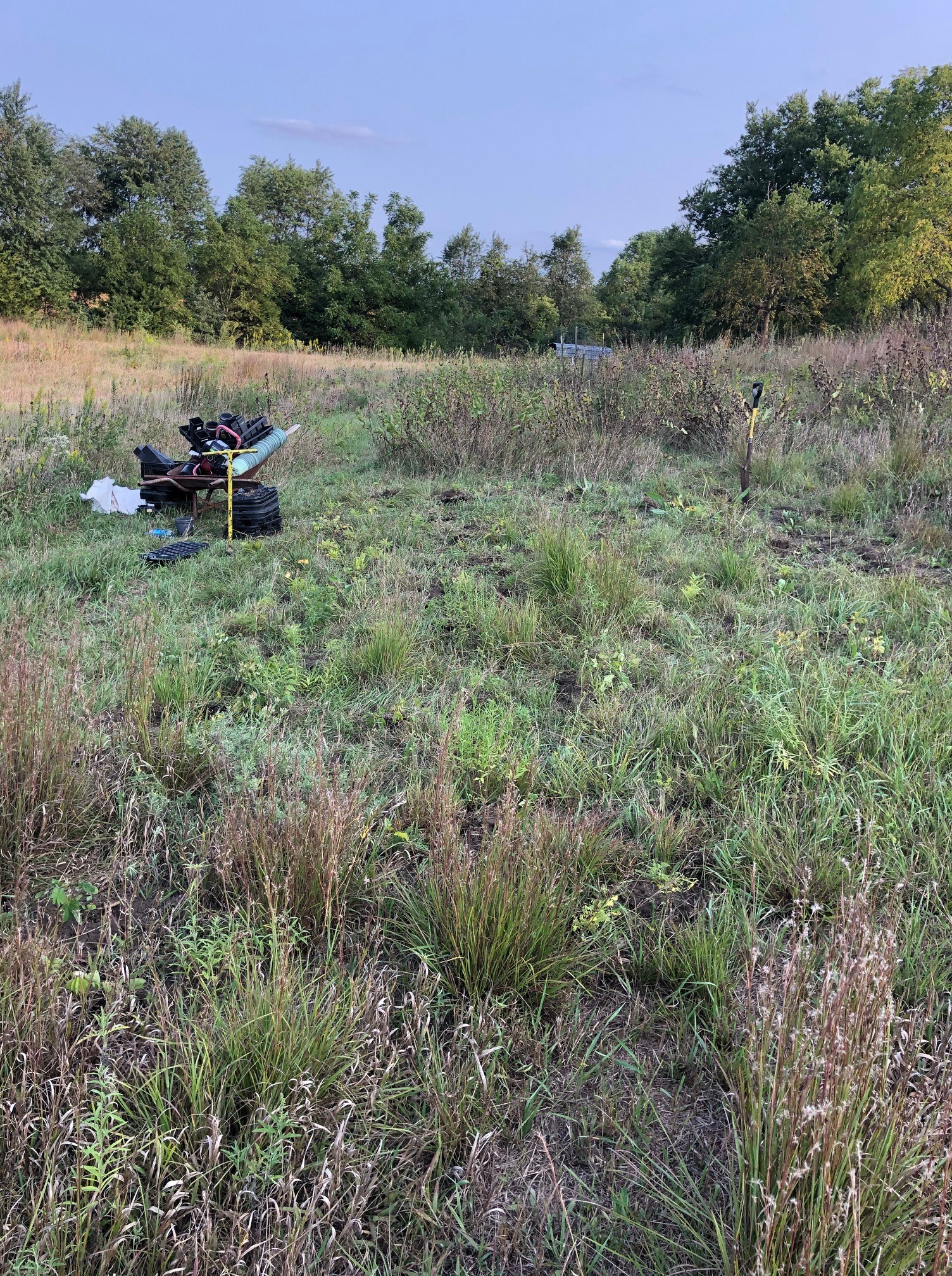
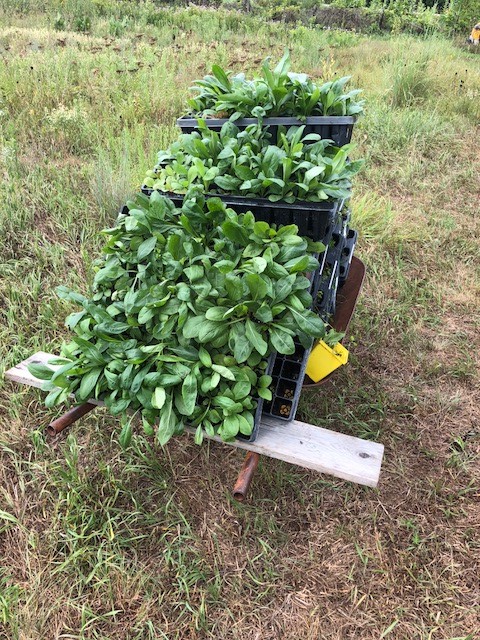
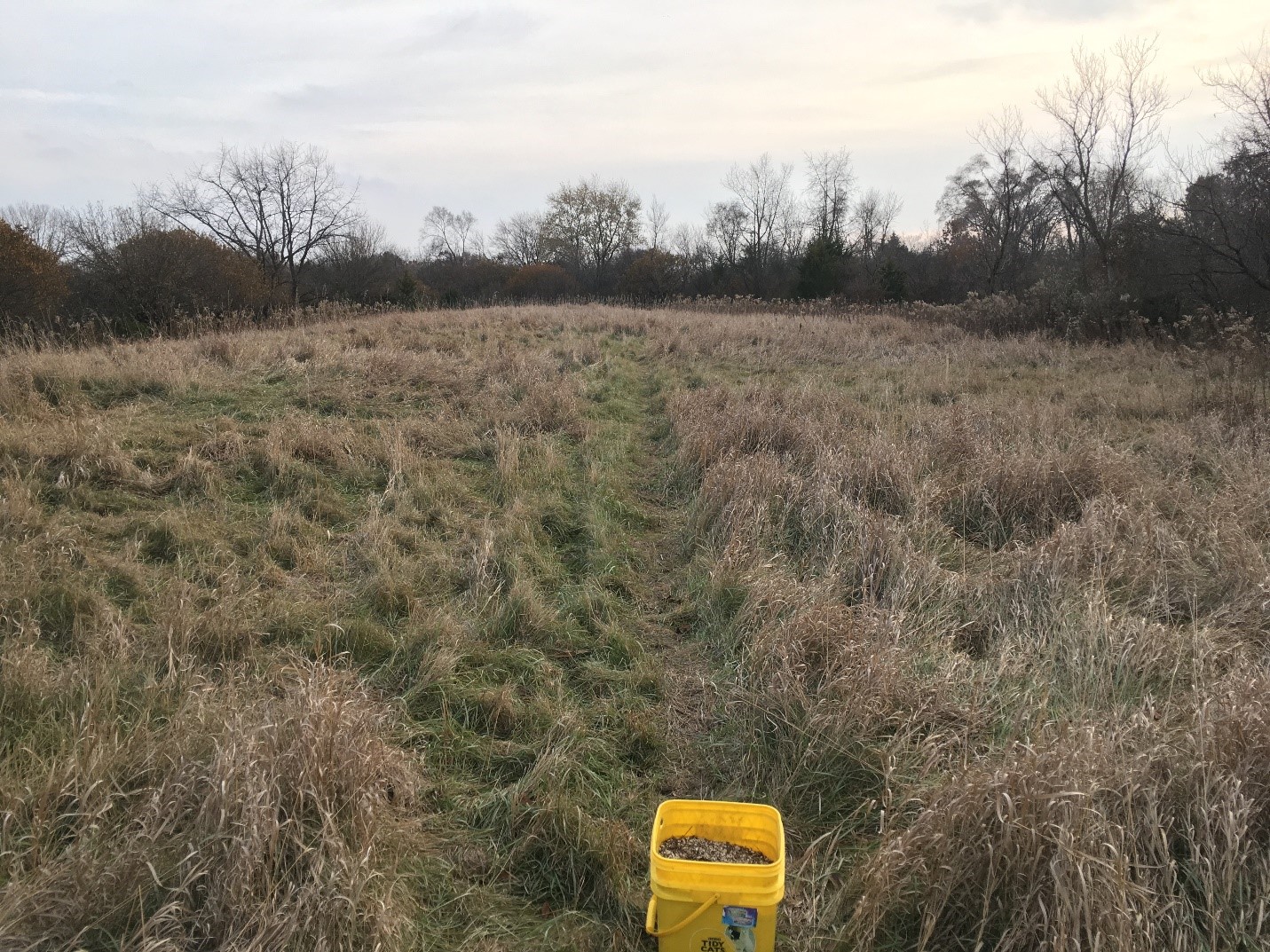
Jim Alwill – prairie plant propagatorI grew lead plant in pots in two months. Lead plantI planted 100 lead plant in one hour on a sand hill in Bureau County, IL. 100% survival. Planting in rows and patches makes it easy to collect by hand, and I create habitat by replacing brome grass sod that won’t go away easily.Spidorwort, Tradescantia ohiensis. I have been planting in sand the last three summers in early September with great success. The key is to have plants with good roots that were gown in full sun. Give the plugs in their growing flats just enough water to survive the next couple of hot days. I purposely let the flats go dry and the plants start to go limp, and then I water them in the last hour of daylight. Post hole digger for the bigger plugsBefore image while planting After planting. Should be able to collect seeds next fall from these plants.Polyacrylamide was used on some plugs. Wet the product in a bucket of water, then take a handful of the wet polyacrylamide and funnel it into the premade hole by hand. Adding this product gives a couple of field days reprieve till I can come back and water again. A one inch rainfall means I can stop watering for a week. I look at weather forecasts for possible thunder storm front coming and then make a made dash to plant several hundred plugs. Showy goldenrod, Solidago speciosa, loves sand as do bumble bees. Summer 2020 plants. I produced 10,000 plugs.Polyacrylamide in water. I have a farm wagon with a 500 gallon tank of water that I can fill 5 gallon buckets with and then fill a 2 gallon watering can to hand water the planted plugs at the last hour of the day. This allows the water to soak in overnight and not evaporate the same day. The trick is to find the plants again to water. If the area is mowed short, I can find the plants again to give them another drink. I mowed paths first and then made divot holes with a home made divet bar. This is a 4 way wood splitting head welded to a pipe and then a pipe handle. I think I got 98 % survival overall, and I really didn’t break a sweat.
I have been working my 10 acre sand hill for the last 20 years and have thrown down tons of forb seed with poor results overall. Little bluestem will grow very well in sand. The forbs don’t seem to get past the brome.
I just learned about the grass herbicide Intensity herbicide three yrs ago. My intention is to switch to more herbicide ( intensity) and try more seed.
Just as the COVID-19 pandemic was starting to grip the world, another global milestone was occurring: The United Nations declared 2021-2030 the “Decade of Ecosystem Restoration.” The official launch date coincides with World Environment Day on June 5, 2021. In an effort to ensure that both people and nature enjoy a sustainable future, it represents a worldwide strategy to stop and reverse habitat degradation across the planet.
According to the Society for Ecological Restoration, the gold standard result for an ecological restoration project is an ecosystem that’s on a self-organizing trajectory to full recovery from human activity. What does that mean? It means little to no human intervention or management is necessary to ensure the health and resilience of that ecosystem. However, there’s a lot of work to be done to set a degraded, or highly altered, ecosystem back on that path. When you visit a preserve and see large pieces of equipment at work, they’re often in use with an eye toward doing just that.
The intensity and frequency of restoration work required depends where along a spectrum a particular natural area starts. An area with low impact might be something like a remnant prairie, which will require little management except for the restoration of controlled burns or the reintroduction of native grazers such as bison (Bison bison). On the other end are those lands most in need of intensive restoration, like former agricultural fields. Generally, the more altered the landscape and the more human activity present there, the more intervention is needed.
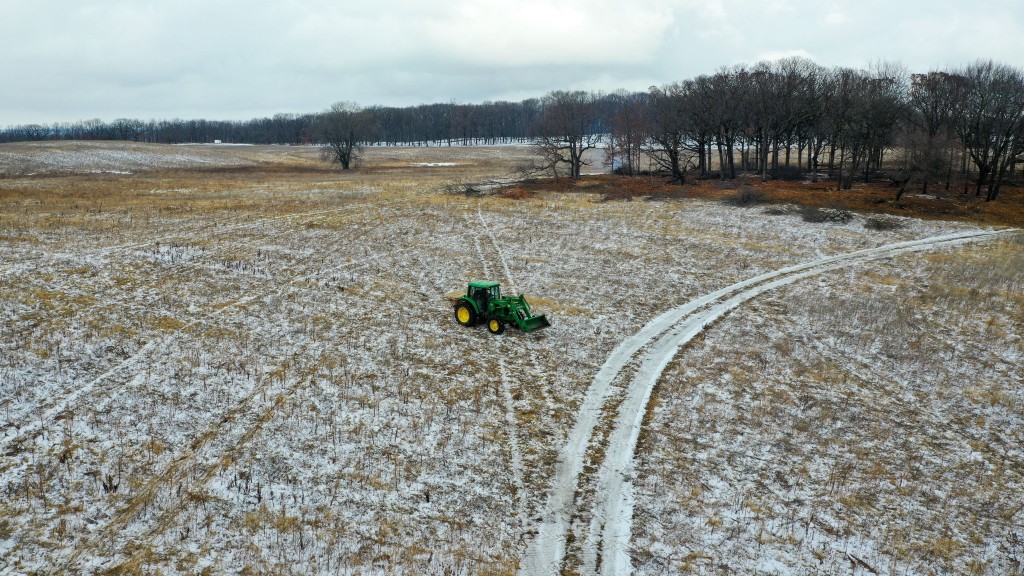
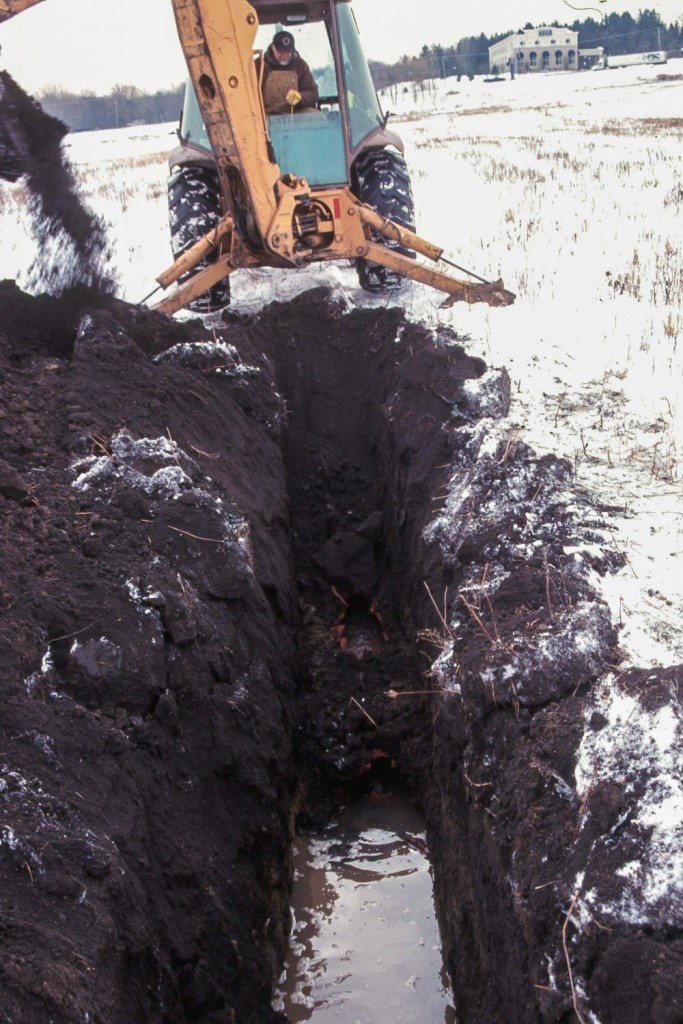
In the Midwest, many farm fields have been engineered to increase crop yield. This is often done by changing the original hydrology of the habitat with drain tiles, so what was once a wetland becomes cropland. Drain tiles are perforated pipes laid below the soil surface, effectively lowering the water table to encourage root growth of planted crops.
As you might guess, drain tiles are a significant alteration of the original environment. This alteration means that restoration of former agricultural lands, such as the project area at Grant Woods, can be quite complex. Several steps are often needed, and each step requires decision-making.
One factor to consider is how recently the area was farmed. A field that lies fallow for a long time is referred to as an “old field.” The natural process of ecological succession might push the habitat toward one dominated by native plant species that are generalists. In other words, generalist plants can grow in many settings and aren’t very particular about habitat quality. When a farm field goes fallow, these native plants may disperse themselves into it from adjacent areas.
But invasive shrubs and trees can dominate an old field, as well. Invasive plant control can be the first step in a restoration. It may be accomplished with controlled burns, physical removal of woody invasive plants, herbicide application, or all of the above. If only herbaceous (i.e. plants with non-woody stems), invasive species are involved, you might plow the field to allow new native seed to establish rapidly. If invasive species are relatively sparse, as they might be in a newly fallow field, one strategy could be over-seeding the field with fast-growing, native grass species. Following seeding, crews would then selectively apply herbicide to reduce invasive species abundance and boost the success of the newly planted grasses.
Once those grasses are well-established, perhaps within a year or two from seed, the next step is to add herbaceous species such as goldenrods, asters and legumes to diversify the plant community. In the very early stages of a restoration—the establishment phase—continuing to control invasive species is critical. Frequent control measures will occur for about five years as native plants become well established. The intensity and frequency of control, though, will decrease over time.
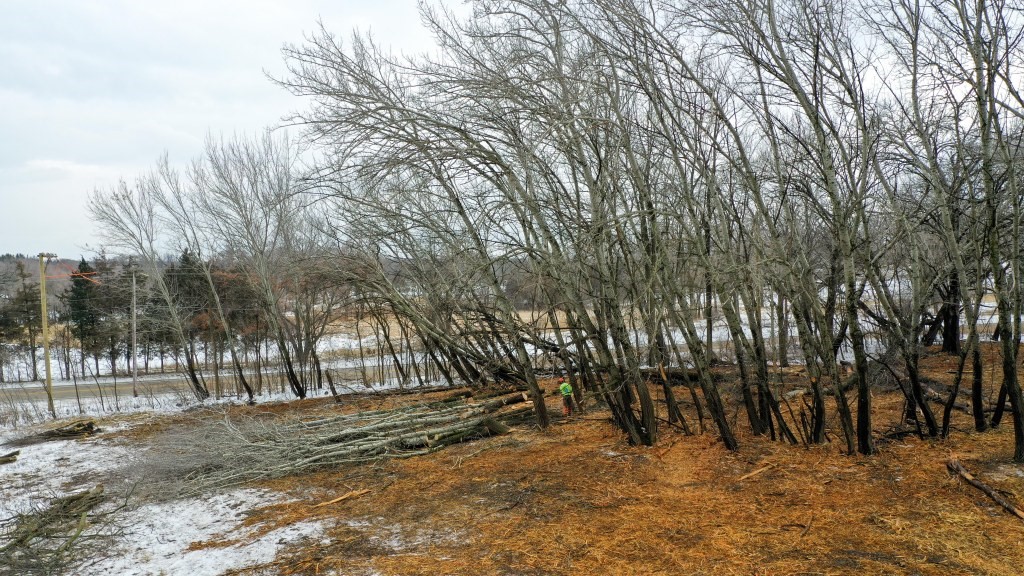
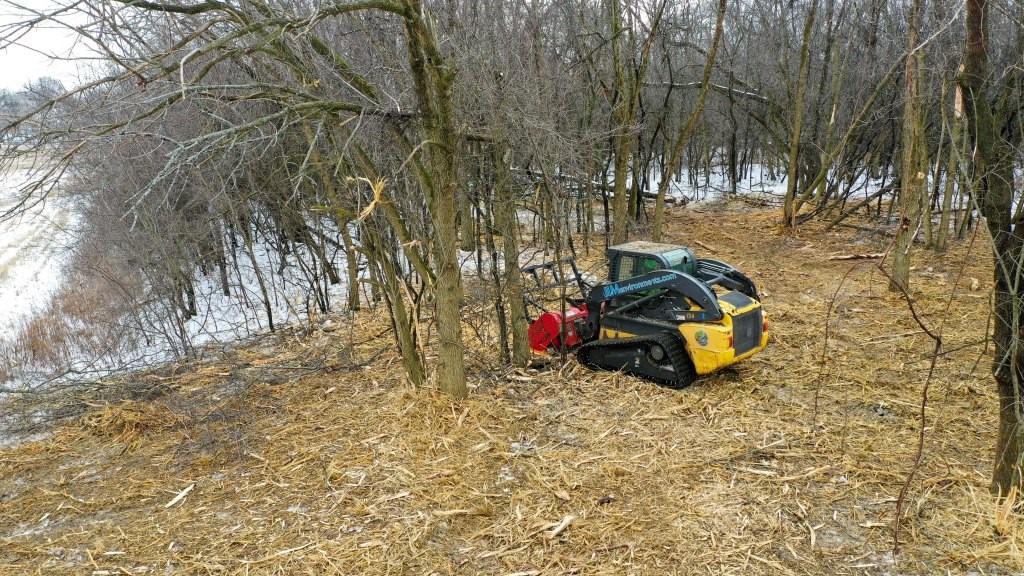
Many farm fields have hedgerows that grow between them. Hedgerows may contain trees, shrubs and fences. They’re variably used to mark property ownership boundaries, control where livestock wander, or act as a windbreak. Removing hedgerows increases connections between fields. Depending upon the size of the trees, heavy equipment may be employed. One common piece of equipment called upon for this task is a skid steer with a Fecon mower attached.
The Fecon mower attachment is ideal for shredding and mulching woody material very quickly. Large areas of invasive buckthorn (Rhamnus cathartica) can be removed efficiently by this tool. The skid steer may be equipped with large wheels for versatile movement, or it could have tracks that reduce damage to the soil by distributing the weight of the machine over a bigger area. An additional way to avoid damage is to limit the use of a skid steer to times of year when the soil is very dry or when the ground is completely frozen.
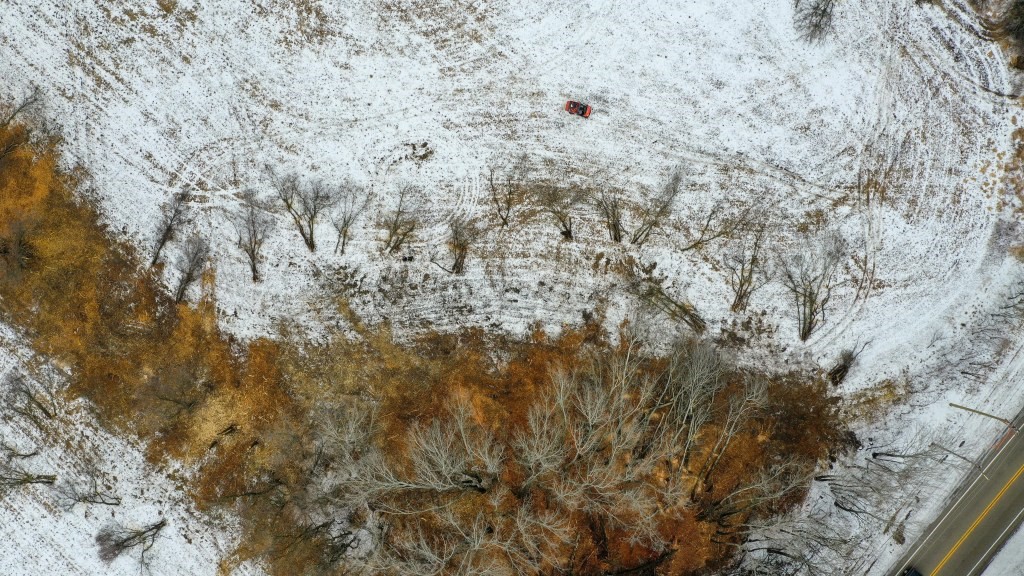
At Grant Woods this winter, we’re removing invasive trees and shrubs, including buckthorn, box elder (Acer negundo) and white poplar (Populus alba), often confused for birch trees. Our end goals are to open up the tree canopy to encourage oak regeneration, and to support a diverse community of native shrubs and herbaceous species beneath the oaks that remain. We’ll plant additional trees and shrubs, which will provide habitat for birds and other animals. Once the restoration is complete, the project area will be continuous habitat.
As you can see, restoration projects are long-term endeavors, requiring detailed planning and execution to successfully set a natural area back on the path to recovery. Site history, current flora and fauna populations, hydrology, and more must be considered. Results will not reveal themselves overnight—plants take time to grow from seed, of course—but we’ll be here to document and share them as they happen.
By Kevin Scheiwiller, Restoration Manager, Barrington Illinois
While attending the 2019 GRN Workshop in Madison, I was particularly impressed with the prairie restorations the Madison Audubon Society was undertaking. Young restorations of old brome fields already had a great display of matrix prairie species after just three years of planting. They had first burned and then sprayed glyphosate before seeding in the sod. After listening to how they approached these restorations, I was inspired to try a variation on their technique on some brome fields Citizens for Conservation recently acquired. In the past, we commonly would seed heavily into brome fields and rely on fire to eventually knock out the Eurasian grass sod. Anecdotal results using this approach for the last 10 years has had some positive results, but often a dense sod of brome will remain with only scattered clumps of native matrix species starting to break through. We decided to compare the two methods side by side and track the progression of each and make a quasi-experiment out of it.
Hypothesis:
Mow, then spray then seed Vs. Seed only: Stimulating growth of Hungarian Brome (Bromus inermis) through a late summer mowing followed by treatment of 3% Glyphosate in the Fall to set back the brome grass sod (as typically one spraying does not kill the sod but weakens it) will increase germination rates of prairie seedings over areas where brome is left intact.
Site Description:
The study site is an old hay meadow with the dominant species being Bromus inermis. There is scattered Tall Goldenrod (Solidago altissima) mixed in some of the study plots, but not in numbers that will drastically alter species composition.
Methods:
The site has been separated into 10 plots, 5 received Treatment 1 and 5 plots received Treatment 2. The study site is approximately 100’ by 170’. The plots were created by “eyeballing” the center point of the field on an East-West axis and creating study blocks every 30’ on the North-South axis. Figure 1 shows the study plots. A recent updated photo from Google maps reveals that the “eyeballing” techniques left plots rather uneven in shape and size. The center of each plot was staked with a wooden post for subsequent monitoring.
Treatment 1 – Mow, glyphosate, seed:
Areas mowed with a Gravely brand brush mower at a 4” depth on August 30, 2019. The mowing is meant to stimulate the growth of this cool season grass thereby increasing the uptake of herbicide. Madison Audubon Society uses late Summer burns for the same effect. Due to smoke concerns in a highly residential area, mowing was substituted for this experiment.
A 3% Glyphosate solution (4oz/gal of RoundUp Custom with 1oz/gal of non-ionic surfactant and turf marker) was applied a few weeks later on September 20, 2019.
Each plot seeded with 5 gallons of Dry Prairie Mix and perlite on November 20, 2019. The mix consisted of 9.3 ounces of 33 species of hand picked and processed (aka chaffy) seed mix. We seeded at an approximate rate of 17 pound per acre. See attached seed list for species and approximation of the weight distributed.
Treatment 2 – Seed only:
Each plot seeded with the same 5 gallons of Dry Prairie Mix and perlite on November 20, 2019
Results after one Growing Season:
Plots were surveyed on September 13th, 2020 and a colleague, Karen Glennemeier, graciously crunched the data. The comparison between the two treatment types are as follows:
Treatment
Plot
N Spp
Mean C
FQI
Native Cover
% brome
mow, spray, seed
1
16
3.88
15.50
77
2
mow, spray, seed
4
17
4.47
18.43
98
0
mow, spray, seed
5
15
4.53
17.56
88
0
mow, spray, seed
8
13
5.23
18.86
85
0
mow, spray, seed
9
13
3.62
13.04
57
0
seed only
2
3
0.33
0.58
1
100
seed only
3
5
1.80
4.02
13
100
seed only
6
3
0.67
1.15
8
100
seed only
7
3
0.00
0.00
0
90
seed only
10
5
0.80
1.79
5
100
Means
mow, spray, seed
14.80
4.35
16.68
81
0
seed only
3.80
0.72
1.51
5
98
St. Errors
mow, spray, seed
0.80
0.28
1.08
7
0
seed only
0.49
0.30
0.70
2
2
Management Implications and Ongoing Monitoring
As observed through the Madison Audubon’s restorations, the pre-treatment of Brome with mowing (or fire) and initial Glyphosate treatment produced a much more diverse assemblage of plants the following growing season. This treatment was not too intensive for the small plots but scaling up would require a large amount of time and/or equipment. The big question moving forward now is will the “Business as Usual” plots catch up to the treated plots? If both plots end up evening out in species abundance and distribution over the next decade, then is it worth the effort to pretreat the brome? Time will tell and data will continue to be collected.
Figure 1 – Study Area: Plots 1,4,5,8,9 received mow, spray, and seed; Plots 2,3,6,7,10 received seed only
Figure 2 – Pretreatment August 30, 2019
Figure 3 – August 30, 2019 after mowing. 5 plots were mowed, sprayed with glyphosate 21 days later and then seeded. 5 plots were left unmowed but seeded same day as treatment
Figure 4 – November 20, 2019 Seeding each plot with ~5 gallons of Dry Prairie Mix
The author forgot to take a picture during the growing season of 2020 which would have been helpful for the sake of this article. The same error will not be repeated in 2021.
Dry Prairie Seed Mix broadcast on November 20, 2019
This Fall we began the process to turn a retired agricultural field into a mosaic of wetlands, wet prairie, mesic and dry prairie.
Below are the photos and maps of this work. At the end is a link to the full report on our Friends of Nachusa Grasslands site. The report was written by this year’s Nachusa Resident Fellow, Anna Scheidel.
Anna Scheidel
The planting is 23-acres.
On this 23 acres we planted 1,622 pounds so about 70 pounds per acres of seed from 165 species of seed!The fall crew of Khushali, Morgan, Emma and Anna completed the hand harvest of seed, mixed the seed, and planted it. We pulled two seeders around the field. Some of the special seeds, and the very wet areas were hand planted.This view is just after we created three scrapes, using the soils removed to build two shallow dikes that also created shallow pools. These open waters will typically freeze in the winter and perhaps dry out in the late summer, thus being great habitat for frogs and turtles and other critters.
Winter has always been my favorite time of the year to do woodland ecological restoration work.
It’s peaceful, comfortable and non hazardous. There are no insects, Herps or bird nests to accidentally spray on.
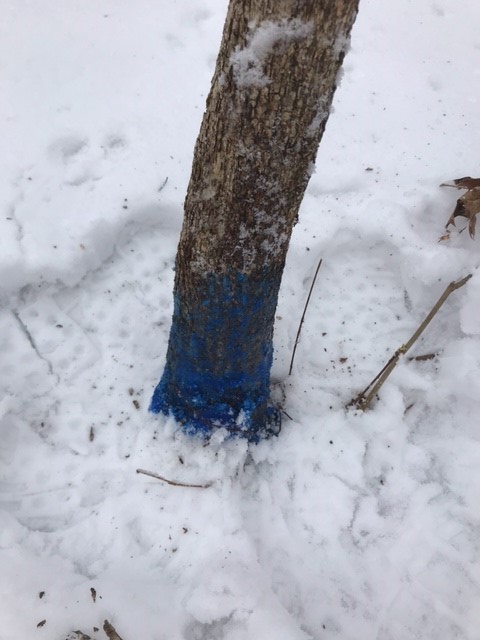
Basal spraying with 20% Triclopyr Ester, called by various trade names such as Garlon 4, Element 4 and others, mixed with a good quality basal oil with dye, is my choice for the entire Winter. If done properly there is minimal off target plant damage.
I usually scrape some bark off every fifth tree or so, or any tree that I’m not sure of being dead or alive. The scrape mark also acts as a flag that I can see from a distance, indicating I’ve been in that area.
Winter brings snow, yet there is an effective tactic to use. There may be snow on one or all sides of the trunk. The label instructs to spray trunks clear of snow or ice. Recently, all the snow has been just on the east side of the trunks. No problem here.
Just use your foot as a shovel and push down on the snow. Usually takes a couple of swipes to clear most of it off.
I usually “step down” any fluffy white stuff on all sides of the trunk. Times a couple hundred trees a day, this takes some time to do, but at least you’re out there doing restoration work when others are saying, “there’s too much snow out there to work!”
Next, under LOW pressure, careful spray a stream of herbicide around the entire circumstance of the trunk about 6 inches high. I spray a complete band around the lowest part of the trunk of a tree or branches of shrubs. I’m concentrating on anything exotic, plus mesophytics less than 6” DBH. (Diameter at Breast Height.)
You will have to walk around each tree to cover it properly and avoid overspray. If you are careful, there will be no dye stained herbicide splattered all about. This can greatly reduce the “ring of death” around the base of the tree that will likely be evident the next growing season.
Trees with smooth bark will allow for clean spraying.
Rough barked trees, like Black Cherry, Hackberry and some Elms, need to be sprayed even slower and from a higher angle than smooth barked trees. You will get the hang of it if you pay close attention.
Whether you are shopping for a slip on unit, or want to assembly one yourself seeing the ones here can help. Below are some photos of pumper units I assembled this year.
At the end is a link to the Illinois Prescribed Fire Council equipment review page where you can find a more detailed document with lots of photos.
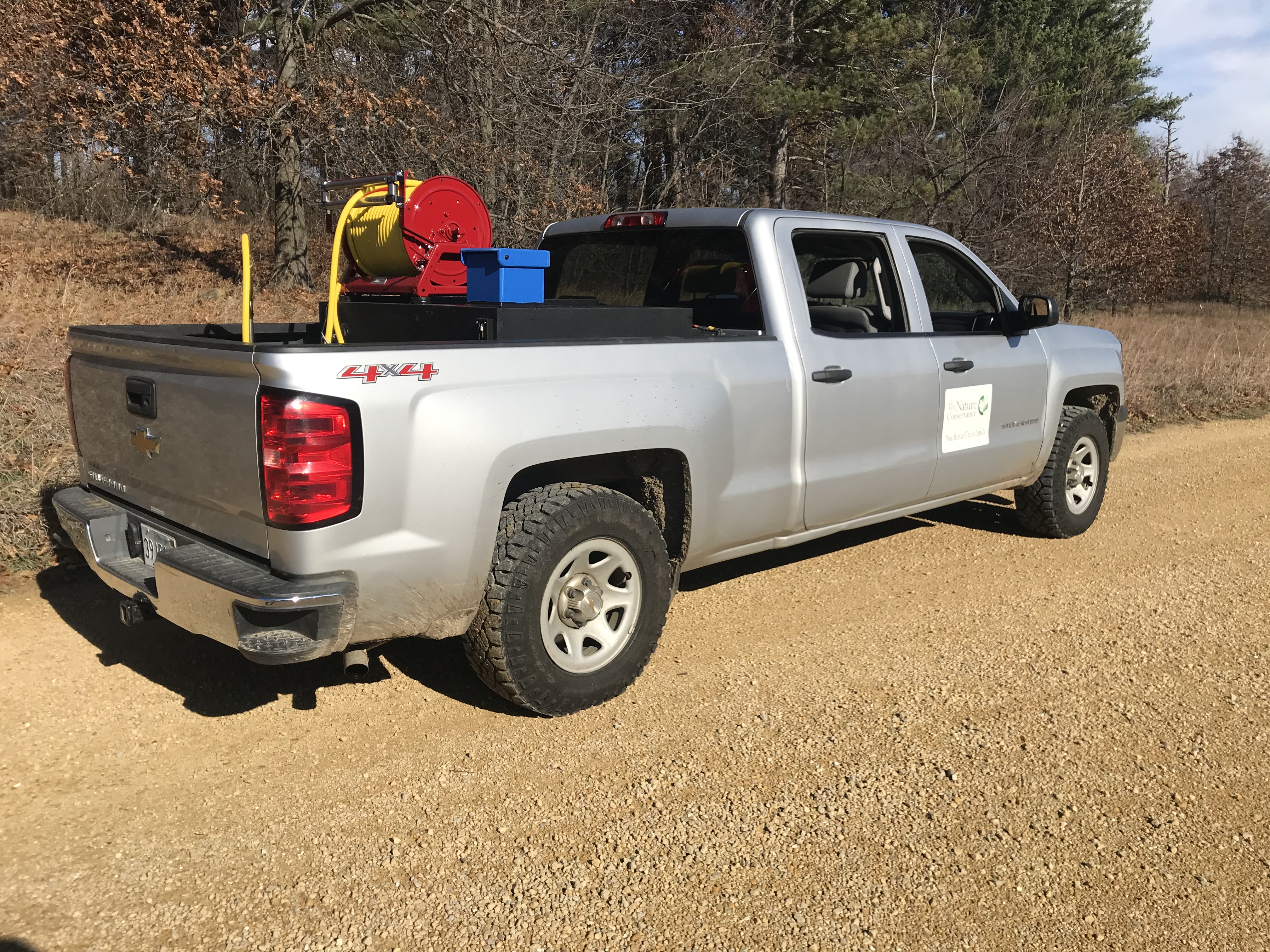
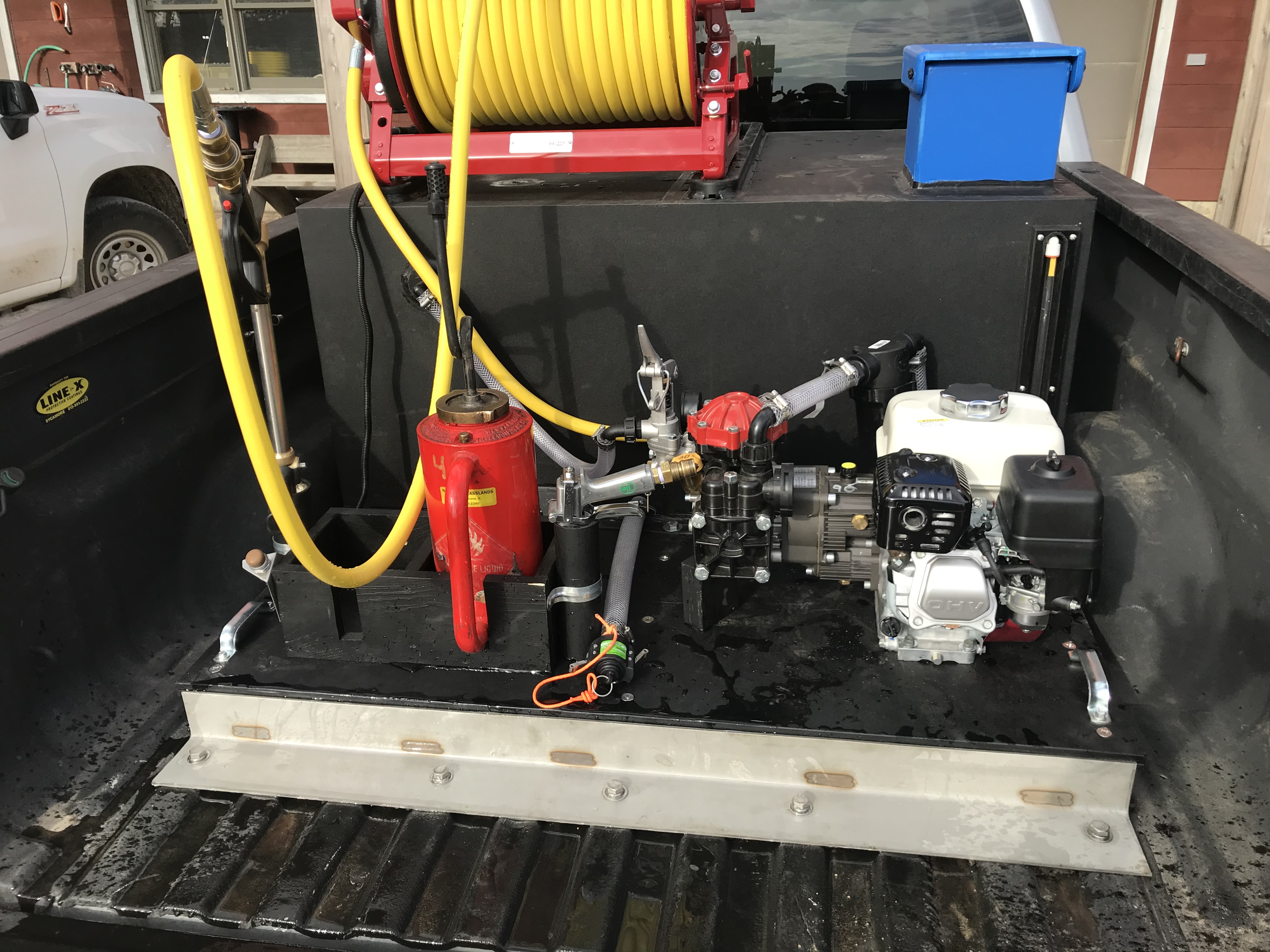
160 gallon truck pumper above. What you see is a 5hp Honda GX160 Motor with a Hypro D30 (also found as an AR30) piston/diaphragm pump with its pressure regulator. The yellow hose is half inch ID Continental Gorilla hose. There is a JD-9 hand nozzle, $165, and a Hypro long range rifle style tree gun $260. I mounted the push button for the reel to the left of the red drip torch. This is because the reel is too far away from the tailgate or side of the truck to be able reach your arm across to feed the hose onto the reel.
I had my local fabricator create the stainless steel mount plate clamp to affix the pump to the bed at the back and front of the tank. This unit should be able to withstand at least a modest vehicle collision. My hand shows where the stainless Z shaped bracket “clamps” onto the skid unit. (March 2022 update: I concluded this plate was too much fuss. We still use the clamp near the tailgate but retired the front clamp by the cab due to it being hard to remove the clamp during the summer season. Fuel tank and other stuff in the way. So we added bolts through the bed to help the single clamp do its job.)
UTV pumper runs with the tailgate closed. The main mass, the water, is up between the two axles. The plumbing is simple and clean, even if the hose is not perfectly reeled up. The white laundry detergent bottle carries Class A fire foam. We add a capful per 50 gallons of water, sometimes two or three capfuls. At the end of the season flush out the soapy water. The hose roll up handle on the reel is on the driver side for easy reach. This unit feels very stable on corners and zipping down the road.
On September 15th, 2020, 124 participants from across the Midwest and the broader United States, as well as Argentina, Australia, Canada, and Germany, came together for a virtual workshop: Growing Through Change – Sourcing Climate-Resilient Seed for Ecological Restoration. The purpose of the workshop wasto discuss the most current research, challenges, and best practices related to sourcing seed for ecological restoration while building resilience to climate change.
The workshop featured three plenary speakers as well as lightning talks by land managers and seed producers.
Plenary speaker: Dr. Julie Etterson, third from left above, is a professor at the Institute on the Environment at University of Minnesota, Duluth, and principal scientist at Project Baseline, was the first speaker. Dr. Etterson studies the evolution of plant populations in response to climate change. Her presentation highlighted her research on whether plant populations can adapt to keep pace with climate change and whether we should restore sites with plant material that is “preadapted” to the climate of the future. Dr. Etterson’s research provides evidence for the value of climate-informed restoration practices.
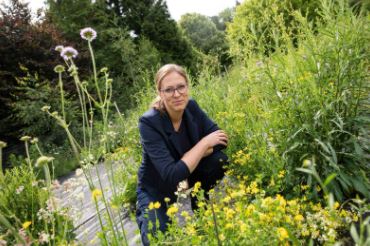
Plenary speaker: Dr. Anna Bucharova, shown above, is assistant professor in the Biodiversity and Ecosystem Research Group at the Institute of Landscape Ecology, Münster presented the next talk: “Mix and Match: Production of Seeds for Restoration in Germany.” She focuses her research on plant evolutionary ecology, specifically the challenges in using seeds for ecological restoration in a changing environment and the rapid evolution of plants in response to climate change. Dr. Bucharova discussed the effects of seed cultivation on plant genetics and evolution and their implications for seed-based restoration in a changing climate.
Plenary speaker: Jennifer Ogle, shown above is the coordinator of the Arkansas Native Seed Program and collections manager at the University of Arkansas Herbarium, was the workshop’s final speaker. Her presentation highlighted the program’s work to develop ecoregional sources of locally adapted native seed for large-scale habitat restoration and revegetation projects in Arkansas. The program is currently focused on developing demand and incentivizing the use of locally sourced native seed for agencies working in Arkansas, training volunteers to collect seed, increasing seed storage capacity, and developing sustainable ecotypes of target species.
I find it pleasant when driving the preserve and I spy one autumn olive out in the prairie and I have my little sprayer in the truck. I don’t need to remember to return to take care of the problem.
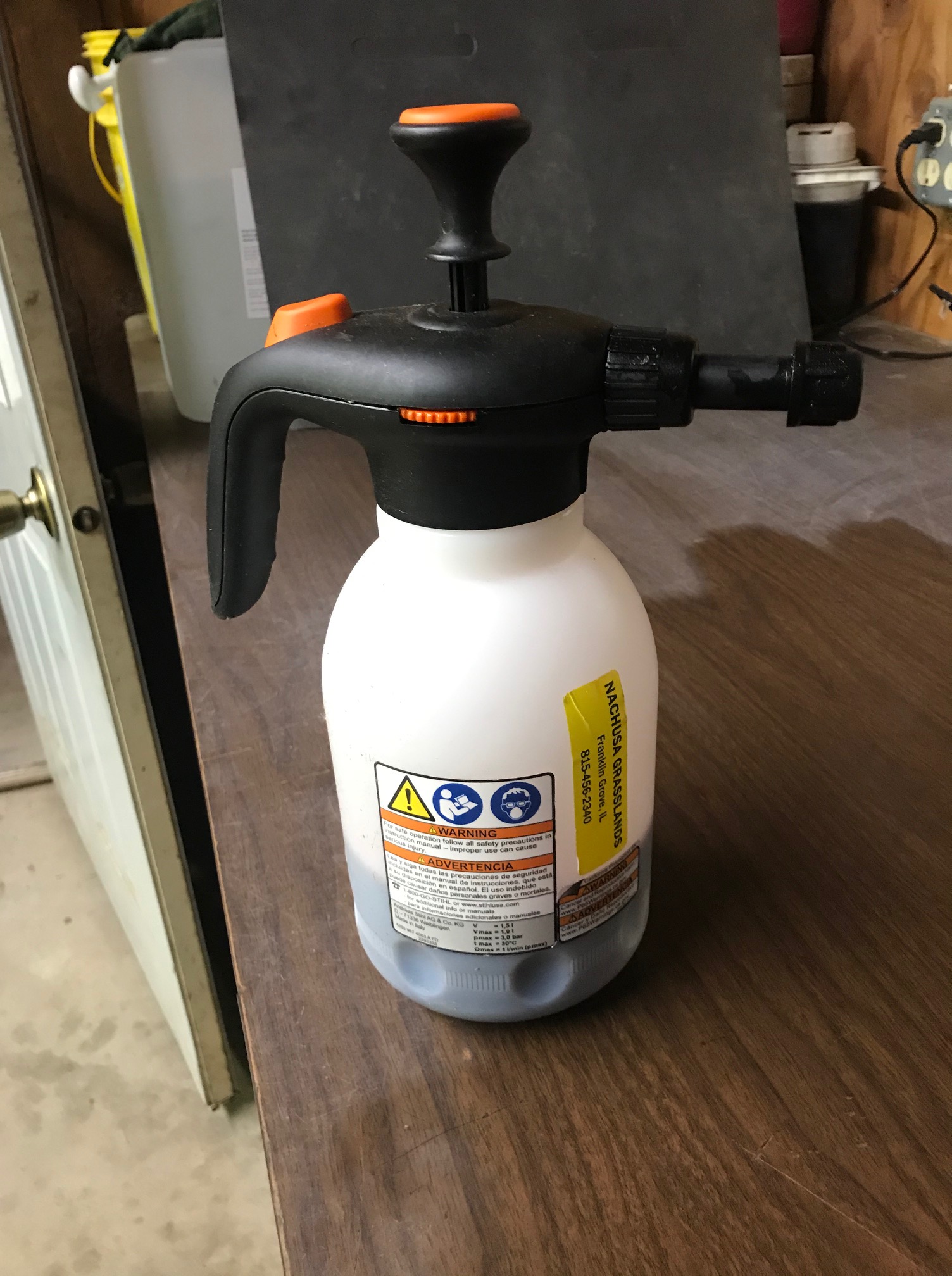
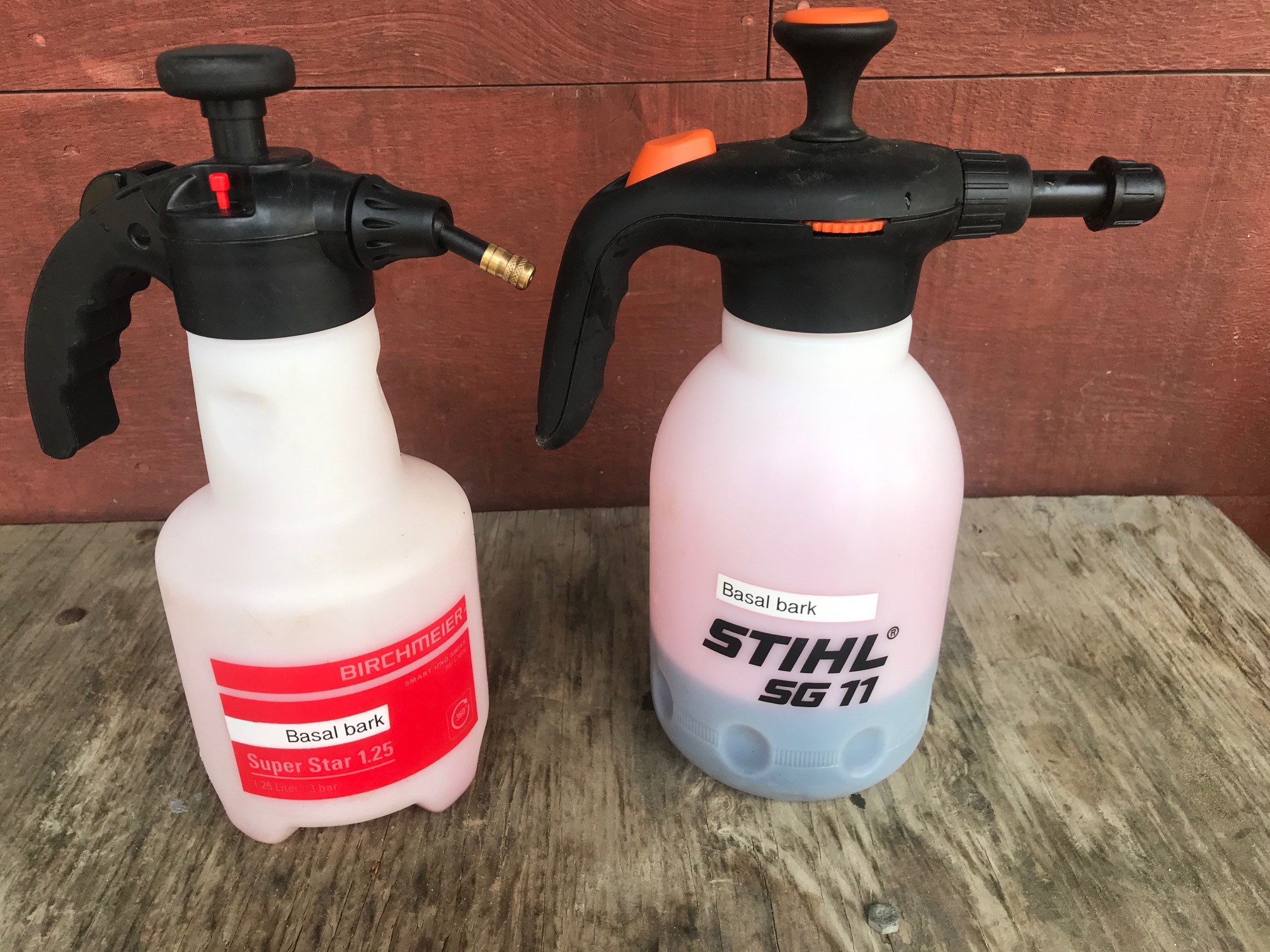
Below is a Stihl SG11 we use for basal bark oil herbicide, so mineral oil with about 20% broadleaf herbicide of Garlon 4. They hold about 1.5 quarts. Sprays water solutions too, of course.
Although the directions for these state to empty and wash them with warm soapy water after each use, I fill them with slippery basal bark solution and have one of them sitting in a bucket in the bed of my truck year round, cleaning it a few times a year for good luck.
The Stihl SG11 costs about $35. I have been trying several of these for about two years and they still works. Amazing! The tip is not adjustable which is one weakness. It sprays a cone pattern only. So you want low pressure and get very close to the stem. A few of our crew find this cone only pattern frustrating. The tip and its mount are stout. It has an orange pressure release on the side for storage.
A few times we have had them report they would not build pressure. This was the rubber ring that pushed against the air to build pressure. The seal was out of place. To fix, clean sprayer with warm soapy water, then find that rubber ring on the pump plunger and fit it back into place. Then test.
For about a year I have been trying the Birchmeier brand “Superstar 1.25” of these sprayers at $70! I like it too. The tip can pivot up and down which maybe helps with some situations. And the brass nozzle tip is adjustable for cone or stream. Both models can release the pressure when you are putting them away in your vehicle.
Below is the working parts of the Birchmeier. In this photo you can see the trigger I am holding has split on the far end. The red plunger is pointing at crack. This is the third time this has split right here. The supplier was responsive and sent me triggers at no charge.
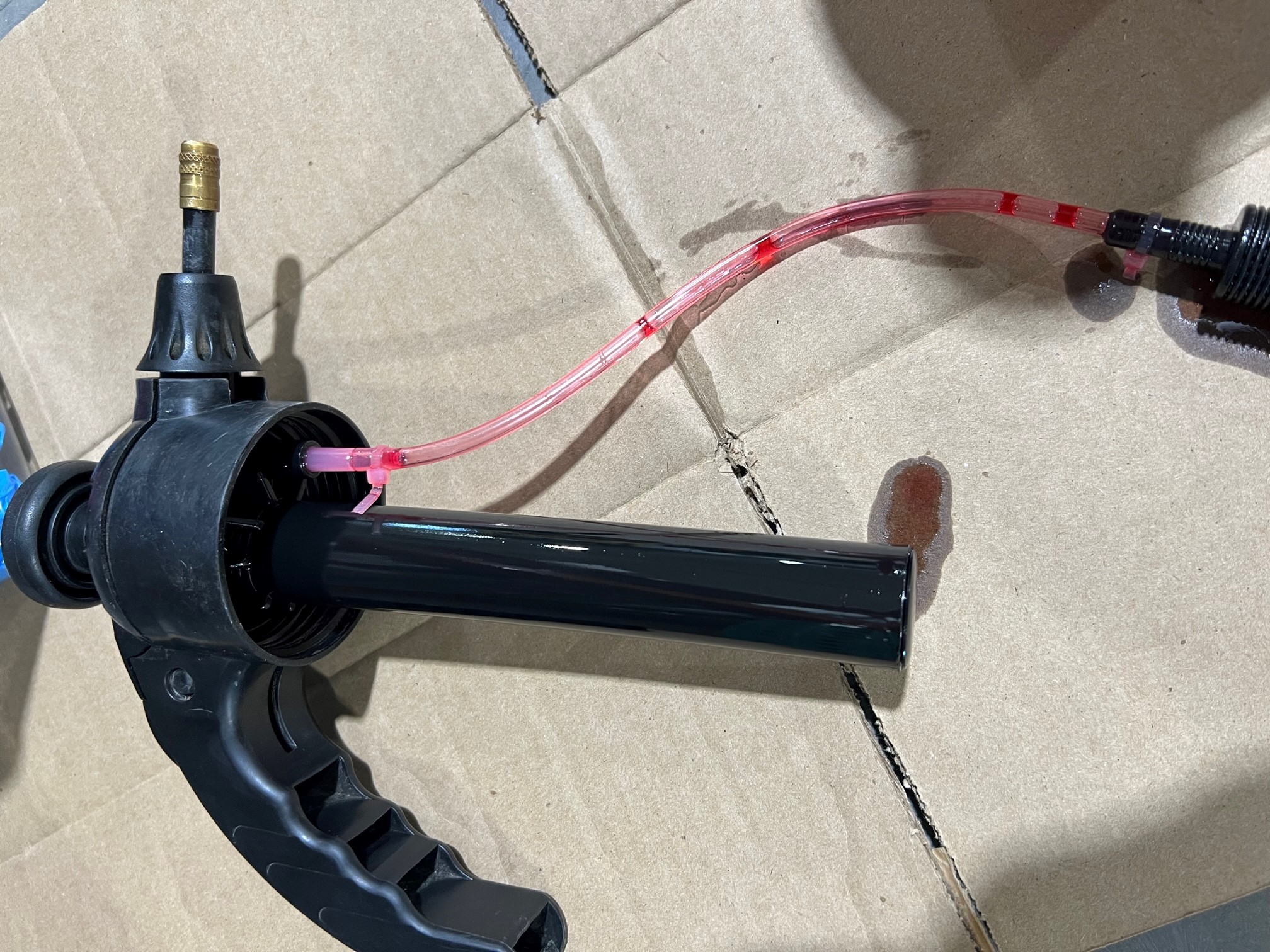
Below, the Birchmeier innards. See the clear pickup tube slides over a smooth hose bib. Basal bark fluid is slippery and this tube was sliding off. This bib should have been made with barbs. To fix it, I took a very small clear cable tie and cinched it on. You can just see them in the photo below. I put a cable tie on the filer end too. It works.
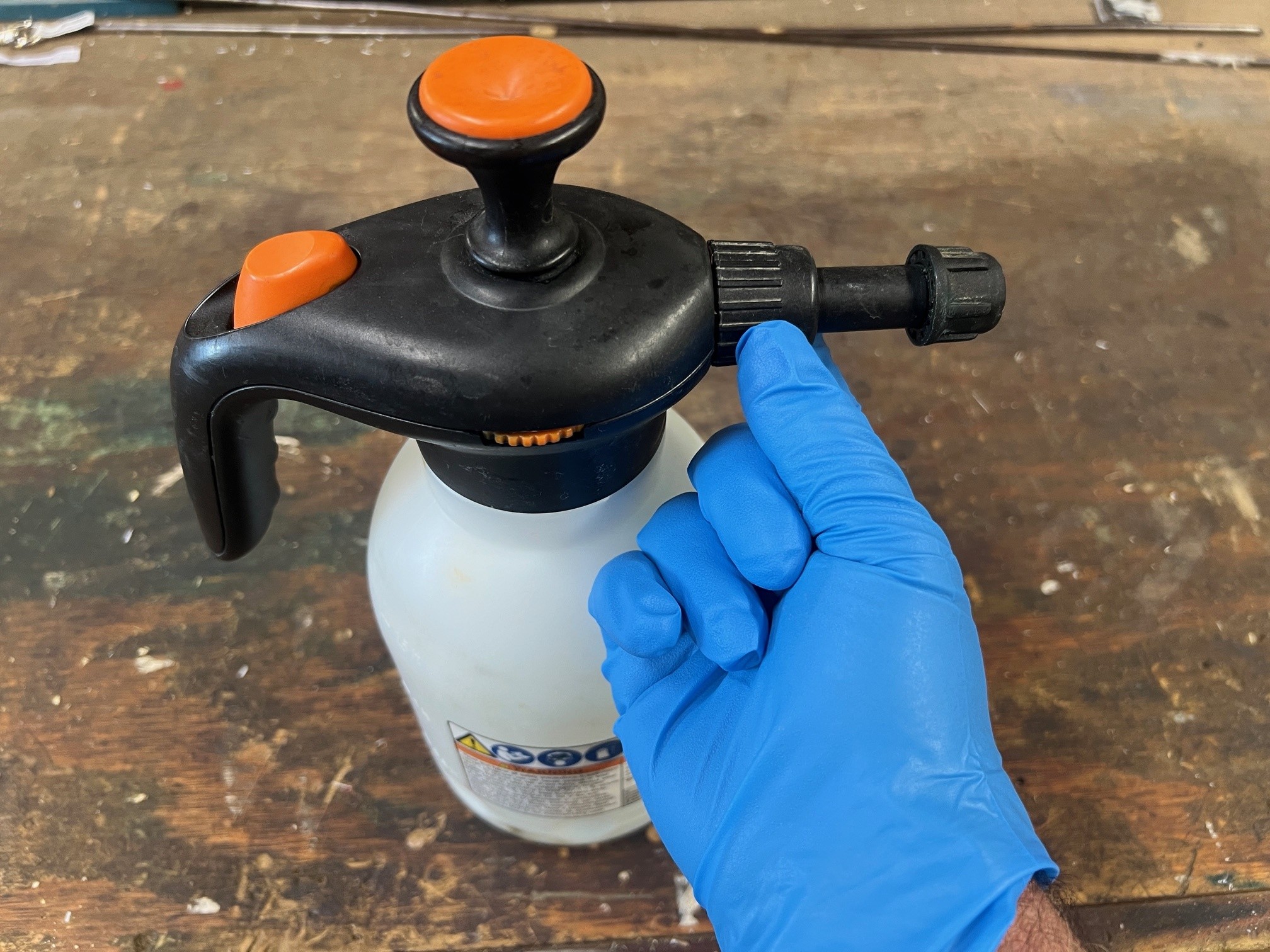
Back to the Stihl hand sprayer. If the issue with the Stihl squirt bottles is that it is hesitant to release the liquid when you pull the trigger, then I have a solution. In the photo I am touching the plastic nut which holds the mechanism together. If that nut is too tight you get the hesitant trigger. Just loosen it about a tenth of a turn (counter clockwise) and I have found that problem is solved.
Likely someone tightened it to make sure it would not leak.
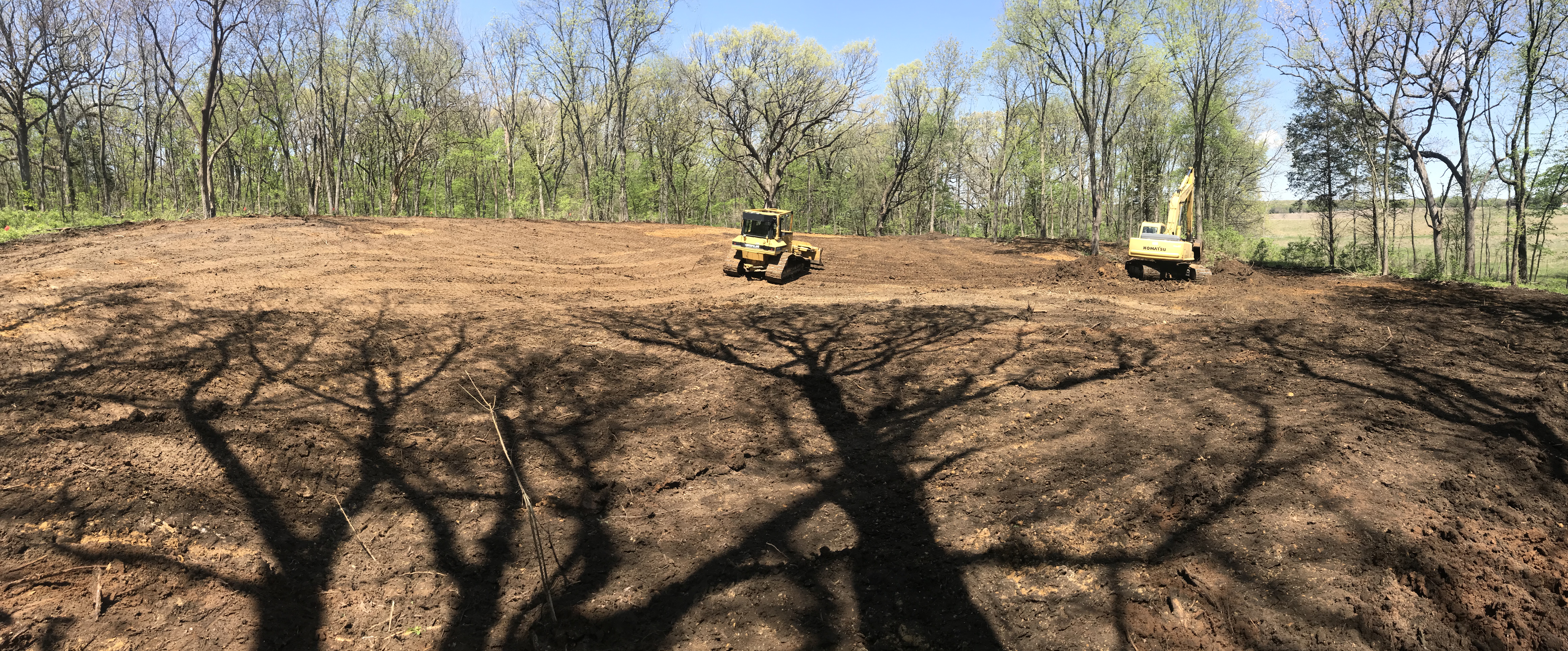
Years back we purchased a tract with a gravel mine pit. We found some funds last year to use an excavator to return the land to a more natural looking, gentle, shape before starting the long process of restoring the native plant community.
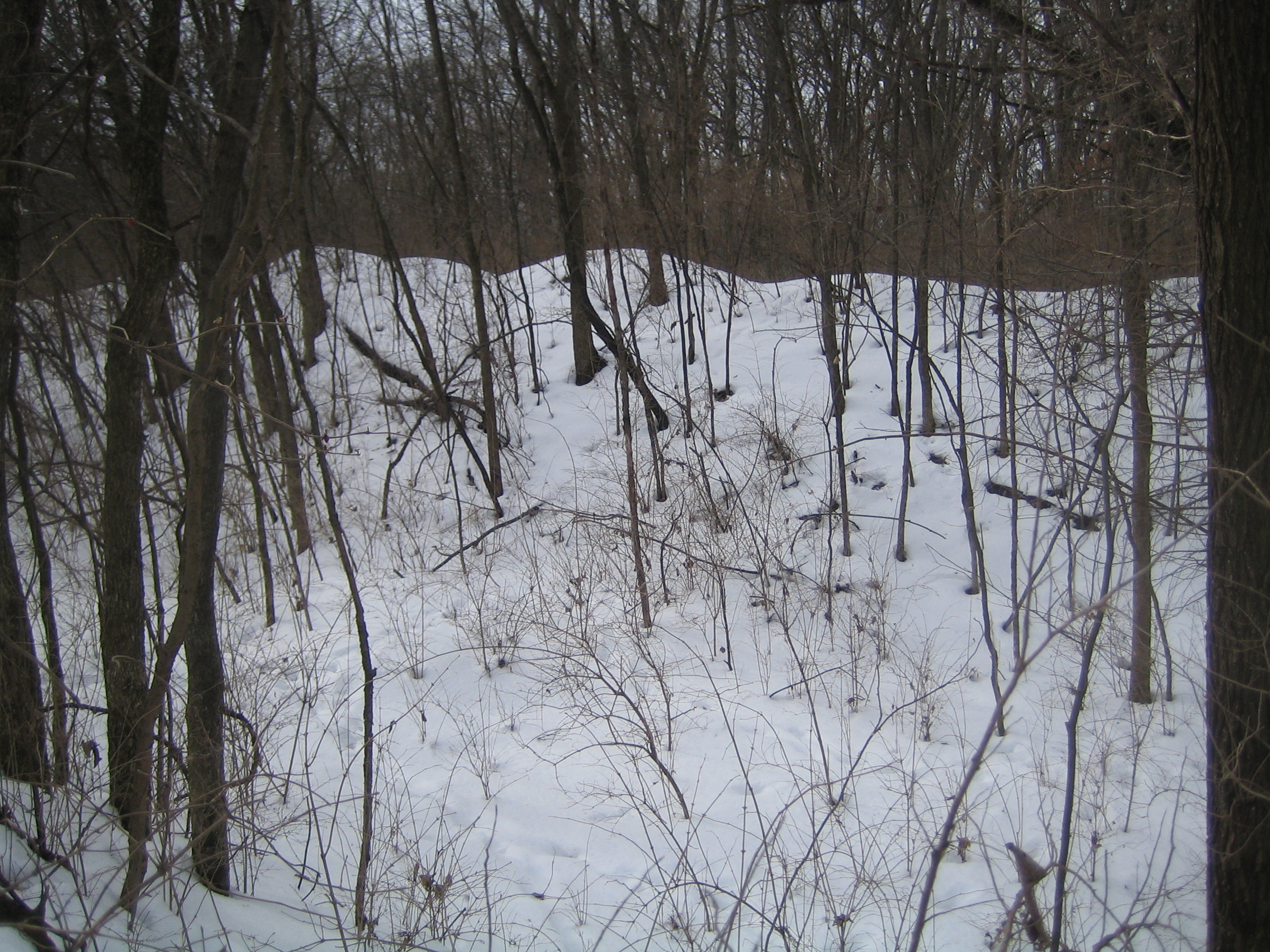
The photo below is the old gravel “borrow” pit. The trees are mostly elm, some Osage orange, cherry. The spoils are bigger and more abundant than my photo suggests. The area surrounding the pit is a rather nice oak hickory woods.
The same pit, but a different photo angle. Decades back the top soil had been pushed up onto a ridge on the left. We later spread this topsoil back over the final grade.
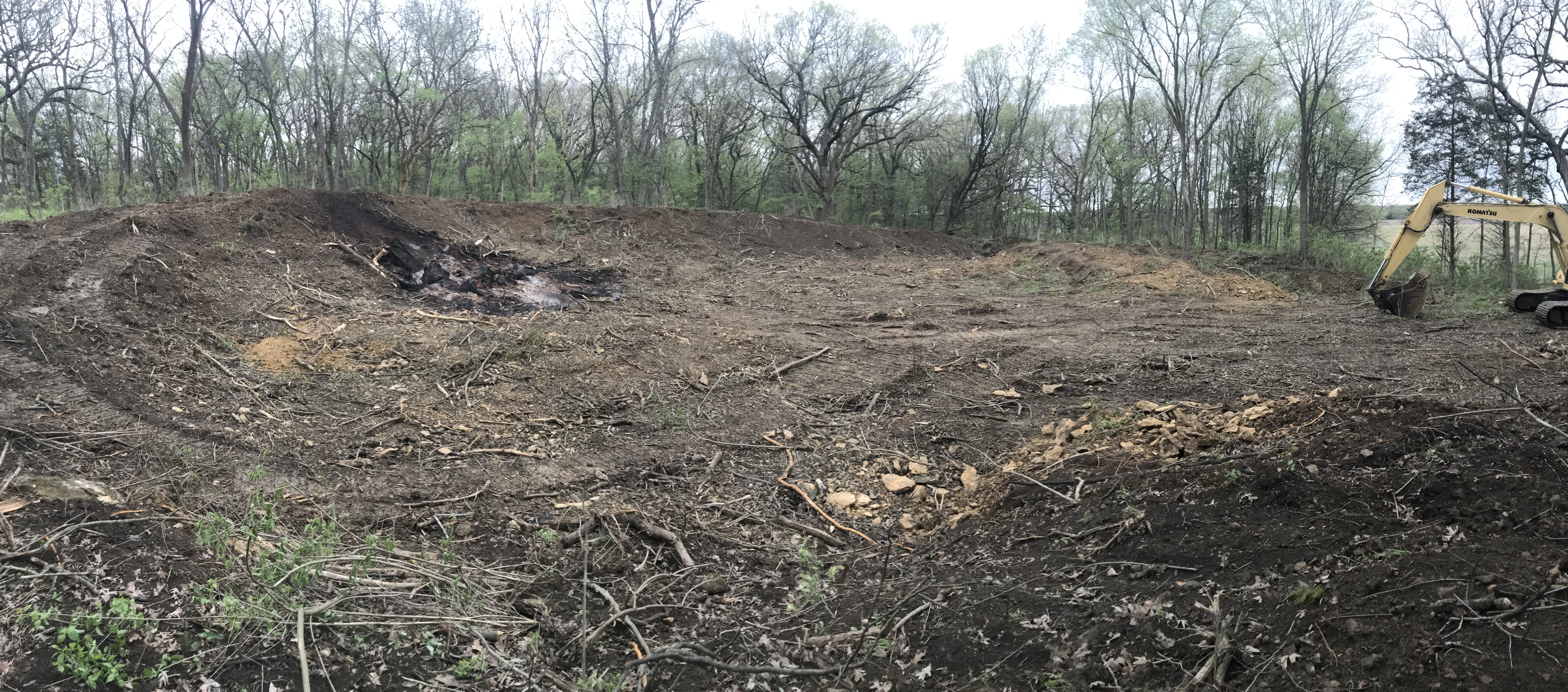
After two days the contractors had the trees piled and burned. The excavation contractors were Bill and Brad Nordman, below.
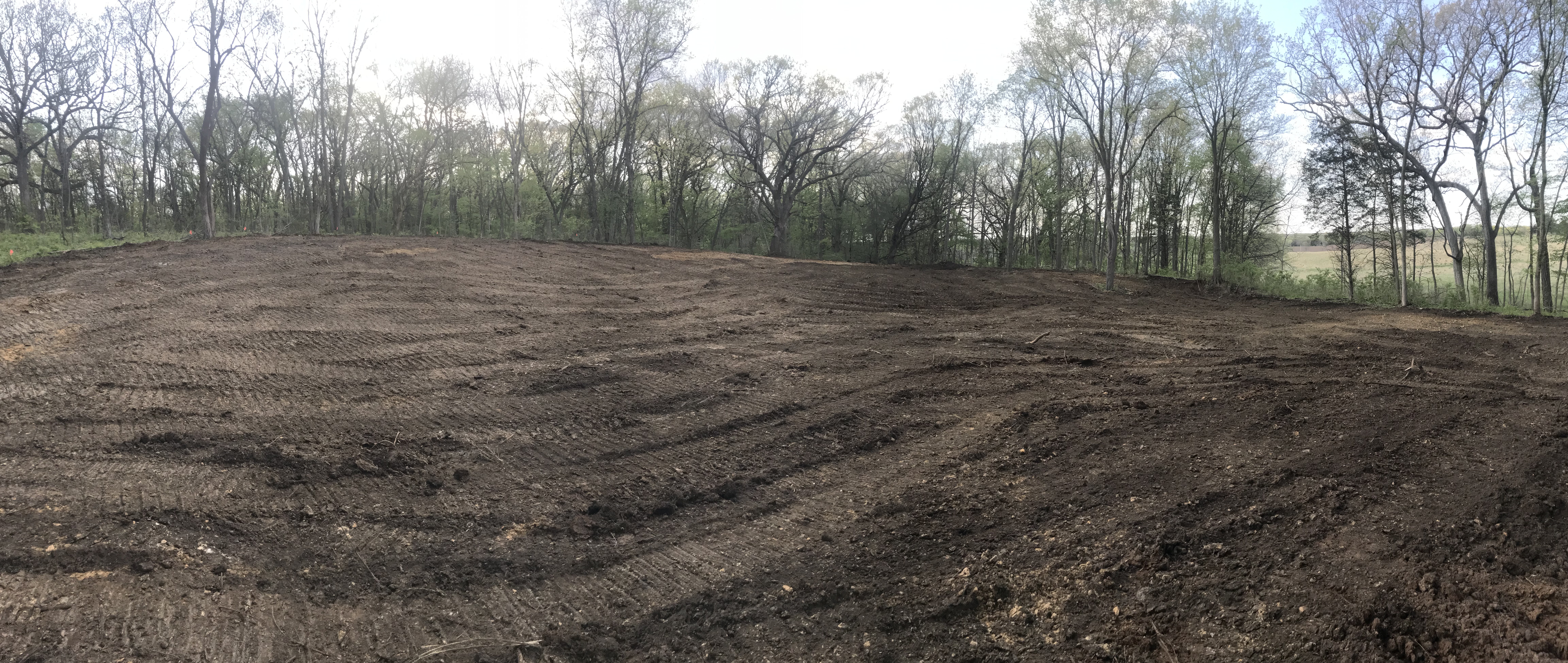
They gave the shape of the pit a more natural look.
We smoothed the area with a harrow and planted combine harvested seed from a prairie planting.
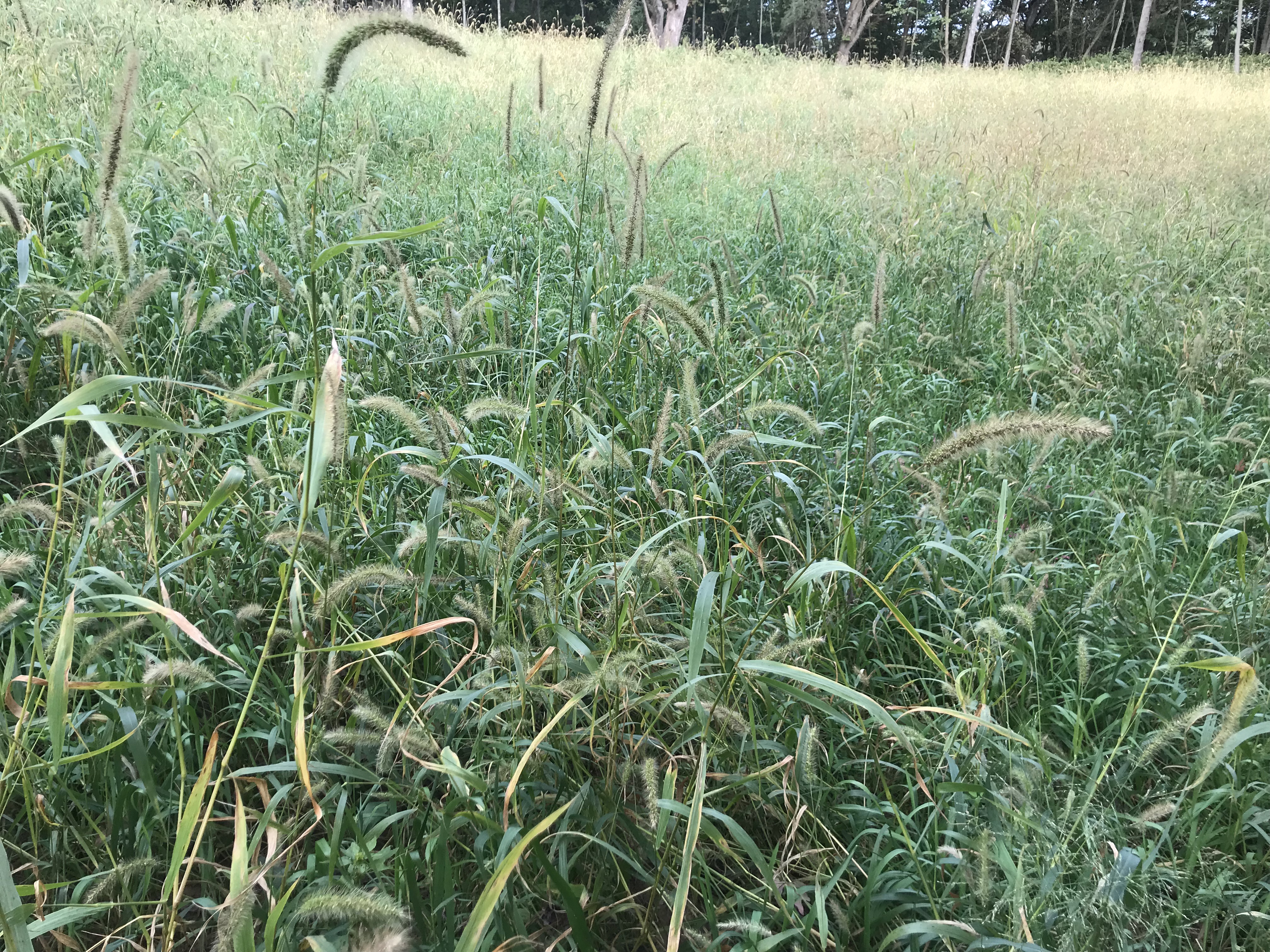
Below is the natural “cover crop” of foxtail, a weed in every foot of disturbed soil in the region. There are also some smaller sized annual oats we planted in case our cover crop did not show up. And we planted our prairie seed. A year later the Canada rye dominates, and by year three the other prairie plants will be showing up
Leaf blowers are used to move vegetation off of fire breaks to make them less flammable.
A backpack leaf blower
I once sent two hardy youth, Ryan K and Austin S, out to clear two miles of woodland fire break, each with a back pack leaf blower. After a long day of noise, brambles in their faces, hills to go up and down, they got it done.
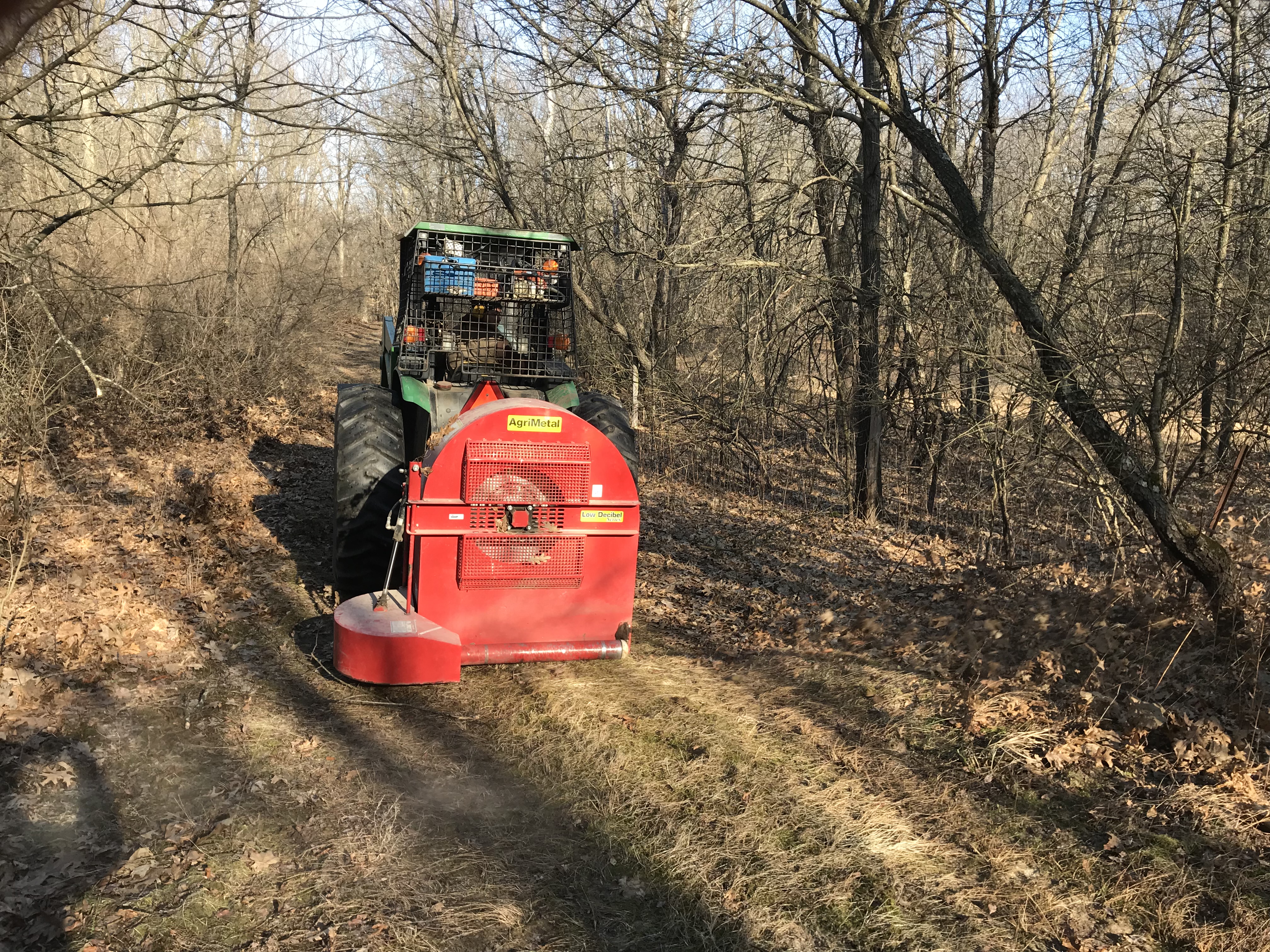
We needed a bigger tool. It ends up golf courses use tractor mounted leaf blowers to clear their fairways. They work for us too. Below is our leaf blower for about the last decade.
Here is a video of the leaf blower above clearing oak woodland fire break of leaves and mowed vegetation. These cost $4,000 to $5,000: https://youtu.be/dGYF0BHrZro
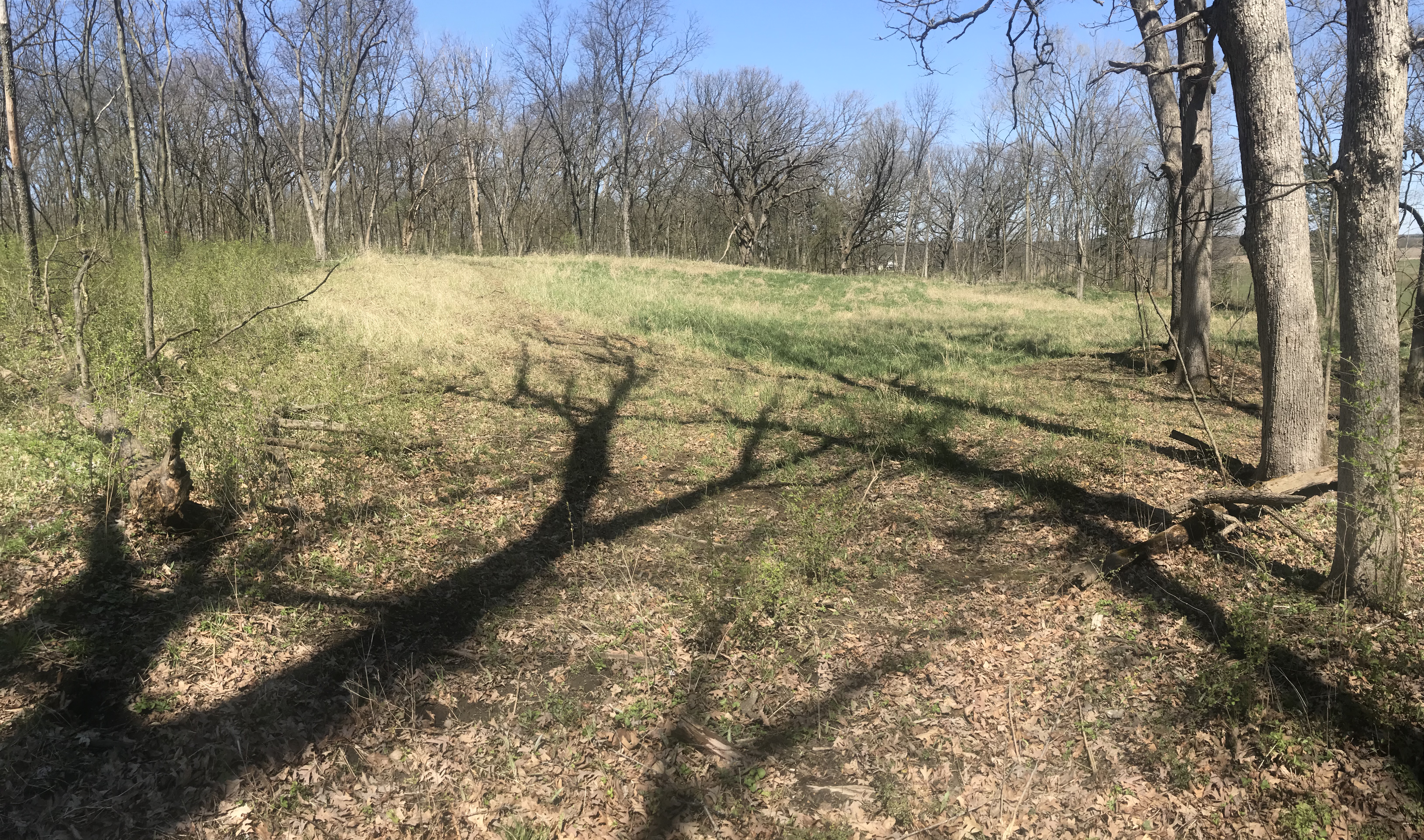
For prairie fire breaks we mow a break in the prairie, then use a hay rake to move the cut vegetation to the side. Look for the blog we have on hay rakes. Here is a video of a tractor mounted leaf blower removing the raked prairie, the windrow, off of the fire break: https://youtu.be/TWFiHMW8k4M
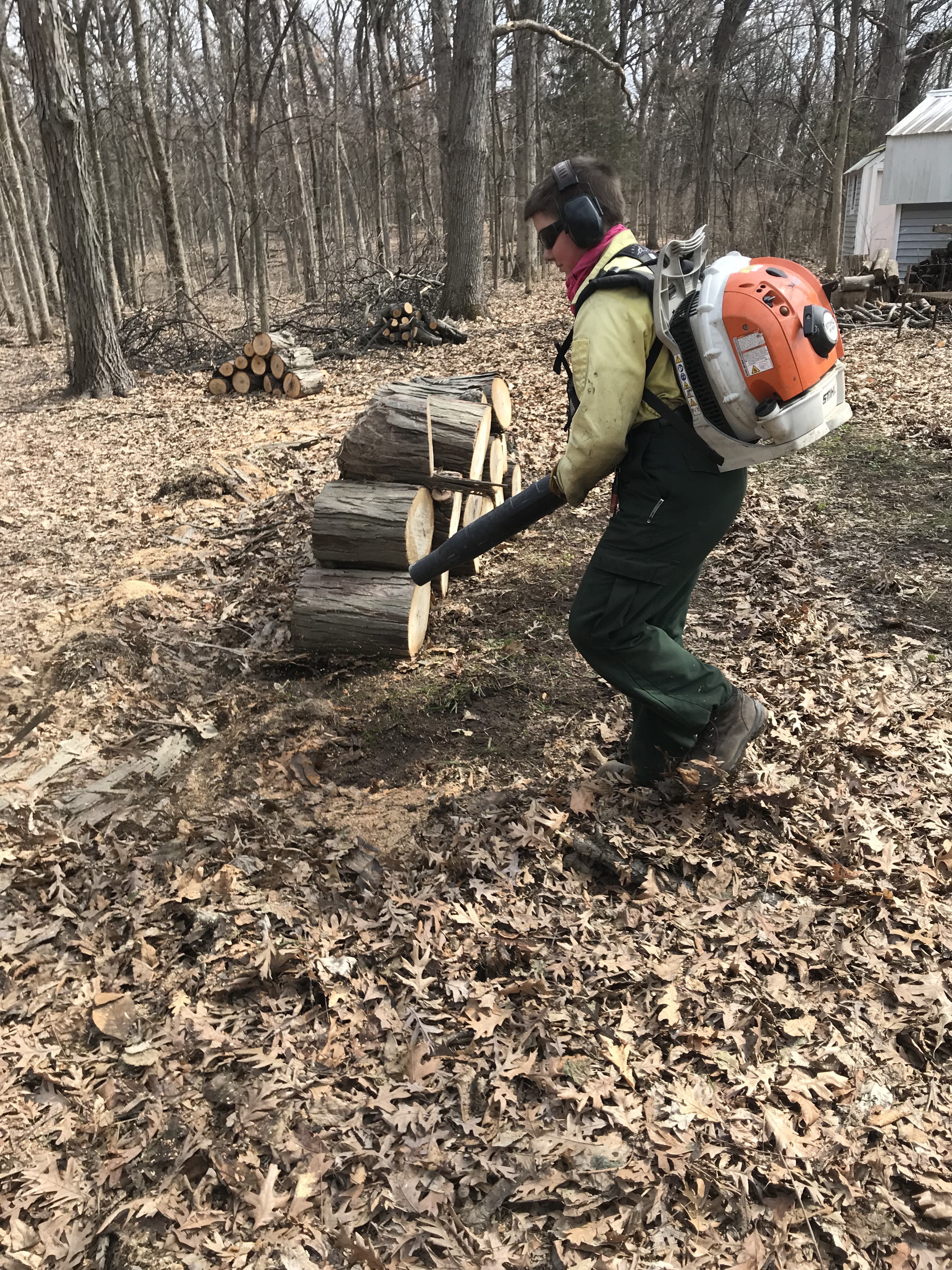
We still carry and use backpack leaf blowers. They are nice for tasks like short fire breaks, or blowing leaves from around small flammable things like sheds and wood piles, as in below:

















 grassland restoration network