By Bernie Buchholz, Nachusa Grasslands Steward

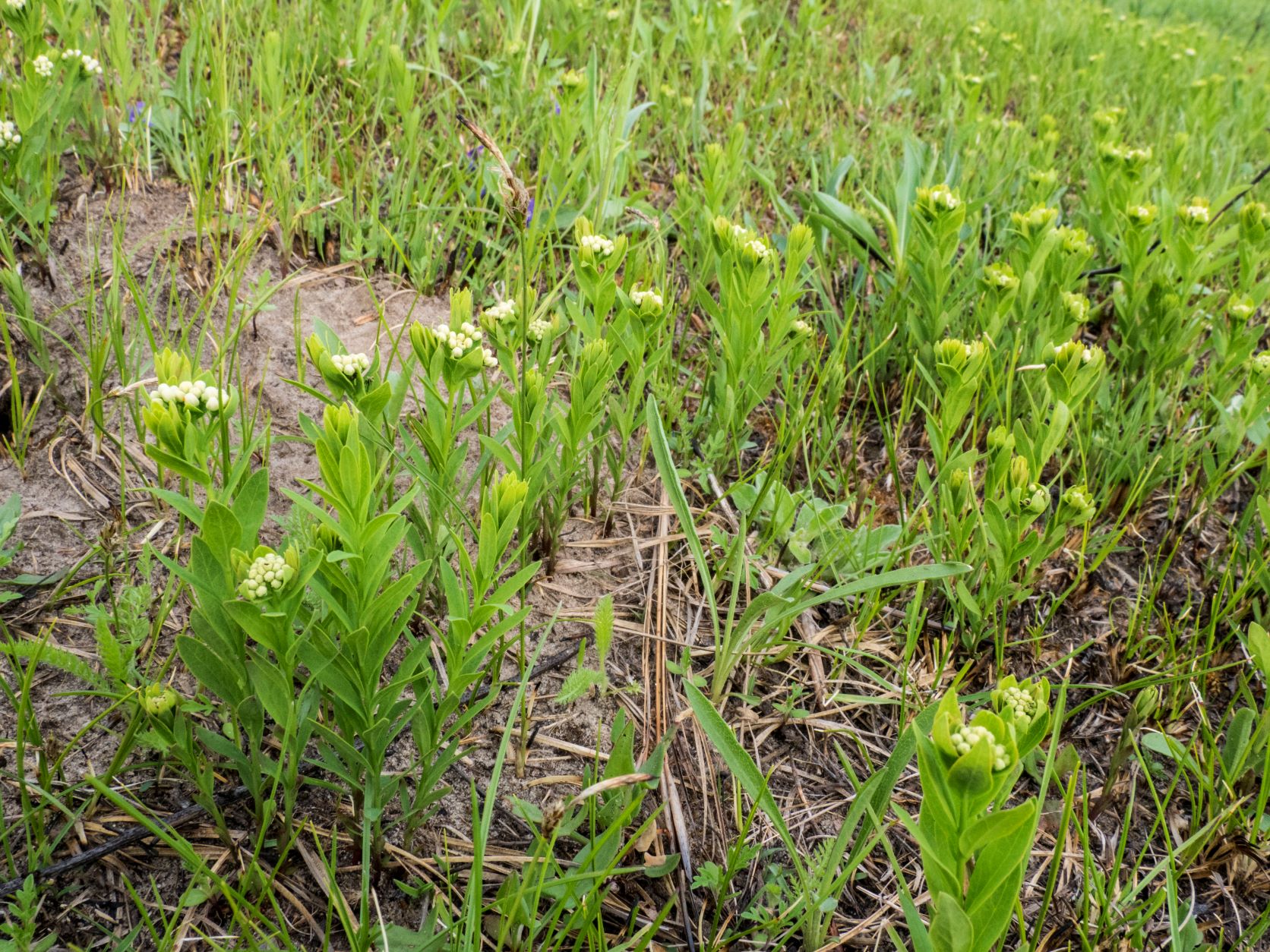
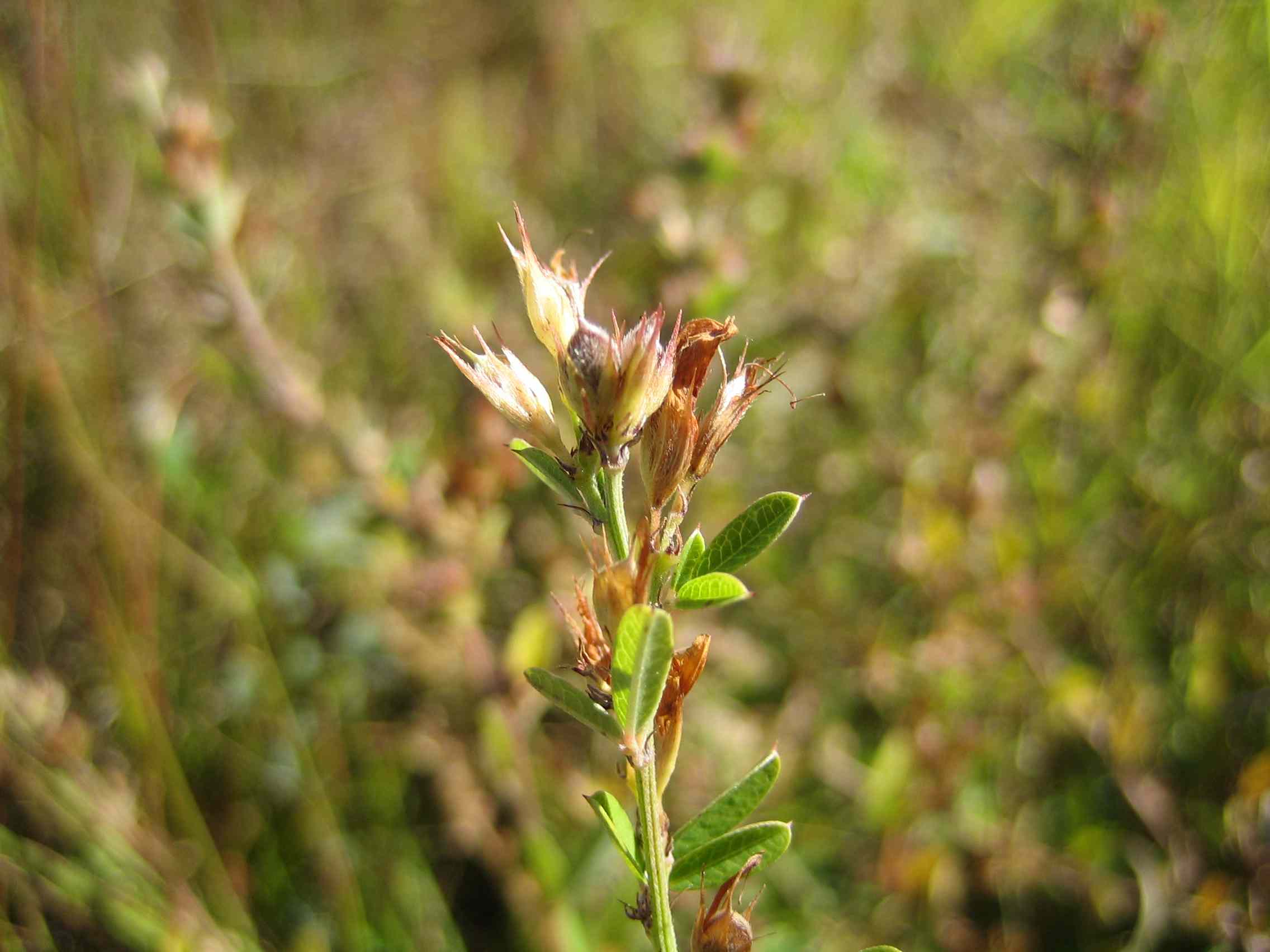
Comandra umbelata (bastard toad flax) is notoriously difficult to grow from seed, but we’ve had success growing it from plugs.

In 2008, we dug five plugs from inconspicuous spots on the edges of a relic prairie, where the grasslands faded into trees and shrubs. We planted them in both a degraded remnant and in a planting. We planted those initial five plugs, they prospered over time and eventually became the source for 175 plugs without putting any pressure on the remnants. It’s been a slow, labor intensive, but very rewarding process.
Here is how the process has worked best in our sandy-loam soils:
- We transplant in both early April, as soon as new growth appears, and in early November when the plants are dormant. You’ll need to mark potential plugs in the summer for fall transplant so you can find them.
- A straight edge shovel is handy for digging nice square plugs. We like them to be about 8” x 8” x 8”, but deeper can be better.

- Since we want comandra to have the opportunity to spread across our entire plantings, we chose to plant them on roughly 25 meter centers. Based on our experience, the plugs might connect in about 15 years. Like I said, it’s a slow process.
- Keeping transplants moist is critical while they get established. That’s why we set the plugs 1.5” to 2” inches below the adjoining surface. Creating this square pool enables us to deliver about a gallon of water with no runoff, both while transplanting and in the following weeks if the weather is droughty. Water your spring transplants before they show dryness. Late watering reduces chances for success. We never water after the first season.
- Reduce the risk of your transplants drying out by applying an inch or more of clean mulch in the “pool” and the edges of the plug where water might tend to escape through evaporation.
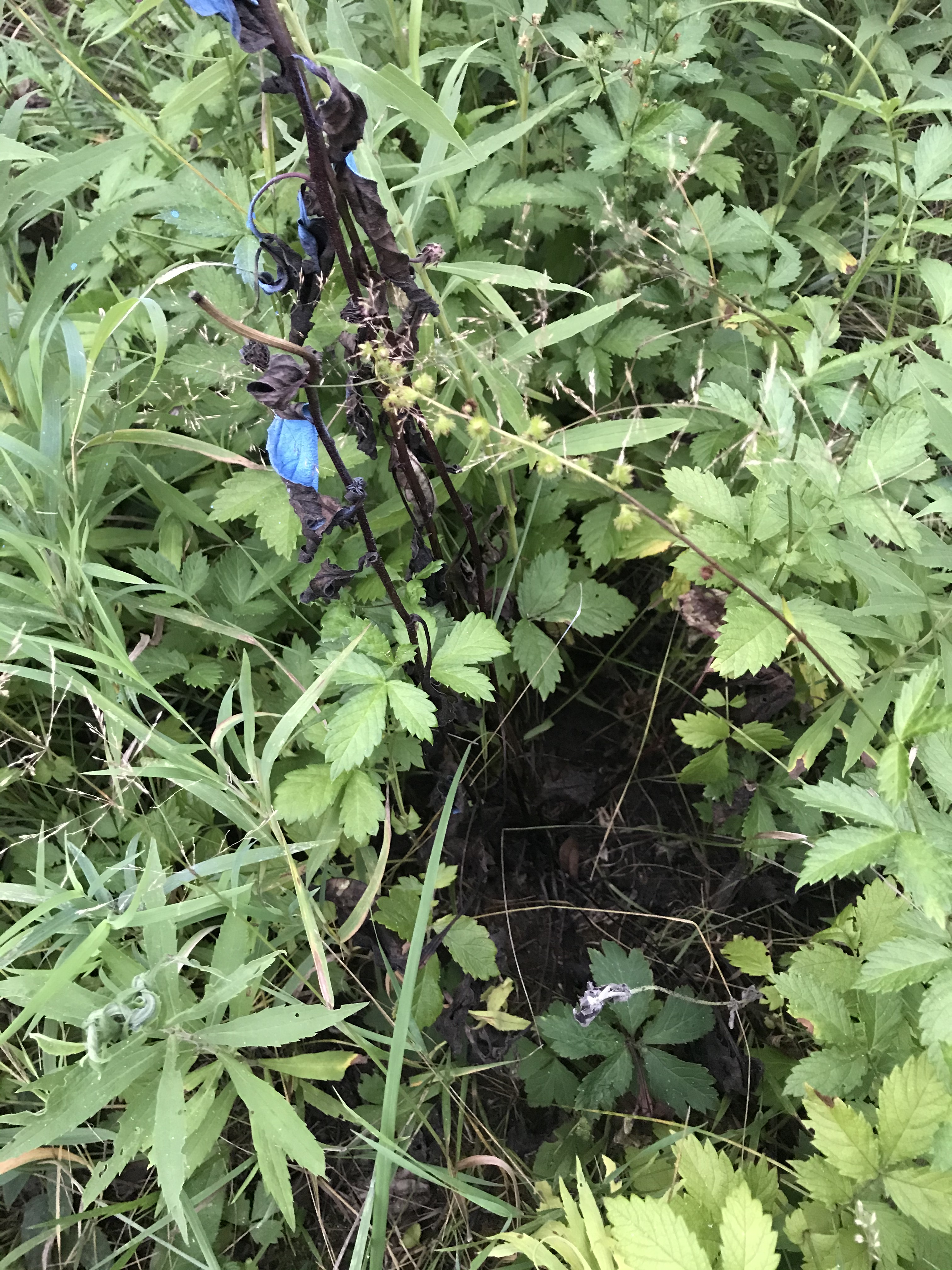
- Collect the soil you remove to create the transplant holes and use it to fill where you dug the plugs. The spots where we dug plugs (grown from our original five plugs) and refilled the holes, these areas quickly blend into the adjacent flora and are recolonized by comandra over a period of several years
- It takes about 3 hours to dig and replant ten plugs into nearby plantings and repair the borrow site.
Don’t expect to see much growth the first 2 to 4 years. We celebrate seeing just a couple of surviving stems. The plugs tend to be resilient. We average about 90% survival, although some plugs seem unwilling to expand for quite a while.
Working from seed will ultimately be the way to make comandra a routine part of our plantings. Here is an abstract of recent research into comandra which was funded by Friends of Nachusa Grasslands: science-symposium-abstracts-2019 . Scroll down to Mycorrhizal fungi community and population genetics of Comandra umbellata, Emma Leavens. One of the great joys of spring is to see which plugs send up a few shoots and how much the clones grew from year to year.


















 grassland restoration network