By Don Osmond, volunteer steward
Wild parsnip is a monocarpic perennial, usually taking 2-3 years to flower. I chose a 4 acre area in southwestern Wisconsin to evaluate my control efforts over time. Habitats ranged from dry degraded prairie to mesic lowland planted with forage. Spring burns occurred in 2021 & 2023. All the work was performed by me, so the methods are consistent year to year.
Herbiciding was performed using a calibrated backpack sprayer with 0.5% Garlon 4 (1.1 quarts/acre of product) & 0.5% MSO. This concentration was chosen based on an experiment consisting of a control plot & plots sprayed at 0.5, 1 and 1.5%, then monitored one year later. All 3 plots had similar very low densities of parsnip one year after spraying, compared to the high density control plot. It probably would be safer to settle on 1% concentration to account for variables, but I anecdotally had good results previously at 0.5%, so I stuck with that. The minimum concentration for broadleaf weeds on the Garlon 4 label is 1 quart/acre. Herbiciding was never done in the remnants. Spring spraying started in the first 2 weeks of May, depending on how cool it had been. Fall spraying started the second week of September (rosettes were in the process of emerging before then). I limited fall application to known, higher density patches since tall vegetation makes area searches unproductive.
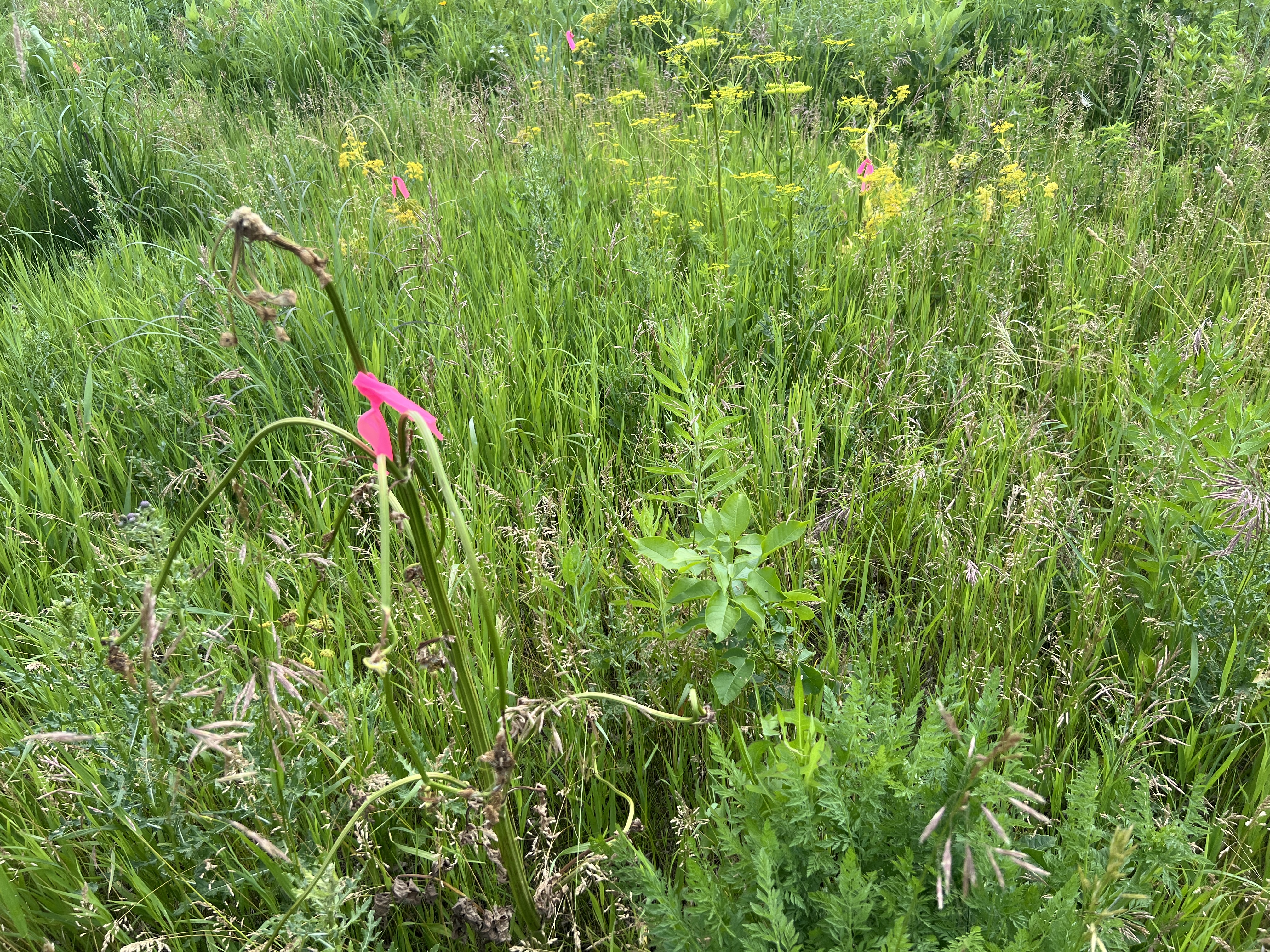
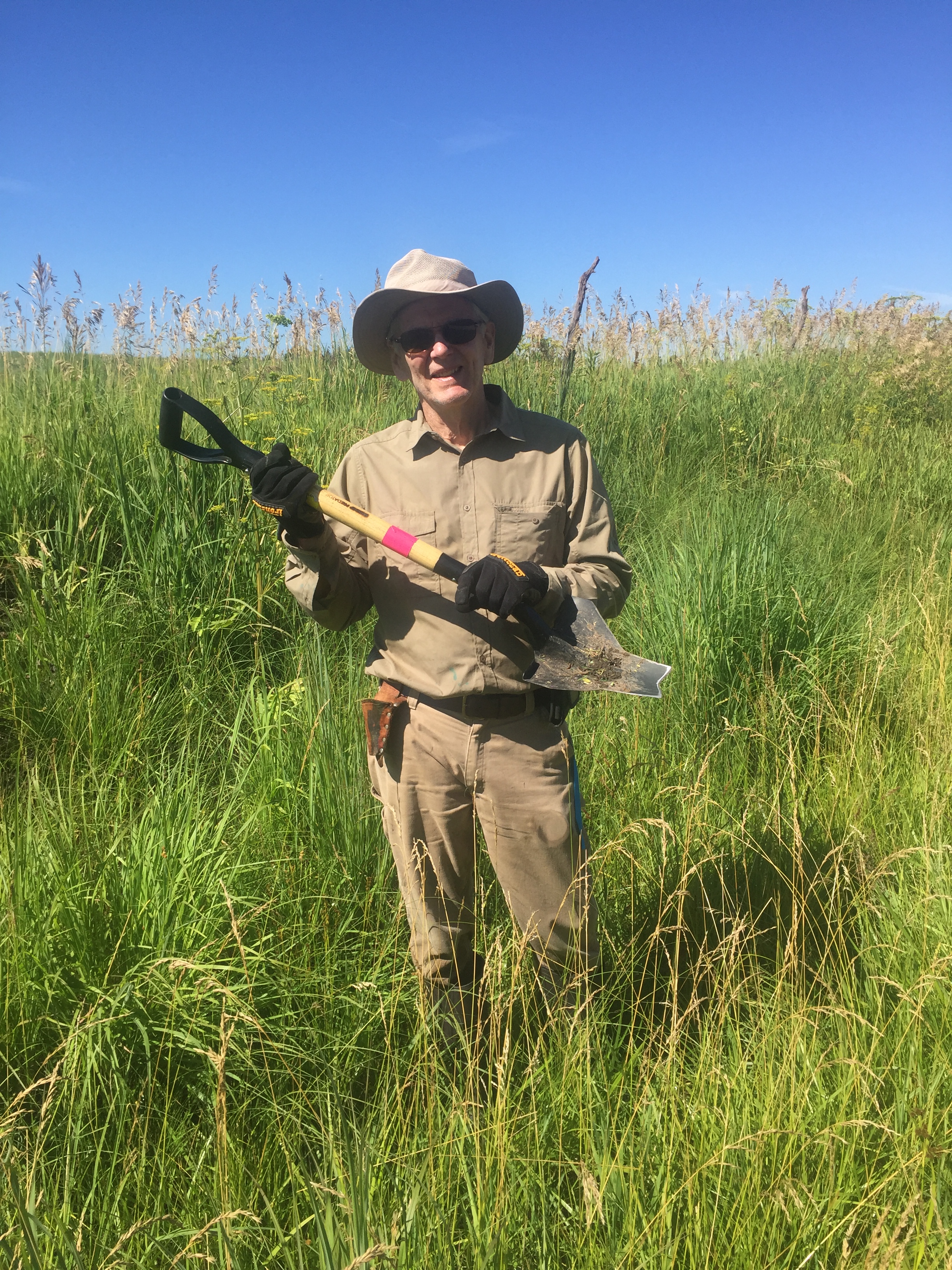
For mechanical control, I use a sharpened Parsnip Predator shovel to sever the root a few inches below the soil. I place the shovel at the parsnip base to center the shovel notch on the stem, move the shovel back 2”, hold it about 30 degrees off vertical & slice the root with even force (no stomping or prying). If the plant doesn’t pull up easily, I move the shovel laterally & make another slice. If the plant isn’t swollen at the top of the stem, I throw it on the ground. If swollen, but flowers aren’t emerging, I throw it on the ground & cut the stem below the swelling with the shovel. Before June 15, if the plant is blooming or close to it, I throw it on the ground & cut the stem below the terminal flower & also below the lowest flower. Cutting the stem reduces the possibility that stem carbohydrates will be used to reflower, although I have no proof that is possible on a stem without a root. After June 15, I bag the cut plants & let them compost on site. I deposit the bags away from roads & trails since animals may break the bags open, allowing seed spread. My method is an attempt to keep the job manageable for one person. A 2 person team is ideal for digging & bagging. Keep in mind the plant is toxic to the skin, so long gauntlet waterproof gloves & a long sleeved shirt should be worn. Peak bloom for the early plants in my area occurs in late June. The first pass of mechanical control is in the first 2 weeks of June, with a second pass starting the 3rd week. The latter is to find late blooming plants, which are small & not in bloom during the first pass & thus easily missed. Many plants will have green seeds by July 9. Mechanical control can continue until July 15 (when seeds start to drop), but I try to be done by July 1 so I can switch to white sweet clover control. Despite trying to be meticulous, I always find a handful of plants each year that were missed & went to seed. For example, I did a second pass on June 19 & found a small but surprising amount of blooming plants July 1 to July 19. So a 3rd pass may be necessary. I’ve even occasionally found blooming plants, some quite tall, in September. If you only have limited time for one pass, shoot for July 4 in southern Wisconsin & stack the cut plants in as few piles as possible, away from roads & trails. This is well before seed drop, yet late enough to catch the early as well as many of the later blooming plants.
Here are the results:
Gallons of herbicide solution used
2020 (fall only): 9
2021: 30
2022: 9
2023: 9
2024: 6
2025: 2
Hours for mechanical control
2021: 19
2022: 12
2023: 6
2024: 7
2025: 8
Estimated plant density over this 4.5 year time period decreased from moderate-dense to light. Notice that mechanical control hours plateaued after 2 years, probably because at that point most of the time was spent walking around looking for plants.
The results roughly correlate with the following:
1) Cain, Nancy, et al. “The biology of Canadian weeds: Pastinaca sativa L.” Canadian Journal of Plant Science volume 90 (2) page 217 (2010). They report the seedbank is viable for 2 to 4 years.
2) A prairie expert plus the above reference indicate most parsnips produce flowers in the 2nd or 3rd year but some take 5 to 6 years.
Using my method, 2 factors can lengthen the time for adequate control.
1) Missed plants due to poor visibility in heavy vegetation, plants that bloom at very low heights or very late blooming plants (as late as September). It is very easy to miss short, blooming plants in tall vegetation. Especially since invasion was widespread at this site, requiring a search of the entire area, except for the dry remnants where parsnip success was poor.
2) Digging disrupts soil, bringing seeds to the surface where they are more likely to germinate. Proper use of the Parsnip Predator (no prying) minimizes this.
If practitioners are not meticulous, time for adequate control will be longer than what I experienced. For example, not making a second mechanical pass, thus missing a surprising amount of late blooming plants. Or missing a year, allowing substantial seed drop. That would severely set efforts back & illustrates the importance of careful site selection & control area size to match the predicted resources over the years needed.
Herbiciding is particularly effective after a spring burn since thatch removal makes rosettes quite visible. Herbiciding can be skipped if there are enough people to complete 2 thorough mechanical passes for the number of years needed. My results are a good example of how herbicides can be a force multiplier if resources are limited. Without them, there would be no hope of making a meaningful improvement at this site with just one worker.


 grassland restoration network
I take the same approach in all ways except that I use Garlon 3 at a rate of 2.5 Oz. Per gallon in a backpack with surfactant and blue. Then switch to manual control in a similar way with a parsnip predator. I have eliminated parsnip from my own property where it was very dense. Every year I keep an eye out for plants as seed comes in from neighboring properties on occasion probably from animals and its usually only 1 or 2 plants if i find anything at all. For me total control was achieved in 6 years on my own property. I still do it this way on properties I manage or help friends with.
Elimination of an invasive is a fantastic accomplishment. How much land area did your infestation occupy & did you work alone? That will help others assess the amount of resources needed to achieve your results.
Replication of restoration methods is important because due to many variables, what works at one site may not necessarily work at another. The holy grail is to discover which subset of methods for each invasive species is generally applicable across an ecoregion.
In your case, elimination was a good goal. For me, large areas of parsnip exist in the vicinity of my work area, ensuring continuing seed ingress. So my goal is to keep the invasion at low levels in remnants (especially mesic ones), their buffer areas & foot trails/vehicle paths that lead to them. Each site will need to choose realistic goals considering available resources.
Thank you, Don, for this thorough treatment of the subject. I have two questions for you: 1) Why Garlon 4 instead of 3? Due to its effectiveness at lower temperatures? 2) Do you have anecdotal or other experience of swollen stem-ends/almost flowering plants/flowering plants producing viable seed if their reproductive parts are left attached after the stem is cut? My understanding was that as long as the plants are mechanically controlled at full flower or before, viable seed would not be produced. This is considerable incentive to target our work in May/early June (“one cut and done”), but if even plants in very early stages of flowering can produce viable seed, that is another point in favor of the herbicide approach or other early-season control
The Garlon 3A label says it causes irreversible eye damage & it’s harmful if swallowed or absorbed through skin. The Garlon 4 label says it causes moderate eye irritation & is harmful if swallowed. Both herbicides are safe to use with proper PPE, but since Garlon 4 has worked well for me at low concentrations, I chose that one.
We need more research into your second question. Multiple publications from invasive plant organizations, university extensions & state departments of natural resources recommend bagging plants or bagging blooms once flowers have opened. However none of them give sources, so it’s impossible to know the accuracy of their statements. I’ve searched the peer reviewed literature & cannot find anything on it. Conducting such an experiment in a robust fashion isn’t easy. A study like that for Garlic Mustard gives us clues. The number of plants for each bloom stage must be enough to be statistically meaningful (they chose 50). Selected plants should be of similar height & close enough to one another to share the same microhabitat. The location should be on a north facing slope to minimize drying of the cut stems. Stem diameter must be large to maximize available carbohydrates. Vegetation in the area should be low enough to promote pollinator visits to the cut plants. If seeds develop on cut plants, they must be submitted to a company to test viability. I’m sure there are other variables to consider.
In my experience, a single mechanical pass will allow a fair number of plants to set seed even if the cut plants are bagged. If I cut early, I’ll miss low height plants that will bloom weeks later. If I cut late, I won’t have time to finish before seed drop or needing to switch to white sweet clover control. For reference, I manage invasives on about 100 acres.
I like your point about matching the site to the long-term resources.
It is so important, isn’t it? For years I didn’t do that & paid the price. I want to save the world & with good intentions, bit off more than I could chew. Invasives take many years to get under control & if you allow seed drop once, it sets you back many years. So it’s better to treat a small, higher quality area thoroughly than a larger area piecemeal. I select my treatment areas based on the likelihood of a healthy recovery with the resources available. That means remnants & the buffers around them are first priority for sites with few resources. Plus the site must have a long term plan for burning every unit at least every 3 years.
Having collected and bagged parsnip seeds, then what is to be done with them? In order to prevent the weed from being spread, either on-site or off-site, proper disposal is critical. Off-site risks contamination elsewhere. On-site establish a permanent dump location and either compost the seeds or burn them; then monitor that location from year to year and herbicide any sprouts that develop there.
As for the collection bags, avoid plastic because it rips easily allowing seeds to be inadvertently scattered as the bags are moved out of the area being “cleaned.” For paper yard-waste bags be sure to tape the bottom seams closed using packing tape. Those seams are not always properly sealed, which again allows for inadvertently scattering the seeds.
I’m glad you brought this up. Excellent ideas to create designated disposal locations & to prevent bag leaks.
I work alone to control parsnip on a large site with no trails & without a pickup truck to haul bags. Herbiciding rosettes & chopping the stems of dug plants before June 15 delays the date when bagging must start, minimizing the amount of biomass to be bagged. To finish parsnip in time to begin white sweet clover control, I start work early in the morning when dew is present, so I can’t use paper bags. I carry the bag with me as I dig, dropping it at a random location once it gets too heavy. I use 3 mil black plastic contractor bags. 4 mil is better but harder to find in retail stores. I leave the bags until the end of summer & then dump them out. Many of them are torn apart by animals at that point, but I’ve never seen a patch of plants where the bags have been. This is because I’m usually done with my first pass by July 1, when only a small minority of plants are starting to form seeds. The second pass (which is done concurrently with white sweet clover control) is mostly late blooming plants that haven’t started to form seeds. For plants farther along in seed development, it’s possible that sunlight hitting the plastic bags could cook & kill the seeds, but that would depend on how soon animals rip the bags.