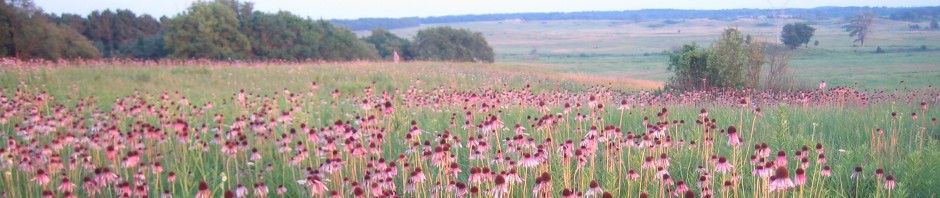
By Jeff Horn, IL DNR district heritage biologist for Ogle, Winnebago, DeKalb, Kane, and DuPage counties based out of Castle Rock State Park
Lespedeza cuneata (commonly referred to as Sericea or Chinese bush clover) is a perennial wildflower introduced into the United States from East Asia. It can form dense colonies of plants in grasslands and open areas. It is also allelopathic and its seeds can remain viable for up to 20 years. These traits make it an unwanted guest in our prairies and natural areas. It is more common in southern Illinois but continues to expand its range across the northern part of the state. It is easy to identify with its unique leaf shape and branching structure.
My district with the Illinois Department of Natural Resources Natural Heritage division had been vacant for about 20 years when I started in the position out of Castle Rock State Park in 2024. Sericea was present in many of the prairie plantings at the park. Local conservationists had made the park staff and covering biologists aware of its presence a few years ago. With limited time and resources, growing season burns and spraying were done in a few plantings. This work had started to reduce the abundance of sericea in those plantings. The plantings that were not treated had high densities of sericea in some areas forming thick mats with only a few species of plants present.
I mapped the presence and relative abundance of Sericea throughout the park and developed a plan to combat the invasive plant.

Map showing the prairie recreations that contained sericea and the treatment method(s) used
Growing season burns were conducted on Aug. 20 and 23, 2024. Research has shown that growing season burns can offer greater control of sericea than dormant season burns. The growing season burn prevents the plant from going to seed that year, but also reduces its chance of survival over the winter. All fire scarifies its seed and increases germination, so these burns also help deplete the seed bank faster. It is important to weigh the potential impacts of conducting a growing season burn on the other life in the prairie as they can negatively impact several species. I’d recommend consulting with other professionals or biologists before taking this approach.
With the help of the park staff and other INDR staff, we began backpack spraying in July 2024. We focused our efforts first in the planting that had been burned in March. It became apparent quickly, that we would need more resources, so we reached out to Nachusa Grasslands (TNC) for assistance. Fortunately, Nachusa was able to provide a tractor with a 50 gallon sprayer and also sent a team of 2 people with backpack sprayers for a couple days. This was critical for the effort as the tractor allows us to spray perched above the tallgrass prairie plants and gives a better vantage point for finding the plants to be sprayed.
Any areas that could not be sprayed by mid-Sept. were mowed down to prevent plants from going to seed. Then, we focused on the plantings that were burned in August with the same strategy, spraying as much as we could, then mowing the areas that were too dense to burn/spray. The first spray applications were done using 2% Vastlan (Triclopyr choline). This application prevented the plants from going to seed, but probably only killed about 75% of the plants that were treated. We were able to obtain some Pastureguard (Triclopyr with Fluroxopyr) and the remaining treatments were done using 2% Pastureguard with MSO (1/2oz./gal.). The Pastureguard mix was very effective at killing the plant. Sericea that was sprayed would yellow and start dropping leaves within a week.
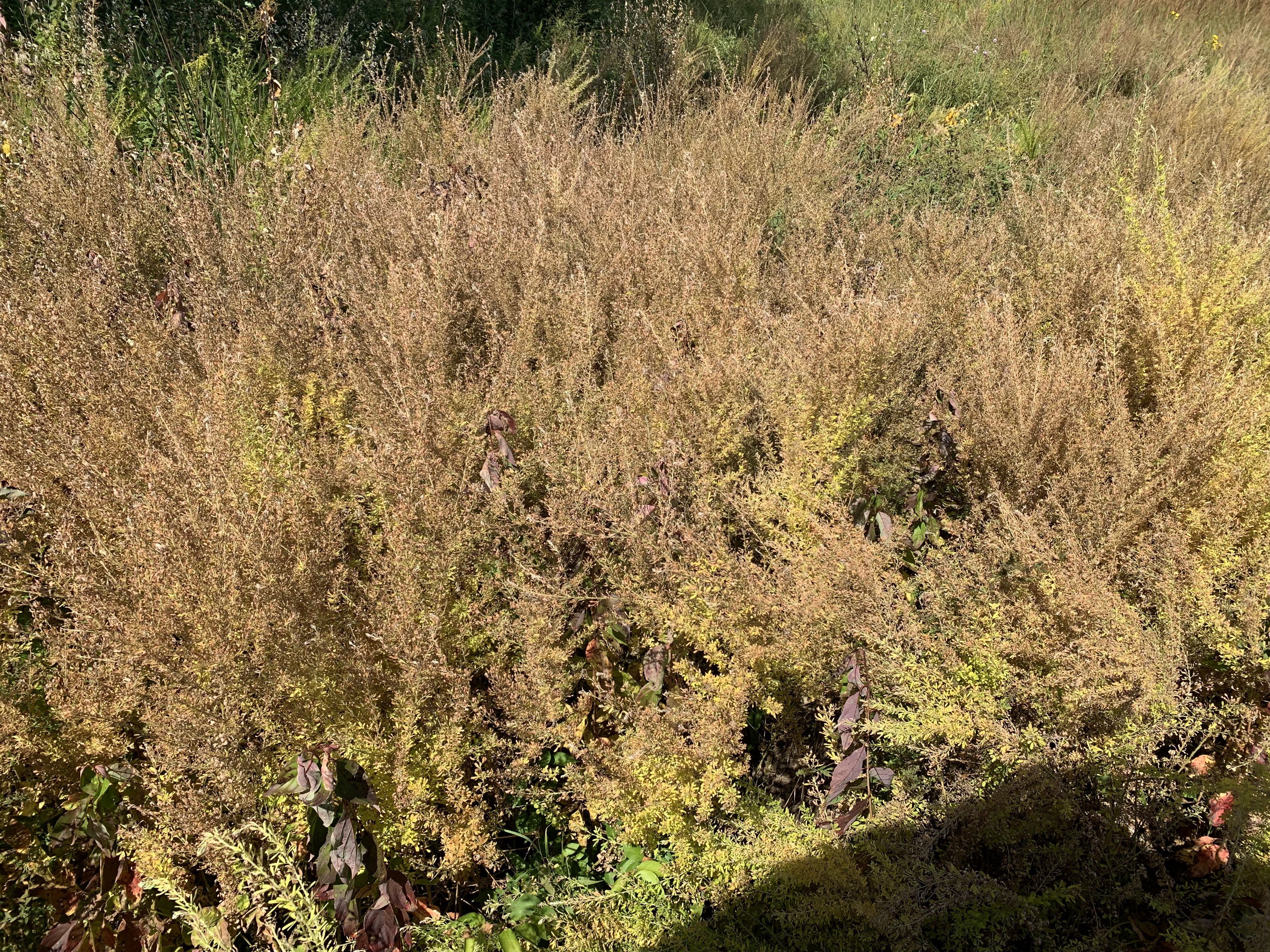
Photo showing Sericea treated with 2% Pastureguard with MSO.
We received more assistance for sericea control in 2025. Covia Holdings LLC hired contractors to spray sericea at Castle Rock, Covia, and Lutheran Outdoor ministries. All of these properties are connected and contain sericea in their prairie recreations. Nachusa Grasslands also offered the use of their tractor and provided manpower for burns and spraying. These partnerships are invaluable in our restoration efforts.
Growing season burns were conducted in 2025 on several plantings on Aug. 5,6. The units that were burned in 2025 were also burned in 2024 so the fuel loads were reduced, but the fire was still able to carry through the plantings. We were also able to do follow up burning in those units on a day with higher wind speeds and burn more of the areas containing sericea. The burn window in the growing season is long, but there are not as many burn days as you might think due to high humidity, rain, and lack of wind (August is the month with the lowest average wind speed in Illinois). So, if we had good conditions, we burned. August burns also allowed us more time to do follow up treatment in the fall. I plan to conduct burns in September in the future when the amount of sericea is reduced to a more manageable level. This might increase fire intensity and coverage. One of the plantings contains high densities of sericea and is more protected from winds than the other units; this unit was mowed down in September. After the fuels were allowed to dry, the unit was burned to reduce seed production and growth of sericea. Contractors were hired with the Covia funds to do foliar treatment of sericea and leafy spurge in the units that were burned.
Overall, these control methods have been highly effective in controlling sericea at Castle Rock. The plantings with higher grass components have had higher fire intensity and burn coverage, thus, higher rates of sericea control (90%). In the plantings with higher forb density and/or reduced winds, sericea control has been much lower. The areas that have been spot mowed have not had a reduction in density, but it has prevented the plants from going to seed. This will be important in the long-term management of the site. Pastureguard has been the superior product for sericea control for this site. It is worth buying this product even if you have Vastlan on hand.
There are also areas that contain ornate box turtles and sericea. We have avoided conducting growing season burns or mowing in these areas and used only chemical treatments. Currently, those areas have relatively low density of sericea, but, once they are burned (in the dormant season) I would expect seed germination to follow.

The author, Jeff Horn, with Adam Schubert – Castle Rock State Park site technician wrapping up a growing season burn
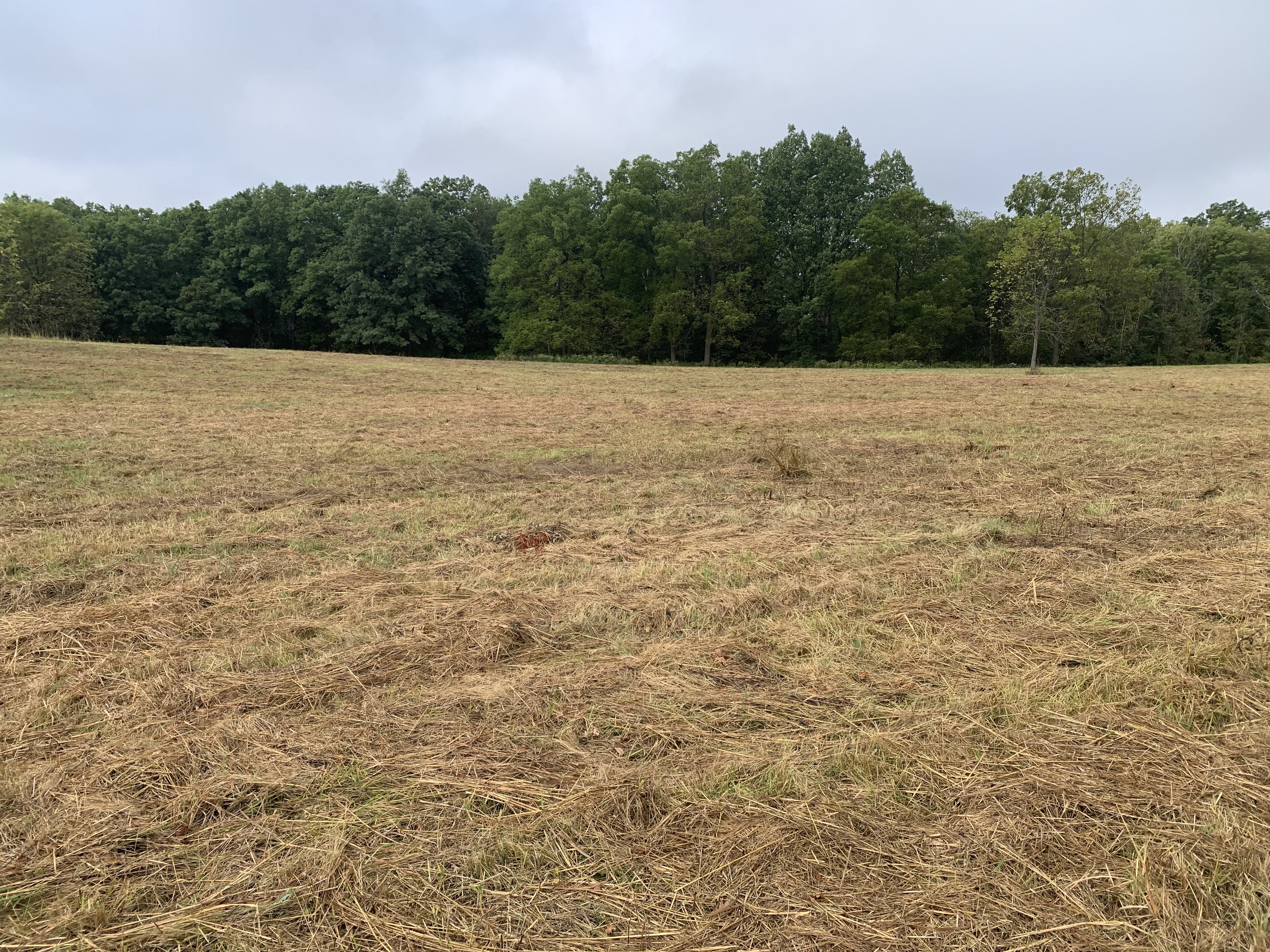
Prairie that was mowed prior to sericea setting seed
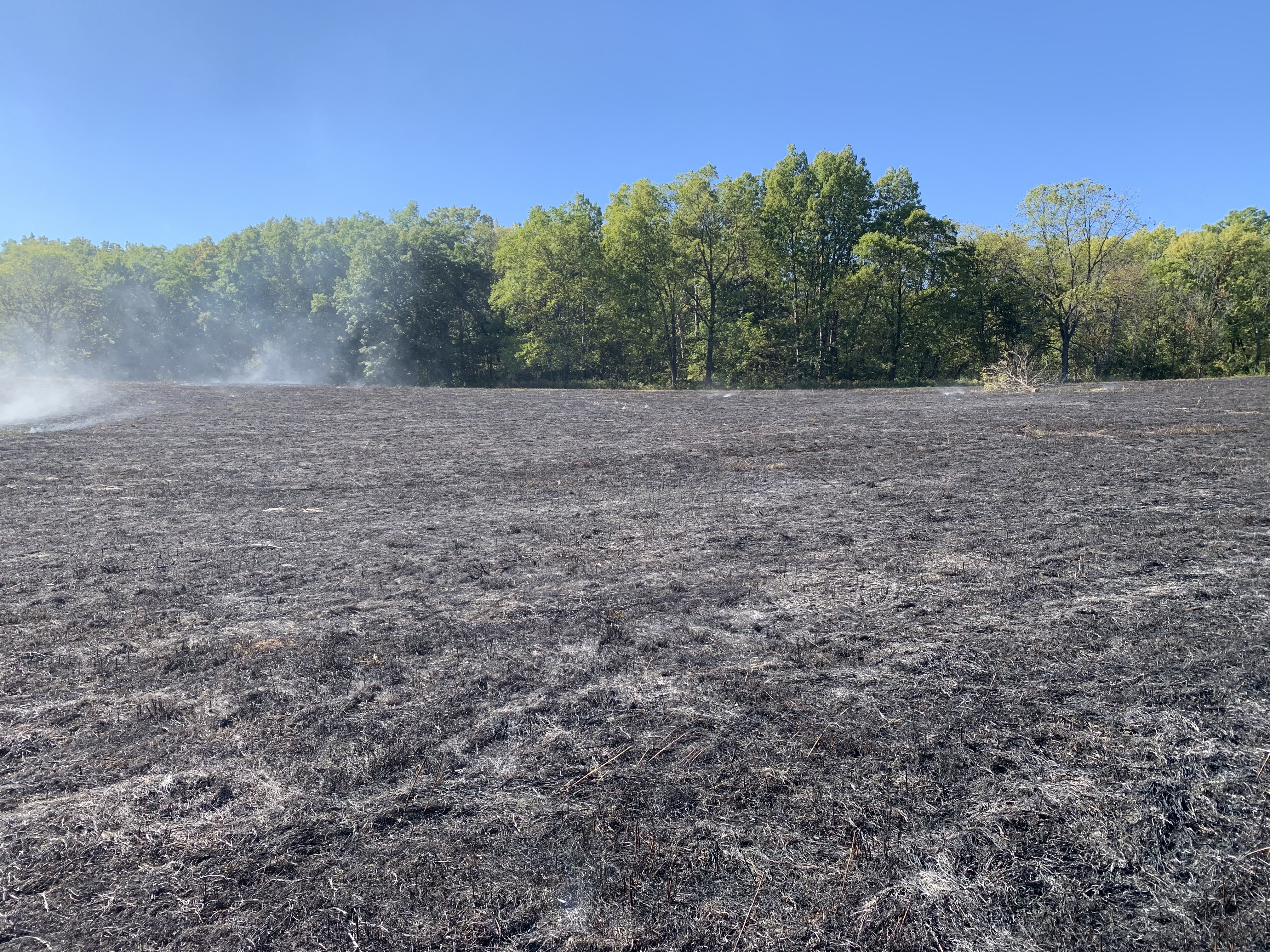
The same prairie was burned about 3 weeks after mowing. It will be interesting to compare the effectiveness of this treatment with the others in 2026.
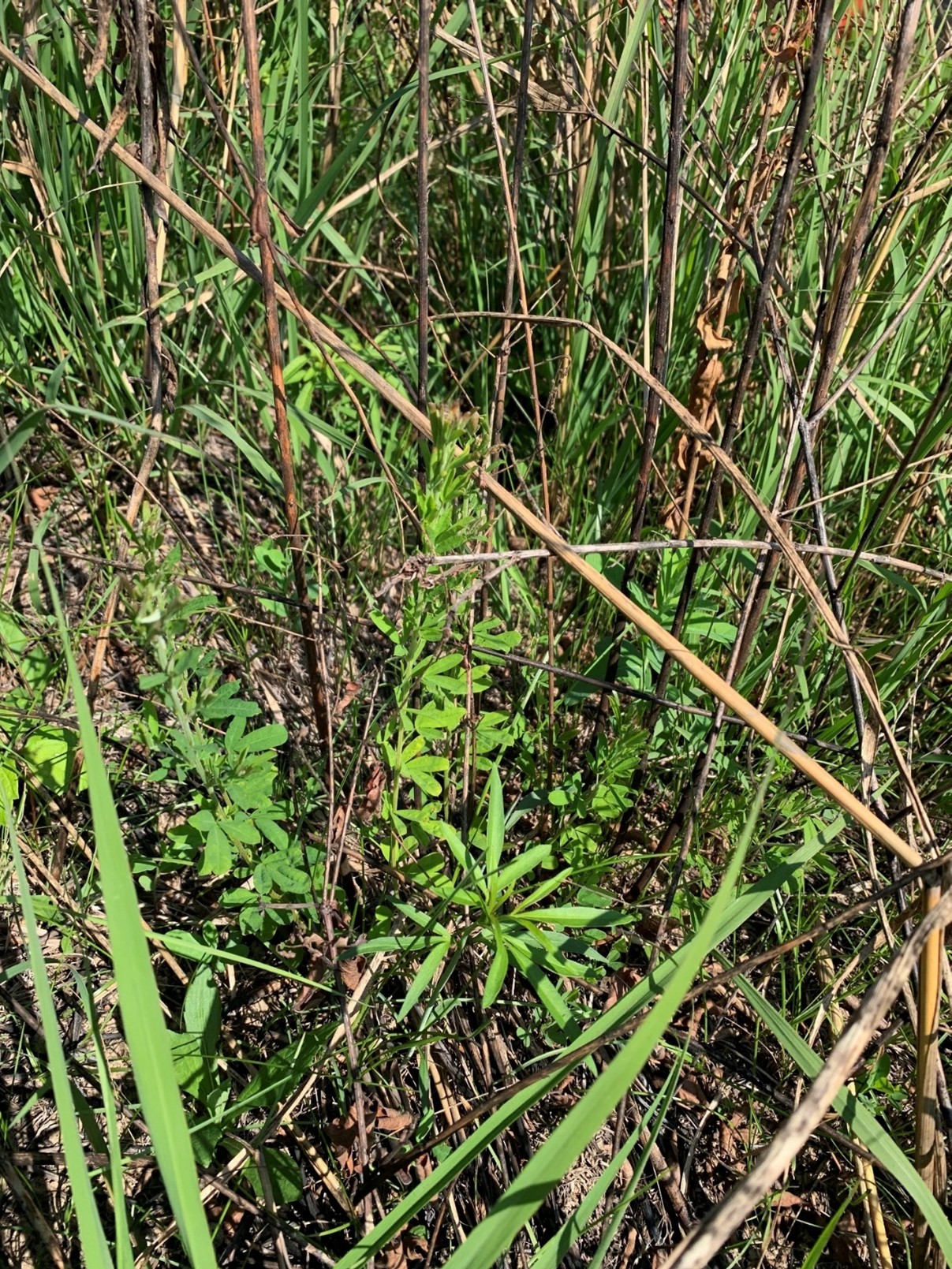
Resprouting following a growing season burn. This is the optimal time to spray. The plants are relatively easy to find and it minimizes collateral damage to native species.

In the foreground – resprouts of sericea with stalks of burned sericea giving its presence away. The stalks make it easy to find the resprouts.

The tractor with 50 gallon sprayer borrowed from Nachusa Grasslands (TNC). This was the ideal tool for spraying sericea in areas that had high vegetation.

Mature sericea stand. They can take over large sections of the prairie.

Contractor, Austin Webb, spraying resprouts in an area that had been burned during the growing season about a month prior to this photo.
Here is a short video clip from a 2024 growing season burn done by Jeff: https://youtube.com/shorts/gVM5q2EyyOg?feature=share
End


 grassland restoration network
Nice work Jeff. fran
I have just read the Grassland Restoration Network posting on control of Lespedeza cuneata. Getting after it during the growing season by whatever method is available makes great sense and I found your success encouraging. As someone who has conducted research on this invader, I am interested in methods for controlling it.
Starting in 2006, colleagues, students, and I have witnessed the takeover of the John English Prairie in Comlara Park, McLean County, IL by L. cuneata. Probably the most important, or at least useful, conclusion from our research came from Morgan Walder’s M.S. thesis (published in Biological Invasions). She found that the increase in Lespedeza cuneata over several years was negatively correlated with the cover of native legumes. This was consistent with the Limiting Similarity Hypothesis, which predicts that invaders will have least success where functionally similar species are most common. Her research suggests that increasing native legumes could help deter spread of L. cuneata. However, modeling by another student using more recent data from the same site showed that it was specifically cover by L. capitata that was negatively associated with l. cuneata. So, if you are looking for another thing to try, increasing native Lespedeza species might be worth a try.
Thank you for your insightful work.
Sincerely,
Vickie Borowicz
Thank you for the insight. We have been discussing the overseeding topic so that is good timing.
Nice work, Jeff. Thanks for sharing! Sericea is a monster…good to spread the word and get this on folks’ radars.
Pasture Guard is highly effective but is a little more pricey. Following research published by K-State and TNC, we have been using .75% v/v Triclopyr ester in water (Garlon 4 Ultra) early in the season when the plants are < 12in tall. At this low rate, we see great kill. Once the plants are taller, we bump our concentration to 1.5% v/v and continue to see high levels of mortality.
Great article, Jeff. I walked by some Castle Rock burn units a few weekends ago that were freshly done and was curious if there was a particular target. Keep up the great work!
Hi All,
Has anyone tried using Milestone on Lespedeza cuneata? A colleague reported trying 2.25% Milestone application last year and this year with moderate results, population not spreading in a Eurasian meadow, but still there. Thanks!
Dan Spencer