By Bill Kleiman
To get control of a dense invasive olive on 28-acres we brush mowed, seeded heavily, started a frequent fire program, and continue to make visits to apply basal bark herbicide to individual shrubs. We have been mostly successful.
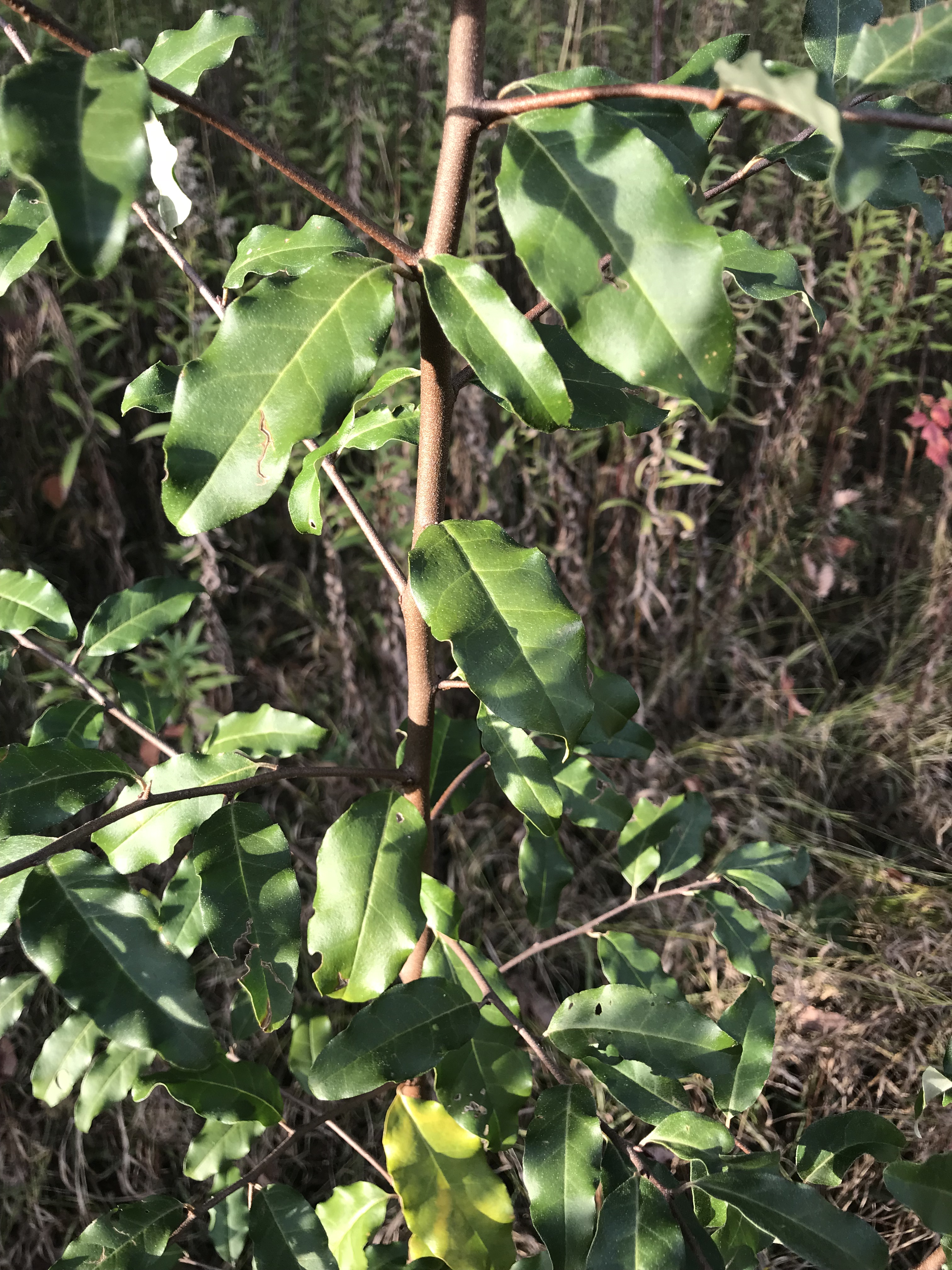
Invasive autumn olive is easy to spot from the stems which appear to be covered with rust or cinnamon powder. The stems also have false thorns which you will feel if you take your gloves off. The leaves are wavy with a silvery bottom.


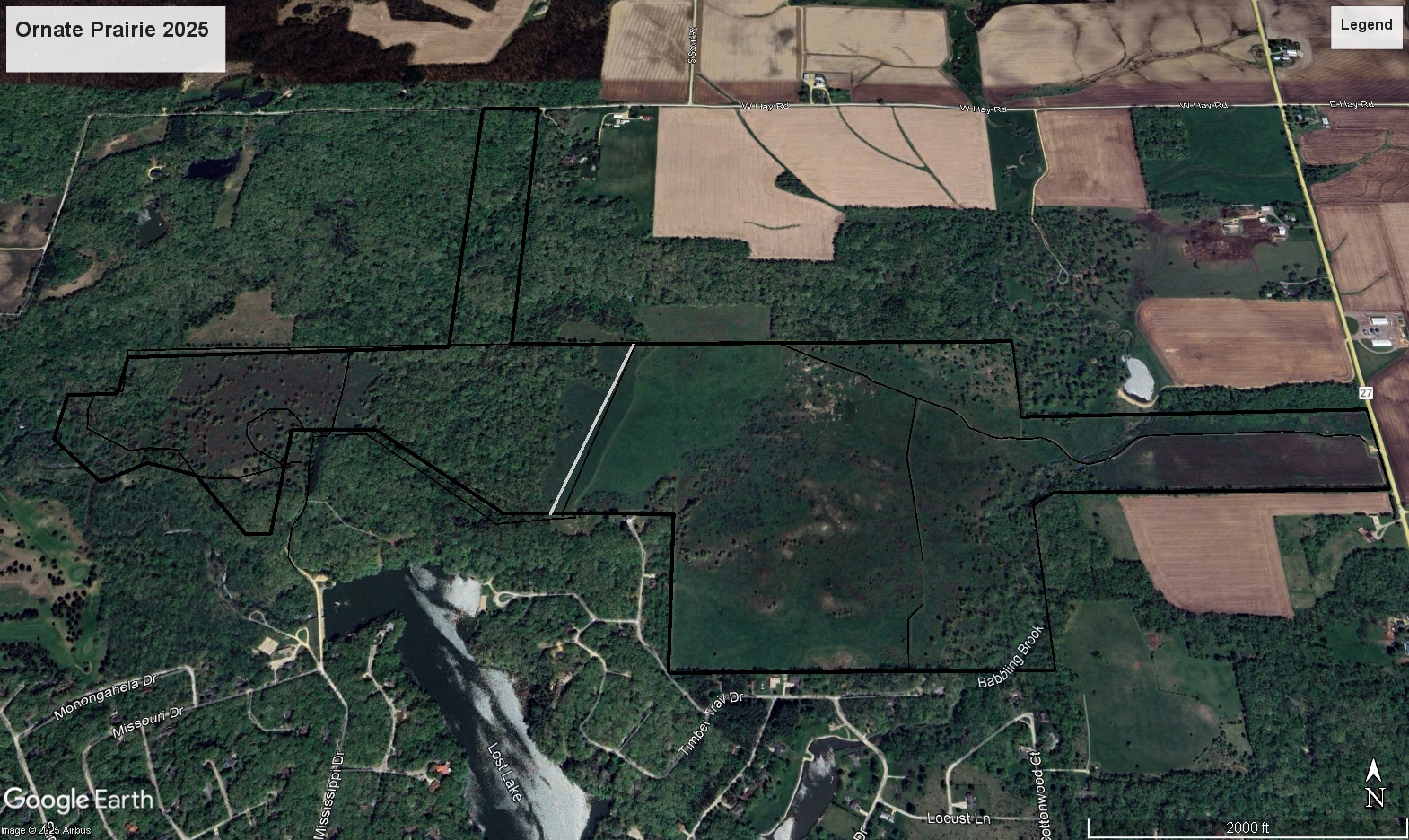
I could tell various stories from these three aerial views but today I will stick to autumn olive.
If you look on the left side of the unit where in 1939 there is open prairie and a dry gulch running east to west.
The invasive shrub Autumn olive, Elaeagnus umbellata, was likely planted in the 1980s. It was a thing back then to plant olive to make “great habitat”. Some places may still be selling this invasive. Please don’t.
In the 2010 aerial, olive is very abundant, which is the year TNC purchased this tract at Nachusa Grasslands.
The third aerial shows shrub cover much reduced from brush mowing, herbicide, and frequent fire. Most of the woodies you would see today there are black oak, wafer ash, and some olive we are still chasing.

There were about 28-acres of very thick autumn olive. Above is an image from that tract showing where a brush mulcher had just passed through. The ground layer was so shaded that exposed soil would dominate a monitoring quadrat. But there were also still open patches of prairie here and there, so foliar spaying the olive was not chosen.
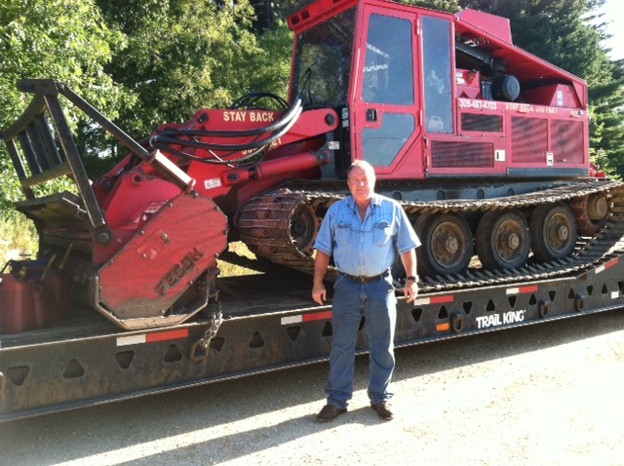
We hired this contractor to mulch the 28-acres in about a week. Back in 2010 it might have cost $15,000.
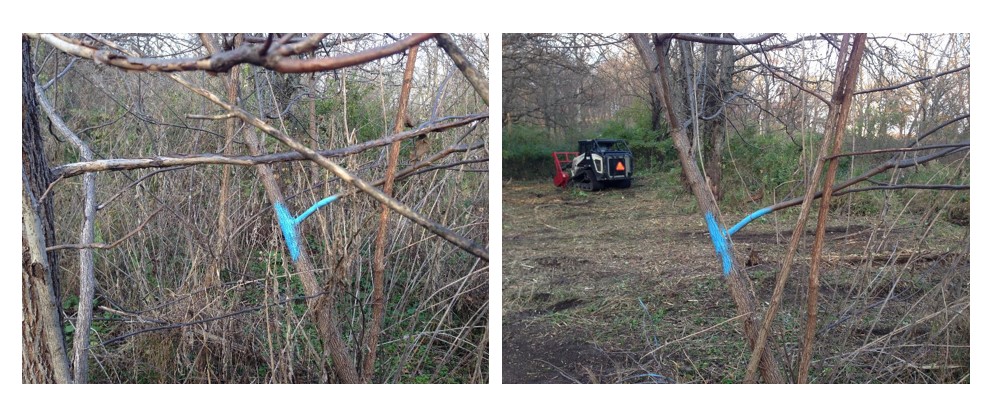
We used a skid loader with mulcher to also clear areas.

We assumed most of the mowed olive was going to re-sprout. That is what shrubs do. And we would need to use frequent fire, which would require a prairie to burn. So we planted a heavy amount of prairie seed harvested with an old combine from prairie plantings at Nachusa. This is a view into the combine hopper.

We planted about two full grain wagons of combine mix.
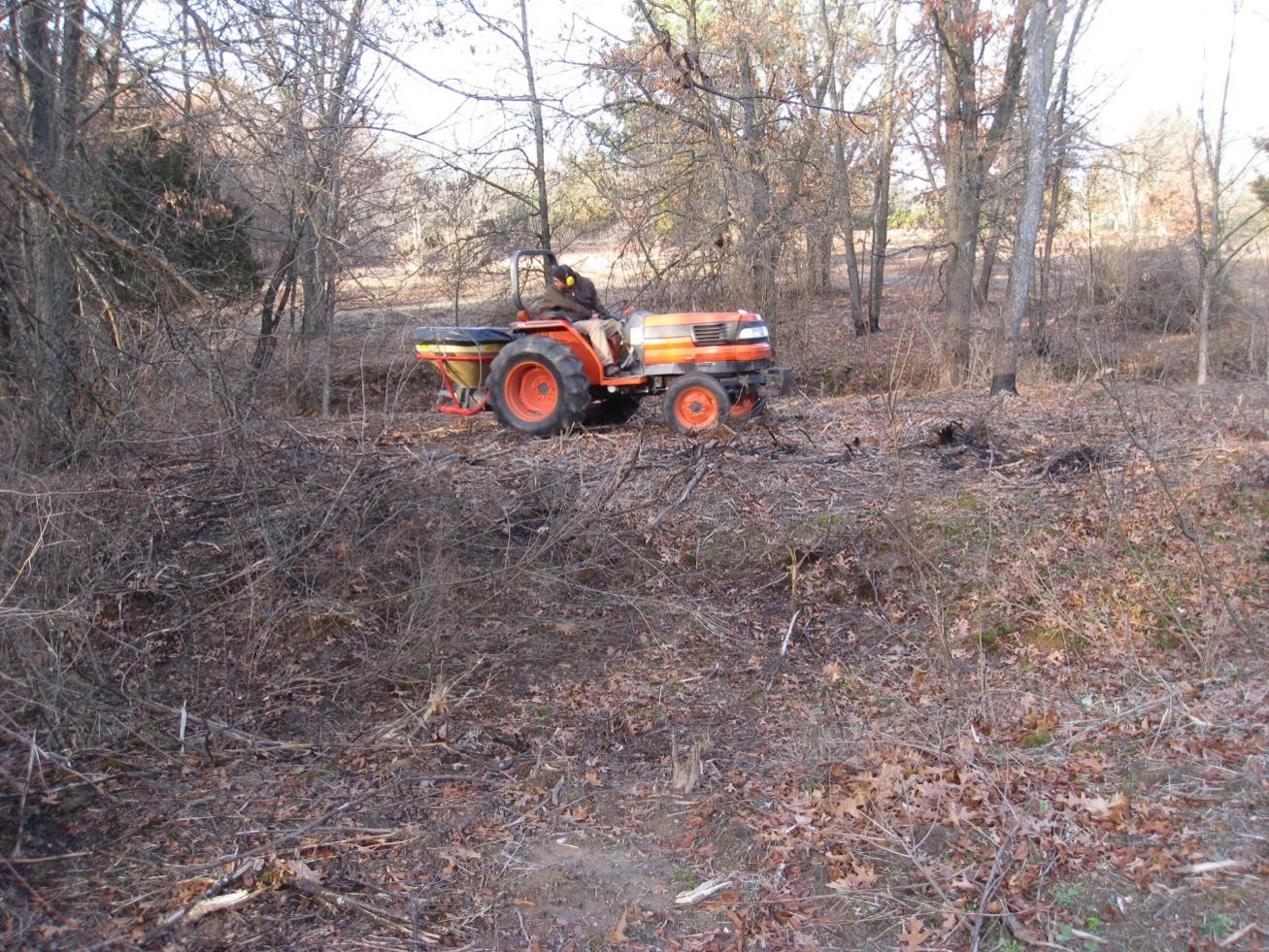
We used this little tractor with a pendulum seed broadcaster on the back. I think that is Mark Kruis on the tractor.
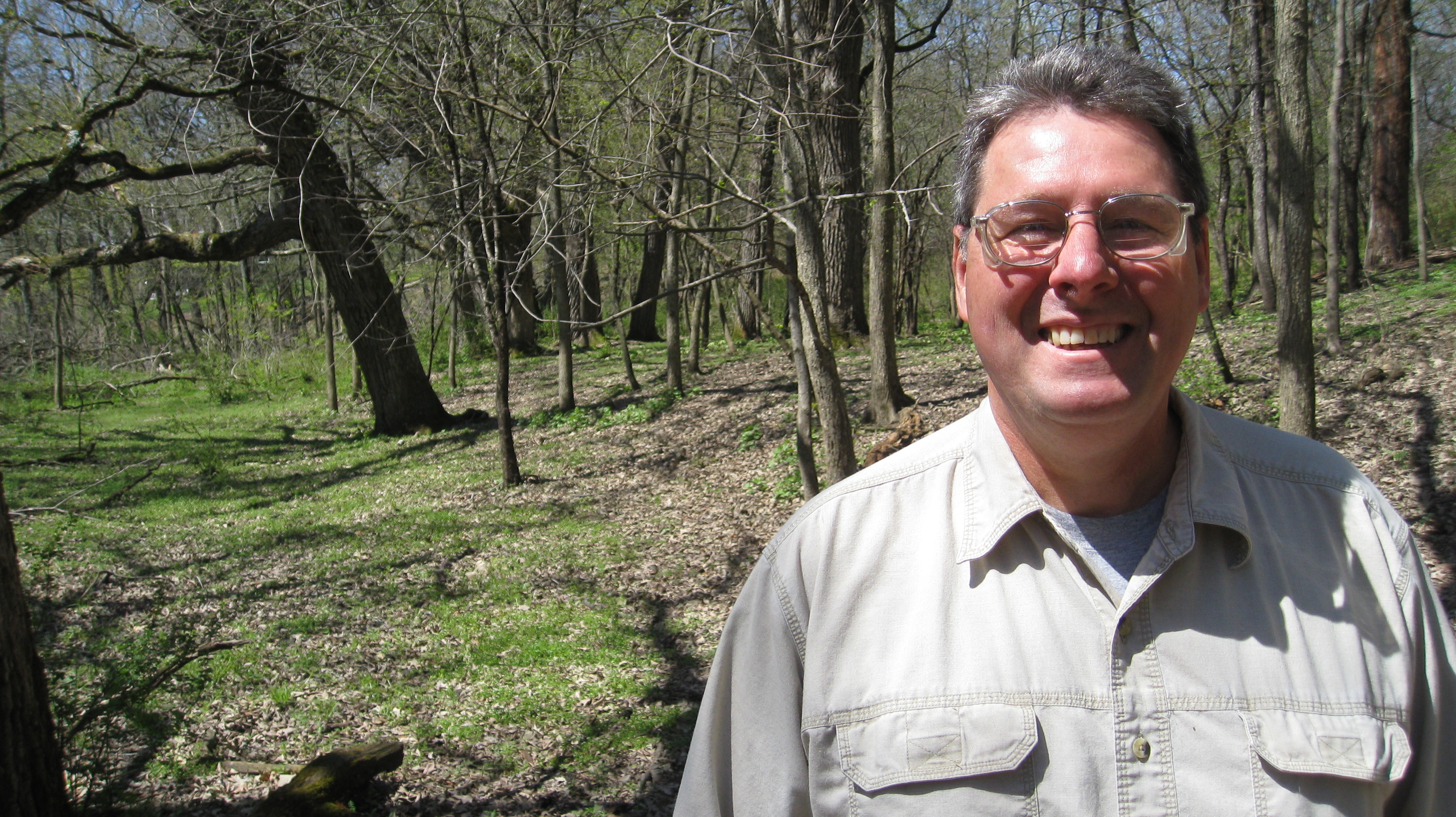
Mike Carr was a neighbor to the tract back then and as I went door to door to introduce myself to the neighbors I met Mike. He was so happy we had purchased the tract, stating he wanted to get involved. Boy did he. Mike became a major presence on this unit, working with other volunteers and seasonal crews. 15 years and counting. They wore backpacks and applied the basal bark herbicide (mineral oil with a broadleaf herbicide) to the bottom bark of each and every olive they could find. Basal bark herbicide is very effective on olive. You should get complete control of every plant treated. But how to find the time to get to each one? They repeated this work over 15 years with a pleasant can-do attitude.
Currently, there is still a bit of olive out there and we will keep going after it.
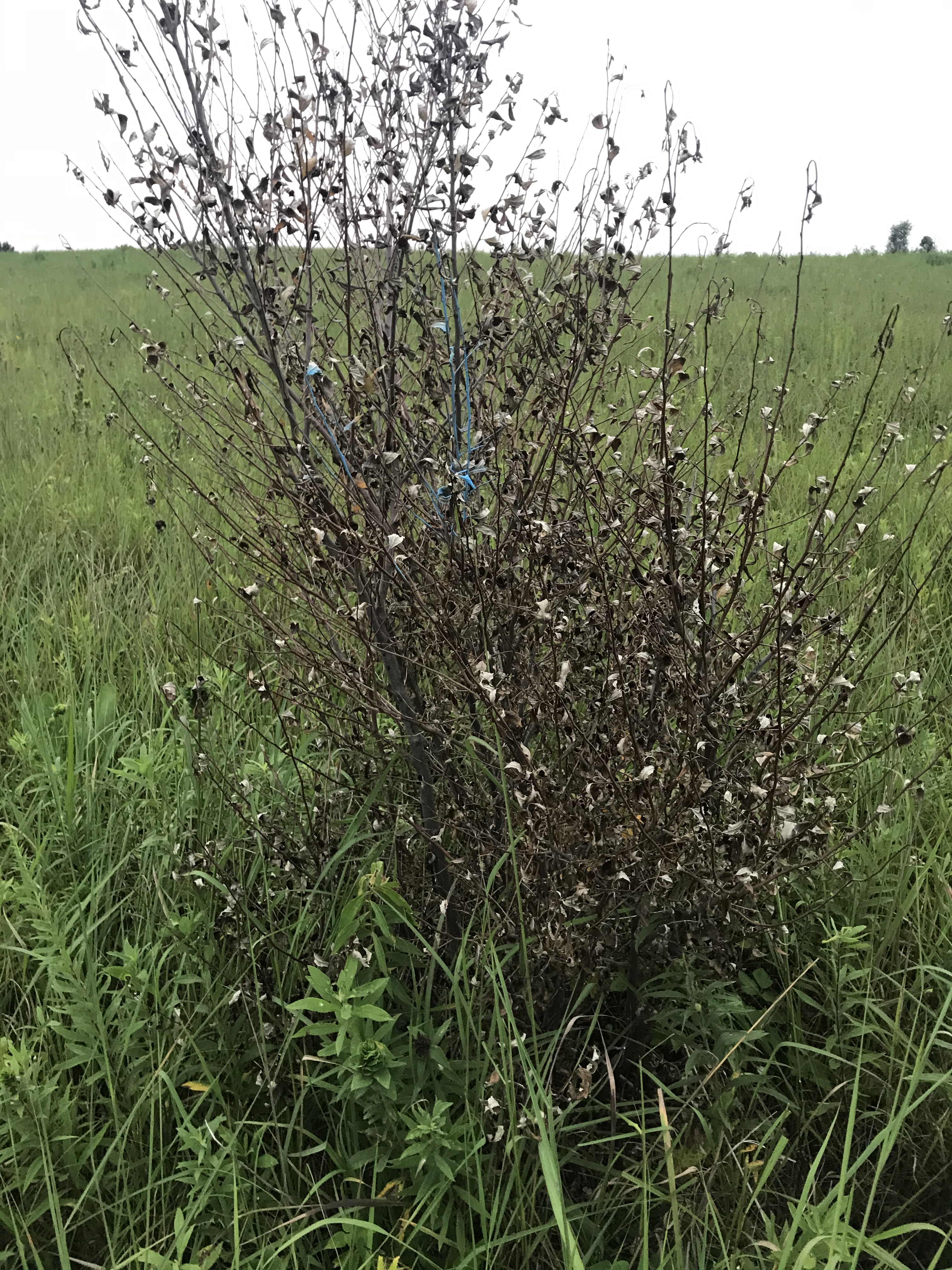
An olive shrub basal bark treated mid-July and crispy four weeks later. The blue paint is how I mark a hand full of plants so I can know an individual was treated.
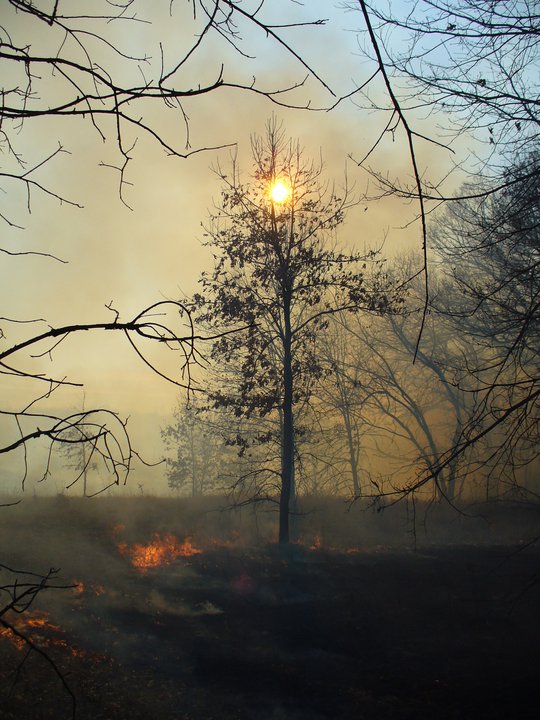
We use frequent fire at this unit to keep the shrubs in check. This image is from there.

August 22, 2012: Just two years after we started our work in this olive patch.
To find other posts about invasive shrubs on this blogsite just use the search bar on the site. And follow our blog by putting in an email address there.


 grassland restoration network
Hi Bill,
I have a 65 acre prairie/savanna restoration site in Ontario, Canada that is as overtaken by olive as your site was. My site has 4 types of areas within it: naturally open with scattered olives, areas recently cleared of scotch pine with olive and buckthorn left behind, areas to be cleared of scotch pine with thick understory of olive and buckthorn and a mature Norway spruce plantation with super dense olive in the plantation rows.
I am considering using a forest mulcher in the plantation rows and spot treating all the other areas, then maybe using a mulcher to remove the dead woody debris and reduce likelihood of resprouts. We would do foliar treatments on the mulched resprouts in the rows come spring. However, I’m not sure if that’s the best approach. Or should mulch everything except for the open areas.
What was your seeding application rate?
I welcome any suggestions! Thanks.
Cheers,
Ewa
Our seeding rate was likely over 30 pounds per acre of clean seed. But what we planted was combine harvested seed, stems, leaves. We may have planted twice that seed rate.
As per using a forest mulcher, I would use there wherever you can. In the pine rows if it fits, all the slash areas, and all other areas where the mulcher will save you time. A gentle operator can minimize soil disturbance in the good areas. You can always basal bark treat shrubs without mowing them. The mowing helps with thickets that are hard to access with a backpack. The resprouts of shrubs from that mowing are also controlled easily by spraying the same basal bark solution to the mowed stubs. It can be easier to see the resprouts in the spring when they send up a few leaves. Aim the basal bark herbicide where the plant emerges from the ground.
another great article Bill, fran
Thanks for a good article. The 2-year-after photo is really impressive, especially since it looks like that area already has good fuel to carry fire so soon after mulching. Do you recall if there were any obvious winners and losers from your seed mix in those olive areas? Or other lessons from the seeding? I’d wonder if that heavy mulch layer and the effect autumn olive has had on the soil would be a barrier to establishing plants from seed, but I don’t know that firsthand. With IDNR we are clearing some large olive stands from reclaimed strip mine areas and are still in the killing phase (mulching, dozers, aerial spraying) but we have work to do to figure out next steps in terms of seeding and establishing enough fuel to carry fire.
We seeded a few months after thinning all that brush. That is a lesson learned. When you have a lot of brush encroachment there is a lot of exposed soil that will take seeds, either the ones you add or the weeds in the area. Seed when you can with the best species you can muster.
The seeding in this case established well. It was an agricultural combine produced mix where we planted what came out of the combine. What went in the combine came from a few prairie plantings. So that means that Sorghastrum nutans, feather grass, is abundant there. It seems every seed of feather grass establishes. There is also little bluestem, round headed bushclover, pale purple coneflower, and the ubiquitous yellow coneflower and bee balm. If we had hand picked seed to add that would have been the time to add it.