By Bill Kleiman
A basic question in prairie plantings is what is the weight of seed to plant per acre? You would think that the community of prairie restoration ecologists would have answered this question in a controlled study a few times. But back in 2006 I did not know of any published studies, so I started a study and then partnered with ecologist, David Goldblum, to gather the data and publish a nice summary.
The punch line is you should plant a lot of seed, but there is a point of diminishing returns. For us 50 pounds per acre of uncleaned seed (with plenty of chaff) produced as good a result as did 70 pounds.
50 pounds per acre of uncleaned seed is a lot! When I first started planting prairies at Nachusa we were at perhaps 12 to 15 pounds per acre. We got mixed results, with some areas not establishing well and exotic plants occupying a lot of space. Then we noticed that volunteer Jay Stacy got a fantastic establishment of prairie by dumping on an immense amount of seed, which he was not weighing. Jay eventually produced a series of home run prairies and mentored many others here. So we increased our seeding weights, eventually hitting in the 40 to 50 pounds per acre of uncleaned seed. Our mixes were very high in species too, with 50 to 150 species. We have planting reports for many of these on the Friends of Nachusa Grasslands website.
So the data supported our theory that we need a lot of seed. Do not expect the natives to be able to keep out the exotics unless you seed a lot. And of course you will have exotics anyway as lawn grasses seem to be everywhere.
Here is a short summary of the study design:
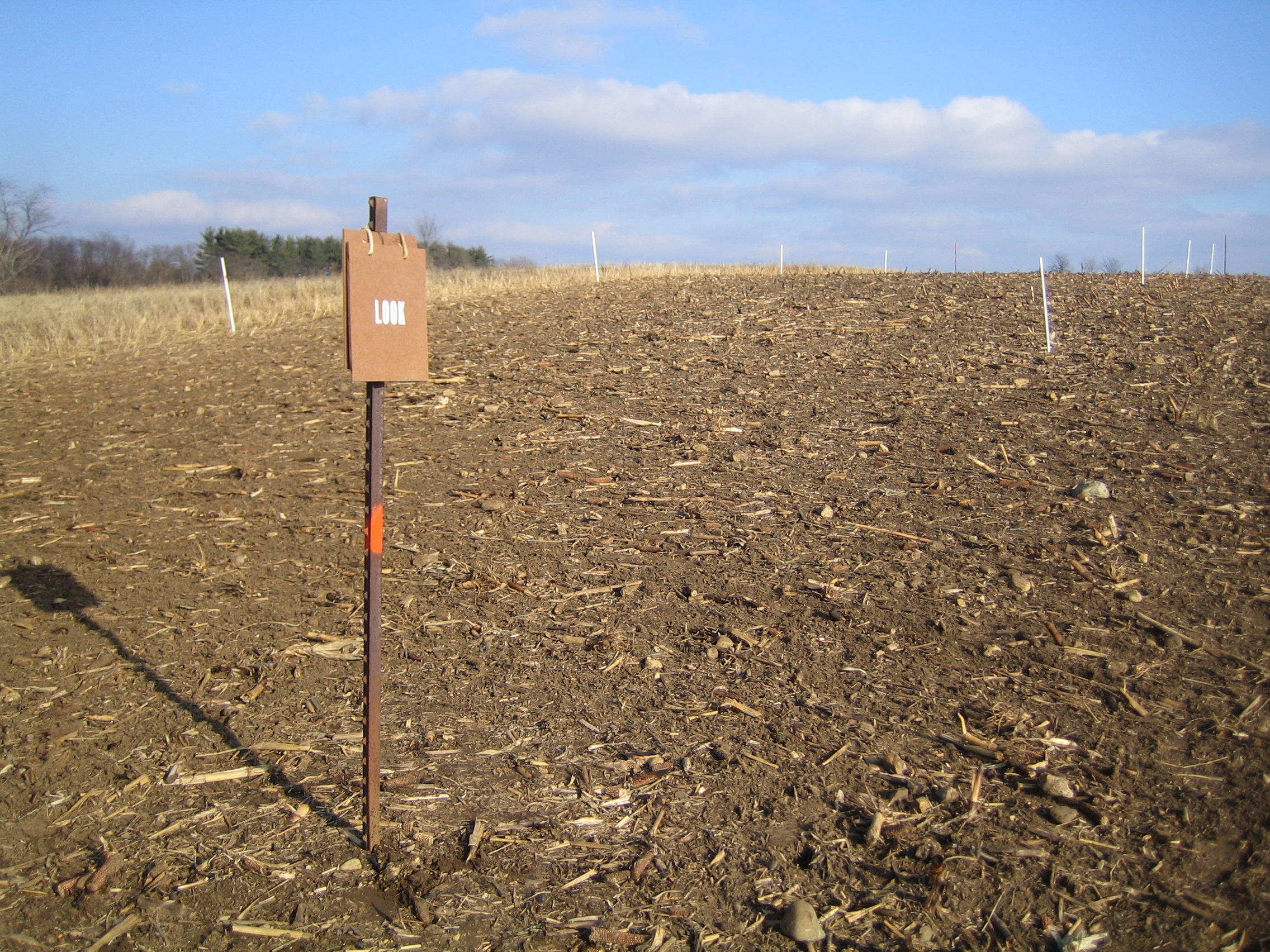
In the fall of 2006 we set up a “random block design” to test four seed weights per acre for planting prairie seed in a field that was had been in a decades long corn/soy rotation. This random block was a row of five cells, and there were three rows. This means there were three replicates. Each row is randomized. Hence the random block.
Here are the four treatments:
- 10 pounds bulk weight seed per acre.
- 30 pounds bulk weight seed per acre.
- 50 pounds bulk weight seed per acre.
- 70 pounds bulk weight seed per acre.
- Control: No seed will be added.
By bulk weight I mean the seed mix was not cleaned and contained chaff and stems. From previous comparisons to cleaned seed the bulk mix is about 40% seed by weight.
On the second growing season of the planting Northern Illinois University grad student Brian Glaves and his professor David Goldblum used quadrat to gather the data. The study was evaluated using Floristic Quality Indices recording all species and their cover


Here is the link to the paper in Ecological Restoration:
The Impact of Seed Mix Weight on Diversity and Species Composition in a Tallgrass Prairie Restoration Planting, Nachusa Grasslands, Illinois, USA
David Goldblum, Brian P. Glaves, Lesley S. Rigg and Bill Kleiman
Ecological Restoration, June 2013, 31 (2) 154-167; DOI: https://doi.org/10.3368/er.31.2.154
https://er.uwpress.org/content/31/2/154
From the paper: “Low seed density plots had low species evenness, while densities of 56.0 and 78.5 kg/ha [these were the high seed rates 50 pounds and 70 pounds] showed significantly greater evenness. Based on germination and growth, the floristic quality index (FQI) was significantly lower in the control and lighter seed weight treatments. …Considering all ecological metrics analyzed, there were few differences between the 56.0 and 78.5 kg/ha treatments.


 grassland restoration network
Do you have any insights for seeding rates in wet meadows, temporary and seasonal wetlands?
Good work here. Love the history and collaboration. Thanks,JamesSent from my iPhone
Fascinating read—really appreciate the way you turned “how much is enough?” into testable ranges rather than a single magic number. I’m curious whether you’ve seen different sweet spots when you bias mixes toward a few structural dominants vs. higher forb richness, especially under corn-field legacies (N flush, weed pressure). Any quick rule of thumb you use to adjust PLS rates when you expect a heavy first-year annual load?
We have found you can plant the full suite of diversity of seeds that match the soil type. Or I have stated it, “plant year one what you want to see in year 100”. As per PLS clean seed, our bulk mixes of seed are about 40% seed by weight. 60% chaff.