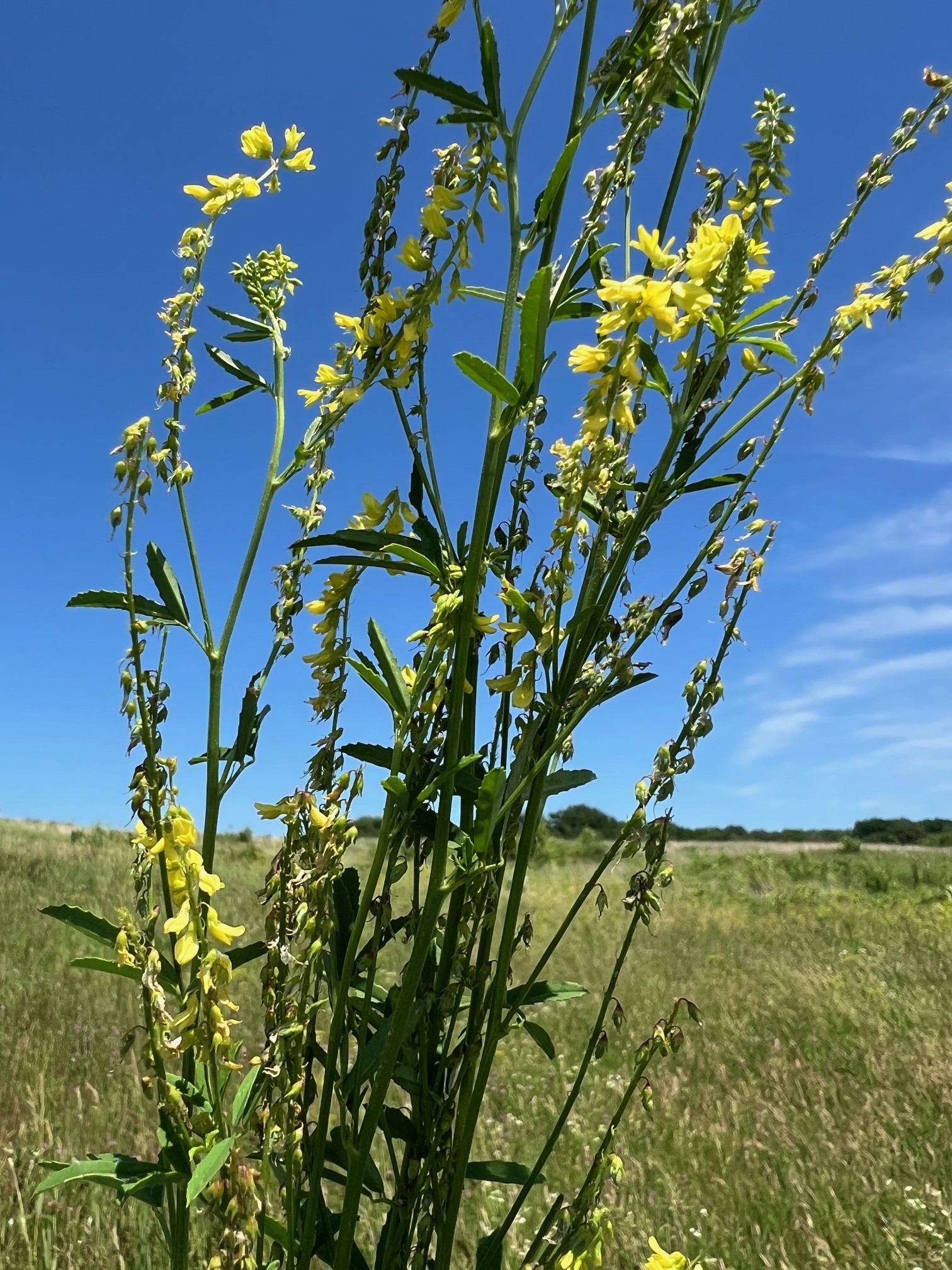
Yellow and white sweet clover (Melilotus officinalis and M alba) are on the invasive weed list of many natural areas managers. The plants are biennial, so on year two they bolt, bloom, and produce a lot of seed. They are a legume and their seed sits in the soil for years, releasing some annually to give you a run for your money.
I bet some insects like the nectar and pollen sweet clover produces, and in a pasture I would think cattle would graze it. It was originally brought to the continent for hay. We managers have seen how sweet clover can form incredible thickets and so we push back when feasible.
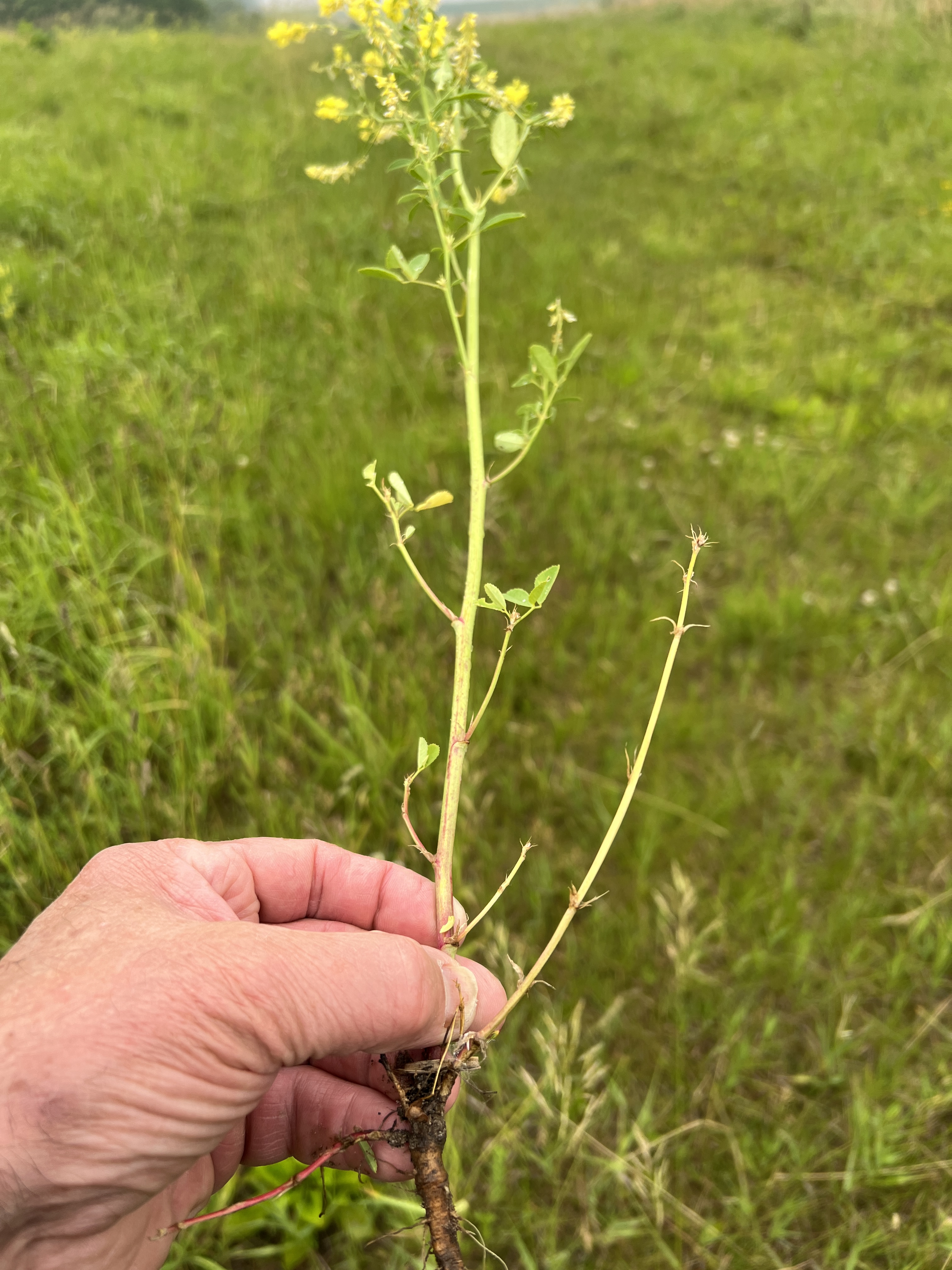
A long time ago my new boss Stephen Packard told me you can mow the sweet clovers to kill them but you have to mow them below the lowest leaves. If you mow above the lowest leaves it will resprout.
As sweet clover matures the leaves die off from the ground up.
A key point here is the longer you wait the higher you can mow.
I have found Stephen’s advice to be solid. Decades back we reduced fields of white and yellow sweet clover with mowing done at the right time. A few years later we only had to spot mow some patches, then later just some backpack spraying of patches, and now just a sprinkling of plants we can spade or spray or cut.
As with all weeds, you have strategies for some areas that are different from other areas. Mowing sweet clover won’t work in rocky areas. If you have thousands of acres to manage you may not have sweet clover on the top of your list of weeds. Like many ecological questions the answer starts with “It depends”.
June 25, 2013: Removing sweet clover. You only need to remove sweet clover if the seeds are forming.
The yellow sweet clover blooms first. Wait to mow it until it is just about to be mature enough to produce seed. At Nachusa this is about June 15 to 20. White sweet clover is ready to mow around the Fourth of July.
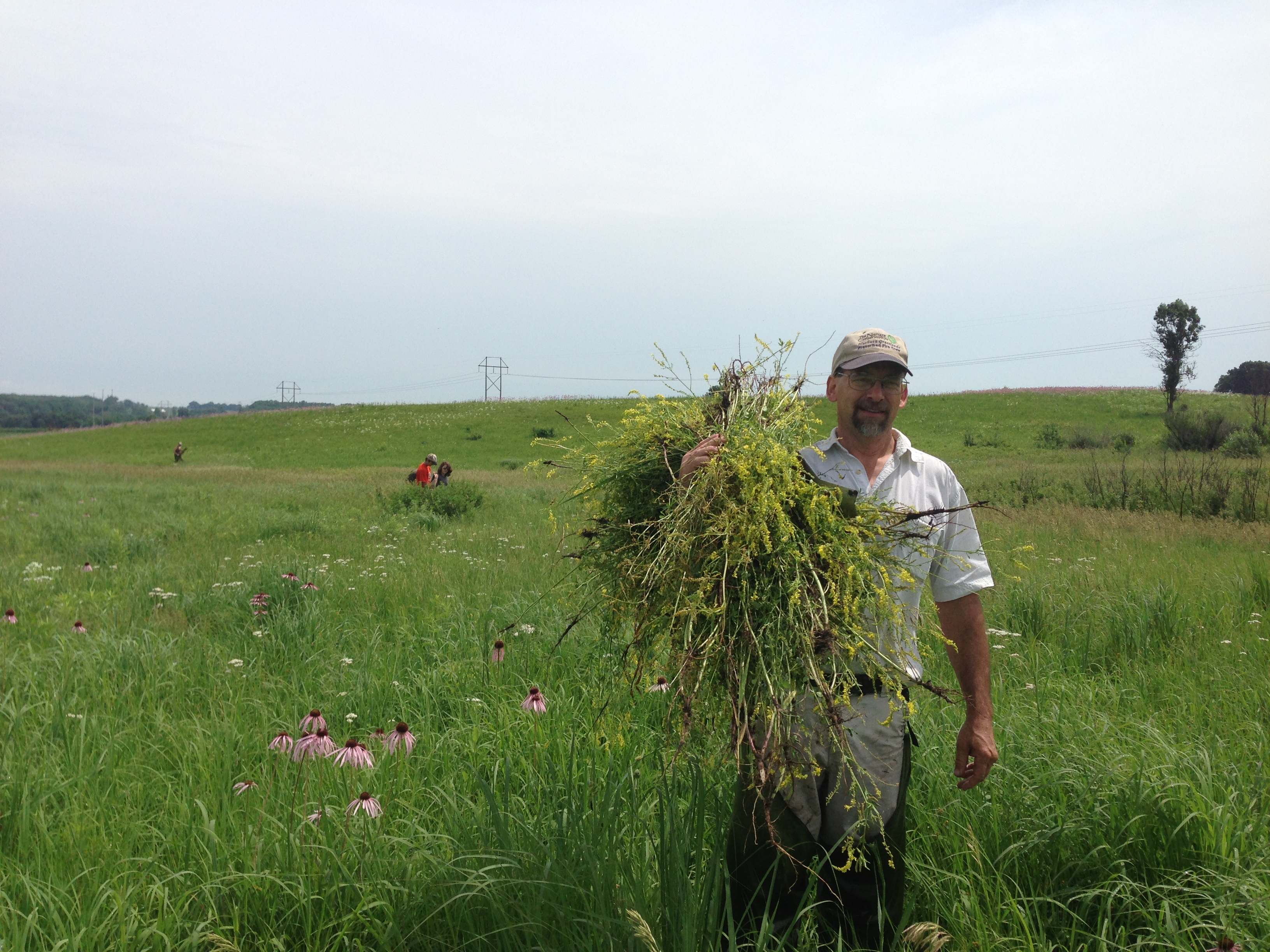
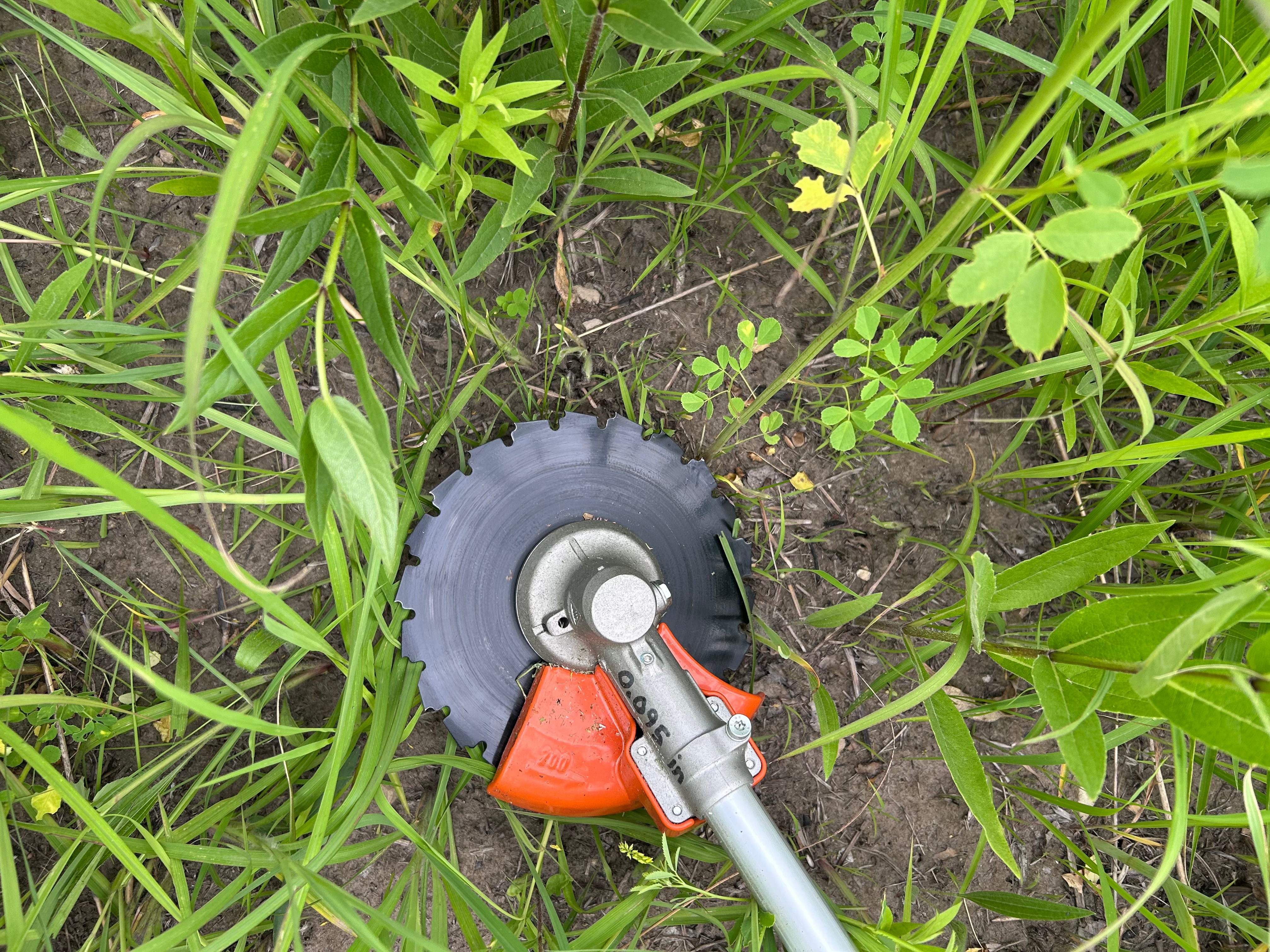
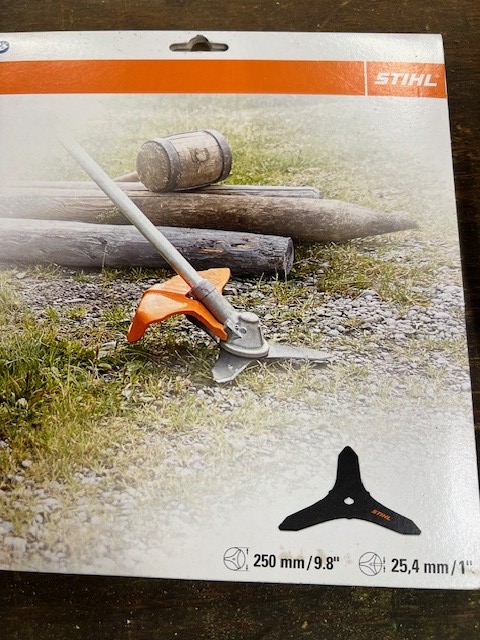
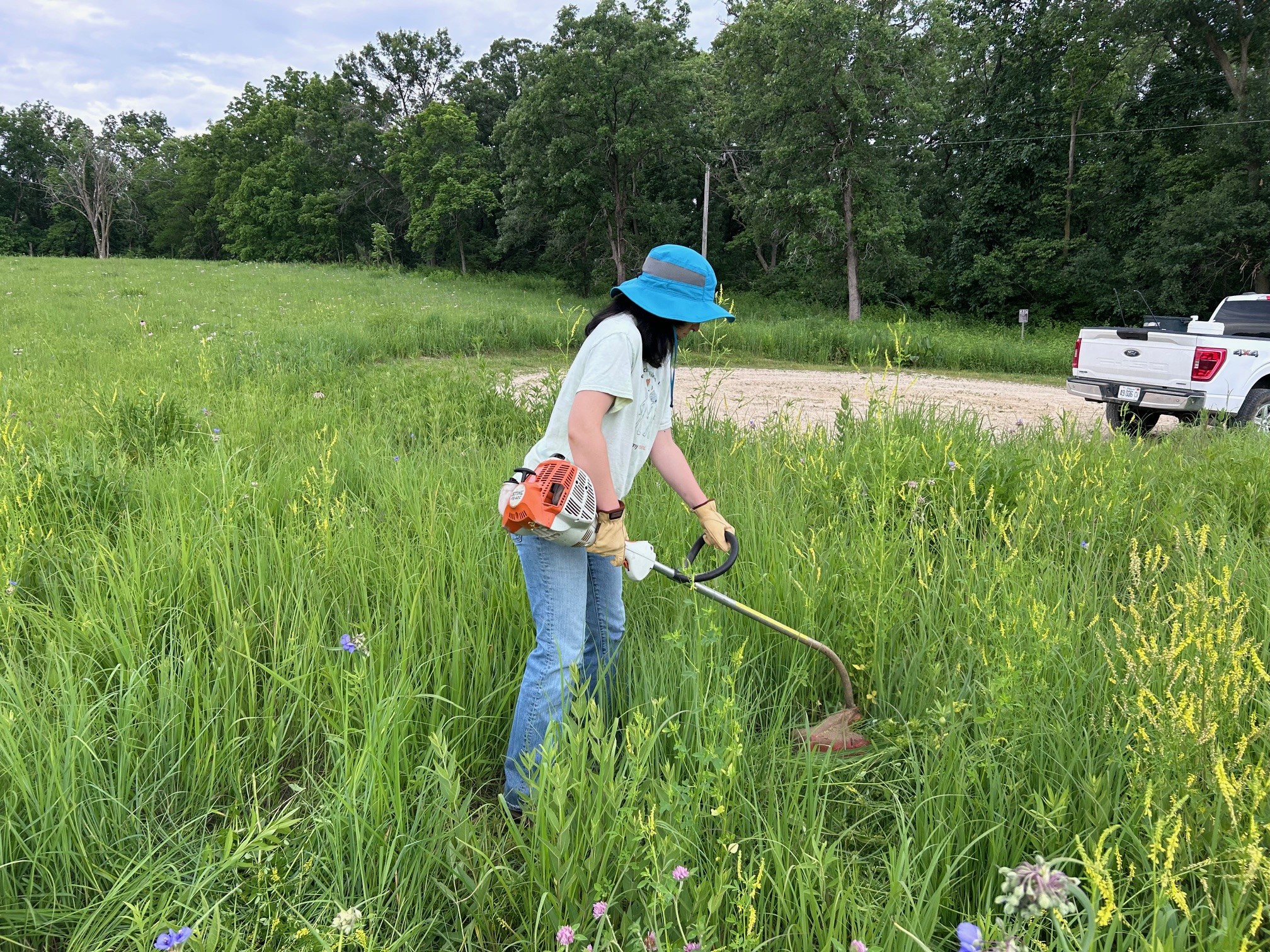
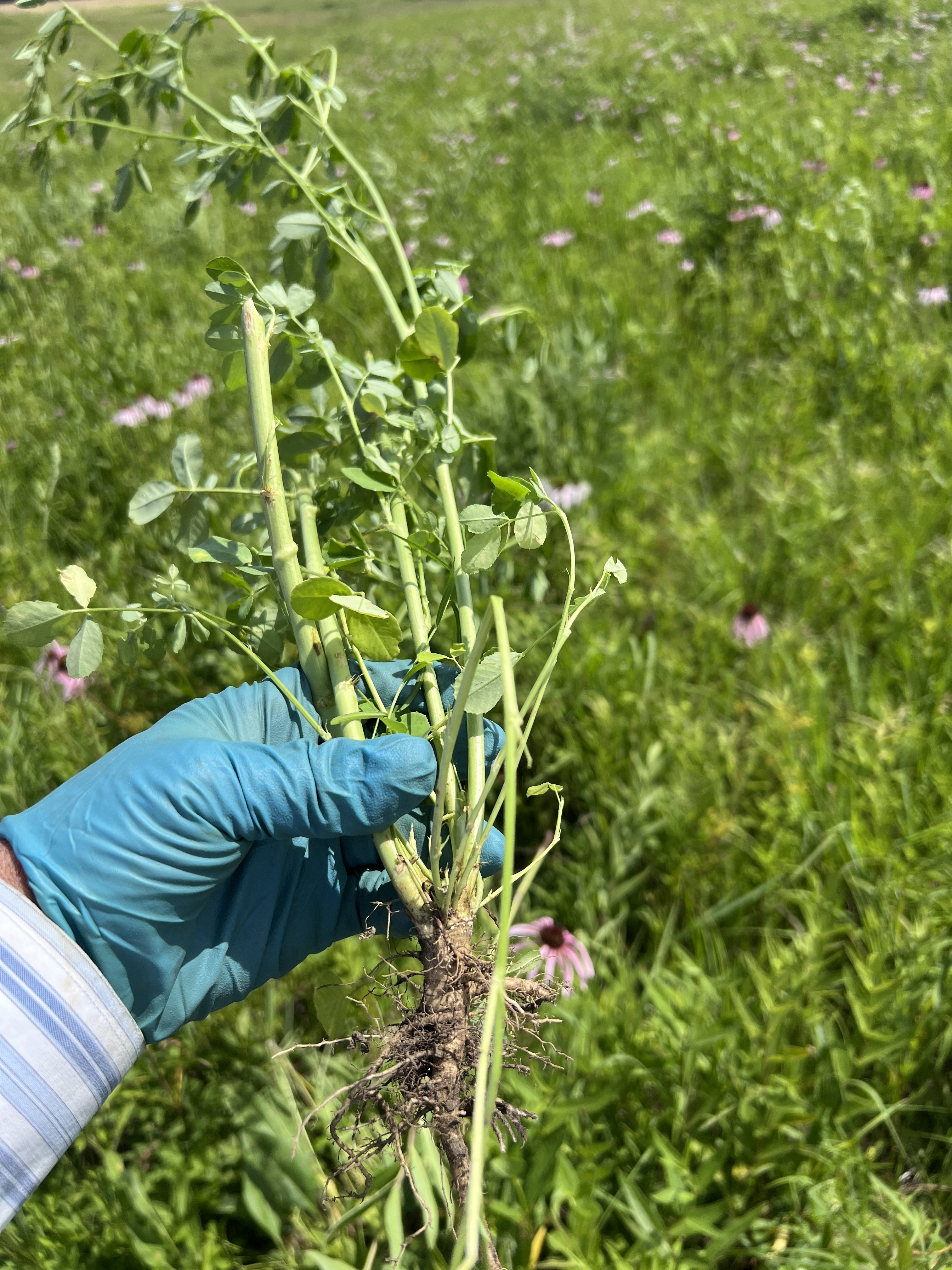
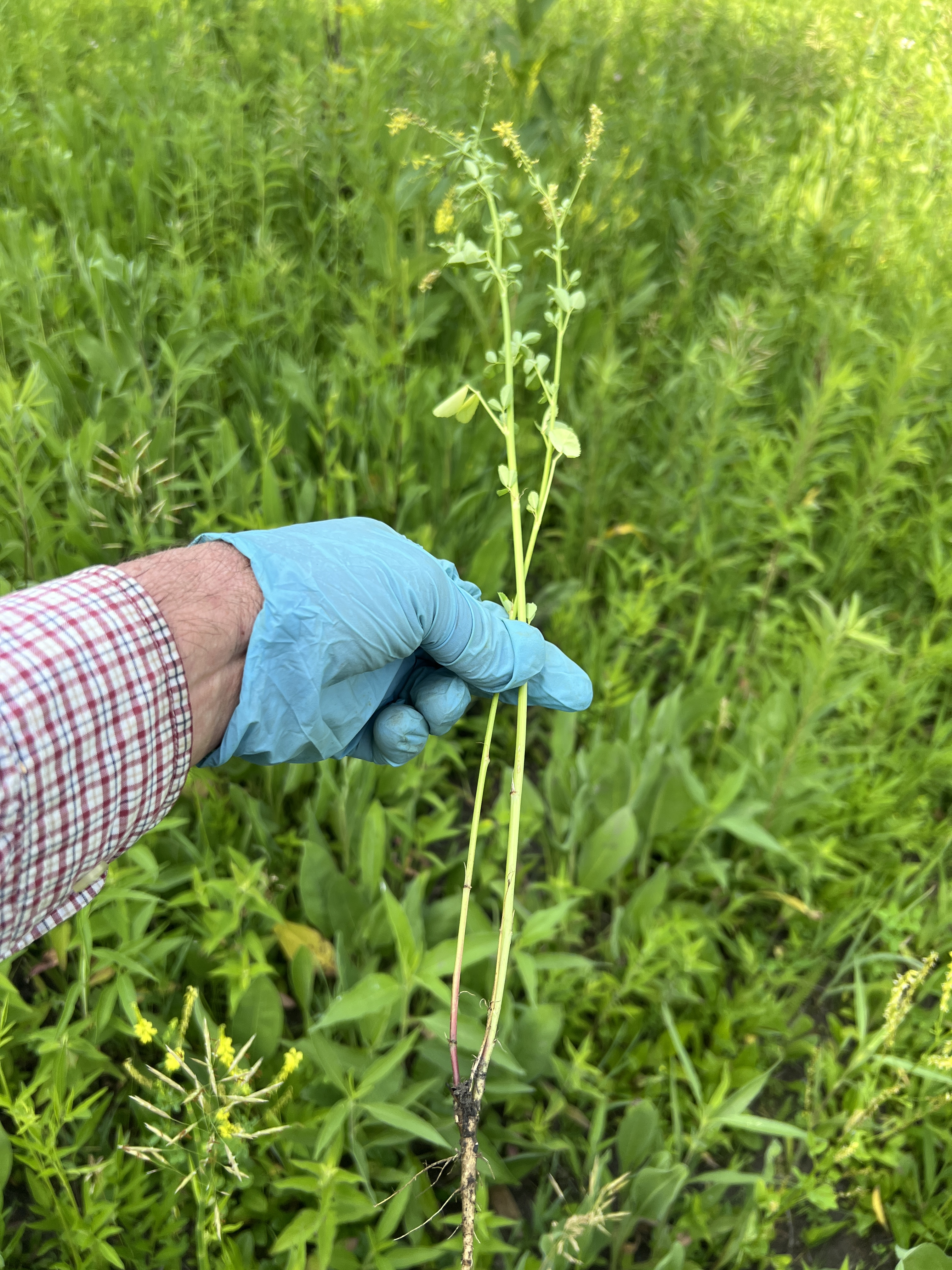
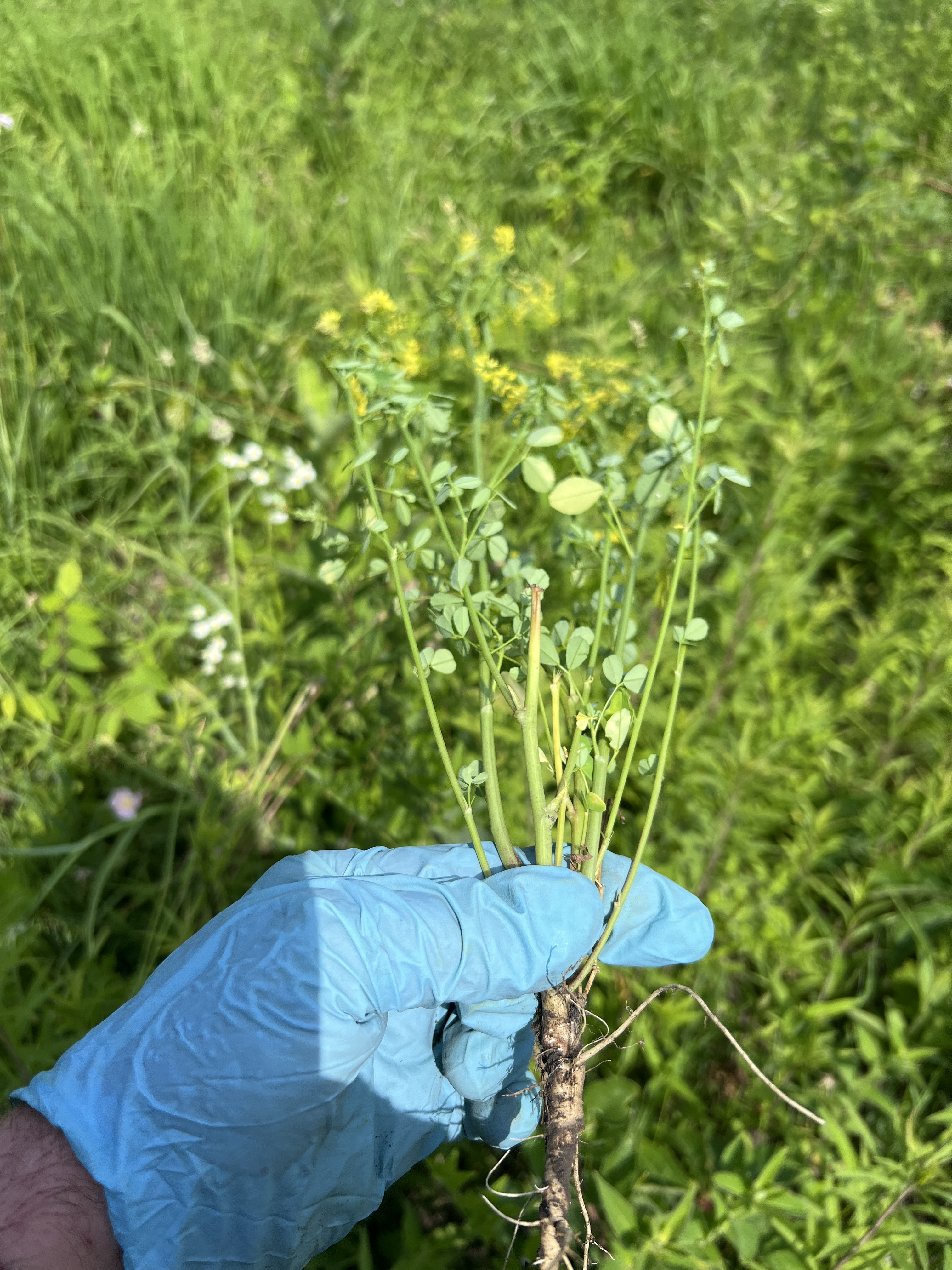
June 18: Stihl FSA 200 electric brush saw cutting a yellow sweet clover. A brush saw can mow nearly flush to the ground so they can be a good choice of a tool. They are faster than spading or hand scything. But we still mostly use a spade as the spade is cheap and effective.We are about to try this tri blade out which comes with its own orange shield. We hear this will work well. Gas string trimmer to cut yellow sweet clover. White sweet clover is too robust for a string trimmer. White sweet clover on June 17. Note that to mow this below the lowest leaf stem you would have to cut flush with the ground. That won’t happen with a mower. Yellow sweet clover on June 15. So this could be mowed at the height where I hold the plant, perhaps 5 inches. Many mowers can do this. June 15: Yellow sweet clover. You would need to mow at the height I am holding it, essentially flush with the ground. A mower can’t do this. You could cut it with a spade flush with the ground, but we tend to use the “Parsnip Predator” weed spade to loosen the soil and then pull it up with the roots. If the plants are in seed when cut then they need to be removed from the field. June 14: Yellow sweet clover. That stem with leaves on it means you can’t mow this plant yet. June 7: So how low do we have to mow this one?June 5: A yellow sweet clover that was mowed June 5. Too early is what I concluded. It is a macerated mess but there were a few leaves below the cut.
Patience is a prairie word: A key point here is the longer you wait the higher you can mow sweet clover.
June 16: Yellow sweet clover in early seed. I would haul this one out if you can.
Bill Kleiman, Julianne Mason, and Mike Saxton publish this blog. Bill's daytime job is director of Nachusa Grasslands with The Nature Conservancy. Julianne works for the Forest Preserve District of Will County. Mike Saxton works for the Missouri Botanical Garden at their Shaw Nature Reserve. We are looking for guest authors on various topics of grassland habitat restoration. Contact us with your ideas.
Excellent post. I try to cut clover during early bloom stage because I can’t find anything published about whether stems cut during late bloom stage can develop viable seeds while laying on the ground. Carbohydrates are stored in stems as well as roots so its theoretically possible. Perhaps your successful results indicate they don’t develop seed in that way. Another reason I cut at early bloom is to maximize the time available to control huge infestations. If I understand your strategy correctly, the reason for waiting until late bloom is that the distance from ground to the lowest leaf increases over time?
This year I’m trying an articulated hedge trimmer (Stihl HLA66) with Darwin’s Grip on clover & goldenrod. I haven’t used it enough to write a review, but so far it’s awesome. I’m cutting at 3” but with practice I may be able to get lower.
A few years ago in early September, I monitored white sweet clover patches that were mowed at 3-5” in late July (very late bloom stage with some seeds forming). Most didn’t reflower, but a few locations did for unknown reasons. I pulled 82 reflowering plants of various root diameters & took some measurements. 30% had at least one resprout originating at or just above the root crown, which is at or below the soil surface at varying depths. This correlated with an old report (link below) that indicated 30% of white clover plants resprouted even when cut by hand at ground level. Its unknown if the reflowering plants produced viable seed before freezing temperatures occurred. I’m guessing all of this could depend on soil moisture/precipitation. Bill, do you notice reflowering of cut plants & what % of plants do that?
Hey Don, I have seen sweet clover resprout at times. I bet a weed brush saw would make a nicer cut than a mower. Some mowers cut well, such as the Land Pride 2584 Flail Mower we use. It cuts low and clean. But it makes sense that some plants will have small leaves that emerge and attempt to keep the plant going. Overall, I have felt mowing works. Yes, waiting for the lower leaves to fall off allows your mower to do a better job.
And once plants are cut sweet clover quickly wilts, dries, and seems to stop producing seed. Mowing also shreds the plants which likely stops seeds maturing. But, if there are seeds that seem far enough along then I would pile them or haul them out. I have hauled out many thousands of sweet clover.
Thanks for the insight on cutting. How can one judge if the seed is likely to mature after cutting and needs to be removed rather than dropped? Is this different if cut at the base vs mowed, as the mowing chops the inflorescence?
A variant of the stem cut technique that is suitable for smaller patches is to cut just below ground level with a narrow shovel. Again later in the season to avoid resprouting is critical. This technique is a bit more surgical than using a brush cutter.
As noted, management practices are not a one size fits all.
Whether an immature sweet clover seed will become viable is subtle and subjective. If the developing seed is past the milky phase I assume it may become viable. Mowing the plants disconnects the developing seeds from the stems which may halt seed maturation. I bet some folks have tested this. One time we left some wild parsnip heads on the ground. My wife said they would become viable and we should remove them. We didn’t. She grabbed some and put them on sterile soil in a pot. They grew. Another time my wife was right.
Cutting below ground has to be better. It is about the amount of work vs how many plants you have to treat.
I just checked yellow sweet clover that I had cut on June 6 (early bloom stage in southern Wisconsin). In areas where the plants were small to medium sized at low density & cut at about 2”, reflowering sprouts were numerous. In a spot where plants were tall & dense, there was no reflowering even though they were cut high at 4-6”. For that spot, some stems had no leafy resprouts & some had tiny leaves, so time will tell if they eventually produce leafy stems & flowers. One theory is that the dense colony shaded out & killed the lower leaves, making the cut more successful. The 1933 booklet “Sweet Clover in Illinois” (page 249) supports this by saying the thicker the stand, the higher the stem buds, meaning it’s more likely that mowing will kill the plant.
If that theory holds at multiple sites for both white & yellow clover, dense clover patches can be mowed or cut starting at early bloom stage & scattered plants or low density patches should be pulled/dug or mowed at late bloom stage (and removed if seeds are forming) if the cut is below the lowest living leaf. Bill, would that strategy be consistent with your experience? Reference your 7/11/24 post, have you noticed that yellow clover resprouts more than white when mowed at early bloom stage? That also could be consistent with the above theory if yellow tends to form less dense patches than white.




 grassland restoration network
Excellent post. I try to cut clover during early bloom stage because I can’t find anything published about whether stems cut during late bloom stage can develop viable seeds while laying on the ground. Carbohydrates are stored in stems as well as roots so its theoretically possible. Perhaps your successful results indicate they don’t develop seed in that way. Another reason I cut at early bloom is to maximize the time available to control huge infestations. If I understand your strategy correctly, the reason for waiting until late bloom is that the distance from ground to the lowest leaf increases over time?
This year I’m trying an articulated hedge trimmer (Stihl HLA66) with Darwin’s Grip on clover & goldenrod. I haven’t used it enough to write a review, but so far it’s awesome. I’m cutting at 3” but with practice I may be able to get lower.
A few years ago in early September, I monitored white sweet clover patches that were mowed at 3-5” in late July (very late bloom stage with some seeds forming). Most didn’t reflower, but a few locations did for unknown reasons. I pulled 82 reflowering plants of various root diameters & took some measurements. 30% had at least one resprout originating at or just above the root crown, which is at or below the soil surface at varying depths. This correlated with an old report (link below) that indicated 30% of white clover plants resprouted even when cut by hand at ground level. Its unknown if the reflowering plants produced viable seed before freezing temperatures occurred. I’m guessing all of this could depend on soil moisture/precipitation. Bill, do you notice reflowering of cut plants & what % of plants do that?
https://www.invasive.org/gist/esadocs/documnts/melioff.pdf (page 6)
Hey Don, I have seen sweet clover resprout at times. I bet a weed brush saw would make a nicer cut than a mower. Some mowers cut well, such as the Land Pride 2584 Flail Mower we use. It cuts low and clean. But it makes sense that some plants will have small leaves that emerge and attempt to keep the plant going. Overall, I have felt mowing works. Yes, waiting for the lower leaves to fall off allows your mower to do a better job.
And once plants are cut sweet clover quickly wilts, dries, and seems to stop producing seed. Mowing also shreds the plants which likely stops seeds maturing. But, if there are seeds that seem far enough along then I would pile them or haul them out. I have hauled out many thousands of sweet clover.
Thanks for the insight on cutting. How can one judge if the seed is likely to mature after cutting and needs to be removed rather than dropped? Is this different if cut at the base vs mowed, as the mowing chops the inflorescence?
A variant of the stem cut technique that is suitable for smaller patches is to cut just below ground level with a narrow shovel. Again later in the season to avoid resprouting is critical. This technique is a bit more surgical than using a brush cutter.
As noted, management practices are not a one size fits all.
Whether an immature sweet clover seed will become viable is subtle and subjective. If the developing seed is past the milky phase I assume it may become viable. Mowing the plants disconnects the developing seeds from the stems which may halt seed maturation. I bet some folks have tested this. One time we left some wild parsnip heads on the ground. My wife said they would become viable and we should remove them. We didn’t. She grabbed some and put them on sterile soil in a pot. They grew. Another time my wife was right.
Cutting below ground has to be better. It is about the amount of work vs how many plants you have to treat.
I just checked yellow sweet clover that I had cut on June 6 (early bloom stage in southern Wisconsin). In areas where the plants were small to medium sized at low density & cut at about 2”, reflowering sprouts were numerous. In a spot where plants were tall & dense, there was no reflowering even though they were cut high at 4-6”. For that spot, some stems had no leafy resprouts & some had tiny leaves, so time will tell if they eventually produce leafy stems & flowers. One theory is that the dense colony shaded out & killed the lower leaves, making the cut more successful. The 1933 booklet “Sweet Clover in Illinois” (page 249) supports this by saying the thicker the stand, the higher the stem buds, meaning it’s more likely that mowing will kill the plant.
If that theory holds at multiple sites for both white & yellow clover, dense clover patches can be mowed or cut starting at early bloom stage & scattered plants or low density patches should be pulled/dug or mowed at late bloom stage (and removed if seeds are forming) if the cut is below the lowest living leaf. Bill, would that strategy be consistent with your experience? Reference your 7/11/24 post, have you noticed that yellow clover resprouts more than white when mowed at early bloom stage? That also could be consistent with the above theory if yellow tends to form less dense patches than white.
https://archive.org/details/sweetcloverinill00sear/page/210/mode/2up