By: Julianne Mason, Restoration Program Coordinator
It’s an understatement to say that woody invasives are a major threat to our natural areas. They can displace native plant communities, alter wildlife habitat, and impact nutrient cycling and other ecosystem processes. Here in northeastern Illinois, they have become nearly ubiquitous. I’m hard pressed to think of any protected upland areas in my county that are not threatened by some kind of woody invasive species. The scale of where woody invasives need to be treated = basically, everywhere we want to maintain or restore highly diverse natural communities!
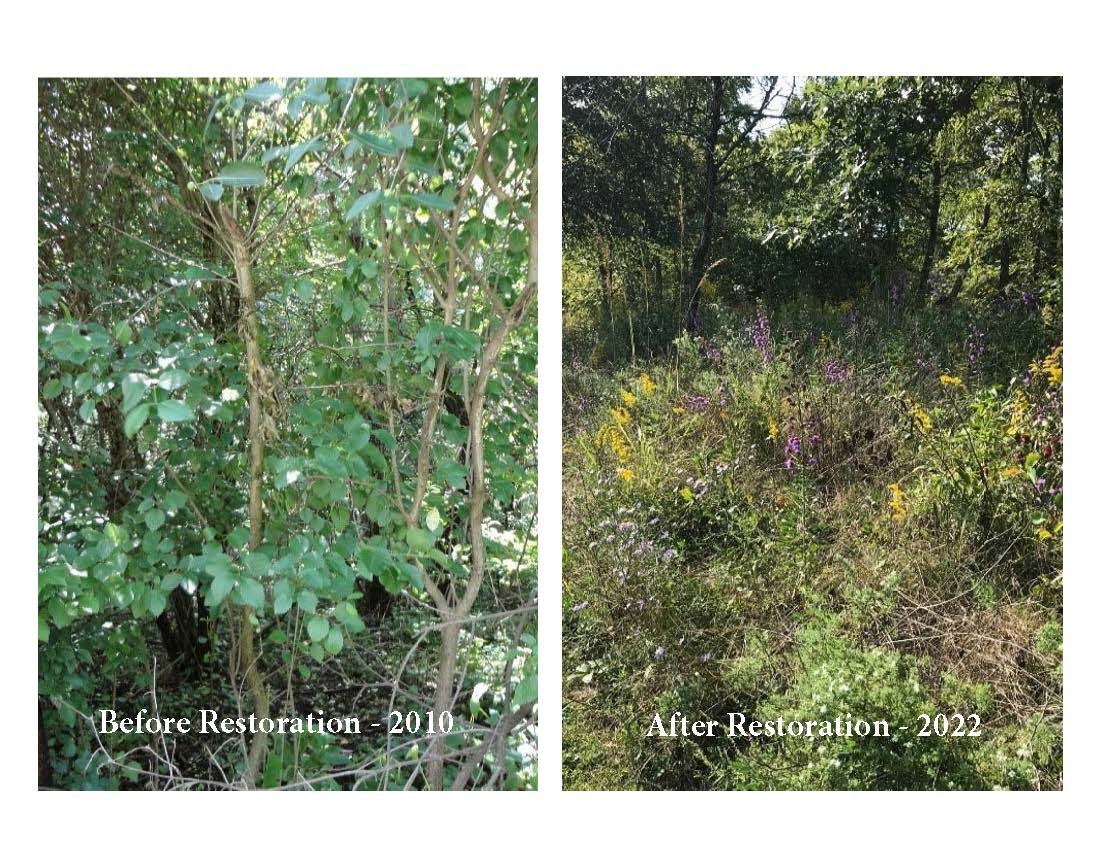
Dense brush before restoration (left) and more diverse savanna community after invasive shrubs are managed (right).
Previous posts in this blog have documented how basal bark treatments are an effective and efficient method to kill invasive woodies. Bill Kleiman’s original posts on the topic were published in five parts in 2016. Part 1, Part 2, Part 3, Part 4, Part 5. If you haven’t read them yet, I highly recommend doing so. Based on his recommendation and data, we did our own trials which were also highly successful. JM post. After that, we started using basal bark treatments fairly extensively to combat invasive woodies. Even so, we still use cut stump treatments in many situations too. I analyzed the past six years of treatment data to compare the time and resources needed for the two different treatment methods to control woody invasives.
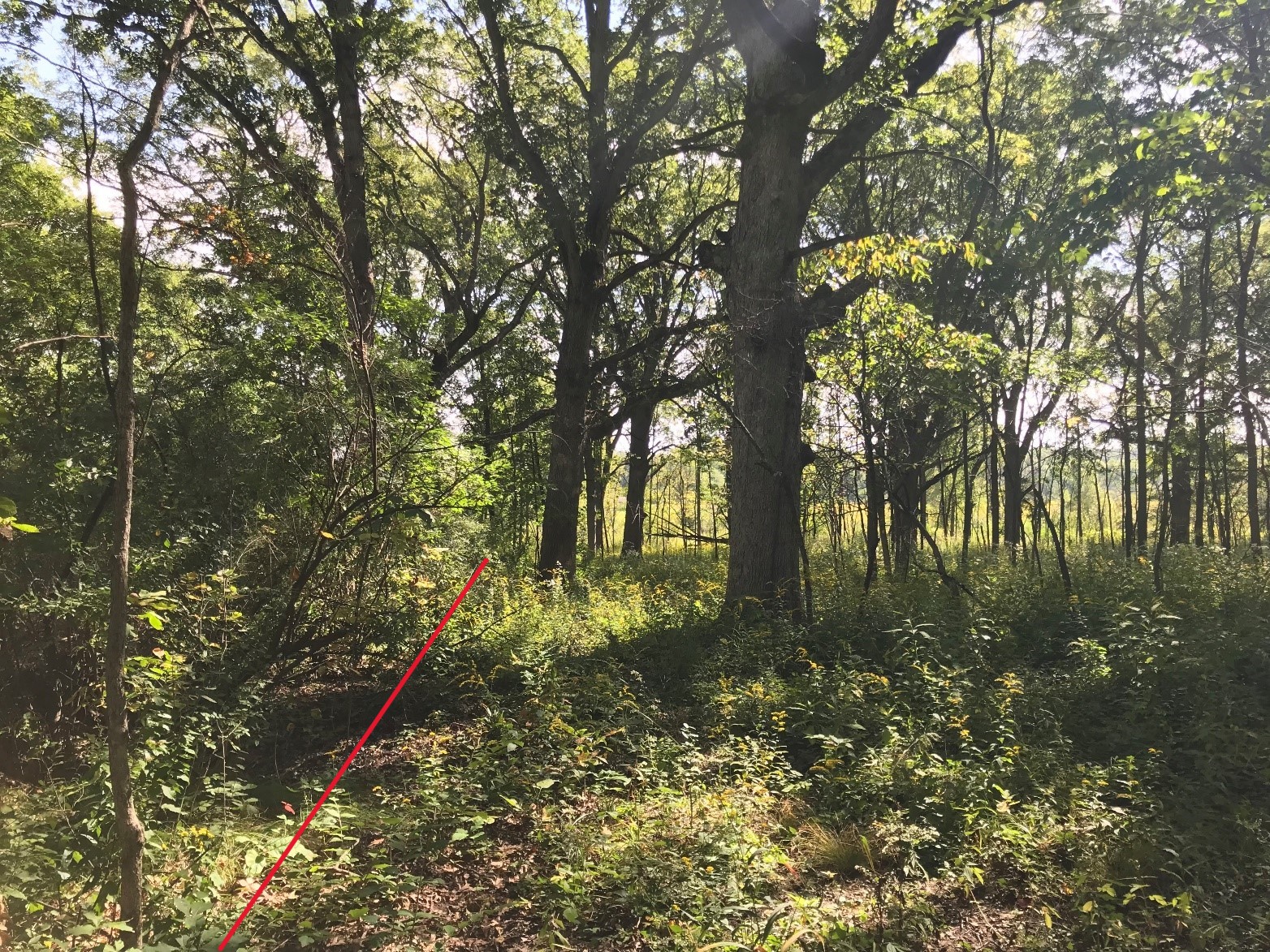
Woodland where invasive shrubs have not been controlled (left) and where woodland has been managed with prescribed burning and basal bark treatment to invasive shrubs (right).
Here’s a summary of the past six years of treatment data for my organization (the Forest Preserve District of Will County in Illinois). For scale, we own ~22,000 acres in 80 preserves scattered across the county, and we perform a moderate level of ecological management in ~6,000 acres.
Cut stump treatments are when the invasive shrubs are physically cut, using chainsaws, hand tools, or specialized machinery like forestry mowers. Herbicide is typically applied to the cut stump to kill the shrub.
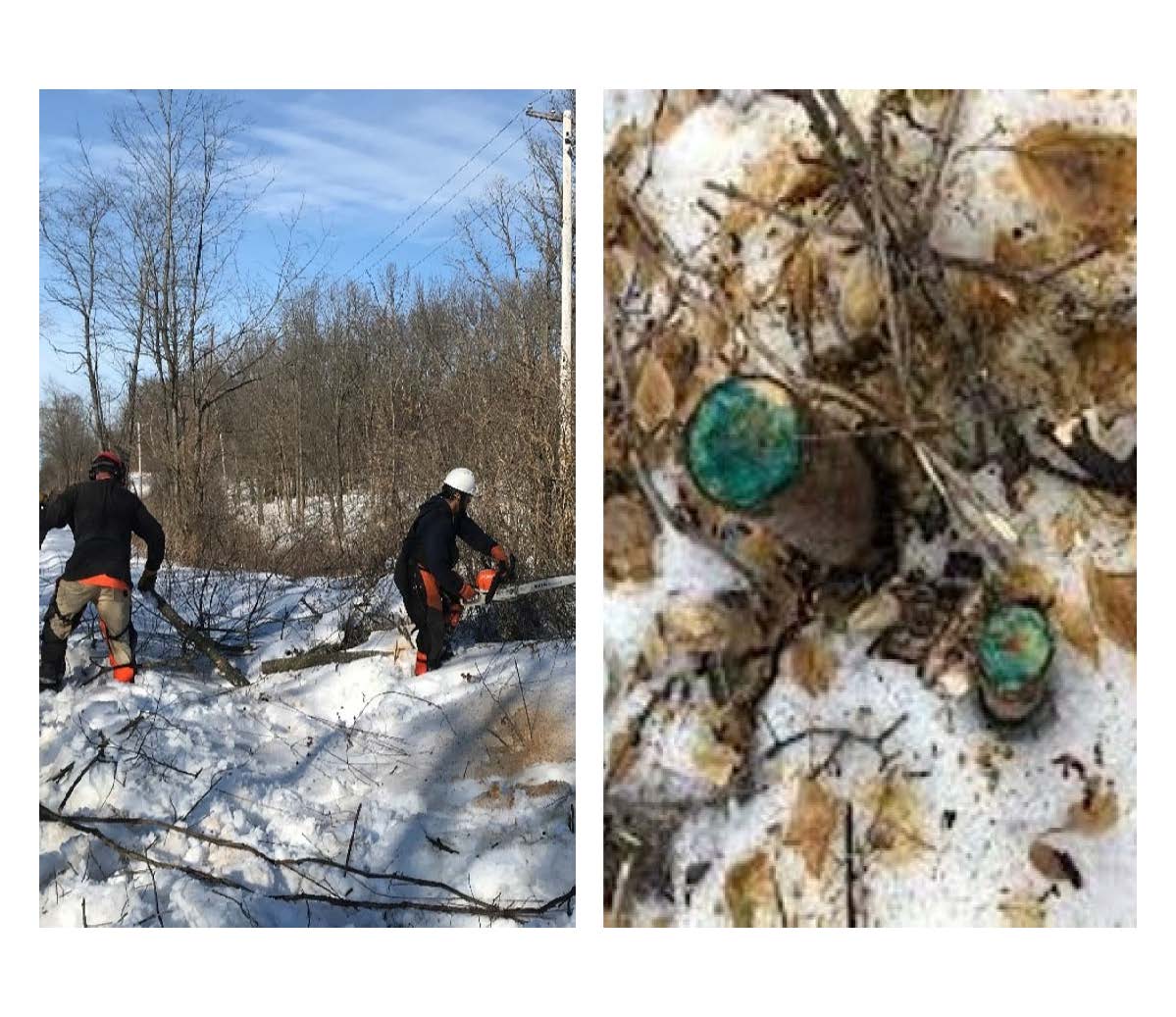
Cut stump treatment where the brush is cut with chainsaws (left) and herbicide applied to the cut stumps (right).
Sometimes, the cut material is stacked into piles and burned. This is fun and satisfying, and brush clearing using the cut/stack/burn method is a popular activity during volunteer workdays. The main advantage of cut stump treatments is instant gratification. We’re humans, after all, and it’s very satisfying to see visible progress after a day of hard work. A dense thicket of shrubs in the morning is physically removed, and it’s very satisfying to look back at our progress at the end of the day.

The cut/stack/burn approach is popular because it is fun and satisfying. We’re humans and we love instant gratification.
If machinery like a forestry mower is used, one drawback is that ground disturbance caused by the machinery can kill plant crowns located in the top inch of soil and result in opportunities for weedy species to establish. Generally, there is a slower recovery of the native plant community. This is especially true if the ground is not frozen solid. In our area, there are often limited numbers of days when the ground is frozen solid, which limits the acreage that can be treated under optimal ground conditions.

Mechanical clearing also results in instant gratification. Compare the area cleared (right) to the uncleared area of dense shrubs (back, left).
An unfortunate reality is that many invasive shrubs resprout vigorously after a cut stump treatment, and areas often need multiple re-treatments after the initially satisfying (but rather ineffective) cut stump treatment.
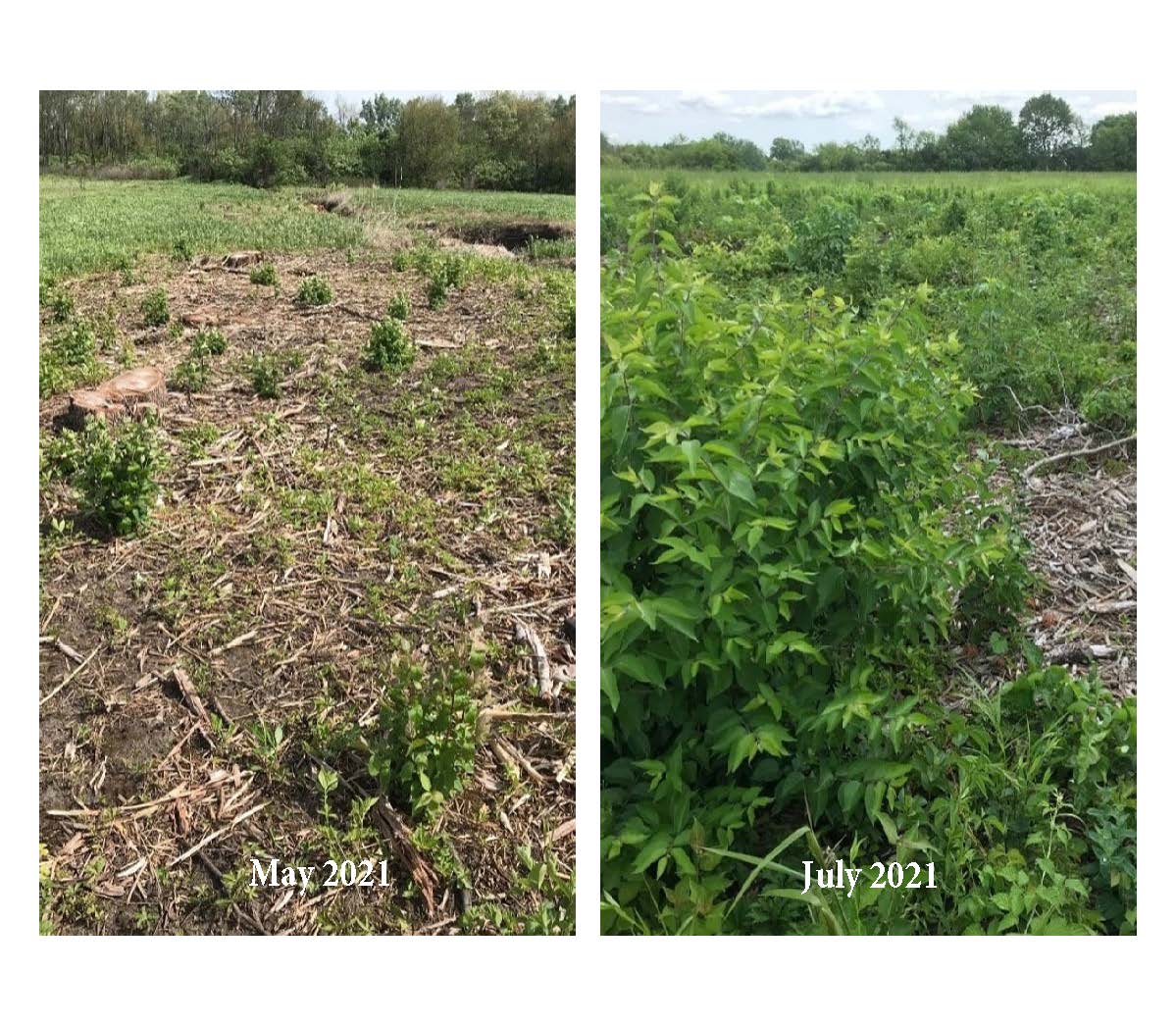
Invasive shrub resprouts after cut stump treatment. Note how much the shrubs grew back by the following summer.
In a previous study, I found that only ~30% of resprouting shrubs died from a follow-up foliar herbicide treatment. Insert sad face here.
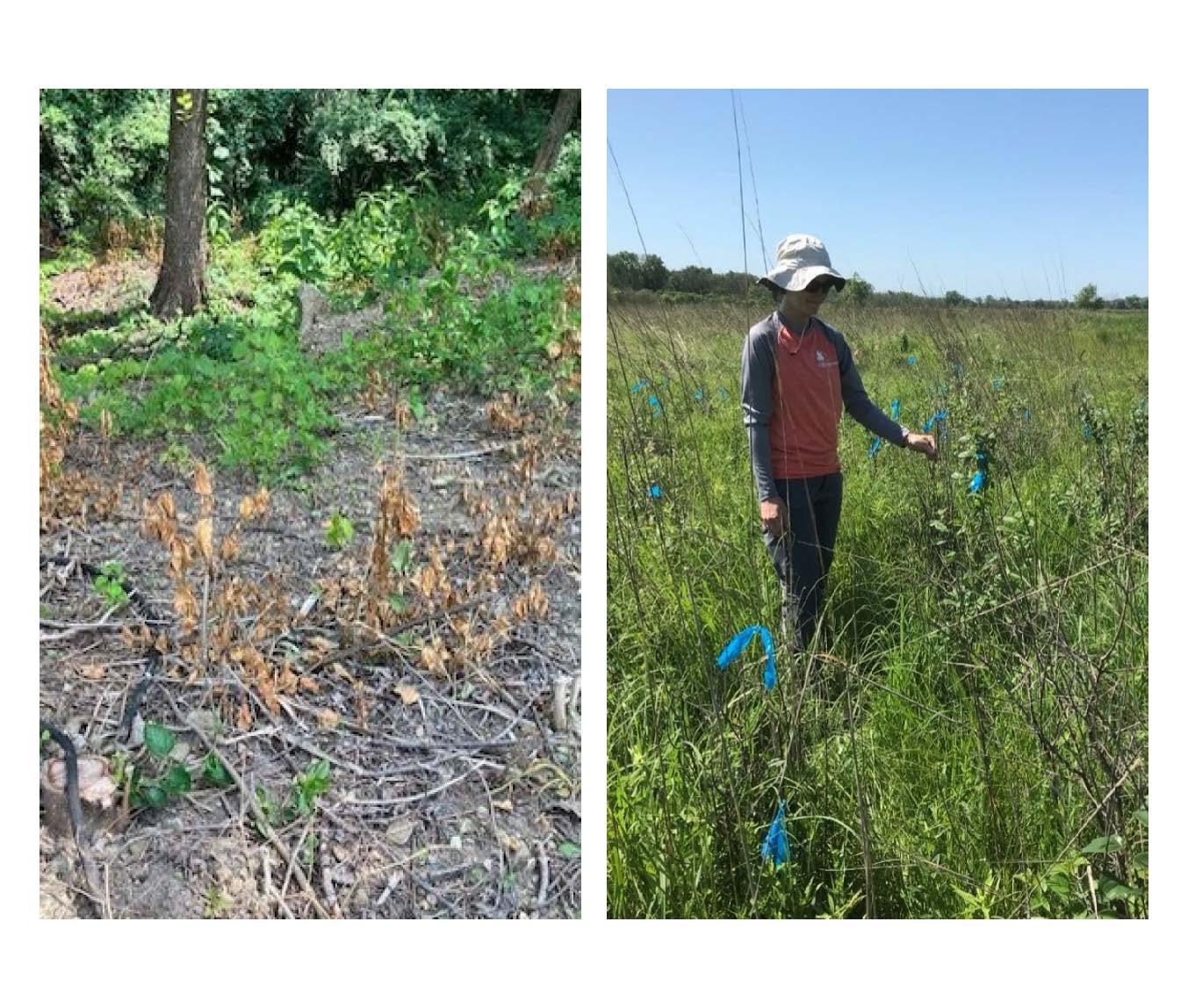
Invasive shrub resprouts look dead after a foliar herbicide treatment (left). However, 70% of them rebounded to life (right).
Cut Stump Treatments – By the Numbers: Due to various factors, most of our cut stump treatments have been done by hand using chainsaws, and clearing with machinery has been used less frequently. For the past six years of available data (2017-2022), cut stump treatments have taken an average of 38 person-hours per acre. To complete 949 acres of cut stump treatments, it has taken over 30,000 hours by our staff, contractors, and volunteers. The initial cut stump treatments have used 1.0 gallon of herbicide per acre. Follow-up foliar treatments to re-sprouts have used an additional 1.8 gallons of herbicide per acre, and taken an additional 5 person-hours per acre. All that adds up to a lot of effort! However, multiple rounds of follow-up treatments are often needed, and in balance, little effective management is achieved especially compared with the amount of time and effort invested.
Basal bark treatments are an herbicide-only method. We typically use a backpack sprayer to spray the bottom part of the stem with 15% triclopyr ester (Garlon 4 or equivalent) in bark oil. It’s important to get full 360 degree coverage around the stem’s circumference for it to be effective. If most species are only sprayed on one side of them stem, the treatment will not fully kill them. A happy exception is that all canes that come out of the ground of multiflora rose and Japanese barberry need to be treated, but full 360 degree coverage is not necessary for those species. For small diameter shrubs, just the bottom inch or two need to be sprayed. For massively large shrubs (4-6+ inch diameter), the bottom 9-12” need to be sprayed. We try to use low pressure on the backpack sprayers to minimize the overspray zone and reduce collateral damage to other plants.
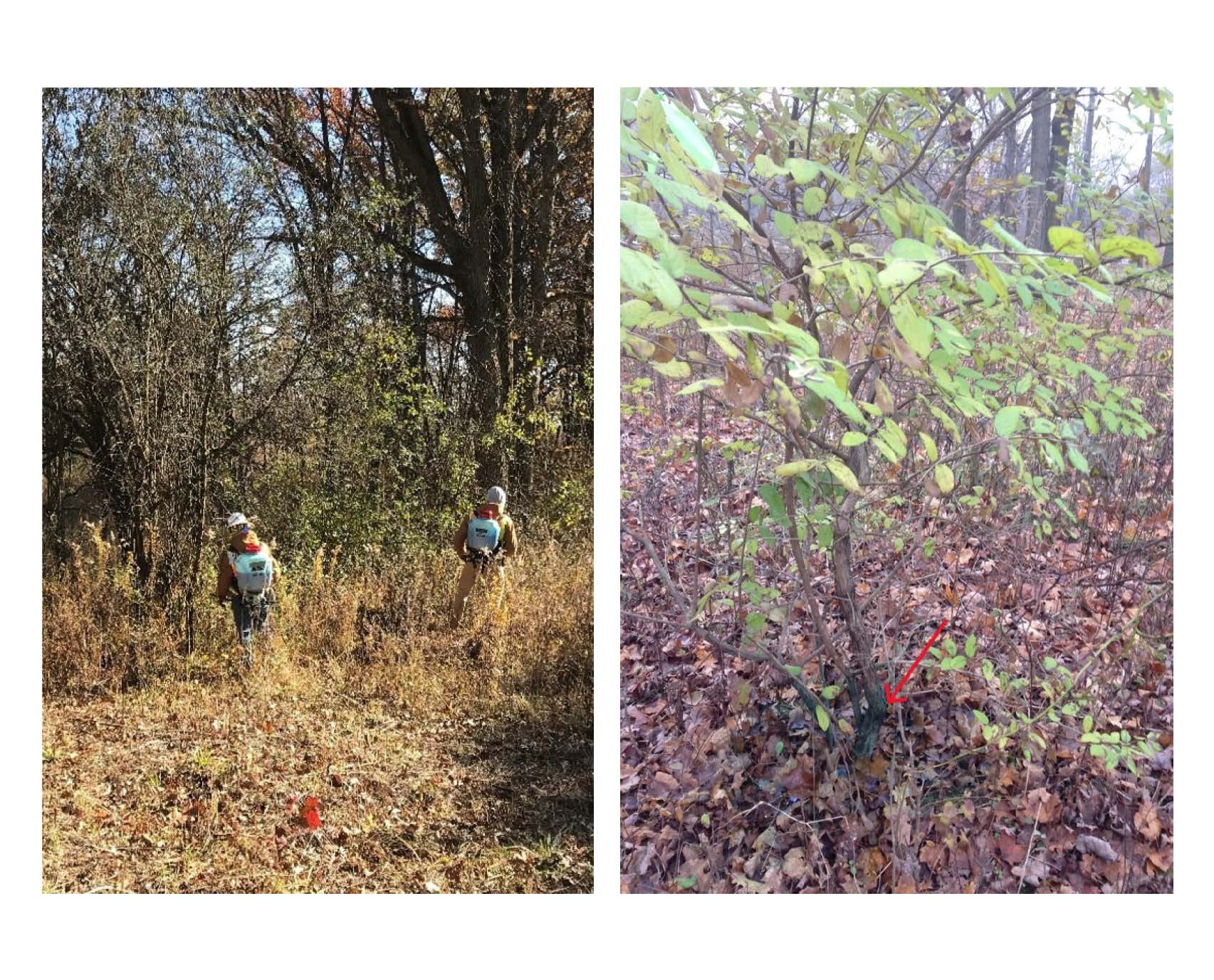
Basal bark herbicide crew (left) and invasive shrub with basal bark herbicide treatment (right).
The main downside of basal bark treatments is that it can take a long time (even 12-18 months) for treated woodies to die. However, it’s highly effective – more than 95% of properly treated individuals do die. Eventually. It just takes time. From an emotional standpoint, it’s the complete opposite of the instant gratification of cut stump treatments – the gratification is delayed by many months or even years.
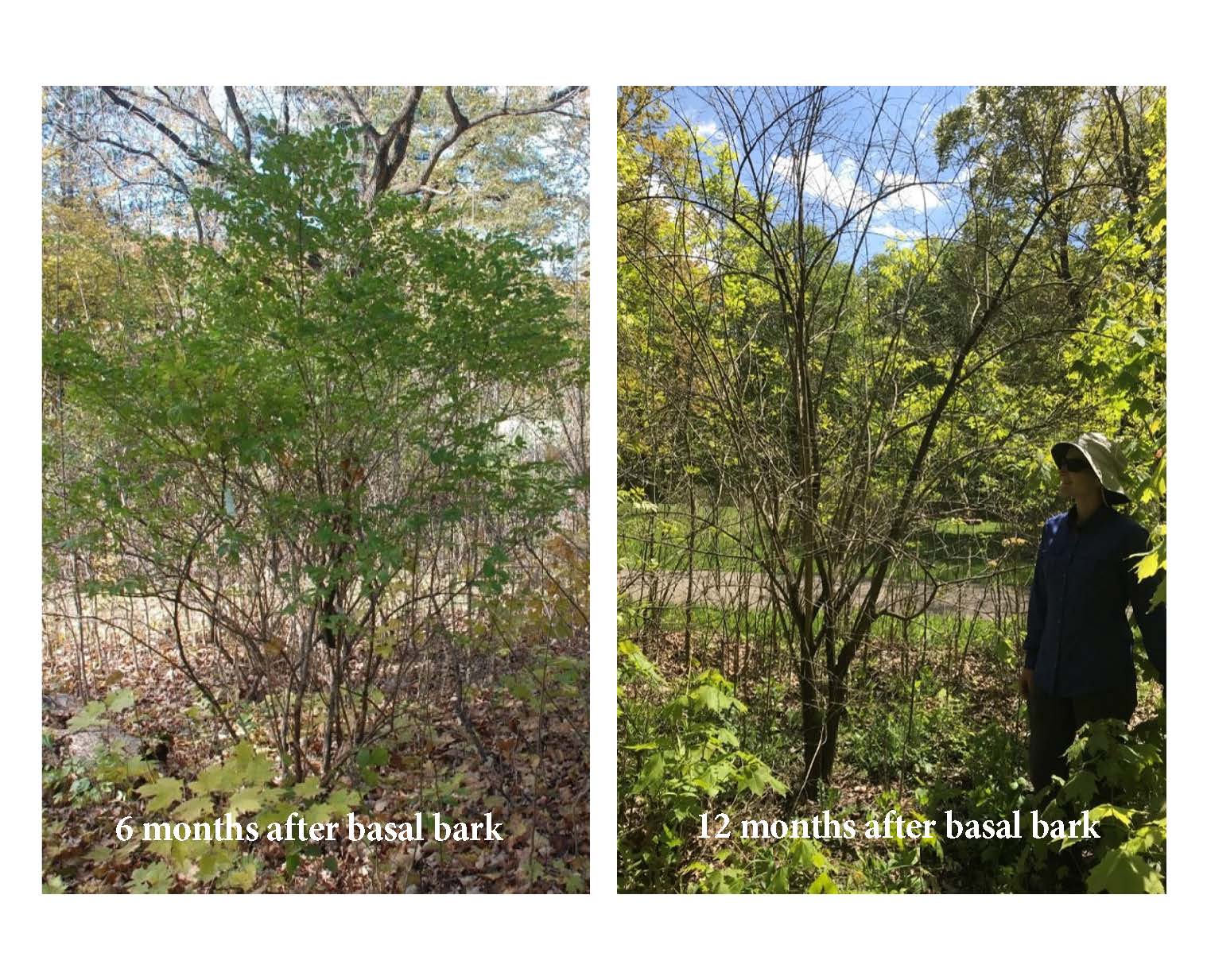
Slow death. Invasive shrub still has green leaves 6 months after basal bark treatment (left), but is fully dead 12 months after treatment (right).
Basal Bark Treatments – By the Numbers: For the past six years of our data (2017-2022), basal bark treatments have taken an average of 4 person-hours per acre. A few of the very densest brush areas took more than 40 hours per acre, which is on par with most cut stump treatments. But those super-dense areas only accounted for 4% of treatment entries. In almost all cases, the brush looks scary from a distance and the edges can be dense. However, when you get in there, nearly all areas are actually passable to be treated with a backpack sprayer. Overall, basal bark treatments took significantly less time than cut stump treatments. Our staff, contractors, and volunteers have been able to treat 4,900 acres in less than 20,000 hours. An average of 1.7 gallons of herbicide was applied per acre during basal bark treatments, which is slightly more than the initial amount of herbicide applied during cut stump treatments (1.0 gal/ac) but less than initial cut stump treatments plus foliar resprout herbicide applications (2.8 gal/ac).
Cut Stump Treatments
Basal Bark Treatments
- Instant gratification
- Resource intensive – 43 hours/ acre by hand
- 2.8 gallons of herbicide per acre
- Ground disturbance potential if machinery
- Re-sprout lots
- Foliar follow-up – only 30% effective on resprouts
- Multiple years of follow-up needed
- Delayed gratification
- Resource efficient – 4 hours/ acres
- 1.7 gallons of herbicide per acres
- Up to 12-18 months for shrubs to die
- Dead standing
- >95% effective
- Patience needed


Given the scale of acreage that needs invasive woody treatments, we need to be able to treat thousands of acres per year effectively with our current resources. Like most natural resource management organizations, we have a limited amount of time, money, and personnel. Basal bark treatments take patience, but they are very efficient and effective. We need to recognize our human emotions, and to acknowledge that the biggest advantage of cut stump treatments is that they give us instant gratification. However, to manage the scale of the woody invasive threat, we need to have patience with basal bark treatments, a slower-acting but more effective management approach. It’s important to effectively scale up invasive woody treatments in order to maintain or restore highly diverse natural communities. Efficient, effective management (albeit with delayed gratification) is ultimately more satisfying!
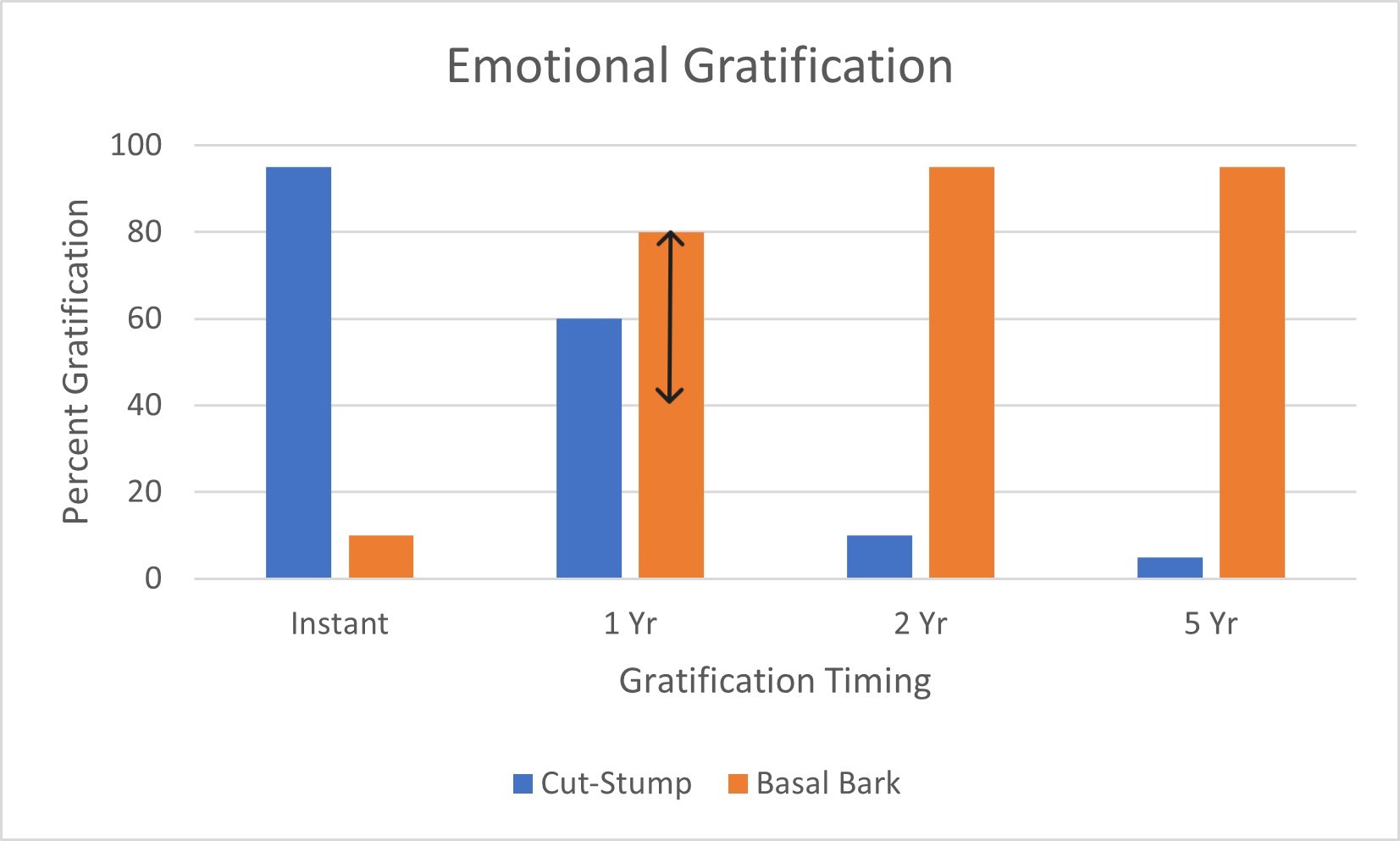
* Special thanks to my co-worker, Becky Blankenship, for making the graphs!


 grassland restoration network
Thanks for this article, I do think there is an edit error at the very end comparing the two. All bullet points are listed under basal bark, Just needs corrected. M
Mary Fisher-Dunham Fire Effects Program Fire Management
MWR Great Lakes Fire Management Zone of Region 3 ( formerly Midwest Region) INDU, SLBE, LIBO, PIRO, MISS, SACN, NOCO, RIRA, IATR, PULL, GERO, LIHO
Indiana Dunes National Park? 1100 North Mineral Springs Road Porter, Indiana 46304 219-395-8414 http://www.nps.gov/indu/parkmgmt/firemanagement.htmhttp://www.nps.gov/indu/parkmgmt/firemanagement.htm http://www.nps.gov/indu/parkmgmt/upload/Fire%20Managment%20Plan.pdfhttp://www.nps.gov/indu/parkmgmt/upload/Fire%20Managment%20Plan.pdf
Thank you! This matches what I’ve observed anecdotally. In my experience (and) observation cut stump efficacy seems to depend on how (and how much) herbicide is applied to stumps and the method of cutting. Often applicators fail to get adequate herbicide on cut surfaces (and with triclopyr, application to the upper outside edges of the stump around the cut is better than treating the surface alone). If cuts aren’t level enough, it can be difficult to get enough herbicide on them. Often many small shoots are missed, especially when using a brush cutter. Small shoots are also often missed when using hand tools and chainsaws in winter, because they don’t stand out from herbaceous stems, but that can also happen with basal bark treatment. …so the effective uses of cut stump treatments I’ve seen have mostly been when vegetation is still in leaf (few do it at this time), using hand tools (small diameter) and chainsaws (larger diameter), and using adequate herbicide. In using triclopyr ester to cut stump treat excessive hazel in oak-pine barrens, I’ve found cut stump treatment to be very effective if every stem is treated; hazel usually dies a few feet beyond the edge of my treatment area due to belowground integration too, but the use of cut stump there is primarily due to the impossibility of moving around without cutting stems as I go and then later the need to be able to move around to mop up after fire, which I try to return to treated areas during the autumn immediately after treatment in conjunction with interseeding extirpated species. Most sites need a tight sequence of brush removal, fire, and seed addition, and so mobility is a big consideration when choosing herbicide application methods.
Thank you for the article! This past year has been my beginning journey with basal bark, when before that it was mostly cut stumping.
I essentially have similar observations to the study that has been in place over the past 6 years. Thanks for the great work!
I do have a few follow up questions/thoughts also and would love to hear your response:
1.) I have found the cost of basal bark garlon 4 plus basal oil to be highly expensive. With my resources, I have to use diesel and crossbow because the cost is a lot lower. However, I also find myself drawing back on this technique in order to limit diesel (due to the con environmental effects of diesel). Thus, I am still limiting my basal barking.
2.)Is the herbicide/ gallon comparison between basal bark and cut stumping+foliar spray fully taking into account the percentage of actual herbicide being used? Also, the residual vs less-residual herbicides? Any thoughts there?
3.) With my basal bark technique of using a backpack sprayer; a lot of extra drip comes out for each spray even though I have a fan nozzle. I could go through 5 gallons of treatment/ acre easily if I’m not extremely careful. Any suggestions?
4.) The extremely developed honeysuckle that may be 15 ft in height or more plus a four to 6 in diameter; is basal barking effective? I tried it on a small area, but don’t want to continue tell I know it is effective.
Once again, thanks for the great efforts and post!
It’s not normal for a backpack sprayer to drip & it’s a real problem if highly concentrated herbicide is dripping onto the soil. The sprayer manufacturers have disassembly guides on how to replace & lubricate seals. If you do that, wear 15 mil thickness nitrile gloves & toss them afterwards, as highly concentrated herbicides will migrate through any glove over time, especially if oil based. I just order the complete replacement assembly instead of taking it all apart. Also, there may be a clogged screen behind the nozzle, accessed by unscrewing the nozzle nut.
I’m glad you are thinking about the environmental effects of diesel. I don’t know any contractors or agencies that use it anymore. Perhaps someone with chemical knowledge can tell us why it is toxic to the environment, including underground bacteria & fungi.
Do you notice any difference in results with basal bark treatment by species? Do you get good control on Lonicera species as you do on other invasive woody species? Thanks for interesting article and also interested in same questions that Kristen asked.
Hi Kristen & Mary, Thanks for your comments. Here are my thoughts:
1. If the cost of bark oil is a hurdle, we’ve found that you can cut it with water. See the blog post that I wrote on this previously. We’ve used 15% G4, 20% bark oil, 65% water & dye in an “emulsion”: by this I mean to shake the mix until it’s frothy. It uses about one-fifth of the amount of oil, so is much more economical. There are some limitations, however. It can’t be used below freezing. And, it seems to not be as rain-fast as quickly – if it rains within a couple of days after treatment, then it doesn’t seem to be as effective especially on bigger stems. But, it seems to work nearly as well in most above-freezing situations.
2. The gallons/acre herbicide amounts in the post don’t account for differing herbicide concentrations (typically for us, 5% G3 for foliar, 15 or 20% G4 for cut stump/basal bark). I could have done the more complicated math, but it complicates the units to report. My presumption before running the data was that basal bark treatments would use wildly more herbicide per acre than cut stump, but I was surprised to see that the herbicide amounts were more comparable than I would have thought.
3. I feel like with the time savings of using the basal bark method with backpack sprayers, we can afford to take our time and be a bit careful in the application to minimize overspray. We use hollow cone nozzles (the default plastic ones that come with our sprayers), adjust the nozzles to make the droplet size big, and keep the pressure on the sprayers low so that the spray is more like a sluggish quasi-stream with only a couple of inches of spread.
4. Yes, yes, yes! We’ve found basal barking to be effective on massively large honeysuckle (15′ tall, 4″ in dia+). Give them a full, proper basal bark treatment (12″ tall application, 360 degree coverage). It just takes them a disconcertingly long time (18 months or so) to fully die.
5. We’ve found that the rate of death definitely varies by species and shrub size. Some species die very quickly (roses, barberry, willows to name a few). Some die slowly (honeysuckle & autumn olive top my list). And, smaller shrubs die much more quickly than larger shrubs. But, it has been quite effective on all the species that we have used it on. Including honeysuckles.
Good luck to all of us!
Thanks for the detailed posting! Here in MO, privet is the heir apparent to honeysuckle. We have little buckthorn. Big, older shrubs are honeysuckle. Cut one, open up a big space. Satisfying. But privet (Ligustrum obtusifolium) moves in with hundreds, thousands of small diameter stems afterward without fire management. I’d much rather have 10 acres of honeysuckle than 5 acres of privet.
With privet especially, there is extremely high mortality of berries in fire (my own observation). Post fire, burned areas have few, new seedlings. In areas that didn’t burn, privet stems are everywhere. I am relucatant to cut brush in an area where we can’t effectively manage with fire.
Volunteer workdays = always cutting and treating with brush piles (gratification, like you said!)
Staff time = nearly always cutting with brush cutters and each operator spraying their own stumps with a 2L solo hand sprayer with triclopyr ester and oil. It’s fairly fast, effective, stumps aren’t missed, and it’s not taxing on the operator. You can hold the sprayer and weild a brush cutter. We really, really like this approach.
We usually cut, stack and burn. This is because 1) we always follow up cutting with native seeding (so you need to be able to walk through the area post-cutting) and 2) we always follow up for at least 2 subsequent years with foliar spraying (so we need to be able to walk through the area) and 3) with standing dead brush or dead brush laid down, it’s really hard to effectively treat resprouts and new seedlings.
Spatial/scale context is everything…we’re a 2,400 acre site and we’re doing this intensive clearing/seeding/follow up on only a few dozen acres a year.
Also – because we have Japanese stilt grass in these areas too…so we really, really need to be able to walk through them after the brush is killed so cutting, stacking and burning helps us to better manage other invasvies.
Lastly – the density of small diameter privet stems make walking through and basal barking nearly impossible. Not like walking under/through the tall branches of large honeysuckle.
Thumbs up to this comment.
Julianne, thanks for taking the time to post this-it helps all of us. I’d like to point out a risk when using basal bark in areas with desirable natives. There are persistent reports of off-target kill a fair distance away from the treated stem with dormant season basal bark application.
https://woodsandprairie.blogspot.com/2020/08/brush-puzzles-in-somme-prairie-nature.html
One volunteer found it correlated with elapsed time between application & significant rainfall in the next week, but there are other possible root causes like snow/ice transport (oil & water don’t mix), root exudation of herbicide into the soil & transport of herbicide by underground fungi. The Tallgrass Restoration Handbook recommends 1-4 days precip free after application. That seriously limits the days appropriate for basal bark if desirable natives are present. In addition, herbicide labels specify maximum application rates per acre to avoid putting too much herbicide into the environment. We should calculate this for all basal bark & cut stump projects. It isn’t easy to reliably detect off-target kill from basal bark because it requires comparing photo plots in the growing season before application to photos in the growing season after application, along with a control plot. At minimum, we should be using the narrowest nozzle angle to minimize overspray per your recommendations, limit ground contact by not spraying to the point of runoff, never spray on a windy day & not use basal bark in remnants.
I’m puzzled by your cut stump treatment failures unless they refer to clonal species, which often require repeat treatments or the stumps were mowed, leaving ragged surfaces. Do you have theories about root cause? I’ve used 20% glyphosate in soft water & 20% Garlon 4 in bark oil for decades on many species from fall through spring & I can’t remember significant failures, which agrees with some other experienced practitioners I’ve talked to. Which species resprouted? Did you observe the application method yourself for locations where failures occurred? My method agrees with the post by Prairiebotanist for a horizontal cut & treating every shoot. In addition, I never apply within 8 hours of significant precip, cut close to ground level, spray immediately after the cut & don’t apply if snow cover forces too high a cut or causes herbicide dilution or runoff To minimize herbicide runoff into the soil, I spray only the cut surface, not the bark below the cut, with excellent results. Per Prairiebotanist post, I never use wicks or sponges because I’m unsure enough herbicide will be applied with such methods. Another thing to consider is for shady areas, resprouts after cut stump application may die in a year or two.
My favorite tool for those small diameter stumps is a wick applicator TPE sells called a Makutu (what I use at the barrens site I referred to above). The pressure of the wick on a small diameter stump gives a healthy dose. I work through areas on my knees with a Makutu in one hand and sharp hand pruners in the other…some loppers nearby. It’s slow, but it works. That tool is unsuitable for larger diameter stumps though…at least if you don’t want to break the applicator by exerting too much force. For larger diameter stumps I’ve gone to a hand-held pump sprayer. Before the Makutu, I used a hand sprayer to impregnate cheap foam brushes, which I could hold in one hand as I cut with the other (a loaded small foam brush would do several dozen small stumps). I liked that because I could throw away the foam brush, which would only last for a single session of a couple hours anyway. For cut stump with triclopyr ester I like to have at least a few hours completely rain-free post-treatment. At least some triclopyr ester products have a minimum recommended application temperature of 20F. I usually do that work when it is between 30 and 60F.
Hi Julianne,
Great work. Have you submitted this to the appropriate journals? This could impact a large number of areas across the country. I am just starting to read the comments on this blog entry as well.
I am fairly new to this. I wanted to ask you what you meant in regards to the size of the shrubs to be treated. You mention 6″ and smaller. Is this the diameter of one stalk/stem coming out of the ground, or the aggregate diameter at the base of a base which is focalized in one smaller area? Also, does this research include buckthorn which can be a shrub or a tree?
Thanks,
Suzanne
Thanks for the feedback! By 6″ and smaller diameter, I was referring to the diameter of the stem at the base. For multi-stemmed woodies, I consider it as a sum of stems’ diameters (e.g., 4″ stem + 2″ stem = 6″ diameter). And, yes, we definitely have buckthorn in many of the cut stump and basal bark treatment areas.
Thanks
Hello. Thank you for the information. I’m wondering about efficacy on bittersweet, wisteria, and possibly bamboo. Any experience/success with these?
Tony J
anthony_john@nps.gov
SHEN NAT PARK
Hi Tony, we have used basal bark techniques on bittersweet. It works well, especially where there’s just a few python vines coming out of the ground. Where it’s growing as a tangled mess of smaller stems, the challenge is figuring out where the vines are coming out of the ground in order to treat them all. I don’t have any experience with wisteria or bamboo. Good luck!