If you are trying to turn a low diversity cool season grass pasture into high diversity prairie should you just seed the recently prescribed burnt sod? Or first apply glyphosate herbicide or grass herbicide, then burn it, then seed it?
This long term experiment tests this. Here are our year two thoughts.
Above is the “before” photo of the pasture. Almost all simply cool season grass sod and a few weeds.
Fall 2021, October 15 and 18, we sprayed one plot with clethodim grass herbicide, one with glyphosate, and the third we left alone. We only did one application of herbicide.
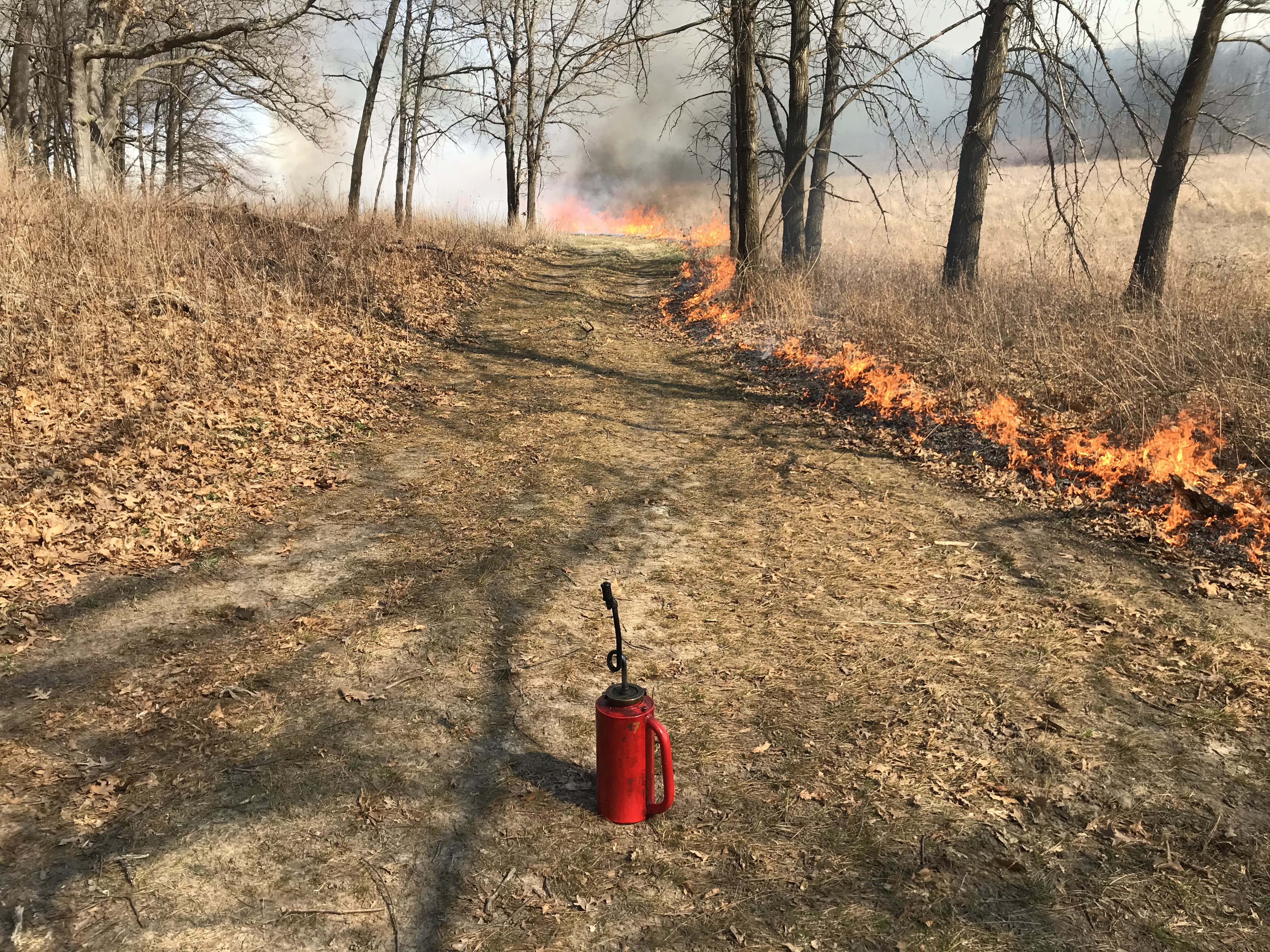
All three plots were then burned November 11, 2021.
Next, the plots were all seeded by Bernie Buchholz. The first seeding was a few weeks after the prescribed fire of the plots. This was with about 27 pounds per acre of seed from 117 species. Then in April another 27 pounds per acre of 55 species was over-seeded. So 54 pounds of seed per acre were planted before the first growing season. This is a lot.
May 22, 2022: Above is First spring of the “control” plot where we did not apply either herbicide.
May 22, 2022: Above is clethodim pasture looking about the same as the control with the grasses looking weaker and maybe some weedy forbs coming up.
May 22, 2022: Above is the glyphosate pasture looking very similar to the clethodim with the grasses looking weaker and maybe some weedy forbs coming up.
October 10, 2022: Above, by fall of the next year, so one growing season, is the control plot where we did not spray the pasture, but only seeded it. On the left you can see the glyphosate plot.
October 10, 2022: Above is the clethodim grass herbicide plot looking wild and weedy after one season. It looks very different from the control. The seedlings would be an inch or two tall and very hard to find in there.
October 10, 2022: Above is the glyphosate herbicide plot also looking wild and weedy after one season.
July, 2023: Above, on left is unsprayed but seeded control, and on right is clethodim grass herbicide treated and seeded. With Bernie Buchholz doing some weeding. On right grass is less dense and there are more weedy forbs, but what was seeded are mostly seedlings.
July, 2023: Above, no spray but seeded on left, glyphosate and seeded on right.
July, 2023: Above, Bernie Buchholz finding small seedlings of his planted species in the second year of the restoration in among the tall weeds.
Here are Bernie’s thoughts about what he is seeing on year two of this long term study:
“Now in the second growing season, both herbicide treated areas have dramatically more stems of native species, easily 20 times more. And the volume of the biomass in treated areas is significantly higher than untreated areas.
The glysophate treated area seems to have the greatest number of native species, including more little bluestem.
It’s hard to imagine the untreated area catching up to the treated areas over the coming years, but that’s what we are trying to learn.
The only significant non-native (or some would say low value native) species in the treated areas is the thousands of yarrow. One of the major downside risks to treating a pasture planting with herbicide is the potential to release difficult species like white and yellow sweet clover. Our favorable results are our good fortune. Had we released otherwise dormant weed species, the untreated areas might have seemed more favorable and certainly would require less management.”
Poison hemlock, Conium maculatum. The maculatum means spotted and the stem has conspicious red spots. Hemlock is a modestly invasive plant that can form thickets if it gets started in disturbed or fallow ground. I sometimes see it along some local creeks where flooding may kill the sod and leave open spaces. Or recently shaded areas that are opened up can sometimes have a flush of hemlock that had been suppressed somewhat by shade. Hemlock is highly poisonous. A member of the carrot family. These are biennial plants so the best time to spray them is the year one basil leaves or in the spring of year two before it bolts.
image of basal leaves from Washington state
On May 26, 2023, we tested a 2% solution of Garlon 3A in water, with methylated seed oil at a half ounce per gallon on hemlock plants that had already started to bolt their flower stalk. The plant can be 4 to 7 feet tall. The plants we sprayed were just starting to bolt. We wondered if the Garlon 3A would kill them.
Below, looking down, is one of dozens of hemlock about a week after being foliar sprayed. The plant is drooped, including the flower stalk. But is the root going to die?
Below, about four weeks after being sprayed. We flagged several plants to make sure we were looking at the right plants.
Below is after six weeks. I also applied a bit of blue tree marking paint so as to keep track of this plant. As you can see it looks dead. I think the root is dead, but I will have to wait until next spring to find out. I conclude 2% Garlon 3A controls hemlock.
Hemlock can become huge, especially if a second year plant re-sprouts after mowing, it can come back a third year and be huge like this one below. Hemlock can be spaded out, like wild parsnip. You don’t need or want to touch the plant to spade it. You don’t need to get all the root, just “cut the carrot” root and it will die. Step on the plant to knock it down so you know it was stabbed.
Various other herbicides will also control hemlock.
We sometimes mow hemlock or wild parsnip when they are tall and late in flower. This seems to set them back, but we have not tracked individuals. At least they don’t make seed that year.
I asked a few colleagues for what works for them:
From Julianne Mason: We have primarily used Transline 0.5% on poison hemlock, and also some treatments using triclopyr 3A 3% or Vastlan 2.5%. All those herbicides seem to work well in the spring, before the plants bolt and flower.
We have done a couple of instances of base clipping the hemlock at late flower, primarily in areas of widely scattered hemlock not dense patches. The hemlock hasn’t seemed to come back in those locations the following year, but we haven’t tracked or documented it too closely. Haven’t tried mowing bigger patches at late flower.
Josh Clark uses Garlon 3A on hemlock and dames rocket.
From Bryon Walters: Below wilted hemlock Bryon sprayed with Buckshot, a mix of glyphosate and 2-4-D on a ruderal edge. He was able to spray some reed canary grass at the same time. He likes to spray before the plant bolts. But if bolted he mentions that 3% Garlon 4 should work. The G4 mix also works at the same time for mullein (Verbascum thapsus), and some woodies that are leaved out early in the year.
May 16, 2024: I tested 2% Garlon 3A with MSO added. I sprayed the hemlocks April 6 and about 5 weeks later they were dead and wilted to nothing as in below photo. The blue paint in on a dead hemlock.
Registration for the 2023 Grassland Restoration Network in Windom, Minnesota is open now until August 10.
The meeting will take place August 22nd and 23rd and will visit a variety of prairie reconstructions in southwest Minnesota.
A variety of management techniques including haying, grazing, and prescribed burning have been employed in the management of these sites, and interseeding of forb seed and interplanting of forb plugs has also been undertaken on two of them. One site was seeded with a sculptured seeding approach that utilized GPS technology to place different the different seed mixes in their respective locations.
Two sites have also been utilized in formal research efforts. In a nutshell a wide variety of reconstruction practices have been implemented which will provide for a wide ranging discussion. In addition the monarch migration should be at its peak so we may be treated to a good show on the blazingstars within the plantings.
The meeting will begin at noon on the 22nd and end by 4 PM on the 23rd, although those interested in staying an additional day can tour an oak savanna restoration along the Minnesota River on the 24th.
Transportation to sites will be via carpooling. There is a $9 fee to pay for a box lunch on the second day of the meeting, otherwise there are no other fees. A food truck will be available the evening of the 22nd at a social meeting open to attendees who can either purchase from the food truck or choose to dine elsewhere before or after the meeting. Lodging and all other meals will be at the attendees expense. Attendance is limited to the first 80 registrants.
For more information or to register please email Minnesota DNR area wildlife Manager Jeff Zajac at Jeffrey.zajac@state.mn.us and he will then contact you to make final arrangements and provide information on lodging and dining options. Hope to see you all in late August!
By Jeffrey Zajac, Area Wildlife Manager, Minnesota DNR
They have the best of plants, they have the worst of plants…
This August 22st and 23nd, 2023 the Grassland Restoration Network workshop comes to southwest Minnesota. Registration begins early July.
On the docket are visits to a number of prairie reconstructions, including both the best and the worst projects that I so far have been involved with. One is a diverse planting at the Lamberton Wildlife Management Area (WMA) that so far has a robust stand of prairie plants but is also part of a larger grassland/wetland landscape that hosts breeding wildlife as diverse as trumpeter swans, sandhill cranes, western meadowlarks, harriers, grasshopper sparrows, bobolinks, dicksissels, upland sandpipers, mallards, blue-winged teal, American badgers, and white-tailed jack rabbits. Monarch throng to the stands of blazingstar during fall migration, and a specialist bee normally restricted to remnants prairies has been recorded. The site has hosted professional and lay prairie enthusiasts, serves as an important seed harvest site, and has been the site of a wildlife research project.
On the other extreme is the most recent planting at the Vogel WMA, a mere 10 minutes to the east. A healthy population of leafy spurge, large swaths dominated by smooth brome, and seemingly never ending invasion of Siberian elm at first glance make it look like an ecological eyesore. The grasslands that adjoin it on both public and private land are similarly compromised.
Why the vast differences between the two outcomes? And why haven’t I given up on the poor Vogel planting and still have regrets about the Lamberton one? Both plantings were planted with similar seed mixes, at similar times of the year, on similar soils, with the same seeding method. The vastly different outcomes stand as a stark warning that many different factors come into play when determining how a planting develops over time. Both Lamberton and Vogel featured species adapted to dry mesic to dry soils (with the exception of a small pocket at Lamberton that received a wet mesic mix). Both were seeded during the dormant season, Lamberton in November and March and Vogel in March. Both were seeded with a Vicon broadcaster and left to the elements to work the seed into the soil. From that point however the background of the two plantings diverges radically.
The Lamberton site was a row crop agricultural field when it was acquired, and had been in crop production for many decades, and likely for over a century. It was planted to glyphosate tolerant soybeans the year prior to planting, and the stubble was lightly tilled after harvest to break up mats of soybean straw that remained. Seeding was begun in November of 2010 but was only about a third completed before earlier than usual heavy snowfalls suspended completion until after snowmelt in 2011. So far it was a typical planting. By late June annual weeds were beginning to reach a foot or so high and the site was ready to receive its first mowing. Then in stepped the unforeseen. A state government shutdown began July 1 and continued until late July, preventing the usual mowing. By the time our staff was back to work the weeds had reach two to three feet and produced enough biomass to smother the young prairie plants if the site was mowed and the material not removed. What’s more beneath the canopy of weeds an excellent stand of prairie plants was developing despite the weed canopy. Conventional wisdom said to mow the site, before those annuals choked out the fragile little prairie seedlings. The situation on the ground suggested that mowing at that stage would probably do more harm than good, and those “fragile” little prairie plants didn’t look like they needed much help. So I decided against mowing, and as they say the rest is history. An excellent planting developed and has subsequently been managed with haying and prescribed burning, producing what I consider to be excellent results.
The Vogel tract on the other hand was acquired as a long established CRP planting originally seeded to smooth brome grass and legumes, likely alfalfa and/or sweet clover, in the 1980s. We acquired the site circa 2015 by which time nearly 30 years of pocket gopher mounds made the site undriveable by any of our equipment. The slopes were steep and highly erodible, ruling out using the standard use of temporary cropping as a means of preparing the site. After much debate I decided to contract with an adjacent farmer to disk the site so that it was smooth enough for use to use our equipment to spray the brome and other vegetation with glyphosate and then follow with a no-till drill to get the seed in the ground. In late 2018 and early 2019 seed and glyphosate was purchased, a farmer was contracted, and all looked to be on track for seeding in fall of 2019. Then events intervened. Rain started early and returned often that summer, preventing the farmer from getting in to disk the site until September. And even after disking the site was still deemed too rough to use our spray equipment on, let alone drill. The seed, which was in refridgerated storage but approaching a year old, was in danger of having reduced germination if we stored it for another year. So my decision came down to a choice between seeding that fall and dealing with a live brome stand after seeding or waiting another year with the hope of getting better site preparation and having lost germination on expensive seed. I chose to deal with the live brome after planting and seeding was conducted with an atv mounted Vicon spreader in fall of 2019. And again, the rest is history.
But I’ve been around this game long enough to know that seedings are not endpoints in themselves but the beginning of a process. The nasty planting at Vogel has since had two intensive spring grazings and one prescribed burn to set back the brome, and native plants are beginning to thrive on growing acreages on the site. What’s more even in its present state it is still being used by grassland birds, badgers, and a large number of insects. The arrow is pointed in the right direction and while it will take regular, fairly intensive management there is a light at the end of the tunnel.
The Lamberton planting is now experiencing its own issues. While the planting itself was on soybean stubble, two side of it were bordered by smooth brome infested roadsides and fencelines. Smooth brome has been steadily advancing into the planting and now is 40 or so feet in the interior. This despite several burns over the past dozen years. Further an invasion of woody plants, mostly cottonwood and Siberian elm, is proving to be a persistent problem and threatens the integrity of the site for grassland obligate wildlife species. Even my poster child planting is going to be a long term work in progress.
Prairie reconstruction is an art, not a perfect science, and unforeseen events can wreck havoc on many best laid plans. Further, just because one piece of grassland can look excellent today and another poor, doesn’t mean that they will necessarily stay in that state nor does it mean one is better than the other in every aspect even in their present state. Grassland management is a journey, hopefully one that will be handed off some day to other managers so that they can chart its course long after we are gone.
These ideas will be core of the conversations we’ll be having on August 22st and 23nd in the vicinity of Windom, Minnesota. Registration will begin in early July and will be limited to the first 80 individuals signing up. The sites on tap promise numerous discussion opportunities on a wide range of establishment and management topics and the conversations among attendees should be worth the trip. Hope to see you there!
The black flies of the Simuliidea emerged this week and congregate in the woods, especially areas with low wind. They will be a nuisance for a few weeks. And ticks are occasional. Mosquitos will be here soon. I thought I would share a few tips to deal with pests.
The bug net worked very well today. I forgot I had it on and could do all I wanted in the woods. The little pouch it comes in I hang from a carabiner off my pack or belt loop. The insect shield means it was dipped in permethrin pesticide at the factory, but I am not sure that was needed.
Permethin on the left by Sawyer is a pesticide you spray on clothing to ward off ticks and chiggers. On the right is Picaridin, which is what you put on your skin for mosquitos and such. Picaridin is nice in that it does not stink like DEET, nor does it melt or discolor plastic items like sunglasses and clothing. It is a lotion you rub on your skin. It works well.
Permethrin. I lay out my clothes to treat and wear a glove while spraying. You don’t want the solvent on your skin. You do a heavy spray on the clothes and let them dry for several hours and then they can be worn safely. This will repel ticks and chiggers and lasts for many washings. I spray mine maybe twice a season. I lay items like socks on top of treated items and spray them to save this expensive chemical. I spray my boots and hat too.
You can also send clothing items to a company and they will dip them in a vat of permethrin and this apparently works well.
On the right is a tick & chigger gator. It has permethrin on it too. I rarely wear these as we don’t have many ticks or chiggers at Nachusa. But Mike Saxton at Missouri Botanic Garden says they work well.
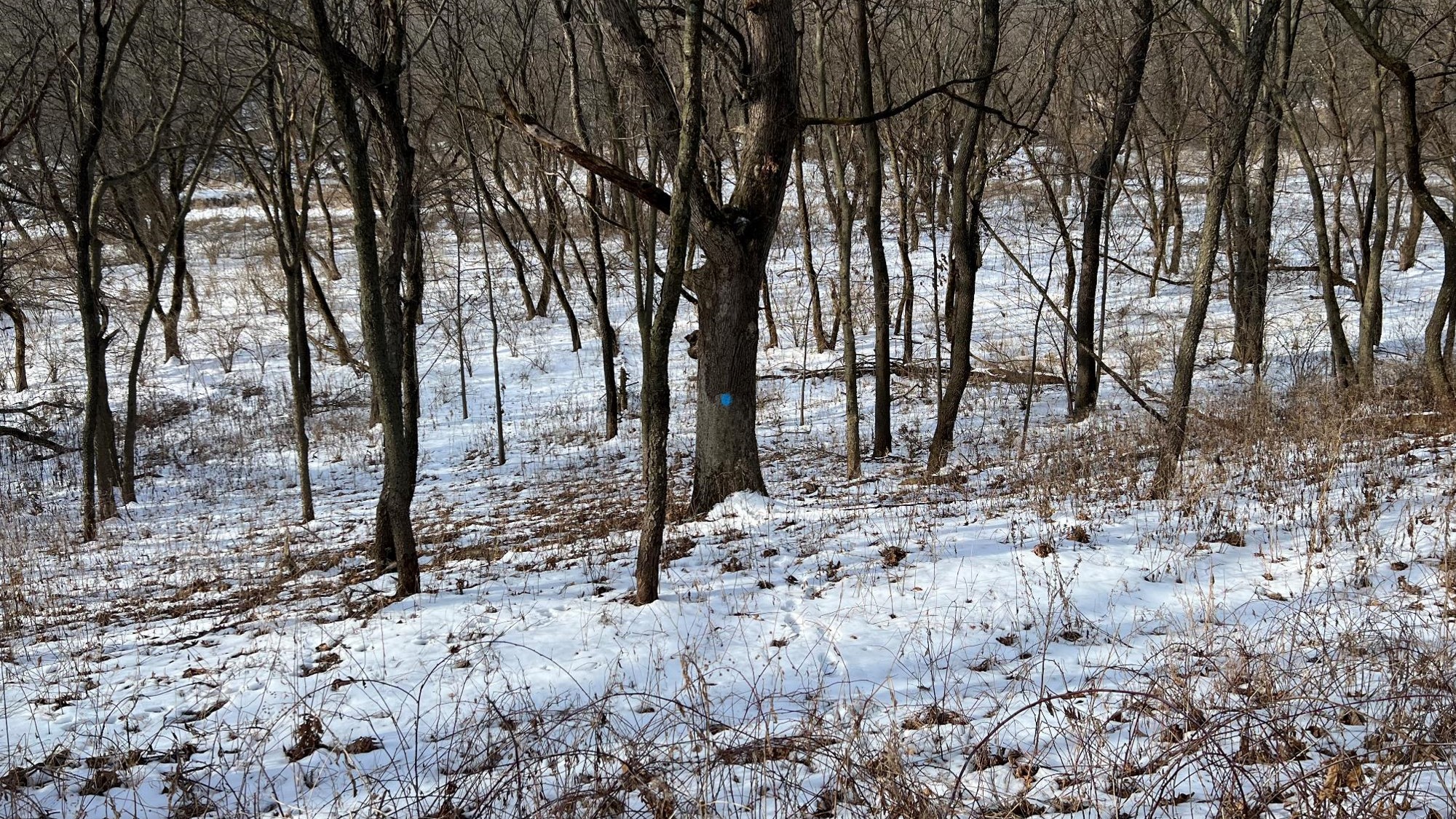
American beak grass has greatly increased in a woodland unit we have burned frequently for two decades. The brush layer is diminished, and the oak and hickory have space to reproduce.
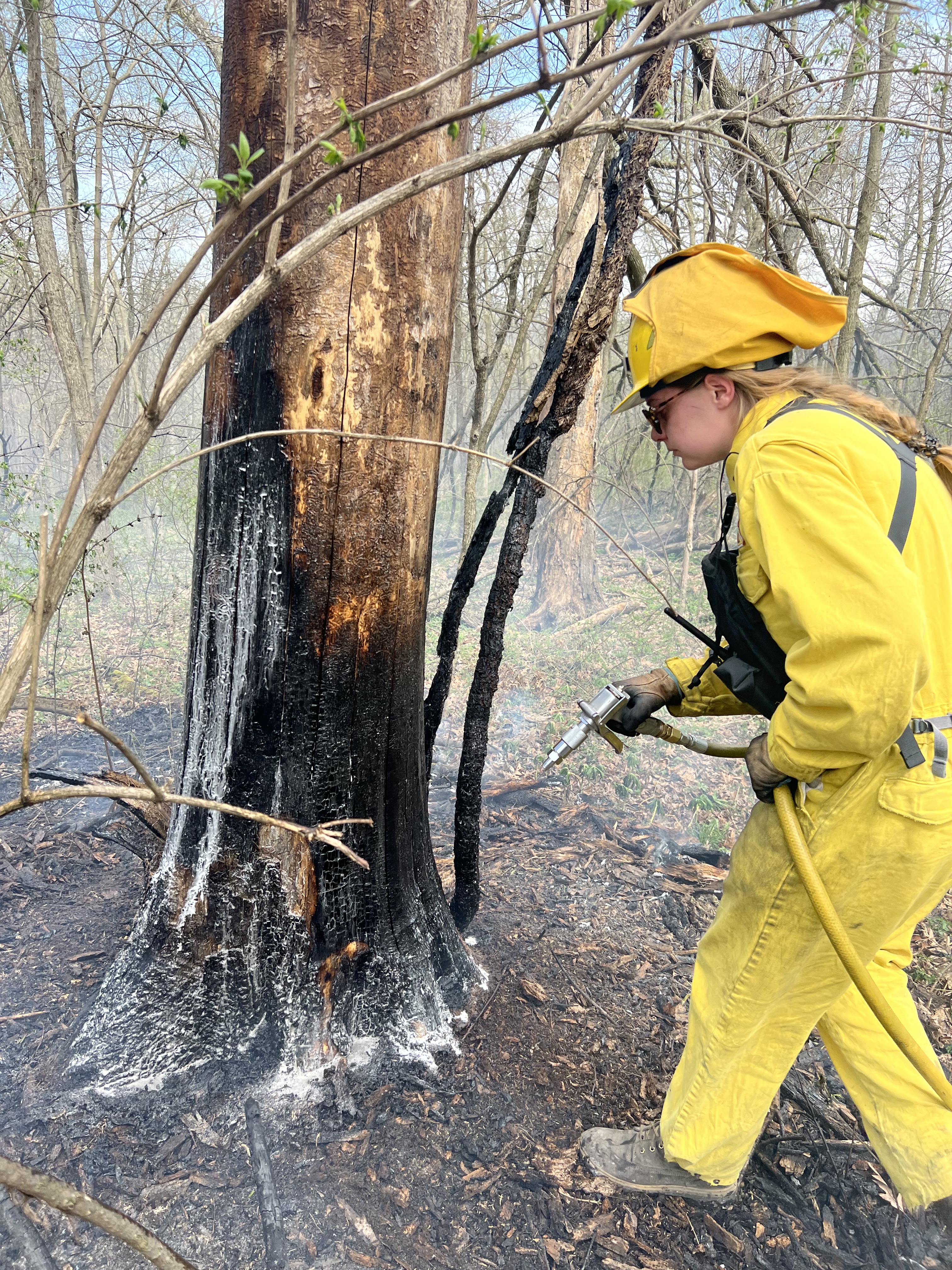
Molly Duncan on snag patrol at Lowden Miller State Forest. We add some foam to our tank to make this soapy water. We don’t want dead trees on fire that are near the fire break.
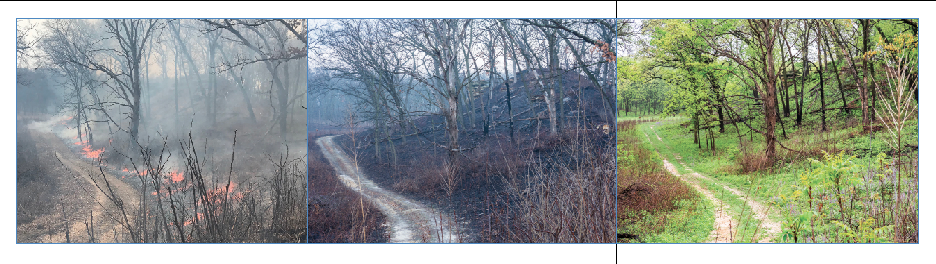
Lowden Miller State Forest a day after the fire. In a few weeks it was green again, but with less brush.
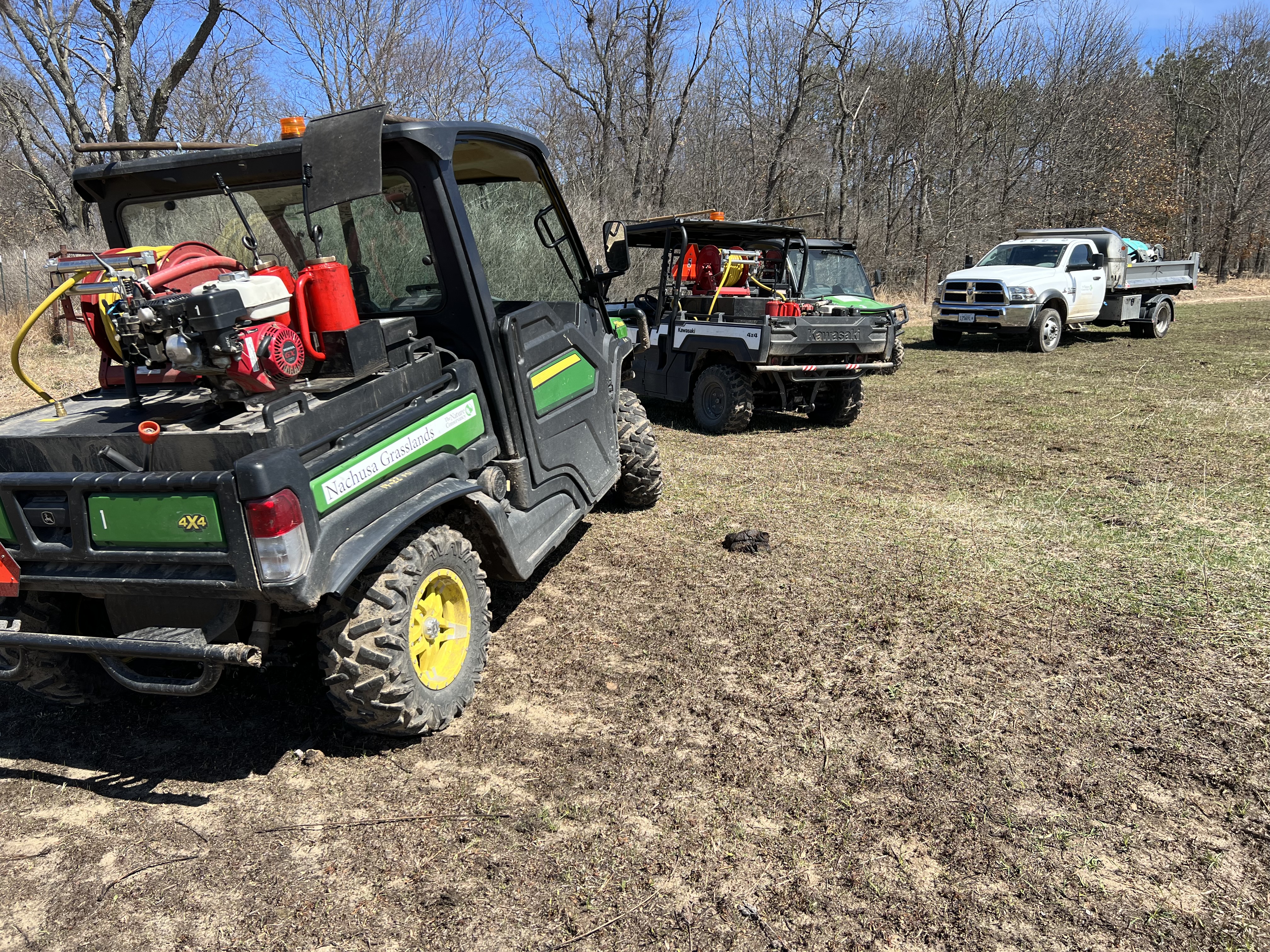
UTVs were the vehicles of choice this wet spring. They spray water at high pressure but low volume. The truck has our 330-gallon water tender and many other handy tools and supplies.
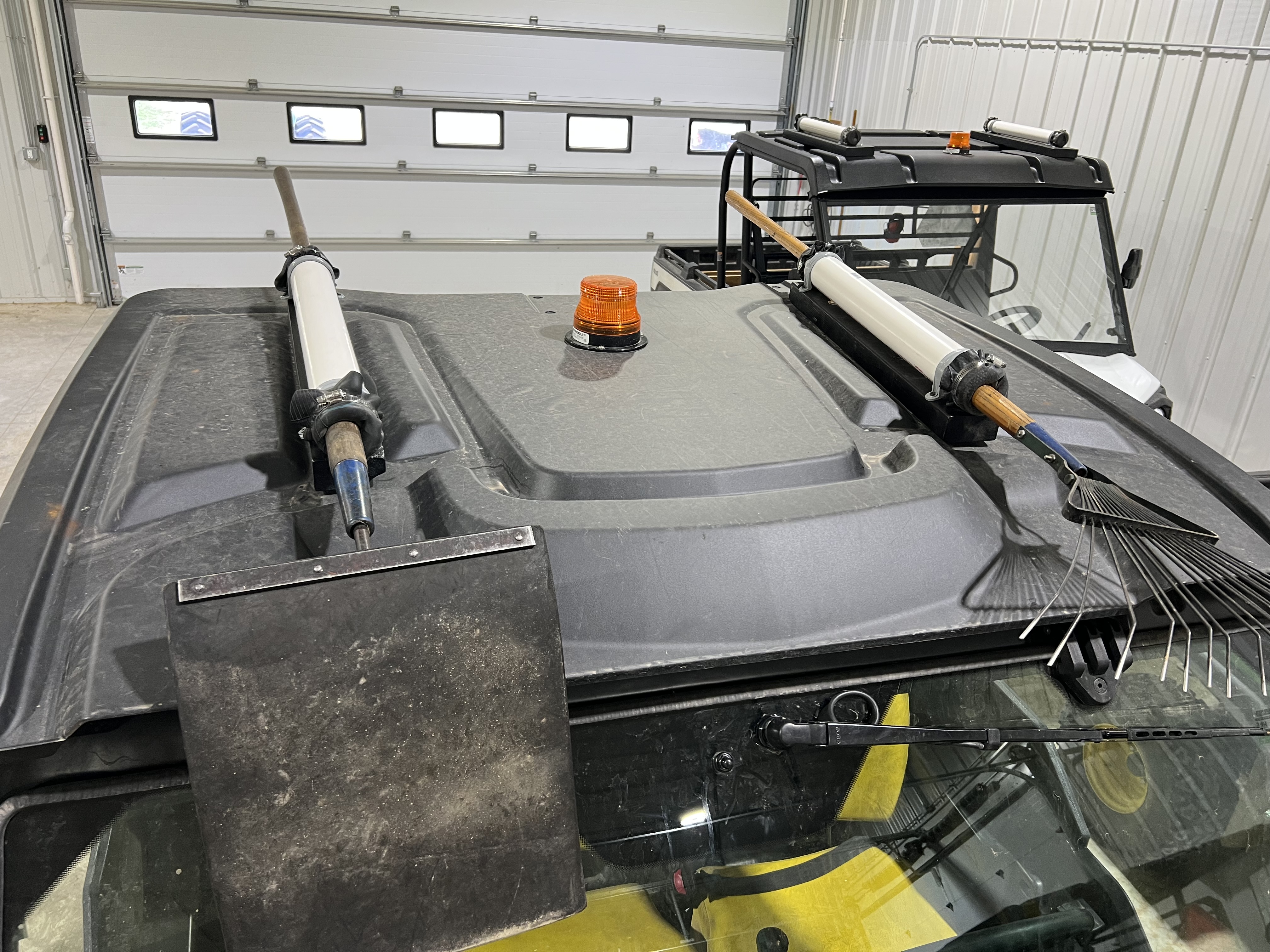
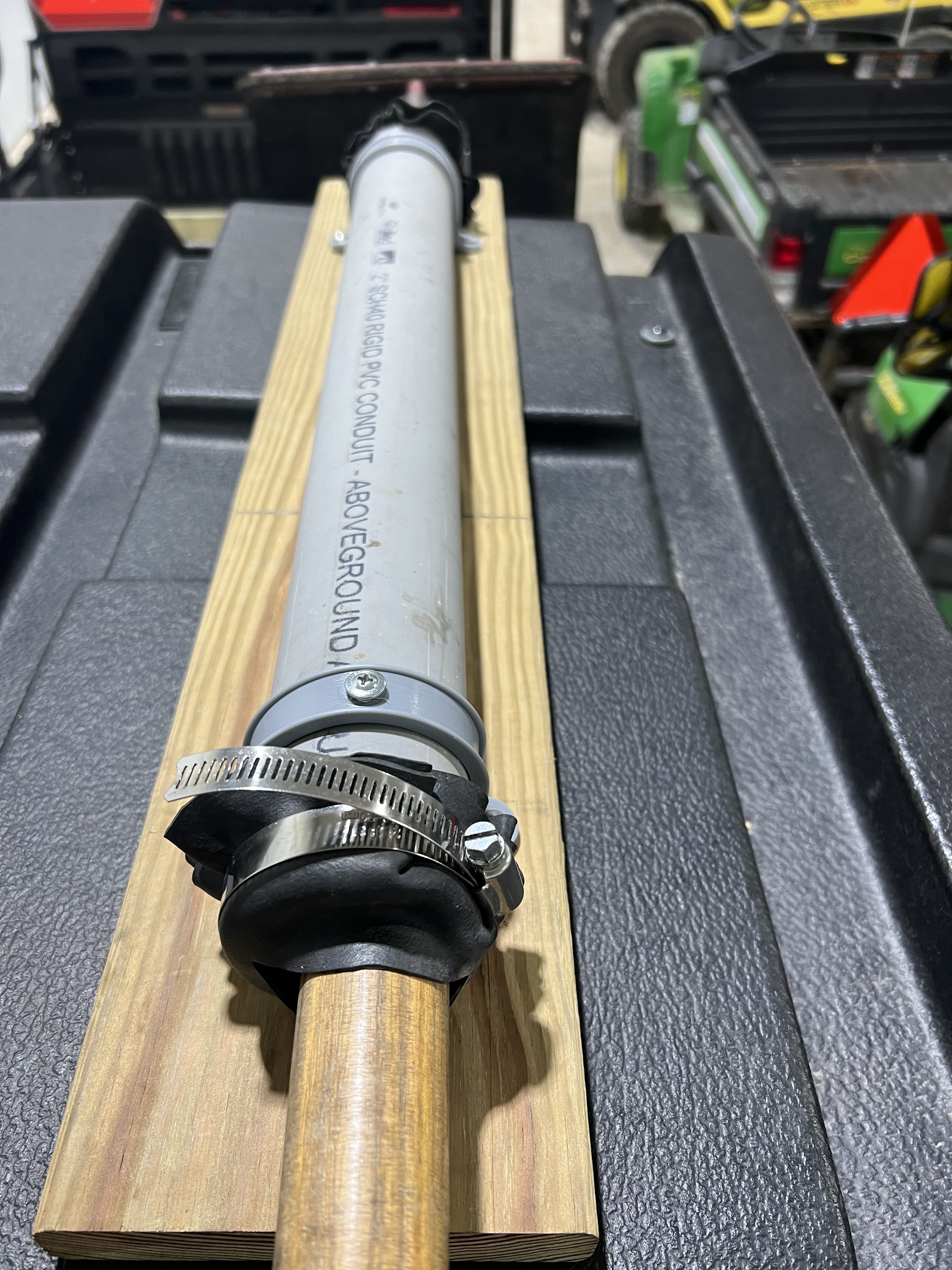
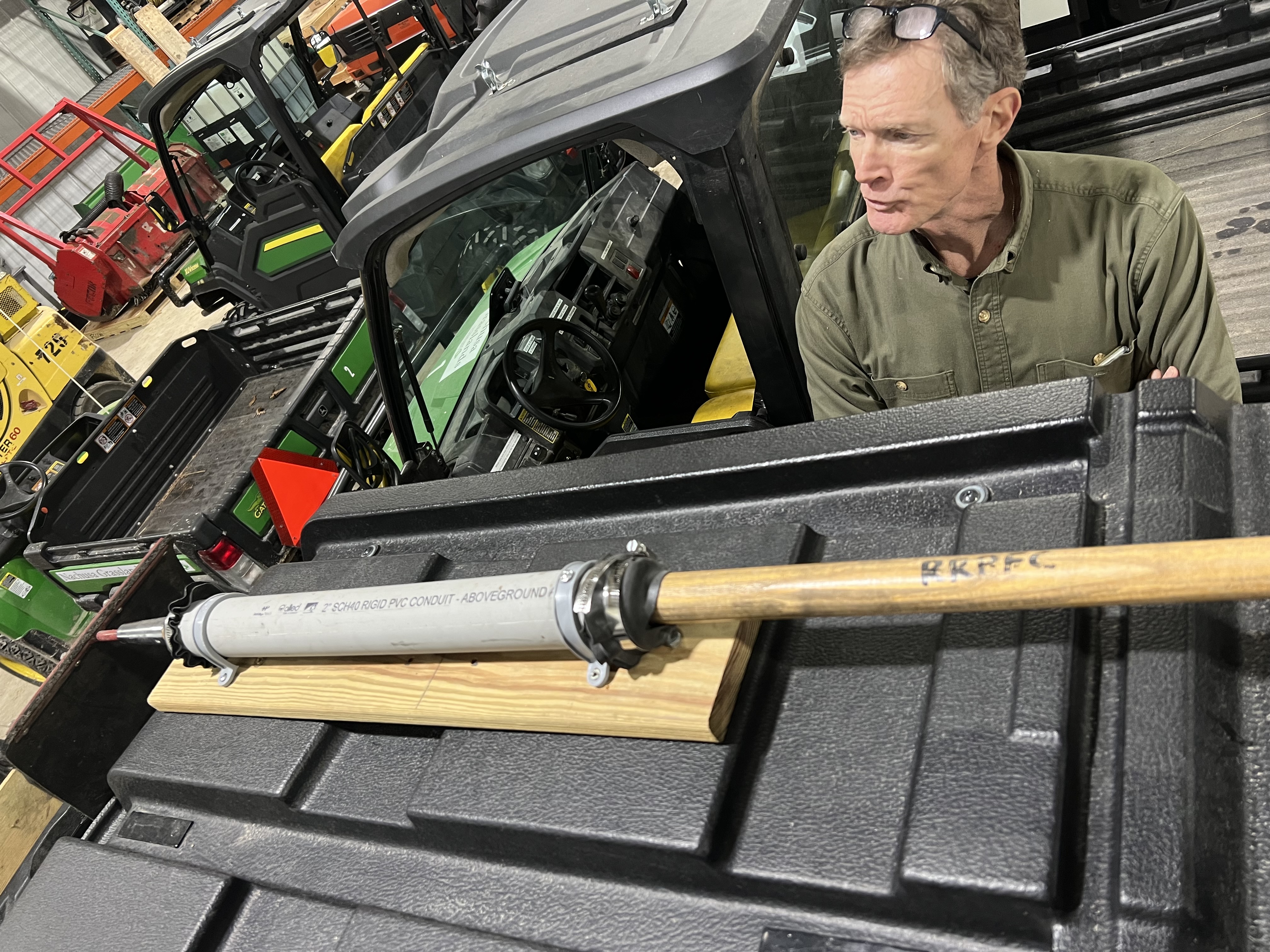
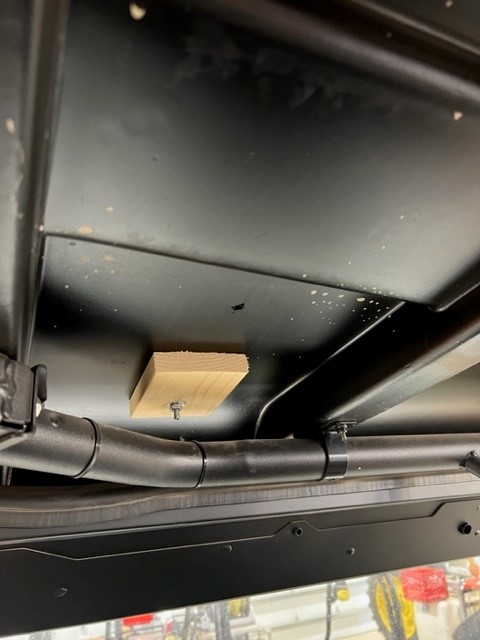
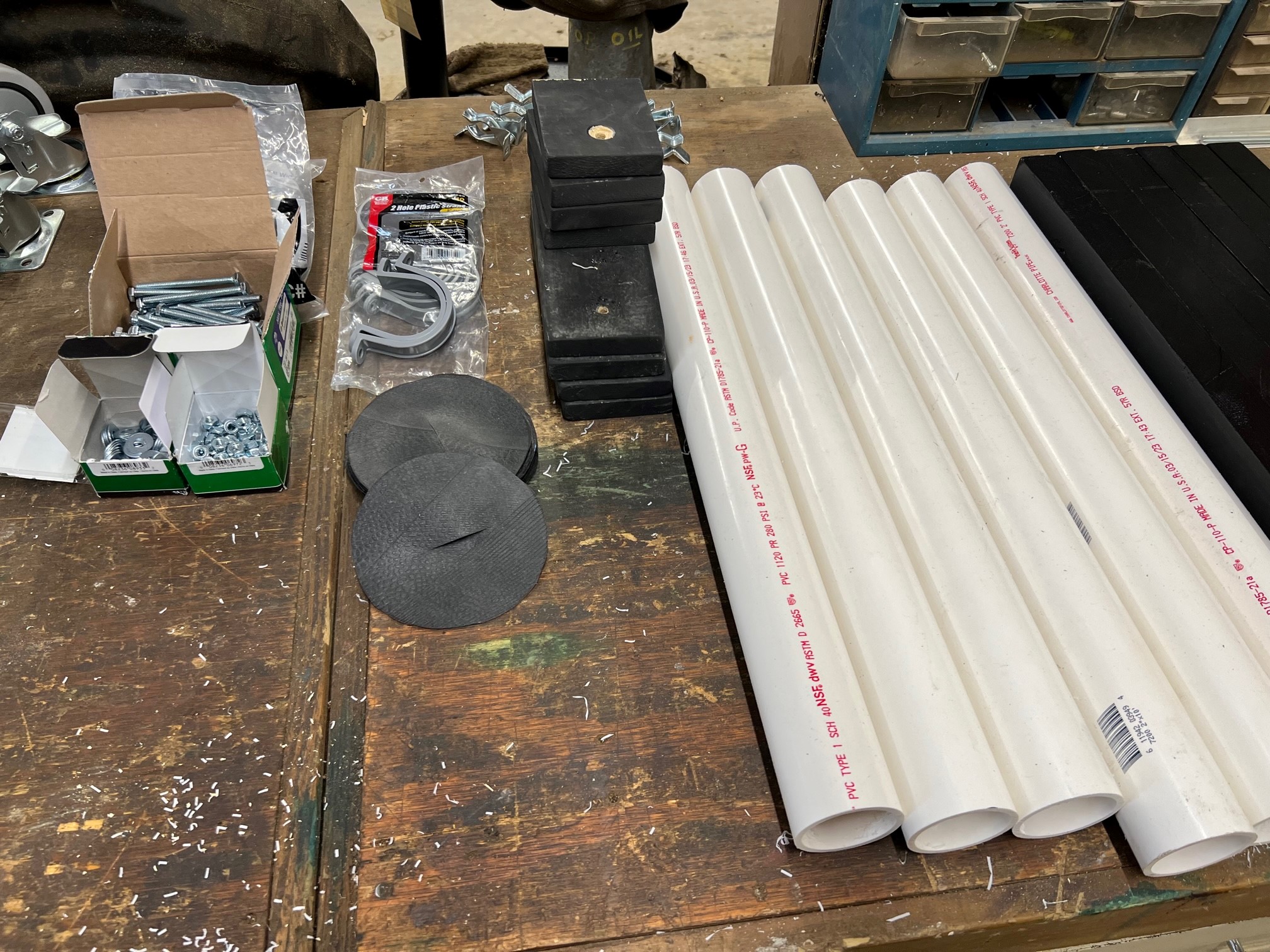
There is no great way to carry long hand tools on a UTV. Of late, volunteer Paul Mellen came up with this design and it works pretty good. This is 2″ white pvc pipe with the plastic clamps. (Maybe we should have tried 1.5 inch pvc. 1.25 inch is too small.) We bolted a board on the roof and the used screws as long as feasible, with washers on them, to affix the clamp to the wood.
On each end of the pvc Paul put two layers of used innertube with X slits cut in them. So this is four circles of rubber. The hard part was getting the hose clamps around the two layers of rubber.
Now the tools are easily slid in from the front and the friction of the rubber holds them in. Low hanging tree limbs can do havoc to anything on the roof.
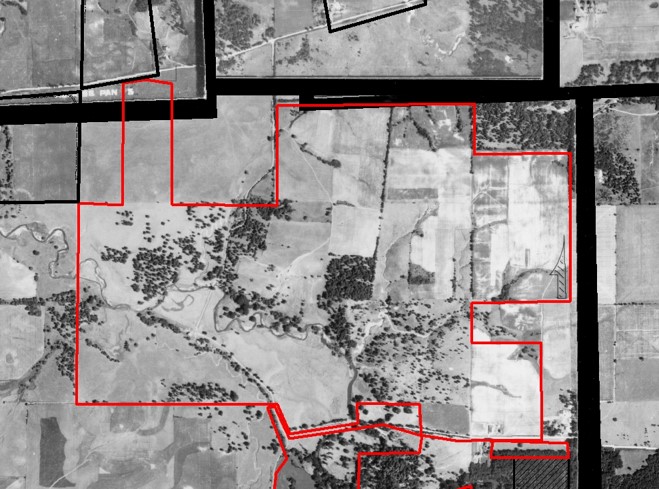
The site is IL DNR’s Franklin Creek State Natural Area.
19392015
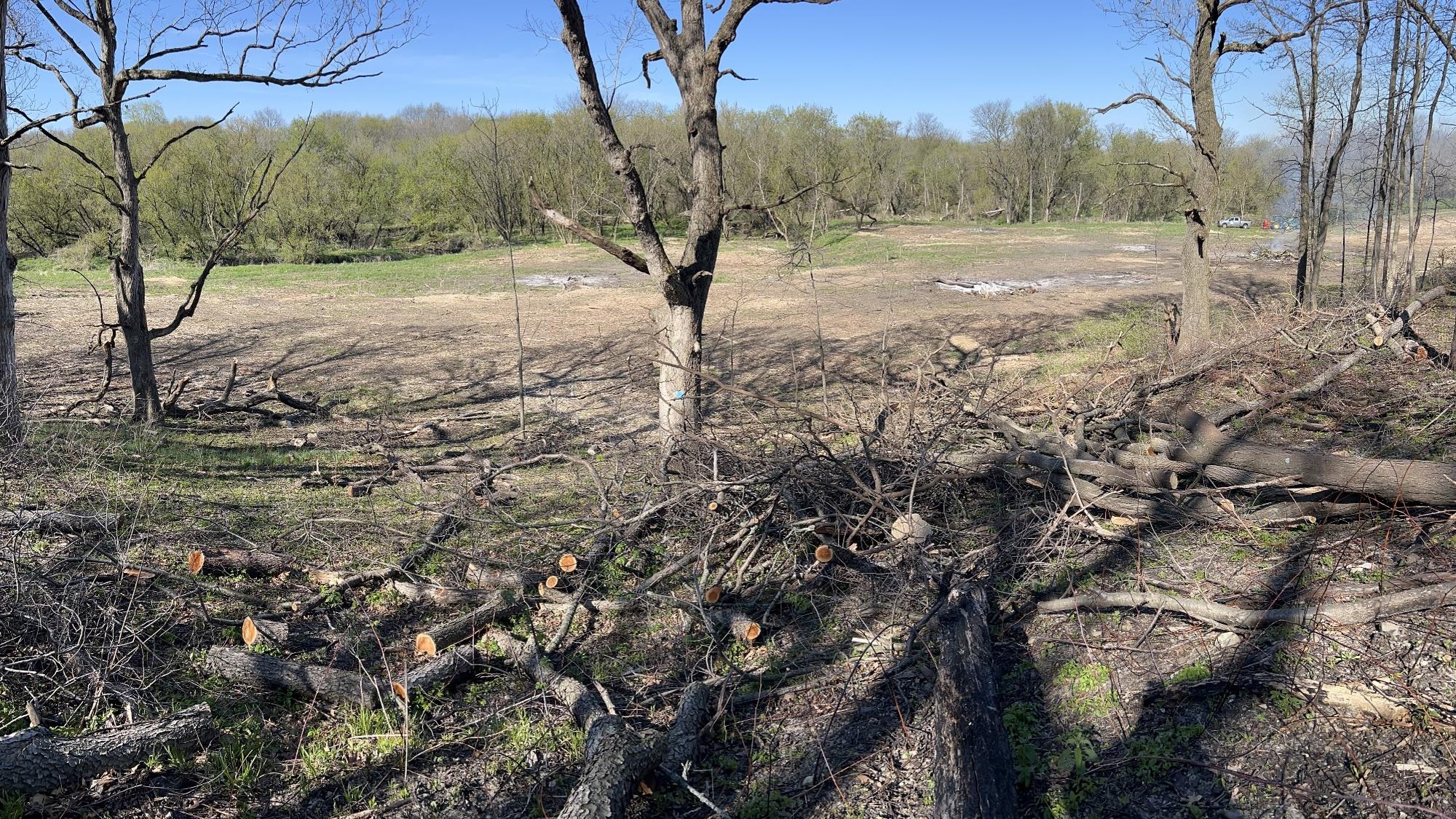
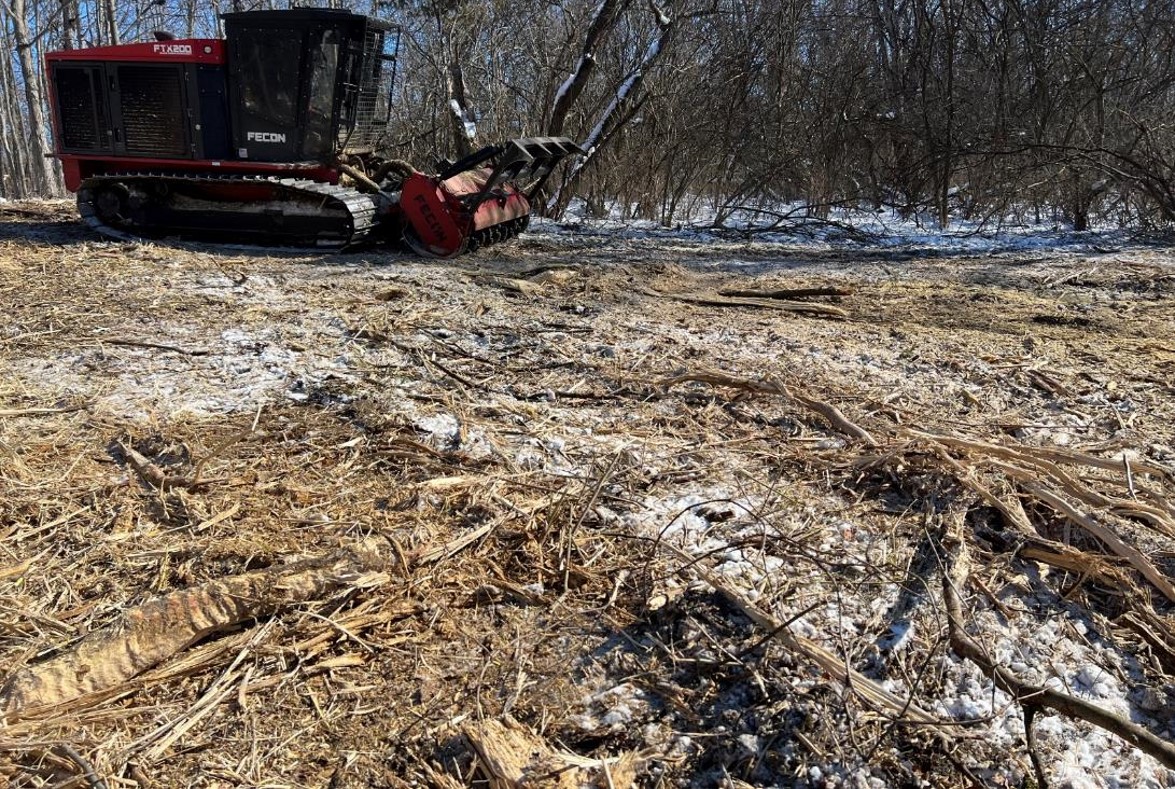
The floodplain north of the creek, next to the oak woods was cleared of common “weedy” trees (mostly box elder, and some cherry, elm and honey locust). The area was then planted with a mix of over 100 different wildflowers and grasses. Oaks will establish in this open area. This will create a diverse habitat for all kinds of wildlife and support the rare oak woodland next to it. The oak woodland needs more sunlight, increased air movement, and occasional prescribed fire.
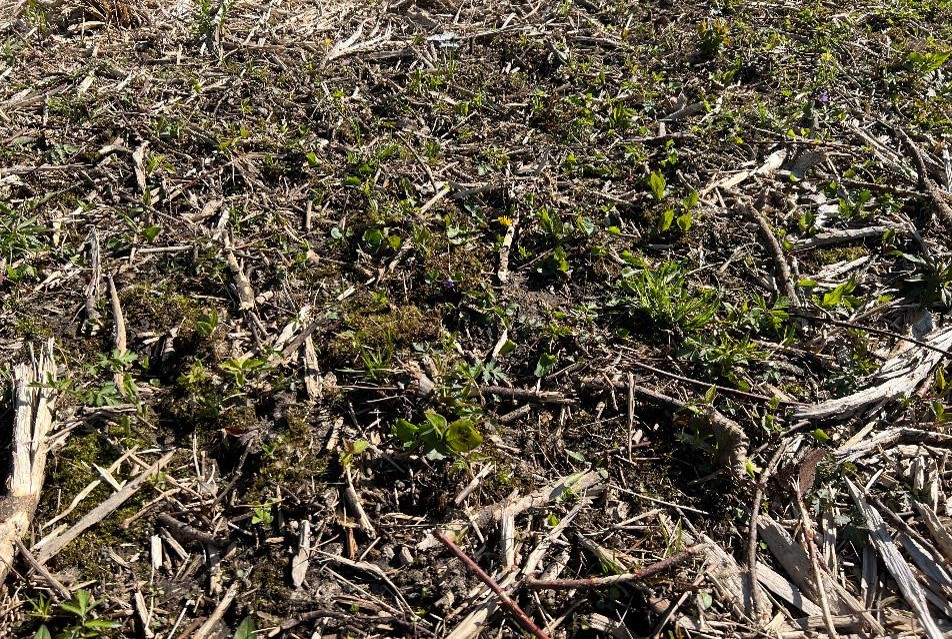
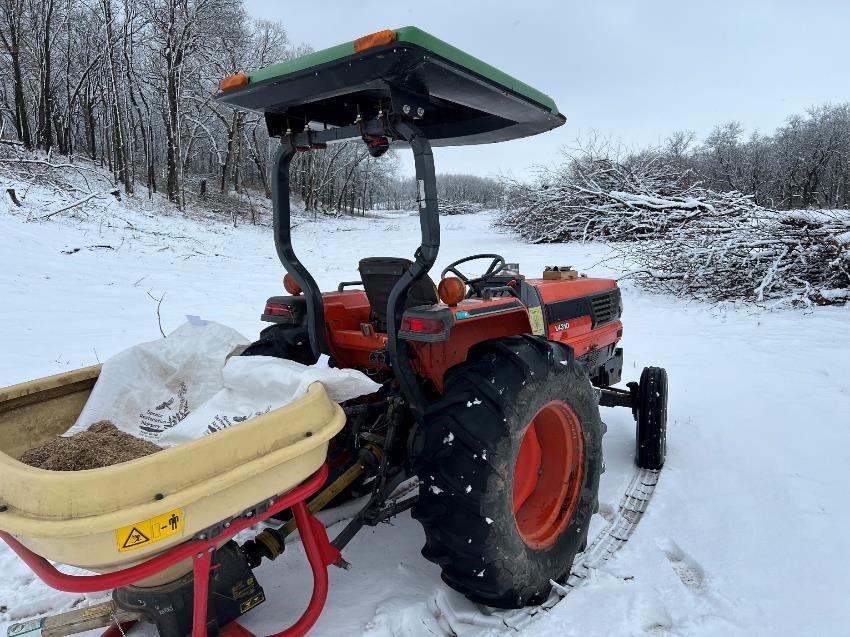
BeforeAfterA 200 horsepower tracked brush mower worked over several weeksThe wide steel tracks often leave little disturbance if turning is done gently. Here several weeks after mowing perennial plants emerge through the slash.The area was seeded with a diverse mix of seeds.
A welcome and overview at the Windom Community Center or the Windom DNR office for a couple hours, then to visit the most southwesterly of sites (the furthest is about 40 minutes from Windom), return to Windom for dinner and a social event afterward. Meet the next morning at the DNR headquarters and then to sites east and north of Windom (farthest site is about 30-40 minutes). Possible addendum tour the morning of the 24.
Companion to article on Somme Woods above is the science publication in PLOS ONE. This well written article is by the steward of Somme Woods, Stephen Packard, and long-time researchers Karen Glennemeier and Greg Spyreas. https://journals.plos.org/plosone/article?id=10.1371/journal.pone.0241061
Chicago Wilderness Oak Ecosystems Recovery Plan by Lake County Forest Preserve District and The Morton Arboretum. Easy to read with references at end. See page 21 for a survey summary of land managers which supports brush and tree thinning. “Respondents…considered removal of woody invasive and canopy thinning as the most important strategies to promote oak regeneration.” https://www2.illinois.gov/dnr/conservation/IWAP/Documents/Chicago%20Wilderness%20Oak%20Ecosystem%20Recovery%20Plan.pdf
Chicago Wilderness Alliance: Excellence in Ecological Restoration Program. If you look at projects recognized you will see land management techniques used. https://www.chicagowilderness.org/page/EERPProgram
High-Diversity seed additions promote herb-layer recovery during restoration of degraded oak woodland. Matthew A Albrecht, et. al. Ecological Solutions and Evidence. “We found that adding high-diversity seed mixes in conjunction with non-native shrub removal, canopy thinning and burning, can accelerate recovery of herbaceous communities in a high degraded woodland” https://besjournals.onlinelibrary.wiley.com/share/B39AW2FXYMJRF7XGPNTA?target=10.1002/2688-8319.12202









 grassland restoration network