Part 3 – Stop Spraying Thistles!
By: Julianne Mason, Restoration Program Coordinator, Forest Preserve District of Will County
Here are my top reasons for not spraying thistles. I’m specifically talking about Canada thistles (Cirsium arvense), but who knows, maybe this applies to other non-native thistles too.
1. It’s Unnecessary. When native forbs get established, Canada thistles fade away. Read about my experiences at Prairie Bluff below for an example. Note that Canada thistles seem to coexist happily and indefinitely with non-native, cool-season grasses. The fading phenomenon seemingly happens when native forbs get established and displace them.
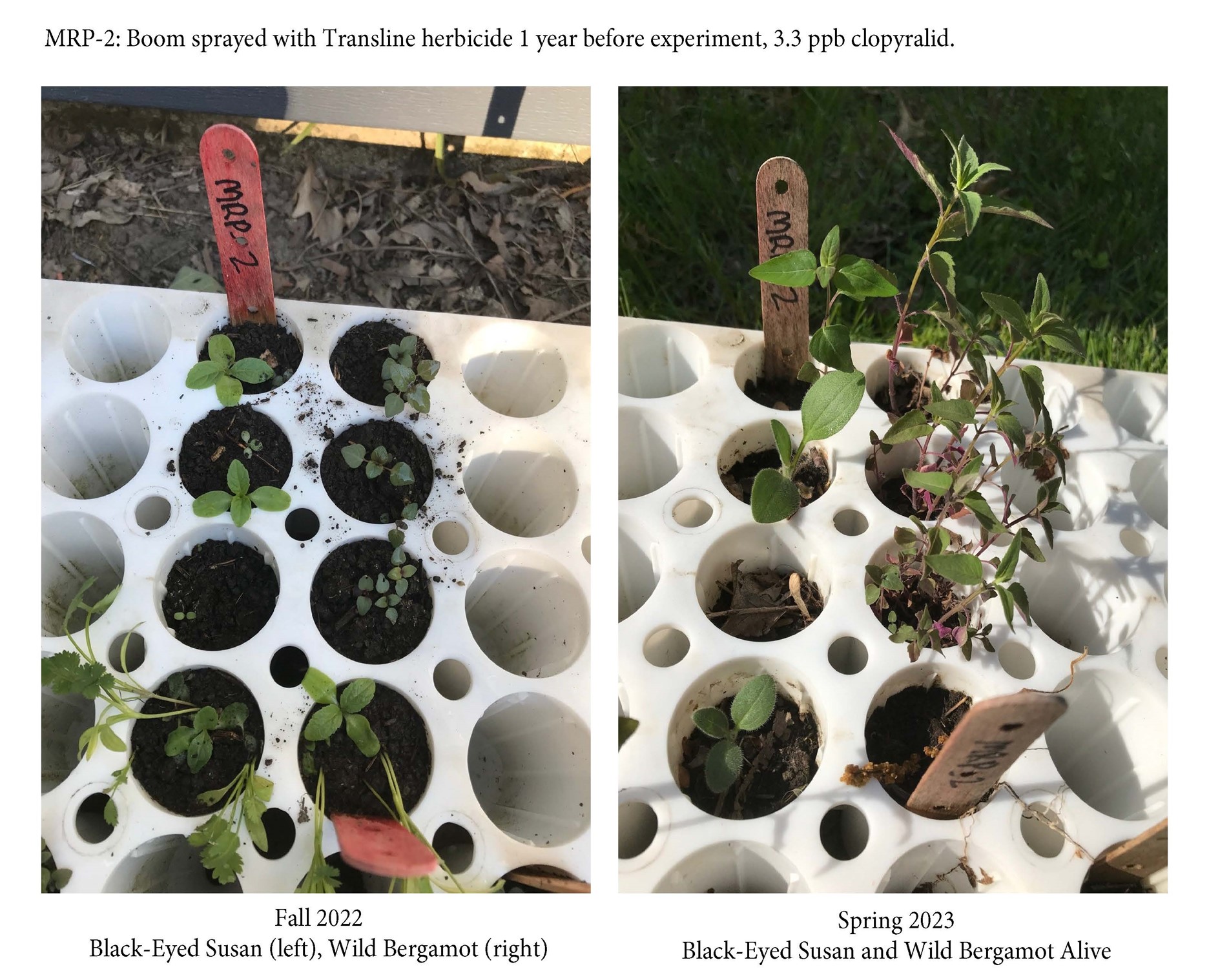
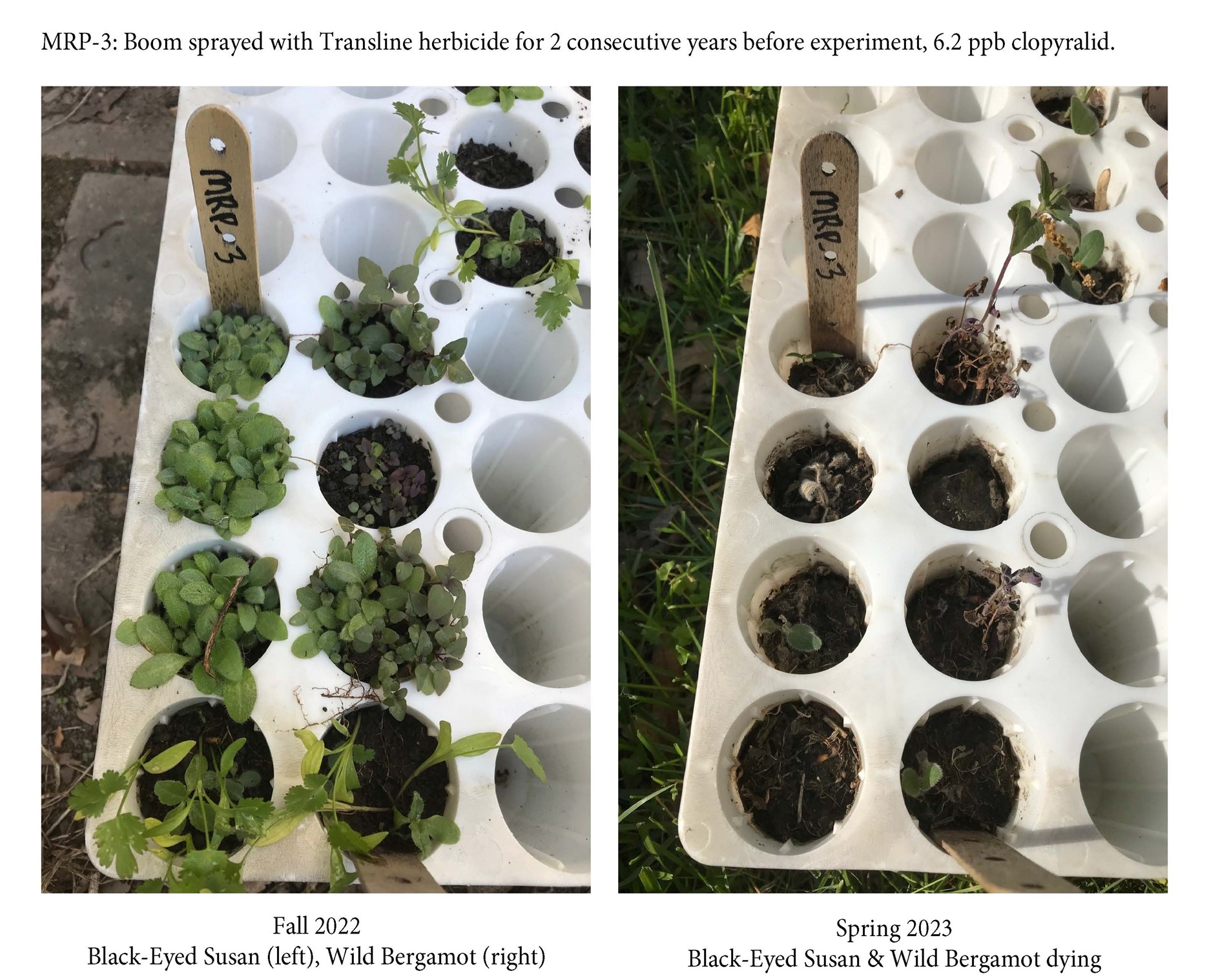
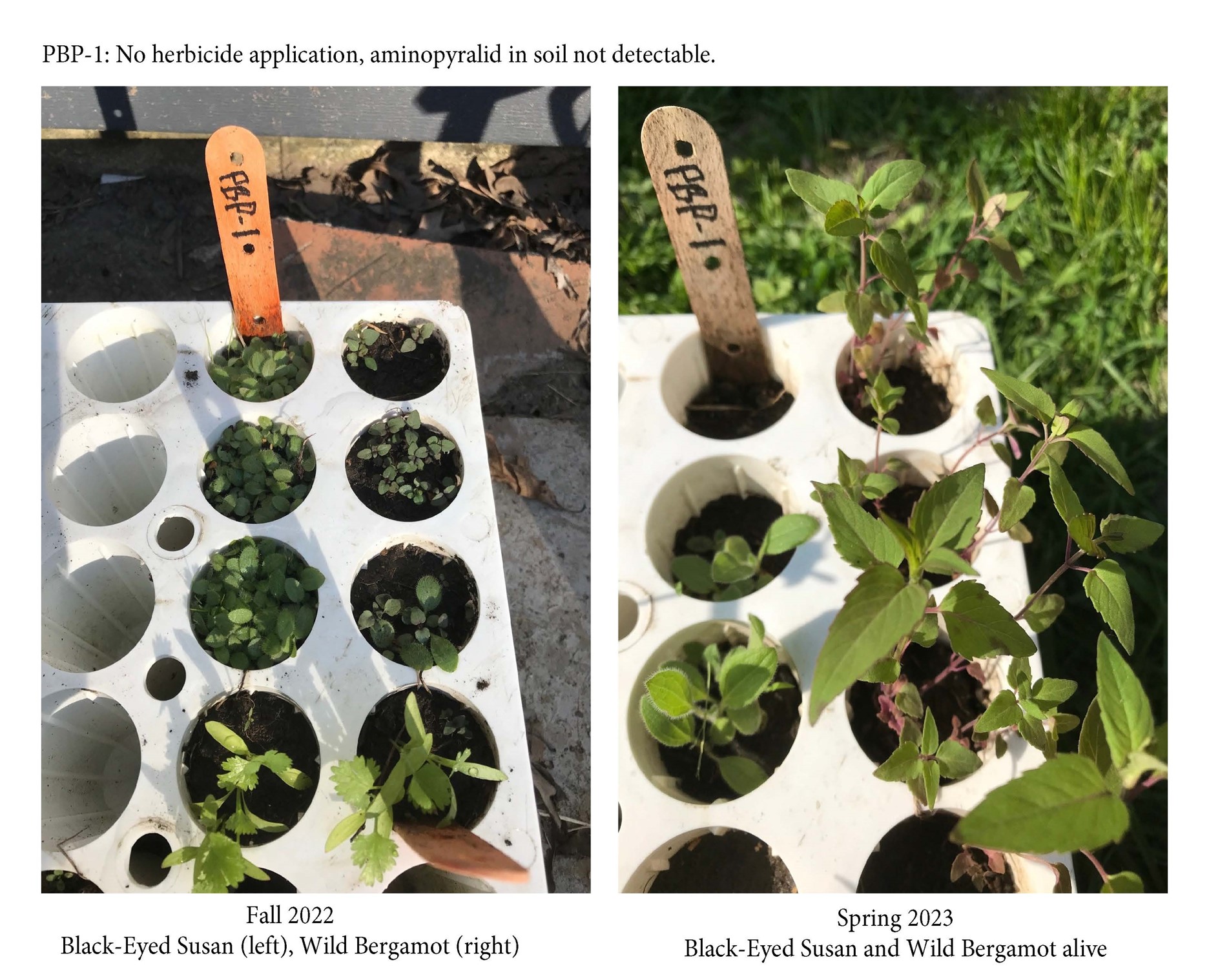
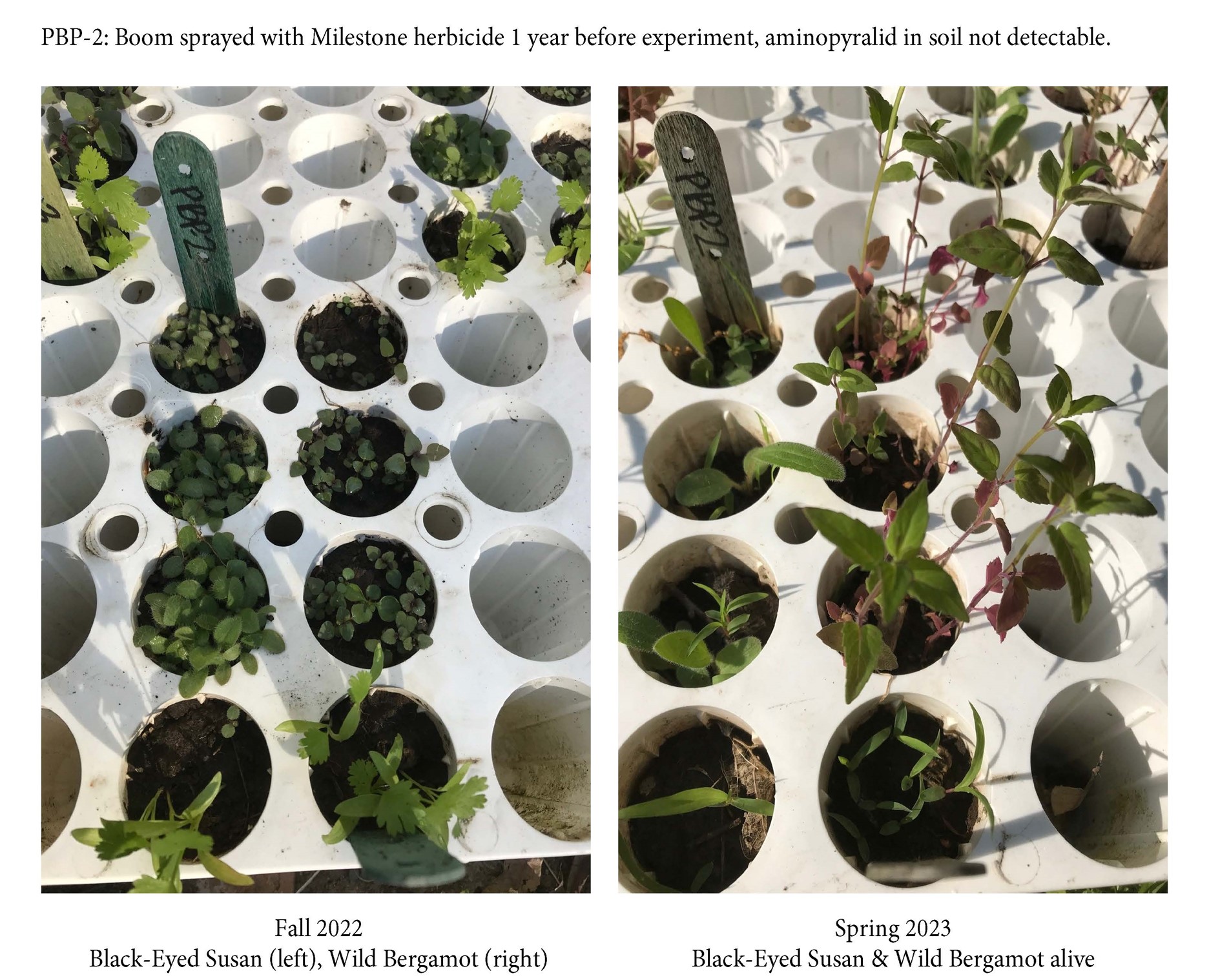
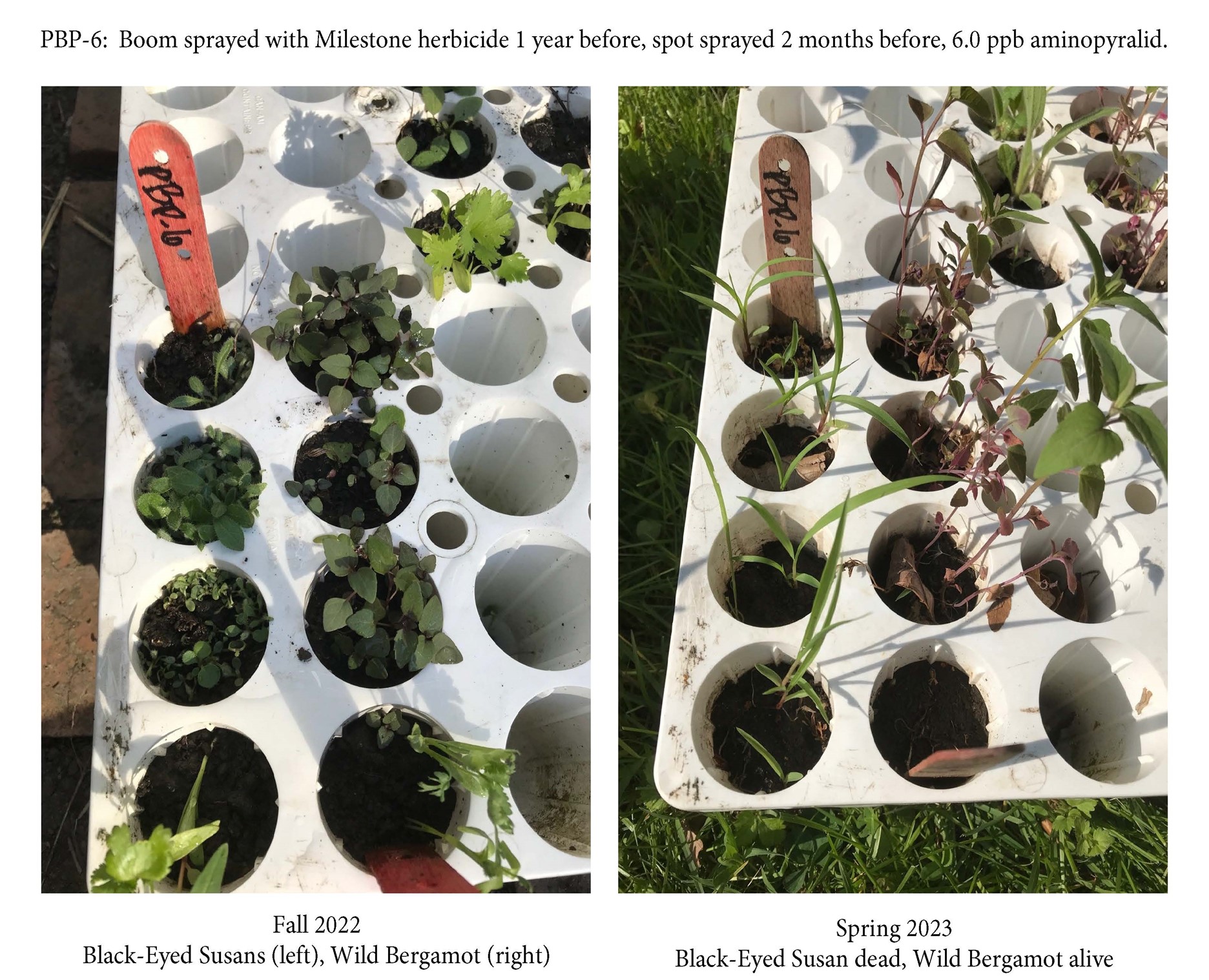
2. It’s Counterproductive. Spraying thistles causes collateral damage to nearby forbs and can inhibit re-establishment of desirable forbs due to residual herbicide activity in the soil [See Part 2 of post] when herbicides like Transline or Milestone are used in excess. This results in less competition for the thistles and perpetuates their re-establishment.
3. Don’t We All Have Other Invasives to Combat? There are more invasives displacing native species than we collectively have resources to address. We should be focusing our efforts and herbicide on the ones that are displacing natives and reducing biodiversity (e.g., Phragmites, reed canary grass, etc., etc., etc.). Yes, thistles are long ingrained in our culture as noxious weeds because they are problems in ag fields and pastures. But, that doesn’t necessarily mean that they are serious problems in natural areas.
- Let’s Distinguish Between Weeds that are Symptoms of Problems vs. Causing Problems. Thistles are usually symptoms of one of two problems. One is when not enough native forbs are present. This often happens in early restorations, when native communities are first planted in former row crop fields. Or, it can happen when previous herbicide applications cause dead zones or “holes” in the native cover. The second problem when thistles persist is the dominance of non-native, cool-season grasses. Thistles seem to happily coexist indefinitely with non-native, cool-season grasses. In this case, burning, overseeding natives, and addressing the C3 grass problem (we use post-burn application of clethodim herbicide) are the prescription, not spraying thistles. Once the C3 grasses are dealt with and the seeded natives can get established, the thistles fade.
- Combat Thistles with Seed, Not Herbicide. If thistles are symptoms of a lack of native cover, then combat the issue by a dormant seeding of native species, especially native forbs.
Case Study: Prairie Bluff – The Tale of Two Restorations
Here is my perspective-changing experience on thistles from the prairie restorations at Prairie Bluff Preserve in Lockport, Illinois.
Prairie Bluff is a 600-acre former row crop farm. When it was in agricultural leases (prior to 2019), we restricted the use of chemicals that have groundwater advisories, which includes most broadleaf herbicides. As a result, the ag fields became very weedy and Canada thistles were persistent throughout the fields; they were chronically just being suppressed by row cropping. Funding for restoration of the preserve came from two different primary sources. The two different restoration projects, although happening simultaneously, took almost opposite approaches regarding thistle management.
Western Project Approach: Do a good dormant seeding and don’t worry about the thistles.
- Dormant seeded with full prairie and wetland mixes – Feb 2020
- Mowed or spot mowed the weedy parts of the prairie- Summer 2020 & 2021 (I don’t know if this was helpful or necessary, but it made both them and the grant agency feel like they were doing something to help the prairie establish.)
- Prescribed burn – March 2022
Eastern Project Approach: Seed a more limited native matrix and battle the thistles into submission before establishing a more diverse prairie.
- Boom sprayed Milestone herbicide – Fall 2019
- Seeded native grasses, graminoids, and limited forbs – Feb 2020
- Spot sprayed widespread thistles (essentially broadcast sprayed) with Milestone herbicide – Summer 2021
- Prescribed burn – April 2022
- [Summer 2022 – I realized that the western restoration was looking immensely better and decided to change course on the thistle approach in this restoration.]
- Summer 2022 – laid off herbicide and avoided spraying thistles
- Tested herbicide residual in soil – August 2022 [see Part 2 of blog post]
- Overseeded more diverse mixes – February 2023
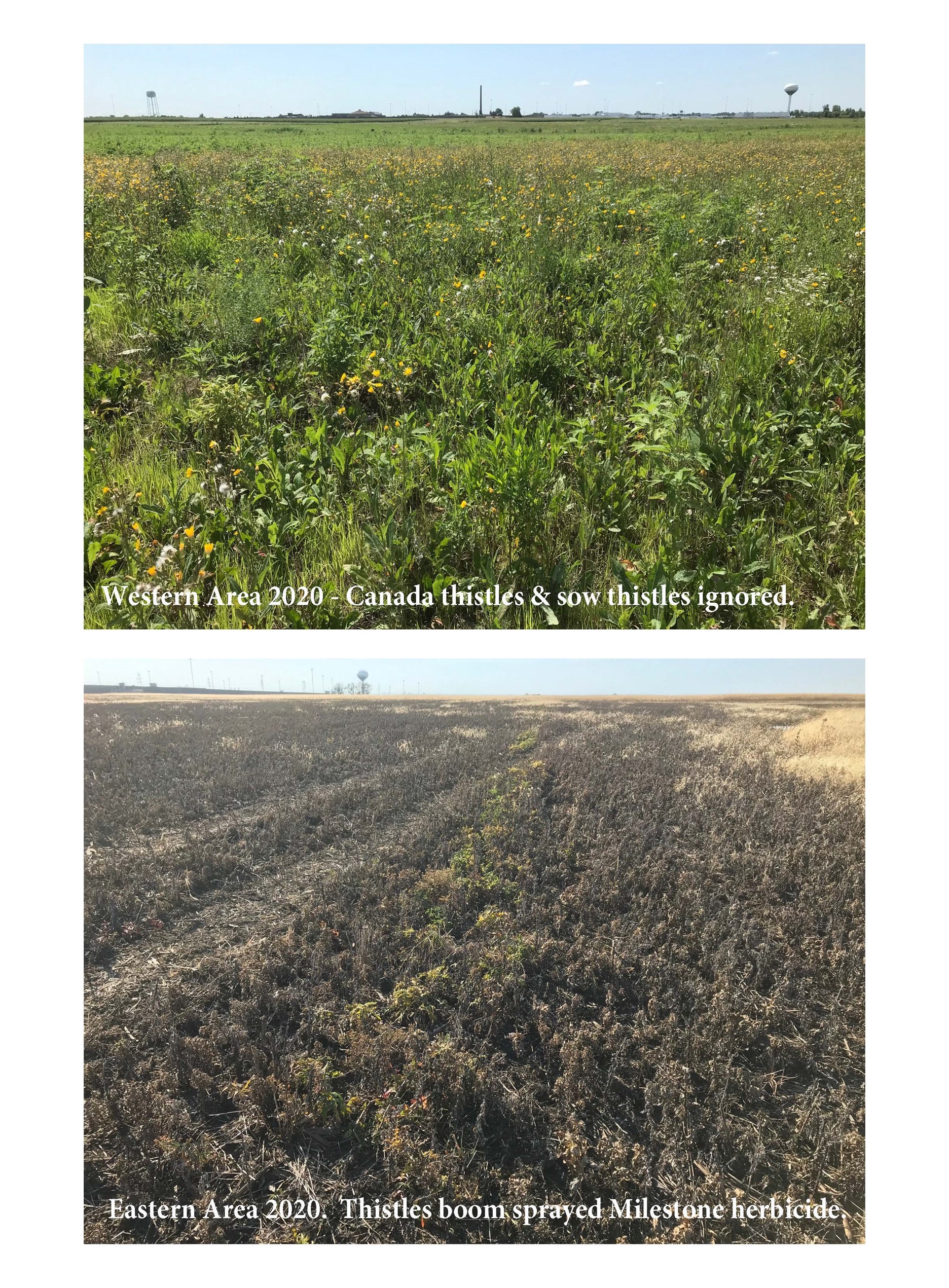
Western Area Results – Thistles Ignored, Thistles Faded: In the western project area, where the approach was to not herbicide the thistles, there are almost no thistles remaining in the restoration. It is a good-looking early restoration, dominated by Canada wild rye (Elymus canadensis), yellow coneflower (Ratibida pinnata), wild bergamot (Monarda fistulosa),golden Alexanders (Zizia aurea), foxglove beardstongue (Penstemon digitalis), rattlesnake master (Eryngium yuccifolium), field oval sedge (Carex molesta),and many other natives. The diversity of the prairie establishing reflects the original seed mix.

The only Canada thistles remaining in the western project area are present along the trail corridor. There, non-native, cool-season grasses that were planted to be mowed turf along the trail shoulders have expanded out into the prairie. The thistles are persisting in the non-native C3 grass zones, but not anywhere where natives have established.

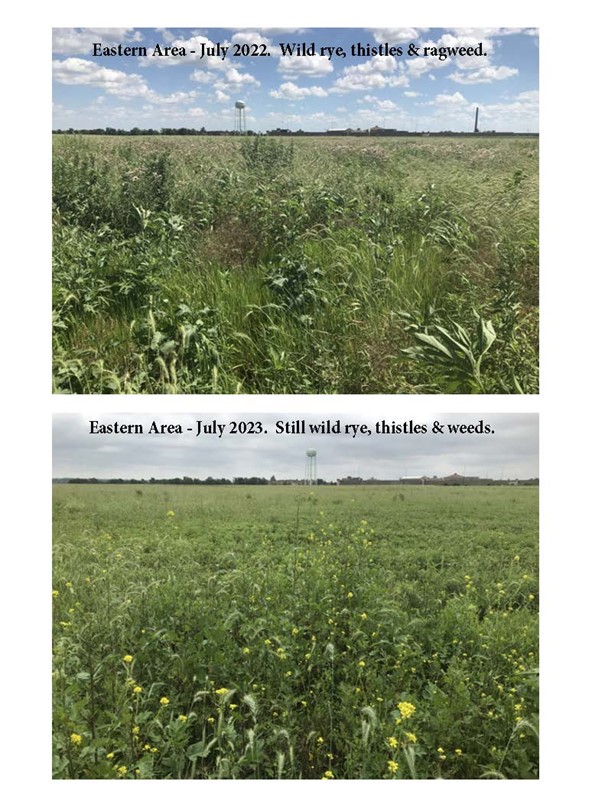
Eastern Area Results – Thistles Battled with Herbicide, Prairie Restoration Suffers. In the eastern project area, there are still lots of thistles in the restoration. Lots of thistles. The seeded native grasses are becoming established, but besides that, the rest of the vegetation is weeds. Now the restoration has been overseeded with properly diverse mixes and we are avoiding widespread herbicide use to allow the seeding to establish. Hopefully, the recently seeded native forbs will be able to establish well and displace the Canada thistles and other weeds (sow thistles, annual/biennial weeds, etc). I’ll keep you posted on how the restorations are progressing in a few years.
Just for good measure, here’s one more photo comparison of the western project area at Prairie Bluff where the thistles were not treated with herbicide, compared with the eastern project area where the thistles were originally boom sprayed with herbicide. It’s only anecdotal data, but I think it’s time to stop spraying thistles. Restorations are a lot easier and more successful when you view thistles as symptoms of a problem (i.e, lack of native cover) and not the problem themselves.















 grassland restoration network