Successful GRN workshop held at Nachusa Grasslands

GRN Saxton tour 2 by MS

Oak regeneration tour by Saxton and Goldblum.

Nachusa Grasslands hosted the annual workshop of the Grassland Restoration Network from September 9, 10 and 11, 2014. We had 90 people register and about 110 with Nachusa stewards and crew on hand to run things. Participants came mostly from Illinois but there were staff from Iowa, Indiana, Missouri, and Nebraska.

Participants were enthusiastic with our format which was heavy on tours, and gave generous time for social interactions and three solid keynote talks.

Great thanks go out to volunteer Marilyn Carr for catering two breakfasts and helping set up all day Wednesday.

Thanks to the tour leaders of: Al Meier, Bernie Buchholz, John Heneghan, Jay Stacy, Cody Considine, David Goldblum (NIU), Shannon McCarragher (NIU), Becky and Hank Hartman, Mike Saxton, Mike Konen (NIU), Nick Barber (NIU), Jeff Walk, Bill Kleiman, Rich King (NIU), and Kim Schmidt (SIU).

Thanks to our three keynote speakers: Chris Helzer, Stephan Packard, and Bob Gillespie.

Thanks to the seasonal crew for the heavy works of cleaning, set up and take down: Heather Baker, Kim Schmidt, Zack Stork, Joe Boise, and Jocelyn Frazelle.

Thanks to Susan and Leah Kleiman for baking desserts and help in kitchen and Susan for leading a tour of the fen on the spur of the moment.

Who did I forget?

GRN talk in barn

Panorama photo of folks during morning briefing before going out into the field.


GRN weed tour by BK

During invasive weed tour we spent 15 minutes collecting some quick data on diversity of plants and number of invasive birdsfoot trefoil. Wonkish fun.

GRN social hour at corral

Social hour at the new bison corral.


Posted in Uncategorized | Tagged , , , , | 1 Comment

GRASSLAND RESTORATION NETWORK WORKSHOP

GRASSLAND RESTORATION NETWORK WORKSHOP
September 9-11, 2014 at Nachusa Grasslands, Illinois

dots knob by K Hallowell

The target audience for the GRN workshop are people actively doing/directing high diversity prairie restoration at a significant scale; or doing the science. The workshop has a lot of field time with some inside talks. We talk a lot about techniques, equipment, monitoring and measuring success, the science behind the restoration, and other wonkish topics.
Nachusa Grasslands has over 110 prairie plantings and many nice remnant prairies for you to look at, with many restoration very well done. September is a nice time of year too. Nachusa Grasslands is two hours west of Chicago in Illinois. http://www.nachusagrasslands.org/

Agenda

Tuesday, September 9
Arrive noon for Lunch, Welcome & Orientation, Housekeeping, Logistics
Location: Nachusa Grasslands– Headquarters Barn (HQ), 8772 S. Lowden Rd, Franklin Grove, IL 61031
1:00 – 5:00 pm: First Concurrent Learning Tours in the Field (see list at bottom)
5:00 – 6:00 pm: Social Hour at HQ.
6:00 – 9:00 pm: Dinner at HQ with short Keynote Talk.
Wednesday, September 10
Location: Nachusa Grasslands Headquarters Barn
8:00 – 9:00 am: Breakfast served
9:00 – 9:30am: Morning briefing
9:30 – 12:30 pm: Second Concurrent Learning Tours
12:30 – 1:45 pm: Lunch and short Keynote
1:45 – 5:00 pm: Third Concurrent Learning Tours
5:00 – 6:00 pm: Social Hour
6:00 – 9:00 pm: Dinner and Keynote
Thursday, September 11
8:00 – 9:00 am: Breakfast served
9:00 – 11:00 pm: Fourth Concurrent Learning Tours
11:00 – 11:30 Lunch served
Workshop ends after lunch.

GRN REGISTRATION FORM
The GRN is an informal network of people working to improve the conservation effectiveness of grassland restoration. Through annual meetings and other communication pathways, GRN participants share information on such topics as restoration techniques, objectives, challenges, measures of success, and more. The ultimate goal is to conserve native grasslands by using restoration to defragment and enhance existing habitats.
We are limited on space in this workshop, and we want to host a particular audience, and our invite may get bounced around the internet to lots of folks.
The target audience we are aiming for are land stewards responsible for creating grassland/oak savanna habitat, their supervisors, and ecologists who study grasslands.
The target audience is typically not under-graduates, seasonal employees, citizens who want to learn about grasslands (noble as that is), friends of the project (who know us too well anyway).
Please fill out the registration information below. Do not send payment yet. The cost will be set low at $75 due to a grant from the Grand Victoria Foundation. By the end of June we will know what space we have and will send an email requesting a payment by check or credit card. We have a block of hotel rooms set aside (cost not included in registration). So easy.
Name:
Email:
Phone:
Affiliation:
What is your job title? What do you do?

We will be having concurrent “learning” tours which we will schedule based on your ranking of preferences that follow. These tours will last a few hours each, require moderate hiking off trail, and hopefully be informative. If you have mobility issues let us know and we will create a custom tour for you. Since the tours are concurrent you may not get all your top picks. We expect to keep tours limited to 15 people. Some popular tours will be repeated. So……rank your preferences with one being the highest and down to twelve.
____ Planting prairie at scale from start to finish. Setting objectives and measures of success, seed harvesting, mixing, planting, maintaining. See several high diversity plantings.
____ Bee ecology. Viewing monitoring stations, pollination, planting diversity effects.
____ Setting up a long term field research project. Visit some studies, discuss with scientists.
____ Strategies for managing weeds. Tools, techniques, thinking at scale, specific weed strategies, when to throw in the towel.
____ Overseeding for success. Adding seed to restorations and degraded remnants. Visit various habitats and see the results.
____ Nachusa’s prescribed fire program. Fire effects. Woodlands and grasslands. Equipment, fire break prep, strategies, results.
____ Soil science, soil carbon, nutrients, understanding soil diversity. Fen hydrology.
____ Oak regeneration and fire ecology, savanna flora and management
____ Bison program. Corral, fence design, genetics, ecology.
____ Herps: ornate box turtle, snakes, monitoring and baseline surveys. Management.
____ Other. What do you want?
Hold the dates of September 9 to 11 open while you wait to hear from us.
Email this registration to grn2014workshop@gmail.com
END.

Posted in Uncategorized | Tagged , , , | Leave a comment

Lesson learned: Over seed successful plantings with more success

Adding seed to a failed planting feels like spending good money after bad. Better to add seed to restorations that are doing well and make them great.

Example by volunteer stewards Jennifer and Chris Hauserhausers

Back in 2004, Jennifer and Chris Hauser adopted a mature, 14 year old, planting that looked like a keeper.  An hour walk through this 15 acre planting gave us 84 species, with a dozen of those being weeds.  Way back in 1993 the planting had a horrific amount of white sweet clover which we reduced over the years with timed mowings at full flower, and then careful spot treatments annually after.  There is still sweetclover there but manageable.  The Hausers are standing in this planting and it looks nice, a keeper.

So Jennifer and Chris harvested an additional mass of seed from various species they decided should be there and were not.  They picked another 8 pounds per acre of bulk weight of seed.  In the fall Chris roughed up the top few inches of soil with a harrow.  They then planted the seed on the top with a tractor mounted seed broadcaster, and then harrowed again.

From walking around the planting a number of times the following season we felt the harrowing did not harm the plants already established. There was a flush of black eyed susan recruitment (which was not over-seeded but there were 5 to 10 seedling per square foot), and pale purple coneflower (which was planted but it not as much as what we saw which was 1 to 2 seedlings per square foot).  So maybe other good things we wanted also germinated.  Important to us was that we also did not get a flush of white sweet clover.

The next year the Hausers had a local greenhouse produce 300 prairie coreopsis plugs and 760 northern dropseed plugs.  They plugged these plants in various pods spread out around the planting.  They had a wet spring and most of those plugs took and can be seen years later.

For several years after they  continued to add seed to the planting on a less intense scale.

Here and there you find a plant they likely over-seeded.  It is a subtle change.  We find over-seeding takes five to eight years to show up as flowering plants.

This was all a good amount of joyful work.   But would you do this on a low diversity planting that had unchecked invasive weed problems?  Again, the lesson learned is over-seed successful plantings with more success.

Chris and Jennifer Hauser were energetic volunteers with Nachusa for about eight years.  Chris did his master work in plant ecology at Nachusa.  They moved to Carmel California where Chris works for the Santa Lucia Conservancy.

Posted in Uncategorized | 1 Comment

Lesson learned: Better to have 5 fabulous acres than a 50 acre weed patch

Better to go slow enough to do the job well.  If you have enough seed to plant 15 acres you might be better to put that seed on 5.  Why?  Because planting too thin is a common cause of poor results. That five great acres can yield the seed to plant the next five and the next 50. Large prairie plantings thinly populated by native plants leads to weeds, work, and aggravation.

An example of well done: Volunteers Tom and Jenny Mitchell had 28 acres of former row crop ground to plant but did the job in four plantings of 7 acres each.  Below they stand in their very nice two year old prairie planting with 52 species planted at about 25 pounds per acre bulk weight. They restricted the species in the planting to those that occurred on the adjacent remnant prairie.  After two years they had 56 native plants, a native mean Conservatism of 4.4, and transect Floristic Quality Index of 26. If you don’t know what those values mean, the point is they got a lot of nice plants filling in what was a crop field.  The planting looks like a remnant prairie.   Now, after a decade has passed this planting is still looking very good.

Mitchells Jenny Tom IMG_1108_helzer


Posted in Uncategorized | 5 Comments

Lesson learned: Plant all species you want on year 100 on year 1

A generation ago it was said that to plant a prairie you start by planting a “matrix” of rough and tough native plants to make the soil ready for the more finicky plant species to be added years later.  These finicky, or conservative, species might be plants like birdsfoot violet, lead plant, pussytoes, shooting star, and many others.  The rough and tough might be plants like indian grass, bee balm, yellow coneflower, and big bluestem. 

We have found we can plant all species on year one.

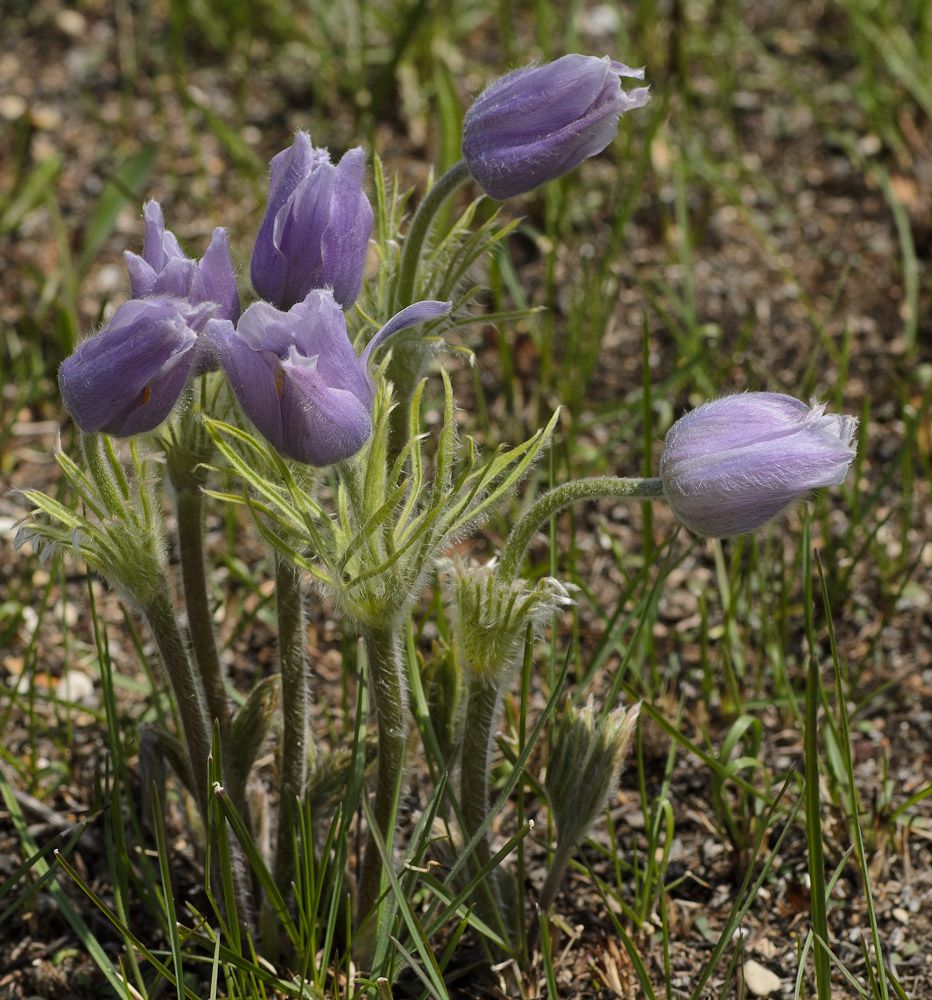
Photo below is one of dozens of pasque flower on a gravelly prairie planting that have been doing well for a quarter century:

Pasque Flower (Anemone patens)

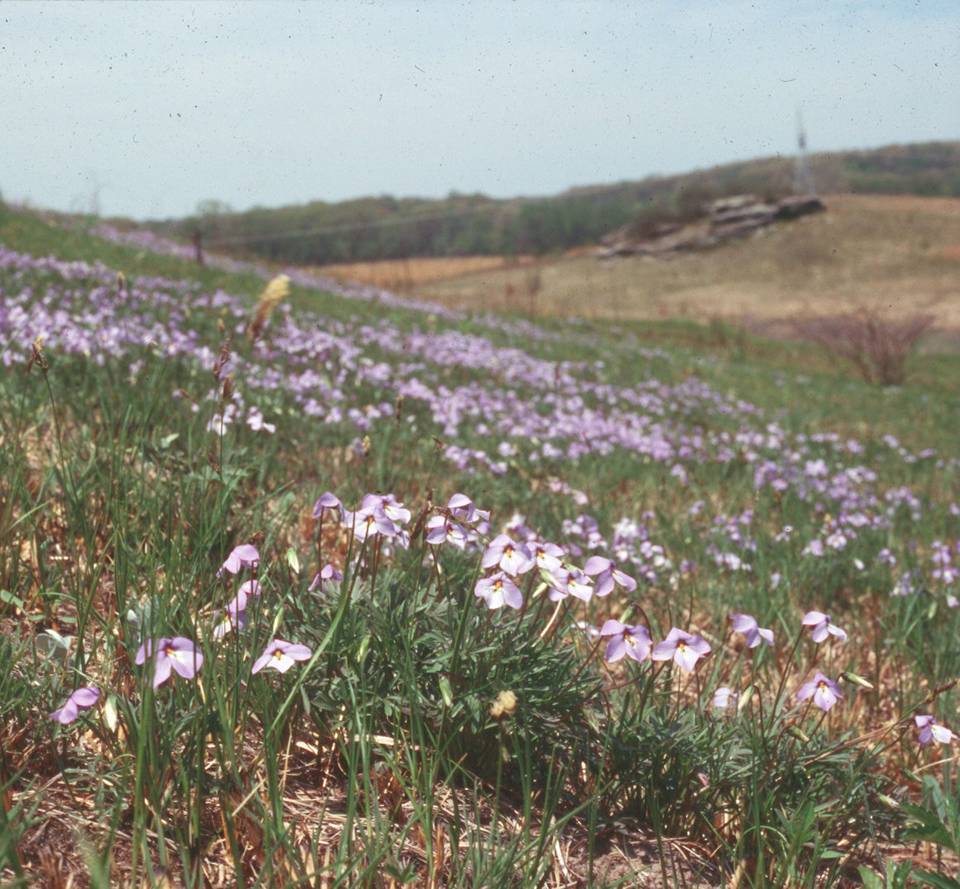
Birdsfoot violet on a remnant prairie. We find these come up in plantings too:

violets at coyote point

Rough blazing star on a remnant prairie. They come up thick in plantings:

blazing star

End.

Posted in Uncategorized | Tagged , | 3 Comments

Lesson learned: Plant a high diversity of seed by starting early

To create diverse prairie, you not only need a lot of seed weight per acre but you need a lot of different species of seed.  We start harvesting in May and go into November.

from PP planting

The photo above was taken in spring from a fine planting that was about ten years old.  The species seen here are usually left out of prairie plantings because their seed is ready to pick in early summer, before people traditionaly consider it time to harvest seed.  Shown are wood betony, two species of pussytoes, Bicknell’s sedge, Muhlenberg’s sedge, and an alumroot leaf in lower right.

jay in planting

The master of this planting is volunteer steward Jay Stacy.  He and friends harvested seed from 157 species.  A study transect done after a decade had 82 native species with only five non-native.   The floristic quality values mimic our better remnant prairies.  Other plants includes Spiranthes orchid, three species of violets, the rare prairie bushclover, and lots of lead plant and northern dropseed.

This planting and many others will be looked at during our annual GRN workshop, this year held at Nachusa Grasslands September 9-11, 2014.

Posted in Uncategorized | Tagged , , | 2 Comments

Plant a large weight of seed

It takes a lot of seeds per acre to make sure an area fills in with native plants, not weeds.

IMG_3056 mixing seed

In the photo, around 3,000 pounds of hand collected seed is being mixed on the floor.   There is over 125 species in this dry-mesic seed mix.  Some of the barrels have just one species of seed. In a new planting that was a former row crop field, we are planting 40 to 60 pounds per acre.  We don’t clean our seed so perhaps 40% of that bulk weight is chaff.  The bottom line is this is a lot of seed per acre.

Further west of Nachusa, Chris Helzer in dry Nebraska is getting solid results using much less seed per acre on sandy soils.

When we look back on our past plantings we feel confident that poor plantings often resulted from “spreading our seed too thin”, the metaphor made real.


Posted in Uncategorized | 5 Comments

Lesson learned: Decide whether your prairie planting will be low or high diversity.

storm front over pale purple coneflower Nachusa by BKleiman 2013 06 22

This prairie planting created by volunteer steward, Bernie Buchholz and friends,  is very diverse with over 165 species of plants showing up after several years from 175 species planted.  Yes, there is an eye popping amount of pale purple coneflower and a storm front to capture the drama. 

Over the next several posts I will share lessons learned on prairie restoration.  The first lessons is to decide whether you want high or low diversity results. 

High diversity takes extra time and resources to produce. If your habitat restoration goal is short term like with a Conservation Reserve Program ten year contract, then simply plant some grasses and maybe a few forbs.  

If you want habitat for birds then you may not need a plethora of plant species.  But, if you want to mimic the diversity of remnant prairie on the assumption that good things will result, or to provide habitat for all sorts of insects, or you want to connect remnant prairies with restored prairies in between….then you are talking about high diversity, and my lessons learned are for you.

Posted in Uncategorized | 2 Comments

GRN workshop at Nachusa September 9-11, 2014

Save the date!

Nachusa Grasslands will host the next Grassland Restoration Network workshop on September 9, 10, and 11, 2014.

Registration will only be $50 to $75 and include most meals. Such a deal.

The target audience for the GRN workshop are people actively doing/directing high diversity prairie restoration at a significant scale; or doing the science. The workshop has a lot of field time with some inside talks. We talk a lot about techniques, equipment, monitoring and measuring success, the science behind the restoration, and other wonkish topics.

Nachusa Grasslands has over 110 prairie plantings and many nice remnant prairies for you to look at, with many restoration very well done. September is a nice time of year too. Nachusa Grasslands is two hours west of Chicago in Illinois. http://www.nachusagrasslands.org/

So put the date on your calendar, and budget enough money for registration, travel, and hotel. We will have more details at this site by May.

Posted in Uncategorized | Leave a comment

Which herbicide for various weeds

Lespedeza daurica IMG_3830 003

Above: An asian bushclover, Lespedeza daurica, speciman sits out to help people learn what this invasive weed looks like.  You can’t kill it with Transline/Stinger but triclopyr or Milestone does the job.

Every manager has their list of what weeds they have to control and what herbicides or techniques they use to control it.  The link below is my current list:

https://grasslandrestorationnetwork.org/wp-content/uploads/2013/09/which-herbicide-for-various-weeds-july-2013.pdf


Posted in Uncategorized | Leave a comment