
by Bill Kleiman

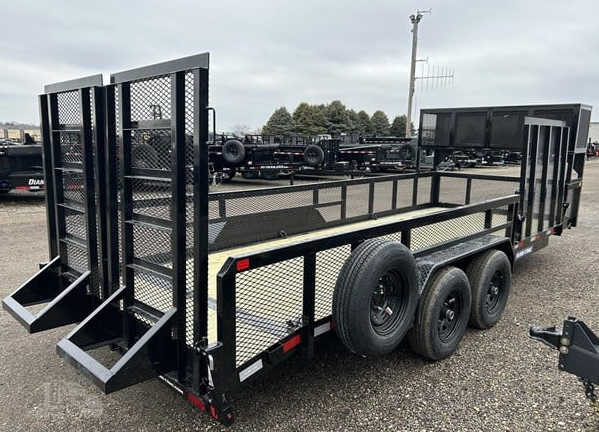
Is the trailer above a CDL setup?
My daughter was telling me about how they need a Commercial Drivers License, CDL, to haul two UTVs on one trailer to their prescribed fires. I told her that there may be a way to not need a CDL, but they are likely using CDL sized trailers. This sent me down a rabbit hole of research and I thought I would write a post to summarize what I re-learned. This is a good post for those who tow things.
Why not get a Commercial Drivers License? Most people don’t want to be bothered with the book testing, driver test, and cost involved. If you have a CDL setup you limit who can drive, which can be a logistical bottleneck. If you are towing just UTVs to fires you can likely trailer one UTV at a time with a non CDL setup.
Yes, the trailer above is CDL because the manufacturer rates it with a big Gross Vehicle Weight Rating, GVWR. Even without seeing the sticker on the trailer that states its GVWR a police officer observes it has two axles and eight tires. This means it is rated for heavy loads. But you don’t go by whether it has dual tires or not, but look at the sticker on the trailer.
This trailer above you don’t need a CDL. So what is the difference?
The Gross Vehicle Weight Rating (GVWR) refers to the maximum weight while loaded at which a vehicle or trailer can safely operate, as determined by the manufacturer. When you add the truck GVWR and trailer GVWR together, if that weight is over 26,000 pounds then you need a Commercial Drivers License to operate it. If caught with a CDL setup on a standard drivers license you can get ticketed, and your trailer idled until a CDL driver shows up to drive it away.
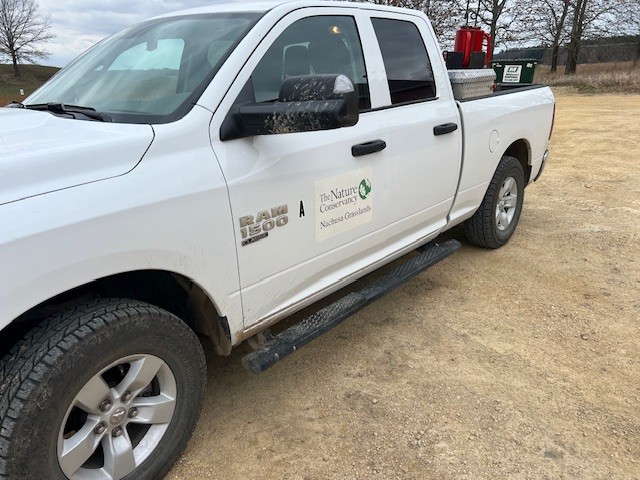
Above, this half ton 1500 Ram has a GVWR of 6,800 pounds, noted from a sticker inside the door. But this truck can only pull a total of 10,660 pounds reads the manual in the glove box. That 10,660 pounds includes the trailer weight empty and its payload. It can easily pull one UTV with a pump loaded with water. I will get back to this point later.
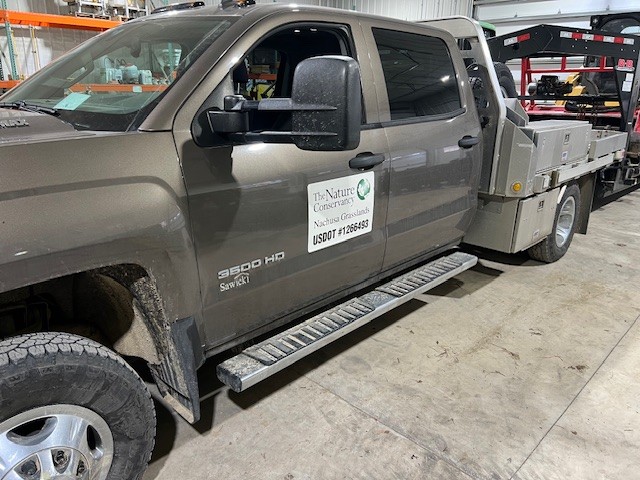
This much bigger 3500 truck with diesel motor, heavy duty towing package and heavy duty transmission, and dual rear wheels has the same GVWR of 6,800 pounds as the little 1500 Ram. But the owners manual states this truck can tow about twice as much weight at 22,600 pounds.
So if we are trying to stay under 26,000 pounds of GVWR: Notice the gooseneck trailer behind this brown truck above. That trailer has a GVWR of 20,000 pounds, the truck has a GVWR of 6,800 pounds So added together we are at 26,800 pounds. This is just into the weight of a CDL setup, which starts at 26,000 pounds GVWR.
That USDOT sticker on the door suggests this is likely a CDL setup. You can be driving this truck and trailer down the road with an empty trailer and you are still supposed to have a CDL. The CDL 26,000 pound limit is based on the GVWR, rather than what you have on the trailer. Now, I doubt you will have trouble from the police pulling an empty trailer or with something light weight like a UTV.
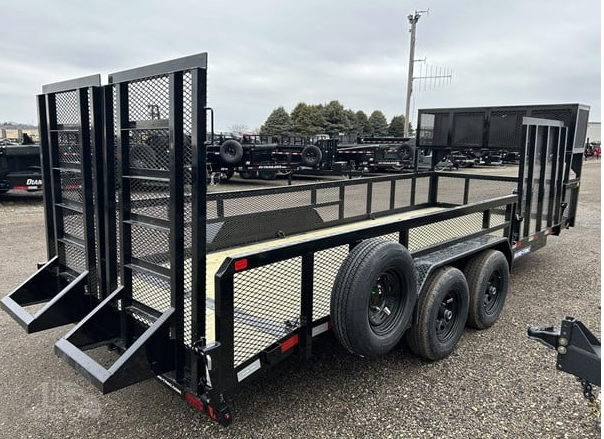
This trailer above we saw previously has a GVWR of 10,000 pounds. So you add that to the 6,800 pounds GVWR of either of the two trucks above and you are at 16,800 pounds. This is well under 26,000 so you don’t need a CDL. Remember the manufacturers decide the approximate GVWR of a truck and trailer.
This trailer comes in lengths up to 24 feet long which would fit two UTVs in length, and their weight of 1,500 pounds each, or 3,000 pounds for two, would not exceed the trailer’s 10,000 pound limit. Our 1500 Ram can pull 10,600 pounds. The two UTVs would weigh 3,000 and the trailer a few thousand pounds so the truck can pull them. You would still appreciate a bigger truck but the half ton can do it, but don’t push it. A half ton truck can pull one UTV easy. Two UTVs is asking for trouble.
Ok, so I covered the CDL and its relationship to the 26,000 pound limit for GVWR.
But there is more to this.
Don’t put a skid loader on a light weight trailer as in this example:
So you go to the dealer and buy a 10,000 pound GVWR trailer, hook it up to your 6,800 GVWR truck and then load it with your 12,000 pound skid loader. Is this legal? No, nor safe! A 10,000 GVWR is the trailer actual weight empty plus the load you put on it adding up to 10,000 pounds. Let’s say the trailer empty weighs 2,000 pounds so you have only 8,000 pounds you can haul on this 10,000 GVWR trailer. So your 12,000 pound skid loader is 4,000 pounds too heavy for this trailer. This is not safe or legal. Your trailer weight and cargo can not exceed the GVWR of the trailer.
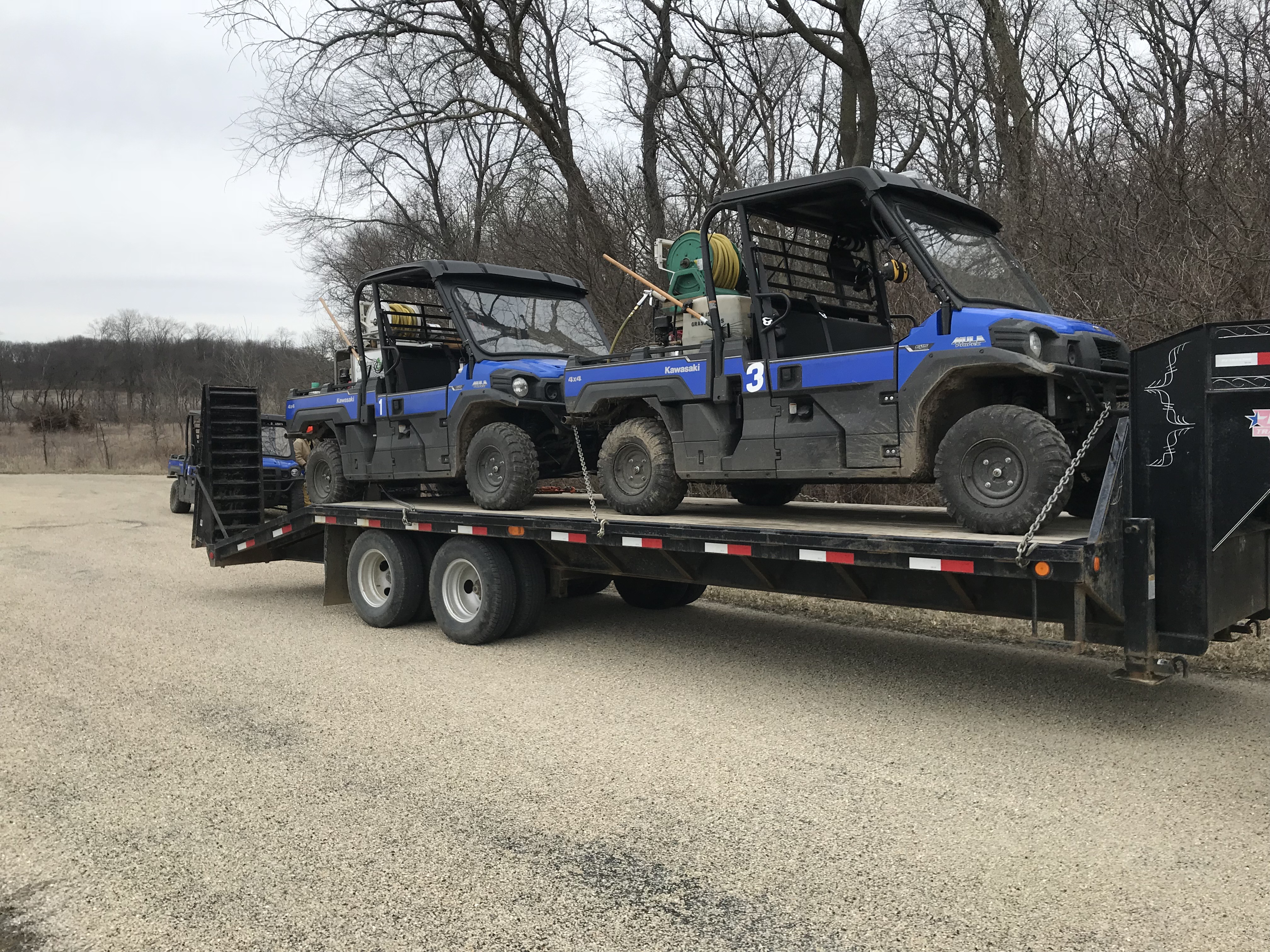
Let’s say you have a CDL. So you think you are clever so you hook up your 1500 Ram to a heavy duty trailer with a 20,000 GVWR. Is this legal?. You are pulling a heavy duty trailer that is heavy empty and then you have two UTVs with water. And you only have a half ton, 1500 Ram. The manual in the glovebox says your 1500 can only pull 10,600 pounds. One UTV weights 1,500 pounds with pump loaded with water, so two UTVs weigh 3,000. The empty trailer may weigh 5,000 pounds. (I notice the trailer manufacturers do not give the empty weight of their trailers, so you can guess or go to a weigh station.). So 5,000 plus 3,000 is 8,000 pounds. So your half ton truck can pull this load. You are legal.. I would not pull two UTVs with a half-ton truck.

Now here is a nice trailer for a 1500 truck. The trailer is mostly light weight aluminum, aluminum deck, two axles, with trailer brakes, and a ramp. The GVWR is 7,000 pounds. The trailer weighs perhaps 1,500 pounds (the trailer sticker does not state the empty weight) so it can carry a load of 5,500 pounds (7,000 minus 1,500 pounds). The UTV with its pumper tank full of water weighs about 1,500 pounds, so you are way under the load limit of the trailer. (In fact a single axle trailer could carry this light load.) And as we saw above this 1500 Ram can pull a maximum of 10,600 pounds so you are also good on the total weight your truck can pull.
So a half ton truck can easily pull one UTV pumper unit.
Trailer axle capacities: This little trailer below is a nice setup because it is easy to tow. It is short at twenty feet long, and easy to load and unload and strap down. It is easy to store when you are not using it because it is not a long trailer. It is easier to drive in traffic.
This trailer has two 7,000 pound axles. Is this heavy duty enough for a 14,000 pound skid loader with mulcher head? Nope. If you have two 7,000 pound axles you add them to get 14,000 pounds and subtract about 5,000 pounds for the weight of the empty trailer. So this trailer’s axles can only carry an additional 9,000 pounds. The big skid loaders with no tool weight about 12,000 so the trailer axles of this trailer are taking way too much weight. We currently have retired this trailer from skid loader hauling. We will trade it in for a trailer that will have the heavy duty axles, perhaps two 12,000 pound axles, which is a 24,000 pound trailer. The trailer will otherwise be the same.

So this has been a long article. A few summary points.
Towing a single UTV on a proper size class of trailer can be done with a half ton truck.
Don’t let newbies tow anything without instructions.
Walk around the truck and trailer to look for mistakes. Check lights, trailer brakes, safety chains, and tire pressures.
Towing Skid Loaders typically requires a CDL and CDL sized equipment. Don’t let novices tow such heavy equipment.
Skid loaders have become bigger and heavier with more horsepower to run brush mowers and such. A skid loader with a brush mower attachment might weigh 12,000 to 15,000 pounds! Your trailer needs to be rated to hold this weight. Your truck needs to be rated to pull this weight plus the weight of the trailer.
Towing is challenging. Read your manual. Poke around for good tutorials on the internet. Leave me comments to improve this post.
Be safe out there.


 grassland restoration network
So you could pull two UTVs (3,000) on your 10,000 trailer hooked up to your 6,800 diesel truck (that is rated to pull more than that) and you wouldn’t need a CDL correct? I believe that would bring you only to 19,800.
I updated my post to try to answer this. You could pull it with either truck. The bigger one would feel better. Your GVWR would be 16,800 (10,000 + 6,800). So you are well under CDL. There are two things here. The GVWR is the weight allowed on top of the truck or trailer. But each truck has to pull the load too. That pull capacity, or tow capacity, is big enough on the smaller truck to do the job. But the big truck pulls it much easier. Your 19,800 number is confusing. You are mixing the weight a truck and trailer can hold with what the truck can pull.
The tow capacity is likely a function of how big the motor is, and how heavy duty the transmission is.
The GVWR is likely a function of how thick is the frame, how stiff is the deck, how thick are the tires, how thick are the axles? Like how many cement blocks can you stack before the trailer collapses?
Thank you for writing this! We recently went through learning this when ordering a new trailer for employees with a Class D drivers license. One item to add to the topic is that if you find a trailer you like (due to length or function), ask the trailer salesman/manufacturer if they can ‘D-rate’ a trailer to reduce the GVWR.