Mike Saxton – Shaw Nature Reserve – Gray Summit, MO
Last week we sowed around 1,200 pounds of seed from 302 species over 46 acres of ground at Shaw Nature Reserve. Most of that seed went into a 42 acre planting as part of our 120-acre, 3-year Wolf Run Grassland Restoration Project. Here are some lessons learned from this year’s sowing.
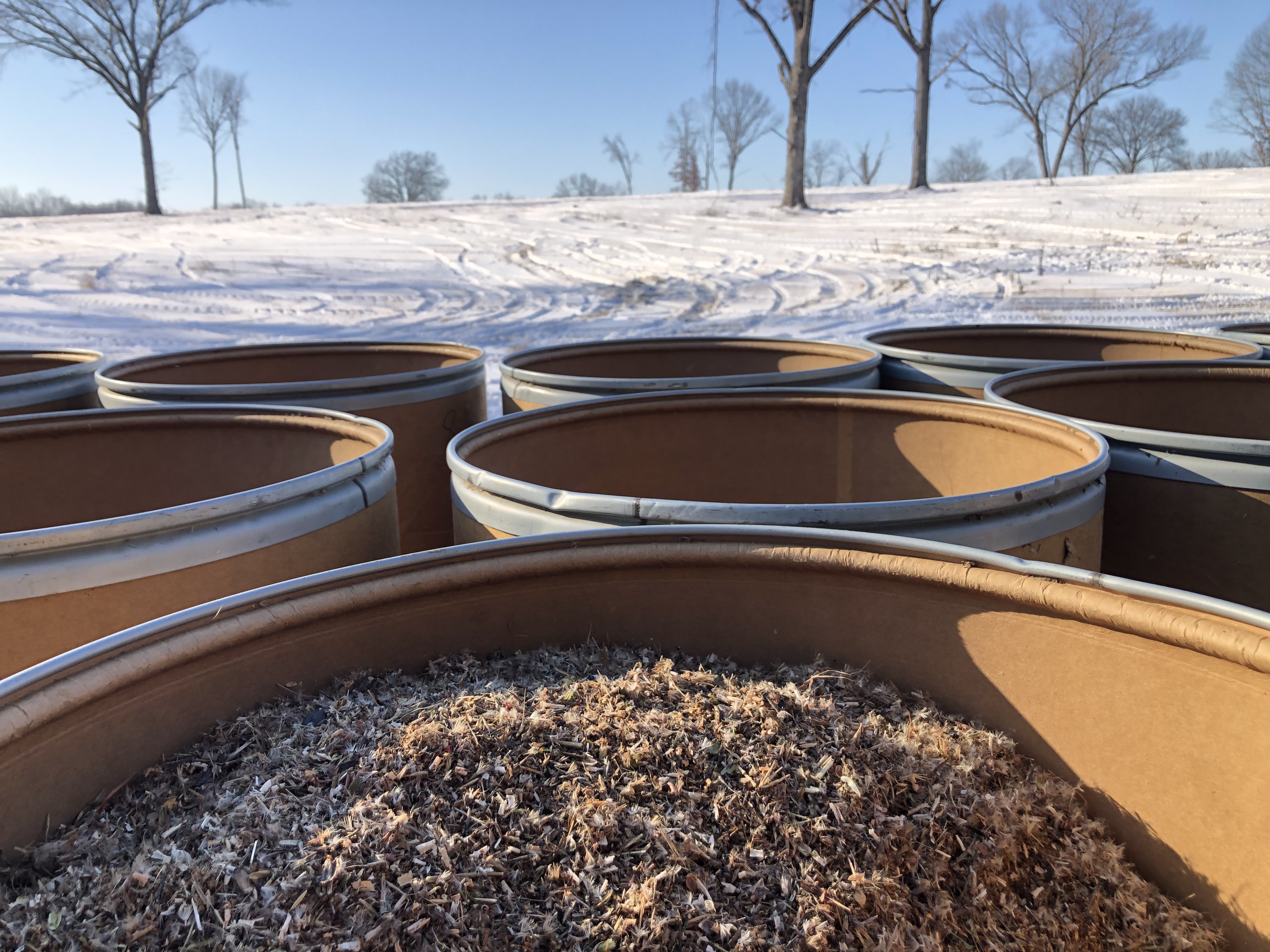
Sowing in snow – is it possible to sow seed without snow? Of course. You can follow the rows if you are planting into corn stubble. You can use cones or flags if you’re planting into bean stubble. You can use GPS apps (which, of course, have course resolution, usually something like 10 – 30 ft if using a cell phone). But snow allows you to sow seed very evenly and methodically.
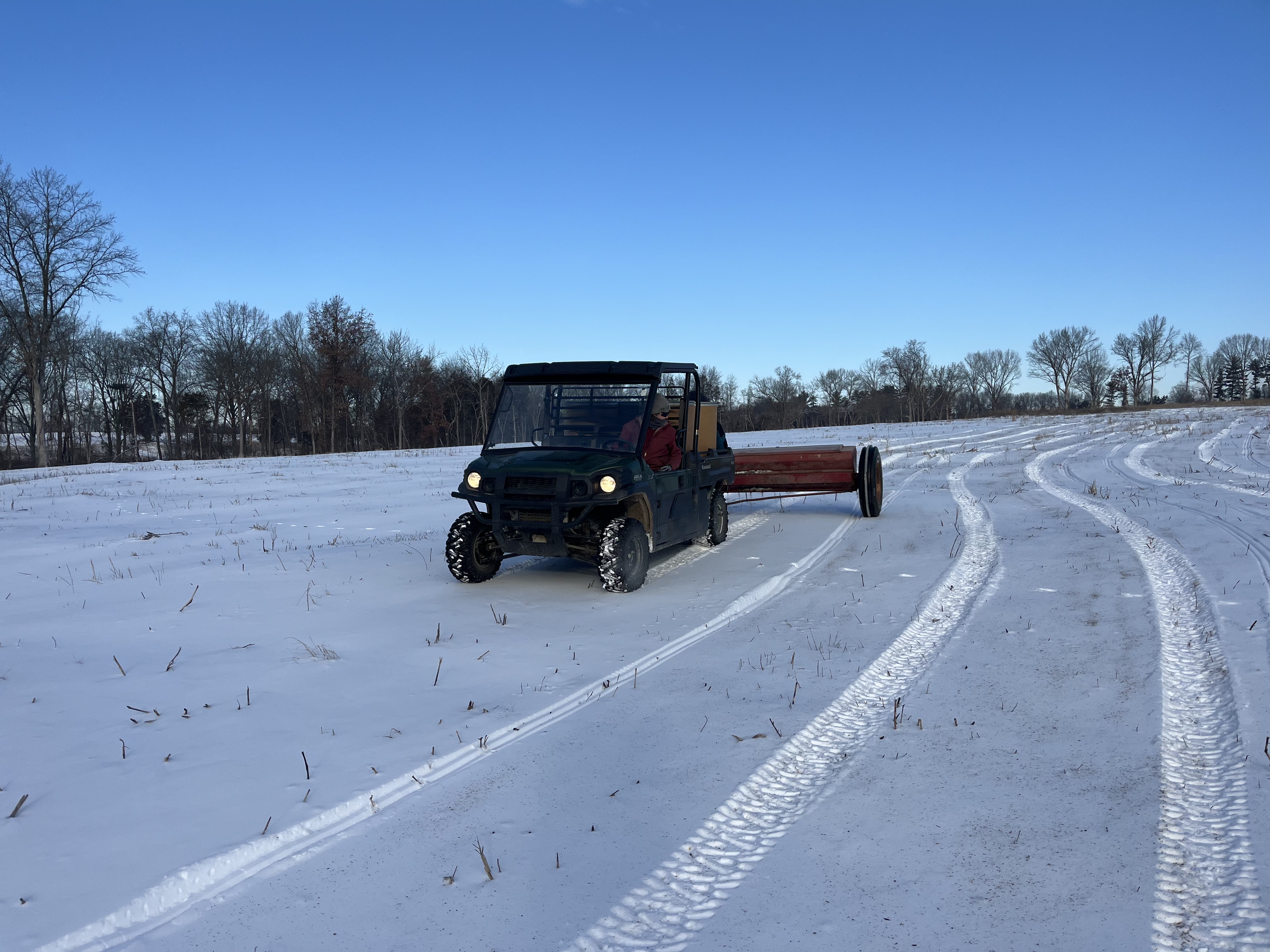
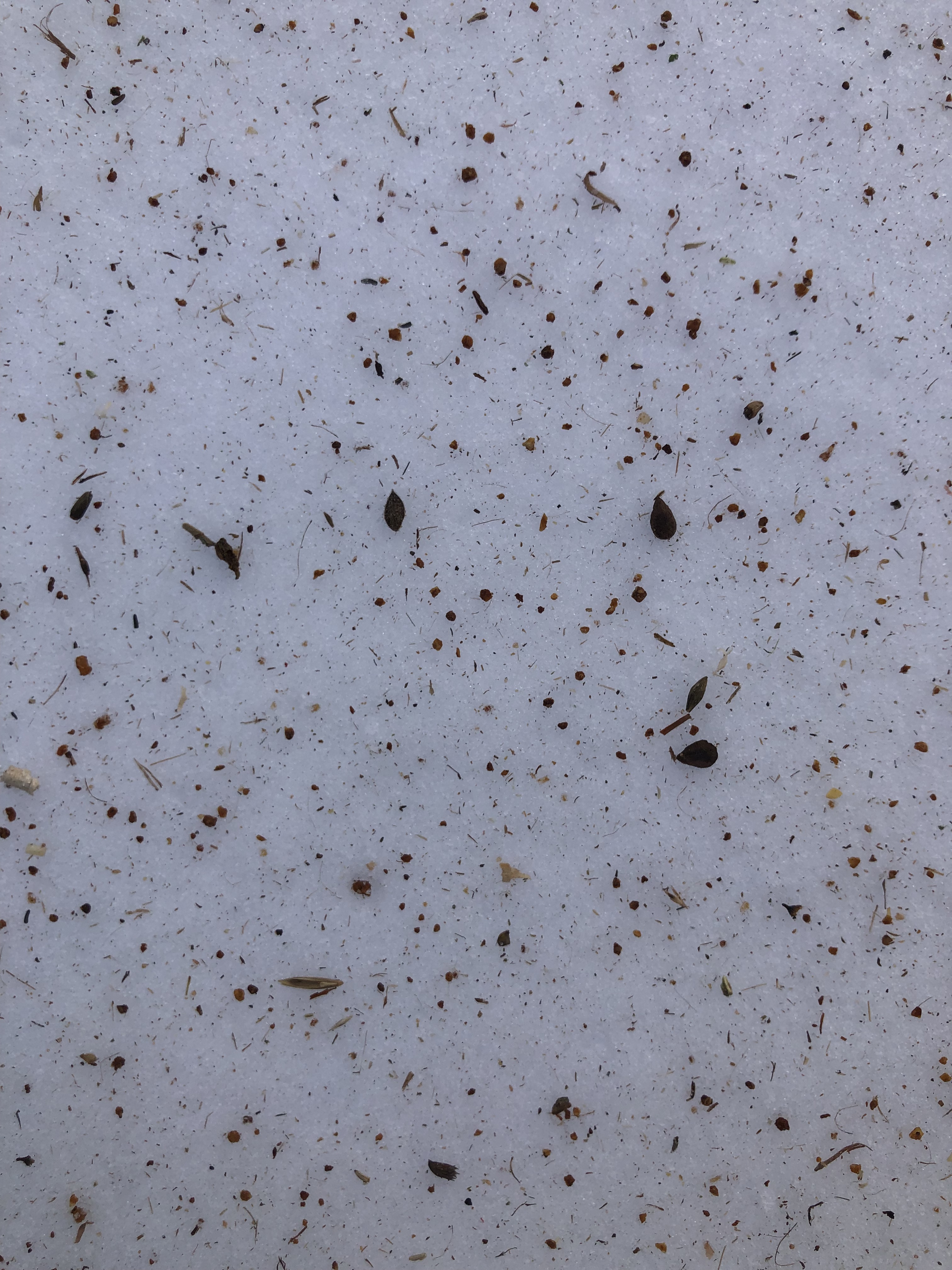
If not sowing into snow, consider driving your seeding unit over clean white paper to see the seeding rate and coverage:

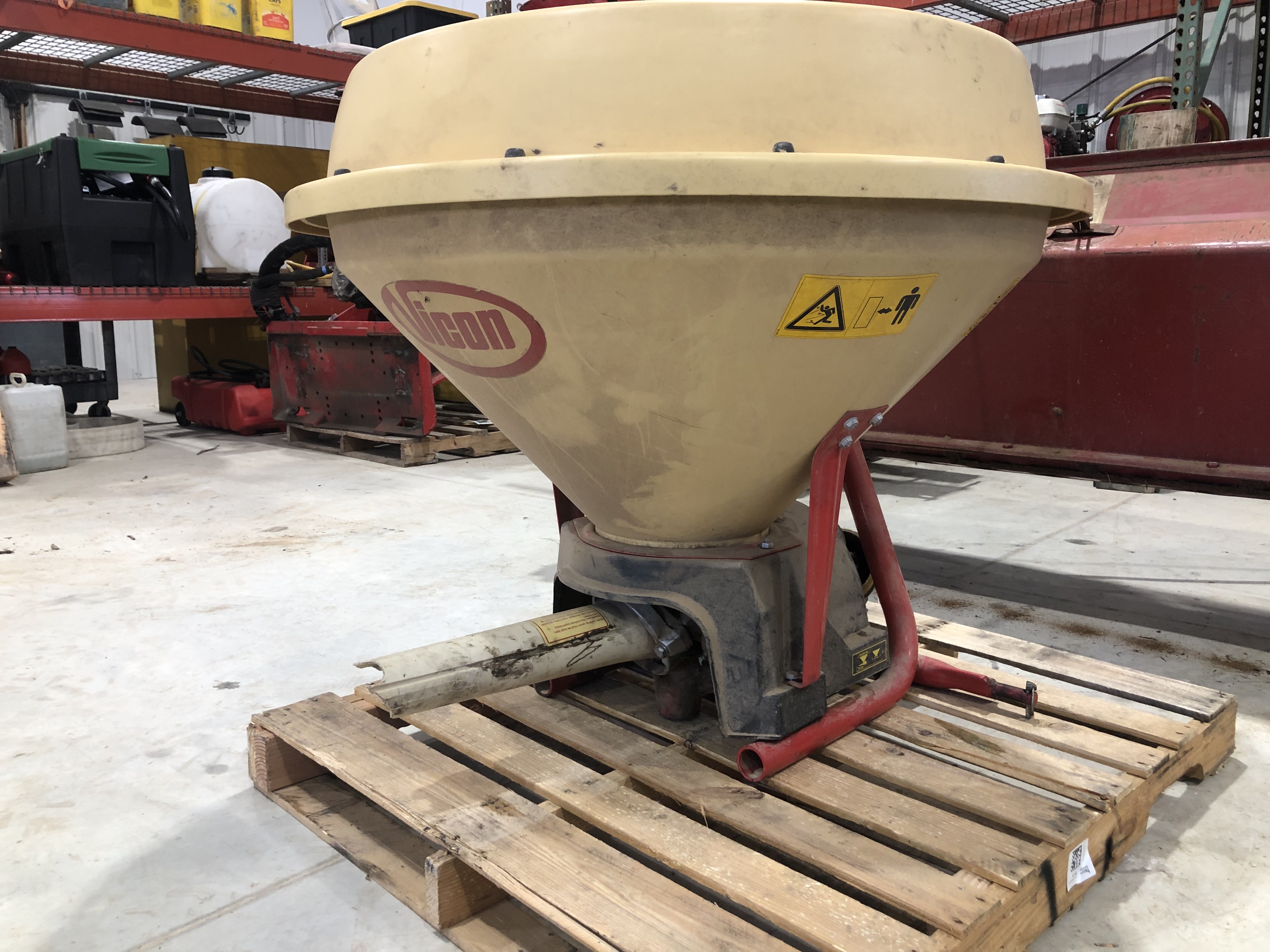
We used 3 different seeders to plant 42-acres:
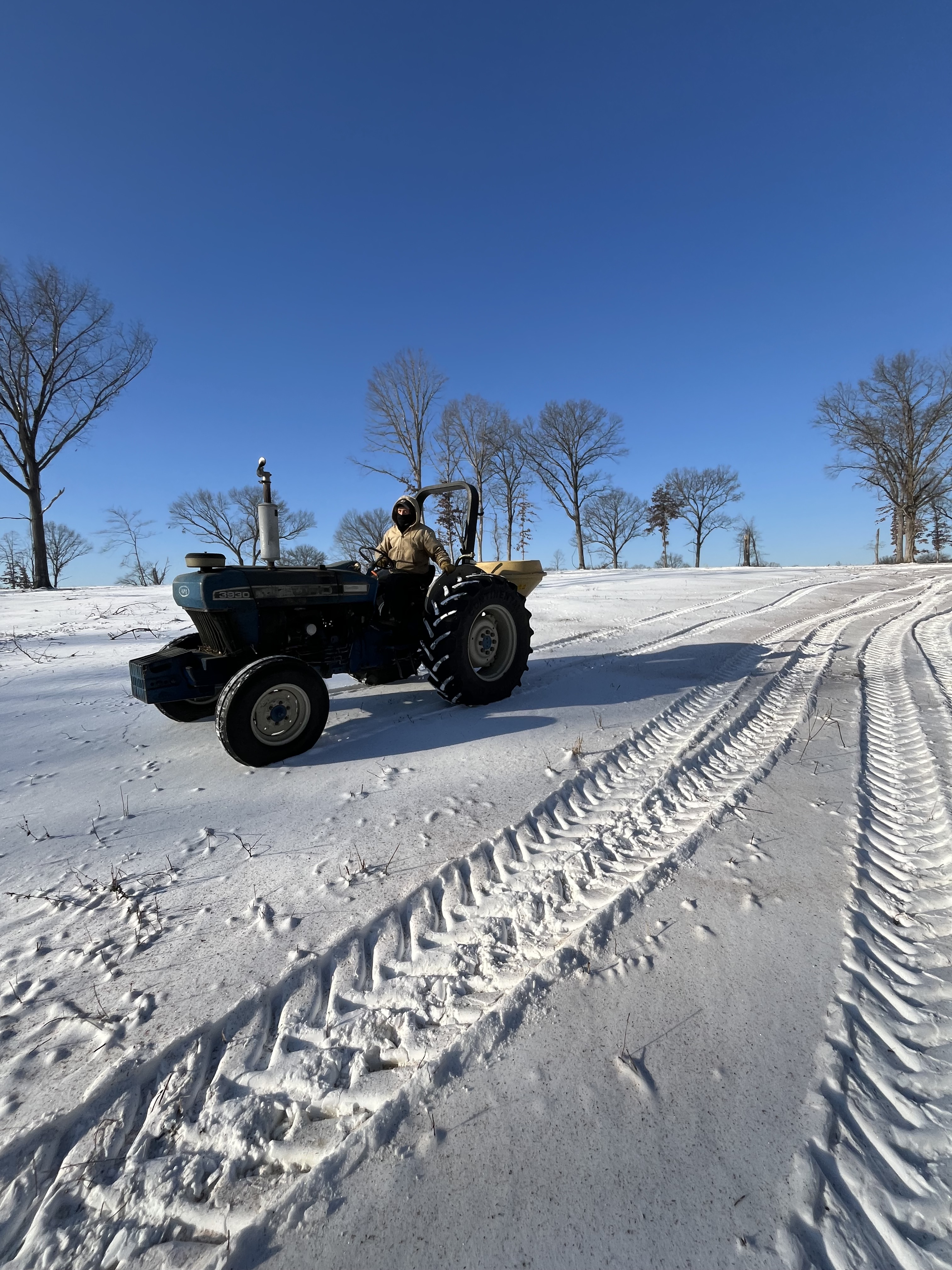
Vicon Pendulum – Tractor PTO – I ran this in Low-4 at 1,600 RPM. Most of my passes were at an aperture between 18 and 32. Pro: I love that the operator can easily open and close the aperture from the driver’s seat. It’s very nimble and has a good, even spread. Using a tractor is great because you can set the throttle and maintain a very consistent ground speed. The seeder is really hard to clog (our unit has an agitator) Cons: it’s cold with no cab! Also, the PTO continues to sling seed if you stop or slow down (unlike the pull behind units). The Mules can hold 5 barrels of seed, so you’re set for a few hours of seeding. With the Vicon, you have to refill frequently from a nearby trailer.

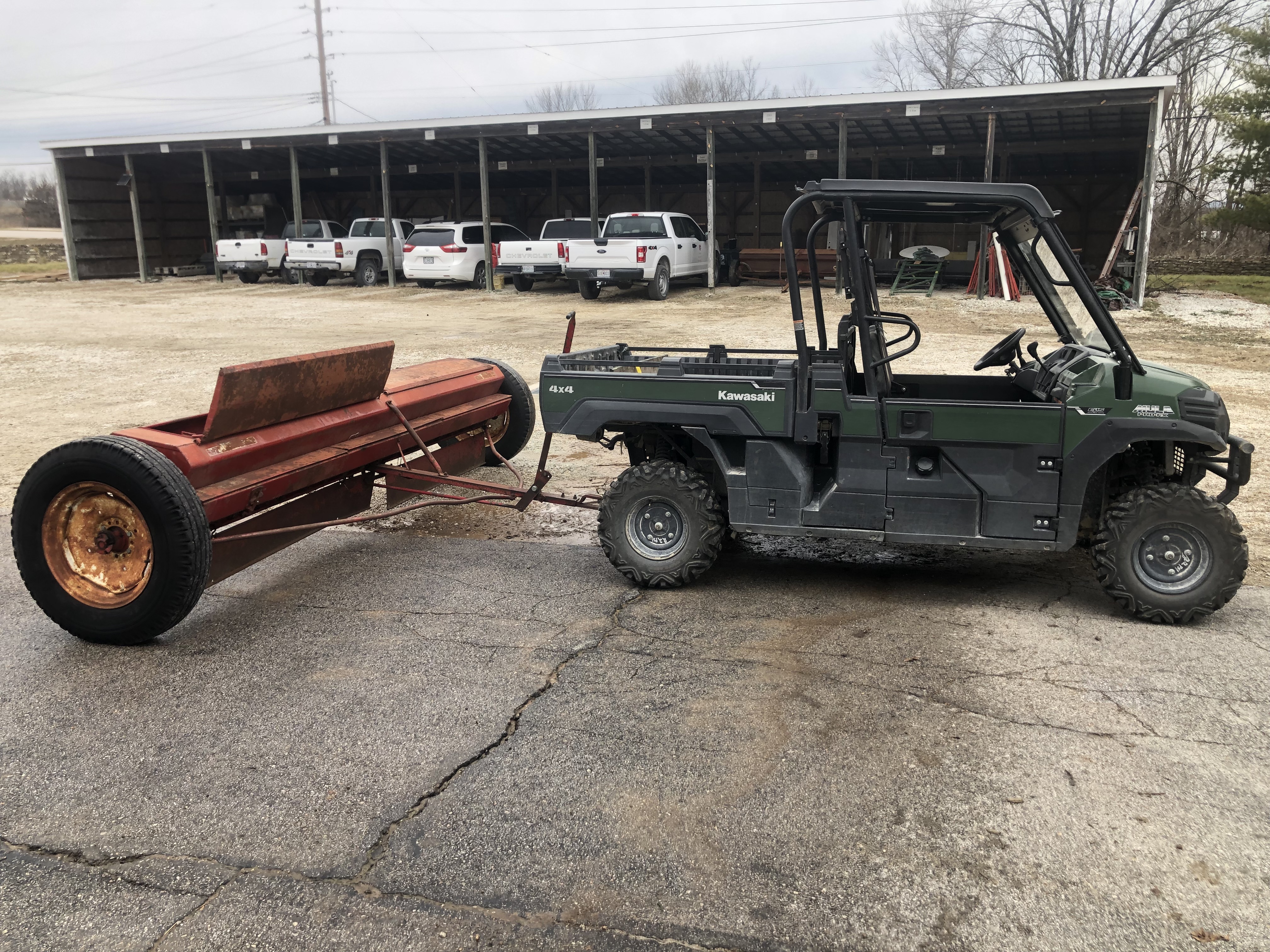
Drop Seeders –
15ft wide International. Brought it for $750 or so off craigslist. Pulled by a Kawasaki mule pro fx. Most runs were at 70% open aperture. Pros: it is wide and covers a lot of ground. High ground clearance. Only drops seed when you’re moving. Offers a pretty uniform pattern. Holds about 2.5 barrels of seed. Cons: with tires, it’s 17ft wide! We have gates and culverts through/over which it cannot traverse. So we have to haul it out on a trailer and unloader/reload with a skid loader. Lots of effort to get it out and sowing ready.


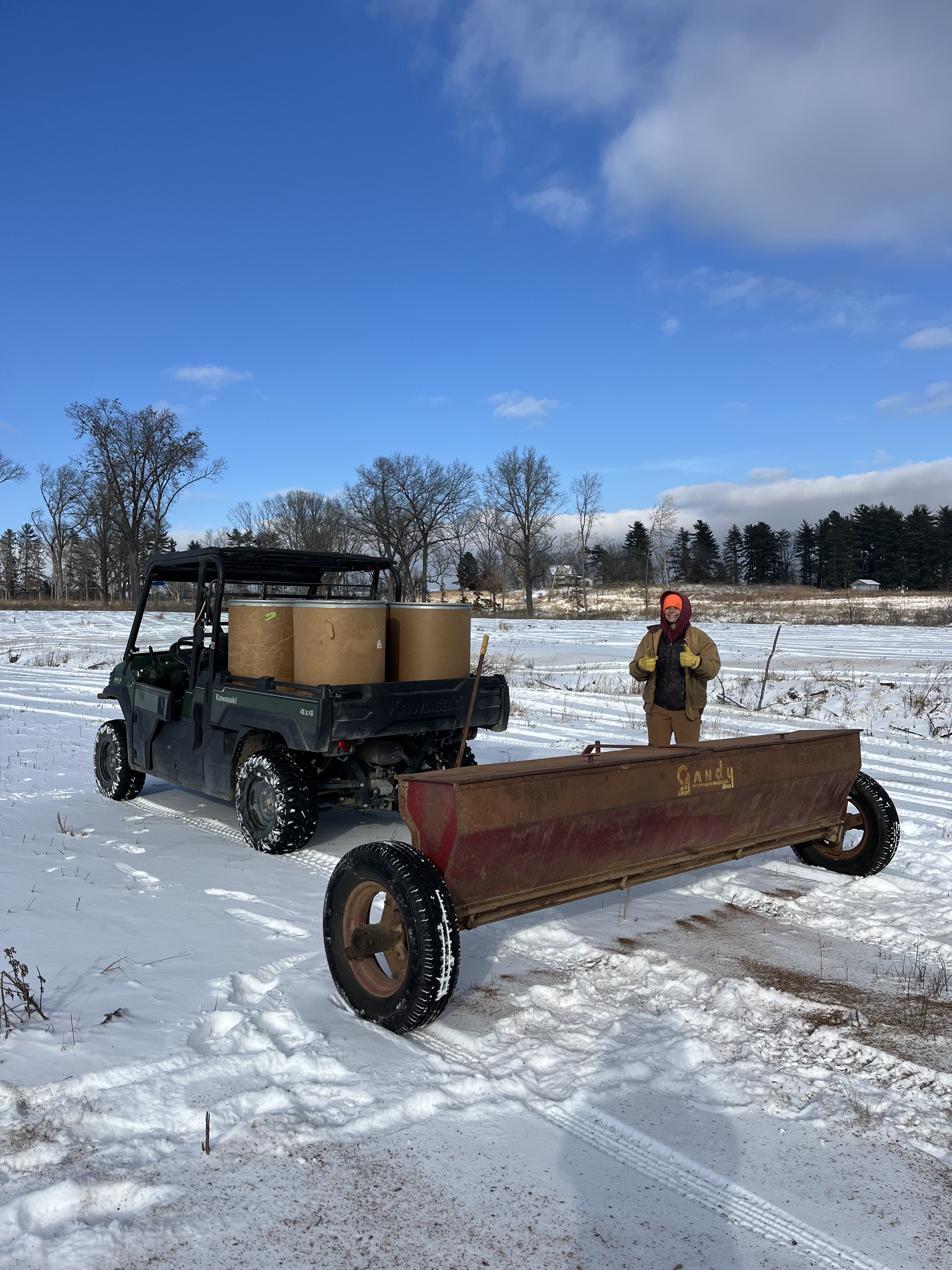
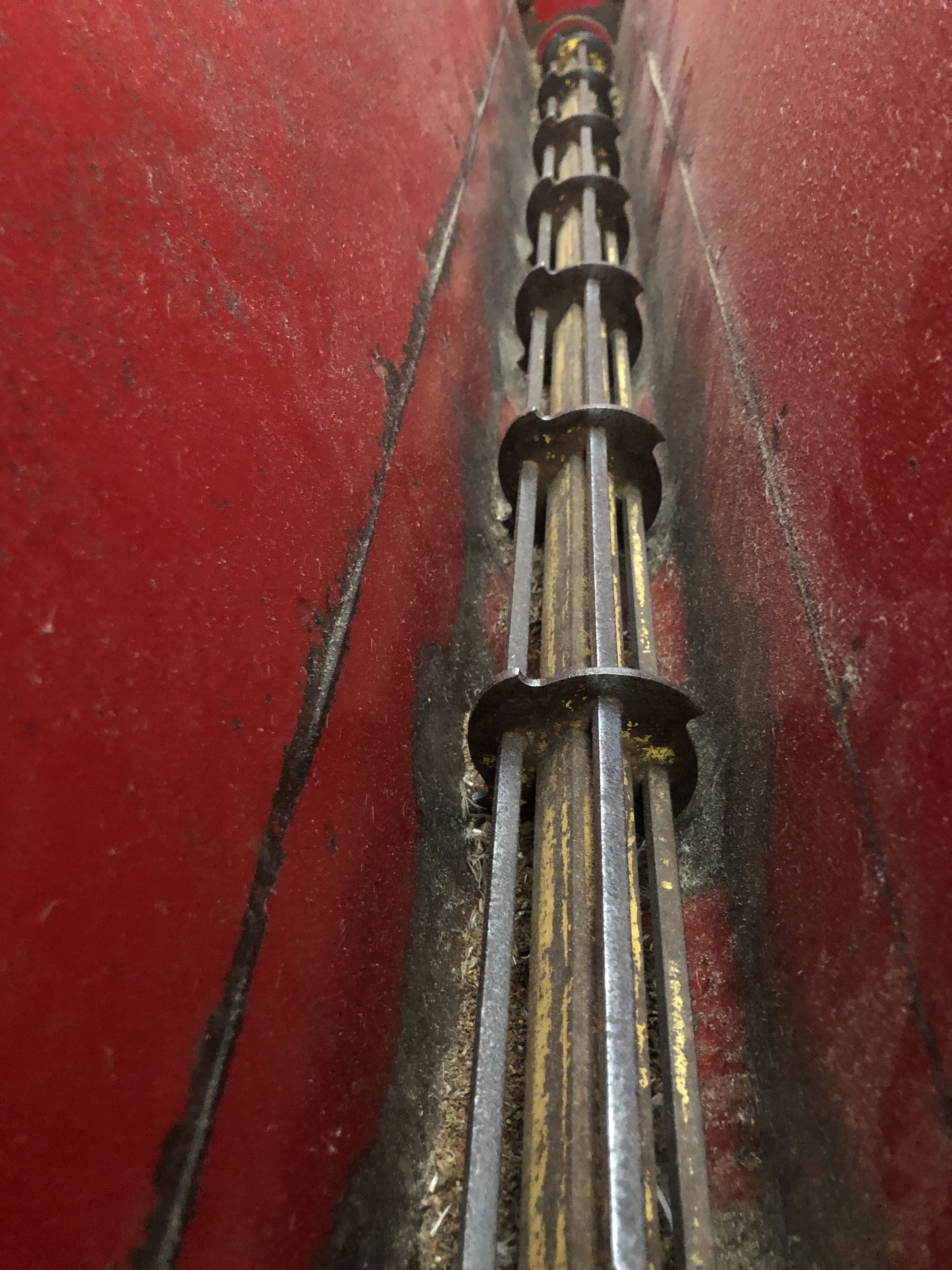
10ft wide Gandy. Bought if off Craigslist for $350. Very good condition, hand been stored inside. Came with new tires. Pro: at only 12 feet wide with tires, it easily passes through gates, over bridges and culverts. Fairly nimble, can navigate around trees. Con: I did not know when I purchased this that it is set up for pelleted, granular fertilizer. It does not have the big toothed auger. It really does not push through the chaffy seed like we want. Even with the aperture full open, not enough seed comes out. Possible fix: we’re going to affix some wide, sturdy zip ties to the auger and snip them short (1in) so that they’re stiff and rigid. We hope this will help push the seed out of the bottom of the seeder.
Seed Filler – if you’ve ever bought pure live seed from a seed vendor, you then face the question of how to cut it, what filler to use, how do you make a small volume of pure seed cover many acres.
Last year we got some “seed trash” from a seed vendor. The “trash” is all of the chaff left over from their cleaning process. It’s a byproduct that does not have a lot of value to them. Pro: often times you can get it for free. Lots of volume, which is important if you’re trying to stretch out pure seed. Con: there is no guarantee that you do not get unwanted species like ashy sunflower, Johnson grass or lots of big bluestem or indian grass. Also, the “trash” can be really stemmy and you might have to process it further so that it’s clean/small enough to pass through your seeder.

This year we purchased dried distiller’s grain from a big ag services company. 2,600 pounds for $300. Two cubic yard super sacks. Pro: not dusty at all. Even, uniform texture. Passed very easily through our seeders. Cons: very heavy! A “normal” barrel of milled mixed seed weights something like 50 pounds. Mixed seed with the distiller’s grain weighed around 100lbs. Took two people to load the seed into seeders. The material is very dense and sometimes settled to the bottom of the seeders maybe more than a fluffy chaffy might have. Did we get an uneven sowing?


Next year we might consider using rice hulls. Should be much lighter and still pretty cheap.
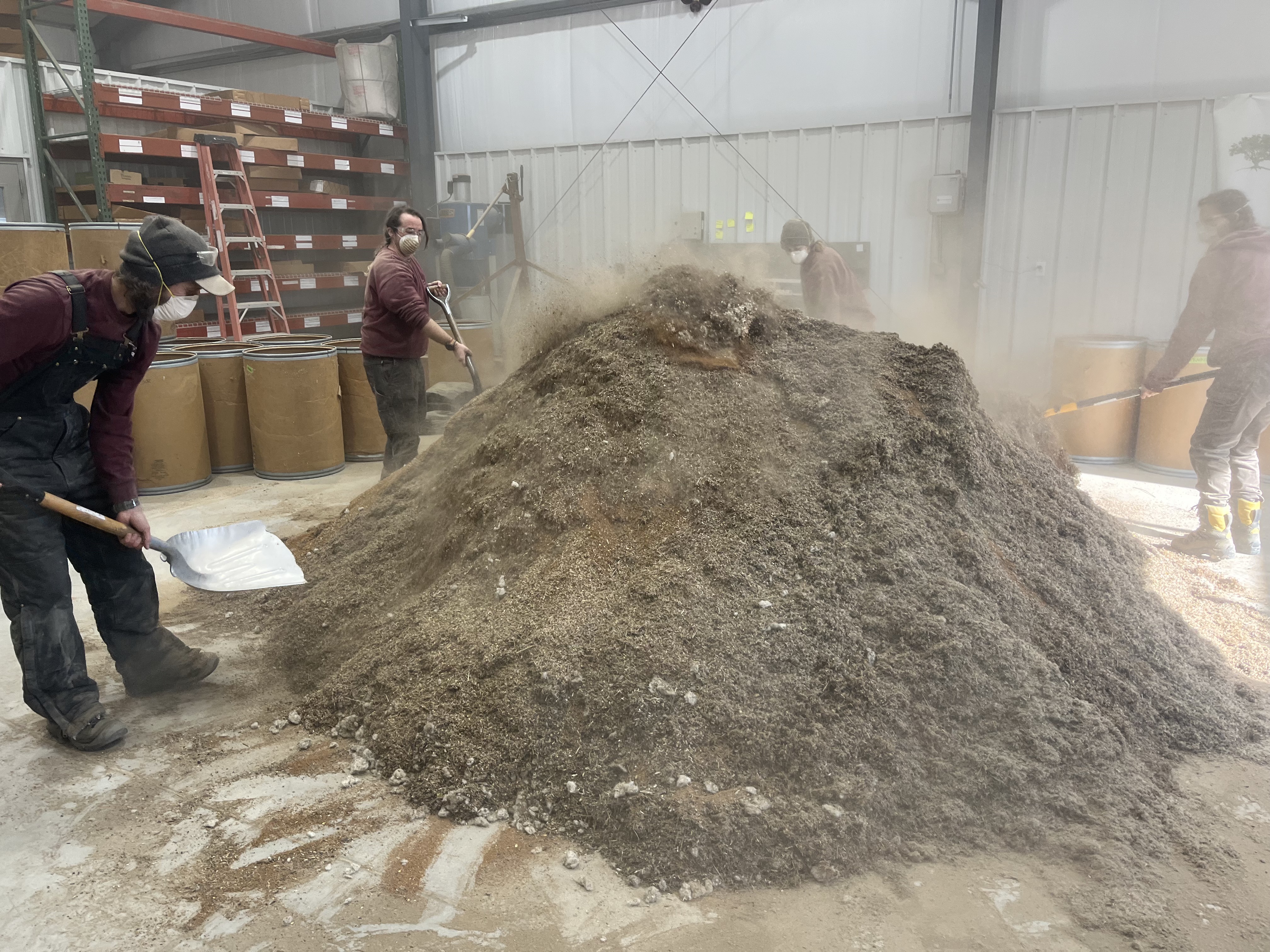
Mixing seed
Concrete floor is best. Mixing on a tarp works. Could we have used a skid loader bucket to churn seed? Maybe. Are there other ways to mix seed other than shovels and pitch forks, probably. Wear a mask and have exhausts fans!! Always, always label things clearly.


 grassland restoration network
Great job especially your pros and cons. We’ve done similar but on a smaller scale. Purchased a used broadcast seeder but found cross cut paper shredded was more useful than rice hulls. This Northwest Illinois area has been getting very minimal snow past few years. Good luck!
How does cross cut paper shredder compare to rice hulls as a carrier? Please tell more!
just brighter white easier to see and not so bulky so slips through easier? Easy to mix with seed/chaff for us. Plus much cheaper!! But whatever works for you!
I’ve used horticultural perlite successfully. It’s bulky, light, and I felt its particle size and density suspended the small and large native seeds effectively. It was sowed through a PTO driven tractor broadcast spreader. I purchased it from Conserve and it came in easy to use 4 CU FT bags.