By: Mike Saxton – Manager of Ecological Restoration and Land Stewardship at Shaw Nature Reserve
Across the Midwest, many prairie restoration efforts seek to transform degraded pastures or row crop fields into robust and vibrant plant communities. In this post-agricultural context, restoration practitioners typically utilize standard ag equipment like harrows, discs, boom sprayers (PTO driven from tractors or electric sprayer rigs in the back of a UTV) for site preparation before planting.
Areas of former ag usage usually are hazard free (rocks, stumps) and can be readily and safely traversed by standard equipment. But what do you do with a 40 acre field of stumps that you want to restore to prairie? When conventional spray equipment cannot be used, new tools are needed. Enter drones.

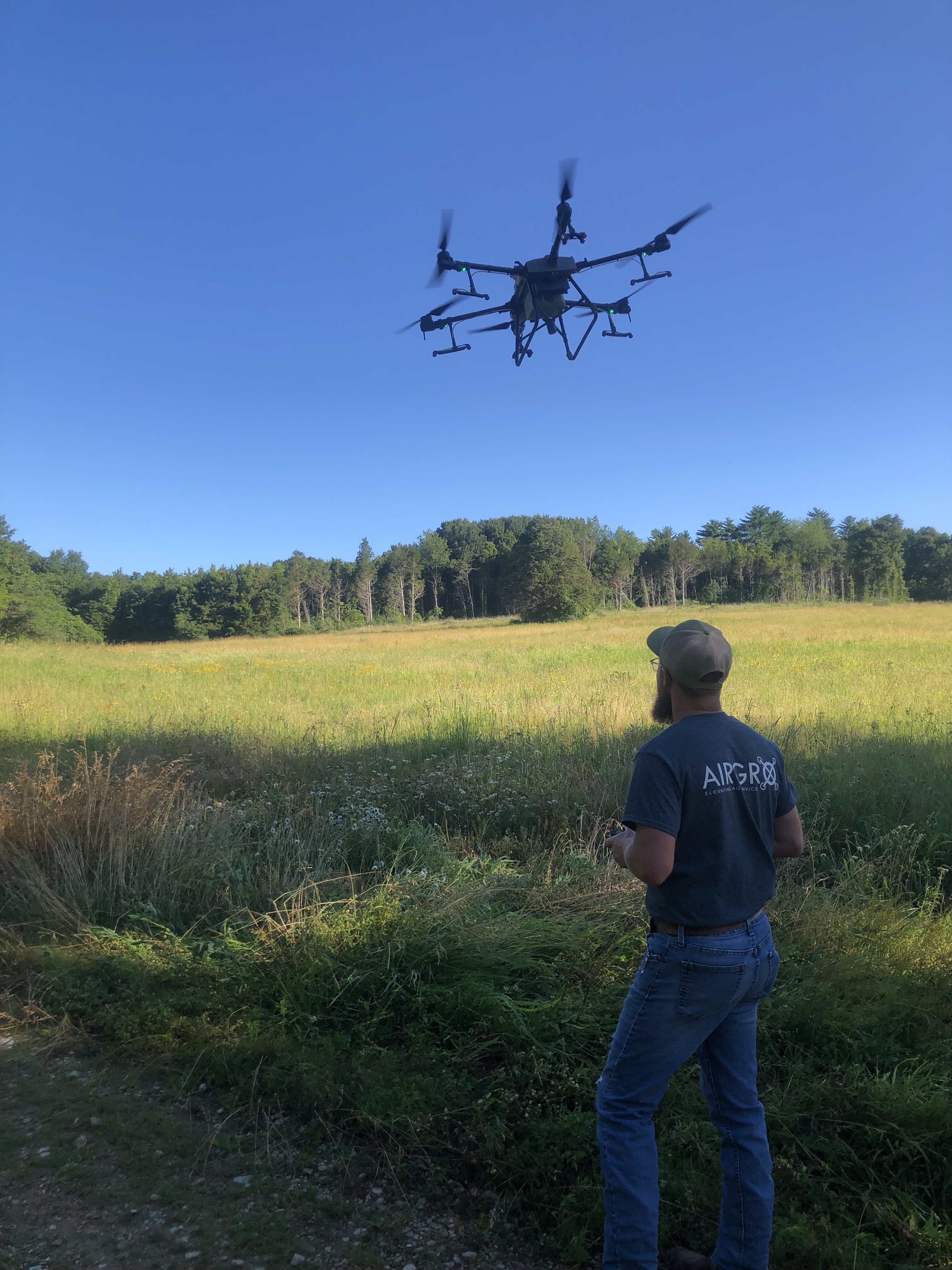
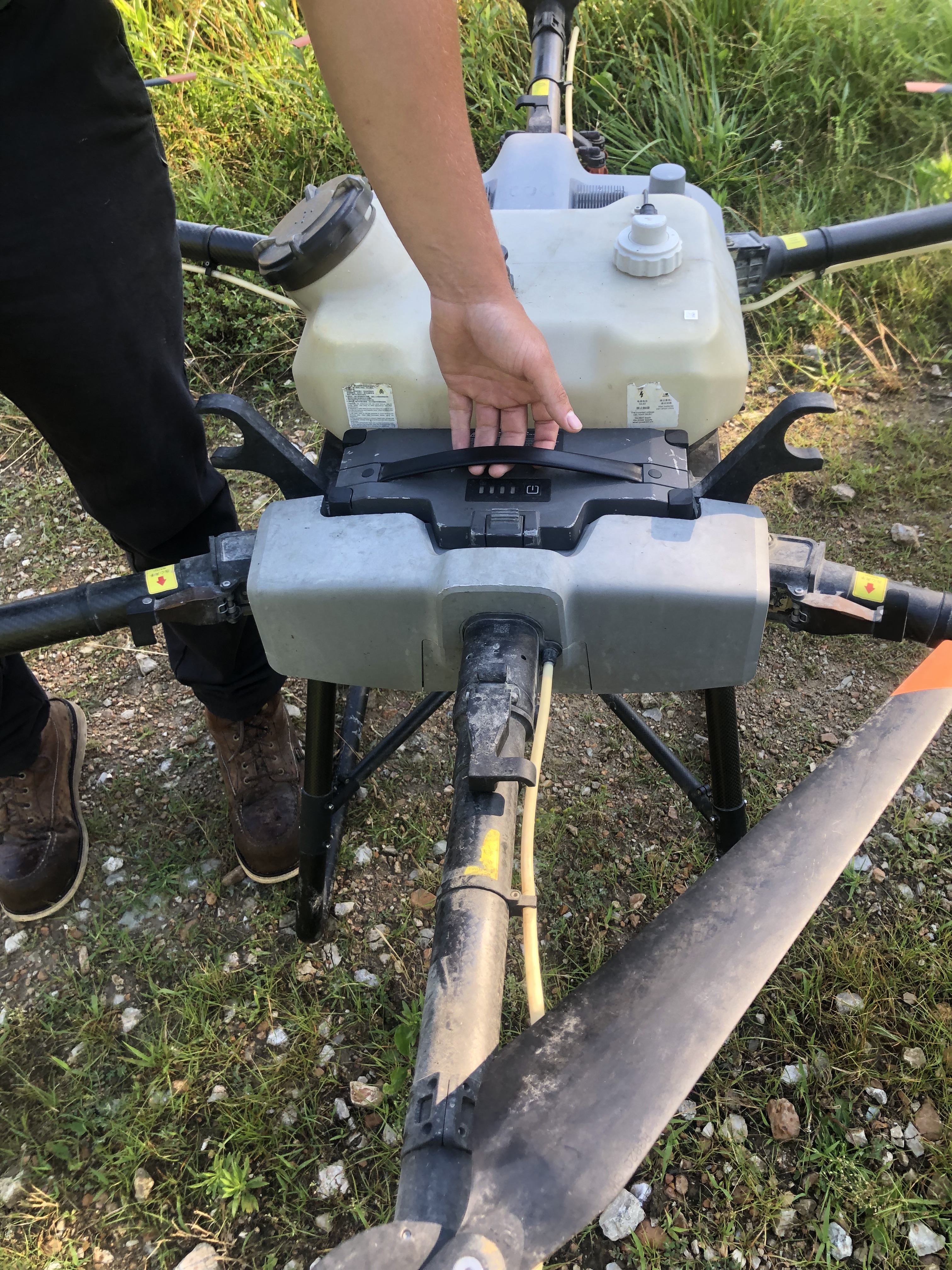
With the help of a contractor, drone herbicide application of invasive species and for general site preparation for native seed addition was completed in a stump-filled 40 acres that we will plant this winter.
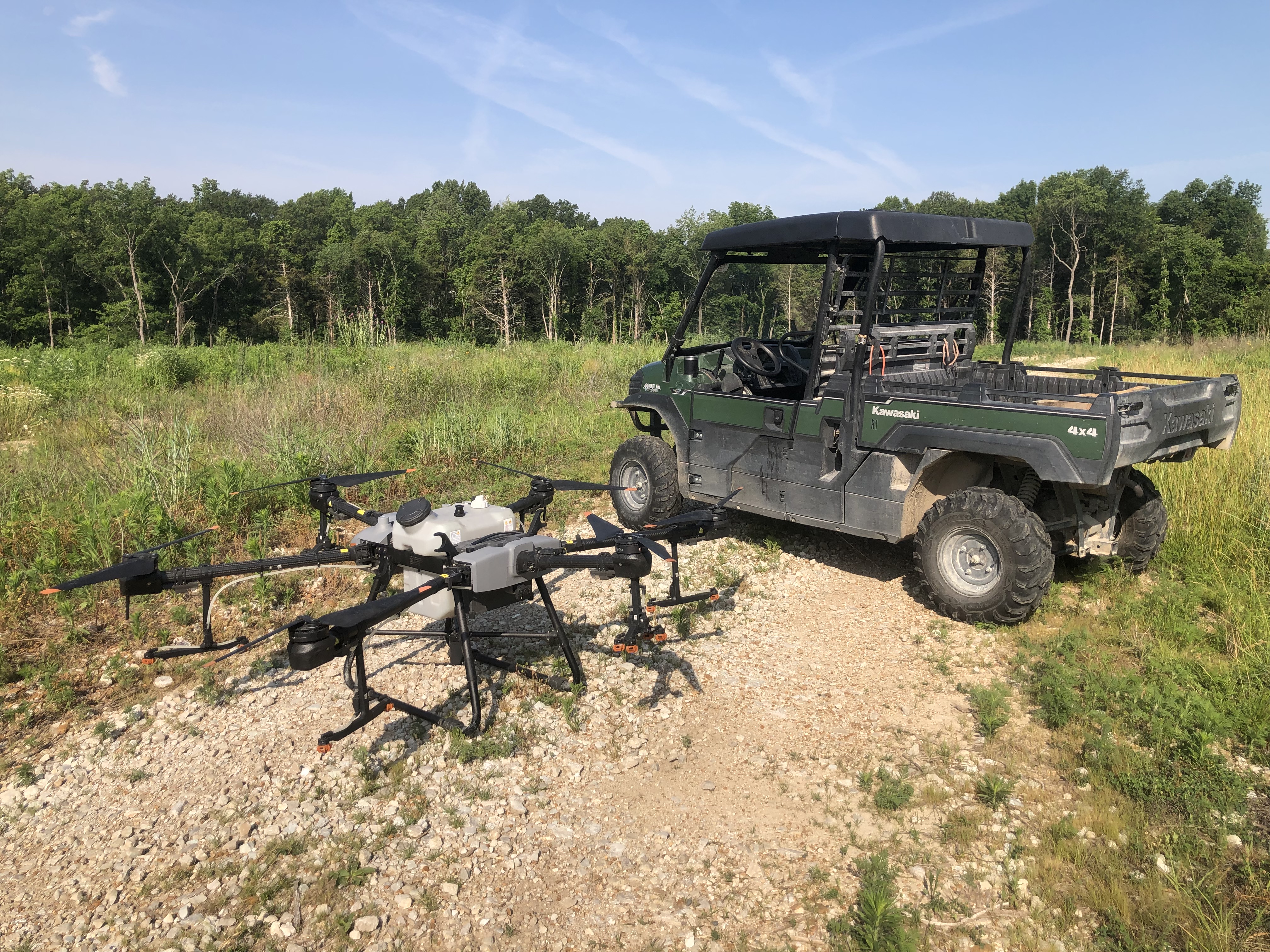
Drone specs:
- About 12ft wide from propeller tip to propeller tip
- Carries 8 gallons of herbicide
- Usually sprays 3 to 4 gallons per acre (mix is at a high concentration and within the label)
- Drone has a 7.5 min flight time
- One battery takes 6 minutes to charge
- Drone can identify and avoid hazards
- Drone flies a grid, knows when it runs out of herbicide, and automatically returns to fill up location where staff refills. The drone flies out and picks up where it left off.
- Drone flies roughly 12ft over top the vegetation.
- Treatment width per pass is roughly 25ft
Drones thrive where conventional equipment can struggle:
- Fields with high tension power lines
- Small, odd shaped fields in a forested landscape
- Post-logging areas with high density of stumps
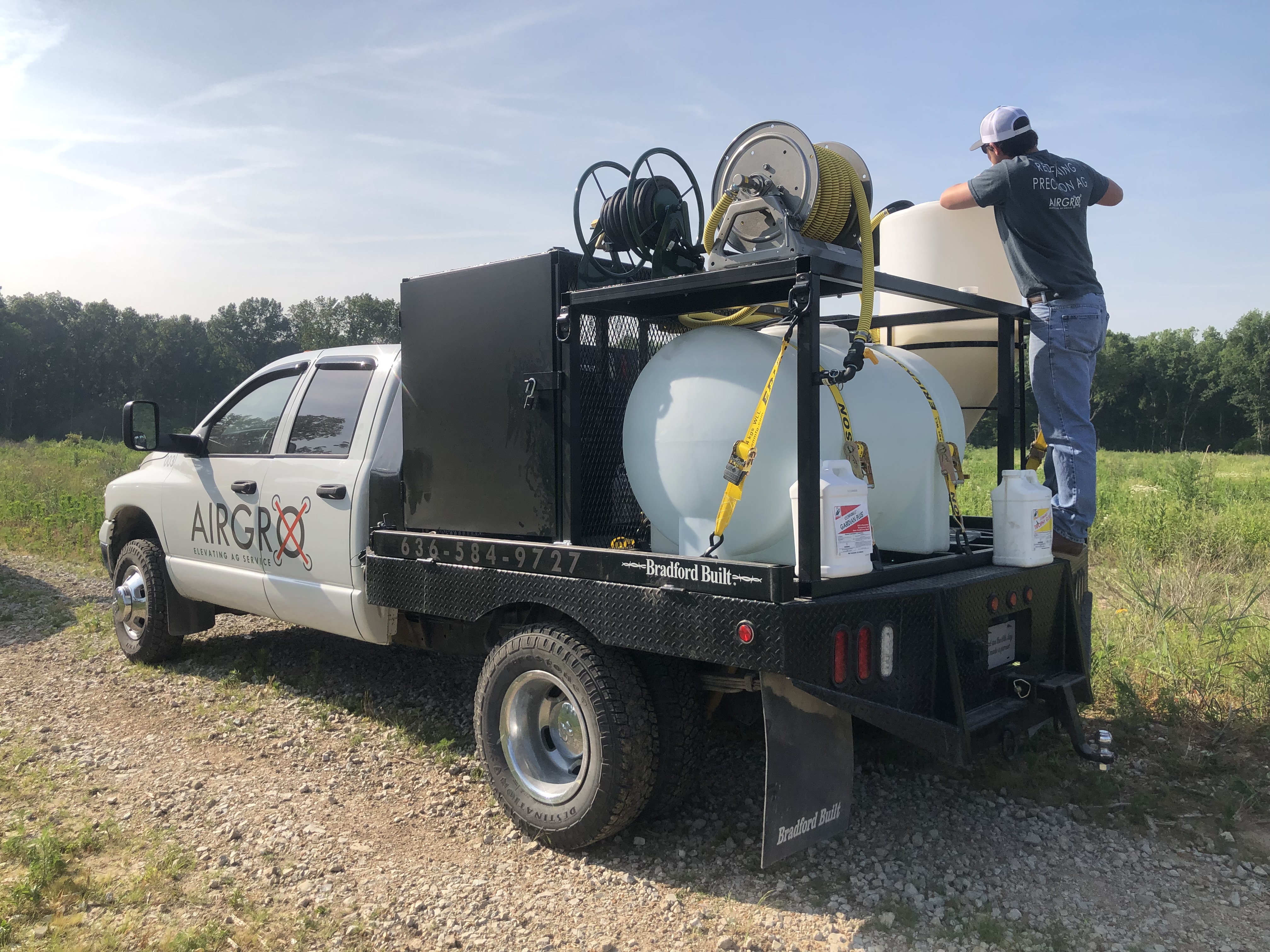
We provided the herbicide to the contractor and the rate for the drone to fly was somewhere around $36/acre.


 grassland restoration network
Mike, it is great to see your name. And great to see drone spraying in restoration advancing. Was this essentially complete boom spraying of an area but with a drone, or spot application? Jenny Flexman
Great to hear from you, Jenny! When I showed Bill Kleiman this post, he said, “10 years from now drones will be spraying weeds for us.” We’re not there yet of course but I just went into Google Scholar and searched “drones invasive species machine learning” and also “drones invasive species herbicide” and there is a lot of research going into these topics.
The area we treated was more boom spraying. These areas were mostly open fields 70 years ago but they were “let go” to undergo old field succession. Pre-clearing, the cedar-thicket floor was mostly barren. Areas of ash/shingle oak/elm might have had 8 ruderal species occurring there. After clearing, we’ve had most of the generalist Ag weeds (mare’s tail, fire weed, ragweeds, but also lots of Japanese brome and fox tail) come up. We’re spraying these areas out before adding around 30 lbs of bulk/milled seed per acre from 250-300 species of plants. Exciting stuff!
Very cool! Could you explain how it only takes 3-4 gallons of herbicide per acre? A higher concentration means less coverage needed?
Seems like a great way to limit exposure and also potentially reduce amount of chemical needed.
Kevin,
The first part of the reduction you see is the use of the aerial portion of the label. The second and most interesting part we are seeing in the industry along with the chemist is that, even though some herbicides still require big carriers, most are just effective at a lower rate. Labels will eventually adapt and we see that process starting.
The benefits that you point out are among several that drone application provides. It’s been a rethinking of how things have been done and what we have always been told.
Thank You,
Nathan Parmentier
President, Airgro LLC
airgro@outlook.com