
By Nathan Burmester, Coastal Plains Stewardship Manager, The Nature Conservancy, North Carolina
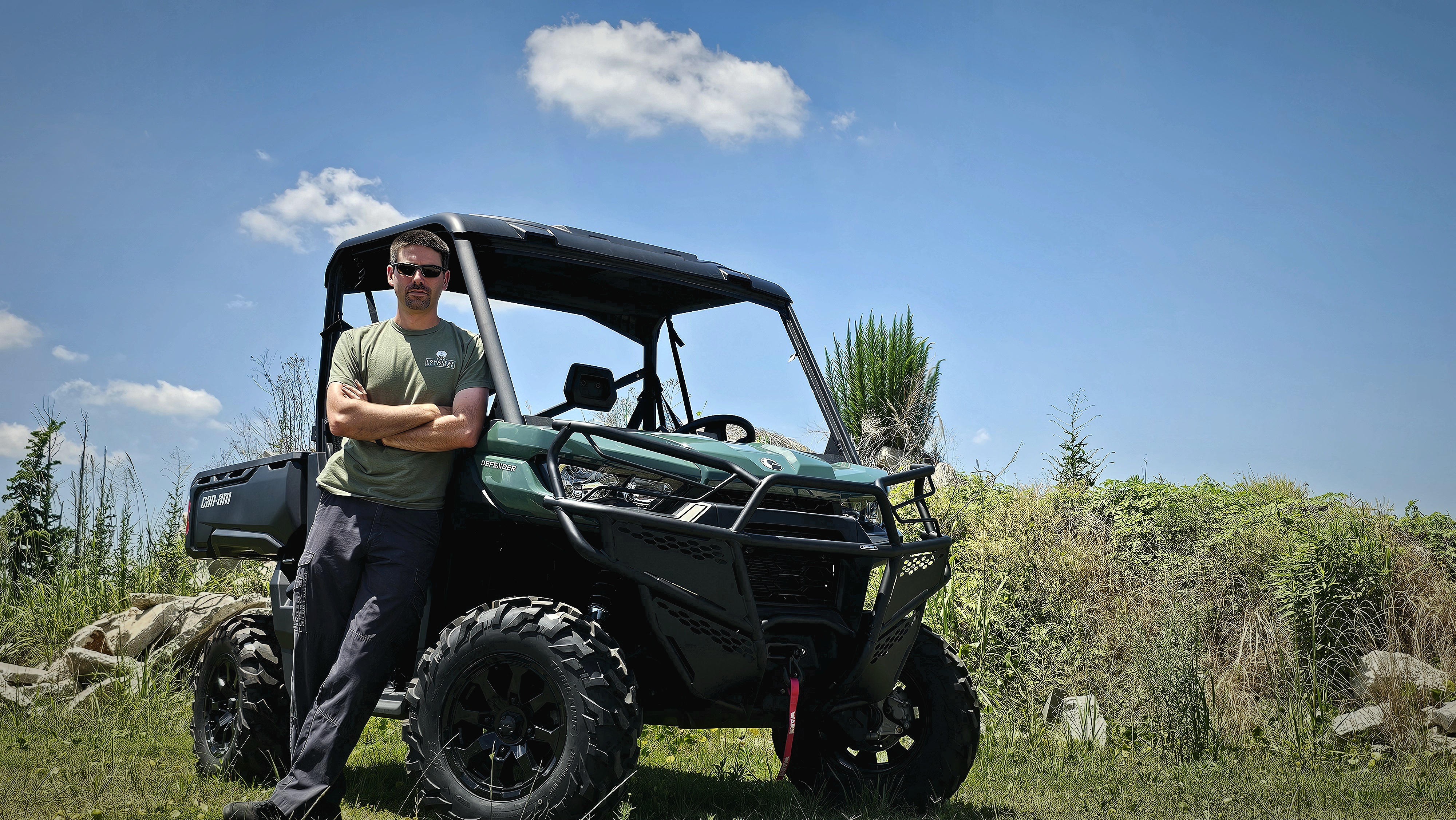
Bill Kleiman here: Nathan Burmester was shopping for a UTV and he asked a bunch of TNC colleagues what they liked and the list was fun to peruse. So I asked Nathan if I could share it and he agreed. He is not endorsing any one machine. What UTV to buy depends on specific needs, and what dealerships are in your region.
South Dakota
I ditched Polaris and went with Cam AM about 8 years ago and I wish I I had done it way before that. Can AM’s are built for more commercial use and are tough as nails. Our Polaris machines were always in the shop and we haven’t had hardly ANY problems with Can AM. I have a UTV and 6×6 atv. No problems with either. I should do a commercial, because I am that much of a believer. You can adjust the suspension, they have all kinds of storage (depending on what you get) and they can handle more weight, especially if you get upgrades. I purchased the first one in 15/16 and its still going strong and they are the work horses of this program. Polaris was constant headaches and problems. I think nearly all the offices in our Chapter have walked away from Polaris and shifted to Kubota and Can AM.
I don’t think you will be disappointed.
Illinois
We went with Can-Am with our most recent UTV. Very sturdy, with lots of clearance. We opted for the 4-seater. The power steering is very handy.
Texas
Can am 6 wheeler. More power. Ground clearance weight capacity. Does take an “acre” to turn around. Uses more gas. Pretty expensive. We don’t have one yet but I was with a vfd that has two. Seats 3. Most of the time people overload things. Just because the sticker says it will haul something. It’s probably for 5% of it use. Figure 50-60% of recommended capacity to make it last longer. The Kubota is the only one that you can get close to capacity and it stay together but it is heavier.
Oklahoma
We have a kubota rtv-xg850 it’s their sporty version its been great so far
Indiana
Here in Northern Indiana we have started to use the Bobcat UV34. Prior to this we were using six wheel Polaris 800s. The bobcat utv have similar clearance, bed capacity, and durability. They seem to handle mud better than 4 wheel Polaris rangers and have better clearance. The bed capacity is better than the 4 wheels. Also, we were able to get a winch as part of the package when we bought the UTV. The shocks are adjustable which has helped to offset the weight of the slip-in. We didn’t need to do much adjustment for ours.
It is a Polaris with bobcat branding. The engine is Polaris but so far we haven’t had any big issues unlike the real Polaris rangers. There is a limit on speed which is reduced even more if you don’t have the seatbelt buckled in. The seats are gray which get really dirty but get less hot than the black ones.
So far, it is my recommended UTV when people are looking to purchase a new. I have used Polaris, Bobcat, Kubota, Gators, and mules. I also have used Can-am a couple times but not enough to have a great sense of what they are like all around as a machine.
Kansas
We purchased a 2020 Can-Am 6×6 and it has been rock solid. It sees dual use for fire and herbicide application. A couple quick notes, I am happy to chat more if you would like:
- This UTV sees dual-use for fire and invasive treatments (different spray rigs).
- Each spray rig has a 100 gal tank, machine carries the weight well with minimum squatting
- This thing is a rockstar on Flint Hills terrain. Super stable, crawls up and down hills and through some pretty gnarly prairie streams no problem. Nice suspension system. High ground clearance, which is great for our rocky soils.
- Several ranching neighbors have changed their tune about how useful UTVs can be on wildland fire because of our Can-Am. We’ve put out a lot of wildfire, getting places where no other rig could have.
- Great power and top-speed for transport around a site.
- 4 years of hard use, so far nothing more than typical maintenance and a new set of tires.
- The only downside is the long wheel base. We had to buy a new trailer to accommodate, and the turning radius is not as small as the Polaris 6x6s.
North Carolina
I would recommend the Honda Pioneer 1000. We now have 3 of them and everyone loves them compared to gators. They have a more traditional transmission with gears, and a sub transmission, which is a design Honda has been using since the 80’s when they were making 3 wheelers. They also have a payload of 1000 lbs (2 seater).
Any machine with a CVT (Polaris calls it PVT) transmission is not great for moving at slow speeds and constantly stopping and starting movement. The clutch belt drive system is dry and was designed to use the belt as the wearable item that can be easily replaced in the field . Unfortunately, for fireline work, the two clutches that the belt rides on also begin malfunctioning over time and they are not so easy to change in the field. The primary clutch uses centrifugal force to actuate weights which swing out and move one half of the clutch in and out on a shaft, pinching the belt. The weights wear out quickly from constantly engaging and disengaging and the clutches start to get stuck on the shaft and will not slide as they need to. That is the cause of the dreaded ratcheting sound when the transmission is in gear but the vehicle will not move with throttle applied. Moving at slow speed and slow rpm causes the weights to be partially engaged. The last time I replaced both clutches and a belt on a ranger XP it was about $1020 plus the special tool needed to remove the primary clutch from the shaft.
I also hate the polaris wheel bearings. The honda pioneers use similar 1 piece bearings but the Polaris bearings wore out so much faster. I have only replaced 1 honda wheel bearing so far and we are in season 3 with our first machine and season 2 with our 2nd machine.
I have looked at the design of the new Polaris with the metal belt design but I am skeptical of the new design, especially in the first year or two of production. I have not seen one in person yet, though, and it may turn out to be a great machine. If money is no object, CanAm makes a UTV with a tool body but it is very expensive, very long and also uses a CVT.
There is no way around needing good rear shocks for whatever UTV is decided on. Our UTV skid units weigh about 900 lbs loaded with water and 10 gal of torch fuel. The honda pioneer 1000 limited edition is no longer available but it came with Fox shocks that have enough adjustment to hold the rear of the machine at proper ride height. For the last pioneer we purchased, we added those same Fox shocks to the spec sheet for a standard model, as well as a roof, full skid plates, front bumper, winch, and rear bumper to protect the discharge plumbing on the skid unit. That has worked out fine and the dealer had no issues accommodating that.
Fox shocks and Elka shocks can also be ordered and built custom by the shock manufacturer for the weight the machine will be carrying. That is what we did with our Rangers and the prices were very reasonable ($800 a pair for the Elkas).
We have over 700 hours on our 2021 Pioneer and 206 hrs on our 2022 Pioneer. The only maintenance other than regular I have done to either machine is one wheel bearing and two rear axles.
Minnesota
Look into a Can Am Defender HD10. We put tracks on ours and it’s been great w/ and w/o tracks. Only had it for a year, but we use it for everything. We use Kubota’s a lot. Heavy duty, but w/o tracks clearance sucks.
Missouri
I’ll share for my experience this season using a new Honda Pioneer, I would not recommend it.
Great piece of equipment, not ideal for fire.
A big problem we’ve had is bed storage. It doesn’t seem to fit a slip in well and it’s hard to figure a way to attach one. We have yet to find a solution 6 months in.
Another big issue with it is that it is so powerful it just wants to go too fast. You can’t slow roll it along a line for patrol or holding without a jerky lurching sensation. It is also so powerful I think you could easily smack into someone in close quarters if you give a little too much gas.
It performed best for us here where it tackles the rough terrain, but shows up with a poorly fitted slip in and gear barely strapped to the sides. It performed worst in the grass lands where it is just way too sporty to drive slowly in a straight line holding.
North Dakota
We’ve used Polaris Ranger from 2010-20 and Kubota RTV from 2007-currently. Polaris are terrible, I refuse to buy one again. Terrible design and unreliable.
We have two- Kubota RTV 900’s that have been workhorses. One is the 2007 and another is 2014. Both are diesel and can handle the heavy loads, no problem. Our slip-on units are 80-90 gal tanks- no problems with terrain, doesn’t get tippy. You drop these in low gear and engage 4WD and they’ll scale a mountain. Clearance isn’t great- 8” I believe, but the standard metal skid-plate mitigates damaging underside. They are on the heavy side with the diesel engine and are slow- max speed of 25 mph. There is a gas version that hits 40 mph.
We also have 2020 Can-Am Defender HD8 that we run with 80 gal slip-on. So far seems to be holding up but the jury is still out on it. It has a 20-30 grease zerks that I’m not a fan of. Clearance is in 10-12” range. Very comparable to the Polaris ranger, slightly less tippy. We’re running the same slip-on unit that was originally in the Polaris Ranger 800. In the Polaris, the front wheels would commonly want to come off the ground when you were maxed out trying to navigate terrain. That doesn’t happen with the Can-Am.
I was extremely interested in Honda Pioneer when replacing the Polaris but I was needing a machine immediately and Honda was 3-5 months out.
Minnesota
If you want to eliminate transmission issues, consider Honda Pioneer. I have a 1000 model, and it’s shaft-driven, I love it.
We also have several Can-Am UTVs in our fleet in MN, but I don’t have any first-hand experience. Those that have them are not going back to Polaris from what I hear
Kansas
You’ll pay out the nose for it, but CanAm is the best machine I’ve worked with. After 7-8 seasons depending on the ranger 6×6 and all its maintenance, I think Canam is worth the investment. We use one here in Kansas and I’m continually impressed by that thing’s ability to climb and slosh around in the mud with a full slip-on in the back. It’s only a few years old, but I remember the Rangers needing a considerable amount of after-market work by that point. Radiator lifts, new CV boots, etc. That’s kind of prairie-specific stuff but it gives an idea. That said, I don’t have experience with those newer models of Polaris and Honda you mentioned.
North America program
I have worked with several machines, including Honda, Polaris, and Can-Am to name a few.
I highly recommend the Honda pioneer 1000. The shaft drive is superior to the belt drive of other manufacturers. If you need to do any aftermarket accessories to make it have a higher clearance, better tires, bed extension, etc are readily available.
Nathan adds this too: Don’t forget that these machines have a break in period of about 10hrs/30mi that you need to complete, then you need to have it serviced (change all the oils), and only then will it be ready to haul your slip-on and be used on the fireline.
And a few comments came in after Nathan published his list:
Steven Kloetzel: We have 2 units here in Western Montana. We rely on partners a lot, and they rely on us. We don’t have a lot of dough for fire equipment, so here’s what I’ve put together. These are very popular on our partner burns, with no breakdowns or issues:
2021 TNC-built 110gal slide-in, with hose-reel, that we put in a 2014 Tacoma. One person can load and install this slide-in in about 30min. Chris Gordon at the Cross Ranch (ND) & Evan at Niobrara Preserve (NE) helped advise on the slide-in build. We often use that setup like a UTV. And then the Tacoma doubles as a daily-driver pickup for our second forester, how sweet is that?
2023 Kawasaki Mule UTV with 50gal slide-in tank. Tops out at about 25mph – but it is small & mighty. Narrow as an ATV, so easy to weave thru trees. Has better clearance than most UTVs, and way less plastic body-parts. My weed management contractors swear by Mules. The lightweight slide-in is custom built by Warne Chemical of Rapid City, SD, with a hi-pressure electric pump (onboard backup replacement pump can be swapped in 5min.) I’m in the process of adding a front-rack to the UTV for gear/tools. The whole setup cost maybe $15000.
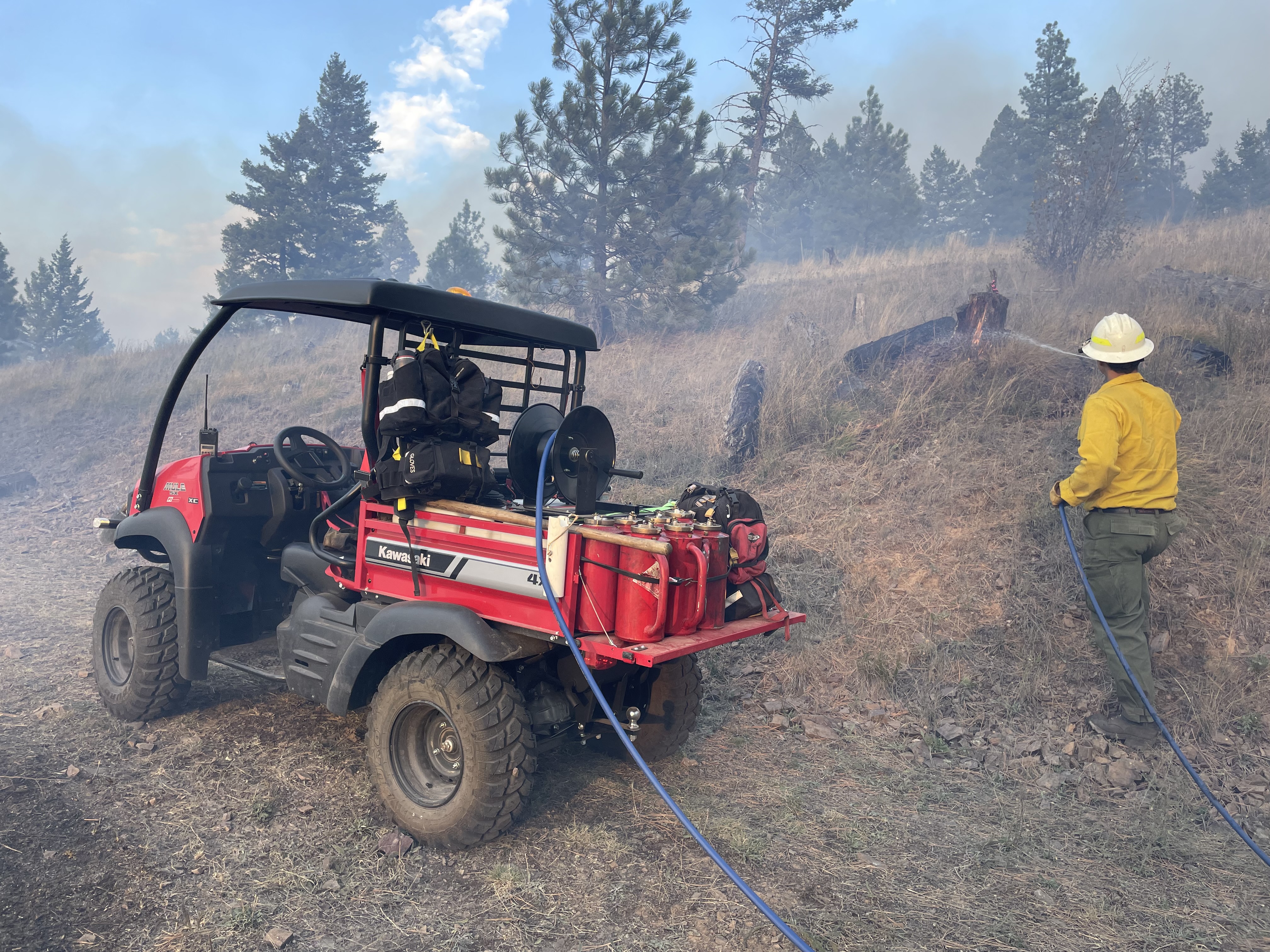
David Printiss: Thanks Nathan. Whatever rig you buy, you must remember to not go over the listed cargo capacity when adding equipment, tools, etc.
Rob Littiken: We have a few of the Bobcat UTV U34. They are the Commercial line of Polaris and are more heavy duty than normal Polaris UTV’s. The cargo capacity is 1,250# as opposed to most of the other at 1000#. We have had good luck with them. TNC gets a pretty good discount if the dealer prices it out through the government discount system.
This blog site has other posts on UTV slip on units:


 grassland restoration network